
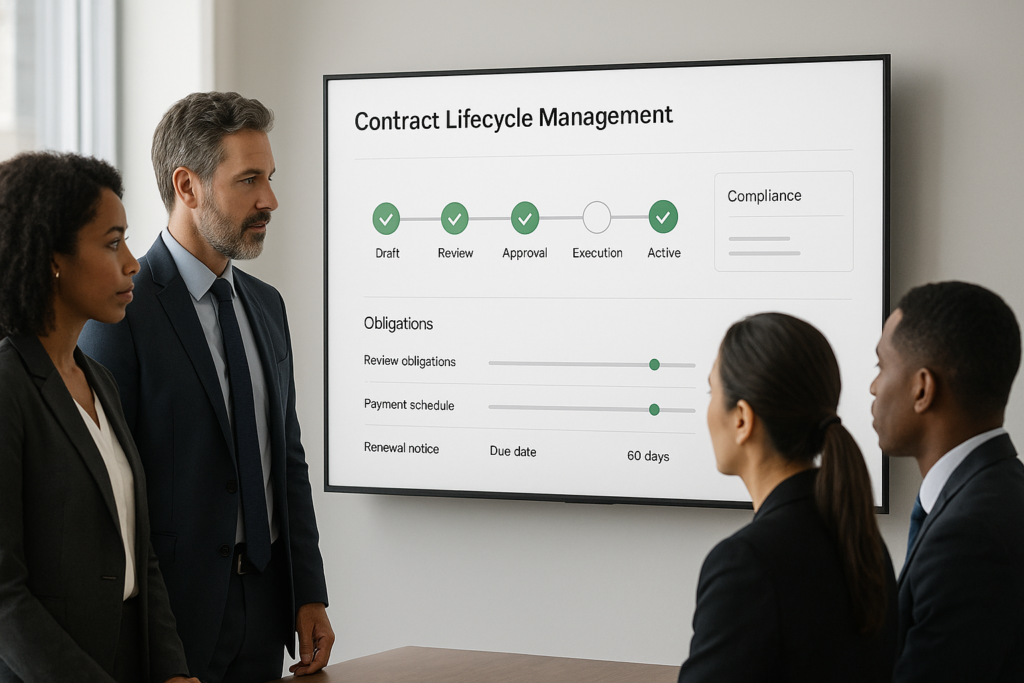
Finance teams managing hundreds of vendor contracts across email threads, shared drives, and procurement folders face a visibility crisis. Renewal deadlines slip, payment terms hide in unread PDFs, and obligation tracking depends on manual spreadsheet updates.
Key Takeaways
- Post-signature intelligence platforms extract obligations from executed contracts without replacing your e-signature workflow, while full CLM suites handle pre-signature authoring and approval automation
- AI-powered extraction accuracy depends on parsing clause context, not just keyword matching — platforms must identify renewal dates, payment terms, and termination conditions from unstructured PDFs
- Finance teams needing only visibility into existing vendor contracts benefit from intelligence-layer deployment; those creating high volumes of new agreements require thorough CLM capabilities
- Integration depth determines platform value — key connections include e-signature systems, ERP platforms, cloud storage, and procurement tools
- Compliance requirements like SOC2 certification and GDPR controls separate enterprise-ready platforms from basic contract repositories
What Finance Teams Actually Need From a Vendor Contract Platform
Finance teams drowning in vendor contracts scattered across emails and shared drives need a centralized platform that extracts obligations from executed agreements, tracks renewal dates and payment terms, and surfaces financial exposure in real time — not the full lifecycle authoring workflows legal teams use to draft new contracts.
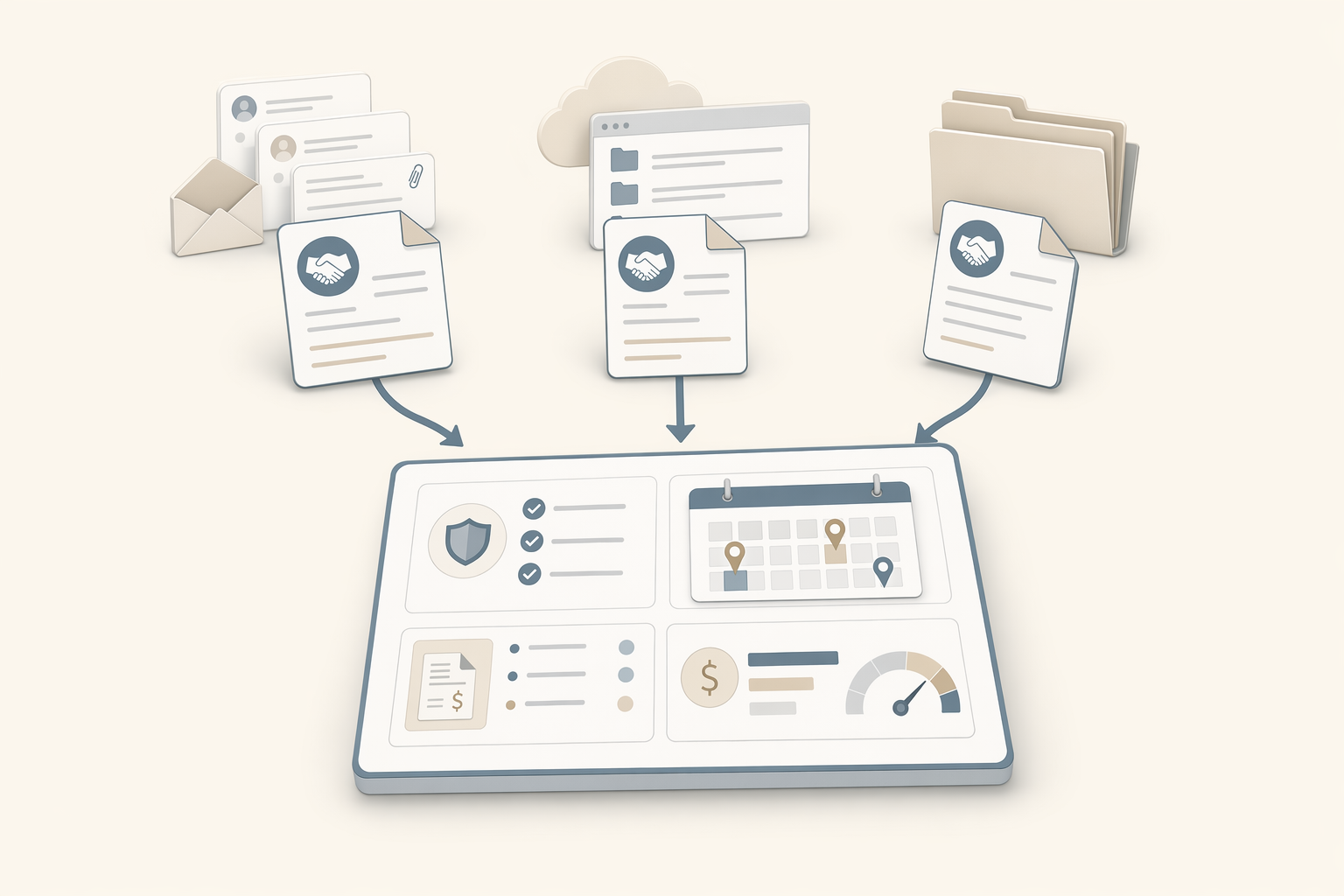
The Scattered Contract Problem: Emails, Shared Drives, and Lost Obligations
Most finance organizations store signed vendor contracts in a patchwork of email threads, department-specific shared drives, and legacy procurement folders. This decentralization creates three critical risks: missed renewal deadlines that trigger auto-renewals at unfavorable terms, inability to aggregate spend visibility across business units, and compliance gaps when auditors request proof of vendor insurance or data-processing terms. Without a single source of truth, finance teams spend hours reconstructing obligations manually — searching inboxes, chasing department heads, and reconciling invoices against contracts they cannot locate.
Post-Signature Tracking vs Pre-Signature Authoring: Two Distinct Needs
The distinction between contract lifecycle management (CLM) and post-signature intelligence is key: legal teams need authoring workflows — templates, approval chains, redlining, and e-signature orchestration, to create new agreements. Finance teams need operational intelligence from contracts already executed: payment schedules, auto-renewal clauses, termination notice periods, and spending caps. Platforms like Contracts.ai target this post-signature layer, extracting structured data from signed PDFs and Word files without requiring organizations to replace their existing contract creation processes. This framing aligns with the principle that contract data is operational intelligence, not just legal records, finance uses it to budget, forecast cash flow, and evaluate vendor performance, roles that require visibility without workflow disruption.
Before evaluating specific platforms, finance teams must understand the architectural divide separating post-signature extraction from full-lifecycle contract management.
Post-Signature Intelligence vs. Full Contract Lifecycle Management
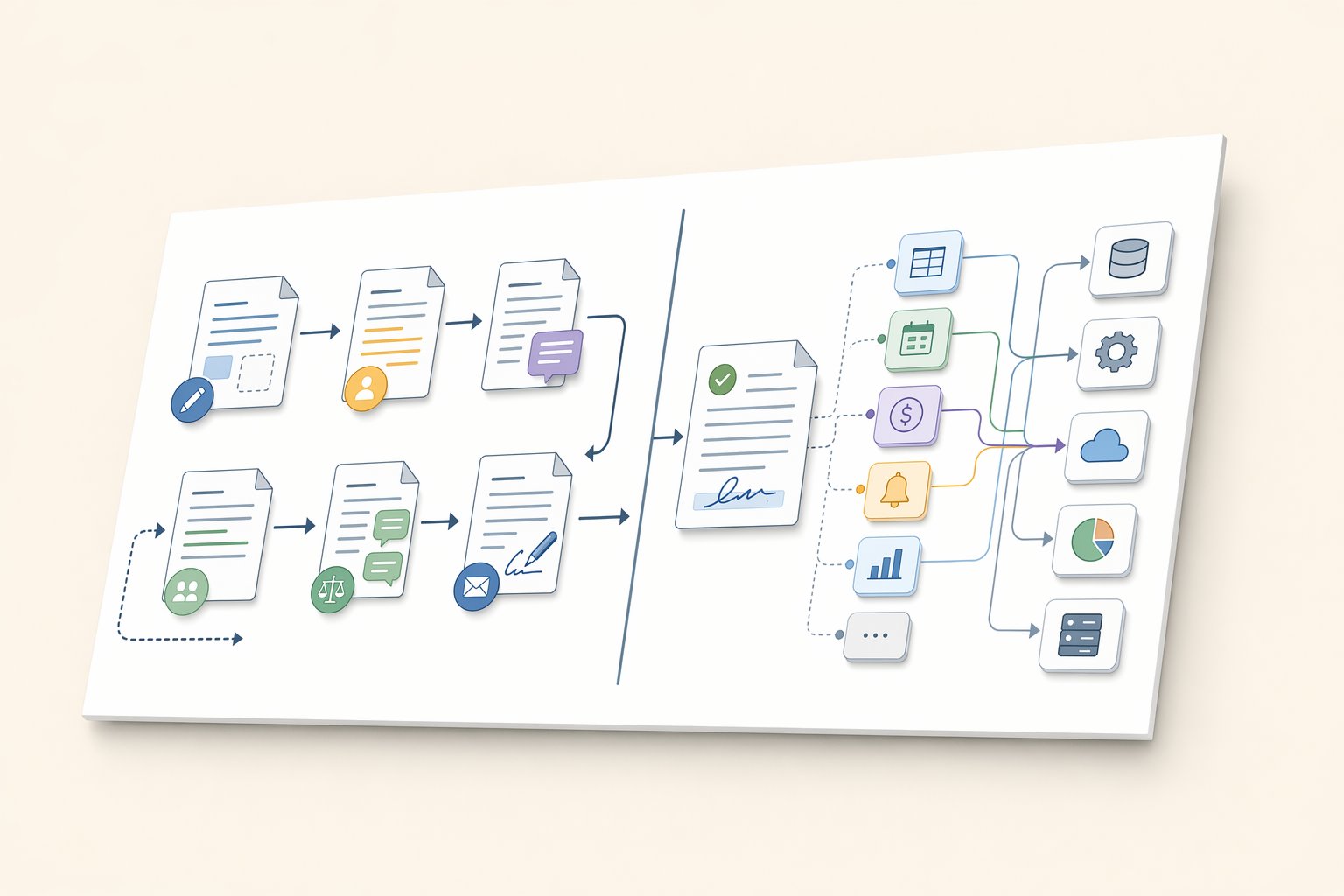
Not every finance team needs to replace their existing e-signature workflow. The post-signature intelligence category separates contract *execution* from contract *extraction*, a distinction zero competitors make explicitly. Where full-suite CLM platforms handle authoring, approvals, and negotiation tracking from signature request through to close, post-signature intelligence platforms start where the e-signature ends: transforming executed agreements into structured operational intelligence that flows across the enterprise.
What Post-Signature Intelligence Platforms Do
Post-signature intelligence platforms use AI-powered extraction to read executed contracts, identify renewal dates, payment terms, auto-renewal clauses, and termination notice periods, then surface obligation alerts before deadlines pass. The work happens *after* the contract is signed, no authoring workflows, no approval routing, no negotiation tracking. Finance teams upload signed PDFs (or connect an API to their e-signature tool) and the platform returns searchable metadata, auto-tagged clauses, and calendar-based alerts for renewal windows and termination cutoffs. The intelligence layer sits on top of existing execution systems, DocuSign, Adobe Sign, or shared drives, without replacing them.
When Full CLM Makes Sense: Contract Creation and Approval Workflows
Full-suite CLM platforms, [Ironclad, Icertis, and DocuSign CLM] among them, handle pre-signature authoring: template libraries, clause-level playbook enforcement, multi-step approval workflows, redlining collaboration, and version control from draft through to executed copy. These platforms reduce contract cycle time [from 45 days to under two weeks] for organizations negotiating hundreds of agreements per quarter. If your finance team *initiates* vendor contracts (rather than reviewing agreements sent by procurement or legal), the authoring capabilities justify the enterprise deployment timeline. If your team only *receives* signed contracts from other departments, the pre-signature workflow is unused infrastructure.
The Non-Rip-and-Replace Deployment Model
Intelligence-layer platforms deploy without forcing migration away from existing e-signature systems. The integration pattern connects via API to DocuSign, Adobe Sign, or PandaDoc, executed contracts flow automatically into the extraction engine the moment signature completes. No workflow migration, no user retraining on a new execution interface, no replacement of the tools procurement or legal already standardized on. Finance gains obligation tracking and renewal alerts while the rest of the organization continues using the e-signature platform they adopted three years ago. The non-rip-and-replace model addresses the integration knowledge gap: teams concerned about vendor lock-in or multi-year migration timelines can layer intelligence on top of current infrastructure rather than displacing it.
With the intelligence-layer versus full-CLM distinction established, evaluation criteria shift to technical capabilities that determine operational effectiveness.
Criteria for Evaluating Vendor Contract Tracking Platforms
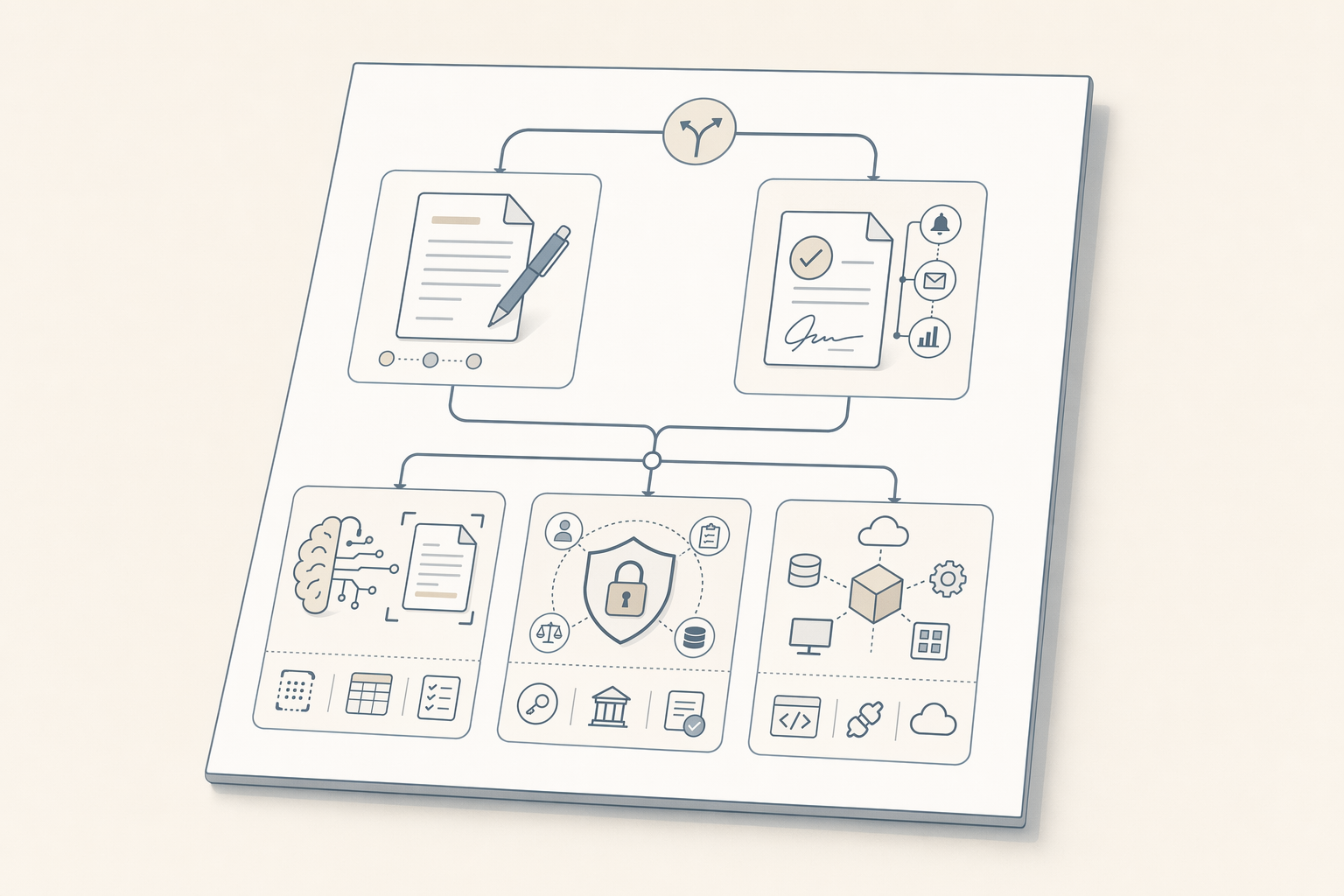
Finance teams evaluating contract platforms face a threshold question before comparing vendors: does your team need authoring capabilities or just post-signature obligation tracking? That distinction determines whether you need a full Contract Lifecycle Management (CLM) suite or an intelligence layer that centralizes obligations from contracts already executed. Answering it requires assessing three technical dimensions: AI extraction methodology, security and compliance posture, and integration architecture.
Core Requirement: AI Extraction Methodology for Unstructured Documents
The technical foundation of any contract intelligence platform is its ability to parse unstructured PDFs and email attachments, not just locate keywords, but understand clause context, identify obligations, and extract metadata like renewal dates and payment terms. AI-powered clause identification has become table-stakes for platforms in 2026, but extraction accuracy varies widely. Platforms claiming >99% extraction accuracy in real time represent the current reliability threshold finance teams should expect when migrating legacy contracts into a centralized repository.
The extraction process itself matters as much as the accuracy metric: does the platform preserve source language alongside structured fields, allowing finance teams to validate AI-generated summaries against the original contract text? Platforms that surface answers without linking back to source clauses create verification bottlenecks when auditors or legal counsel challenge a contract interpretation. Evaluate whether the platform exposes its extraction logic or treats AI output as a black box.
Security and Compliance Posture: SOC2, GDPR, and Data Processor Role
Contract data carries financial and operational risk that generic SaaS security frameworks don’t fully address. The compliance knowledge gap centers on three questions: does the vendor act as a data processor (processing only on your instructions) or a data controller (determining its own processing purposes)? Does the vendor commingle contract data across customers to train generalized AI models? And what certifications, SOC 2, GDPR readiness, HIPAA Business Associate Agreements for healthcare contractors, does the vendor maintain?
Finance teams should confirm that customer contract data remains under organization control at the clause and document level, that the vendor does not use proprietary data to improve shared models, and that data is not commingled across customer instances. Platforms built with tenant isolation architectures and explicit data-processor commitments reduce the risk of contract intelligence leaking to competitors or being repurposed for vendor model training.
Integration Requirements: Intelligence Layer vs Full Replacement
The authoring-versus-tracking question surfaces most clearly in integration architecture. If your team needs only post-signature obligation tracking, monitoring commitments, deadlines, and compliance status across executed agreements, an intelligence layer that sits atop existing email, shared drives, and ERP systems delivers faster ROI than migrating authoring workflows into a new CLM platform. Teams that already negotiate contracts in Word and execute via DocuSign often over-buy when they adopt full-suite CLM tools with template libraries and approval routing they never use.
Conversely, if your team drafts dozens of vendor agreements monthly and needs workflow automation for approvals, redlining, and version control, a full CLM replacement justifies the migration cost. The decision framework is practical: intelligence layers centralize obligations without disrupting existing authoring tools; full CLM suites replace the entire contract workflow from template selection through execution. Finance teams drowning in scattered PDFs typically need the former; legal and procurement teams managing high-volume contract creation need the latter. Evaluate your team’s actual authoring volume, not hypothetical future needs, before committing to a platform that requires wholesale process migration.
Evaluation criteria translate into three distinct architectural patterns, each optimized for different organizational needs and existing system investments.
Platform Approaches: Intelligence Layer, Full CLM Suite, or Basic Repository
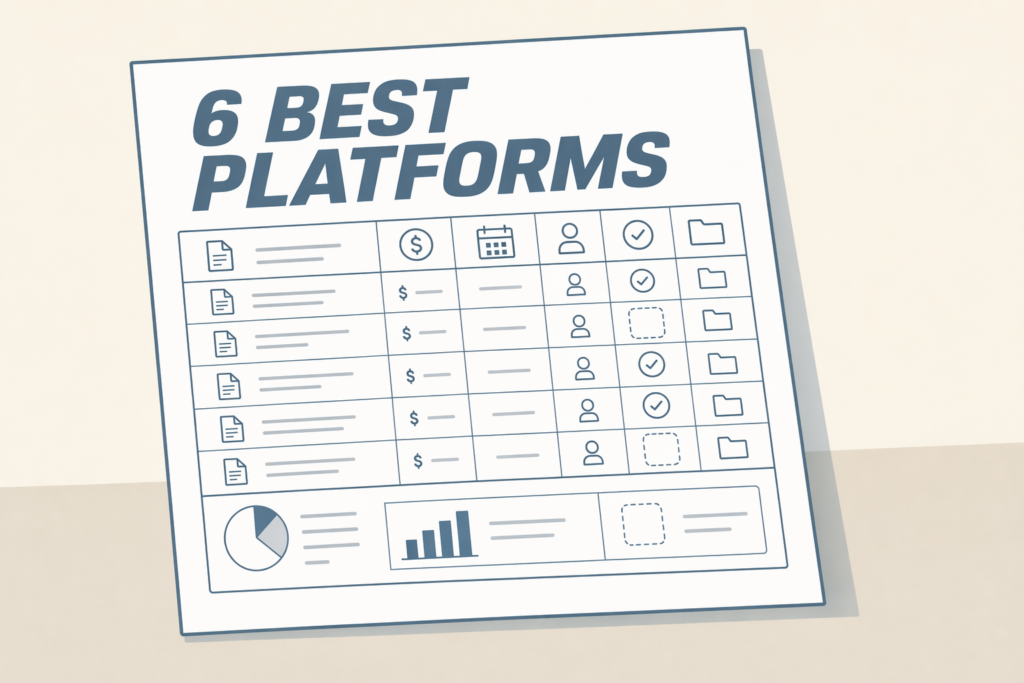
Finance teams seeking centralized contract management face three distinct architectural approaches. Intelligence-layer platforms extract data from existing contracts without replacing authoring tools. Full-lifecycle suites manage contracts from drafting through renewal. Basic repositories provide storage and search but lack AI extraction. Industry reviews of AI-powered contract management software identify six platforms across these categories, each serving different operational needs.

Intelligence-Layer Platforms: Contracts.ai
Contracts.ai operates as a post-signature intelligence layer, extracting key terms across legacy and live contracts in minutes. The platform uses machine learning to analyze contract content and generate structured outputs, summaries, and risk insights. This approach lets finance teams gain visibility into vendor obligations without migrating existing e-signature or document workflows. The platform’s intelligence capabilities include natural-language querying across the entire contract base and automatic grouping of related agreements.
Strengths: Non-rip-and-replace deployment preserves existing workflows; AI extraction with over 99% accuracy in real time; answers linked to source contract language for validation. Limitations: Does not support contract authoring, approval workflows, or pre-signature negotiation tracking. Best for: Finance teams already using tools like DocuSign or PandaDoc for execution who need post-signature obligation tracking and renewal visibility without replacing their existing stack.
Full CLM Suites: Ironclad, Icertis, Sirion, DocuSign CLM, Agiloft
Full-lifecycle platforms manage contracts from authoring through renewal. These AI contract management systems automate workflows including approvals, redlining, and compliance tracking. Ironclad offers obligation management that turns contract commitments into trackable action items, with each obligation carrying an owner, status, and type. Sirion provides automated renewal management systems that eliminate manual tracking errors. Icertis and DocuSign CLM rank as enterprise leaders in analyst quadrants, while Agiloft is recognized for workflow-native architecture.
Enterprise CLM suites typically require 3 to 9 months for implementation including data migration, taxonomy design, and workflow configuration. Annual contract values range from $40,000 to over $250,000 for Ironclad and Icertis. These platforms deliver significant value for organizations managing complex approval hierarchies and multi-party negotiations, but represent substantial workflow transformation.
When Basic Repositories Fall Short
Shared drives and legacy document management systems lack AI extraction capabilities that turn contract language into queryable metadata. Finance teams relying on folder hierarchies face manual searches through PDFs to answer questions about termination clauses, renewal dates, or payment terms. This approach leaves 92% of organizations struggling with contract management inefficiencies, with poor contract management costing up to 9% of annual revenue due to missed obligations and revenue leakage. Without automated alerts, renewal deadlines trigger unfavorable auto-renewals, and compliance risks accumulate as teams lose visibility into contractual commitments spread across email attachments and network drives.
When Contracts.ai’s Post-Signature Model Fits Your Finance Team
Best For: Finance Teams with Existing E-Signature Workflows
Contracts.ai describes itself as the post-signature intelligence layer, designed for organizations that already use DocuSign, Adobe Sign, or similar e-signature platforms and need to extract obligation data without replacing their existing signature stack. Finance teams managing hundreds of vendor agreements across shared drives and email inboxes can deploy Contracts.ai to extract payment terms, renewal dates, and liability clauses from executed contracts, turning unstructured PDFs into queryable structured data. The platform excels when your team’s pain point is post-signature obligation tracking, not pre-signature authoring or approval routing.
Deployment Model: Intelligence Layer Alongside Your Existing Tools
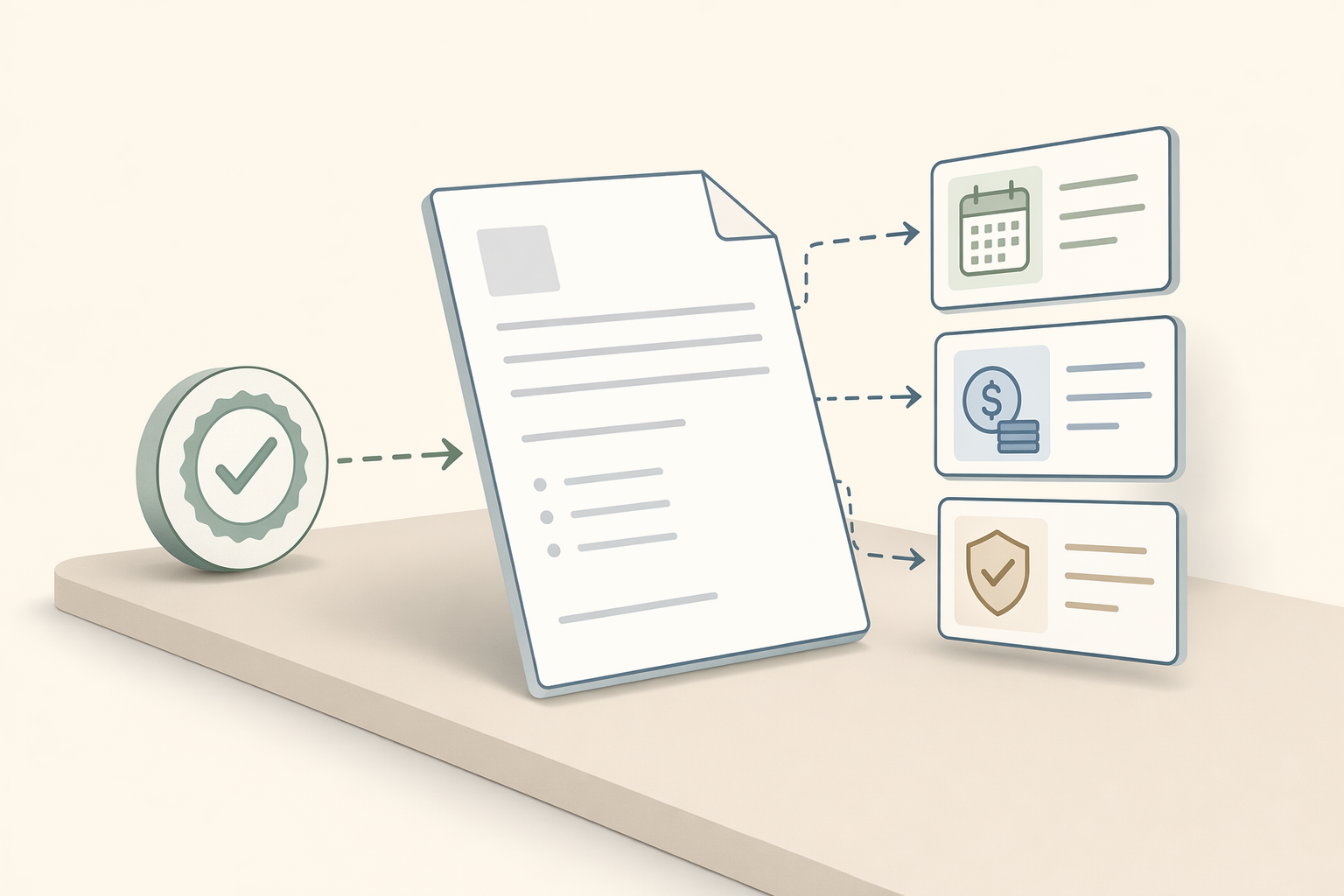
Contracts.ai can be deployed as an intelligence layer without replacing existing systems, connecting to repositories like SharePoint, Google Drive, and ERP platforms including Oracle and SAP to reconcile supplier invoices with signed contract terms. Contract data, access, and governance remain under organization control at clause and document level, while the platform extracts metadata and obligations in the background. This approach lets finance teams preserve their existing signing workflows and folder structures rather than forcing a full workflow migration, a lighter implementation path than thorough CLM replacements.
Limitations: No Pre-Signature Authoring or Approval Workflows
Contracts.ai does not support contract authoring workflows such as approvals. Finance teams needing template libraries, clause playbooks, redlining collaboration, or multi-stage approval routing should evaluate full-lifecycle CLM platforms instead, the post-signature model trades pre-signature workflow automation for faster deployment on top of existing systems. If your primary need is contract creation and negotiation workflow, rather than obligation intelligence from already-signed agreements, a workflow-native CLM like Ironclad or Agiloft will be a better fit.
Choosing Your Vendor Contract Platform
Full CLM platforms like Ironclad, Icertis, and DocuSign CLM deliver thorough pre-signature authoring and approval workflows but require migrating your entire contract creation stack, intelligence-layer platforms like Contracts.ai extract obligations from existing executed agreements without workflow disruption. Basic contract repositories avoid platform lock-in but lack AI-powered obligation extraction and renewal tracking that modern platforms surface as structured, actionable data.
As AI extraction accuracy improves and finance teams demand granular obligation visibility without IT-heavy implementations, expect the intelligence-layer category to expand with specialized offerings for procurement, real estate, and vendor management use cases.
Map your current vendor contract storage, emails, shared drives, e-signature archives, and count how many renewal obligations you’ve tracked manually in the past 12 months, then explore Contracts.ai’s post-signature extraction to automate that workload without replacing your existing tools.
Frequently Asked Questions
How do AI contract platforms extract obligations from unstructured PDFs and emails?
AI contract platforms use natural language processing to parse contract text, identify clause types like payment terms and renewal dates, then extract metadata into structured fields. Extraction accuracy depends on understanding clause context rather than keyword matching, with platform training data and document quality determining reliability.
What’s the difference between a post-signature intelligence platform and a full CLM suite?
Post-signature platforms extract obligations from executed agreements without authoring workflows, while full CLM suites include pre-signature contract creation, negotiation tracking, and approval automation. Finance teams needing only visibility into existing contracts benefit from intelligence layers; those creating high volumes of new contracts require thorough CLM capabilities.
Do contract intelligence platforms comply with SOC2 and GDPR requirements?
Enterprise contract platforms maintain SOC2 certification, operate as data processors implementing org-level controls, and avoid cross-customer data commingling. Critical compliance distinctions include no LLM training on customer data and verification of compliance posture during vendor evaluation processes.
Can I use a contract intelligence platform alongside my existing DocuSign or Adobe Sign workflows?
Yes, intelligence-layer platforms connect to existing e-signature tools via API to ingest executed contracts, then extract obligations without replacing your signature stack. This non-rip-and-replace deployment model preserves current workflows while adding automated obligation tracking and metadata extraction capabilities.
What if my finance team needs contract authoring and approval workflows?
Evaluate full CLM platforms like Ironclad, Icertis, Sirion, DocuSign CLM, or Agiloft that include pre-signature authoring capabilities. Post-signature intelligence platforms focus exclusively on obligation tracking from executed contracts and do not support template libraries, clause playbooks, or multi-stage approval routing.
How do contract platforms track renewal deadlines and send alerts?
Platforms extract renewal dates from contract text using AI clause identification, then trigger alerts based on configurable lead times like 90 days before renewal. Intelligence-layer platforms typically integrate renewal alerts with finance team calendars and project management tools for automated deadline management.
What integrations should I expect from a vendor contract tracking platform?
Key integrations include e-signature systems like DocuSign and Adobe Sign, ERP platforms such as Oracle and NetSuite, cloud storage like SharePoint and Google Drive, and procurement tools. Intelligence-layer platforms prioritize read-only integrations to ingest executed contracts; full CLM suites require deeper two-way integrations.
Sources
- Simplify Post-Signature Contracts with Centralized Contract Management – DebtBook – www.debtbook.com
- Using legal department data for operational advantage – Wolters Kluwer – www.wolterskluwer.com
- Best AI CLM Tools in 2026 – 5 Compared – awesomeagents.ai (2026)
- AI Contract Management Software 2026: 10 Best Tools – bindlegal.com (2026)
- Top 10 AI-Powered Contract Management Software – SaaSlaunchr – www.saaslaunchr.com
- Best AI Contract Management Software for 2026 – Factorial – factorialhr.com (2026)