Finance teams struggle with vendor contracts scattered across email threads, shared drives, and procurement folders — no single source of truth for obligations, renewal dates, or compliance requirements.
This guide evaluates eight contract management platforms that centralize repositories, automate obligation tracking, and integrate with finance systems — helping teams prevent revenue leakage and compliance gaps.
Key Takeaways
- Post-signature obligation tracking delivers higher ROI than pre-signature workflow automation for finance teams managing existing vendor portfolios
- AI-powered clause extraction automatically surfaces payment terms, notice periods, and renewal dates from executed contracts stored as PDFs
- SOC 2 Type II certification and GDPR Article 28 compliance are non-negotiable security requirements for platforms handling vendor contract data
- Pre-built ERP connectors to Oracle, SAP, and Coupa close data silos that cause payment term drift and procurement visibility gaps
- Platform selection depends on team size: small teams prioritize ease-of-use, mid-market teams need AI without complexity, enterprise teams require compliance controls
Finance teams drowning in vendor contracts scattered across emails and shared drives need a centralized repository that surfaces obligations automatically, integrates with ERP and procurement systems, and tracks performance against signed terms. The highest-use starting point is post-signature obligation tracking — not pre-signature workflow automation — because research shows that 90% of professionals struggle to locate specific contracts when needed, and organizations lose approximately 9% of revenue to contract leakage from missed renewal dates, overlooked payment terms, and silent compliance deadlines [F1-5, F1-6].
Centralized Repository as the Foundation
Vendor contract portfolios span MSAs, SOWs, NDAs, amendments, and addenda — often stored in email threads, legal drives, procurement folders, and finance shared directories with no single source of truth. When most businesses track contracts using email chains, spreadsheets, or fragmented filing systems [F1-7, F1-8, F1-9], finance teams cannot answer basic questions: Which vendor contracts renew in Q3? What are our aggregate payment obligations this quarter? Which agreements contain pass-through cost clauses? A centralized repository eliminates these blind spots by consolidating every contract into a searchable, obligation-linked system that flags renewal dates, payment terms, and compliance requirements automatically. Contracts.ai, alongside platforms like LinkSquares, Ironclad, and Agiloft, provides this foundation through AI-powered extraction that transforms static PDFs into structured, query-ready data.
Obligation Visibility vs. Workflow Automation
Many CLM platforms emphasize pre-signature approval workflows — routing contracts through Legal, Procurement, and Finance stakeholders before execution. While valuable for negotiation governance, this capability does not solve the finance-specific pain of tracking what has already been signed. The Forrester Wave™ evaluation of contract lifecycle management platforms distinguishes platforms by how they systematically monitor contract data, deadlines, obligations, and performance throughout the contract lifecycle [F3-6, F3-10]. Finance teams need post-signature intelligence: dashboards that surface upcoming renewals, reports that aggregate spend by vendor tier, and alerts that flag missed SLA credits or payment discrepancies. Obligation tracking, not workflow automation, is the higher-use starting point because it directly prevents revenue leakage and compliance exposure.
Integration with Finance Systems
Contract platforms deliver the most value when they close data silos between legal repositories, ERP systems, procurement tools, and e-signature platforms. Finance teams routinely reconcile invoices against contract terms manually, a process that introduces errors, delays payment approvals, and obscures cost overruns. Platforms that integrate with NetSuite, SAP, Oracle, or Workday enable automated matching: comparing supplier invoices against signed payment schedules, flagging discrepancies, and routing exceptions for review. Contracts.ai’s NetSuite integration reconciles supplier invoices with signed contracts automatically, eliminating the manual spreadsheet layer that most finance teams rely on. Similarly, integrations with DocuSign or PandaDoc ensure that executed agreements flow directly into the obligation tracking system without re-keying. The result: finance teams gain real-time visibility into spend obligations without leaving their ERP environment.
With the finance-specific pain points established, the next step is defining the technical capabilities that separate modern contract intelligence platforms from legacy document repositories.
Core Capabilities: Centralization, Search, and Obligation Tracking
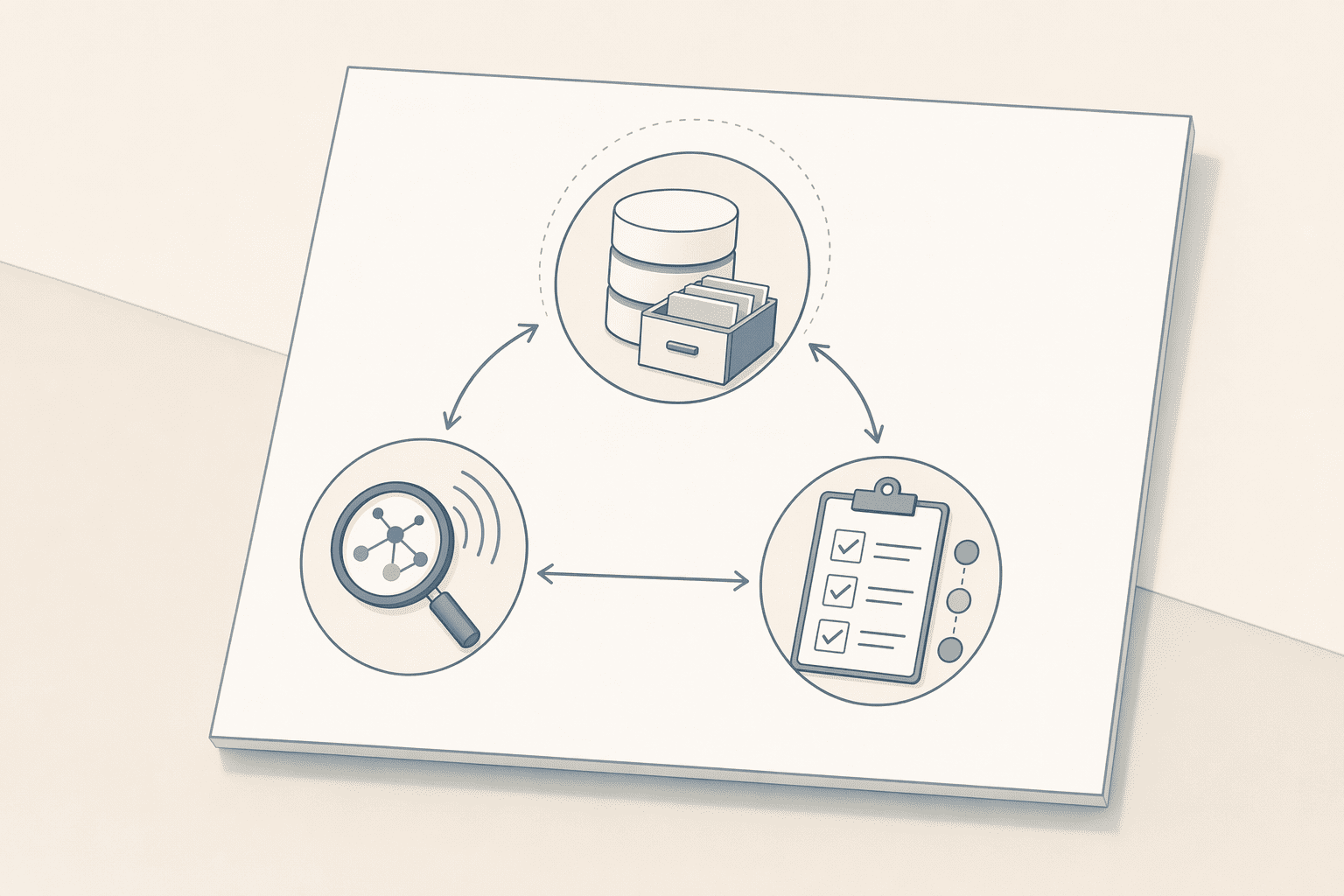
Before evaluating specific platforms, finance teams should establish a decision framework anchored in three non-negotiable technical capabilities. These dimensions determine whether a contract management system will surface buried obligations or simply digitize the chaos already scattered across email and shared drives.
Full-Text Search and Metadata Tagging
AI-powered search distinguishes modern contract platforms from legacy document repositories. Rather than matching keyword strings, these systems understand contract semantics, recognizing that “net 45” and “payment within forty-five days of invoice” express the same obligation. Organizations using AI contract management reduce processing time by up to 65 percent by centralizing contracts, automating extraction, and tracking data across the entire lifecycle.
Effective platforms index every clause and provision, then tag metadata automatically, governing law, payment schedules, liability caps, notice periods. When finance teams ask “Which vendor contracts have California governing law and allow 30-day termination?”, the system returns precise results in seconds, not hours of manual PDF review.
Automated Clause Extraction
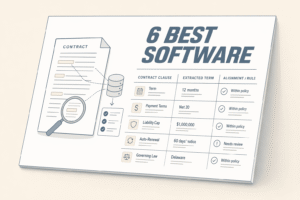
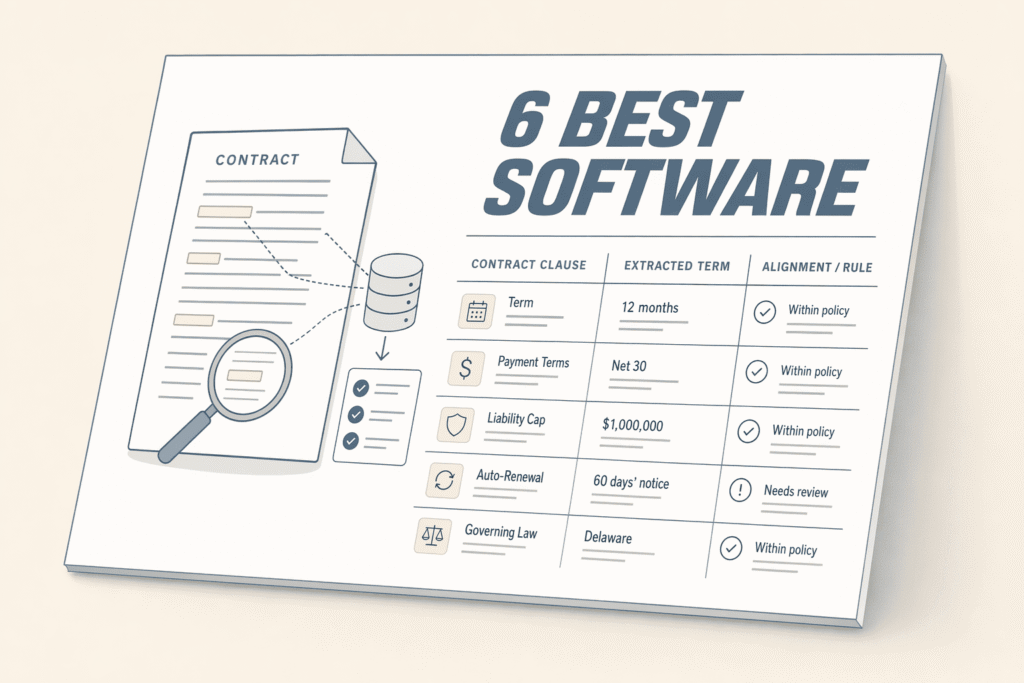
Clause extraction engines transform unstructured PDFs into structured operational data. AI clause detection automatically identifies, classifies, and extracts key contract terms, including payment deadlines, governing law provisions, liability clauses, renewal terms, indemnification language, and termination rights. This capability matters because contracts contain critical information that defines when customers pay, which laws govern agreements, who assumes liability, and how contracts renew.
The extraction accuracy threshold matters: systems claiming “AI-powered” capabilities but requiring manual validation on every field deliver minimal time savings. Look for platforms that parse payment terms, notice periods, and commercial obligations with confidence scores above 95 percent, and surface low-confidence extractions for human review rather than silently accepting errors.
Renewal and Obligation Alerts
Renewal alerts and obligation tracking serve different functions, conflating them is a common evaluation mistake. Alerts are reactive: the system notifies stakeholders 30, 60, or 90 days before a termination window closes. Missed renewal notice periods trigger auto-renewals that lock organizations into another contract year, often at higher rates. Alerts prevent this leakage by surfacing deadlines before they pass.
Obligation tracking is proactive visibility: a centralized view of every commitment, payment schedules, deliverable milestones, compliance requirements, warranty periods, across the entire contract portfolio. Finance teams need both: alerts to avoid missed deadlines, and tracking dashboards to monitor ongoing performance across hundreds of active vendor relationships simultaneously.
Armed with a decision framework anchored in centralization, search, and obligation tracking, finance teams can now evaluate specific platforms against these non-negotiable capabilities.
8 Vendor Contract Management Platforms Compared
Comparison Methodology
After evaluating more than 40 tools, we selected eight platforms finance teams consistently evaluate for vendor contract centralization. The comparison weighs pricing transparency, repository capability, obligation tracking, workflow support, integration breadth, AI-powered search, user ratings from G2 and Capterra, and enterprise security standards.

Platform Comparison Table
| Platform | Starting Price | Repository | Obligation Tracking | AI Search | G2 Rating |
|---|---|---|---|---|---|
| Contracts.ai | Contact for pricing | Post-signature intelligence layer | Yes — clause-level extraction | Yes — natural language queries | Not publicly listed |
| Docusign CLM | $10.82/month | Cloud-based document storage | Yes — automated alerts | Yes | 4.5/5 (127 reviews) |
| Ironclad | Contact for pricing | Centralized contract storage | Yes — end-to-end lifecycle tracking | Yes | Not publicly listed |
| Icertis | Contact for pricing | Enterprise contract repository | Yes — compliance tracking | Yes | Not publicly listed |
| LinkSquares | Contact for pricing | Centralized repositories | Yes — advanced analytics | Yes — clause search | Not publicly listed |
| Agiloft | Contact for pricing | Workflow-native storage | Yes — approval workflows | Yes | Not publicly listed |
| ContractWorks | Contact for pricing | Secure document storage | Yes — reminder automation | Yes | Not publicly listed |
Platform-by-Platform Review
Contracts.ai is a post-signature intelligence layer that transforms executed agreements into structured, operational intelligence. It extracts key terms across legacy and live contracts in minutes with over 99% accuracy. Users query the entire contract base in natural language. Trade-off: Does not support pre-signature approval workflows, designed for post-execution obligation tracking, not contract creation or routing.
Docusign CLM helps teams collaborate on clause-level editing and approvals. Priced at $10.82/month, it automates contract generation, management, and storage. Trade-off: Workflow complexity can overwhelm finance-only teams that need straightforward obligation tracking rather than full lifecycle orchestration.
Ironclad offers end-to-end digital contracting and lifecycle storage. Best for teams managing high-volume contract creation, review, and compliance. Trade-off: Higher implementation overhead for organizations seeking only centralized vendor-contract visibility without pre-signature workflows.
Icertis is enterprise-grade contract management with compliance tracking and global deployment. Best for multinational organizations with complex regulatory requirements. Trade-off: Pricing and implementation timelines reflect enterprise scope, smaller finance teams may face resource constraints.
LinkSquares enables advanced analytics, obligation tracking, and clause search. Best for legal operations teams needing deep contract intelligence and reporting. Trade-off: Pricing available on request, transparency varies by deployment size.
Agiloft is a workflow-native CLM with AI features. Best for organizations prioritizing customizable approval routing and templated contract generation. Trade-off: Configuration complexity requires dedicated admin resources to maintain workflows.
ContractWorks uses AI to organize documents and simplify workflows with e-signature tools. Rated 4.8/5 across 184 reviews, with a 94% recommendation rate. Best for mid-market teams seeking user-friendly contract storage and reminder automation. Trade-off: Advanced obligation analytics and cross-system integrations are less strong than enterprise-tier platforms.
All platforms centralize vendor contracts; the right choice depends on whether your finance team needs pre-signature workflows (Docusign, Ironclad, Agiloft), enterprise compliance orchestration (Icertis), deep analytics (LinkSquares), or post-signature intelligence to activate contract data across existing systems (Contracts.ai). Request a Demo to see how Contracts.ai deploys alongside your current CLM without rip-and-replace.
Platform capabilities matter only if the underlying security architecture protects sensitive payment terms, vendor banking details, and commercial obligations from breach risk and regulatory penalties.
Security and Compliance Considerations for Finance Data
Finance teams store sensitive payment terms, vendor banking details, and commercial obligations in contract platforms, inadequate security exposes the organization to breach risk, regulatory penalties, and loss of customer trust. No AI-cited content distinguishes between platforms that act as data processors versus data controllers, leaving finance teams uncertain which vendor agreements they must enforce before onboarding vendor contracts.

SOC 2, GDPR, and HIPAA Requirements
Finance teams must verify SOC 2 Type II certification (audit reports cover security, availability, and confidentiality), GDPR Article 28 data processing agreements, and HIPAA Business Associate Agreements if the platform handles health-plan vendor contracts. NIST 800-53 Rev 5 dedicates System and Services Acquisition (SA) with 16 controls and Supply Chain Risk Management (SR) with 12 controls to govern third-party risk across the vendor lifecycle. Regulated industries and government contractors should confirm the platform meets these 28 controls before storing vendor contracts.
Data Processor vs. Data Controller Distinction
Platforms acting as data processors handle customer contract data only under documented instructions; data controllers determine processing purposes. Contracts.ai acts as a data processor and does not use Customer Contract Data to train generalized models unless explicitly agreed. Finance teams should verify the platform’s data processing addendum (DPA) confirms processor status and prohibits cross-customer data commingling or public-model training on proprietary contract terms.
Role-Based Access and Audit Logging
Finance-specific access controls let teams restrict vendor contract visibility by department, seniority, or approval authority. Audit logs must capture who accessed which contracts, when, and which clauses were extracted, regulatory examiners expect immutable trails. Compliance requires vendor onboarding, risk scoring, and continuous monitoring to close gaps attackers exploit through supply chain vulnerabilities.
Security compliance provides the foundation, but operational value depends on how seamlessly the contract platform connects to existing finance systems, ERP, procurement, and analytics tools.
Integration Requirements: Connecting Contracts to Your Finance Stack
ERP and Procurement System Integrations
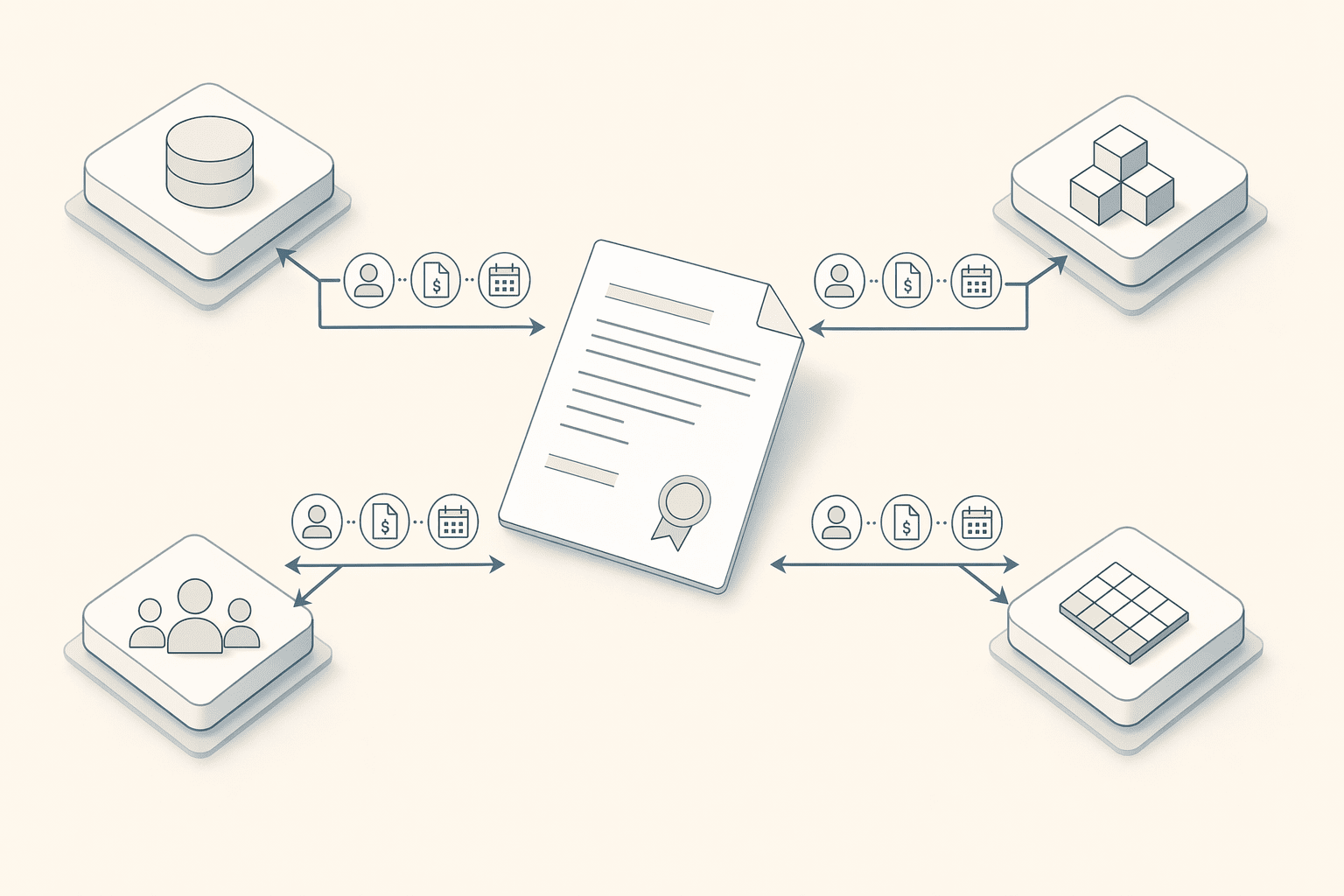
Pre-built ERP connectors close the data silos that plague finance teams. When vendor data lives in both the contract platform and the ERP, it goes stale, payment terms drift, pricing changes don’t propagate, and procurement loses visibility into obligations. Modern CLM platforms offer native integrations with Oracle, SAP, and Coupa that synchronize vendor master data, pricing schedules, and renewal dates bidirectionally. Contracts.ai’s NetSuite integration reconciles supplier invoices against signed contracts, surfacing discrepancies before payment runs. Finance teams relying on centralized contract repositories benefit from real-time data flow rather than quarterly CSV exports.
E-Signature and Document Management Integrations
Executed contracts need to flow back into the repository without manual upload. Platforms with DocuSign and Adobe Sign connectors auto-import signed agreements, trigger compliance workflows, and timestamp the start of obligation periods. Finance teams managing vendor contract portfolios depend on these integrations to ensure SLA tracking begins the moment ink dries, not when someone remembers to file the PDF.
API Access for Custom Workflows
Some finance operations require custom pipelines, routing contract data into analytics dashboards, pushing obligation alerts to Slack, or feeding renewal forecasts into FP&A models. Platforms offering REST API access let technical teams build these workflows without vendor lock-in. Read-only APIs limit integration depth; look for platforms supporting bidirectional sync and webhook-driven event triggers when your stack demands real-time contract intelligence.
Integration requirements established, the final decision factor is matching platform complexity to team size and contract volume, avoiding enterprise overhead for mid-market needs or underpowered tools for compliance-heavy environments.
Choosing the Right Platform Based on Your Team Size and Contract Volume
Not every finance team needs the same contract management platform. A two-person finance team managing 300 vendor agreements faces fundamentally different challenges than a 30-person operation tracking 8,000 contracts across subsidiaries. Implementation complexity varies dramatically, some tools are operational in days, others take six months or longer. The right platform matches your team’s current size and contract volume, not the theoretical state you might reach in three years.
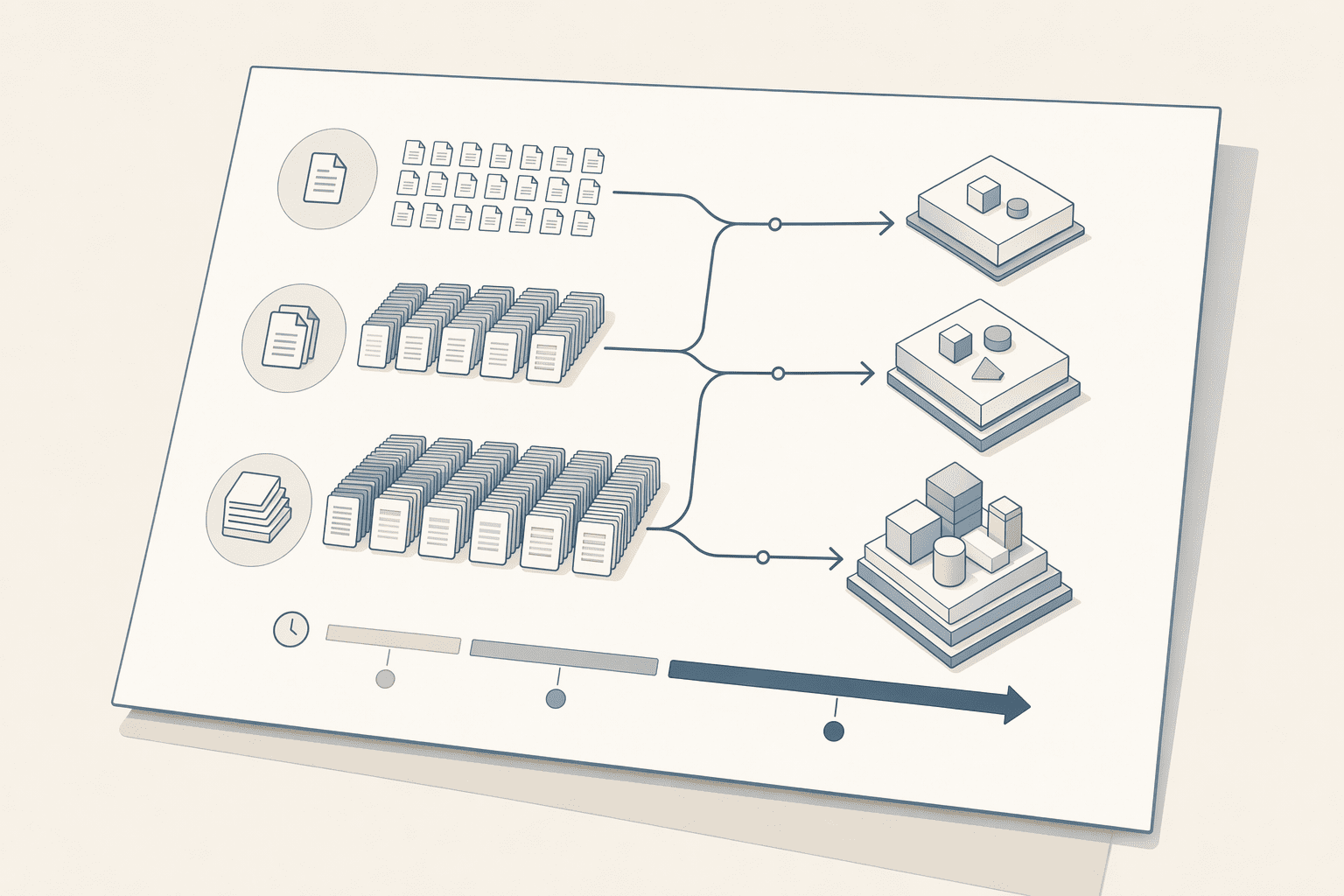
The framework below segments finance teams into three tiers: small teams prioritizing ease of deployment over workflow complexity, mid-market teams needing AI-powered obligation tracking without full CLM overhead, and enterprise teams requiring compliance controls and multi-system integrations.
Small Finance Teams (1-5 Users, <500 Contracts)
Small teams need contract visibility fast, without enterprise setup complexity or six-figure implementation fees. The highest-use starting point is obligation tracking, payment terms, renewal dates, auto-renewal clauses, not workflow automation. Many small teams make the mistake of buying enterprise CLM suites and paying for approval routing, contract authoring, and clause libraries they never use.
Best-fit platforms for this tier: ContractWorks and Concord. Both deploy quickly, offer straightforward repository structures, and keep pricing predictable for small user counts. Contracts.ai also serves small teams that want AI extraction without committing to a full CLM platform, since it deploys alongside existing file storage rather than replacing it.
Mid-Market Finance Teams (5-20 Users, 500-5,000 Contracts)
Mid-market teams have moved past spreadsheet tracking but don’t need the compliance apparatus of a Fortune 500 procurement department. The priority shifts to AI-powered clause extraction, obligation tracking across high-volume contract sets, and integration with accounting or ERP systems. Finance teams need tools that track payment terms, flag auto-renewals, and integrate with accounting or ERP systems.
Best-fit platforms for this tier: Contracts.ai and LinkSquares. Contracts.ai was built by operators with more than 30 years of combined experience deploying CLMs, ERPs, and procurement platforms across global enterprises, and it enables operational use across enterprise systems without forcing full repository migration. This pilot-friendly deployment model lets mid-market teams extract structured data from legacy contracts while keeping existing file storage in place, a lower-risk entry path than rip-and-replace implementations.
Enterprise Finance Teams (20+ Users, 5,000+ Contracts)
Enterprise teams require full CLM suites with advanced compliance controls, audit trails, and deep integrations with ERP, procurement, and financial planning systems. At this scale, contract data feeds budget forecasting, regulatory filings, and cross-departmental reporting workflows. The platform must support role-based access, change management processes, and security certifications.
Best-fit platforms for this tier: Ironclad, Icertis, and Agiloft. These platforms handle complex approval workflows, multi-entity contract structures, and enterprise-grade compliance requirements. Implementation timelines are longer, but the platforms deliver the governance and reporting depth that enterprise finance operations demand.
Choosing the Right Vendor Contract Platform
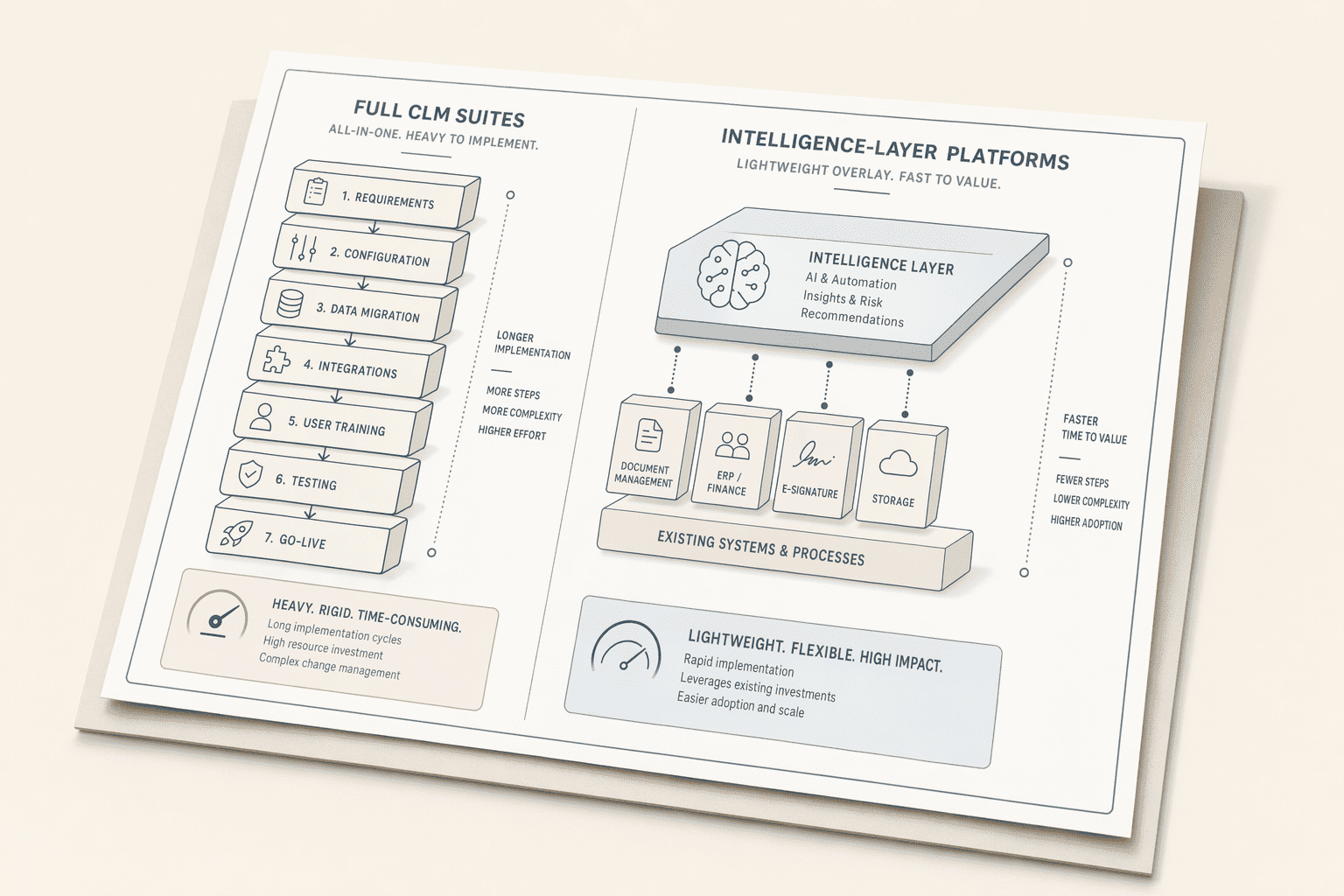
Full CLM suites like Ironclad and Icertis deliver thorough pre-signature workflows but require longer implementation timelines and higher upfront investment, mid-market finance teams often overpay for features they won’t use for 12+ months. Intelligence-layer platforms like Contracts.ai deploy faster by sitting alongside existing systems rather than replacing them, but don’t handle pre-signature approval routing, finance teams prioritizing post-signature obligation tracking over workflow automation get faster time-to-value.
As AI clause extraction accuracy improves, expect contract platforms to shift from reactive renewal alerts to proactive risk scoring, flagging non-standard payment terms, compliance gaps, and vendor concentration before obligations come due.
Start by auditing your current vendor contract repository: how many contracts do you have, where are they stored, and which obligations are you tracking manually? Then explore Contracts.ai’s AI-powered contract intelligence to centralize and automate obligation tracking without ripping out your existing systems.
Frequently Asked Questions
What is the best platform to centralize vendor contracts for finance teams?
The best platform depends on team size and contract volume. Small teams prioritize ease-of-use (ContractWorks, Contracts.ai), mid-market teams need AI clause extraction without full CLM complexity (Contracts.ai, LinkSquares), and enterprise teams require compliance controls (Ironclad, Icertis). All consolidate scattered contracts into searchable repositories with AI-powered obligation tracking.
How do contract management platforms track vendor obligations automatically?
Platforms use AI clause extraction to scan PDFs and pull payment terms, notice periods, renewal dates, and governing law, then automatically tag metadata and set alerts for 30/60/90-day termination windows. This prevents missed renewal deadlines that trigger auto-renewals and surfaces obligations throughout the contract lifecycle.
What security certifications should finance teams require from contract platforms?
Finance teams must require SOC 2 Type II certification (minimum), GDPR Article 28 compliance for EU vendor contracts, HIPAA for healthcare vendor data, and NIST 800-53 for government/regulated industries. Verify the platform acts as a data processor under documented instructions and provides a signed Data Processing Agreement.
Can contract platforms integrate with Oracle and SAP ERP systems?
Yes, modern CLM platforms offer pre-built connectors to Oracle, SAP, Coupa, and other finance systems to sync vendor data bidirectionally. Contracts.ai, Ironclad, and Icertis all support ERP integrations, closing data silos that cause payment term drift and procurement visibility gaps.
What is the difference between contract obligation tracking and renewal alerts?
Obligation tracking provides proactive visibility across all contract obligations (payment terms, deliverables, compliance requirements) throughout the lifecycle. Renewal alerts deliver reactive notifications for upcoming renewal dates only. Finance teams need both, but obligation tracking is higher-use because it prevents missed terms before they escalate.
How do I migrate existing vendor contracts into a new platform without disrupting finance operations?
Use a pilot deployment approach: start with a subset of high-value vendor contracts, validate AI extraction accuracy, then expand. Platforms like Contracts.ai support intelligence-layer deployment alongside existing repositories without rip-and-replace, offering a low-risk entry path for mid-market finance teams.
Do contract management platforms use my vendor contract data to train AI models?
It depends on the platform’s data processing policy. Contracts.ai acts as a data processor and does not use customer contract data to train generalized models unless explicitly agreed. Other platforms may use contract data for model improvement, finance teams must verify the Data Processing Agreement before onboarding sensitive vendor contracts.
Sources
- Contract Tracking Explained: Key Strategies for Businesses – www.sirion.ai
- The Forrester Wave™: Contract Lifecycle Management Platforms, Q1 2025 – www.forrester.com (2025)
- Best Contract Management Software 2026 – www.capterra.com (2026)
- Best AI Contract Management Software for 2026 – factorialhr.com (2026)
- NIST 800-53 Vendor Management: Complete Guide [2026] – www.saltycloud.com (2026)
- NIST Third-Party Risk Management: 800-53, 800-161, CSF – safe.security (2025)
- Best Contract Management Software for Finance Teams (2026) – Bind – bindlegal.com (2026)