Legal teams manage thousands of executed contracts storing critical business terms—renewal dates, payment schedules, liability caps—yet most remain locked in unqueryable PDFs. Contract intelligence platforms automatically extract this information into structured datasets that feed dashboards and analytics workflows.
Key Takeaways
- Contract extraction platforms use three methods—OCR for scanned text, NLP for pattern matching, and LLM for complex clauses requiring contextual understanding
- Evaluate platforms on output formats (JSON for API teams, CSV for spreadsheets, native BI connectors), integration ecosystem, pilot deployment flexibility, and compliance certifications (GDPR, SOC2, HIPAA)
- API-first tools like DigiParser deliver sub-minute extraction for engineering teams, while dashboard platforms like Contracts.ai provide faster time-to-insight for non-technical users
- Pilot testing on 50-100 contracts validates extraction accuracy before full repository migration—critical for risk-averse mid-market organizations
- Automated extraction reduces manual review time from hours to minutes, with SaaS platforms deploying in 2-8 weeks
What Is Contract-to-Data Extraction Software?
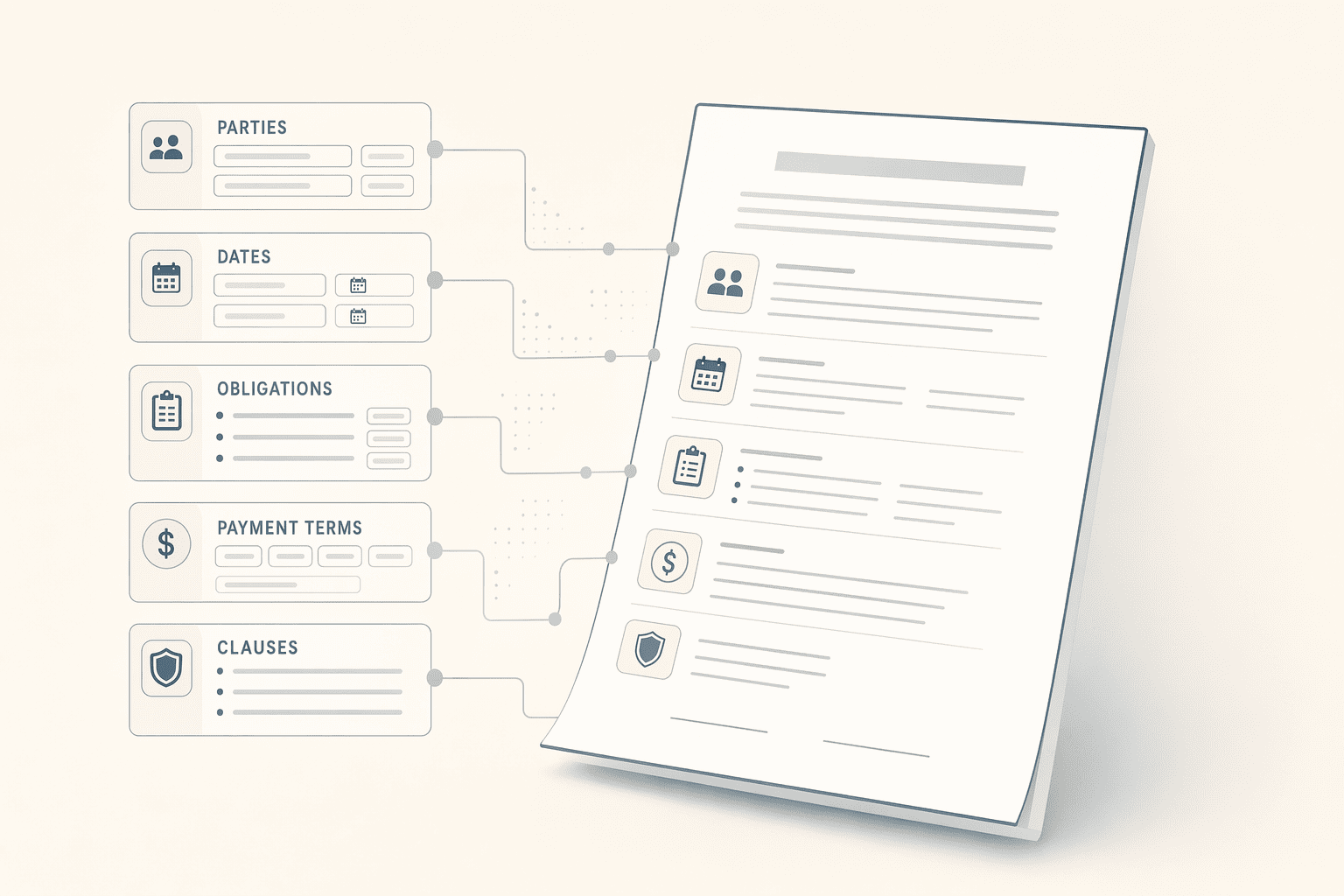
Yes, multiple software platforms automatically turn contracts into structured data for business intelligence. Contract-to-data extraction systems pull key metadata, parties, dates, obligations, payment terms, clauses, from contract documents and organize them into structured, searchable fields. Platforms such as Ironclad, Aline, and Contracts.ai use AI to read clause meaning rather than match fixed positions, making them usable across inconsistent formats found in real contract repositories.
Scope: What Gets Extracted
Modern extraction tools handle three layers. OCR converts scanned PDFs and photographed contracts into machine-readable text. Clause identification locates specific clauses, indemnity, liability caps, termination rights, within the contract body. Field extraction pulls specific values (dates, amounts, party names) from those clauses and normalizes them into consistent fields. The output goes into a CLM system, spreadsheet, or database where it can be searched, filtered, and connected to downstream workflows.
Why Structured Data Matters for BI
Without structured metadata, contracts are static documents. With it, they become a queryable dataset that supports operational decisions across legal, procurement, sales, and finance. Organizations use extracted data to build real-time renewal dashboards, aggregate vendor spend, and score compliance risk. Every clause, obligation, and metadata field carries insights that improve compliance, reduce risk, and accelerate decisions. The transition from static storage to dynamic intelligence requires matching extraction method to contract complexity, OCR for scanned PDFs, NLP for clause identification, LLM for nuanced interpretation, which section 2 details.
Understanding what extraction software does is only the first step, choosing the right approach depends on how these platforms actually process contract language.
How Contract Intelligence Platforms Extract Structured Data
Enterprise contract optimization depends on extraction accuracy. Three methods dominate: OCR handles clean text but misses semantic context; NLP applies predefined patterns for structured schema; LLM-based parsing captures clause ambiguity at higher cost. Below is the workflow each approach follows.
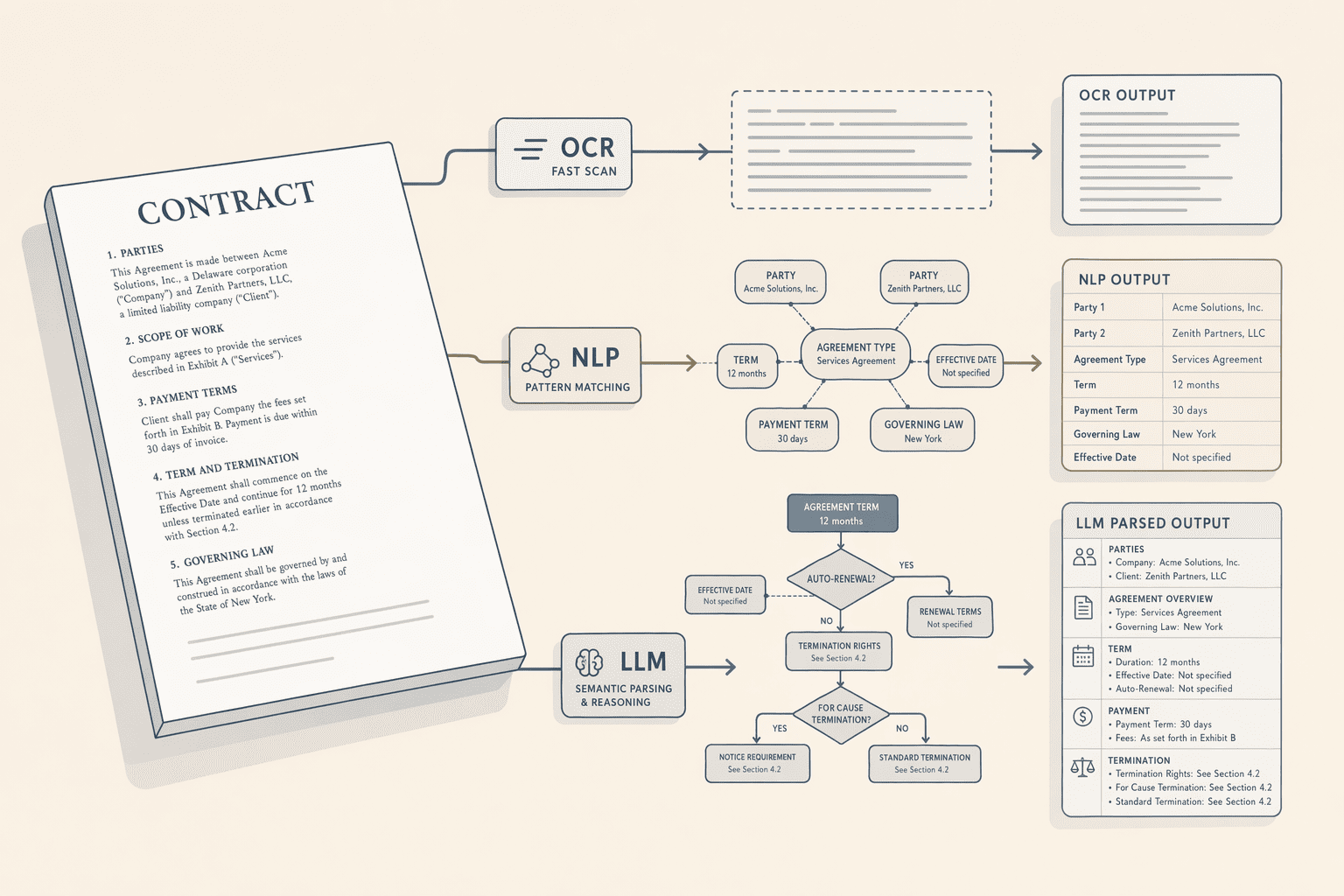
- OCR-Based Extraction Optical character recognition converts scanned PDFs into machine-readable text. It excels at speed and cost, ideal for high-volume document ingestion where clauses follow predictable templates. The limitation: OCR operates at the character level with no semantic understanding. Conditional clauses like ‘Party A shall indemnify Party B unless the breach results from Party B’s negligence’ parse as plain strings. The system cannot distinguish the unless condition from the base obligation, resulting in incomplete or misleading data fields. For straightforward term sheets, OCR suffices; for indemnity caps and nested liability logic, it fails.
- NLP and Rule-Based Parsing Natural language processing systems apply predefined patterns to identify clause types, payment terms, renewal dates, termination rights. This mid-tier approach improves clause identification beyond OCR by mapping sentence structure to a fixed schema. The trade-off: schema rigidity. When contract language deviates from training examples, extraction accuracy drops. A custom indemnity clause phrased in non-standard syntax may be missed or misclassified. Rule-based NLP works well for standardized agreements within a single jurisdiction; it struggles with bespoke enterprise contracts that layer multiple clause variants.
- LLM-Based Parsing Large language model approaches, such as OpenAI’s contract data agent, apply contextual reasoning to ambiguous clauses. The system parses nested conditions, ‘Party A indemnifies unless breach stems from Party B, except when force majeure applies’, and produces structured fields that reflect the conditional hierarchy. This method delivers the highest accuracy for complex liability caps and multi-party obligations. The cost and latency trade-offs are real: LLM inference runs slower than OCR, and API fees scale with document volume. For enterprises processing thousands of contracts with non-standard terms, the accuracy gain justifies the expense.
Comparison summary: OCR wins on speed and cost for high-volume, low-complexity ingestion. NLP fits standardized agreements with fixed schemas. LLM parsing handles the ambiguity and conditional logic that enterprise procurement and finance teams need for accurate obligation tracking, at higher per-document cost.
Extraction methods define technical feasibility, but deployment success hinges on four practical dimensions that determine whether a platform fits your organization’s workflows and risk tolerance.
Key Capabilities to Evaluate in Contract Data Extraction Tools
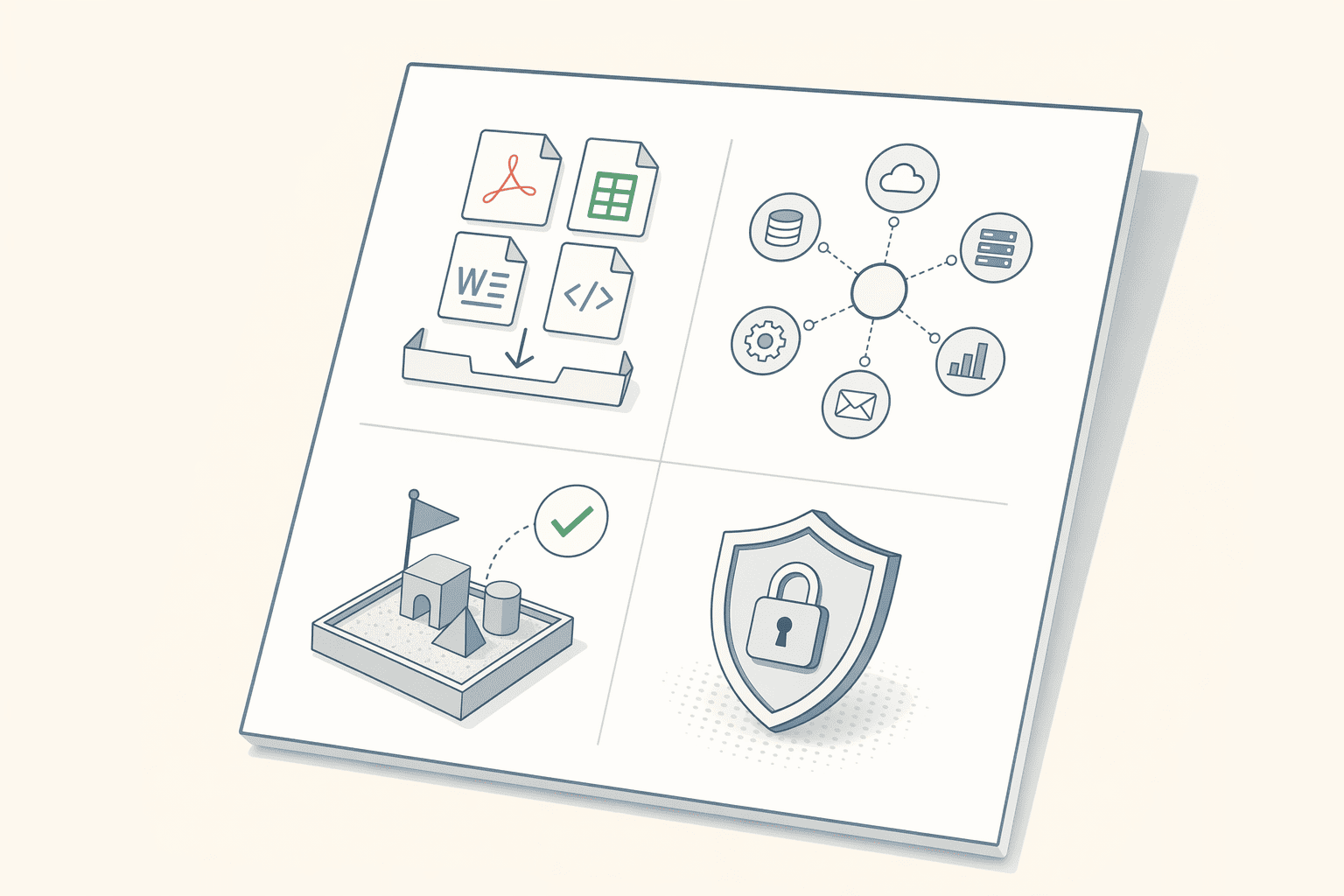
Before committing to a platform, map your extraction needs against four evaluation dimensions: output formats, integration ecosystem, pilot feasibility, and compliance posture. Gartner’s CLM reviews show enterprise buyers prioritize role-based access to terms and obligations, centralized repositories, and regulatory compliance, the same criteria that apply to extraction-layer tooling.
Output Formats and Schema Flexibility
Extraction tools typically offer JSON for API-first workflows, CSV for spreadsheet users, and direct connectors to business intelligence platforms like Tableau, Power BI, and Looker. JSON schemas support custom dashboards and downstream automation; CSV outputs serve finance teams running pivot-table analyses. Summize’s CLM feature guide emphasizes centralized repositories with queryable data, the same requirement applies when evaluating extraction outputs for BI integration.
Integration With CRM, ERP, and BI Tools
Native connectors reduce implementation friction. Evaluate whether the platform provides pre-built integrations for Salesforce, NetSuite, Tableau, and Power BI, or requires custom API development. API-based integration offers flexibility but demands engineering resources; native connectors ship faster for mid-market buyers without dedicated integration teams.
Pilot Deployment Without Full CLM Migration
Full CLM replacement is risky for mid-market organizations. Look for platforms that support incremental pilots, testing extraction on a contract subset (e.g., supplier agreements in a single business unit) without replacing your existing CLM. This de-risks adoption and lets you validate accuracy before committing to enterprise-wide deployment.
Security and Compliance Certifications
Match certifications to your operational requirements: GDPR for EU operations, HIPAA for healthcare contracts, SOC2/SOC3 for enterprise procurement. Platforms handling protected health information must execute Business Associate Agreements. Reference the NIST AI Risk Management Framework for trustworthiness practices when engaging AI-enabled extraction capabilities in critical infrastructure contexts.
With evaluation criteria established, here’s how six leading platforms compare across extraction accuracy, output flexibility, and integration depth.
Platform Comparison: Leading Contract Intelligence Solutions
Comparison Methodology
Platforms were evaluated on extraction accuracy (LLM vs. NLP), output format flexibility (JSON/CSV/API), BI integration breadth, and compliance posture. Selection prioritized vendors that publish extraction benchmarks, support incremental pilots without full CLM migration, and serve the mid-market segment (50 to 500 employees). Capabilities were verified through vendor documentation and third-party comparisons.
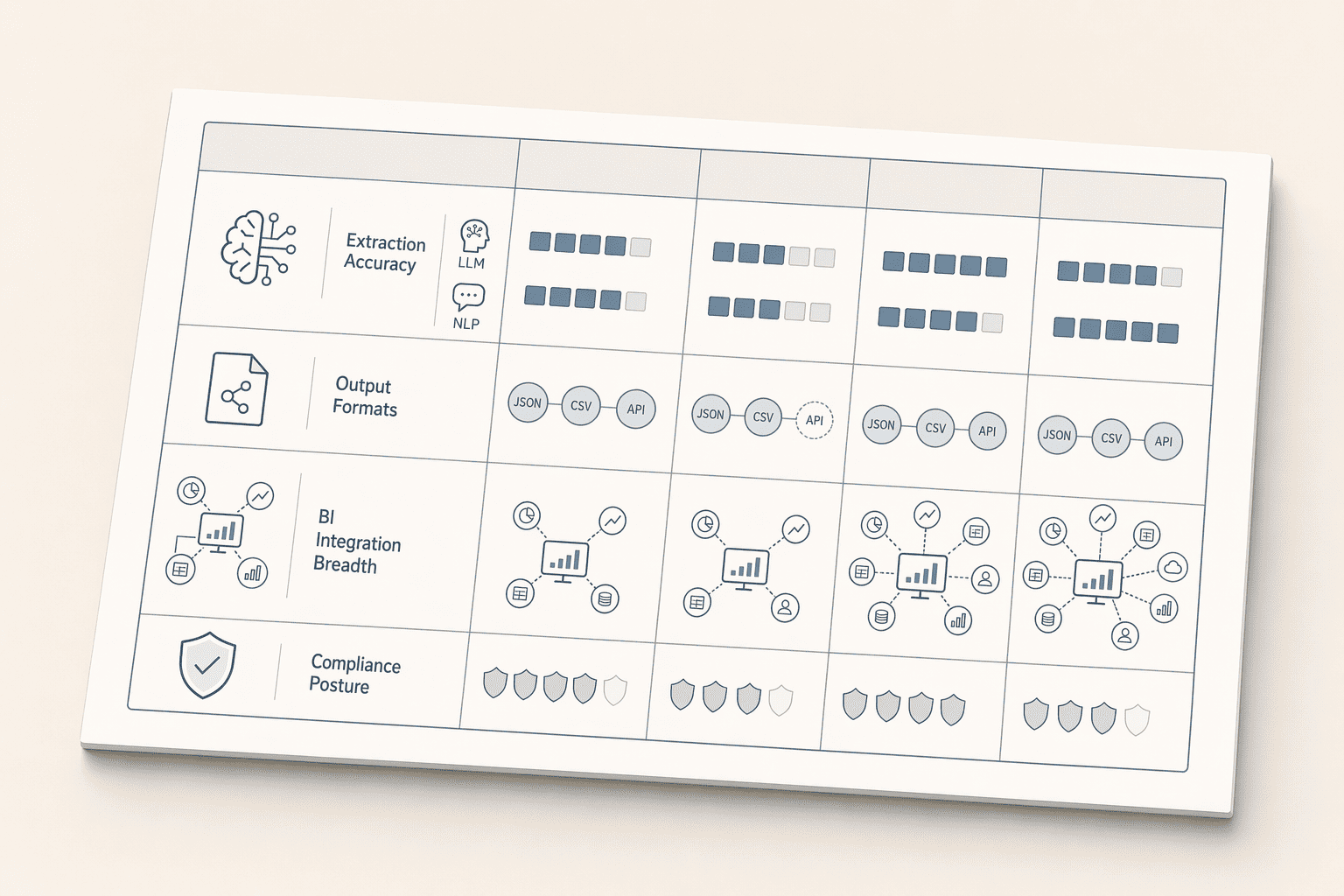
Feature Matrix: Six Leading Platforms
| Platform | Extraction Method | Output Formats | BI Integrations | Compliance | Pricing Model |
|---|---|---|---|---|---|
| LinkSquares | Proprietary NLP + LLM hybrid | JSON, CSV, native CLM export | Salesforce, NetSuite, limited BI connectors | SOC 2, GDPR | Not publicly disclosed |
| Contract Logix | Rule-based extraction + 75 auto-extracted fields | CSV, PDF reports | Native CLM repository; API available | SOC 2, GDPR | Not publicly disclosed |
| Unstract | Open-source LLM framework (BYO model) | JSON, CSV, custom API | Self-hosted; user-defined integrations | Self-managed (user responsibility) | Open-source; enterprise support available |
| TermScout | Clause-level NLP benchmarking | CSV, benchmarking reports | Limited; focused on clause comparison | Not publicly disclosed | Subscription; pricing not disclosed |
| Contracts.ai | Multi-model LLM (OpenAI, Anthropic, Google Gemini) | JSON, CSV, API | 37 integrations including NetSuite, Salesforce, Tableau | SOC 2, SOC 3, GDPR, HIPAA, CCPA | Annual/monthly; pricing not publicly disclosed |
| DigiParser | AI models trained on contract corpus; 99.7% accuracy | JSON, CSV, API, webhook | API-first; custom integrations | SOC 2 Type II | Usage-based; free trial available |
Key Differentiators
DigiParser excels for API-first engineering teams requiring sub-minute extraction pipelines and custom integrations. LinkSquares fits legal ops teams needing integrated CLM with post-signature extraction as a secondary workflow. Contracts.ai specializes in post-signature BI without full CLM migration, 37 integrations and multi-model LLM infrastructure support real-time structured data delivery, though it does not support contract approval workflows and focuses exclusively on executed agreements.
Contract Logix suits bulk legacy extraction projects, 75 auto-extracted fields across thousands of documents, but lacks the real-time API velocity of DigiParser. Unstract offers maximum flexibility for teams with in-house AI expertise willing to manage their own model fine-tuning and deployment. TermScout serves benchmarking use cases (clause comparison across peer contracts) rather than operational BI extraction.
API-first platforms (DigiParser, Unstract) suit engineering-led procurement teams with technical resources; dashboard platforms (Contracts.ai, LinkSquares) suit legal ops and finance teams prioritizing speed-to-insight over pipeline customization. Mid-market buyers should prioritize incremental pilots over rip-and-replace CLM migrations.
Contracts.ai: Post-Signature Intelligence Without Workflow Disruption
Core Capabilities and Scope
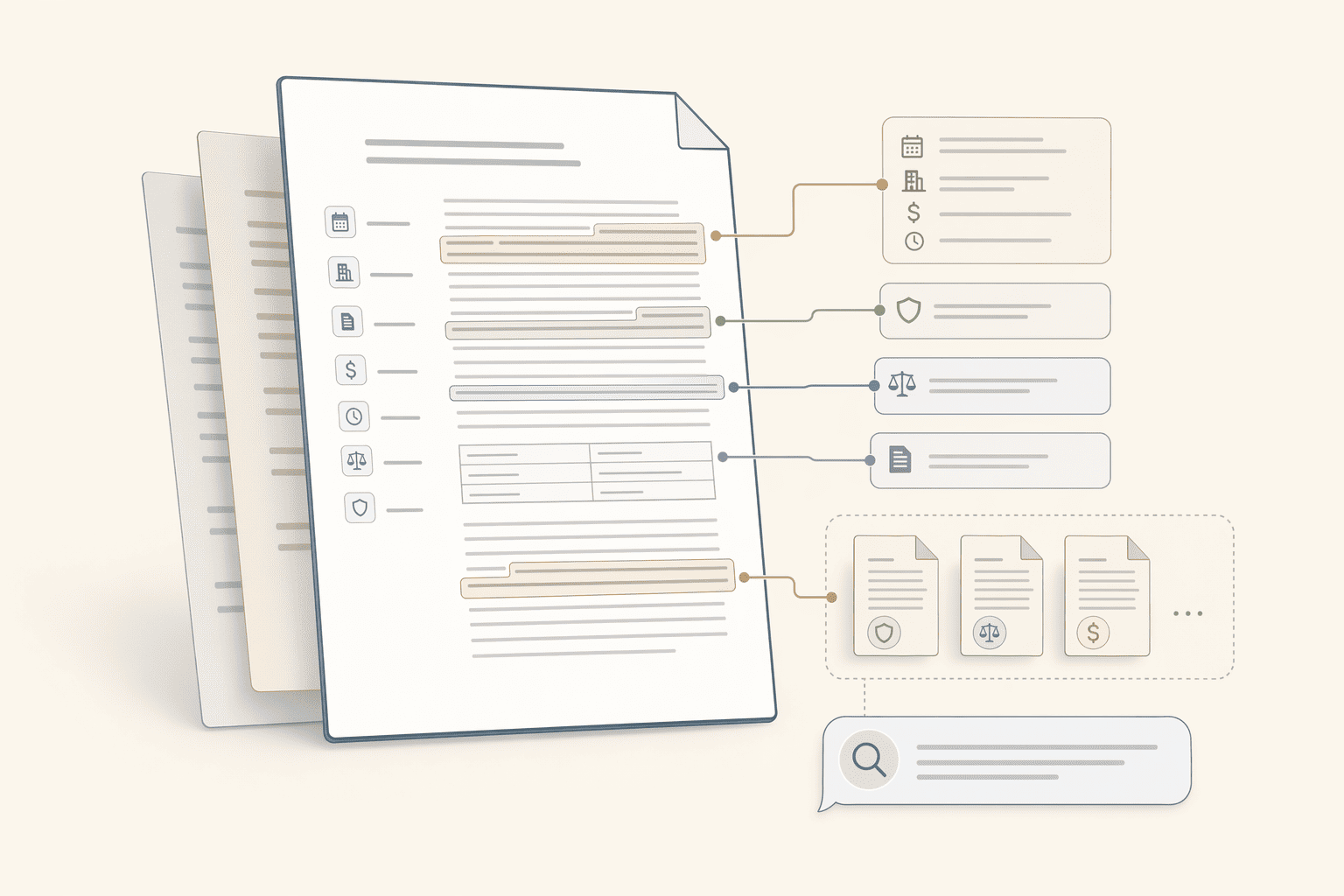
Contracts.ai extracts key terms, clauses, obligations, and metadata from executed agreements with more than 99% accuracy, turning legacy and live contracts into structured, queryable business intelligence. Users query the entire contract base in natural language, with answers linked to source contract language for validation. The platform automatically identifies relationships between contracts and tags metadata, grouping related agreements and aligning shared terms. Contracts.ai does not support approval workflows or routing, this is post-signature intelligence, not a full CLM replacement.
Integration and Compliance
The platform connects to 37 integrations, including BI tools (Tableau, Power BI, Looker) and ERP systems; the NetSuite integration can reconcile supplier invoices with signed contracts. Contracts.ai supports compliance with GDPR and HIPAA, and is SOC 2 and SOC 3 certified. Enterprise and global customers can use their own models with BYO keys, and customer data is never used to train public or shared models. Limitation: The platform addresses post-signature extraction and reporting but does not replace approval routing or pre-signature workflow orchestration that full CLM suites provide.
Pilot Deployment and ROI
Contracts.ai supports testing on a contract subset without migrating the full repository, a differentiator for risk-averse mid-market buyers who want to validate accuracy and integration fit before committing. Implementations typically take 2-8 weeks and deliver 300% ROI by reducing manual contract review costs and surfacing revenue leakage from unenforced terms. Best for: Procurement and legal ops teams who need BI dashboards and structured contract data from existing agreements without replacing their CLM or approval workflows.
Once contracts are parsed into structured data, the next challenge is routing that intelligence to the business teams who need it, sales, finance, procurement, through existing analytics workflows.
Integration & Output Flexibility for BI and Analytics
Output Formats: JSON, CSV, API Endpoints
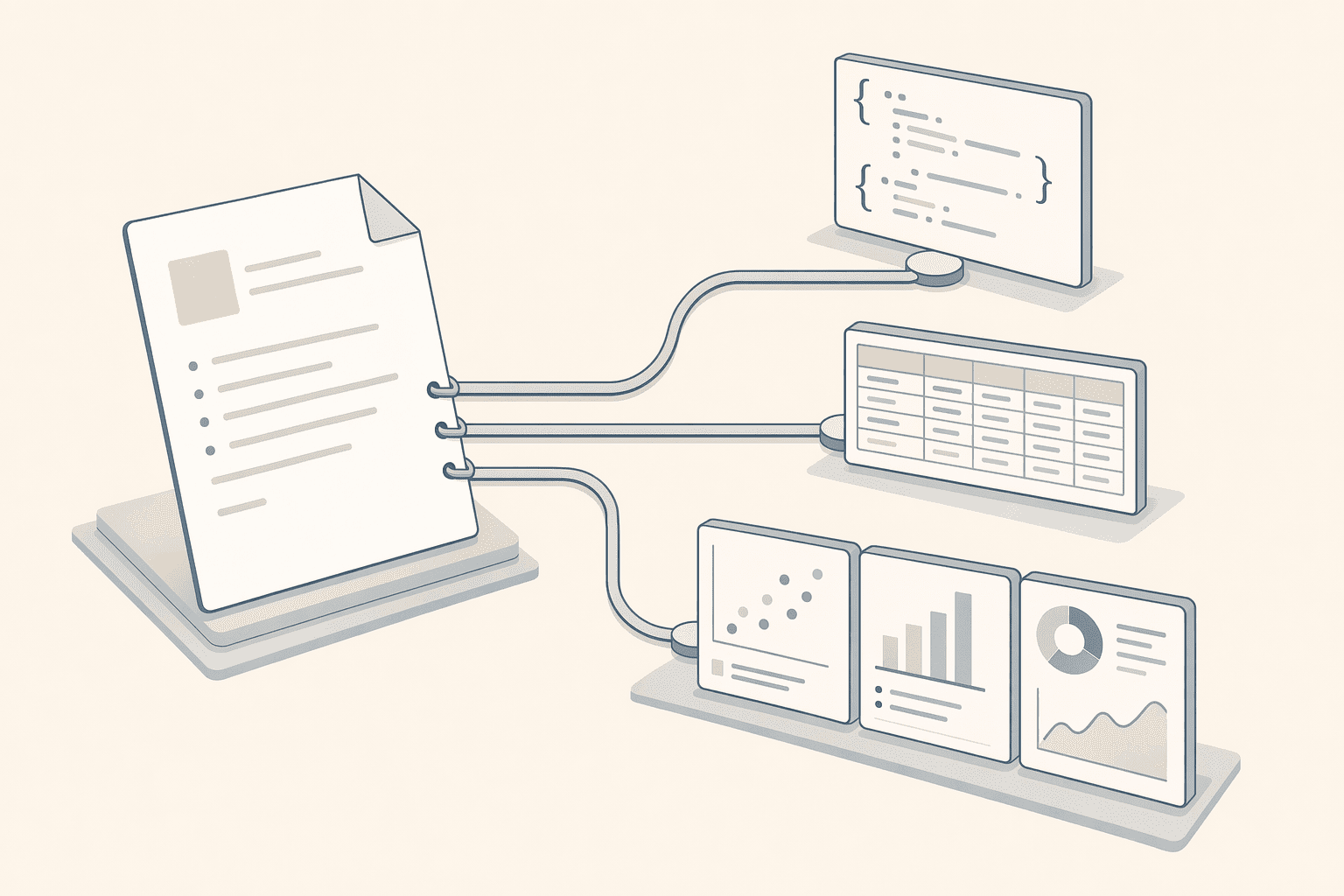
Platforms offer three primary output paths for contract intelligence. JSON endpoints serve API-first teams building custom pipelines, maximum schema flexibility but require developer time to map fields. CSV exports support finance and operations teams working in Excel or Google Sheets; straightforward but limited to tabular structures. Direct BI connectors (Tableau, Power BI, Looker) feed dashboards without engineering support, fastest to deploy but lock you into the platform’s pre-defined schema. Contracts.ai generates structured outputs that integrate with a full suite of connectors, giving teams flexibility across all three paths.
Direct BI Connectors vs API Integration
Native BI connectors reduce setup time to under two weeks, point-and-click configuration with minimal IT involvement. API integration demands upfront engineering but unlocks custom schemas and multi-tool pipelines. Enterprise-grade CLM platforms ship with both options. Choose direct connectors when dashboards must launch quickly; choose API integration when you need non-standard field mapping or pipeline orchestration across contract, procurement, and financial systems.
Platform capabilities matter only if implementation costs and timelines justify the investment, here’s what to expect for cost reduction and ROI.
Cost Reduction and ROI Considerations
Cost Reduction Benchmarks
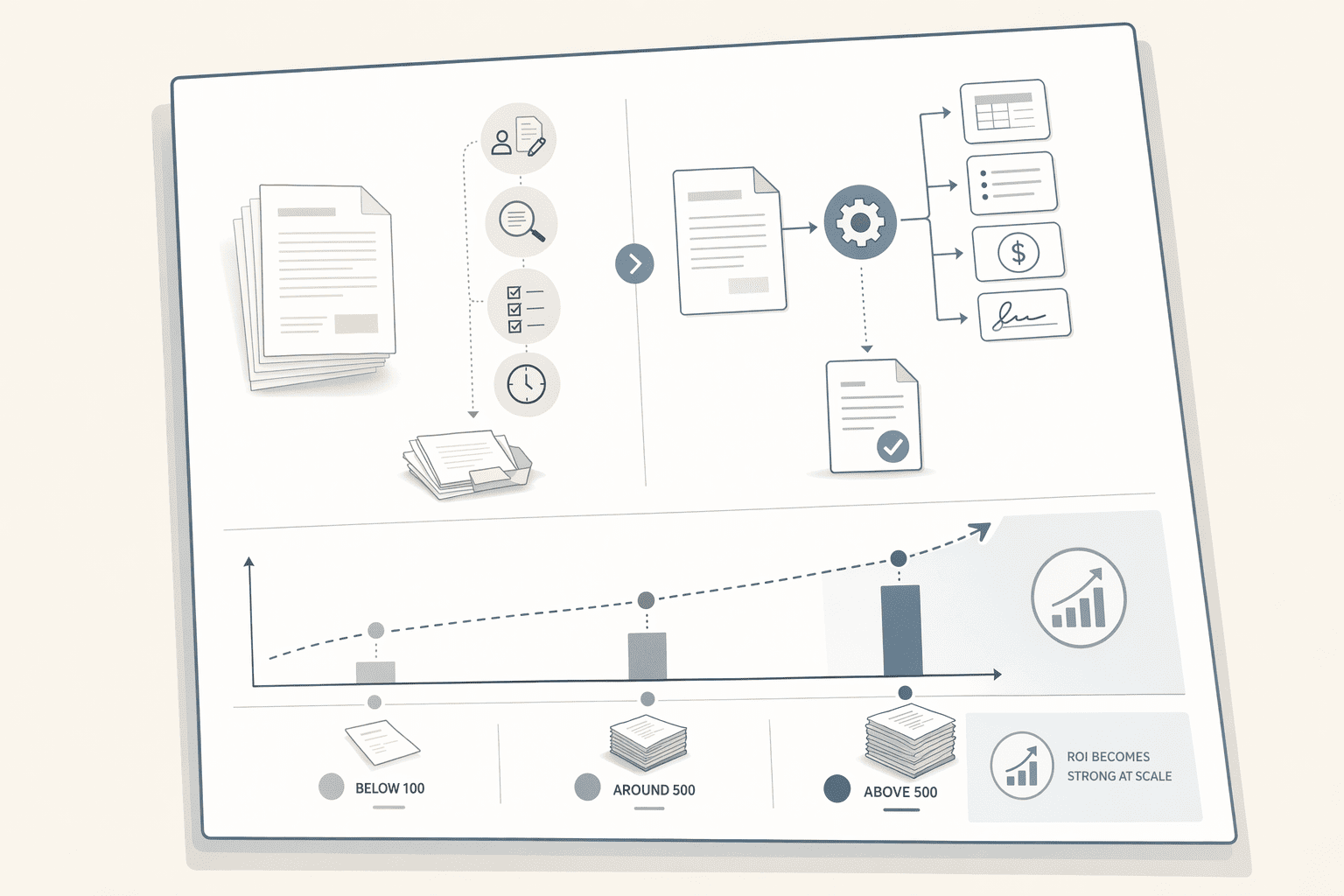
Automated extraction eliminates manual review for standard clauses, dates, payment terms, counterparty names, reducing processing time from hours to minutes. Poor contract management costs companies 9% of their bottom line, making extraction tools high-impact for high-volume portfolios. However, the 80%+ cost reduction theme applies to repetitive data entry, not complex negotiation analysis or legal judgment calls. ROI is strongest for teams processing over 500 contracts annually; below 100 contracts, marginal gains rarely justify platform investment.
ROI Timelines and Implementation Speed
SaaS platforms deploy in 2 to 8 weeks; custom API builds require 8 to 16 weeks. Fast payback assumes digitized contracts (PDFs, Word files); poor OCR quality on legacy scans demands pre-processing overhead. Teams spending over 20 hours per week on manual review see payback within six months. Smaller volumes yield longer timelines and lower percentage gains, pushing ROI beyond the first year.
Conclusion
API-first platforms like DigiParser and Unstract offer maximum output flexibility but require engineering resources, while dashboard platforms like Contracts.ai and LinkSquares deliver faster time-to-insight for non-technical teams. LLM-based extraction handles ambiguous clauses best but costs more per contract than OCR or NLP approaches, match extraction method to your portfolio’s complexity, balancing standard agreements against bespoke negotiated terms.
As LLM accuracy improves and extraction costs decline, expect contract intelligence platforms to expand from metadata extraction into predictive analytics, flagging high-risk clauses, recommending renegotiation strategies, and automating compliance audits across multi-jurisdictional portfolios.
Compare extraction accuracy, BI integrations, and compliance certifications across platforms using the feature matrix above, then pilot Contracts.ai or another platform on 50-100 contracts to validate output quality for your portfolio before committing to full deployment.
Frequently Asked Questions
What is the most accurate extraction method for complex contract clauses like indemnity or liability caps?
LLM-based parsing handles complex clauses best because it understands contextual relationships between nested conditions, OpenAI’s contract agent case study demonstrates this advantage. OCR and NLP struggle with ambiguous phrasing that requires semantic inference rather than pattern matching.
Can I test contract extraction software on a subset of contracts without migrating my entire CLM repository?
Yes, platforms like Contracts.ai support incremental pilot deployment, letting you test extraction on 50-100 contracts to validate accuracy before full rollout. This approach reduces risk for mid-market organizations by testing extraction on a single business unit’s supplier agreements without replacing existing CLM systems.
Which output format should I choose for my BI dashboard — JSON, CSV, or a direct connector?
Choose JSON for API-first teams building custom pipelines, it offers maximum schema flexibility but requires developer time. CSV suits spreadsheet workflows (Excel, Google Sheets), while direct BI connectors (Tableau, Power BI) deliver dashboards for marketing and analytics teams without engineering support.
What security certifications should I look for in a contract extraction platform if I operate in a regulated industry?
Match certifications to your operational requirements: GDPR for EU operations, HIPAA for healthcare contracts, SOC2/SOC3 for enterprise procurement. Platforms handling protected health information must execute Business Associate Agreements. Verify data residency capabilities for cross-border transfers to meet NIST AI risk management guidelines.
How long does it take to implement contract extraction software and see ROI?
SaaS platforms deploy in 2-8 weeks; custom API builds require 8-16 weeks. High-volume portfolios (>500 contracts/year) typically see 300% ROI by eliminating manual review, automated extraction reduces processing time from hours to minutes. Poor contract management costs companies 9% of their bottom line.
Does Contracts.ai replace my existing CLM system or work alongside it?
Contracts.ai provides post-signature intelligence (metadata extraction, BI dashboards) but does not handle approval workflows or routing, it works alongside your existing CLM. The platform connects to 37 integrations, including BI tools (Tableau, Power BI, Looker) and ERP systems like NetSuite for invoice reconciliation.
What is the difference between OCR-based and NLP-based contract extraction?
OCR converts scanned text to digital format but lacks semantic understanding, it struggles with complex clauses requiring interpretation. NLP uses predefined patterns to identify clause types, offering better accuracy than OCR but rigid schema that misses variations. Neither handles ambiguous language as effectively as LLM approaches.
Sources
- What Is Contract Data Extraction? Everything You Need to Know – Lido – www.lido.app (2026)
- Best Contract Life Cycle Management Reviews 2026 – Gartner – www.gartner.com (2026)
- Important CLM features – www.summize.com
- AI Risk Management Framework | NIST – www.nist.gov
- Best AI CLM Tools in 2026 – 5 Compared – awesomeagents.ai (2026)
- Extract Data from Contracts & Agreements Automatically – www.digiparser.com (2026)
- Best CLM Software for Mid-Market Companies (2026) – bindlegal.com (2026)
- Why A Clm Tool Is Crucial… – premikati.com
- Decrease Contract Management Costs with AI & Automation – www.intelagree.com
- Ironclad: AI Contract Lifecycle Management Software – ironcladapp.com