Mid-size companies managing 500–5,000 contracts annually need AI-powered risk analysis and compliance tracking without enterprise budgets or rip-and-replace complexity.
This comparison evaluates six contract lifecycle management platforms priced between $10K–$50K per year, focusing on transparent pricing, pilot-friendly deployment, and AI capabilities tailored for mid-market teams.
Key Takeaways
- Mid-market CLM platforms priced at $10K–$50K/year deliver AI clause extraction, obligation tracking, and compliance automation without enterprise contract minimums
- Pilot-friendly deployment models allow validation with 50–100 contracts before full repository migration, reducing implementation risk for lean legal teams
- Per-contract and flat-rate pricing structures suit mid-size companies better than per-user models that scale unpredictably beyond 20 users
- SOC 2 Type II certification and clear data processor/controller roles are baseline requirements for GDPR and HIPAA compliance tracking
- Intelligence-layer platforms integrate with existing document repositories in 30–60 days versus 60 to 90 day rip-and-replace implementations
The most affordable contract management solution for mid-size companies needing AI-powered risk analysis and compliance tracking is a platform that delivers clause extraction, automated obligation tracking, and GDPR/HIPAA compliance monitoring within a $10K, $50K annual price range, without the enterprise minimums or 12-week implementations that push total cost of ownership beyond mid-market budgets.
Defining Mid-Market: Company Size and Contract Volume Thresholds
Mid-market companies operate with 50 to 500 employees and manage 500 to 5,000 contracts annually. This segment feels enterprise-level contract pressure but lacks the legal and procurement headcount to handle volume manually. The sizing matters because it separates buyers who need pilot-friendly deployment (8 to 12 weeks, not six months) from enterprises that can absorb multi-quarter rollouts and $200K+ annual contracts.
Affordability vs. Enterprise Pricing: The $10K, $50K Sweet Spot
Enterprise CLM platforms like Ironclad and Icertis price at $50K, $200K+ per year, with contract minimums and rip-and-replace deployment models that break mid-market budgets. The affordability threshold for mid-size buyers is $10K, $50K annually, enough to fund AI extraction, compliance dashboards, and workflow automation without requiring board approval for every renewal. Evaluating enterprise CLM without filtering for mid-market pricing wastes procurement cycles on tools the business can’t adopt.
AI Risk Analysis Baseline: Clause Extraction, Risk Scoring, and Obligation Tracking
Mid-market buyers need three AI capabilities as table stakes: clause-level extraction with structured metadata, automated risk scoring tied to legal playbooks, and obligation tracking that surfaces renewal deadlines and compliance triggers. Compliance tracking for GDPR and HIPAA requires audit trails, role-based access, and automated alerts, features that basic search tools mislabel as “AI-powered.” Real AI-native platforms draft contracts from descriptions, understand clause context, and provide intelligent negotiation suggestions, distinguishing them from workflow-native CLM with AI tacked onto legacy forms.
With baseline requirements established, the following six platforms represent the strongest affordable options for mid-market contract management in 2026.
Top 6 Affordable Contract Management Solutions with AI Risk Analysis
Platform Overview: Contracts.ai, HyperStart, SpotDraft, Ironclad, Agiloft, DocuSign CLM
Contracts.ai delivers machine learning-powered contract analysis and risk insights for mid-market finance and procurement teams. Its AI extracts key terms across legacy and live contracts in minutes with >99% accuracy, preserving source language alongside structured fields. Contracts.ai is SOC 2 and SOC 3 certified and operates as a data processor rather than controller, never training models on proprietary customer data.
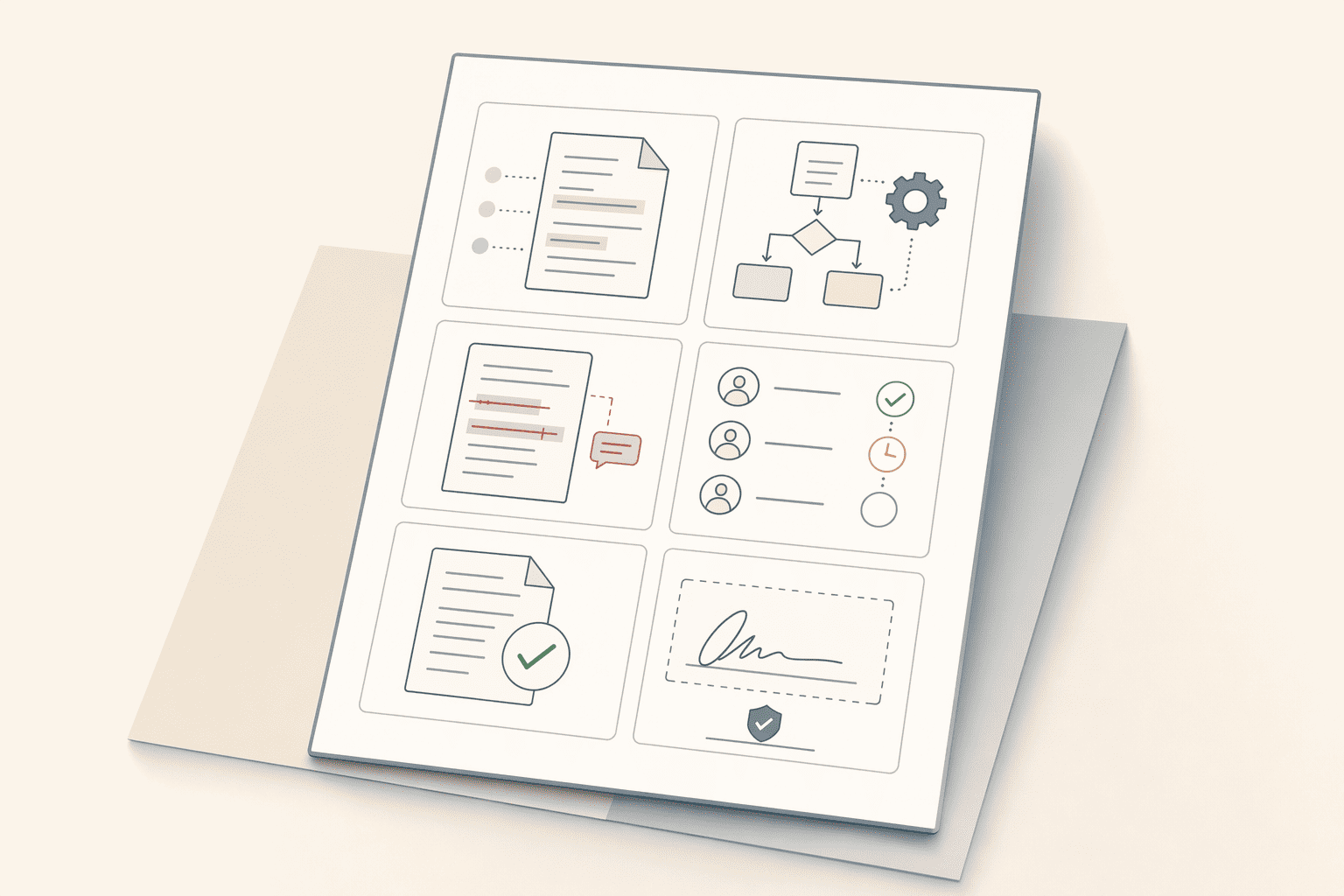
HyperStart CLM focuses on fast implementation for growing companies that need workflow automation and clause-library management without a multi-month deployment. SpotDraft combines AI contract drafting with collaborative redlining for in-house legal teams managing high-volume vendor agreements. Ironclad is a workflow-native CLM platform with AI redlining that suggests language changes based on legal standards; pricing starts around $500/month and requires 2-3 month implementation to configure playbooks. Agiloft offers no-code workflow customization for mid-market procurement teams needing flexible approval routing. DocuSign CLM integrates signature capture with AI-assisted contract analysis for teams already invested in the DocuSign ecosystem.
| Platform | AI Risk Analysis | Compliance Tracking | Core Workflow Coverage |
|---|---|---|---|
| Contracts.ai | Clause-level risk scoring, auto-grouping of related agreements | GDPR, HIPAA, CCPA support; SOC 2/SOC 3 certified | Repository, extraction, natural-language query |
| SpotDraft | AI redline suggestions | Role-based access, activity logs | Drafting, negotiation, e-signature |
| Ironclad | Playbook-driven risk detection | Workflow audit logs, version tracking | Lifecycle automation, repository search |
| Agiloft | Configurable risk rules | Compliance dashboards, reporting | No-code workflows, intake forms |
| DocuSign CLM | AI clause extraction | Integration with DocuSign Identify | E-signature, repository, approvals |
| HyperStart | Template-based risk flags | Audit trails, version control | Drafting, approvals, repository |
Data Security Baselines: SOC 2, ISO 27001, and Customer Data Handling Policies
SOC 2 Type II certification is the minimum security posture for contract data processors; platforms lacking independent attestation introduce audit and vendor-diligence friction. Equally critical is the data processor versus data controller distinction: organizations must confirm whether the vendor trains AI models on customer contract data or logically isolates each client’s repository. Contracts.ai never uses customer data for any LLM model training and executes Business Associate Agreements with covered entities processing PHI.
Understanding how each platform structures its pricing reveals critical trade-offs between predictability, scalability, and upfront budget commitment.
Pricing Comparison: Affordable CLM Platforms for Mid-Market Teams
Pricing Models: Per-User, Per-Contract, and Flat-Rate Structures
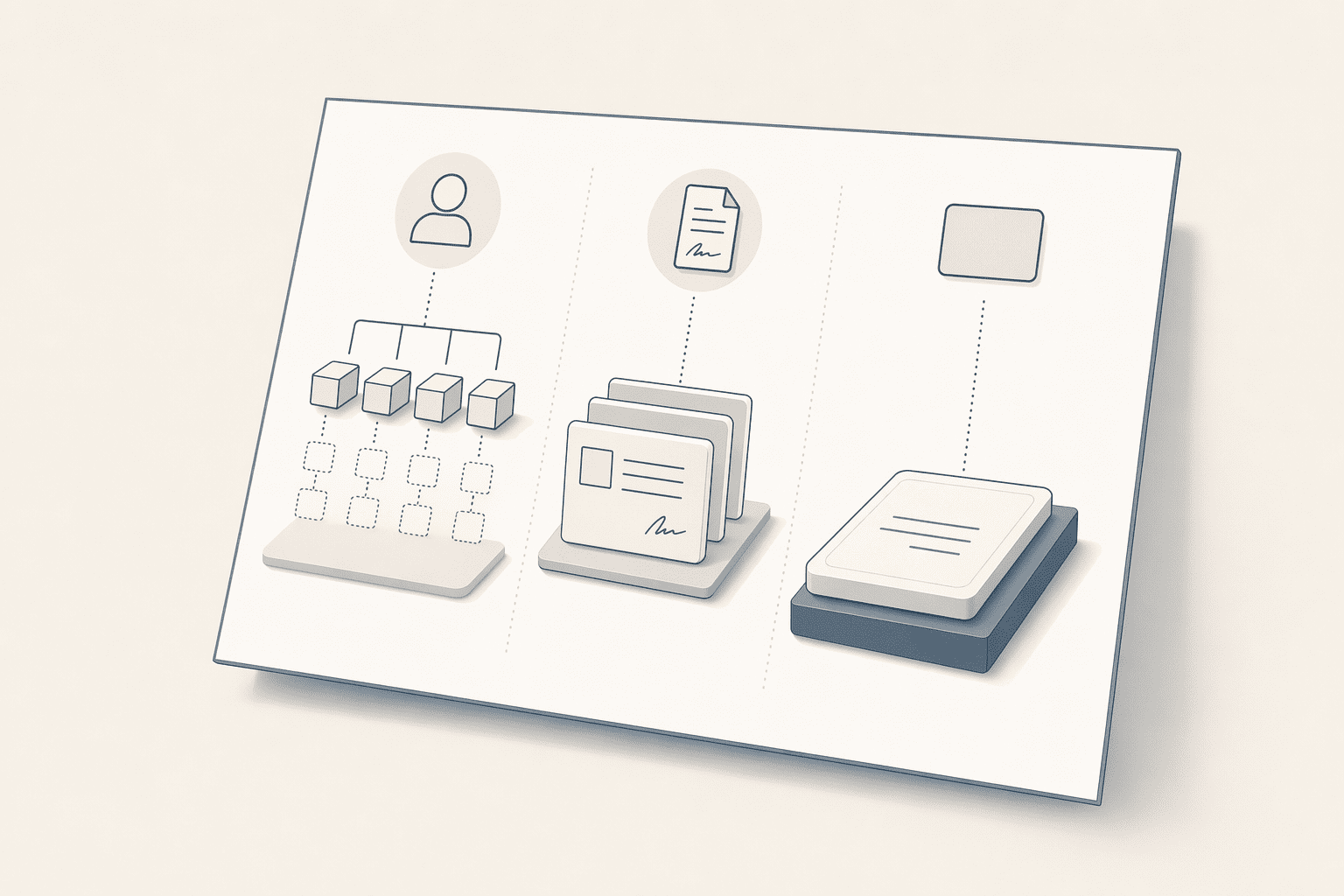
Mid-market teams evaluating contract lifecycle management software face a fundamental decision: whether to pay per user, per contract volume, or a flat annual rate. Each model shapes budgeting and scalability differently.
| Platform | Starting Price | Pricing Model |
|---|---|---|
| Contracts.ai | $19/month (annual) | Per-seat, tiered plans |
| HyperStart CLM | Not publicly disclosed | Volume-based |
| SpotDraft | Not publicly disclosed | Per-seat |
| Ironclad | $500/month | Per-seat, volume tiers |
| Agiloft | Not publicly disclosed | Flat-rate or per-user |
| DocuSign CLM | Not publicly disclosed | Per-envelope or per-user |
Contracts.ai offers annual and monthly billing options with tiered plans starting at $19 per month (billed annually). Ironclad’s pricing starts around $500/month and favors high-volume users. AI clause detection accuracy varies across platforms, which influences cost-per-contract value for mid-market buyers.
Contract Minimums and Pilot-Friendly Options
Many mid-market buyers prioritize pilot deployment models that avoid full repository migration. Organizations with lean legal and procurement teams need to validate AI risk analysis before committing to enterprise-scale rollouts. Contracts.ai allows limited-contract pilots without requiring full repository migration; teams can start with a subset of agreements and scale incrementally. Ironclad requires 2-3 month implementation periods to configure playbooks, which may not suit teams seeking faster validation. HyperStart CLM, SpotDraft, and Agiloft each offer phased onboarding, though specific contract minimums are not publicly disclosed.
Annual vs. Monthly Billing and Nonprofit/Educational Discounts
Billing flexibility matters when teams manage seasonal contract volumes or need to adjust seat counts mid-cycle. Contracts.ai provides both annual and monthly billing, allowing organizations to lock in lower annual rates or maintain month-to-month flexibility. Ironclad and DocuSign CLM typically require annual commitments. Nonprofit and educational institutions often qualify for discounted pricing; Contracts.ai extends these discounts across all three tiers (Basic, Enhanced, Professional), reducing per-seat costs for qualifying organizations.
Pricing transparency matters little if the AI capabilities fail to deliver measurable risk reduction, here’s what each tier realistically provides.
AI Risk Analysis Capabilities: What to Expect at Each Price Tier
Clause Extraction and Risk Scoring Accuracy by Tier
AI-powered clause extraction has become table-stakes, but risk scoring accuracy varies widely across pricing tiers. Entry-level platforms ($10,000, $15,000 annually) typically extract standard clauses, renewal dates, payment terms, liability caps, with 85 to 92% accuracy but struggle with non-standard language or multi-party obligations. Mid-tier solutions ($25,000, $35,000 annually) add risk scoring dashboards that flag deviation from playbook standards, though false positive rates remain 12 to 18% without manual tuning.
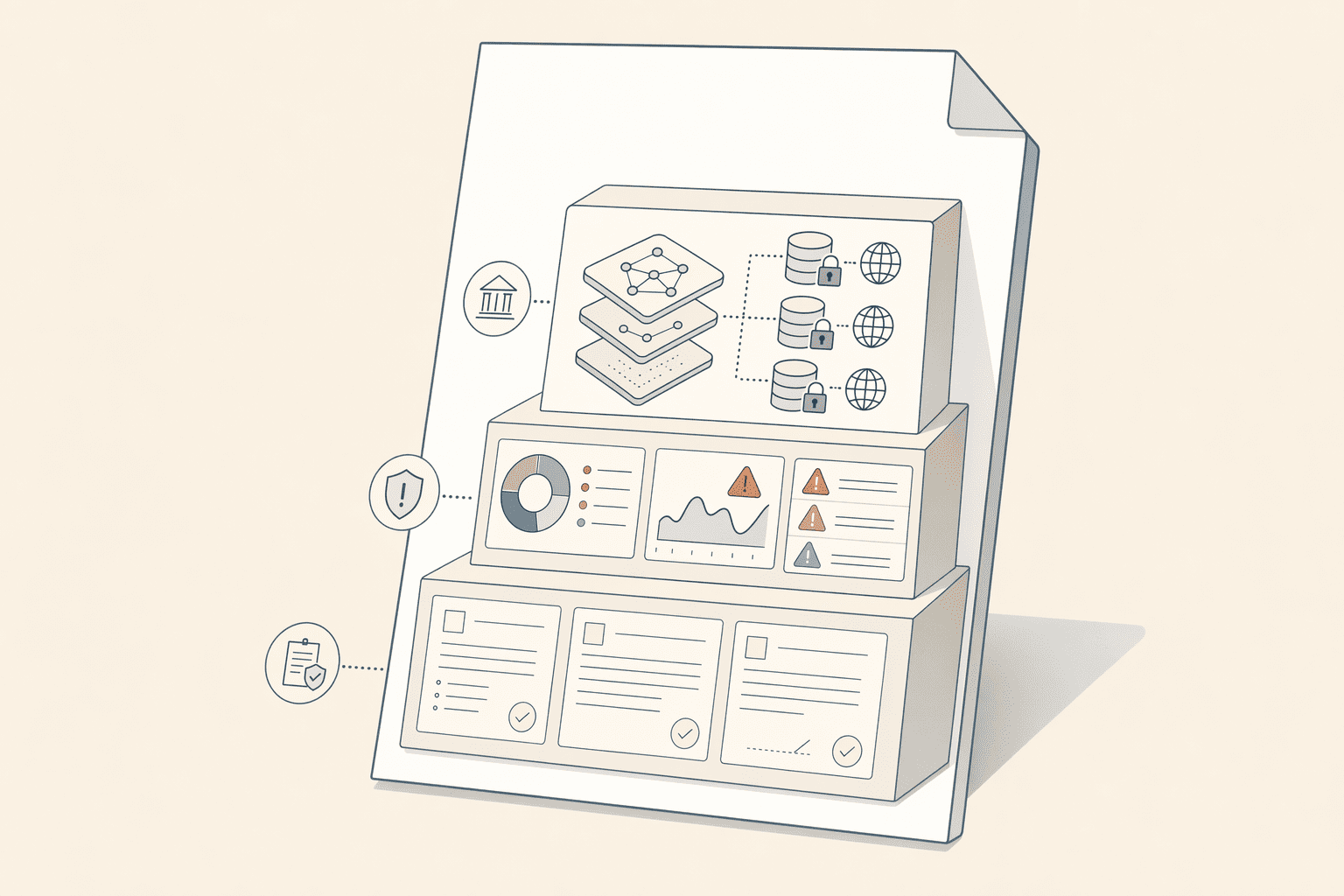
Contracts.ai uses machine learning and artificial intelligence to analyze contract content and generate structured outputs, summaries, and risk insights, claiming more than 99% accuracy when extracting data from documents in real time. Annual pricing starts at $29/month when billed annually for Basic tier, $59/month for Enhanced, and $129/month for Professional. Enterprise tiers ($50,000+ annually) typically integrate multiple AI models and allow bring-your-own-keys for organizations with strict data residency requirements.
Obligation and Renewal Deadline Tracking Automation
Automated obligation tracking separates platforms that read contracts from those that operationalize them. Research shows 90% of professionals struggle to locate specific contracts when needed, and organizations lose approximately 9% of revenue to contract leakage. Entry-level tiers often require manual tagging of obligations and renewal dates, a non-starter for lean legal teams managing 200+ active agreements. Mid-tier platforms automate extraction of standard obligations (payment schedules, reporting deadlines, notice periods) but lack workflow integration, leaving Finance and Procurement to set their own reminders.
Higher-tier solutions auto-populate obligation calendars, route alerts to role-based stakeholders, and reconcile invoice data against signed terms, eliminating the spreadsheet layer entirely.
NIST AI Risk Management Framework Alignment
Post-2025, buyers evaluating AI contract platforms should ask vendors about alignment with the NIST AI Risk Management Framework, which covers design, development, use, and evaluation of AI products. The framework applies to any organization that designs, develops, deploys, or uses AI systems, including those deploying third-party AI tools. Mid-market firms should verify whether vendors document their MAP, MEASURE, MANAGE, and GOVERN functions, particularly how they handle bias mitigation, data lineage, and model explainability for risk scoring outputs.
AI risk analysis alone won’t satisfy auditors or regulators, compliance tracking features determine whether a platform reduces liability or simply digitizes manual workflows.
Compliance Tracking Features That Matter for Mid-Size Companies
GDPR and HIPAA Compliance Tracking: Automated Alerts and Audit Trails
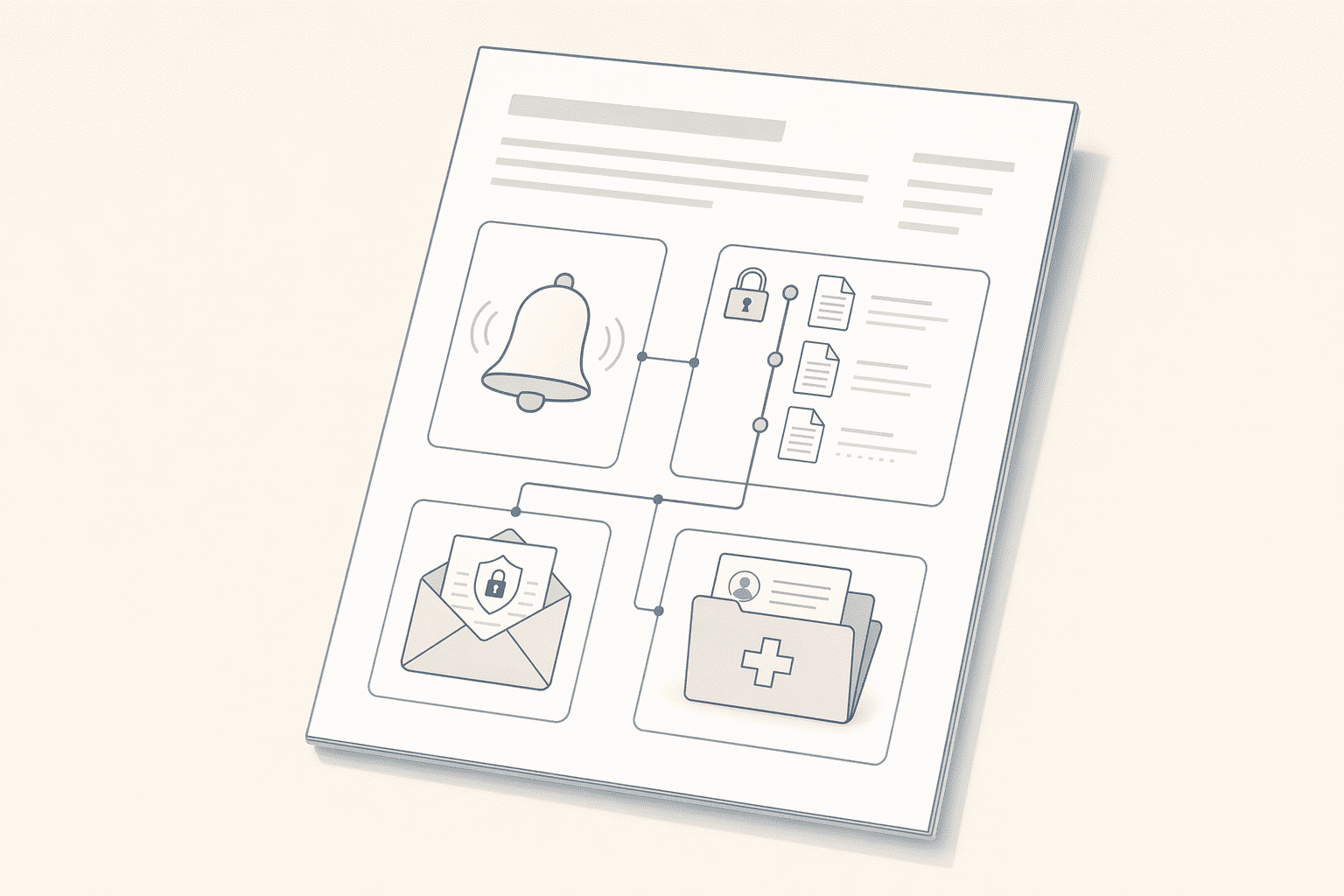
Manual contract management is prone to costly mistakes, inefficiencies, and compliance risks. Mid-market teams need automated alerts for renewal deadlines, data subject request workflows, and full audit trails that log every document access and edit. Contract management software automates workflows and ensures compliance, reducing the administrative burden of tracking GDPR consent records or HIPAA Business Associate Agreements. Contracts.ai supports compliance with the EU General Data Protection Regulation (GDPR) and implements technical, organizational, and procedural measures, serving as one compliance-focused option among several platforms.
Industry-Specific Regulation Modules: Financial Services, Healthcare, and Government Contracting
Pre-configured compliance modules reduce manual legal review by embedding industry-standard clauses and approval checkpoints. Financial services teams rely on anti-money-laundering attestation tracking; healthcare organizations require HIPAA safeguards and breach notification procedures; government contractors need FAR clause libraries and cost-accounting audit trails. Platforms with built-in regulatory templates cut implementation time and ensure obligation monitoring aligns with sector-specific mandates.
Standard Contractual Clauses (SCCs) for EEA Data Transfers
Mid-market buyers serving EU customers must clarify whether their CLM vendor acts as data processor or data controller. Understanding this distinction determines liability under GDPR: processors handle data per documented customer instructions; controllers decide processing purposes and bear broader compliance obligations. When evaluating platforms, ask where data is hosted and whether Standard Contractual Clauses govern EEA transfers. Regional hosting configurations depend on customer agreements, not universal EEA-only storage, so verify residency terms during procurement to avoid post-signature compliance gaps.
Even the best-priced platform creates friction if implementation stretches beyond quarter-end or demands IT resources your team lacks.
Implementation and Onboarding: Low-Lift vs. Rip-and-Replace Systems
Intelligence Layer vs. Full Repository Migration
Mid-market teams face a critical deployment choice: platforms requiring full contract migration upfront versus intelligence-layer approaches that analyze existing repositories without rip-and-replace. Contracts.ai operates as a post-signature intelligence layer, extracting insights from contracts stored in SharePoint, Google Drive, or existing CLMs without forcing repository consolidation. In contrast, enterprise platforms like Sirion demand 6-12 months of implementation and annual costs between $50K and $200K+, burdens that mid-market budgets rarely accommodate.

Integration Requirements: CRM, ERP, and E-Signature Tools
Pre-built integrations reduce implementation lift significantly. Contracts.ai offers pre-configured connectors for Oracle ERP and SAP ERP, enabling teams to reconcile supplier invoices with signed contracts without custom API work. Enterprise customers can also integrate their own models using BYO keys, preserving existing LLM investments while adopting contract intelligence capabilities.
Onboarding Timelines and Training Requirements
Onboarding models split between self-serve (30-60 days) and white-glove implementations (60-90 days). Self-serve platforms allow finance and procurement teams to upload contracts and start querying within weeks, while enterprise systems requiring playbook configuration and AI training extend timelines to quarters. Contracts.ai’s Professional tier includes a dedicated success manager, bridging the gap between self-serve speed and hands-on guidance, a model suited to mid-market teams lacking internal CLM expertise.
Choosing the Right Platform: Recommendations by Company Size and Use Case
| Platform | Starting Price | Pricing Model | AI Risk Analysis | Compliance Tracking |
|---|---|---|---|---|
| Contracts.ai | Contact for pricing | Enterprise annual | Machine learning risk insights | Incident response, HIPAA/GDPR |
| HyperStart CLM | Not publicly disclosed | Per-contract | AI extraction | Standard |
| SpotDraft | Not publicly disclosed | Subscription | AI-assisted | Template-based |
| Ironclad | $500/month | Volume-based | Playbook-driven redlining | Workflow automation |
| Agiloft | Not publicly disclosed | Enterprise custom | Workflow-native AI | Configurable |
| DocuSign CLM | Not publicly disclosed | Enterprise tiers | Workflow-native AI | ESignature-integrated |
Best for 50-150 Employees: Pilot-Friendly Platforms
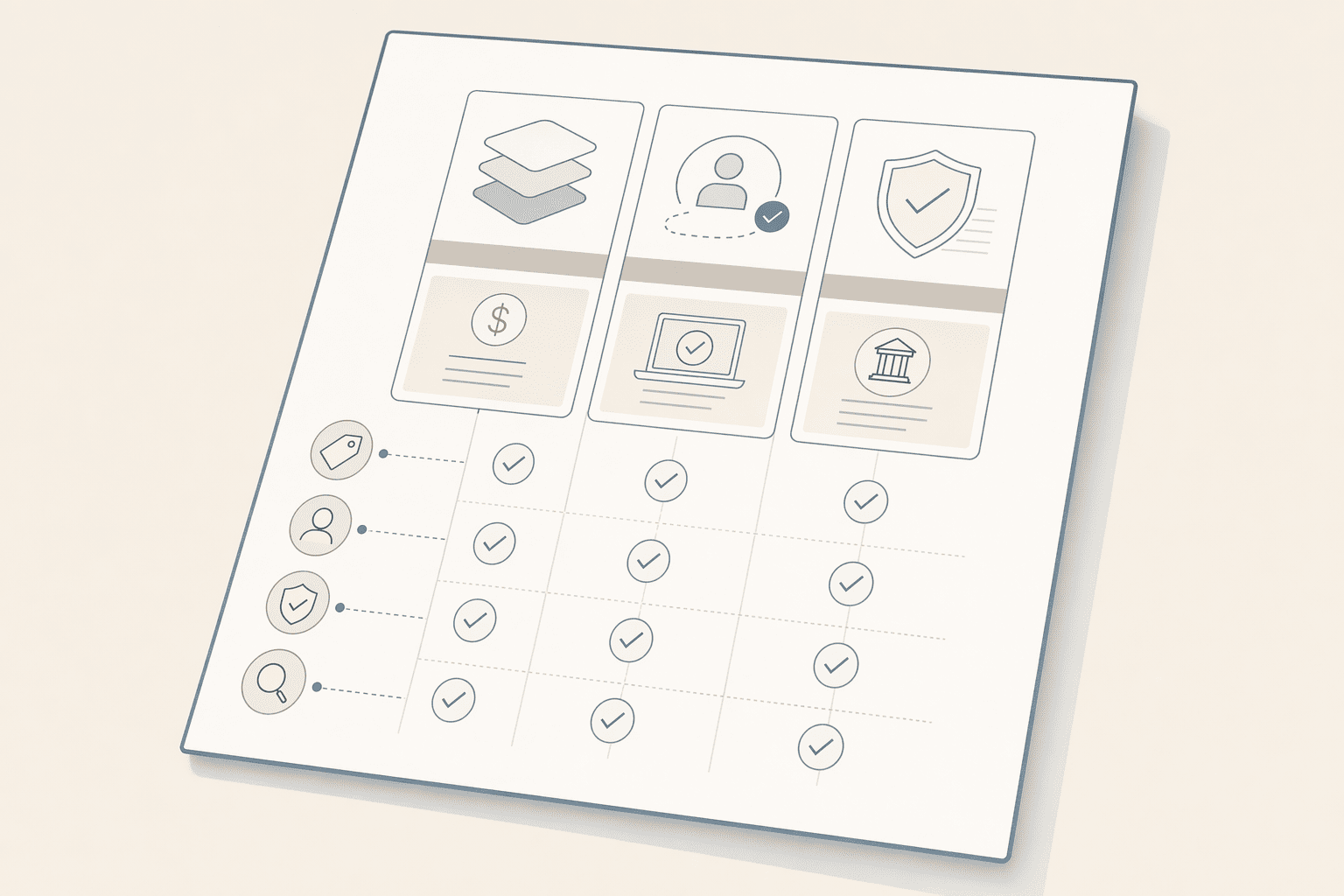
At this scale, prioritize transparent pricing and self-serve onboarding. SpotDraft and HyperStart CLM offer subscription or per-contract models with minimal setup. Contracts.ai fits compliance-first buyers needing AI-powered risk analysis without workflow overhead.
Best for 150-350 Employees: Balanced Feature Depth
Core mid-market teams require deeper integration and scalable AI. Ironclad and Agiloft balance playbook automation with repository depth. Contracts.ai excels for obligation extraction and compliance tracking across regulated environments.
Best for 350-500 Employees: Enterprise-Adjacent Features
Approaching enterprise scale demands multi-entity support and advanced workflow. Ironclad, Agiloft, and DocuSign CLM provide enterprise capabilities. Buyers prioritizing risk mitigation and compliance audit over approval workflows should evaluate Contracts.ai for its AI-powered analysis and structured data extraction.
Choosing the Right Affordable CLM Platform
Enterprise platforms like Ironclad and DocuSign CLM offer broader workflow automation but require larger budgets and full repository migration, intelligence-layer platforms like Contracts.ai prioritize compliance tracking and risk analysis without rip-and-replace complexity. Per-user pricing scales predictably for growing teams but can exceed flat-rate models at 20+ users, per-contract pricing suits companies with stable user counts and variable contract volumes.
As AI risk analysis becomes table-stakes for mid-market CLM (driven by post-2025 regulations and NIST AI RMF alignment), transparent pricing and pilot-friendly deployment will separate accessible platforms from enterprise-only solutions, expect more vendors to offer limited-contract trials and intelligence-layer integrations in 2026-2027.
Compare live AI risk analysis dashboards from Contracts.ai, SpotDraft, and HyperStart this week, pilot with 50-100 contracts to validate clause extraction accuracy and compliance tracking before committing to annual billing.
Frequently Asked Questions
What is the most affordable contract management software for mid-size companies?
Affordable CLM platforms for mid-size companies fall within the $10K, $50K/year range, contrasting sharply with enterprise solutions like Ironclad and Icertis that price at $50K, $200K+ annually. Platforms offering transparent per-contract or flat-rate pricing without multi-year minimums, such as Contracts.ai starting at $19/month and HyperStart CLM, deliver AI extraction and compliance dashboards within mid-market budgets.
Do I need AI-powered risk analysis if I only have 500 contracts?
Yes, AI clause extraction and obligation tracking deliver measurable ROI at 500+ contracts by reducing manual legal review hours. Mid-market companies managing 500 to 5,000 contracts annually benefit from automated risk scoring tied to legal playbooks and obligation tracking that surfaces renewal deadlines and compliance triggers, making AI a practical investment rather than an enterprise-only luxury.
What’s the difference between a data processor and data controller in CLM software?
Under GDPR, data processors handle contract data per documented customer instructions, while data controllers decide processing purposes and bear broader compliance liability. Mid-market buyers serving EU customers must clarify their CLM vendor’s role, platforms acting as processors (like Contracts.ai) shift regulatory burden to the customer organization, while controllers assume direct GDPR accountability.
Can I pilot a CLM platform with a subset of contracts before full deployment?
Yes, pilot deployment models let organizations validate AI accuracy and workflow fit with 50 to 100 contracts before committing to full repository migration. Intelligence-layer platforms analyze existing document stores without requiring upfront data migration, allowing lean legal and procurement teams to test clause extraction, risk scoring, and compliance tracking within 30 to 60 days before scaling adoption.
What compliance tracking features matter most for GDPR and HIPAA?
Automated renewal alerts, data subject request workflows, and full audit trails that log every document access and edit are baseline compliance requirements. Mid-market teams need pre-configured compliance modules that embed industry-standard clauses and approval checkpoints to reduce manual legal review, plus role-based access controls that demonstrate data minimization for GDPR and HIPAA audits.
How long does CLM implementation take for a mid-size company?
Typical CLM onboarding spans 30 to 90 days, with intelligence-layer platforms deploying faster (30 to 60 days self-serve) than rip-and-replace systems requiring full contract migration (60 to 90 days white-glove). Integration requirements with existing CRM and ERP systems drive the primary timeline variance, pre-built connectors accelerate deployment, while custom API development extends implementation by 4 to 8 weeks.
Will my contract data be used to train AI models?
Most CLM vendors logically isolate customer data and do not use it for model training. SOC 2 Type II-certified platforms typically implement data handling policies that separate customer contracts from training datasets, for example, Contracts.ai explicitly excludes customer data from AI training. Always confirm vendor data practices during procurement to clarify whether your contracts remain logically isolated.
Sources
- AI Contract Management Software 2026: 10 Best Tools – bindlegal.com (2026)
- 10 Best AI Contract Management Software in 2026: SaaS Contract Automation – www.cloudeagle.ai (2025)
- Top 10 AI-Powered Contract Management Software – www.saaslaunchr.com (2025)
- 10 Best Contract Management Software for 2026 – aavenir.com (2026)