






Mid-market companies evaluating contract lifecycle management platforms encounter vendor claims of 300%+ ROI and minimal implementation timelines—but verifying these promises requires understanding deployment models, baseline measurement methodologies, and architecture trade-offs.
Key Takeaways
- 300%+ ROI stems from three measurable components: contract value leakage prevention (15-25%), cycle-time reduction (25-35 hours weekly), and compliance cost avoidance
- Pilot-first implementations deploy analytics on 50-200 contracts in 2-4 weeks without migrating legacy repositories, while full-stack migrations require 3-6 months
- Intelligence-layer CLM overlays analytics on existing SharePoint or Google Drive repositories without replacing workflows—ideal for mid-market teams with fewer than five IT staff
- Vendor ROI studies often exclude implementation costs and use composite customer profiles rather than peer-group benchmarks—cross-reference claims with Gartner peer reviews
- Mid-market companies need five core integrations: Salesforce, HubSpot, NetSuite, DocuSign, and Adobe Sign—with intelligence-layer platforms requiring only read-only connections
What ‘300%+ ROI’ Actually Means in CLM Evaluation
A CLM platform’s ‘300%+ ROI’ claim stems from three measurable components: contract value leakage prevention, cycle-time reduction, and compliance cost avoidance. Understanding how each component contributes to the headline number lets buyers compare vendor claims like-for-like and identify which component matters most for their organization.

Contract Value Leakage Prevention
Missed renewal deadlines, auto-renewal clauses buried in legacy agreements, and untracked pricing drift create 15-25% contract value leakage across mid-market portfolios. CLM platforms recover this leakage through automated obligation tracking, renewal alerts, and clause-level metadata extraction. When a vendor cites ROI from ‘value capture,’ they’re measuring the delta between pre-CLM leakage and post-deployment recovery. Organizations managing 1,000+ contracts annually typically see $200k-$500k in recovered value within the first year, though the exact figure depends on pre-existing leakage rates and contract complexity. Industry ROI frameworks consistently identify value leakage as the largest single ROI contributor for mid-market deployments.
Cycle-Time Reduction Economics
Traditional contract workflows consume 25-35 hours weekly on manual paperwork, including data entry, version reconciliation, and approval routing. CLM platforms compress approval cycles by 30-50%, translating to accelerated revenue recognition for sales contracts and reduced legal headcount burden for procurement teams. A mid-market organization executing 50+ contracts monthly can redeploy 15-20 hours of legal-ops time per week to higher-value work. Contracts.ai transforms executed agreements into operational intelligence that flows across finance, procurement, and customer success, exemplifying how platforms measure cycle-time ROI through automated workflow orchestration rather than manual task elimination alone.
Compliance Penalty Avoidance
Manual tracking failures produce 2-3 compliance violations annually for the average contractor, each costing $10,000-$50,000 in penalties or remediation. CLM systems prevent these violations through automated obligation tracking, insurance renewal alerts, and flow-down clause monitoring. The compliance ROI component is the most variable across industries — healthcare and construction organizations see 40-60% of total ROI from penalty avoidance, while SaaS companies may see <20%. Buyers evaluating '300%+ ROI' claims must ask vendors to break down which component drives the figure; a platform citing 400% ROI from compliance alone signals either exceptional pre-deployment risk exposure or inflated baseline assumptions.
Understanding ROI calculation components provides the foundation for evaluating deployment models, the timeline and risk profile of bringing a CLM platform into production.
Implementation Models: Pilot-First vs. Full Migration
What ‘Minimal Implementation Time’ Means Operationally
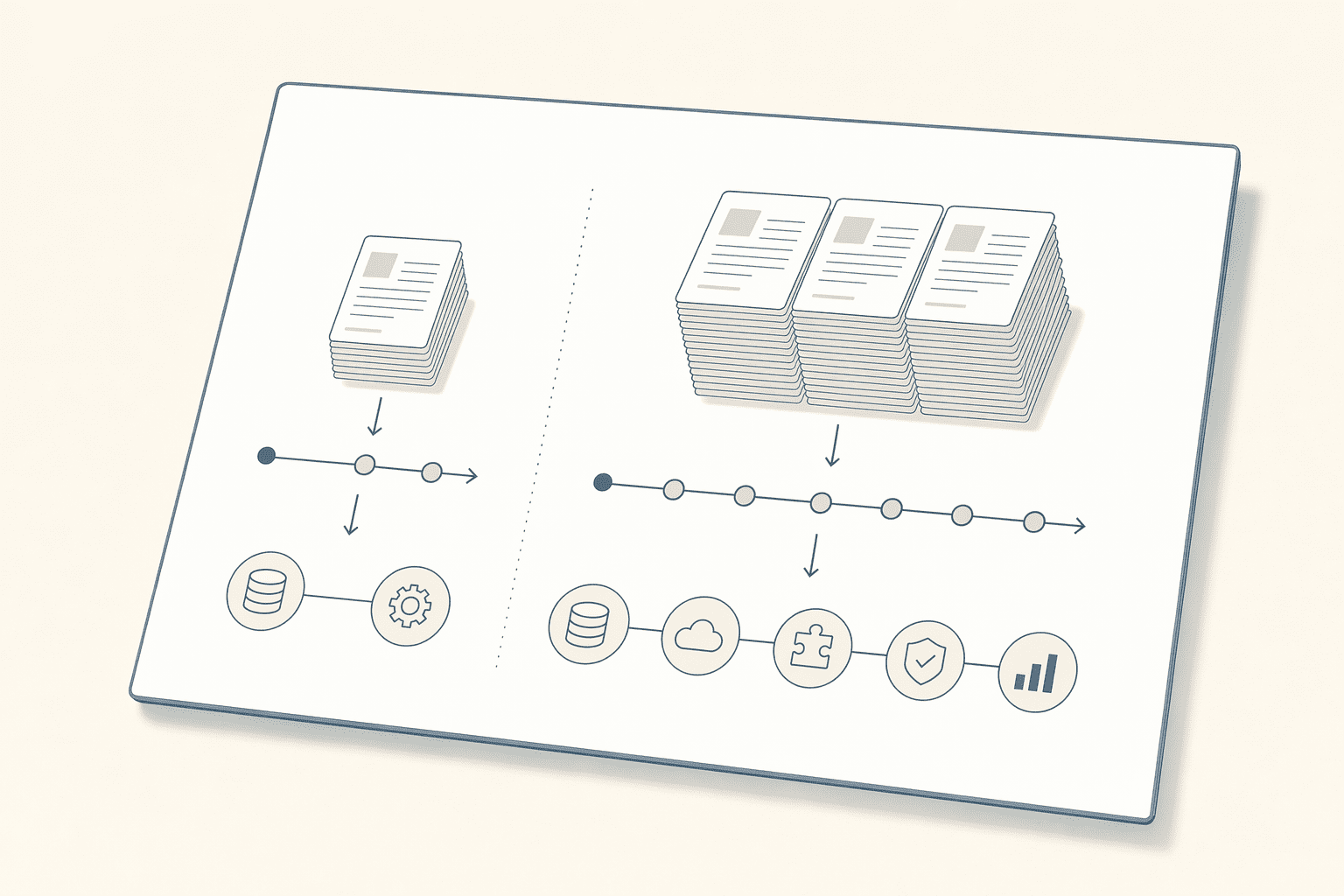
Minimal implementation time is not marketing language, it reflects a specific deployment scope measurable in weeks rather than months. A pilot-first approach typically involves 50 to 200 representative contracts, 8 to 16 hours of platform training distributed across legal, procurement, and sales stakeholders, and integration testing limited to one or two priority systems (commonly CRM or ERP). This bounded scope allows mid-market companies with small legal teams, often one to five people, to validate ROI before committing to repository-wide migration. The alternative, full migration from day one, introduces 3 to 6 month timelines that strain IT bandwidth and delay value realization in organizations where contracts are managed across multiple departments without dedicated legal operations infrastructure.
Pilot-First Deployment Checklist for Mid-Market Constraints
A structured pilot deployment follows a three-stage framework designed for organizations with fewer than five IT staff and active legacy contract repositories:
- Contract selection criteria: prioritize high-velocity templates (NDAs, master service agreements, vendor contracts) representing 60 to 70 percent of annual volume, ensuring the pilot subset exercises renewal workflows, approval routing, and obligation tracking without requiring migration of dormant or legacy agreements.
- Success metrics definition: establish baseline cycle times (drafting to signature), renewal miss rates, and search/retrieval latency before pilot launch; target 40 to 50 percent cycle-time reduction and zero missed renewals during the 60-day pilot window as go/no-go thresholds.
- Rollout staging: configure the platform for the pilot contract set first, run parallel workflows for 30 days to validate data integrity and user adoption, then expand incrementally by department (sales, then procurement, then HR) rather than attempting simultaneous enterprise-wide activation that overloads change-management capacity.
This staged approach addresses the resource reality of mid-market organizations handling hundreds to thousands of contracts annually without the 10-person legal operations teams that enterprise platforms assume.
Full Migration Trade-Offs: When Rip-and-Replace Is Worth the Risk
Full repository migration justifies 3 to 6 month timelines in two scenarios: planned legacy system sunsets (where the existing CLM vendor is exiting the market or contract renewal is economically unfavorable) and regulatory-driven consolidation mandates (such as GDPR or SOC 2 compliance programs requiring centralized audit trails across all historical agreements). These circumstances create forcing functions that offset migration risk. Outside these contexts, pilot-first models reduce organizational disruption by allowing mid-market buyers to validate platform fit, measure ROI on a controlled contract subset, and preserve existing workflows during the testing window, addressing the primary failure mode where forty percent of first-time CLM buyers replace their system within 36 months due to poor initial fit.
Deployment speed claims require independent validation, auditing vendor ROI studies reveals whether projected returns reflect your organization’s baseline reality or an idealized composite.
How to Validate ROI Claims During Vendor Evaluation
Distinguishing Vendor-Funded Studies from Independent Benchmarks
Vendor-funded Total Economic Impact (TEI) studies often carry disclaimers limiting their scope to a composite customer profile rather than your specific environment. When reviewing platforms like Ironclad, look for sample-size disclosures and check whether the ROI calculation includes your operational context, contract volume, review complexity, and team structure. Independent benchmarks from sources like Gartner Peer Insights aggregate peer ratings across willingness to recommend and company-size cohorts, offering a cross-check against vendor marketing claims. Valid vendor-funded studies disclose baseline measurement methodology and third-party audit firms; reject studies that cite industry averages without customer-specific data. Third-party comparisons, such as independent market analyses, validate or contradict vendor claims by comparing features and outcomes across multiple platforms without commercial bias.
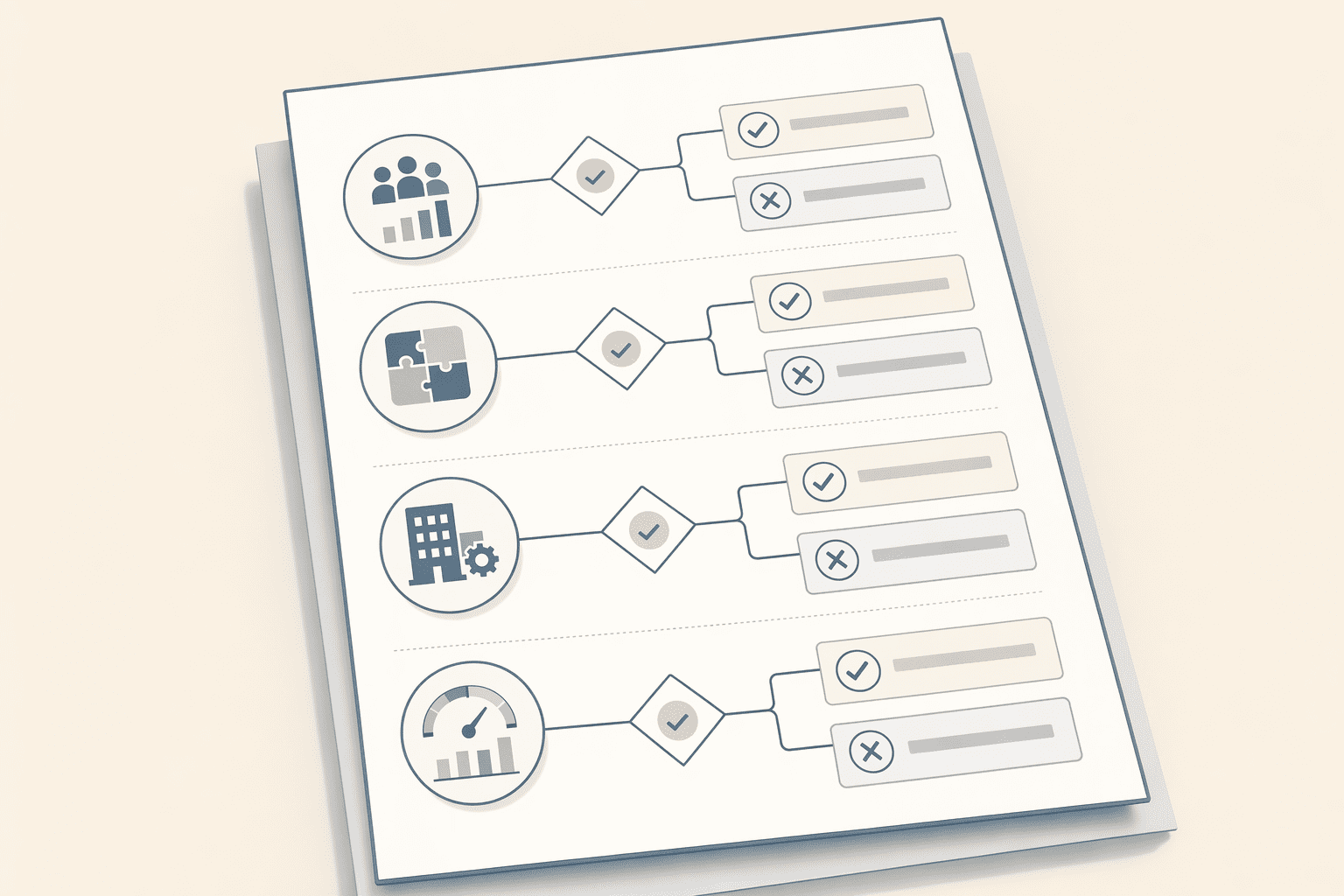
ROI Audit Checklist: 6 Questions to Ask Every Vendor
- What baseline metric was measured pre-implementation? Require specific values, contract cycle time in days, hours spent on manual review, not industry averages.
- How is ROI attributed to the platform versus other initiatives? Ask whether the calculation isolates the CLM’s contribution or blends it with process changes.
- What implementation costs are included? Verify that setup, training, and data migration expenses are factored into the payback period.
- What time-to-value assumptions does the ROI model use? Challenge timelines that assume full adoption within 30 days when your team needs ramp-up time.
- How does the peer group compare to your organization? Confirm that the study’s sample includes companies with your contract volume and complexity.
- Can you access the raw data or anonymized customer results? Request evidence beyond summary statistics to validate claims.
Red Flags in ROI Case Studies
Warning signs include missing baseline data, ROI timelines that exclude implementation costs, and reliance on industry-average benchmarks instead of customer-specific results. When a case study claims “300% ROI” without disclosing pre-implementation contract cycle time or the cost of platform deployment, the figure is unverifiable. Buyers who accept these claims without auditing the methodology often discover post-purchase that actual ROI lands 50 to 70% below the marketed figure, a gap driven by unanticipated integration complexity and team adoption lag.
ROI transparency and deployment speed create a platform selection matrix, comparing leading CLM vendors on these dimensions clarifies trade-offs between rapid analytics delivery and thorough workflow replacement.
Mid-Market CLM Comparison: Deployment Speed & ROI Transparency
Implementation Timeline Benchmarks Across 6 Platforms
Mid-market teams choosing CLM software face a stark trade-off: platforms with 2-4 week deployment cycles typically operate as intelligence overlays (analytics and reporting), while full-stack CLM suites (contract creation, approval workflows, e-signature) require 6-12 weeks for production readiness. Contracts.ai pilots with a limited contract set without repository migration or workflow disruption, positioning it in the fast-deployment tier. Ironclad and DocuSign CLM budget 3-9 months for enterprise implementations, including data taxonomy design and system integrations. Agiloft and LinkSquares serve mid-market buyers seeking strong AI analytics at accessible price points, typically landing in the 4-8 week range. Icertis, built for global enterprises with complex ERP needs, requires longer onboarding but delivers the deepest functionality.
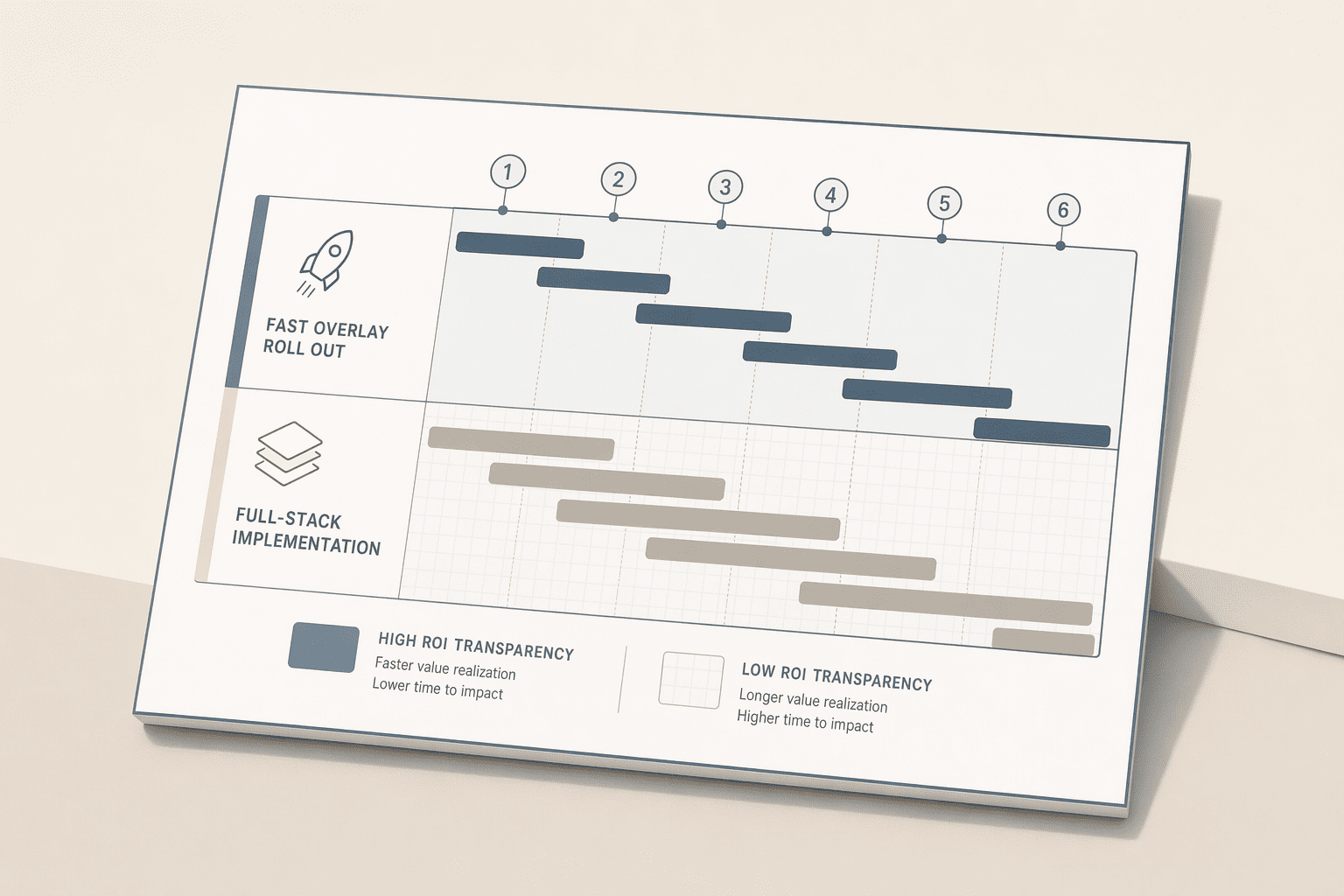
ROI Transparency: Which Vendors Publish Independent Case Studies?
Industry analyst quadrants (Forrester Wave, Gartner Magic Quadrant) consistently rank Ironclad, Icertis, DocuSign CLM, and Agiloft as enterprise leaders. Ironclad reports three consecutive years as a Gartner Magic Quadrant Leader with $150M ARR. DocuSign CLM cites a composite organization achieving 449% ROI in a Forrester TEI study. LinkSquares holds G2’s highest rating (4.6/5) for mid-market buyers. Contracts.ai, as an intelligence-layer platform, does not compete directly in full-stack CLM analyst evaluations but fits teams prioritizing rapid analytics deployment over thorough workflow automation.
Best Fit by Company Size and IT Bandwidth
For organizations under 50 employees with no dedicated IT staff, LinkSquares and Agiloft offer modern UX without enterprise overhead. Companies with 50-200 employees and 1-5 IT personnel benefit from Contracts.ai’s pilot-first approach or DocuSign CLM’s native eSignature integration. Teams of 200-500 employees with dedicated IT resources should evaluate Ironclad (legal workflow sophistication) or Icertis (ERP-centric integration). The 6-12 week implementation commitment for full-stack platforms makes sense only when the organization will actively use contract creation, approval routing, and obligation tracking, not just search and reporting.
Choosing between intelligence-layer and full-stack platforms depends on organizational constraints, legacy system investments, IT bandwidth, and approval workflow requirements determine which architecture delivers faster value.
When Intelligence-Layer Deployment Outperforms Rip-and-Replace
What Intelligence-Layer Architecture Means
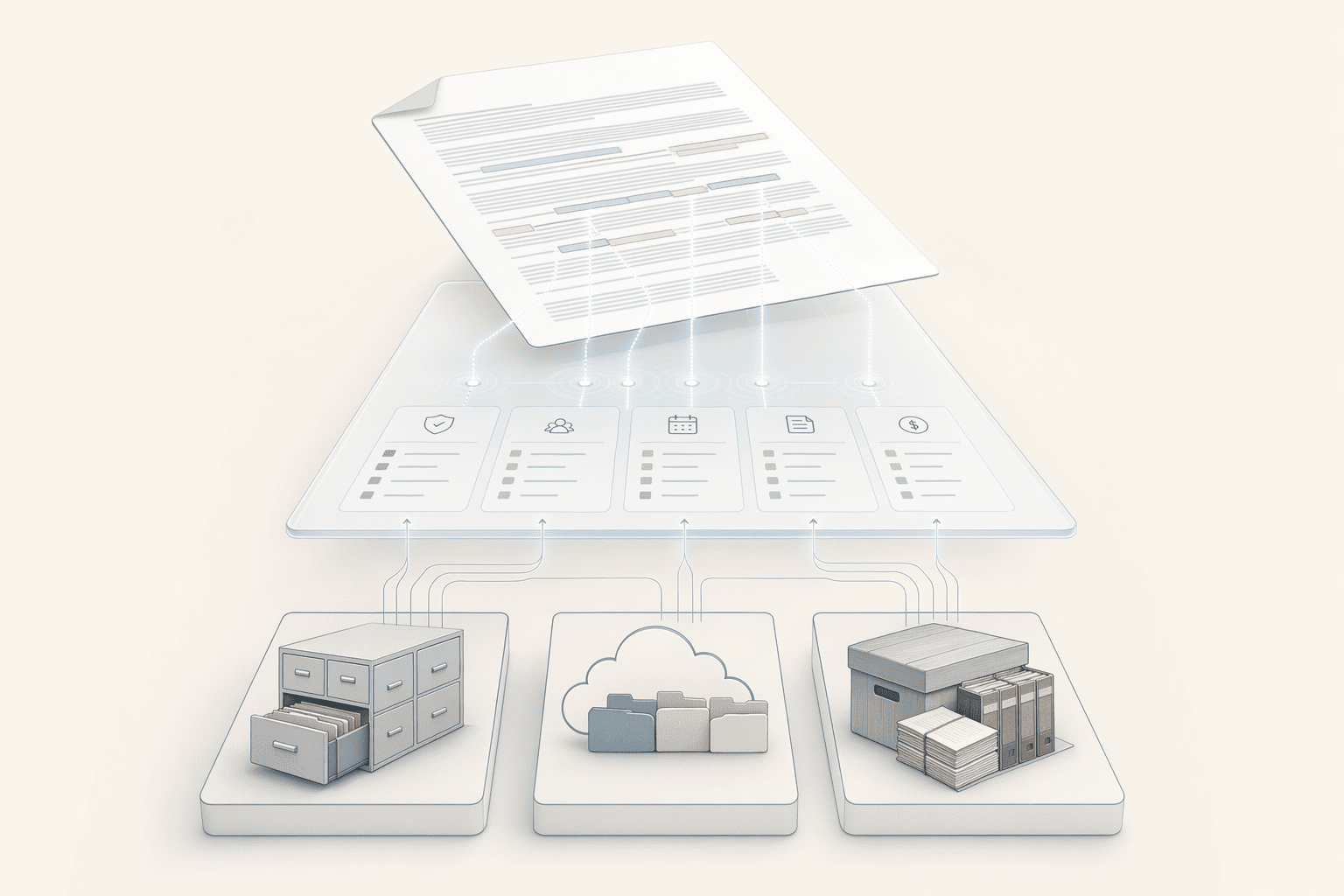
Intelligence-layer CLM overlays analytics, AI extraction, and reporting on top of existing contract repositories, SharePoint, Google Drive, or legacy CLM platforms, without requiring migration. Contracts.ai deploys as an intelligence layer, not a rip-and-replace system, extracting key terms across legacy and live contracts in minutes. For example, OpenAI’s internal contract data agent ingests PDFs, scanned copies, and phone photos, parsing contracts into structured data while showing its work for finance experts to review. Similarly, DigiParser extracts clauses, obligations, and key terms from complex agreements, turning documents into structured data in minutes, all without replacing the underlying storage systems.
Implementation Risk Comparison: Intelligence Layer vs. Rip-and-Replace
Rip-and-replace CLM implementations carry organizational disruption, data migration risks, and rollback costs that intelligence-layer deployments avoid. A Tipalti legal operations leader spent a year on a failed CLM platform billed as end-to-end before rebuilding the stack from scratch, a pattern repeated across in-house teams. Intelligence-layer architecture reduces implementation time from 3 to 6 months to 2 to 4 weeks: Contracts.ai can be piloted with a limited contract set without migrating the full repository or disrupting existing workflows. Mid-market companies with fewer than five IT staff avoid the taxonomy design, workflow reconfiguration, and user retraining that enterprise CLM replacement demands.
When Full Replacement Is the Better Choice
Rip-and-replace justifies higher implementation risk when legacy system sunset mandates force consolidation, enterprise-wide CLM standardization requires unified approval workflows across business units, or regulatory repository consolidation demands single-system audit trails. Organizations with dedicated migration teams, system-sunset budgets, and regulatory mandates that cannot be met through analytics overlays should prioritize full replacement over intelligence-layer deployment. Intelligence-layer CLM suits mid-market companies with active legacy repositories, limited IT capacity, and immediate need for contract analytics without workflow disruption.
Architecture decisions directly impact integration requirements, intelligence-layer and rip-and-replace CLM platforms demand different levels of system connectivity with CRM, ERP, and e-signature tools.
Integration Requirements with Existing CRM, ERP, E-Signature Tools
Core Integration Points: CRM, ERP, E-Signature
Mid-market companies typically need five core integrations: Salesforce (CRM contract data sync), HubSpot (deal-to-contract handoff), NetSuite (revenue and expense reconciliation), DocuSign (execution metadata capture), and Adobe Sign (signature workflow triggers). Critical data flows include contract metadata pushed into CRM opportunities, invoice reconciliation against signed agreements in ERP systems, and obligation milestones surfaced in finance dashboards. Contracts.ai offers a NetSuite integration that pushes revenue and expense metadata into accounting sources of truth, enabling procurement and finance teams to validate spend against executed terms without manual lookups.

How Intelligence-Layer Architecture Simplifies Integrations
Intelligence-layer CLM platforms require read-only integrations, pulling contract metadata into dashboards without syncing approval stages back into CRM or ERP. This approach deploys faster because it avoids bi-directional workflow dependencies. Full-stack CLM platforms with bi-directional integrations suit companies replacing legacy approval routing; intelligence-layer platforms with read-only access suit teams keeping existing workflows but adding analytics. For mid-market buyers, the trade-off centers on whether the bottleneck is workflow orchestration (favoring full-stack) or data visibility across siloed contracts (favoring intelligence-layer extraction).
Conclusion
Intelligence-layer CLM like Contracts.ai deploys analytics over existing repositories in 2-4 weeks but doesn’t replace contract approval workflows, best for mid-market companies keeping legacy systems. Full-stack CLM platforms such as Ironclad and Agiloft replace workflows but require 3-6 month migrations, best for enterprises with system-sunset mandates. Vendor-funded ROI studies provide directional guidance but lack peer-group comparability, cross-reference with Gartner reviews and independent benchmarks to validate claims during evaluation.
As AI extraction technology matures, intelligence-layer CLM will become the default mid-market entry point, enabling companies to pilot analytics and AI insights without the organizational disruption of rip-and-replace migrations. This shift reduces implementation risk while delivering measurable ROI through contract value leakage prevention and cycle-time reduction before committing to full-scale deployment.
Pilot Contracts.ai’s intelligence-layer analytics on 50-200 contracts from your existing repository, no migration required, to validate ROI before committing to full deployment. This pilot-first model gives mid-market teams the flexibility to test measurable outcomes without disrupting active legacy systems or consuming limited IT bandwidth.
Frequently Asked Questions
How do I validate a vendor’s 300% ROI claim before signing a contract?
Request the vendor’s ROI calculation methodology, baseline measurement data, and attribution framework. Review Total Economic Impact (TEI) study disclaimers for sample-size disclosures and composite customer profiles rather than peer-specific environments. Cross-reference claims with Gartner peer reviews for independent validation from comparable organizations.
What is the difference between pilot-first and full migration CLM implementations?
Pilot-first deploys CLM on 50-200 contracts without migrating the full repository, taking 2-4 weeks from kickoff to dashboard delivery. Full migration moves all contracts to the new system, requiring 3-6 months and carrying data migration risks, a Tipalti legal operations leader spent a year on a failed platform before rebuilding from scratch.
What does ‘intelligence-layer architecture’ mean in CLM?
Intelligence-layer CLM overlays analytics, AI extraction, and reporting on existing contract repositories, SharePoint, Google Drive, or legacy CLM platforms, without requiring migration. This contrasts with rip-and-replace implementations that migrate all contracts to a new system. OpenAI’s contract data agent exemplifies this approach, extracting insights from existing repositories.
How long does a typical CLM pilot take for a mid-market company?
Pilot-first implementations take 2-4 weeks from kickoff to dashboard delivery for 50-200 contracts. This timeline covers contract selection, AI training on document types, and integration testing. Intelligence-layer platforms like Contracts.ai achieve this speed by avoiding full repository migration and workflow replacement that extend traditional implementations to 6-12 weeks.
Which CLM platforms support pilot deployments without full repository migration?
Contracts.ai operates as an intelligence-layer platform that pilots analytics without migration. Traditional full-stack CLM platforms, Ironclad, Icertis, Agiloft, typically require repository migration to enable contract creation, approval workflows, and e-signature features. Intelligence overlays extract insights from existing systems, while full-stack suites replace those systems entirely.
What integrations do mid-market companies need from a CLM platform?
Mid-market companies need five core integrations: Salesforce for CRM contract data sync, HubSpot for deal-to-contract handoff, NetSuite for revenue reconciliation, DocuSign for execution metadata capture, and Adobe Sign for signature workflow triggers. Intelligence-layer CLM requires read-only integrations pulling contract metadata into dashboards, while full-stack platforms need bi-directional workflow sync.
How do I know if my company needs intelligence-layer or rip-and-replace CLM?
Intelligence-layer suits mid-market companies with active legacy systems, fewer than five IT staff, and existing approval workflows they want to keep. Rip-and-replace suits enterprises with system-sunset budgets, dedicated migration teams, and regulatory consolidation mandates requiring unified approval workflows across business units. Organizations with limited IT bandwidth benefit from intelligence-layer deployments avoiding migration risks.
Sources
- CLM vs Traditional Contract Management: ROI Comparison Guide – contractsconnected.com (2026)
- Best Contract Life Cycle Management Reviews 2026 – Gartner – www.gartner.com (2026)
- Best AI CLM Tools in 2026 – 5 Compared – awesomeagents.ai (2026)
- Contract Lifecycle Management (CLM) Platforms Overview | Amicore AI Research – www.amicoreai.com (2026)
- Turning contracts into searchable data at OpenAI – openai.com (2025)
- Extract Data from Contracts & Agreements Automatically – www.digiparser.com