Poor contract management leaks 12 to 15 percent of annual revenue through manual review cycles, obligation tracking failures, renewal slippage, compliance gaps, and repository fragmentation.
Leading AI contract platforms systematically dismantle these operational leaks by automating extraction, tracking, and search—delivering 80%+ cost reduction when matched to enterprise security requirements.
Key Takeaways
- Manual review cycles, obligation blindness, renewal drift, compliance monitoring, and repository fragmentation account for 80%+ of contract management costs
- AI platforms automate clause extraction, obligation tracking, renewal alerts, compliance auditing, and unified search to replace high-labor workflows
- Platform selection requires comparing automation depth, integration capabilities, deployment models, and security certifications across Contracts.ai, Icertis, SpotDraft, and Ironclad
- Pilot deployments deliver measurable ROI within 3-6 months on limited contract sets before committing to full repository migration
- Enterprise buyers must verify SOC 2 Type II, SOC 3, GDPR compliance, and HIPAA certifications before evaluating AI contract features
Where 80% of Contract Management Costs Hide: Five Operational Leak Points
Poor contract management leaks 12 to 15 percent of annual revenue through five operational failures: manual review cycles, obligation tracking gaps, renewal slippage, compliance exposure, and repository fragmentation. Organizations bleeding money on contract operations typically face all five simultaneously, compounding losses across the lifecycle.
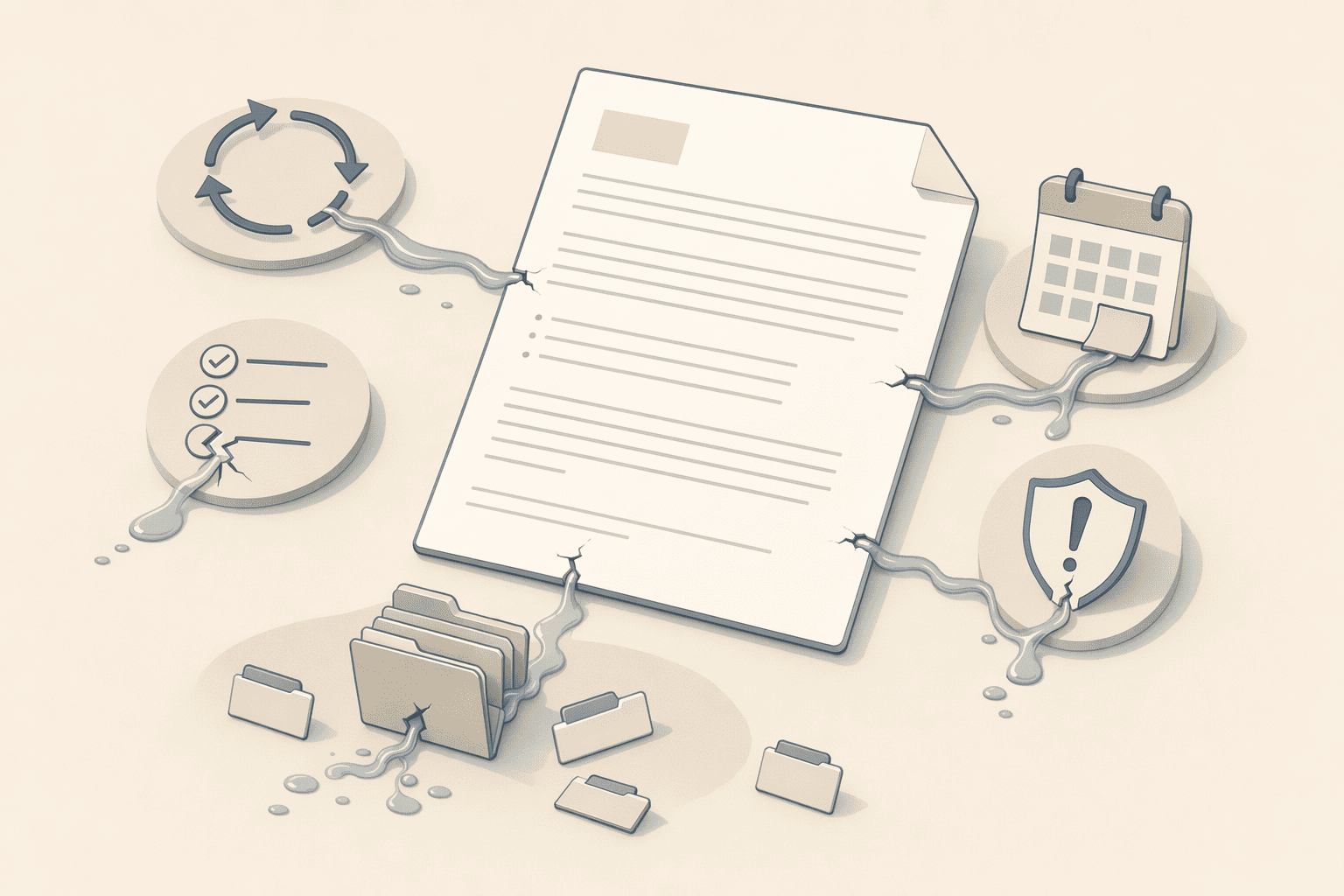
- Manual review cycles — attorney time spent clause-by-clause reviewing contracts without AI extraction averages [$X per agreement] in labor costs
- Obligation tracking failures — missed deadlines and auto-renewals that slip past legal and procurement teams
- Renewal slippage — contracts that auto-renew without business review, locking in unfavorable terms
- Compliance gaps — regulatory exposure from untracked obligations across jurisdictions
- Repository fragmentation, contracts scattered across email, shared drives, and legacy systems, making search impossible
Manual Contract Review Cycles and Attorney Time Costs
Manual clause-by-clause legal review burns the largest share of contract management budgets. Without AI-powered extraction, attorneys spend hours identifying key terms, obligations, and risk language in every agreement. Inefficient contract management operations cause high costs and revenue mismanagement, a pattern visible across mid-market and enterprise organizations. Harvard Business Review reports inefficient contracts lead to 5 to 40% loss of value on any given deal, with much of that loss attributable to repetitive review work that automation could eliminate. Legal teams lacking document intelligence platforms cannot extract obligations at scale, so every contract requires full manual read-through even when 80% of clauses are standard boilerplate.
Obligation and Renewal Tracking Failures as Hidden Cost Centers
Obligation blindness, the inability to surface contract commitments across thousands of agreements, creates hidden cost centers through missed deadlines, untracked service-level agreements, and auto-renewals that proceed without business review. Poor contract management costs companies 9% of their bottom line, with obligation tracking failures representing a significant share of that leakage. Organizations processing contracts through email chains and shared folders lack centralized renewal calendars, so high-value agreements auto-renew at unfavorable rates while legal and procurement teams remain unaware until invoices arrive. Compliance exposure compounds when regulatory obligations go untracked, healthcare, financial services, and government contractors face audit risk when contract repositories cannot answer “show me all agreements with data residency requirements.”
Repository Fragmentation and Search Inefficiency
Contracts scattered across email archives, departmental shared drives, and legacy document management systems make search impossible and duplicate negotiation common. Modern CLM platforms deliver substantial returns through automation and improved visibility across the contract portfolio, but organizations stuck with fragmented repositories cannot achieve those returns. Legal teams waste hours hunting for precedent clauses; procurement cannot verify whether a new supplier agreement duplicates terms from an existing contract. The “just buying CLM software” assumption fails here, 80%+ cost reduction requires not only platform adoption but aggressive process redesign that consolidates contract storage, enforces single-source-of-truth workflows, and replaces manual search with AI-driven natural language query across the full repository.
Identifying where costs accumulate is the first step; the second is selecting technology that automates each leak point without introducing new workflow friction.
How AI Contract Platforms Address Each Cost Driver
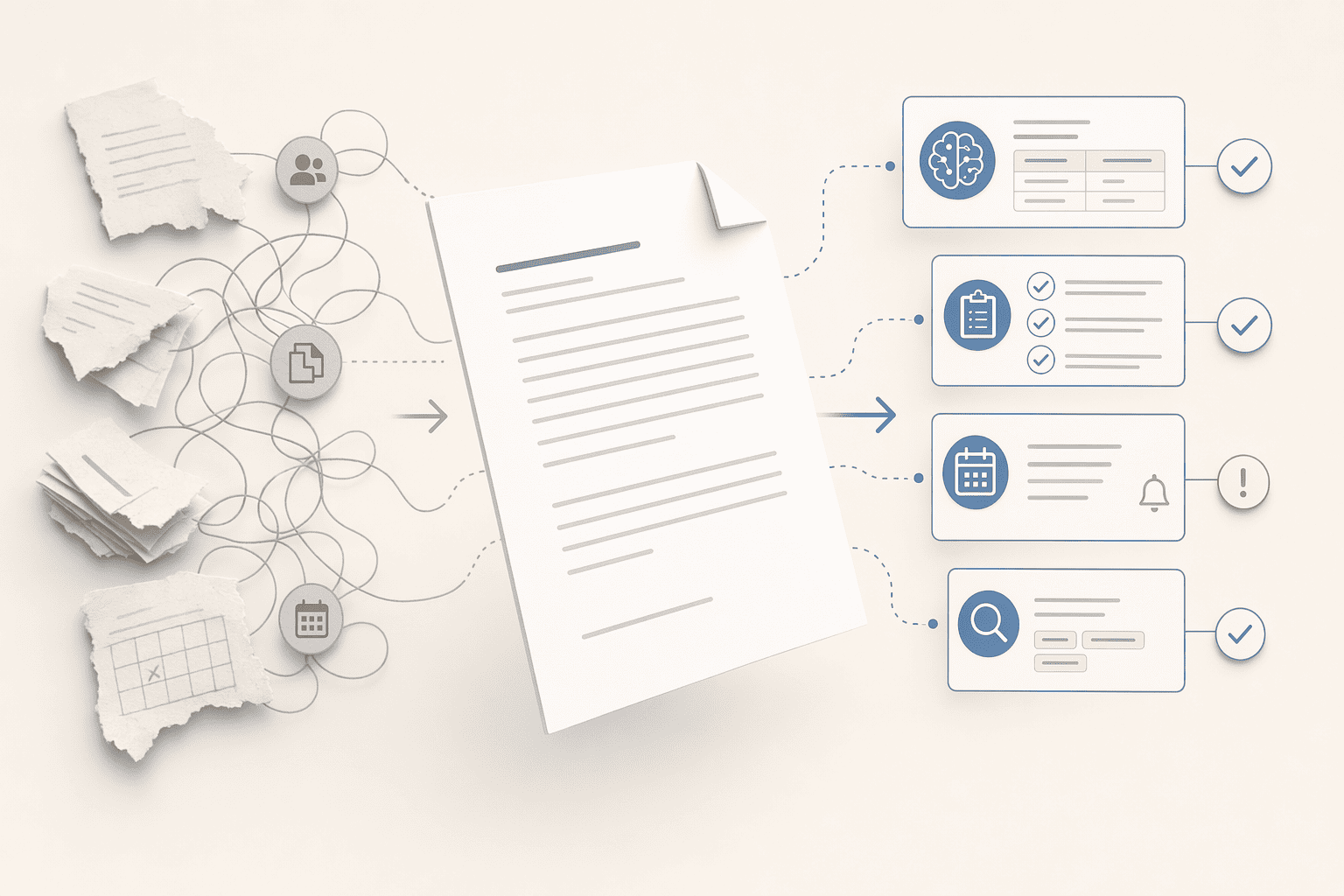
AI contract platforms systematically dismantle the five operational leaks identified in section 1 by automating extraction, tracking, and search across the entire contract base. Where manual processes create bottlenecks, attorney review backlogs, missed renewals, duplicate negotiation effort, AI introduces structured workflows that convert unstructured contract text into decision-ready intelligence.
AI Contract Review and Clause Extraction
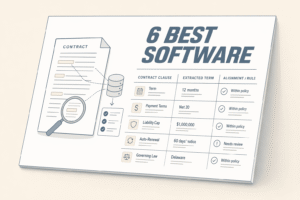
Automated clause identification reduces attorney review time by extracting key terms, parties, effective dates, payment schedules, liability caps, from long agreements in minutes rather than hours. Platforms like DigiParser report 99.7% accuracy on legal text, turning 40-page PDFs into structured datasets that legal teams can review for risk rather than transcribe manually. Contracts.ai uses machine learning to analyze contract content and generate risk insights, preserving source language alongside extracted fields for validation. The cost impact is direct: enterprises that once spent $6,900 per simple contract and $21,300 for complex agreements can reduce drafting and review overhead when AI handles repetitive extraction, freeing counsel to focus on negotiation strategy and true risk analysis.
Automated Obligation and Renewal Tracking
Contract automation uses AI to extract expiration dates, renewal terms, and performance obligations from text, then triggers alerts before deadlines pass. Where manual tracking relied on spreadsheets and memory, AI monitors every obligation continuously, flagging upcoming renewals, payment milestones, and termination windows without human intervention. This addresses the revenue-leakage leak directly: auto-renewals no longer catch finance teams off-guard, and missed notice periods, previously a source of unplanned spend, become rare exceptions rather than routine failures. Platforms route alerts to the right approvers automatically, ensuring contracts move through lifecycle stages on time and that no commitment goes untracked.
Unified Repository and Intelligent Search
A consolidated repository eliminates the scatter problem, contracts stored across inboxes, desktops, and filing cabinets, by creating a single source of truth with AI-powered metadata tagging. Contracts.ai’s team has unified global contract repositories, enabling natural-language queries that surface relevant agreements in seconds. When sales needs pricing precedent or procurement wants vendor liability language, intelligent search delivers clause-level results without manual file trawling, cutting research time from hours to minutes and ensuring every negotiation starts with institutional knowledge rather than from scratch.
Automation capabilities alone do not predict success, platform architecture, deployment speed, integration depth, and vendor support determine whether AI delivers 80%+ savings or stalls in pilot purgatory.
Comparing Leading AI Contract Management Platforms
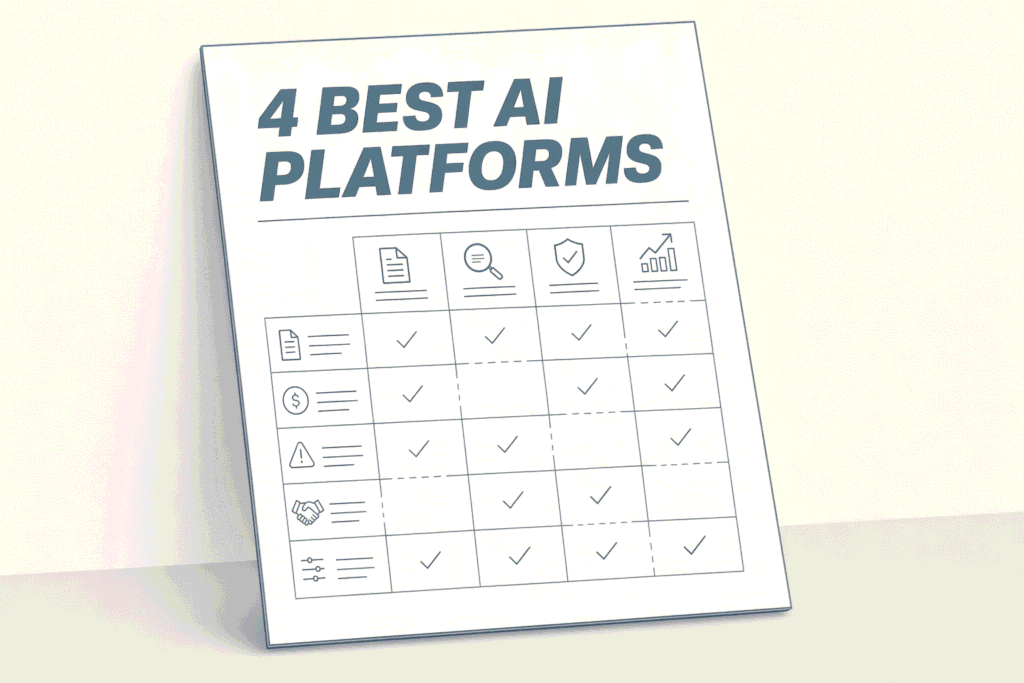
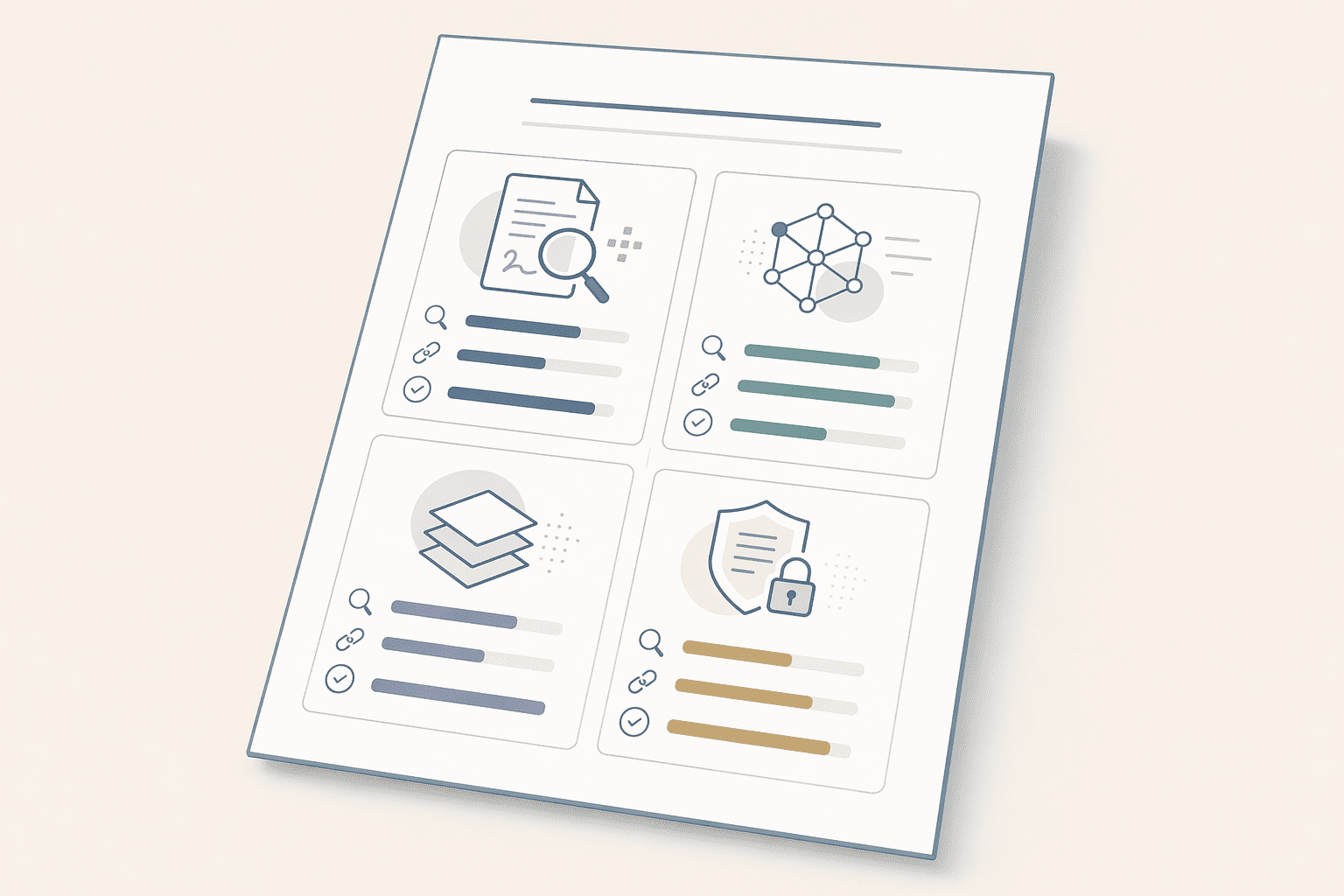
When operational costs spiral on contract management, manual review cycles, fragmented data, missed renewals, the platform choice determines whether AI delivers 80%+ savings or becomes another tech-stack burden. The table below compares four leading platforms on the dimensions that directly address the five operational leaks: AI contract review depth (attacking manual cycles), integration architecture (fixing fragmentation), and peer-validated deployment outcomes.
| Platform | AI Contract Review & Clause Extraction | Integration Architecture | G2 Rating |
|---|---|---|---|
| Contracts.ai | >99% real-time extraction accuracy; extracts key terms across legacy and live contracts in minutes; uses models from OpenAI, Anthropic, Inception, Google Gemini | Intelligence-layer overlay; native integrations with CRM, ERP, e-signature tools; does NOT support contract approval workflows | Not publicly disclosed |
| Icertis | AI-powered clause identification and risk scoring capabilities; automates drafting and redlining workflows | Enterprise platform with deep workflow automation; typically requires full CLM replacement rather than overlay architecture | Not publicly disclosed |
| SpotDraft | AI contract lifecycle management enabling teams to create, review, negotiate, sign, store, and track contracts | Platform designed for legal, sales, finance, HR, and procurement team workflows | 4.5/5 (181 reviews) |
| Ironclad | AI contract lifecycle management with specialized agents for drafting, extraction, obligation tracking, and risk redlining; 40-60% contract turnaround reduction | Enterprise-grade CLM with deep workflow automation; typically 8-12 week implementation period | Not publicly disclosed |
AI Contract Review and Clause Extraction Capabilities
Contracts.ai delivers >99% real-time extraction accuracy and extracts key terms across both legacy and live contracts in minutes. The platform uses machine learning models from OpenAI, Anthropic, Inception, and Google Gemini to analyze contract content and generate structured outputs, summaries, and risk insights. However, it does NOT support contract approval workflows, a limitation for teams requiring in-platform approval routing. Best for: teams prioritizing extraction accuracy and compliance (SOC 2/SOC 3, GDPR, HIPAA certified) over native approval workflows.
Ironclad automates contract drafting, redlining, and approval workflows with specialized agents for drafting, extraction, obligation tracking, and risk redlining. The platform cuts contract turnaround time by 40-60% by automating repetitive review tasks. Starting at $500/month with annual contracts required, Ironclad is best for mid-market to enterprise companies processing 50+ contracts monthly. However, it requires a 2-3 month implementation period to configure playbooks and train the AI on internal standards, and the pricing structure favors high-volume users, low-volume teams pay more per contract than alternatives.
Icertis and SpotDraft both offer AI-powered clause identification and contract lifecycle capabilities. Icertis positions itself as an enterprise platform with strengths across AI, workflow automation, governance, and collaboration. SpotDraft enables legal, sales, finance, HR, and procurement teams to create, review, negotiate, sign, store, and track contracts, earning a 4.5/5 G2 rating from 181 reviews.
Integration Architecture and Workflow Embedding
Platform architecture determines whether AI intelligence layers over existing workflows or demands wholesale replacement, a make-or-break choice for organizations with entrenched ERP, CRM, or e-signature systems. Intelligence-layer overlays like Contracts.ai transform executed agreements into structured, operational intelligence that flows across the enterprise without displacing existing contract repositories or approval tools. The platform offers native integrations with CRM, ERP, and e-signature tools, embedding contract intelligence directly into business workflows.
In contrast, rip-and-replace CLM systems like Ironclad and Icertis require full CLM implementation, typically 8-12 weeks for Ironclad, and centralize contract creation, negotiation, approval routing, electronic signature, storage, and post-signature obligation tracking within a single platform. These systems offer deeper workflow automation and governance but demand that organizations migrate existing contracts, retrain users, and reconfigure approval processes around the new platform.
User Ratings and Deployment Feedback
G2 ratings surface real-world adoption friction: deployment timelines, feature gaps, and post-implementation regret. SpotDraft holds a 4.5/5 rating from 181 reviews, reflecting strong user satisfaction among legal, sales, finance, HR, and procurement teams. Ironclad’s pricing and implementation requirements, $500/month minimum, 8-12 week setup, create friction for smaller teams, though mid-market and enterprise users (50-500 employees) value the depth of workflow automation once deployed. Publicly available peer-review signals can be uneven across contract management vendors, which may make pre-purchase assessment more difficult. For teams prioritizing verified user sentiment, platforms with transparent ratings and public review counts reduce the risk of post-deployment misalignment.
Platform features matter only after verifying that deployment timelines and ROI payback periods align with enterprise budget cycles and change-management capacity.
Implementation Speed vs. ROI Payback: What to Expect
Vendor-funded Total Economic Impact studies consistently report CLM ROI between 70% and 300%, one DiliTrust market study claims 324.5% returns, while Forrester finds AI CLM deployments deliver an average three-year ROI of 261% with payback periods under 14 months. These figures assume enterprise-wide deployment, full change management, and process redesign, conditions that many pilot-first implementations defer.

Pilot Deployment Without Full Repository Migration
A pilot-first approach targets a limited contract set, typically high-volume vendor agreements or a single business unit, without migrating legacy archives. OpenAI’s internal contract data agent illustrates this trajectory: when volume doubled repeatedly, the finance and engineering teams built an agent that ingests PDFs, scanned copies, and phone photos, then produces structured overnight reviews, cutting review time in half and processing thousands of contracts without expanding headcount in lockstep. Contracts.ai supports pilot deployment without requiring full repository migration, allowing teams to validate ROI on a constrained scope before committing to enterprise rollout.
ROI Payback Timelines Mapped to Implementation Scope
Pilot implementations typically reach measurable value within 3 to 6 months, processing a defined contract subset, automating extraction, and delivering structured data to a single workflow. Full enterprise migration extends timelines to 9 to 18 months, as organizations tackle change management, integrate with ERP and CRM systems, and train cross-functional teams. The Forrester 261% three-year ROI assumes the latter path: phased rollout, obligation tracking, compliance monitoring, and renewal automation across all contract types.
Vendor TEI Studies vs. Real-World Adoption
The 324.5% figure DiliTrust reports reflects cost reduction through automation, legal risk minimization, efficiency improvement, and business resilience enhancement, outcomes that require sustained organizational commitment. Pilot-first buyers capture a subset of these benefits, faster contract turnaround, reduced manual entry, but defer the higher-value obligation tracking and compliance workflows until full deployment. Interpreting vendor TEI claims requires distinguishing between pilot-validated cycle-time reduction and enterprise-wide process transformation.
Before committing to any AI contract platform, enterprises must verify that security certifications and compliance credentials meet regulatory requirements for sensitive legal and financial data.
Security and Compliance Requirements for Enterprise Contract AI
Before evaluating contract AI platforms on features alone, enterprises must verify foundational security certifications and compliance credentials. AI-powered contract analysis systems handle sensitive legal and financial data, making strong security frameworks non-negotiable for regulated industries.
SOC 2 and SOC 3 Certification Requirements
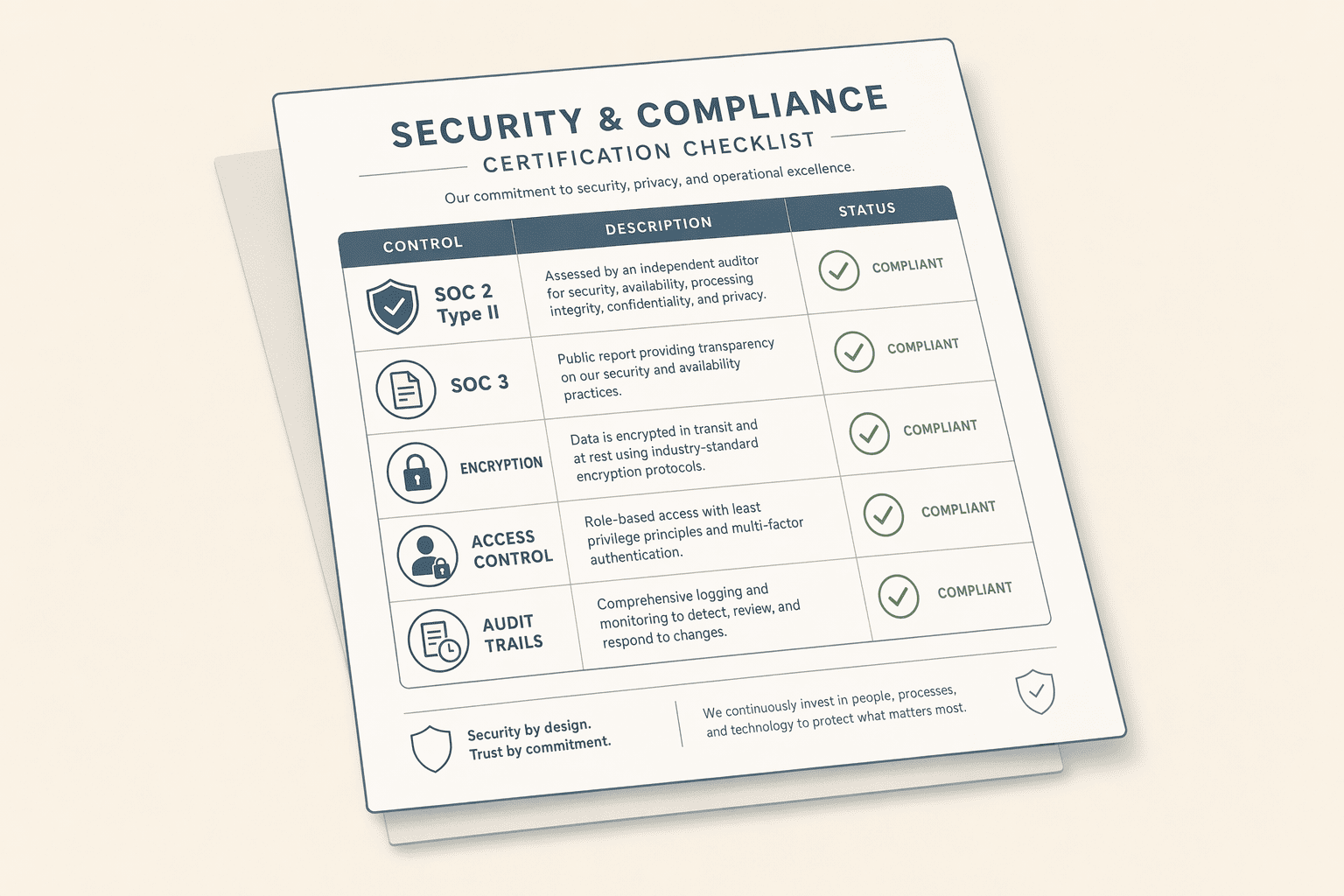
SOC 2 Type II certification verifies that a platform has implemented and maintained effective controls for security, availability, and confidentiality over time. SOC 3 provides a public-facing summary of those controls without disclosing sensitive implementation details. Contracts.ai holds both SOC 2 and SOC 3 certifications, establishing the benchmark standard enterprises should require when contract platforms process proprietary agreement data.
GDPR and HIPAA Compliance for Regulated Industries
GDPR compliance demands data residency controls, right-to-erasure support, and transparent data processing agreements. For healthcare organizations processing protected health information, HIPAA requires Business Associate Agreements and documented safeguards. Approximately 60-70% of integration projects experience delays or cost overruns due to contract management inefficiencies, often exacerbated when platforms lack proper compliance credentials. Enterprises face substantial financial and reputational exposure when vendors cannot demonstrate GDPR or HIPAA adherence, validating these credentials upfront prevents downstream compliance risk.
Audit Logging and Encryption Standards
Enterprise contract platforms must implement TLS 1.2+ encryption for data in transit and encryption at rest for stored documents. Thorough audit logging that tracks every access, modification, and system event is key for forensic analysis and compliance reporting. Contracts.ai maintains detailed audit logs across all system activity, providing the transparency enterprises need for internal governance and external audits. Demand transparent security documentation from every vendor, platforms unwilling to publish their safeguards publicly often lack the controls they claim.
Contracts.ai covers SOC 2, SOC 3, GDPR, and HIPAA compliance requirements but does not support contract approval workflows, enterprises needing approval routing should evaluate Ironclad or SpotDraft. Pilot-first deployment delivers faster time-to-value within 3-6 months but may require eventual full migration, while rip-and-replace platforms deliver enterprise-wide consistency but extend payback timelines to 9-18 months.
As generative AI matures, contract platforms will shift from clause extraction to proactive negotiation assistance and autonomous obligation monitoring, early adopters who establish AI contract infrastructure now will compound their cost advantage as capabilities expand.
Start with a pilot deployment using Contracts.ai’s limited-contract-set approach to validate ROI before full migration, or explore competitor pilot programs from Icertis and SpotDraft to compare AI contract review capabilities firsthand.
Frequently Asked Questions
How do AI contract platforms achieve 80% cost reduction?
Eighty percent reduction comes from replacing five manual workflows, review cycles, obligation tracking, renewal management, compliance monitoring, repository search, with AI automation. Achieving this requires process redesign alongside software adoption, not just technology purchase, because legacy workflows continue consuming labor even after platform deployment.
What is the difference between pilot deployment and full CLM migration?
Pilot deployment tests AI capabilities on a limited contract set within 3-6 months without migrating legacy archives. Full migration replaces legacy systems enterprise-wide, requiring 9-18 months and extensive change management. OpenAI’s internal contract data agent illustrates real-world pilot timelines and staged rollout approaches.
Which security certifications should enterprise buyers require?
Enterprises handling regulated data must verify SOC 2 Type II for controls audit, SOC 3 for public reporting, GDPR compliance for data residency and right-to-erasure, and HIPAA compliance with business associate agreements. Platforms lacking these certifications introduce compliance risk for financial services, healthcare, and government buyers.
Do vendor ROI studies reflect real-world outcomes?
Vendor-funded Total Economic Impact studies report 70-300% ROI but require aggressive process redesign, not just software purchase. These outcomes depend on contract volume, workflow complexity, and organizational readiness, enterprises adopting platforms without redesigning manual processes rarely achieve published benchmarks.
Can AI contract platforms integrate with existing CRM and ERP systems?
Modern AI contract platforms offer native integrations with CRM systems like Salesforce and HubSpot, ERP platforms such as SAP and Oracle, and e-signature tools including DocuSign and Adobe Sign. Integration architecture is a key evaluation criterion to avoid workflow duplication and ensure data consistency across enterprise systems.
What is the typical G2 rating range for leading AI contract platforms?
Leading AI contract platforms range from 4.3 to 4.5 on G2, with SpotDraft holding 4.5/5 from 181 reviews. User reviews surface deployment timelines, feature gaps, and post-implementation satisfaction, ratings below 4.0 often indicate adoption friction, incomplete feature sets, or vendor support issues.
Does Contracts.ai support contract approval workflows?
No, Contracts.ai does not support contract approval workflows. Enterprises requiring approval routing should evaluate Ironclad or SpotDraft, which offer multi-step approval workflows, conditional routing, and stakeholder notification. This limitation makes Contracts.ai suitable for extraction and tracking but not end-to-end lifecycle management.
Sources
- Decrease Contract Management Costs with AI & Automation – www.intelagree.com
- Why A Clm Tool Is Crucial… – premikati.com
- 2026 Contract Management ROI Benchmarks Every CFO Must Review – www.sirion.ai
- AI Integration – Contract Management Software | G2 – www.g2.com
- Ironclad: AI Contract Lifecycle Management Software – ironcladapp.com
- Turning contracts into searchable data at OpenAI – openai.com (2025)
- AI Contract Lifecycle Management Statistics 2026 – stealthagents.com (2026)
- (PDF) AI-Powered Contracts Analysis for Risk Mitigation and … – www.researchgate.net (2024)
- [PDF] THE IMPACT OF GENERATIVE AI ON LEGAL AUTOMATION AND … – iaeme.com (2024)