Executed contracts hold data that can reduce operational costs—renewal dates that prevent auto-renewals, payment terms that reveal duplicate vendor spend, and compliance obligations that avoid penalties.
When legal and finance teams evaluate contract intelligence platforms, four criteria determine which tools activate contract data into actionable insights versus adding workflow complexity.
Key Takeaways
- Contract intelligence platforms use AI to extract structured data from executed agreements, surfacing renewal risks, duplicate vendor spend, and compliance obligations across legal and finance operations
- Enterprises lose money when obligations remain invisible after signature—contracts auto-renew without notice, departments negotiate redundant vendor agreements, and compliance gaps trigger penalties
- Buyers should evaluate vendors on post-signature intelligence capabilities, cross-functional data flow, security architecture that protects proprietary terms, and implementation models that minimize migration risk
- Intelligence-layer platforms extract insights from existing contract repositories without workflow replacement; full CLM systems manage pre-signature drafting and negotiation in addition to post-signature analytics
- Pilot programs with 50-200 high-value contracts validate AI extraction accuracy and integration feasibility before full deployment
What Contract Intelligence Platforms Do (and Why Spreadsheets Can’t Replace Them)
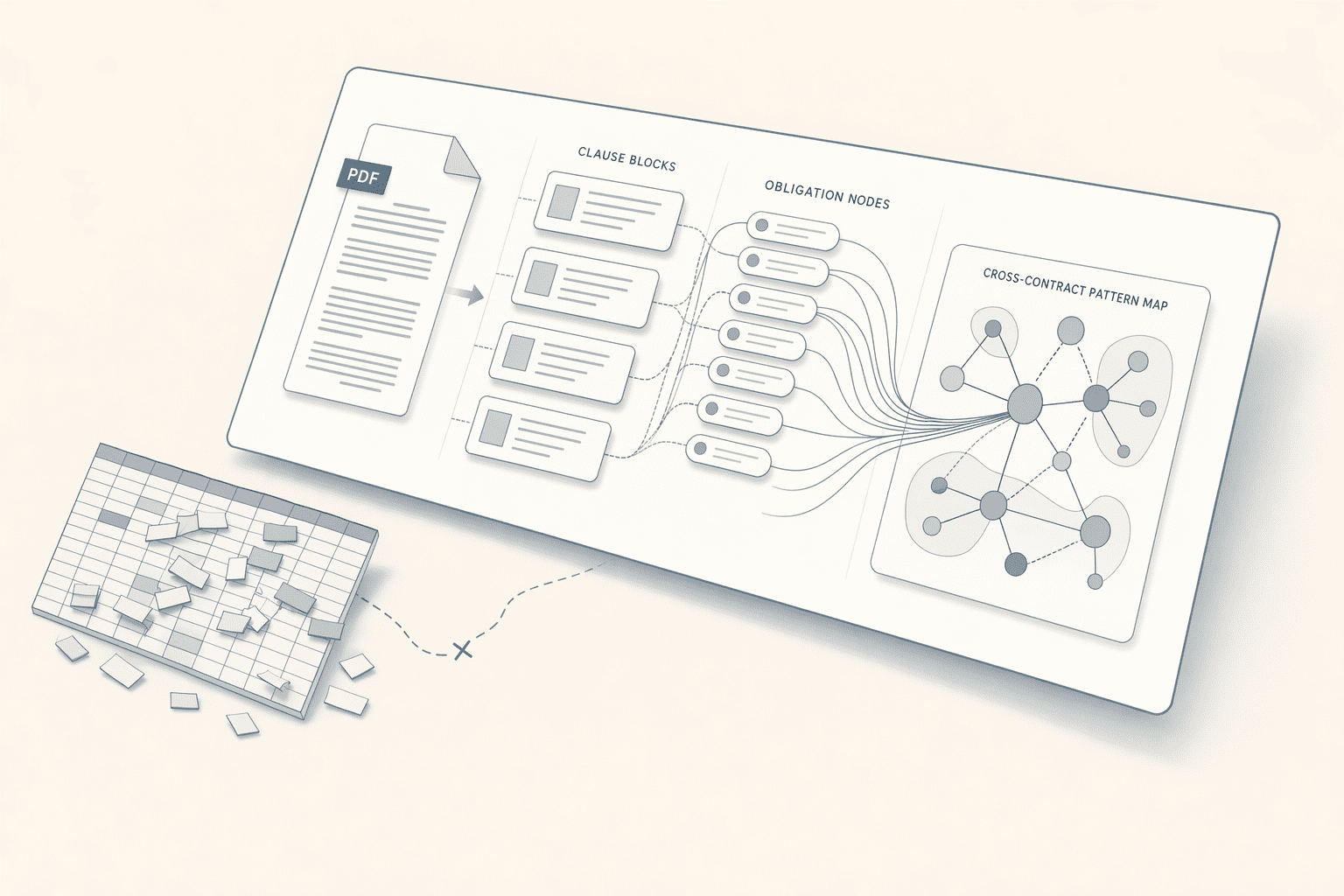
Yes — contract intelligence platforms use AI to convert contract PDFs into structured, queryable data that finance and legal teams can act on. These platforms extract clauses, track obligations, identify cost leakage, and surface cross-contract patterns that manual tracking cannot scale to cover.
The Contract Data Activation Problem
After signature, most contracts become static files stored in shared drives or email threads, disconnected from the operational systems that need their data. Finance teams discover pricing discrepancies weeks after invoices arrive. Procurement learns about unfavorable terms only when renewals trigger. Manual contract management is prone to costly mistakes, inefficiencies, and compliance risks. Spreadsheets break under the volume: they require manual data entry for every obligation, lack automated alerting for renewal deadlines, and cannot surface patterns like redundant vendor spend across departments.
What Intelligence Platforms Extract
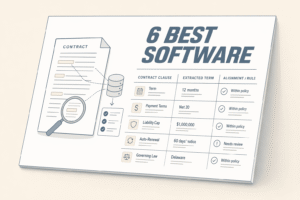
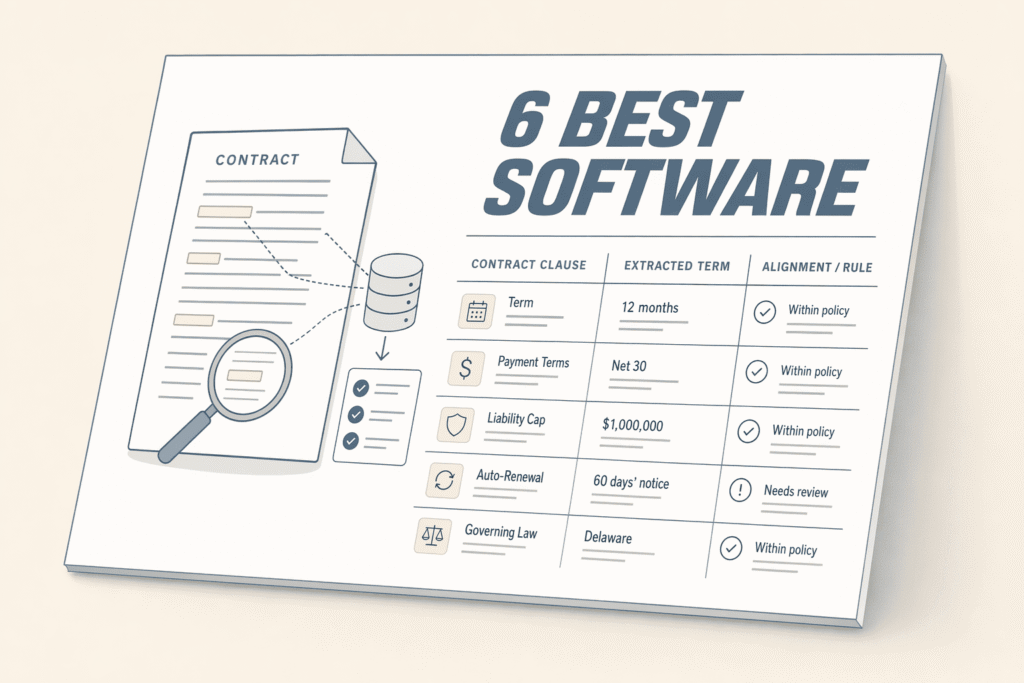
Contract intelligence platforms apply machine learning to analyze contract content and generate structured outputs, summaries, and risk insights. They extract key terms across legacy and live contracts in minutes, identify renewal dates, payment schedules, termination clauses, and liability caps, then push that data into ERP, procurement, or finance systems where teams already work. AI-powered solutions automate contract creation, track key obligations, and minimize errors. The result: finance sees discrepancies before payment runs, legal spots non-standard indemnity language before execution, and procurement negotiates better terms with visibility into existing supplier agreements.
Understanding how these platforms work clarifies why the cost problem persists in enterprises with thousands of executed agreements stored across disconnected systems.
The Operational Cost Problem: Where Legal and Finance Lose Money in Contract Data
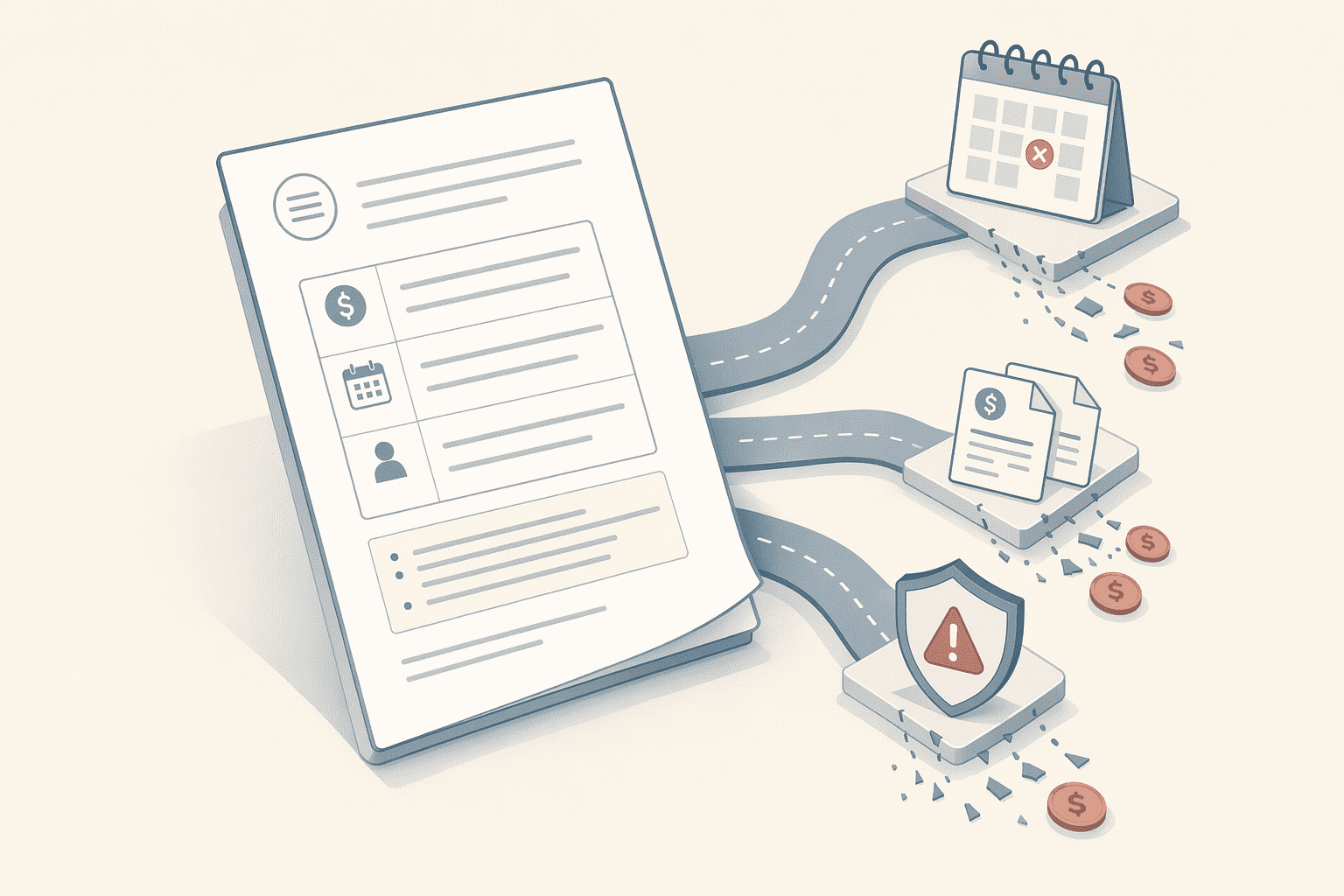
Enterprises leak revenue when contract obligations remain invisible after signature. Research shows that 90% of professionals struggle to locate specific contracts when needed, and organizations lose approximately 9% of revenue to contract leakage. Three cost drivers dominate: missed renewal windows, redundant vendor spend, and compliance exposure.
Missed Renewal Windows and Auto-Renewals
Contracts auto-renew when termination notices slip by untracked. Without systematic monitoring, renewal dates pass silently — locking teams into unfavorable terms or vendor lock-in clauses they negotiated away in prior cycles. The cost surfaces as budget overruns when finance discovers twelve-month commitments that should have been renegotiated or canceled.
Redundant Vendor Spend Across Departments
Legal, procurement, finance, and sales each negotiate independently when no centralized view surfaces existing vendor relationships. Marketing signs a SaaS analytics contract; three months later, product operations contracts with the same vendor at a higher tier — because neither team knew the other agreement existed. Volume discounts evaporate, and duplicate licenses drain budget.
Compliance Penalties and Audit Failures
Regulatory obligations, GDPR data retention schedules, SOC 2 vendor security attestations, HIPAA business associate agreements, sit buried in contract clauses with no tracking layer. When auditors arrive, teams scramble to reconstruct compliance evidence from fragmented storage. Penalties and remediation costs follow when obligations cannot be verified.
Contracts.ai transforms executed agreements into structured, operational intelligence that flows across the enterprise, addressing post-signature cost leakage alongside platforms such as Sirion, Icertis, and Agiloft.
When legal and finance teams set out to solve these cost leaks, they face a vendor landscape split between two implementation philosophies and dozens of feature claims.
Four Evaluation Criteria for Contract Intelligence Platforms
When legal and finance teams search for tools to turn contract data into cost-reduction insights, they encounter two distinct categories: workflow-native CLM systems built for pre-signature negotiation, and intelligence layers designed to activate executed agreements. Organizations using AI-powered contract management reduce processing time by up to 65%, yet most still manage contracts manually, buried in spreadsheets and inboxes. The four criteria below structure the buyer’s decision framework.
- Post-Signature Data Activation: Does the platform extract intelligence from executed agreements or focus on pre-signature workflows? AI clause detection automatically identifies payment deadlines, governing law, liability, renewal terms, and termination rights, capabilities that surface hidden obligations finance teams need for cost forecasting.
- Cross-Functional Intelligence Flow: Can contract data flow into ERP and procurement platforms without manual export? Platforms that integrate with NetSuite, SAP, or Coupa reconcile supplier invoices against signed terms, closing the gap between legal repositories and finance systems that drive cost accountability.
- Security and Compliance Architecture: Does the vendor provide SOC 2 certification, GDPR processing agreements, and HIPAA Business Associate Agreements? Enterprise buyers managing regulated contract data require documented safeguards, encryption at rest and in transit, and subprocessor transparency.
- Implementation Approach: Does deployment require replacing your entire CLM stack or layering intelligence over existing repositories? Intelligence-layer platforms connect to SharePoint, Box, or legacy CLM systems; workflow-native tools demand full contract lifecycle migration, a multi-quarter change-management effort many finance operations cannot absorb.
Post-Signature Intelligence: Turning Executed Agreements into Operational Data
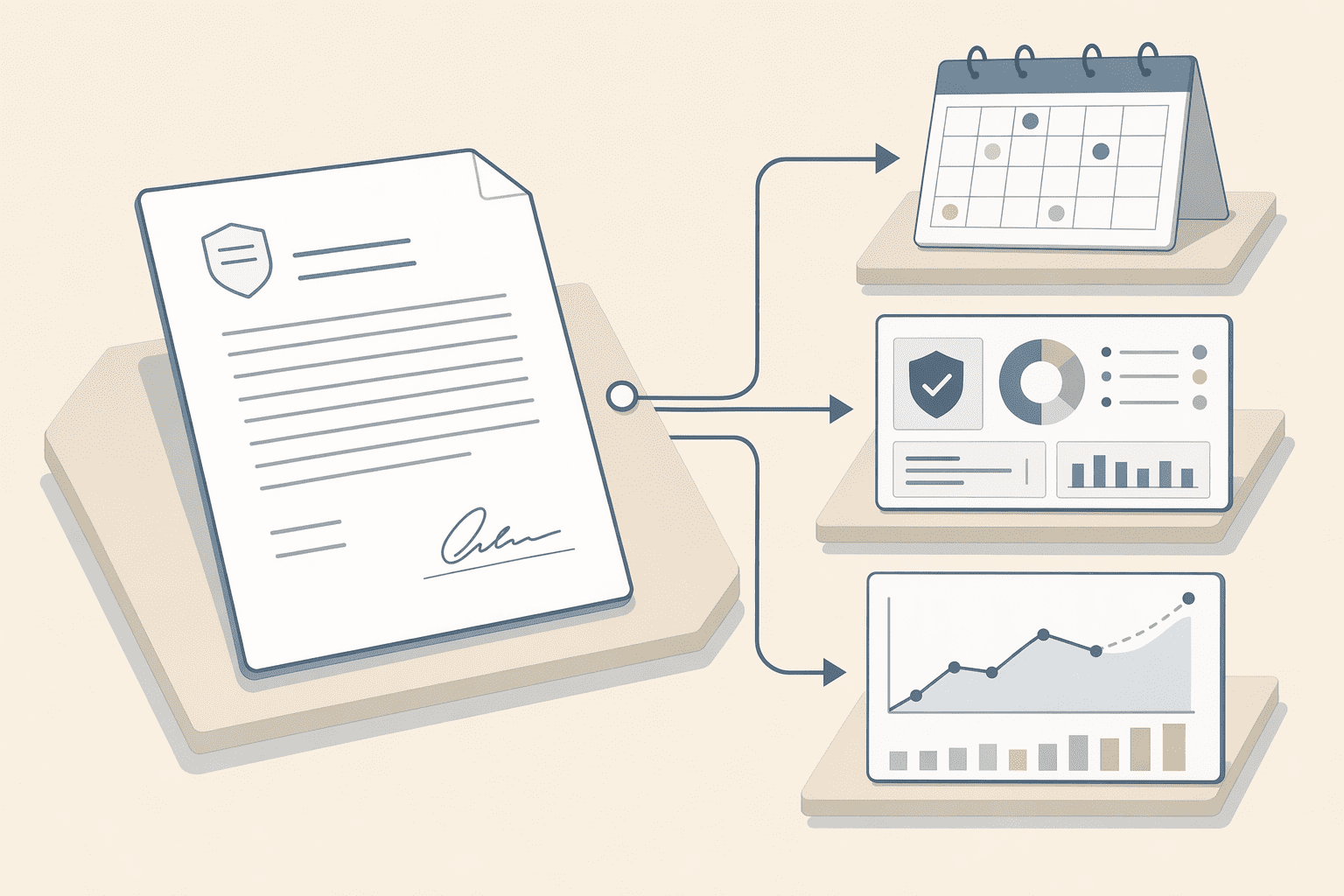
The moment a contract is signed, it becomes a data asset, but only if the terms, obligations, and risk indicators trapped inside can be extracted and routed to the teams that need them. Post-signature intelligence platforms convert executed PDFs into structured, queryable datasets that drive renewal calendars, compliance dashboards, and spend forecasts without forcing teams to migrate into heavyweight contract lifecycle management systems.
AI-Powered Clause Extraction and Risk Identification
AI-enabled contract analytics uses machine learning to identify and extract liability caps, indemnification clauses, intellectual property assignments, renewal terms, and payment schedules from large volumes of agreements. Platforms tag each extracted clause with metadata, clause type, confidence score, related obligations, and preserve the source language alongside structured fields so legal teams can validate flagged risks. Contracts.ai transforms executed agreements into structured, operational intelligence that flows across the enterprise, extracting key terms across legacy and live contracts in minutes.
Obligation Tracking and Automated Alerting
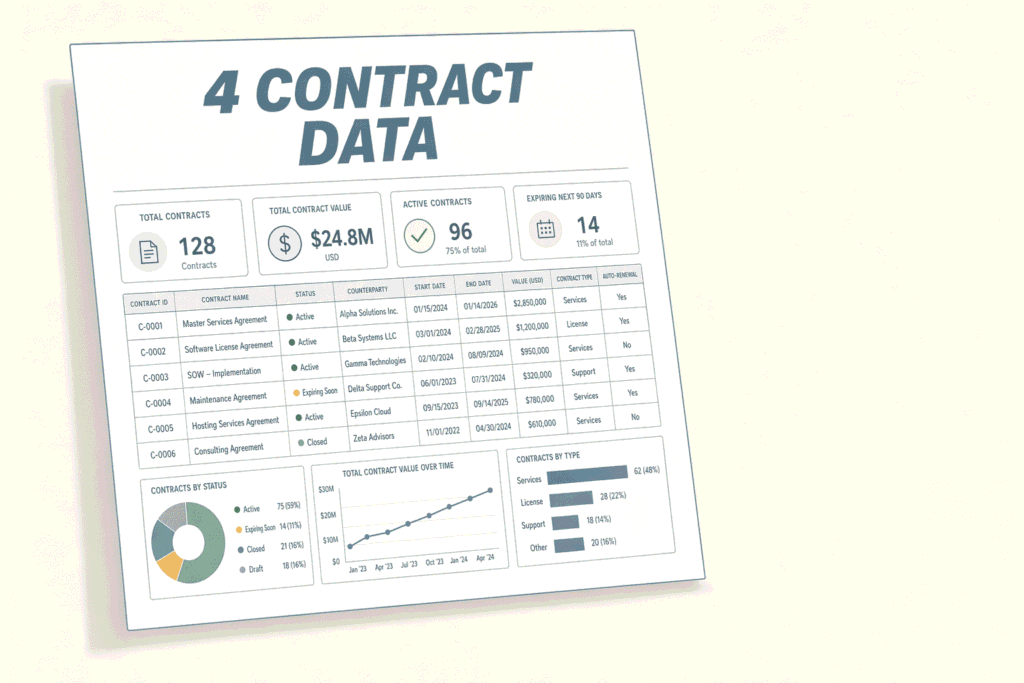
Extracted obligations, renewal deadlines, performance milestones, audit rights, data deletion requirements, flow into dashboards where legal and finance teams can track renewals, spend, and risk across thousands of agreements without manual reporting. Platforms generate automated alerts tied to each obligation’s due date, surface upcoming renewals 90 or 60 days in advance, and route notifications to the responsible stakeholder. When a vendor contract includes a termination-for-convenience window, the platform flags the date and creates a calendar entry, turning a buried clause into an actionable task.
Cross-Contract Pattern Recognition
Intelligence platforms surface risks and track obligations by comparing clauses across the full repository. If 40 percent of SaaS vendor agreements lack termination-for-convenience provisions, the platform flags the concentration risk. If payment terms vary unpredictably, Net 30 in some contracts, Net 60 in others, finance teams can identify vendors eligible for standardization. Cross-contract benchmarking reveals vendor concentration, inconsistent liability caps, and missing data-processing addenda that would otherwise remain invisible until audit or dispute.
Post-signature intelligence delivers value only when the extracted data reaches operational systems securely and meets enterprise regulatory standards.
Security and Compliance Architecture for Enterprise Contract Data
SOC2, GDPR, and HIPAA Compliance
Enterprise contract platforms must meet foundational regulatory standards. SOC2 certification validates a vendor’s controls for security, availability, and confidentiality, critical when contracts contain payment terms, pricing, and performance metrics. GDPR compliance ensures lawful processing of personal data embedded in vendor agreements, employment contracts, and customer records. HIPAA safeguards apply when contracts reference protected health information. Contracts.ai holds SOC2 and SOC3 certifications and supports GDPR and HIPAA compliance frameworks, meeting the baseline criteria enterprise buyers require.

Customer Data Sovereignty and Model Training Policies
The transparency gap most vendors leave unaddressed: does your contract text train the vendor’s shared AI models? Many platforms describe AI-powered extraction without disclosing whether proprietary clauses, negotiation history, or pricing data feed generalized model training. Buyers should require explicit contractual language prohibiting this practice. Contracts.ai states that customer data is never used to train public or shared models, setting a transparency standard all vendors in this category should adopt.
Access Controls and Audit Trails
Finance and legal teams need role-based permissions to restrict who can view specific contract terms, and immutable audit logs to demonstrate compliance during regulatory reviews. Encryption at rest and in transit protects data from unauthorized access. Look for platforms that document these controls in vendor security questionnaires and provide exportable audit trails for internal governance processes.
Security architecture must address not just perimeter controls, but also how vendor AI models interact with proprietary contract language.
Implementation Models: Intelligence Layer vs. Rip-and-Replace Systems
Intelligence Layer Deployments
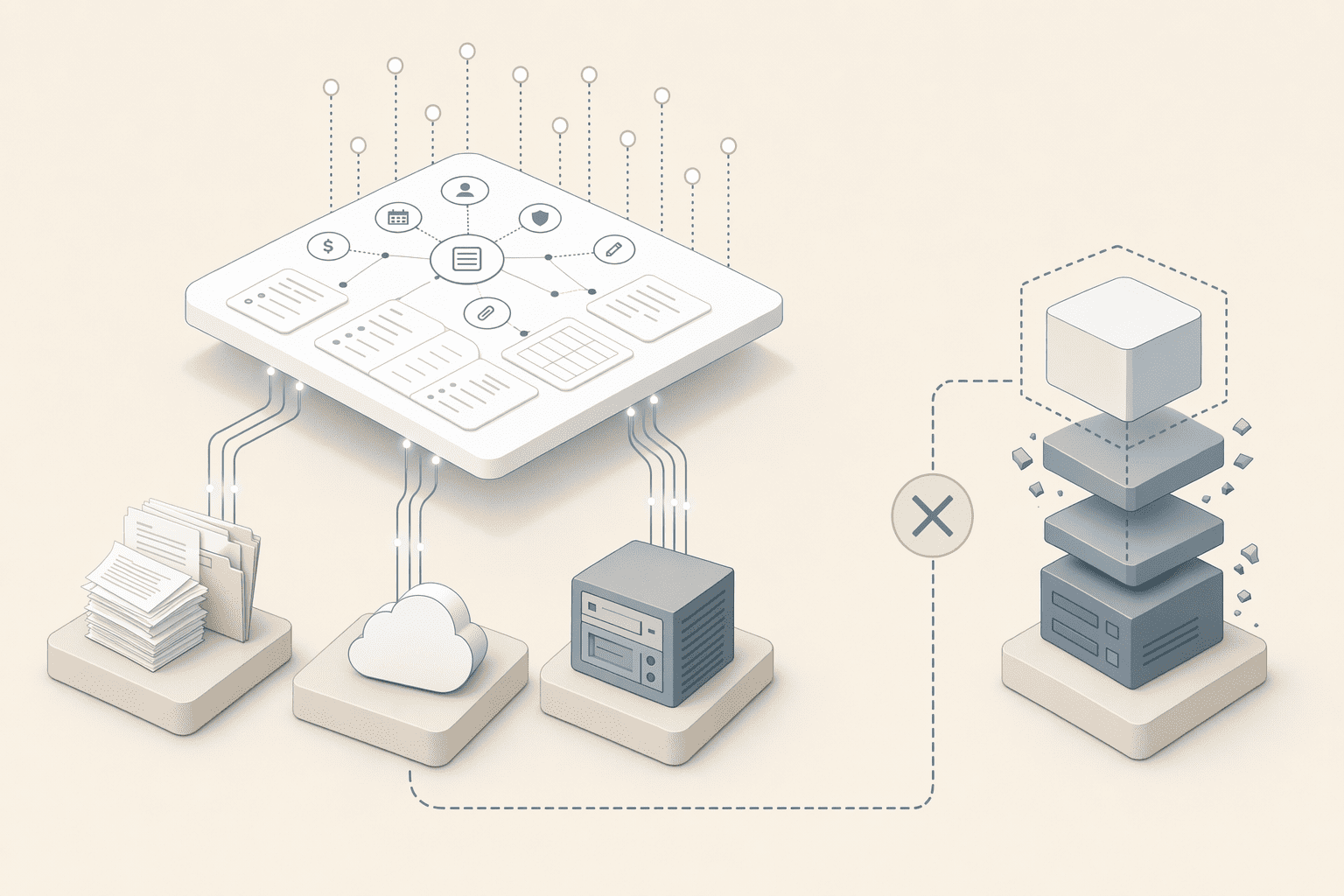
An intelligence layer sits on top of existing contract repositories, SharePoint, Google Drive, or legacy CLM systems, without requiring migration of documents or workflows. These platforms extract and structure data from contracts already in place, turning static files into queryable, actionable insights. Contracts.ai operates as a post-signature intelligence layer, processing signed agreements to surface obligations, renewal dates, and spend commitments without replacing existing signing or approval workflows.
Full CLM Replacement Risks
Rip-and-replace implementations demand significant capital and change-management effort. Vendors securing funding to automate contracting processes often target full-lifecycle solutions, requiring teams to abandon familiar tools, retrain staff, and migrate thousands of documents. Workflow disruption during migration can stall approvals, delay renewals, and create compliance gaps. The investment required extends beyond software licenses to consulting, data migration, and ongoing support, costs that may exceed the intelligence value extracted.
Pilot Approaches and Phased Rollouts
Buyers can mitigate risk by piloting intelligence platforms with a limited contract set, typically high-value agreements or a single business unit, before committing to full deployment. This phased approach validates extraction accuracy, user adoption, and cost-reduction hypotheses without the irreversibility of a rip-and-replace decision. Evaluate vendors on their ability to deliver insights from a subset of contracts while preserving existing workflows, then scale incrementally as value materializes.
How Contracts.ai Approaches Post-Signature Intelligence
Contracts.ai’s Post-Signature Intelligence Capabilities
Contracts.ai positions itself as a post-signature intelligence layer that extracts key terms across legacy and live contracts in minutes. The platform uses AI and machine learning to analyze contract content and generate summaries and risk insights, converting executed agreements into structured operational intelligence that flows across the enterprise. The team behind the platform brings 30+ years combined experience deploying CLMs, ERPs, and procurement platforms at Netflix, Google, Spotify, Deloitte, Cisco, and Blackstone, a background that informs the system’s enterprise-grade design.

Cross-Functional Intelligence Flow to Finance and Procurement
The platform integrates with ERP systems including Oracle and SAP, enabling finance and procurement teams to reconcile supplier invoices with signed contracts and surface obligations directly within existing workflows. This cross-system visibility helps organizations identify payment discrepancies, track renewal obligations, and flag compliance risks without requiring teams to switch between contract repositories and operational tools.
When Contracts.ai Fits (and When It Doesn’t)
Best for: Legal and finance teams with established contract repositories who need to extract intelligence without replacing existing CLM or procurement systems. The intelligence-layer approach suits organizations seeking cost reduction through better visibility into obligations, payment terms, and risk clauses across thousands of executed agreements. Less suitable for: Teams requiring end-to-end contract lifecycle management including workflow automation, approval routing, or negotiation collaboration, Contracts.ai focuses on post-signature intelligence rather than pre-signature workflow.
| Platform | Starting Price | Contract Data Extraction | OCR Capabilities |
|---|---|---|---|
| Contracts.ai | Contact for pricing | AI-powered clause extraction with 99%+ accuracy | Yes, supports scanned and legacy documents |
| Ironclad | Contact for pricing | AI extraction within full CLM workflow | Yes, integrated OCR |
| Icertis | Contact for pricing | Enterprise-scale extraction engine | Yes, multi-language OCR |
| Conga | Contact for pricing | Extraction tied to document generation workflow | Yes, supports legacy formats |
Intelligence-layer deployments suit teams with existing contract repositories who need insights without workflow replacement; full CLM systems suit teams building contract management from scratch who need end-to-end lifecycle control. Post-signature intelligence platforms excel at activating dormant contract data and surfacing cross-contract patterns; they do not replace pre-signature drafting, negotiation, or approval workflows, teams needing both capabilities should evaluate hybrid vendors or plan for a two-platform architecture.
As AI clause extraction accuracy improves and enterprises accumulate larger contract repositories, the competitive advantage will shift from data capture, digitizing PDFs, to intelligence activation: how quickly can legal and finance teams turn contract insights into procurement decisions, compliance audits, and vendor negotiations.
Pilot Contracts.ai’s post-signature intelligence with a limited contract set to validate AI extraction accuracy and cross-functional integration before committing to full deployment. This approach reduces risk while proving value on high-priority agreements first.
Frequently Asked Questions
What is the difference between contract intelligence platforms and contract lifecycle management (CLM) systems?
Contract intelligence platforms focus on post-signature data activation, extracting insights from executed agreements, while CLM systems manage pre-signature workflows like drafting, negotiation, and approvals. Some vendors offer both capabilities; others specialize in one. Organizations seeking end-to-end management need different tools than those activating existing contract repositories.
Can contract intelligence platforms integrate with our existing ERP or procurement systems?
Yes, most enterprise contract intelligence platforms offer pre-built integrations with Oracle, SAP, Workday, and other ERP systems to push contract data into operational workflows. Integration depth varies from API connections to one-way exports. Buyers should validate specific integration capabilities during vendor evaluation to ensure extracted data flows into procurement, finance, and legal systems.
How long does it take to deploy a contract intelligence platform?
Deployment timelines depend on implementation model. Intelligence-layer deployments on existing repositories can pilot in 2-4 weeks with a limited contract set, while full CLM replacements typically take 3-6 months including workflow migration and change management. Phased approaches validate extraction accuracy and user adoption before full-scale investment.
Do contract intelligence platforms use my contract data to train their AI models?
This varies by vendor and is a critical question buyers must ask explicitly. Some vendors use customer contract data to improve shared models, creating competitive intelligence risks. Others prohibit using customer data for model training. Buyers should require transparency on whether proprietary clauses, negotiation history, or pricing data feed generalized training.
What security certifications should I require from a contract intelligence vendor?
Enterprise buyers should require SOC2 Type II (proves security controls operate effectively over time), GDPR compliance for EU contract data, and HIPAA compliance if contracts contain protected health information. These certifications are table stakes for enterprise contract platforms. Buyers should also validate role-based permissions and immutable audit logs.
Can I pilot a contract intelligence platform with a subset of contracts before committing to full deployment?
Yes, many vendors offer pilot programs where buyers can test intelligence capabilities on 50-200 contracts without migrating the full repository. Pilots validate AI extraction accuracy, integration feasibility, and user adoption before full-scale investment. This phased approach reduces deployment risk and validates cost-reduction hypotheses on high-value agreements or single business units.
What types of contract clauses can AI extraction identify?
Modern AI clause extraction identifies liability caps, indemnification clauses, IP assignment terms, renewal and termination provisions, payment schedules, confidentiality obligations, and data protection clauses. Extraction accuracy varies by clause complexity. Platforms use confidence scores to flag low-certainty extractions for human review, ensuring legal teams validate critical terms before operational use.
Sources
- AI Contract Management Software 2026: 10 Best Tools – bindlegal.com (2026)
- Top 10 AI-Powered Contract Management Software – www.saaslaunchr.com (2025)
- 10 Best AI Contract Management Software in 2026: SaaS … – www.cloudeagle.ai (2025)
- KPMG Cognitive Contract Management – kpmg.com
- Making AI Work For Your Finance Team – www.forbes.com (2026)
- Best AI Contract Management Software for 2026 – factorialhr.com (2026)
- LexCheck raises $17M to automate common contracting processes – techcrunch.com (2022)