






Enterprise contract lifecycle management platforms promise AI-powered intelligence, but deployment models, implementation timelines, and total cost of ownership vary dramatically across vendors.
This guide maps six CLM platforms across architecture, AI maturity, and ROI trade-offs, revealing which solutions require full repository migration and which pilot in weeks without workflow disruption.
Key Takeaways
- Enterprise CLM platforms split into full-stack workflow systems requiring multi-quarter migrations and intelligence layers that pilot over existing repositories in weeks.
- Annual licensing ranges from $30,000 to $150,000+, but implementation services and custom integrations typically add 2-2.5× the base quote.
- Most platforms don’t publicly document whether they train AI models on customer contract data, creating a critical due diligence gap for enterprise buyers.
- Full-stack platforms consolidate pre-signature approvals and post-signature analytics but require repository migration; intelligence layers deliver faster time-to-value without replacing workflow tools.
- AI maturity varies from assistive clause extraction to autonomous obligation tracking and risk identification—enterprise buyers should verify whether capabilities are genuinely agentic or require manual review.
What Enterprise CLM Software Actually Delivers (and What It Costs)
Enterprise CLM platforms fall into two deployment models: full-stack workflow replacements like Ironclad and Icertis that manage pre-signature approvals, redlining, and e-signature, and intelligence layers like Contracts.ai that extract clause-level metadata and obligation tracking from executed agreements without replacing existing workflows. Full-stack platforms deliver 300%+ ROI in vendor-funded Total Economic Impact studies, but enterprise buyers should model implementation services, change management, and integration costs separately to estimate net ROI timeline.
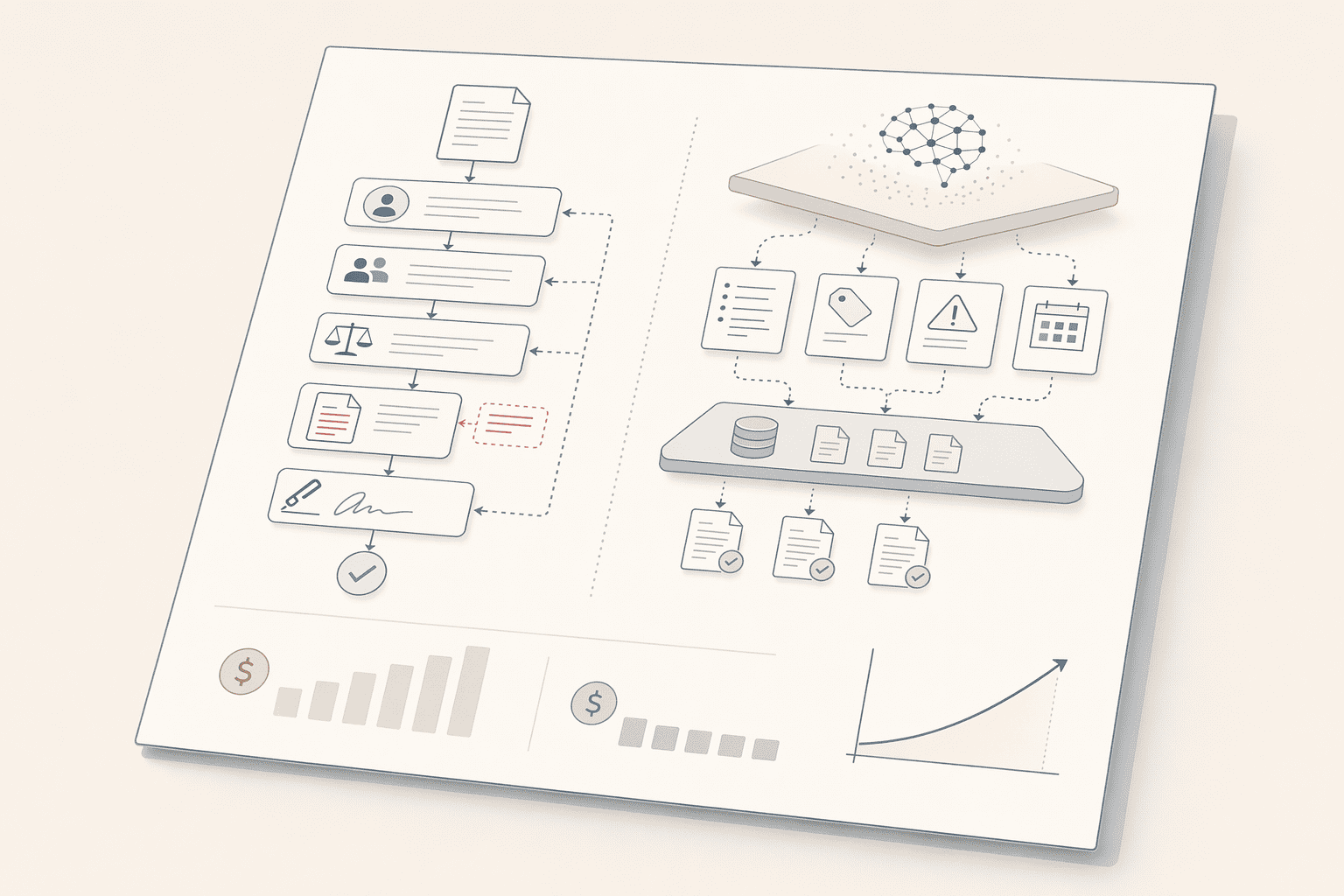
Core CLM Capabilities: Pre-Signature Workflow vs. Post-Signature Intelligence
Workflow-centric platforms automate approvals, redlining, and collaboration before execution. Post-signature intelligence platforms—like Contracts.ai—focus on extracting structured data, identifying key terms and clauses, and tracking obligations across legacy and live contracts. The distinction determines whether a platform replaces existing contract workflows or layers intelligence atop them without requiring process rework.
Total Cost of Ownership Beyond License Fees
Annual base licensing costs range from $30,000 to $150,000+, but implementation services, custom workflow configuration, and ERP integrations typically add 2-2.5× the base quote. Mid-market buyers encounter 6-12 month deployment timelines for enterprise-tier platforms, while intelligence layers deploy in weeks by ingesting existing contract repositories without workflow replacement.
ROI Mechanisms: Automation Savings vs. Compliance Cost Avoidance
Poor contract management costs companies 9% of bottom line, and inefficient contracts lead to 5-40% value loss per deal. ROI materializes through manual review reduction, audit preparation efficiency, and breach prevention—but requires clear metrics to avoid shelfware. Intelligence-layer deployments accelerate time-to-value by eliminating change management overhead tied to workflow replacement.
Before comparing specific platforms, enterprise buyers need a framework for evaluating AI maturity, cost transparency, and deployment architecture.
How to Evaluate CLM Platforms for AI-Powered Cost Reduction
Enterprise buyers face a critical knowledge gap: CLM platforms market ‘AI-powered intelligence’ without disclosing whether they train large language models on your contract data, how much upfront migration they require, or what cross-border data transfer mechanisms they actually use. Four evaluation dimensions separate platforms that reduce cost from those that merely shift it.
AI Maturity: Model Training Policies and Contract Intelligence Depth
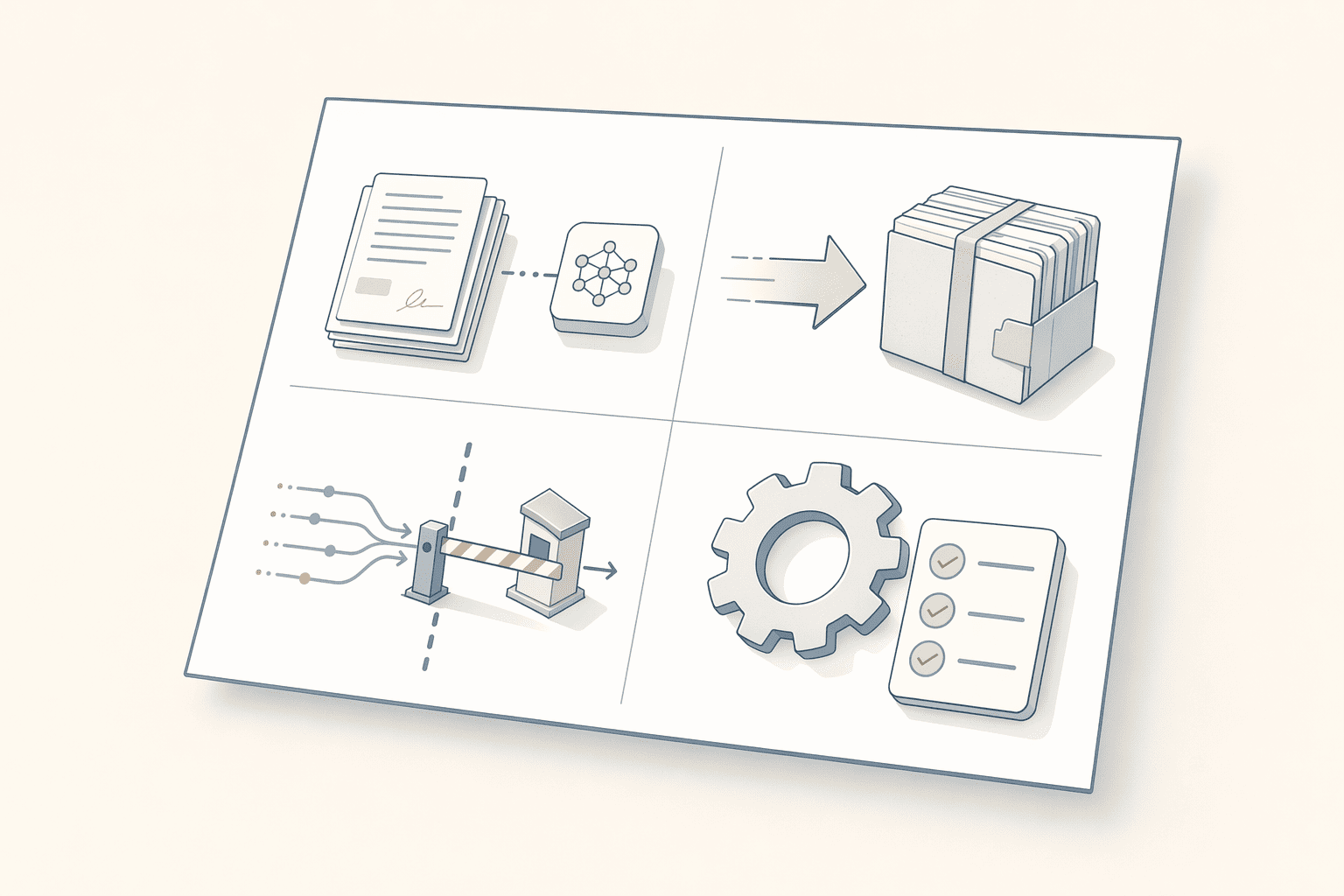
Ask vendors explicitly: does your platform train LLMs on customer contract data? Most avoid the question. Contracts.ai does not use customer data for any LLM model training. Evaluate clause extraction accuracy, risk identification logic, and obligation tracking workflows — not feature bullets.
Implementation Architecture: Migration-Required vs. Pilot-Friendly Models
Enterprise platforms often require full repository migration before delivering intelligence. Mid-market tools can deploy in 2-8 weeks without upfront data transfer. Pilot-friendly architecture lets finance teams validate ROI on a subset of contracts before committing to organization-wide rollout, the architectural choice competitors rarely frame transparently.
Data Residency and Cross-Border Transfer Mechanisms
‘GDPR compliant’ is a checkbox, not a data protection strategy. Request specifics: does the platform use Standard Contractual Clauses for EEA transfers? Where is data processed? Contracts.ai transfers personal data outside the EEA using Standard Contractual Clauses plus technical safeguards including encryption and access controls. Competitors’ cross-border mechanisms are often undisclosed until procurement review.
The table below maps each platform’s contract lifecycle coverage, deployment model, core AI capabilities, and implementation requirements.
6 Enterprise CLM Platforms Compared: Architecture, AI Maturity, and ROI
The enterprise CLM market spans full-stack workflow platforms, intelligence-layer solutions, and agentic post-signature specialists. Ironclad is the overall leader for enterprises over 500 employees, with three consecutive years as a Gartner Magic Quadrant Leader and $150M ARR. Icertis leads the enterprise tier with the deepest feature set and strongest analyst positioning, though its implementation complexity makes it wrong for most mid-market organizations. Sirion built its reputation on post-signature contract management, obligation tracking, performance monitoring, and vendor compliance analysis, investing heavily in what happens after contracts are executed. Agiloft, Evisort, and LinkSquares round out the six-platform roster analyzed here, each serving distinct buyer profiles across lifecycle coverage and AI maturity.
Platform Overview: Lifecycle Coverage and Target Enterprise Profile
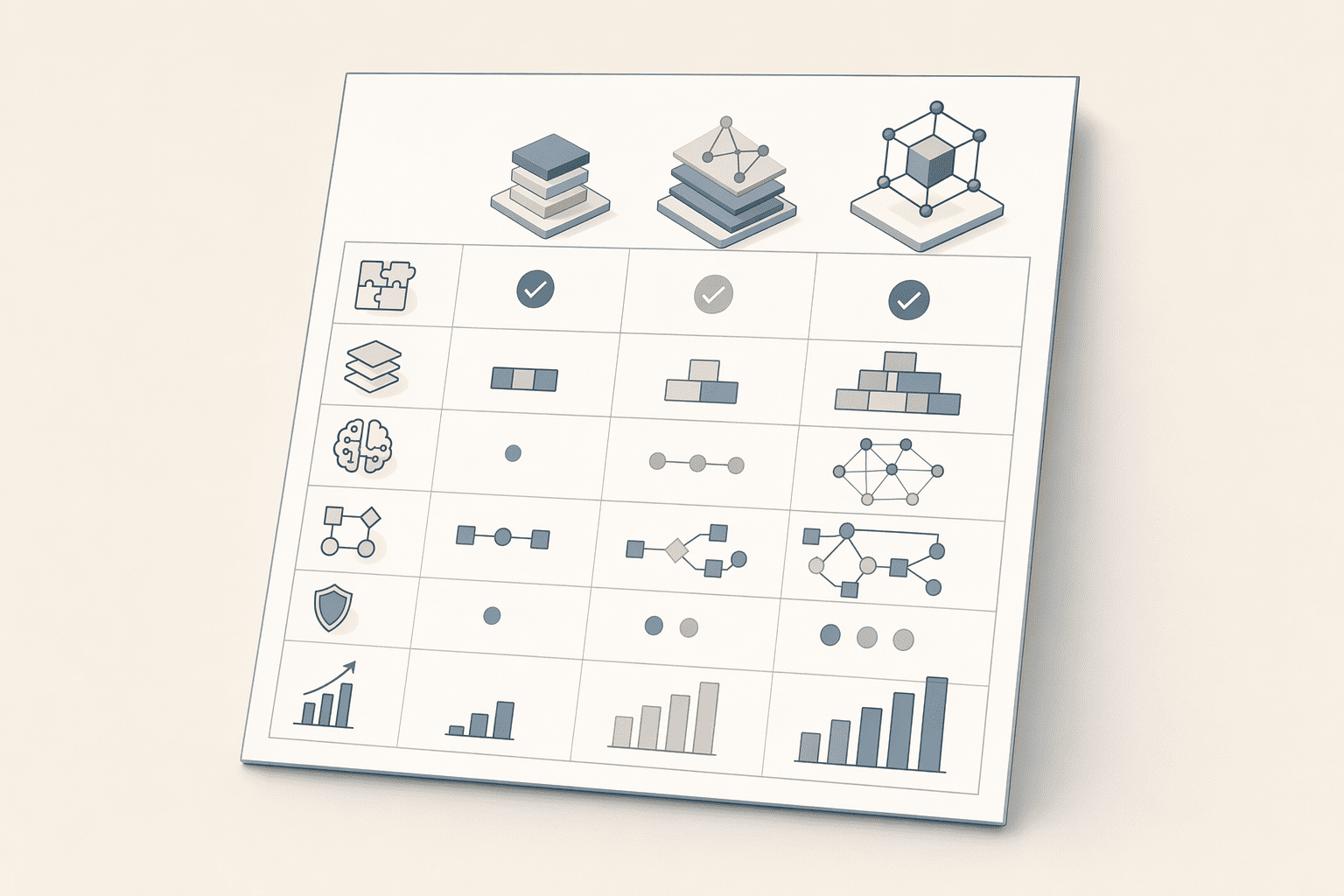
The table below maps each platform’s contract lifecycle coverage, deployment model, core AI capabilities, and implementation requirements. Icertis covers every lifecycle stage, authoring, negotiation, execution, obligation management, analytics, and renewal optimization, with AI capabilities in development since 2015. Its implementation timelines run 6-12 months, with pricing starting above $150,000 annually. Sirion’s pre-signature workflow capabilities are less mature than Icertis or Agiloft, but it delivers best-in-class obligation management and performance analytics. Contracts.ai functions as a post-signature intelligence layer, using machine learning models to analyze documents and generate structured outputs, summaries, and risk insights, without supporting contract workflows such as approvals.
| Platform | Deployment Model | Core AI Capabilities | Lifecycle Coverage | G2 Rating | Implementation Complexity |
|---|---|---|---|---|---|
| Contracts.ai | Intelligence layer | Machine learning for clause extraction, risk insights; uses models from OpenAI, Anthropic, Inception, Google Gemini | Post-signature intelligence; does not support workflows | Not disclosed | Low |
| Icertis | Full-stack replacement | AI extraction, obligation management | Full lifecycle | Not disclosed | High (6-12 months) |
| Ironclad | Full-stack workflow | AI workflow automation, specialized agents for drafting, extraction, obligation tracking, risk redlining | Pre- and post-signature | Not disclosed | Medium |
| Sirion | Agentic post-signature | AI-powered compliance monitoring, specialized agents | Post-signature focus | Not disclosed | Medium |
| Agiloft | Full-stack replacement | Rule-based + AI extraction | Full lifecycle | Not disclosed | High |
| Evisort | Intelligence layer | AI clause extraction, risk identification | Post-signature intelligence | Not disclosed | Low to medium |
| LinkSquares | Intelligence + workflow | AI analytics, conversational contract work | Pre- and post-signature | Not disclosed | Medium |
AI Capabilities and Implementation Requirements
Ironclad builds AI around specialized agents for drafting, extraction, obligation tracking, and risk redlining, delivering the deepest AI workflow automation in the market. Icertis has the most mature AI extraction and obligation management, backed by its strongest enterprise integration library (SAP, Salesforce, Microsoft). Sirion provides AI-powered compliance monitoring optimized for outsourcing and managed services contract governance. Training data usage is not publicly documented for most competitors as of 2026; Contracts.ai does not train models on customer data. Implementation lift varies: full-stack platforms (Ironclad, Icertis, Agiloft) require migration of existing workflows, while intelligence layers (Contracts.ai, Evisort) overlay existing contract repositories with lower deployment friction.
Ironclad: Enterprise-Standard CLM with Workflow Focus
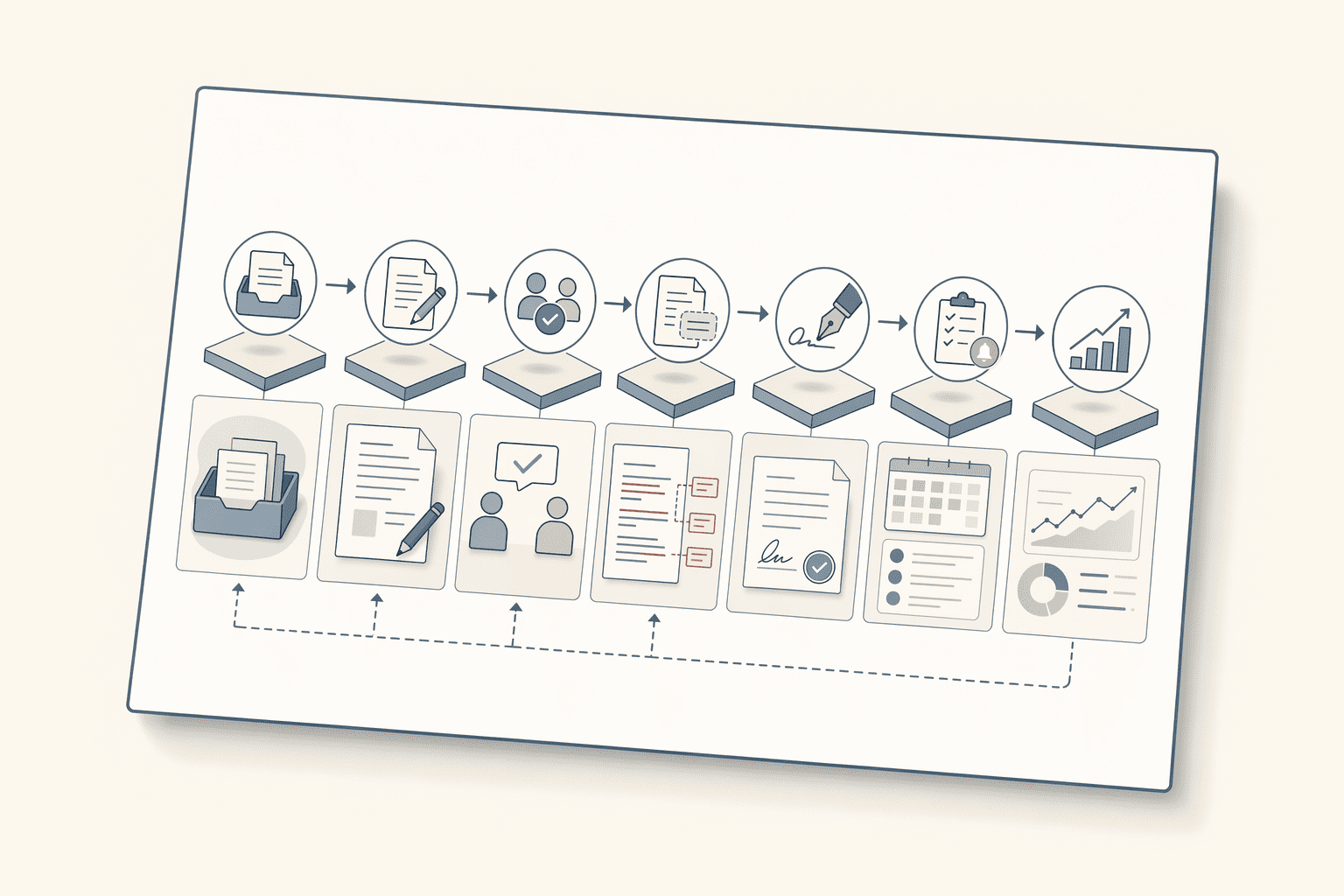
Ironclad has established itself as the enterprise workflow benchmark in contract lifecycle management, built around pre-signature approval chains, redlining collaboration, and e-signature orchestration. The platform promises faster deals, better insights, and less risk through AI-powered automation across the full contract lifecycle, from intake and authoring through obligation tracking and renewal optimization.
Workflow Automation and Contract Repository Depth
Ironclad’s strength lies in its full-stack workflow orchestration: configurable approval routing, clause library management, real-time redlining with version control, and native e-signature integration. The platform is designed for organizations where contracts move across legal, procurement, sales, and finance, requiring structured handoffs, audit trails, and role-based access at every stage. Its repository architecture supports large-scale contract storage with AI-assisted metadata extraction, obligation calendaring, and cross-contract analytics. For enterprises managing complex approval hierarchies and multi-stakeholder negotiations, Ironclad delivers the workflow depth that siloed tools cannot match.
Pricing and Implementation Requirements
Ironclad doesn’t publish pricing; the platform uses custom quotes tailored to organization size, contract volume, and feature requirements. Annual base licensing costs typically range from $30,000 to $150,000+, with total first-year costs, including implementation, integrations, and professional services, reaching $80,000 to $320,000+. Budget planning should account for 2 to 2.5× the base licensing quote to cover implementation and integration expenses. Implementation timelines often span several months and require dedicated change management resources to migrate existing contract repositories, train cross-functional users, and configure approval workflows. While this upfront investment delivers thorough workflow automation, it represents a higher barrier to entry than intelligence-layer platforms that integrate with existing document stores and ERP systems without requiring full repository migration.
Icertis: Contract Intelligence for Global Enterprises
Global Compliance and Multi-Language Contract Intelligence
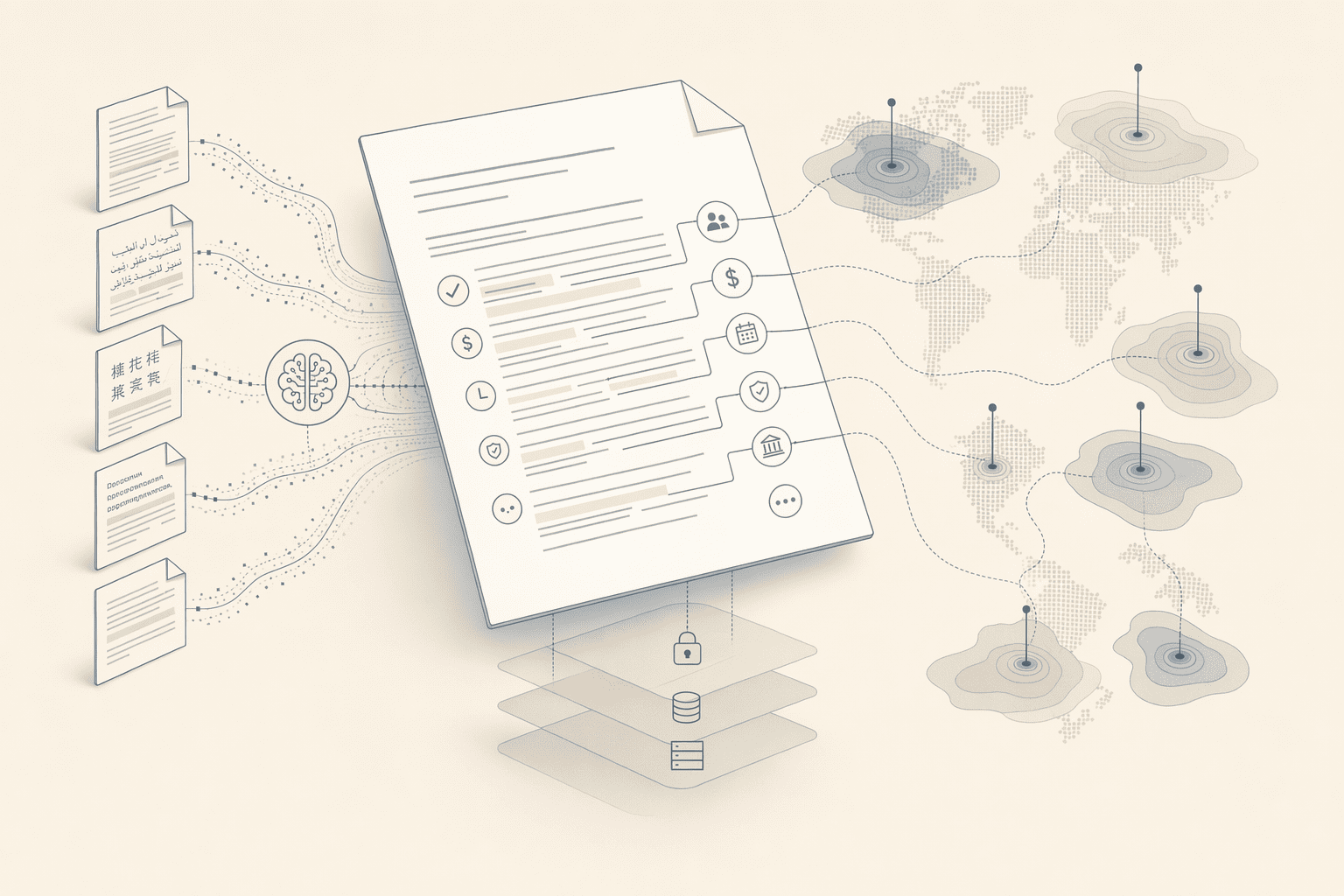
Icertis delivers contract intelligence built for international operations at scale. The platform covers authoring, negotiation, execution, obligation management, analytics, and renewal optimization with AI capabilities developed since 2015. Multi-entity and multi-jurisdictional support enables enterprises to manage 10,000+ contracts across regions with data residency options tailored to regulatory requirements. AI extraction and obligation management work across languages, addressing global compliance demands that few mid-market tools can match. Icertis’s enterprise integration library connects deeply with SAP, Salesforce, and Microsoft ecosystems, positioning the platform as infrastructure rather than a point solution.
Enterprise Integration and Deployment Complexity
Implementation timelines run 6-12 months, reflecting the platform’s configuration depth and integration scope. Pricing starts above $150,000 annually for most deployments, requiring dedicated admin resources to manage ongoing configuration. The complexity makes Icertis overkill for organizations managing fewer than 5,000 contracts, best suited for global enterprises with established ERP/CRM infrastructure and budgets for multi-quarter implementations. Organizations seeking faster deployment or pilot-friendly intelligence layers should evaluate lighter alternatives first.
Sirion: Agentic AI Architecture for Post-Signature Intelligence
Agentic AI and Post-Signature Contract Analytics
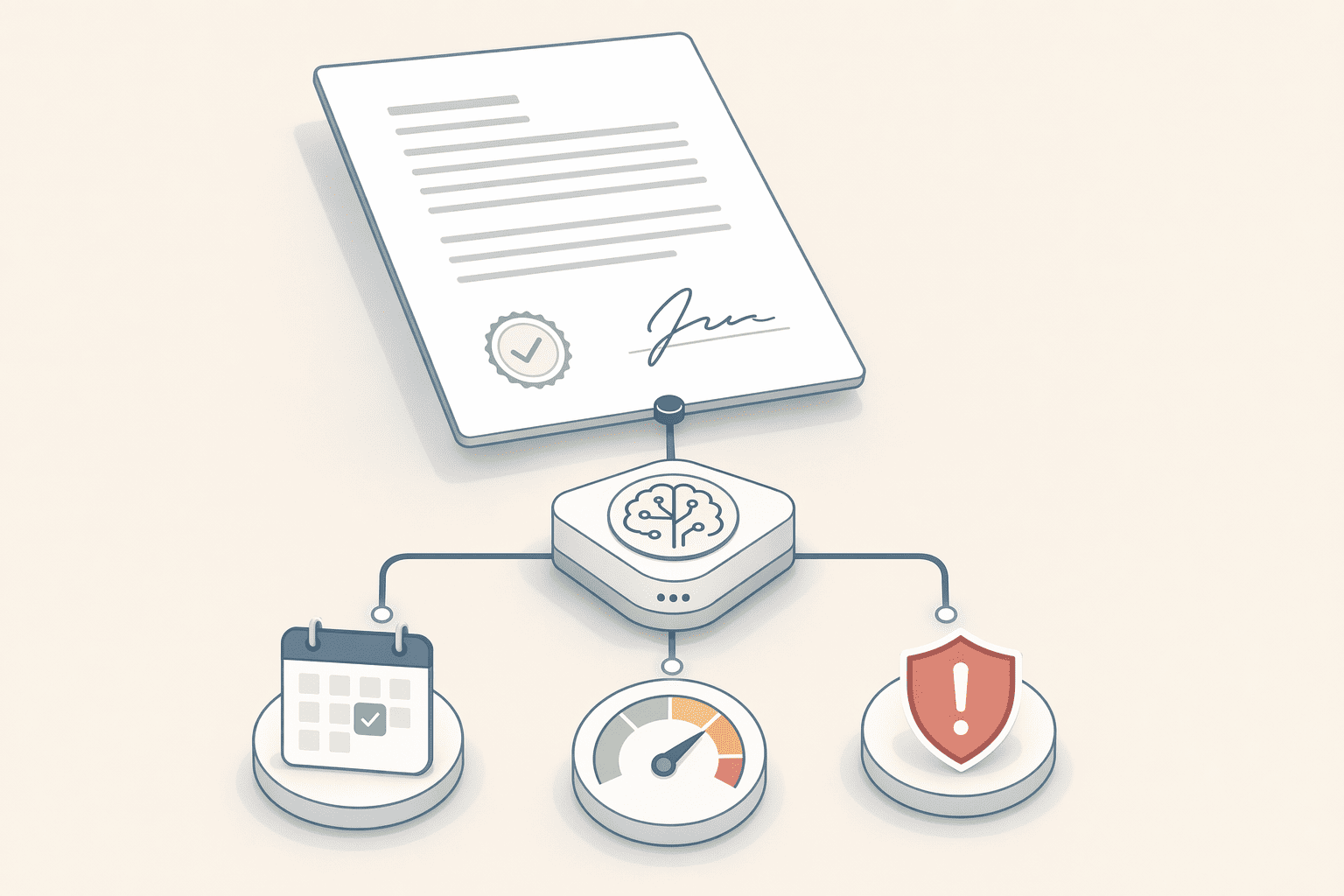
Sirion built its reputation on post-signature contract management, obligation tracking, performance monitoring, and vendor compliance analysis. Its “agentic AI” positioning emphasizes autonomous risk identification and proactive alerts that operate without manual rule configuration. Unlike pre-signature workflow platforms that automate approval routing, Sirion’s AI focuses on executed contracts, extracting renewal dates, SLA thresholds, and supplier scorecards from signed documents.
Supplier Relationship and Performance Management
Sirion excels in post-execution intelligence: supplier scorecards, compliance monitoring, and AI-powered risk alerts. Best for enterprises managing large executed portfolios (10,000+ contracts) where compliance and supplier relationship governance outweigh deal-velocity concerns. Pre-signature authoring capabilities remain less mature than competitors focused on negotiation workflows.
Agiloft: No-Code Customization at Enterprise Scale
No-Code Workflow Builder and Customization Depth
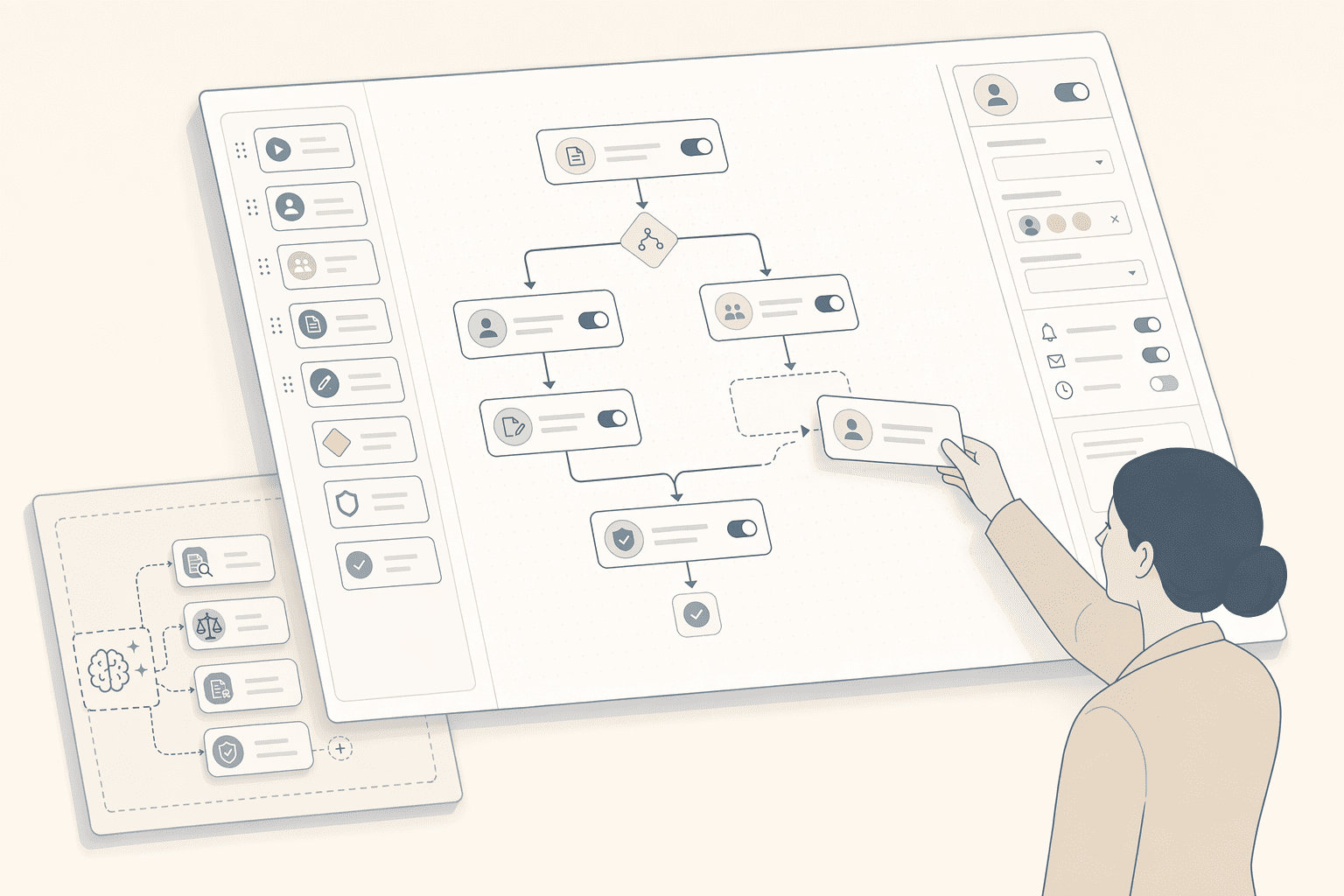
Agiloft differentiates through business-user-configurable workflows that eliminate IT dependency for approval chains, custom fields, and routing logic. The platform’s no-code workflow automation allows procurement and legal teams to tailor contract processes without developer resources, a contrast to systems requiring professional services for similar changes. While clause extraction capabilities are present, AI features require evaluation against native depth: organizations should verify whether extraction, obligation tracking, and risk scoring operate as core modules or necessitate add-ons, particularly when comparing against platforms with embedded intelligence.
Pricing Model and Long-Term Flexibility
Agiloft uses a quote-based model across three tiers, with annual costs ranging from approximately $6,000 to over $60,000 depending on users, features, and integrations. The average buyer pays around $68,121 per year, transparency that supports total cost of ownership planning relative to competitors with opaque pricing. Mid-market to enterprise buyers requiring deep workflow customization with limited IT resources benefit most, particularly when implementation services and ongoing change costs are factored into long-term spend. Organizations should assess whether Agiloft’s subscription versus perpetual license options align with multi-year contract management strategies.
DocuSign CLM: E-Signature Leader’s Lifecycle Platform
E-Signature Integration and Contract Lifecycle Extension
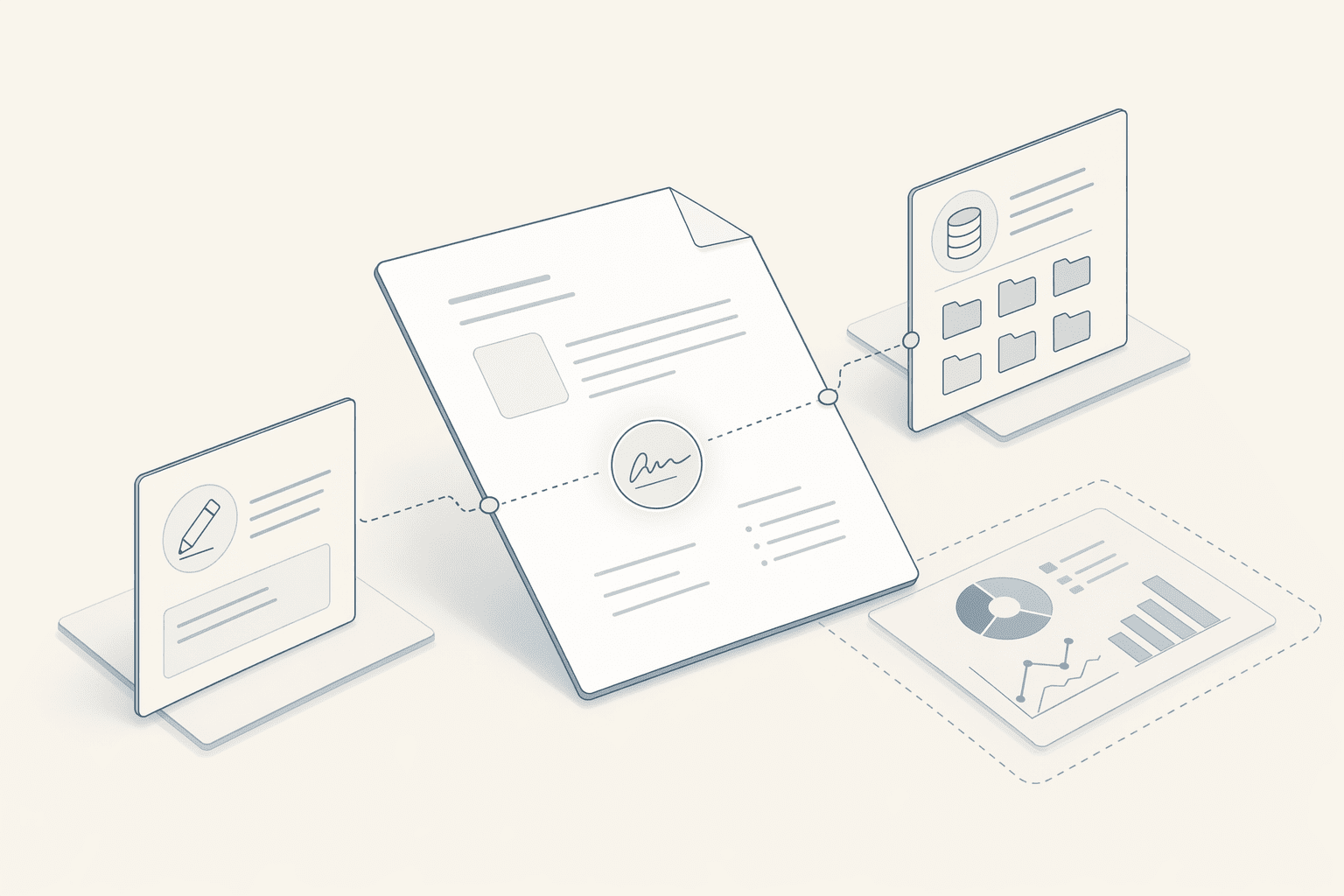
DocuSign CLM extends the company’s e-signature dominance into pre-signature authoring and post-signature repository management. For enterprises standardized on DocuSign Agreement Cloud, the platform offers workflow continuity without adding vendor relationships. However, the architecture remains e-signature-centric, built to support execution rather than intelligence extraction. Organizations requiring deep contract analytics often supplement DocuSign CLM with dedicated intelligence layers.
AI Capabilities and Competitive Positioning
DocuSign CLM offers AI-assisted search and clause extraction but lacks the autonomous obligation tracking and risk identification engines common in AI-native platforms. Its value proposition centers on integration convenience rather than contract intelligence depth. Best for: enterprises seeking to consolidate e-signature and basic lifecycle management within an existing DocuSign footprint.
Enterprise buyers split along a core trade-off: pre-signature workflow consolidation versus post-signature intelligence without repository migration.
Contracts.ai: Intelligence Layer Without Rip-and-Replace
Intelligence Layer Architecture and Pilot Deployment
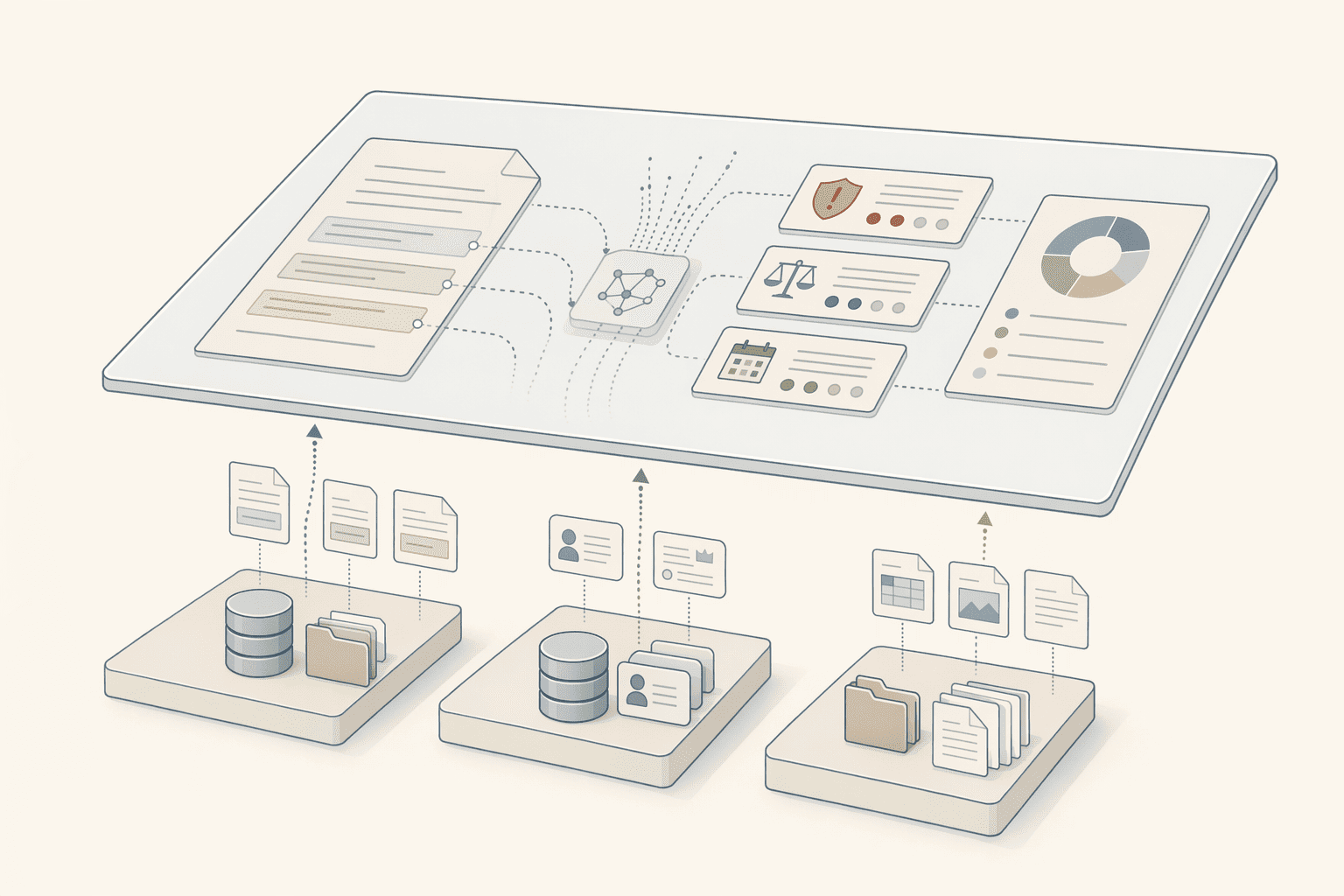
Contracts.ai deploys as a post-signature intelligence layer over existing CLM, CRM, and file-share systems. Enterprises maintain current contract repositories while adding AI-powered clause extraction, risk identification, and obligation tracking without upfront data migration, addressing the pilot-deployment bottleneck that stalls full-stack CLM projects. Integration occurs at the analytics layer, leaving source systems unchanged.
AI Training Policies and Data Security
Contracts.ai does not train models on proprietary customer data, holds SOC 2 certification, and implements encryption in transit and at rest with role-based access controls. GDPR compliance includes Standard Contractual Clauses for EEA transfers; HIPAA-compliant deployments execute Business Associate Agreements.
Best-For Scenarios and Trade-Offs
Pros: Fast time-to-value for pilot deployments; no repository migration overhead; security-first data handling. Cons: Does not support contract approval workflows; requires existing contract storage infrastructure. Choose Contracts.ai when adding post-signature intelligence to established systems takes priority over consolidating pre-signature workflows, particularly for enterprises prioritizing pilot-deployment speed over full-lifecycle workflow unification.
Which CLM Platform Fits Your Enterprise Scenario
Decision Tree: Workflow Automation vs. Contract Intelligence Priority
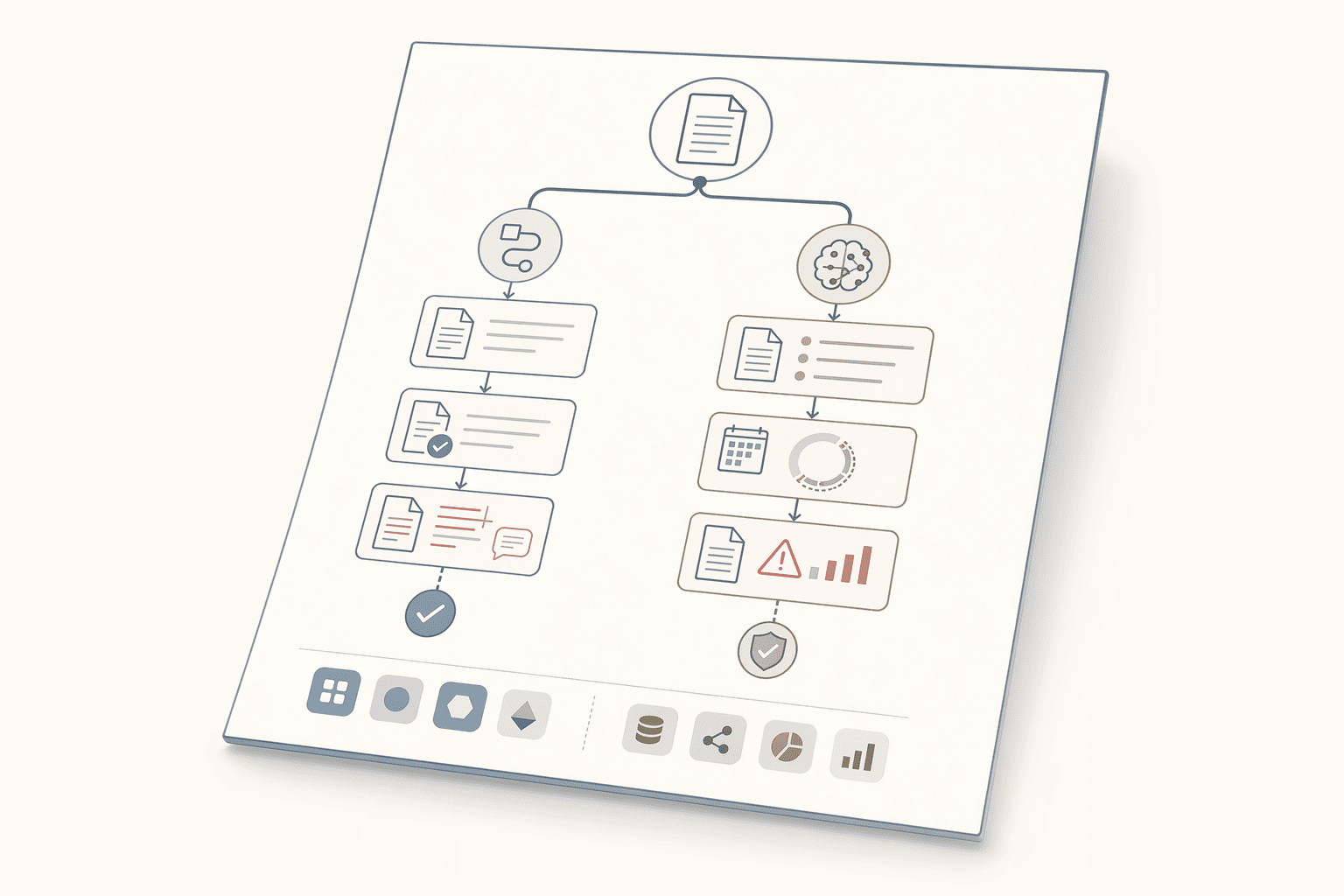
Enterprise buyers split along a core trade-off: pre-signature workflow consolidation versus post-signature intelligence. If your primary pain is contract creation, approval routing, and redlining, full-stack platforms like Ironclad and Agiloft deliver end-to-end workflow automation. If your contracts are already executed and your pain is extracting obligations, tracking renewals, and surfacing commercial risk, post-signature specialists like Sirion or intelligence layers like Contracts.ai provide faster value without replacing existing authoring tools. Organizations managing 10,000+ agreements across multiple jurisdictions typically choose Icertis for its multi-entity support and enterprise integration library; mid-market teams prioritizing no-code customization prefer Agiloft.
Implementation Readiness and Change Management Capacity
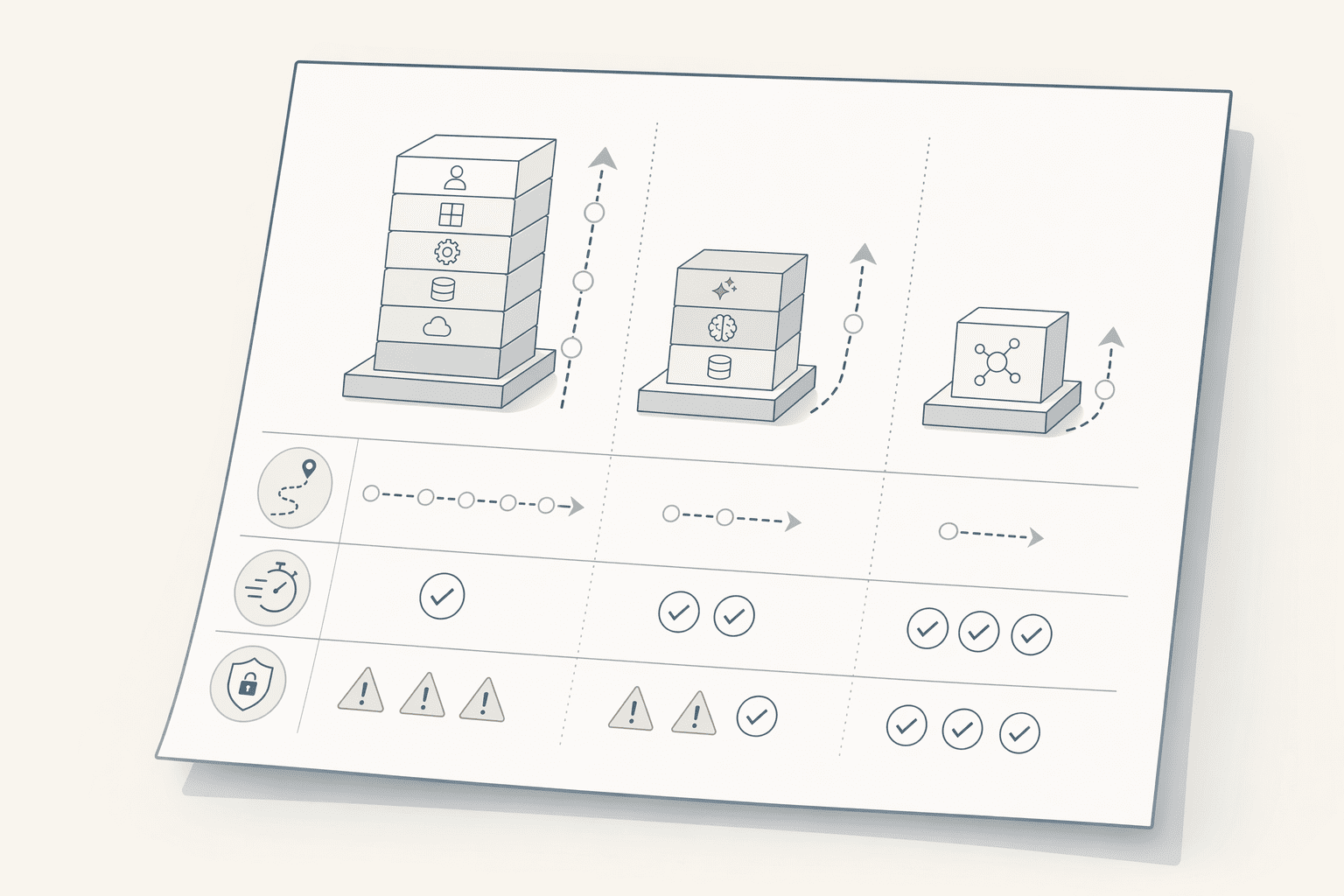
Full-stack migrations require repository consolidation and multi-quarter implementations, Icertis deployments typically span 6 to 12 months, while intelligence layers pilot in 2 to 8 weeks. If your organization lacks dedicated change management resources or prefers a phased rollout, post-signature tools offer faster adoption: Contracts.ai and Sirion deploy without rip-and-replace, overlaying intelligence onto existing repositories. However, intelligence layers do not replace workflow automation; teams needing contract drafting, approval workflows, or negotiation redlining still require separate tools. Choose full-stack platforms when workflow consolidation justifies the implementation investment; choose intelligence layers when speed and AI insights matter more than process replacement.
Choosing the Right CLM Architecture for Your Enterprise
Full-stack CLM platforms like Ironclad, Icertis, and Agiloft consolidate workflow automation and contract intelligence but require repository migration and multi-quarter implementations. Intelligence layers like Contracts.ai and post-signature specialists like Sirion deliver faster pilots and AI insights without rip-and-replace but don’t replace pre-signature workflow tools. Platforms requiring customer data for AI model training create IP risk for enterprise buyers, Contracts.ai explicitly does not train models on customer data, but most competitors don’t publicly document training policies, creating a due diligence gap.
As agentic AI architectures mature, post-signature contract intelligence will shift from reactive reporting to proactive obligation management and autonomous risk mitigation. Enterprise buyers evaluating CLM platforms in 2026 should assess whether AI capabilities are genuinely autonomous or remain assistive features requiring manual review.
Document your contract intelligence baseline and pilot deployment requirements this week, then explore Contracts.ai’s intelligence layer as one evaluated option for fast time-to-value without repository migration.
Frequently Asked Questions
What is the difference between CLM workflow automation and contract intelligence?
Workflow automation manages pre-signature processes, approvals, redlining, e-signature, while contract intelligence handles post-signature analytics like clause extraction, obligation tracking, and risk identification. Ironclad builds AI around specialized agents for drafting, extraction, obligation tracking, and risk redlining, delivering the deepest AI workflow automation in the market.
Do CLM platforms train AI models on my contract data?
Most platforms don’t publicly document AI training data policies, creating a due diligence gap. Contracts.ai explicitly does not train models on customer data, but enterprise buyers should ask vendors directly about training data usage and model privacy policies before signing contracts.
How long does enterprise CLM implementation typically take?
Mid-market pilots complete in 2-8 weeks for intelligence layers, while full-stack enterprise migrations require 3-6 months. Implementation services, custom workflow configuration, and ERP integrations typically add 2-2.5× the base licensing cost. Timeline depends on repository size, integration complexity, and workflow customization depth.
Can I pilot a CLM platform without migrating my entire contract repository?
Intelligence layers like Contracts.ai pilot over existing repositories without migration, reducing risk and accelerating time-to-value. Full-stack platforms like Ironclad, Icertis, and Agiloft require upfront repository consolidation. The trade-off: pilots don’t consolidate workflow tools, while full migrations deliver end-to-end automation but extend timelines.
What ROI can I expect from AI-powered CLM?
Vendor-funded Total Economic Impact studies claim 300%+ ROI, but buyers must model implementation services, change management, and integration costs separately. Full-stack platforms deliver workflow consolidation and intelligence; intelligence layers deliver faster pilots focused on analytics. Realistic payback periods range from 6-18 months depending on deployment model.
How do CLM platforms handle cross-border data transfers for EEA contracts?
Standard Contractual Clauses (SCCs) are the baseline mechanism for GDPR-compliant cross-border transfers. Contracts.ai uses SCCs for EEA data handling, but enterprise buyers should verify data residency and transfer mechanisms with all vendors. ‘GDPR compliant’ is a checkbox, not a data protection strategy, request specifics during vendor due diligence.
Which CLM platform is best for global enterprises with multi-language contracts?
Icertis delivers the most mature multi-language AI extraction and obligation management, with data residency across regions and compliance depth built for international operations at scale. The platform covers authoring, negotiation, execution, obligation management, analytics, and renewal optimization with AI capabilities developed since 2015.
Sources
- Decrease Contract Management Costs with AI & Automation – www.intelagree.com
- Important CLM features – www.summize.com
- Ironclad: AI Contract Lifecycle Management Software – ironcladapp.com
- Best CLM Software for Mid-Market Companies (2026) – Bind – bindlegal.com (2026)
- CLM Software Comparison: Independent Review of 15 Platforms – www.thevendor.ai
- Best AI CLM Tools in 2026 – 5 Compared | Awesome Agents – awesomeagents.ai (2026)
- Agiloft Pricing 2026: Cost + Features + Reviews – www.hyperstart.com (2026)
- Why A Clm Tool Is Crucial for Mid-Market – premikati.com (2026)