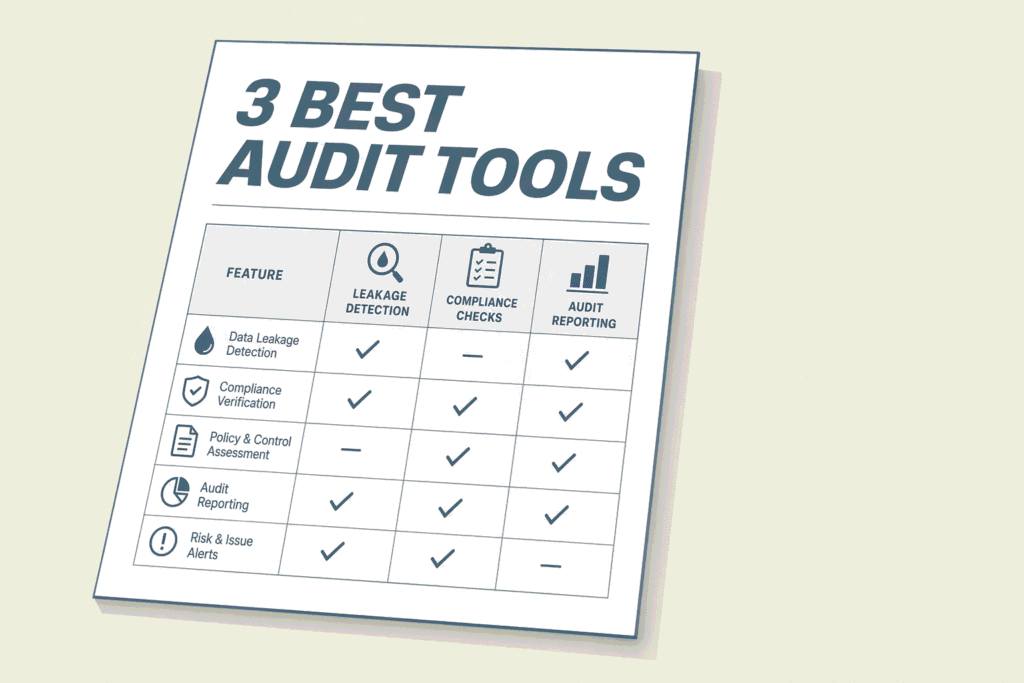
Purchasing leakage — overcharges, missed rebates, and off-contract pricing — drains procurement budgets without triggering alerts in traditional accounts payable workflows.
Modern contract intelligence platforms, invoice audit tools, and spend analytics software use AI clause extraction and real-time compliance tracking to surface unauthorized spending before payment approval.
Key Takeaways
- Three tool categories detect purchasing leakage: contract intelligence platforms extract payment terms and rebate triggers, invoice audit software flags billing errors at approval, and spend analytics tools aggregate enterprise-wide spend to identify off-contract purchasing patterns
- AI clause extraction reduces manual contract review time by identifying payment terms, SLA penalties, and volume discounts in minutes, creating a baseline for invoice-to-contract matching
- Contract intelligence platforms operate contract-level while spend analytics software aggregates category-level data — many procurement teams deploy both in tandem to cover obligation discovery and spend pattern analysis
- Pilot deployments on high-spend supplier contracts quantify leakage within 90 days without requiring full repository migration, allowing teams to prove ROI before scaling
- Real-time compliance tracking prevents leakage by flagging deviations before payment, while retrospective spend analysis only recovers overcharges discovered weeks or months after invoicing
What is Purchasing Leakage in Vendor Contracts?
Three categories of tools help identify unauthorized spending in vendor contracts: AI contract analytics platforms that extract pricing terms and obligations from signed agreements, invoice audit software that flags discrepancies at payment approval, and spend compliance tools that track adherence to procurement policies. Purchasing leakage is the process gap where negotiated contract terms fail to govern actual spend, eroding margins through avoidable cost variance.
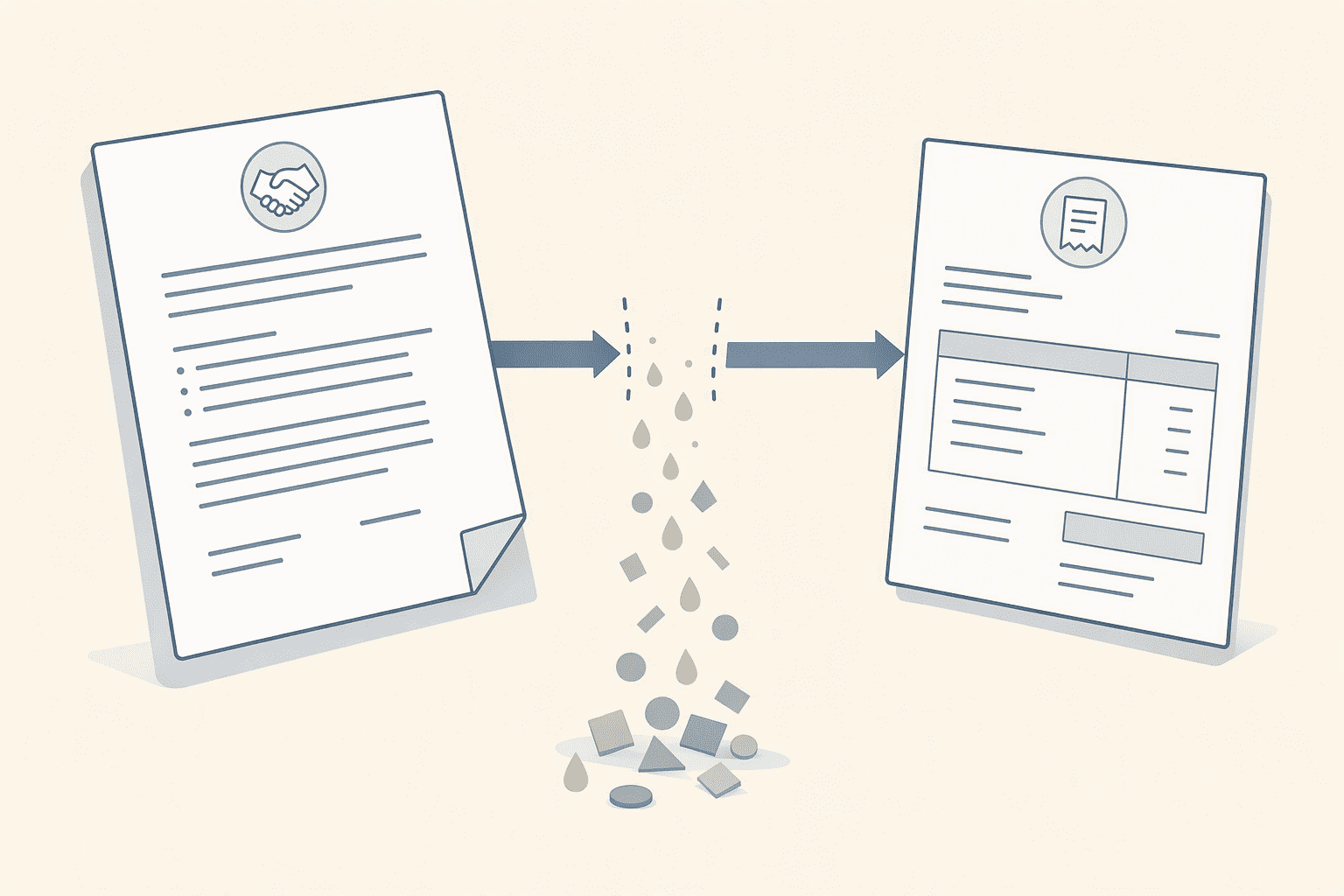
Common Types of Purchasing Leakage
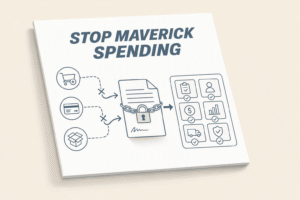
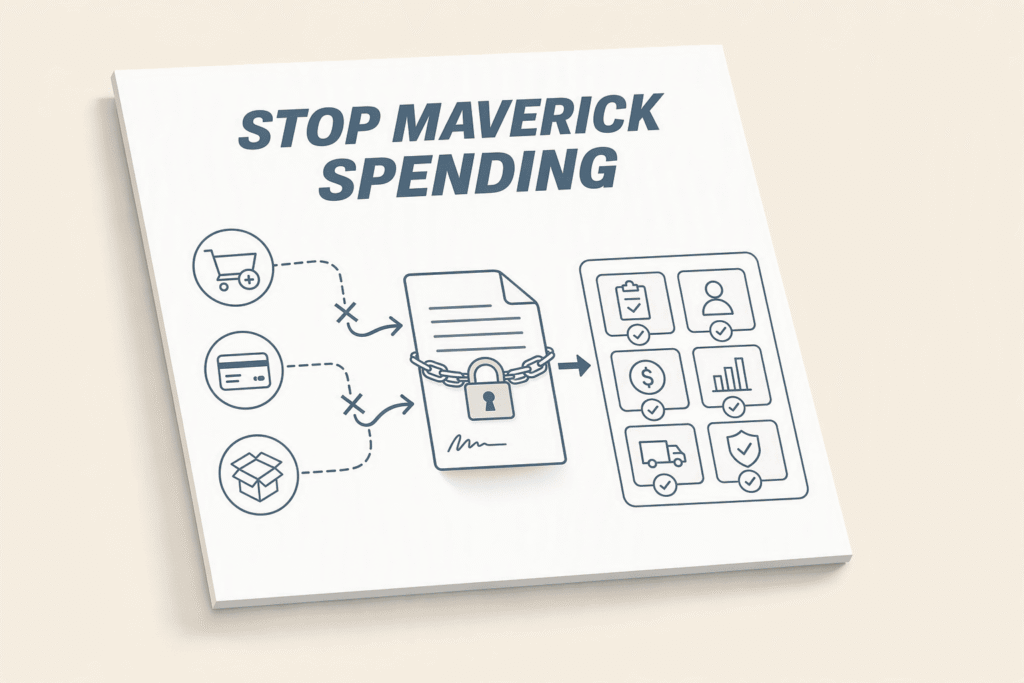
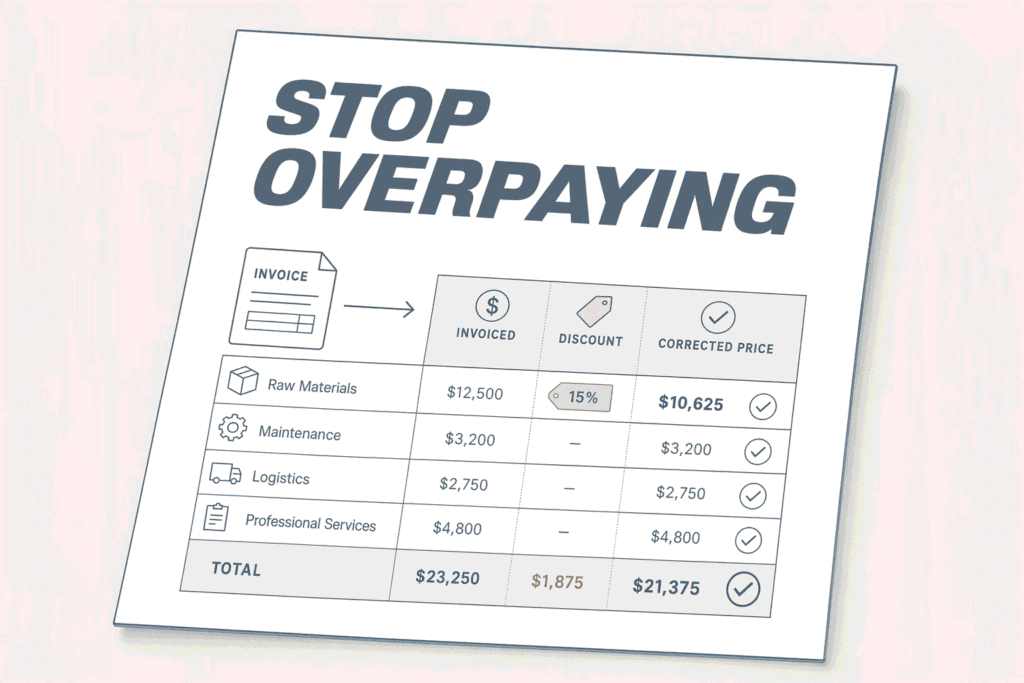
Five patterns account for most leakage. Off-contract pricing occurs when vendors charge above contracted rates—a form of maverick spend that bypasses negotiated agreements. Missed early-payment discounts represent foregone savings when invoice-to-payment cycles exceed discount windows. Unrealized volume rebates happen when cumulative spend triggers tier pricing but rebate claims are never filed. Unauthorized scope creep bills for services outside statement-of-work boundaries. Duplicate invoicing charges the same deliverable twice, often across fiscal periods or cost centers.
Why Traditional Audits Miss Leakage
Periodic manual audits operate retrospectively—teams discover off-contract charges weeks or months after invoicing, when recovery costs exceed the variance. Real-time monitoring tools, by contrast, flag deviations at invoice approval by reconciling line items against contract terms. Platforms like Contracts.ai use machine learning to analyze contract content, extracting pricing schedules and SLA triggers that auditors would otherwise need to locate manually across hundreds of agreements. The time gap between transaction and detection determines whether leakage is preventable or merely measurable.
Understanding which leakage patterns drain your budget determines which detection capability you need first.
How AI-Powered Contract Analytics Detect Unauthorized Spending
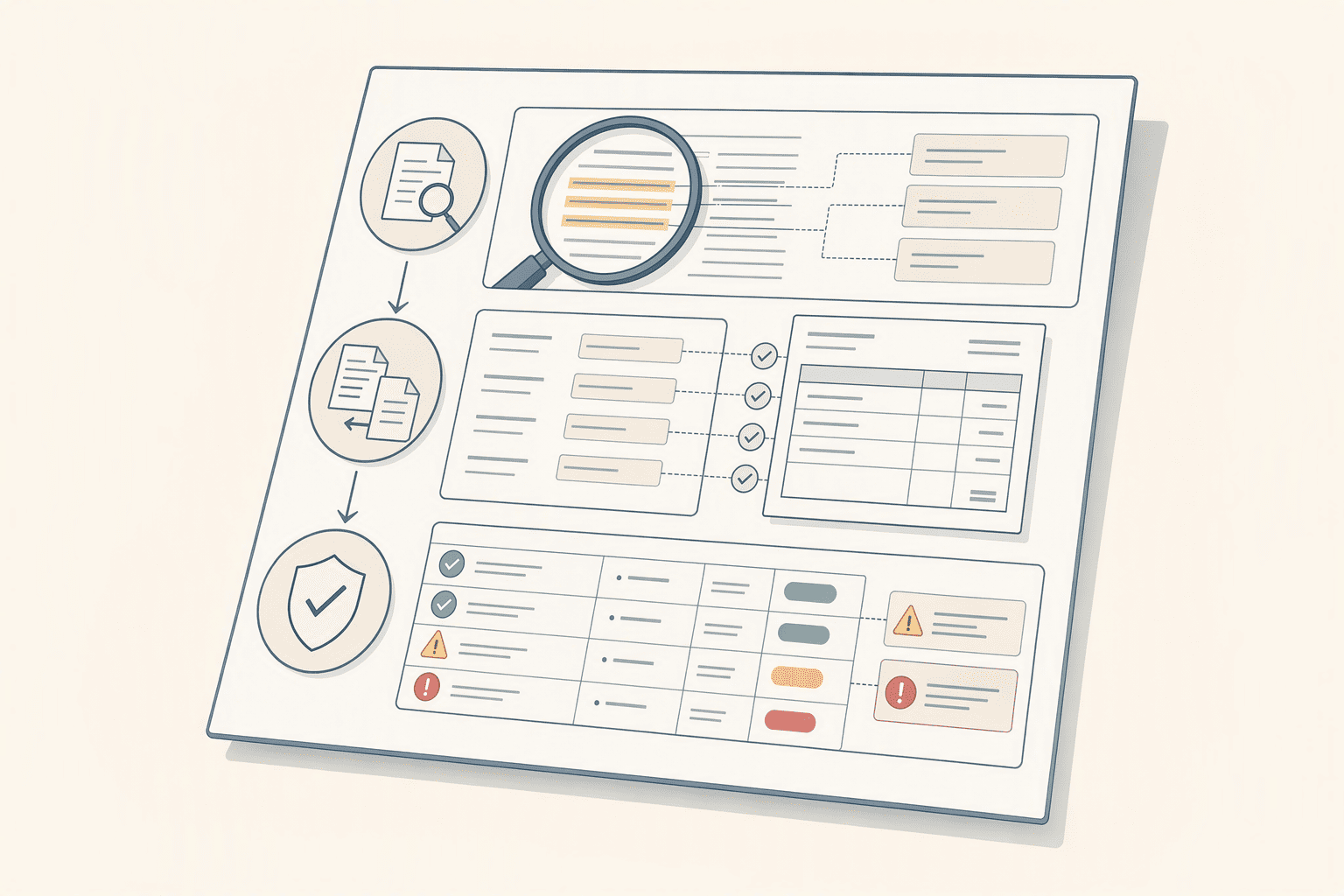
Purchasing leakage prevention depends on three distinct detection capabilities that procurement teams often conflate. Clause extraction, invoice-to-contract matching, and compliance tracking each serve separate functions, yet vendors frequently market them as interchangeable CLM features.
AI Clause Extraction and Key-Term Identification
AI clause extraction reduces manual contract review time by identifying payment terms, SLA penalties, rebate triggers, and renewal clauses in minutes. Machine learning models parse unstructured contract text to surface pricing schedules, volume-tier thresholds, and penalty provisions buried in legacy agreements. Contracts.ai uses machine learning to analyze contract content and generate risk insights, extracting key terms across legacy and live contracts to build a searchable repository of spend commitments.
Invoice-to-Contract Matching for Overcharge Detection
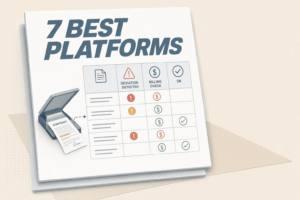
Invoice audit tools operate from the invoice side, cross-referencing line-item charges against contracted pricing to flag overcharges and off-contract rates. Veraldoc automatically matches purchase orders, verifies invoices, and flags discrepancies before they become overpayments [F1-2, F1-3, F1-4]. InvoRec audits every invoice line against contracts and rate cards to catch overcharges and billing errors, powered by AI invoice data extraction that exports clean data to Excel or Google Sheets [F2-3, F2-4, F2-6, F2-7]. These platforms automate the manual spreadsheet reconciliation that procurement teams currently perform quarterly.
Real-Time Compliance Alerts vs. Retrospective Analysis
Compliance tracking separates into two models: real-time alerts that flag deviations at invoice approval, and retrospective analysis that audits spend quarterly after payment. Covasant coordinates multi-agent workflows across complex enterprise processes, monitoring vendor adherence before payment occurs. Retrospective tools identify patterns only after leakage has materialized, valuable for trend analysis, but incapable of preventing unauthorized spend at the transaction level.
Detection capabilities mean little without specific tools that operationalize them across your supplier base.
Top Tools for Identifying Unauthorized Charges in Vendor Contracts
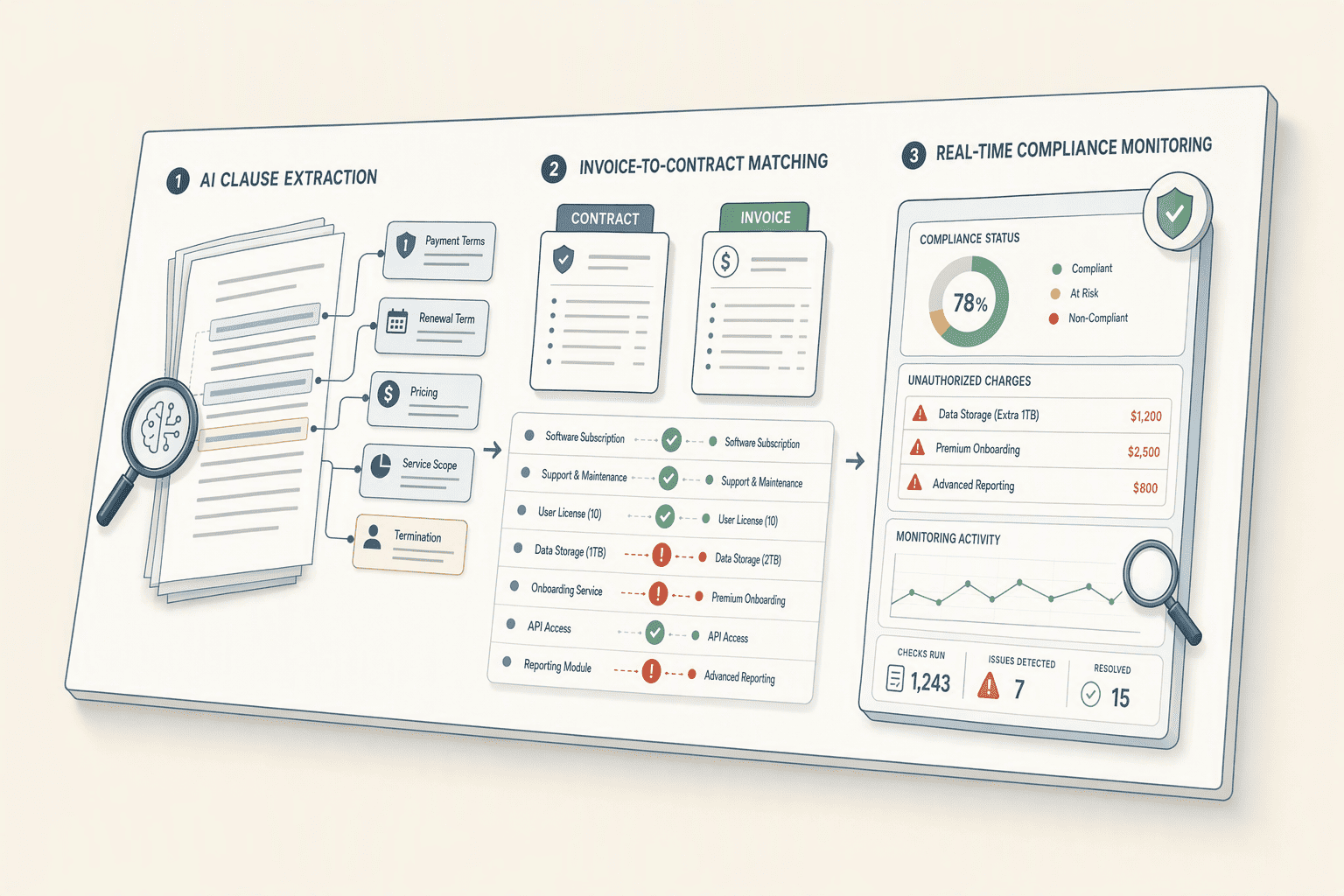
Unauthorized spending in vendor contracts often hides in mismatched pricing terms, unbilled volume rebates, and SLA breaches that never trigger a refund. The tools below organize around three detection strategies: AI-driven clause extraction, invoice-to-contract matching, and real-time compliance monitoring.
Contract Intelligence Platforms (AI Clause Extraction)
Contracts.ai uses artificial intelligence and machine learning to analyze contract content and generate summaries and risk insights, extracting key terms across legacy and live contracts in minutes. The platform operates as a post-signature intelligence layer, teams already using a CLM for creation and approval can overlay Contracts.ai for spend analytics without replacing existing workflows. Strengths: extracts obligations, pricing tiers, and rebate triggers with SOC 2-certified controls; ERP integrations help reconcile invoices against contracted rates. Limitations: does not support contract approval workflows, so organizations need a separate CLM for document routing and signature collection. Best for: procurement teams that need spend-focused analytics on top of an existing CLM stack.
Sirion positions its platform as a CLM solution that extracts obligations, syncs with ERP/CRM/Procurement systems, and triggers proactive notifications and workflows. The platform’s AI monitors SLA compliance and sends breach alerts, while its rebate tracking module centralizes volume-discount terms and automates calculations to prevent missed rebate claims. Best for: enterprises managing multi-tier volume agreements with complex rebate structures where manual tracking historically left money on the table.
Evisort, LinkSquares, Malbek, and Onit each offer contract intelligence with AI extraction. Evisort and LinkSquares emphasize legal workflow automation; Malbek and Onit position themselves as end-to-end CLM platforms with compliance modules. When evaluating these tools for spend leakage, verify whether the platform can isolate pricing clauses, volume tiers, and penalty terms separately, or only extracts obligations as unstructured metadata.
Organizations pursuing contract intelligence for spend detection should confirm the platform’s ERP/procurement-system integrations, ask for sample extraction accuracy on pricing clauses (not just renewal dates), and test whether the tool surfaces rebate-eligible line items automatically or requires manual tagging.
Choosing the right tool requires matching detection capabilities to your specific leakage patterns and procurement workflows.
Comparison Framework: Clause Extraction vs. Invoice Matching vs. Compliance Tracking
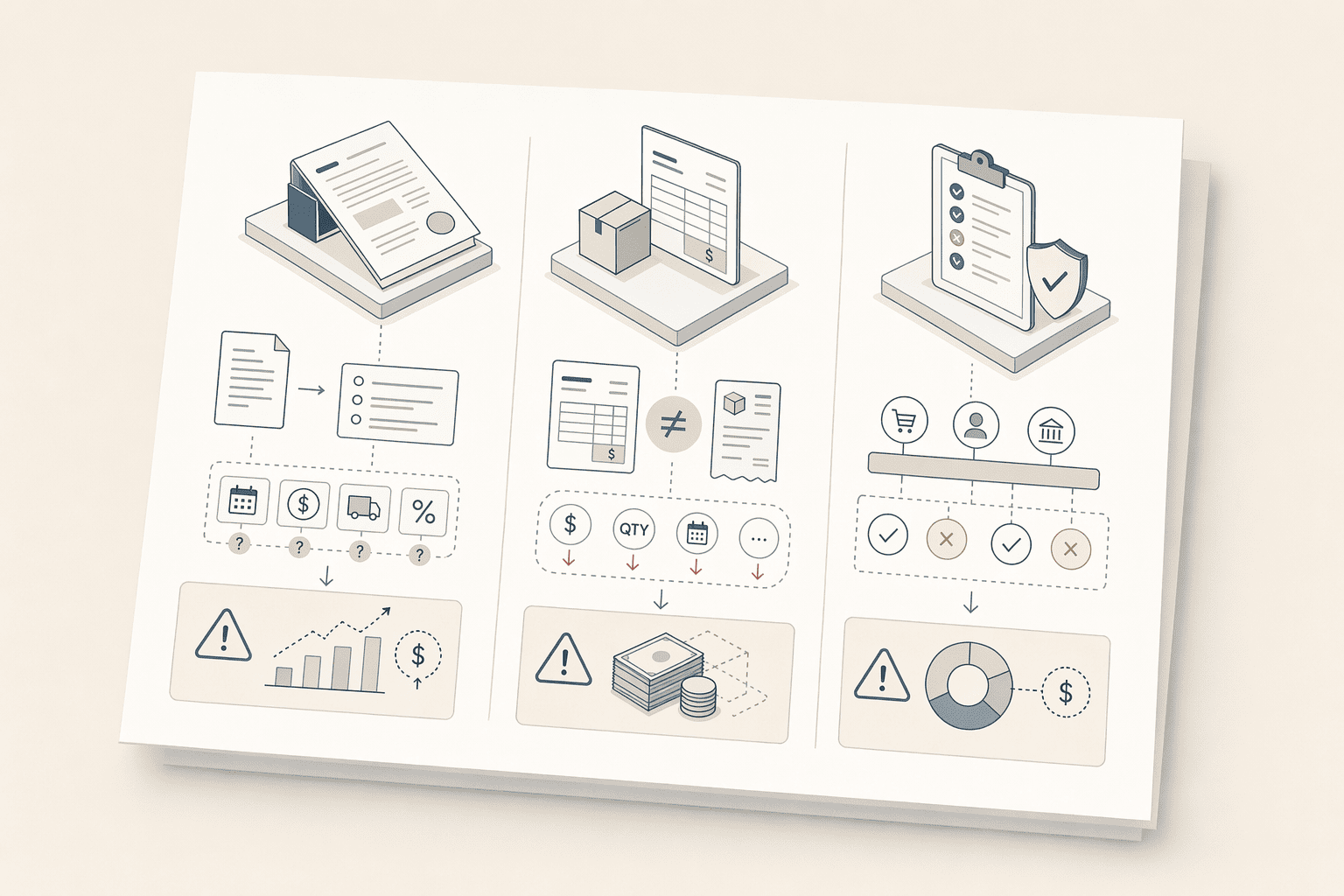
Purchasing leakage rarely stems from a single breakdown, it cascades from three distinct failure modes, each requiring a different detection approach. Most procurement platforms emphasize contract creation, approval routing, and repository management but stop short of the operational integrations that catch unauthorized spending at the point of payment. Understanding which capability solves which leakage type transforms a generic “contract analytics” search into a targeted toolset.
When Clause Extraction Solves the Problem
Use clause extraction when the leakage stems from poor visibility into what you’re buying and on what terms, undiscovered payment clauses, missed rebate triggers, or untracked volume tiers buried in legacy agreements. AI-powered extraction platforms read contracts at scale, pulling pricing schedules, rebate thresholds, renewal escalation language, and termination rights into structured fields that finance and procurement teams can query in natural language. This category catches unrealized rebates (the supplier met the volume threshold but no one flagged the discount), auto-renewals with price escalations hidden in appendices, and tier-based pricing that goes unenforced because the contract sits in a shared drive. The limitation: extraction alone reveals the terms but doesn’t cross-check them against actual invoices or spending patterns, discovering a 2% rebate clause is valuable only if someone then compares invoices to contracted rates.
When Invoice Matching Solves the Problem
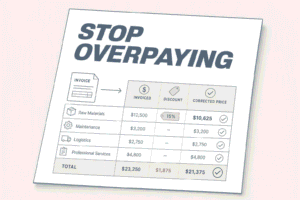
Invoice matching tools address leakage that occurs when billing diverges from contracted terms, off-contract pricing, duplicate line items, or scope creep charges that slip through accounts payable review. These platforms reconcile supplier invoices against purchase orders and signed contract rates, flagging discrepancies before payment authorization. The use case is operational: an invoice arrives charging $120 per unit when the contract specifies $110; the platform blocks payment and routes the exception to procurement for resolution. Invoice matching excels at catching billing errors and preventing unauthorized rate changes, but it requires structured contract data to function, if the pricing terms weren’t extracted and normalized first, the matching engine has no baseline to compare against. The gap: invoice matching is retrospective (it reviews invoices after they arrive) rather than preventive, so it catches errors but doesn’t stop unauthorized purchases before they generate an invoice.
When Real-Time Compliance Tracking Solves the Problem
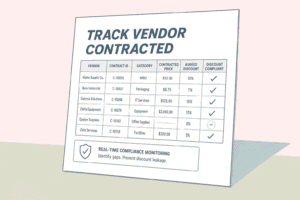
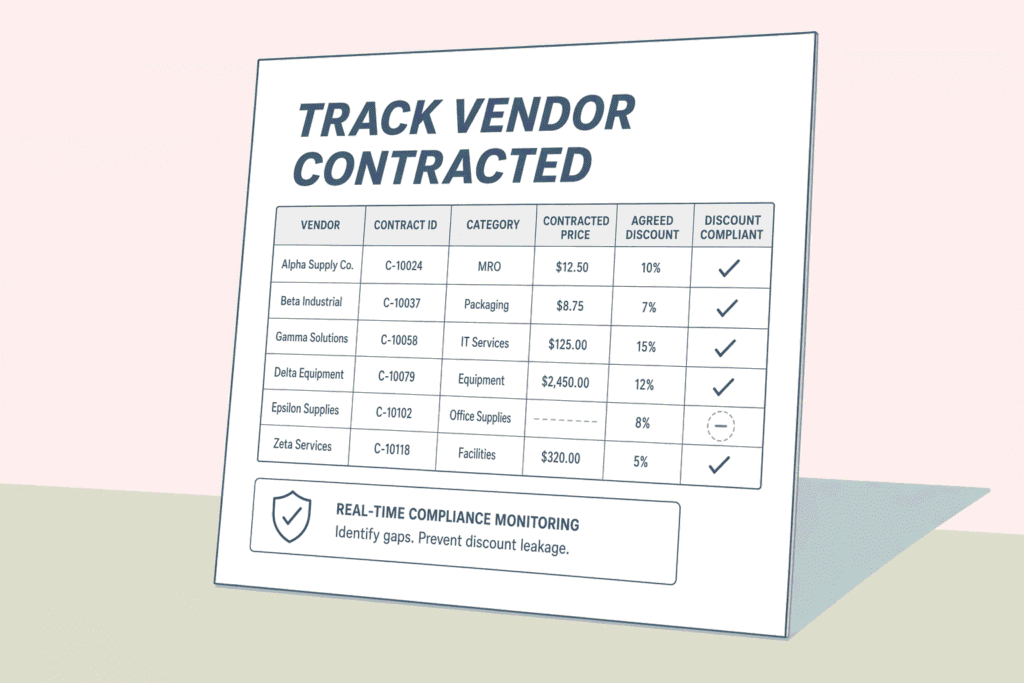
Real-time compliance tracking closes the detection gap that clause extraction and invoice matching leave open: late discovery. These platforms integrate contract repositories with ERP and accounts payable systems to flag deviations at the point of invoice approval, before payment clears. The ROI case centers on early-payment discounts and SLA penalty enforcement: organizations using automated solutions capture seven times more early-payment discounts than peers relying on manual review, and suppliers accepting early-payment offers see acceptance rates above 80% when the offers are segmented and presented at the right time. This capability requires contract-to-AP linkage that neither standalone clause extraction nor invoice matching delivers, the system must know the contracted early-payment terms, identify invoices eligible for the discount, and trigger the approval workflow within the discount window. The limitation: real-time tracking depends on clean, structured contract data and live ERP integration, so implementation complexity is higher than bolt-on extraction or matching tools.
Most procurement teams struggle to choose between contract intelligence platforms and spend analytics software because the categories overlap in spend visibility but diverge in how they surface leakage.
When to Use Contract Intelligence Platforms vs. Spend Analytics Software
Contract Intelligence Platforms (Post-Signature Analytics)
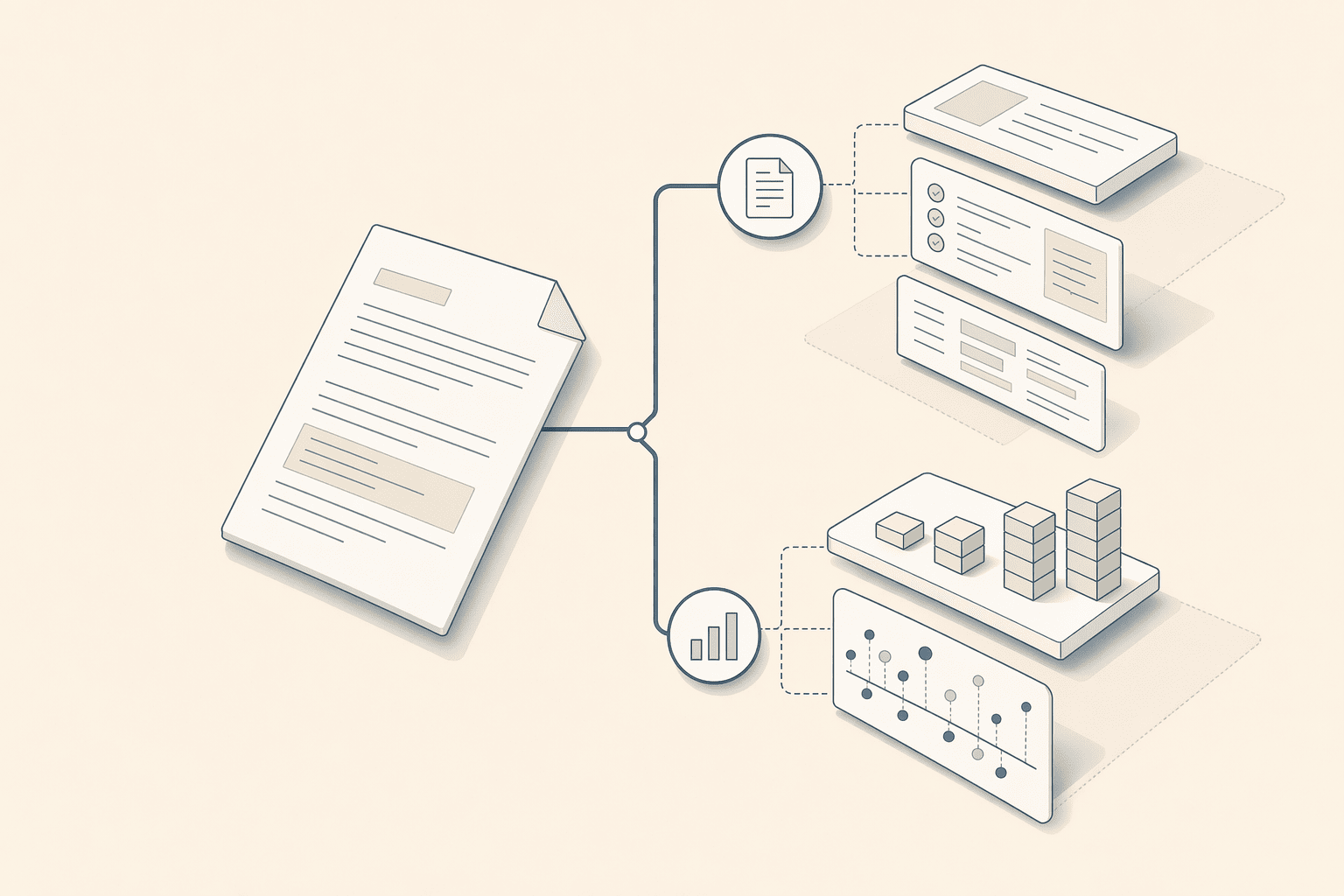
Contract intelligence platforms like Contracts.ai and Sirion extract obligations from signed agreements, rebate tiers, volume discounts, SLA penalties, payment terms, and monitor compliance at the clause level. Choose these platforms when leakage stems from missed entitlements buried in contract language. Contracts.ai’s NetSuite integration reconciles supplier invoices against extracted contract terms, catching off-contract charges before payment approval. Best for procurement teams managing hundreds of vendor agreements with complex, non-standard pricing structures.
Spend Analytics Software (Enterprise-Wide Spend Visibility)
Spend analytics platforms like JAGGAER, Coupa, and SAP Ariba aggregate transaction data across ERPs, P-cards, and AP systems to surface category-level consolidation opportunities. These tools have evolved from nice-to-have to key infrastructure for organizations with fragmented supplier bases. Choose spend analytics when leakage stems from supplier sprawl, lack of category visibility, or decentralized purchasing. JAGGAER’s unified multi-source spend visibility harmonizes feeds from any ERP into a single view, revealing where tail spend and maverick purchases hide. Best for finance teams who need to rationalize suppliers and enforce category-level controls.
Invoice Audit Tools (Line-Item Verification)
Invoice audit tools like Veraldoc and InvoRec cross-reference individual invoice line items against contracted rates, catching duplicate charges, pricing errors, and quantity discrepancies. Choose these when leakage stems from AP workflow gaps, billing errors that slip past three-way matching. Best for AP teams processing high volumes of recurring invoices where manual review is impractical. Many organizations deploy contract intelligence platforms and spend analytics software in tandem, contract platforms extract obligations and feed them into spend analytics systems for category-level tracking. These are complementary layers, not substitutes.
Even the best-fit tool fails if implementation drags beyond stakeholder patience or data quality blocks accurate analysis.
Implementation Considerations: Integration, Data Migration, and ROI Timelines
Pilot Deployment Without Repository Migration
Testing a contract intelligence platform on a focused sample set avoids the operational disruption of migrating an entire contract repository. The following workflow enables organizations to quantify leakage before committing to full-scale deployment:
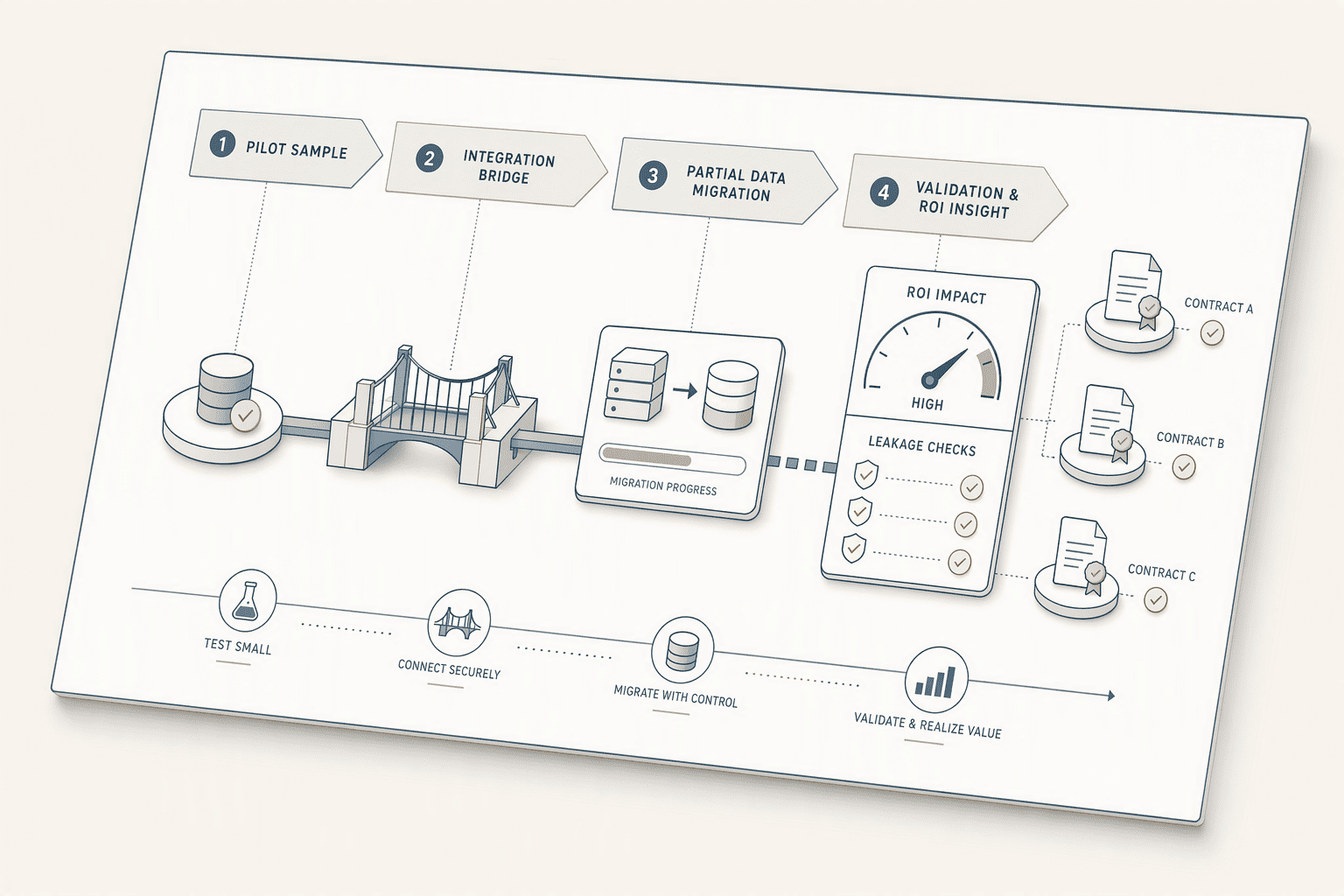
- Identify the top 20 suppliers by annual spend.
- Upload sample contracts for these suppliers to the intelligence platform.
- Extract payment terms, rebate triggers, volume tiers, and service-level commitments.
- Compare extracted terms to current invoice line items to quantify unauthorized spending.
- Expand to the full repository if ROI is demonstrated within the pilot period.
Founded by operators with more than 30 years of combined experience deploying CLMs, ERPs, and procurement platforms across global enterprises, Contracts.ai was built to enable operational use across enterprise systems without requiring a wholesale replacement of existing tools. This approach limits disruption while validating return on investment before broader rollout.
ERP and AP System Integration Requirements
Contract intelligence platforms act as an intelligence layer that integrates with existing contract lifecycle management, ERP, and accounts payable systems. Technical integration points include:
- Read access to contract repositories to extract payment terms, volume commitments, and rebate clauses.
- Read access to AP systems to pull invoice line items for automated matching against contract terms.
- Write access to procurement workflows to push compliance alerts when invoices deviate from negotiated pricing or terms.
Sirion’s early warning platforms automatically flag critical dates, obligations, milestones, or anomalies and push timely notifications into existing tools, demonstrating how modern platforms integrate without replacing existing infrastructure. IBM’s compliance analytics research highlights that transaction volumes range from several million dollars to billions of dollars, making manual review impractical and automated integration key.
ROI Measurement for Leakage-Prevention Tools
Return on investment for purchasing leakage prevention tools divides into hard savings and soft savings. Hard savings include:
- Recovered overcharges where invoiced amounts exceed contracted pricing.
- Captured rebates and volume discounts missed during manual processing.
- Avoided penalties for late payments or missed service-level commitments.
Soft savings include reduced time spent on manual contract review and invoice reconciliation. Organizations typically measure ROI within the first 90 days by tracking recovered spend from the pilot contract set. Full-scale procurement analytics deployments may take 6 to 12 months, but pilot programs running on a focused supplier sample can demonstrate measurable impact within 30 to 60 days.
Contract intelligence platforms like Contracts.ai and Sirion excel at extracting spend-related obligations from contract language but require integration with AP systems to enforce those terms at invoice approval, invoice audit tools enforce at approval but don’t discover obligations buried in contracts, so many teams use both. Real-time compliance tracking prevents leakage by flagging deviations before payment, while retrospective spend analysis only recovers overcharges discovered months later.
As contract volumes grow and supplier relationships become more complex, manual spend audits will shift from quarterly retrospective reviews to continuous automated monitoring. The tools that win will integrate clause extraction, invoice matching, and compliance tracking into a single spend-governance workflow rather than forcing procurement teams to stitch together three separate platforms.
Pilot Contracts.ai on your top 20 suppliers by spend to quantify purchasing leakage before scaling, the platform supports low-lift pilot deployment without repository migration, letting you prove ROI within 90 days.
Frequently Asked Questions
How do I detect when suppliers charge more than contracted rates?
Invoice audit software like Veraldoc and InvoRec cross-references invoice line items against contracted rates to flag overcharges, duplicate charges, and off-contract pricing. Contract intelligence platforms such as Contracts.ai and Sirion extract payment terms from signed agreements, creating the baseline for comparison. Together, these tools catch billing errors at approval.
What’s the difference between contract analytics and spend analytics?
Contract analytics platforms extract obligations and terms from individual contracts, payment terms, rebates, SLA penalties, operating at the contract level. Spend analytics software aggregates enterprise-wide transaction data by category, supplier, and department, revealing category-level spend patterns. Organizations use both in tandem: contract analytics discovers obligations, spend analytics tracks compliance.
Can I test a contract intelligence platform without migrating my entire contract repository?
Yes, platforms like Contracts.ai support pilot deployments on a sample contract set, such as your top 20 suppliers by spend, without full repository migration. The pilot workflow: upload sample contracts, extract terms using AI clause extraction, compare to invoices, quantify leakage, then expand if ROI is proven.
How do contract intelligence platforms capture missed rebates?
Contract intelligence platforms use AI clause extraction to identify rebate triggers, volume thresholds, payment timing conditions, performance milestones, buried in contract language. They flag when actual spend or performance meets the trigger but the rebate hasn’t been claimed, preventing leakage from undiscovered payment clauses and untracked volume tiers.
Do I need separate tools for invoice matching and contract analytics?
Depends on your leakage profile. If billing errors and off-contract pricing dominate, invoice matching tools like Veraldoc suffice. If missed rebates or undiscovered payment terms are the issue, contract intelligence platforms like Contracts.ai are better. Many teams use both: contract platforms extract terms, invoice tools enforce them at approval.
How long does it take to see ROI from a leakage-prevention tool?
Hard savings, recovered overcharges, captured rebates, avoided penalties, can be quantified within 90 days if you pilot on high-spend contracts. Soft savings from reduced manual review time are immediate. ROI depends on contract volume, supplier count, and current leakage rate; pilot deployment on focused contract sets accelerates measurement.
Will a contract intelligence platform work if my contracts are in multiple languages or formats?
Most modern AI-powered platforms like Contracts.ai, Sirion, and Agiloft support multi-language clause extraction and ingest PDFs, Word docs, and scanned images. Accuracy varies by language and document quality. Pilot deployment is the best way to test accuracy on your specific contract formats before committing to full-scale rollout.
Sources
- Maverick Spend Rate – Supply Chain & Logistics Analysis – umbrex.com
- How to Track Contract Compliance Automatically – Sirion – www.sirion.ai
- Why Your Business Misses Rebates—and How to Fix It with Contract Management – www.sirion.ai
- Early Payment Programs – Supplier Management – apexanalytix – www.apexanalytix.com
- 10 Best Spend Analysis Software of 2026 – procurementtactics.com (2026)
- Top Platforms with Early Warning Triggers for Contract … – www.sirion.ai (2026)
- Managing procurement spend using advanced compliance analytics – research.ibm.com
- Top 10 Best Procurement Analytics Software of 2026 – gitnux.org (2026)