Introduction
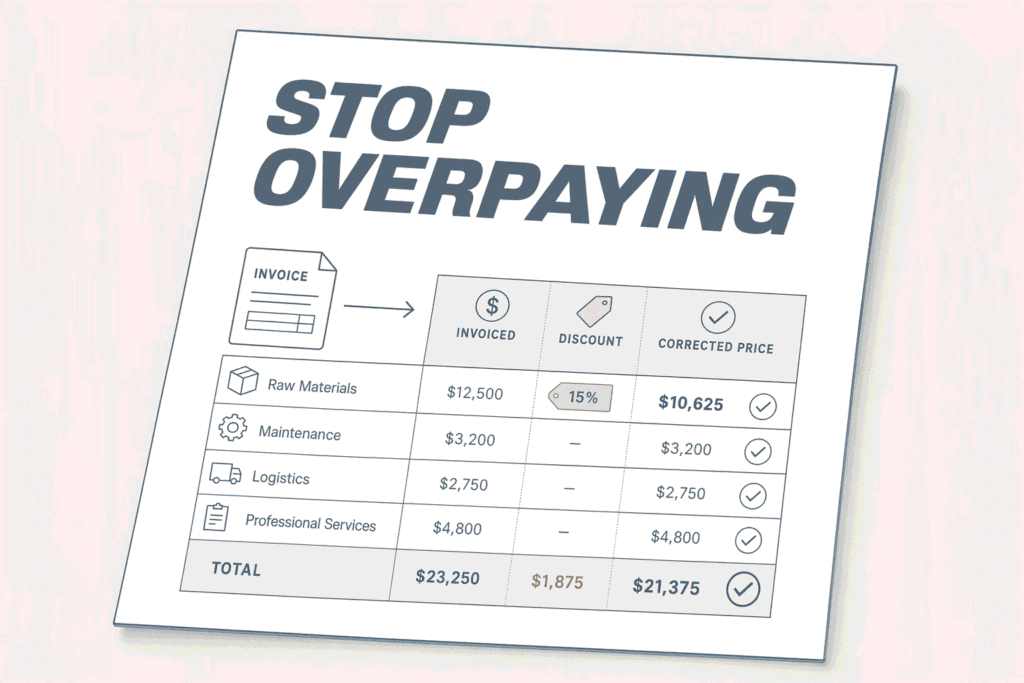
Up to 20 cents of every procurement dollar walks out the door untracked and off-contract. That is the reality of maverick spending, which the Hackett Group estimates can swallow up to 20% of total procurement spend in some organizations. Each off-contract purchase carries a 10 to 20% cost premium over negotiated rates.
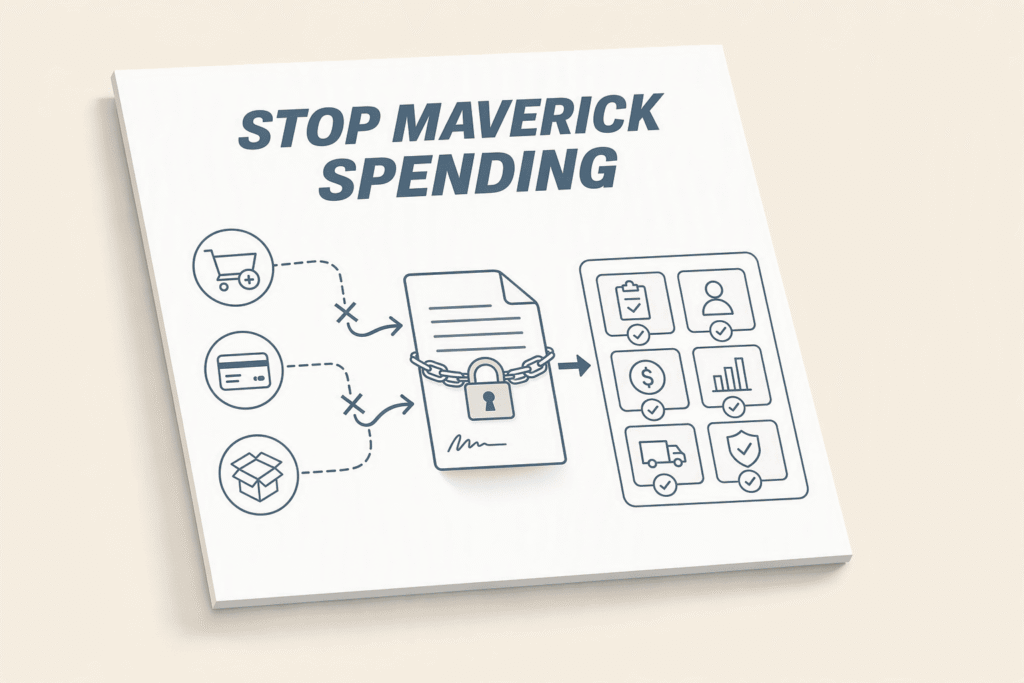
This is rarely an act of employee rebellion. Friction is the real culprit. When a business card and a browser make a purchase feel instant, and internal systems feel like a tax audit, employees prioritize speed. The result is more than a lost discount. It is a structural erosion of your supplier use, your spend visibility, and your compliance posture.
Key Takeaways
The full strategy for closing the maverick spend gap rests on a few core principles:
- The direct cost premium: Off-contract purchases routinely cost 10 to 20% more per transaction, destroying the savings negotiated in master agreements.
- Friction is the root cause: Employees bypass procurement when compliance is slower than a consumer checkout; making guided buying faster than a workaround is the only durable fix.
- AI closes the gap: Contract intelligence software continuously monitors negotiated terms against actual spend, surfacing value leakage that manual audits miss.
- Prevention replaces detection: Granular role-based access controls (RBAC) stop non-compliant spend at the point of entry rather than flagging it after the invoice arrives.
- Compliance becomes automatic: A real-time audit trail that links every transaction to a master contract turns audit defense into a system output, not a scramble.
At a Glance
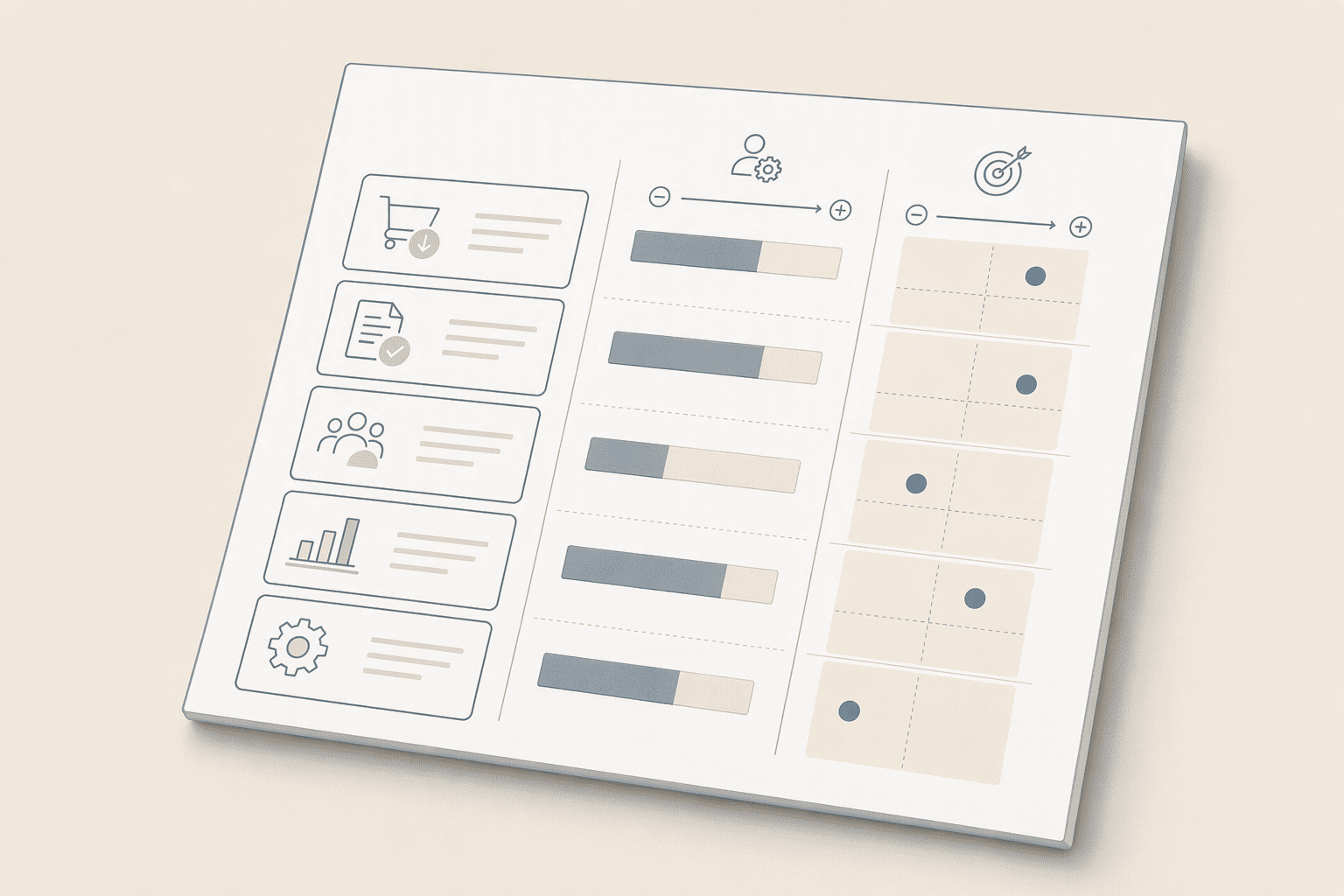
Here is how the options compare across the dimensions that matter most.
| Tactic | What it does | When to use it | Effort to implement | Impact on maverick spend |
|---|---|---|---|---|
| Tighten procurement card policies | Restricts card limits, categories, and merchant codes for non-contract vendors | When card misuse is the primary bypass channel | Low (policy update + system rules) | High (directly blocks casual off-contract buying) |
| Implement guided buying catalogs | Presents only approved items from contracted vendors in a storefront-like interface | When employees buy from dozens of unmanaged suppliers | Medium (catalog setup + integration with procurement system) | High (makes compliant path the easiest path) |
| Deploy purchase order enforcement | Requires a valid PO before any goods or services are delivered or invoiced | When non-PO spend (e.g., professional services) is rampant | Medium (system configuration + exception process) | High (closes the most opaque spend category) |
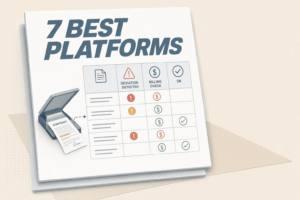
| Use contract intelligence software | Monitors spend against contract terms and flags off-contract transactions in real time | When you need continuous, automated compliance after contracts are signed | Medium-high (software subscription + data integration) | Medium (detects leakage but requires action to stop it) |
| Set role-based access controls | Restricts who can create purchase requests without manager approval | When a few departments or roles account for most maverick spend | Low (user group configuration in ERP) | Medium (prevents high-volume personal purchases) |
| Launch internal chargeback and savings showback | Attributes off-contract cost premiums back to the requesting department | When peer accountability and budget ownership are strong | Low (monthly reporting + dashboard) | Medium (incentivizes self-correction over time) |
| Run a quarterly spend compliance audit | Compares invoice-level spend against contract price books and terms | When you need to quantify the problem for leadership buy-in | Medium (requires data extraction and analyst time) | Low (diagnostic only; no direct prevention) |
Step 1: Define and socialize what maverick spend really costs the business
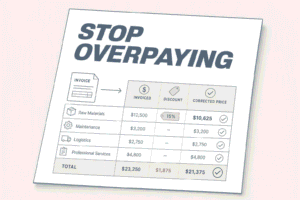
Maverick spending is not just a procurement metric. It is a concrete financial risk. Analysts consistently find that companies can lose 10 to 20% of their savings due to off-contract purchases when volume discounts erode and fragmented buying destroys supplier use.
The risk extends beyond price. Unmanaged professional services engagements create worker misclassification exposure under the Department of Labor’s 2024 economic reality test. Non-PO spend, spending without a purchase order, lacks transparency and control, making every procurement card swipe a potential compliance breach. Naming this cost in dollar terms is the only way to turn an abstract policy violation into a leadership priority. McKinsey found that weak contract management erodes sourcing value equal to 9% of annual revenues, a figure that reframes every bypassed contract as a direct hit to the bottom line.
Step 2: Engineer friction out of compliant buying channels
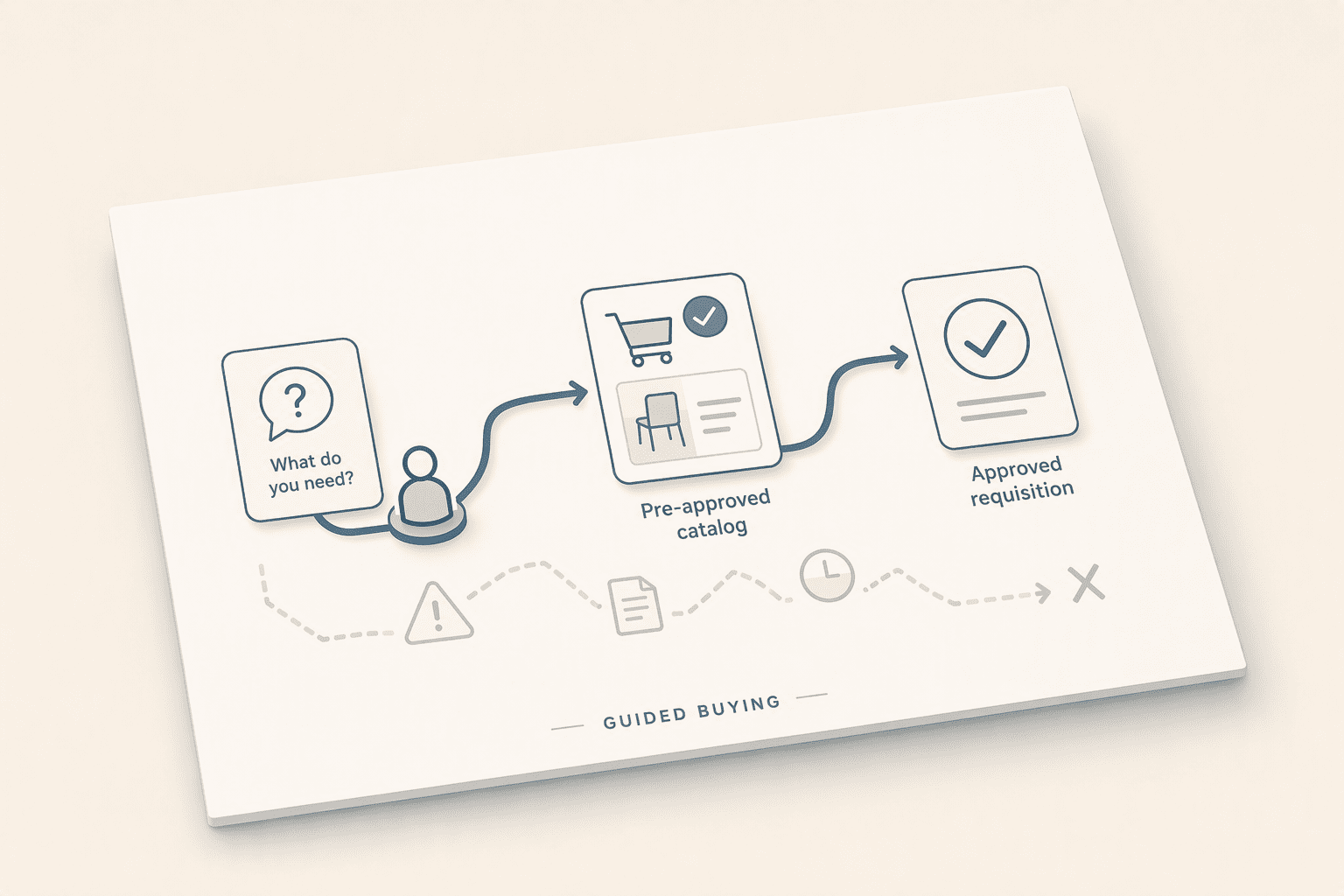
Employees buy off-contract because internal systems punish compliance. When approval workflows stretch across days and catalogs feel like legacy database queries, the impulse to fix a problem instantly is human. The solution is not a sharper policy memo. You have to make the approved path the easiest path.
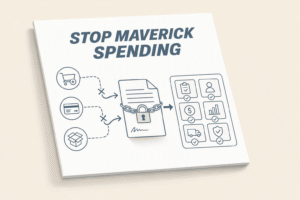
Guided buying changes this calculus. Pre-approved catalogs tied to master agreements mean an employee never has to wonder if a vendor is sanctioned. Single-click requisitions with pre-configured cost centers and GL codes remove the administrative burden that drives shadow spending.
With Contracts.ai, you can pilot this shift using a limited contract set. You do not need to migrate the full repository. You confirm that guided buying works before a department-wide rollout. Measure against the consumer e-commerce experience. If a corporate purchase order takes materially more effort than buying the same item on a personal credit card, the procurement process has already lost.
Design the workflow so a compliant purchase feels faster than a workaround. Surface the pre-negotiated price and delivery terms before the requisition is submitted. Remove every non-key click and approval layer. When staying in-channel is easier than stepping out, maverick spend stops being a behavioral problem and becomes a non-issue.
Step 3: Deploy AI-powered contract intelligence to connect pre-approval data to real-time spend
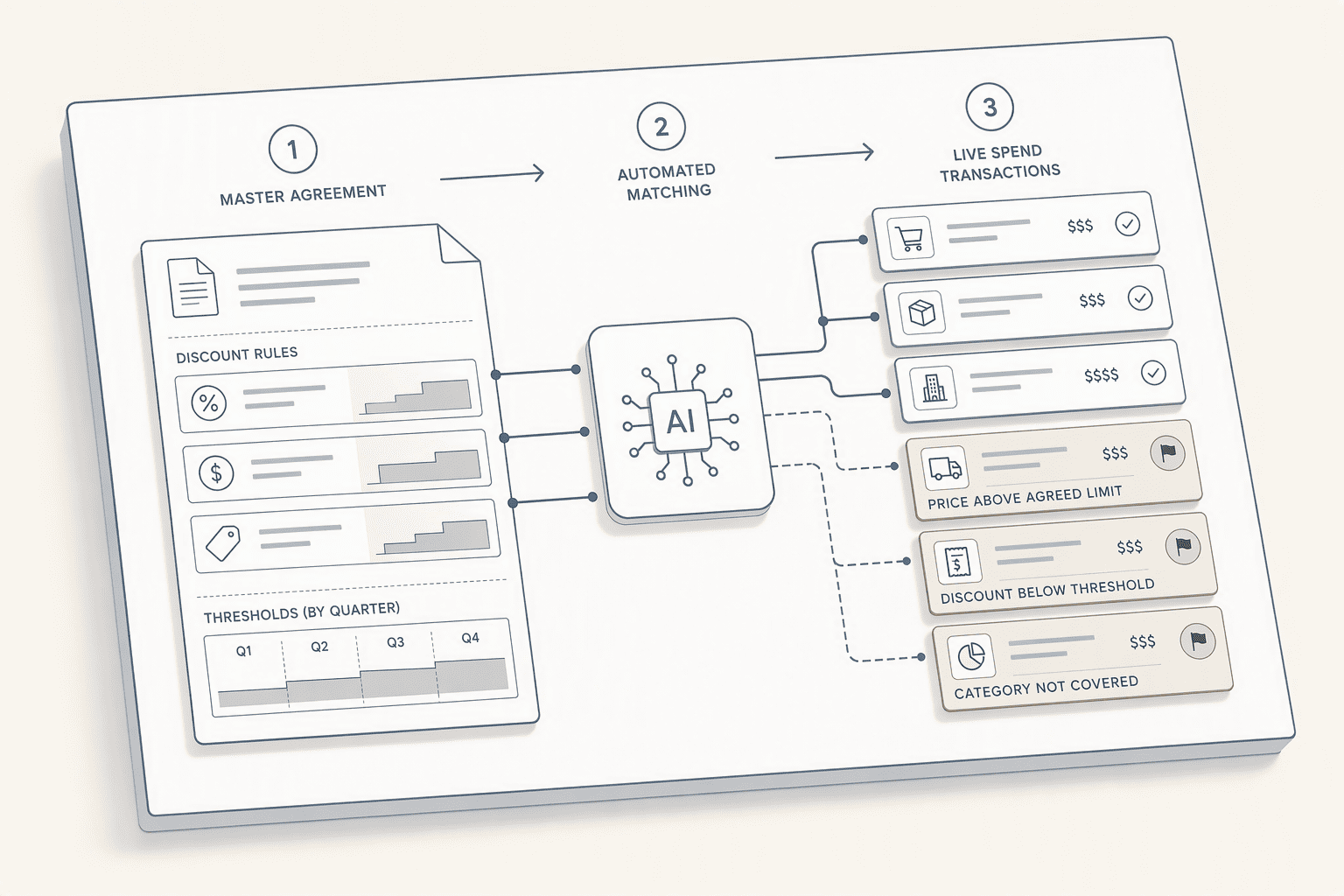
Manual contract review collapses under the weight of modern p-card transaction volumes. A procurement team can spot-check a handful of invoices each month while thousands of charges flow through corporate cards unchecked. AI narrows that gap by shifting enforcement from periodic sampling to continuous, automated matching.
- Extract complex discount structures from every master agreement so the system knows the exact negotiated price, volume thresholds, and escalation clauses for each vendor.
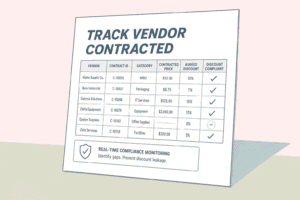
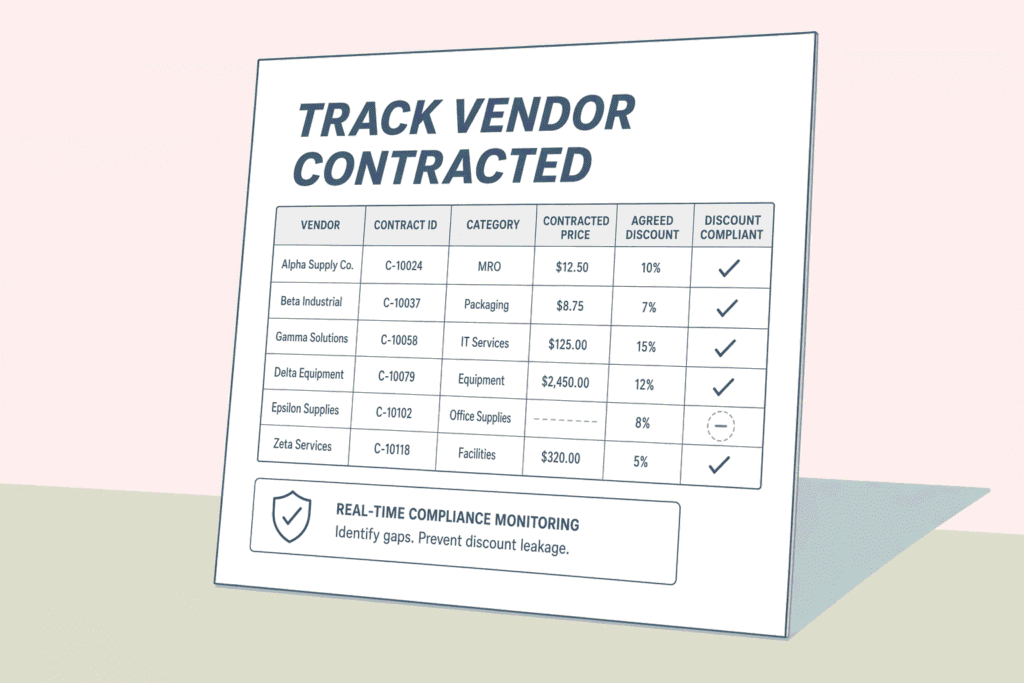
- Continuously monitor whether terms are honored in practice by matching purchase orders and invoices against those extracted terms, tracking volume-discount thresholds and payment deadlines in real time.
- Flag duplicate SaaS subscriptions that individual departments sign up for on corporate cards, a spend pattern manual audit consistently misses.
- Conduct a value leakage assessment that reconciles pricing, discounts, and noncontracted line items against the contract baseline, surfacing the exact dollar figure of maverick spend in the current period.
- Use AI-based data extraction and analysis that enables compliance matching with remarkable speed and certainty, stopping off-contract deviations before payment rather than investigating them after.
Step 4: Configure granular RBAC to enforce data-sensitive spending controls
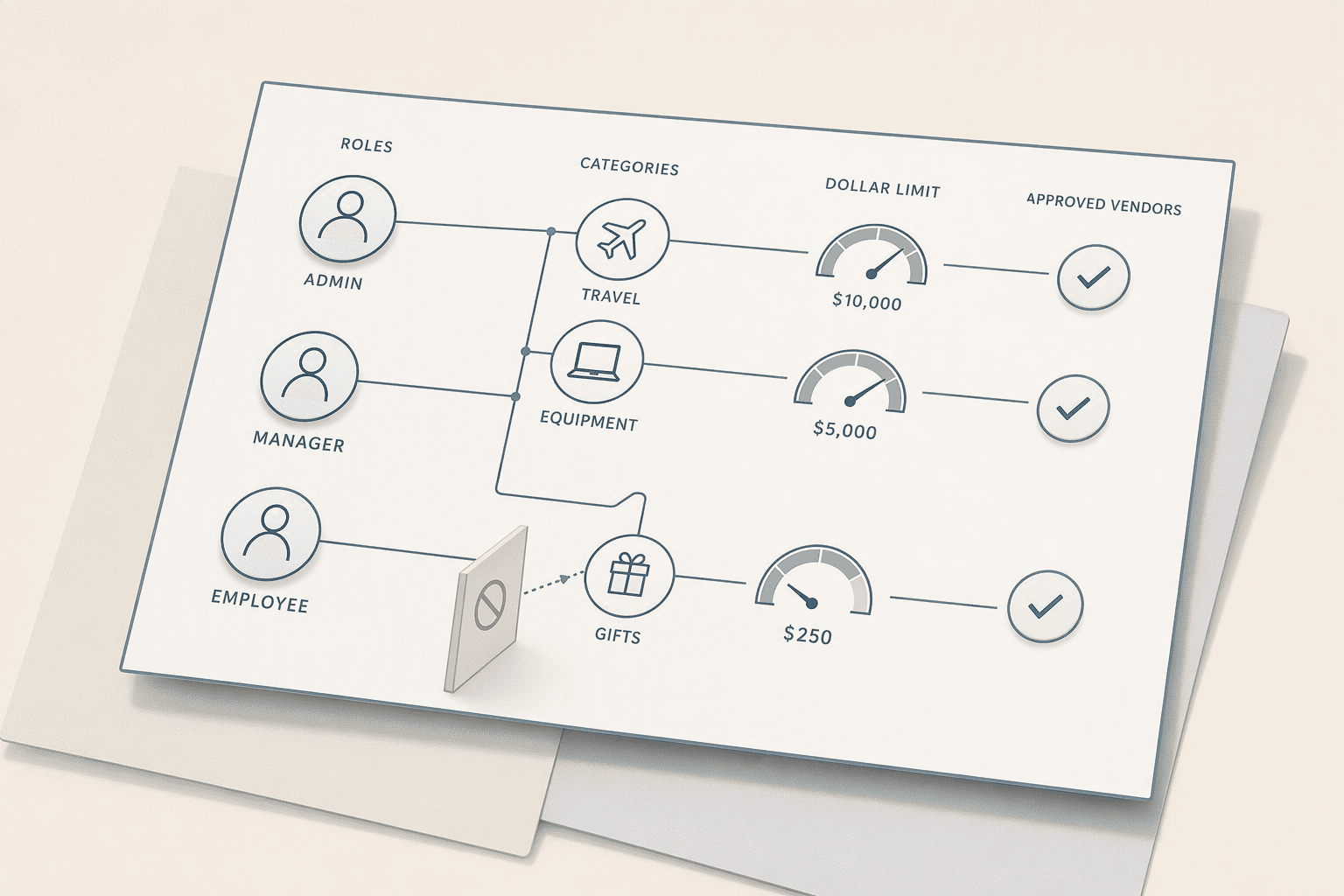
Role-based access controls turn procurement policy into a system constraint that operates silently in the background. You limit purchase categories, dollar thresholds, and approved vendor lists by role before a requisition gets created. A marketing manager sees only the catalog categories and spending limits tied to their job. A software engineer cannot accidentally route a purchase to an unapproved consultancy.
Contracts.ai supports granular role-based access and full auditability as a core platform capability. This lets you build a segregation-of-duties architecture where the system enforces distinct approval, requisition, and receipt roles. Nobody has to check a policy document to know who does what.
Pre-spend approvals happen at the point of entry, framed by rules that reflect your master contracts. This is the pivot from detection to prevention. You stop running quarterly reports to find that a department bought outside its contract and instead let the system block the purchase outright. Compliance becomes the default path because no other path exists.
Step 5: Build a real-time audit trail linking every transaction to a master contract
Continuous monitoring is the technical foundation that makes prevention durable. The architecture requires a unified data model that connects procurement card transactions, purchase orders, and invoices to the specific clauses and pricing tables in your master contracts. When every transaction self-documents its contract basis automatically, the audit trail becomes a system output, not a quarterly reconstruction effort.
That capability is already shipping. Contract intelligence platforms now analyze contract terms alongside actual procurement performance data in real time.
Link P-card transactions directly to master agreements, and you remove the manual matching work that dominates period-end close. That matching work is where maverick spend hides. The system flags a noncontracted line item the moment it appears instead of weeks later when reconciliation finally catches up.
Contracts.ai includes detailed audit logging across system activity. Every access, modification, and spend event is timestamped and attributable to a specific user and role, which satisfies the internal control documentation expectations laid out by the SEC without a separate manual effort.
Step 6: Design the audit narrative to prove compliance automatically
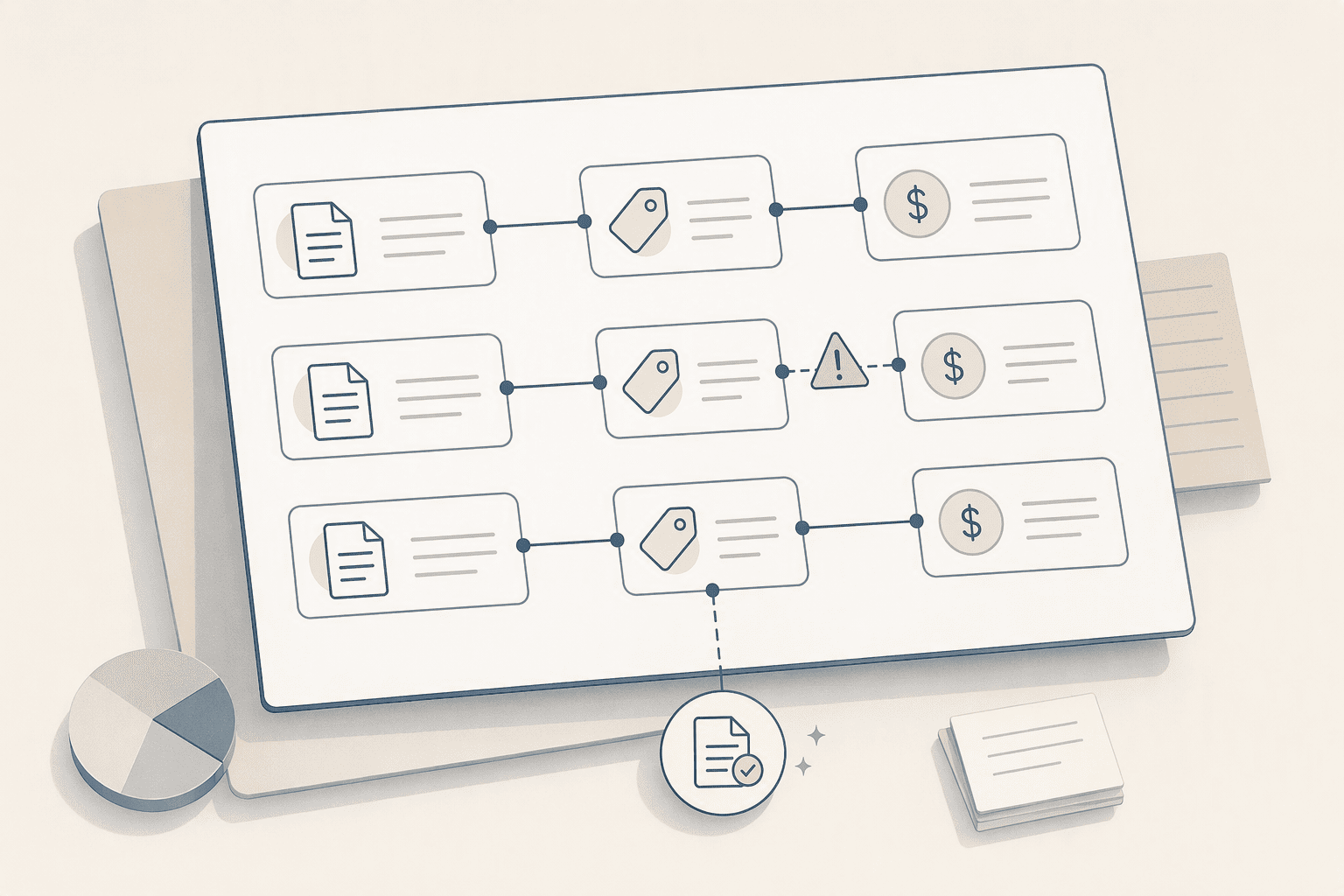
An automated audit trail is useful. But an audit narrative that explains the compliance logic behind every transaction changes the dynamic. You stop preparing for audits and start monitoring a dashboard that answers the central control questions as they arise. The structure looks like this:
- Contract basis display: Each transaction links back to the master agreement clause, the negotiated rate, and the actual price paid. Comparing the three takes a glance.
- Deviation flagging: A line item that crosses a threshold or falls outside a contracted category gets flagged. The flag includes a timestamp and the specific contract term it broke.
- Role-attributed spend: Every transaction carries the role and approval chain that authorized it. You can verify segregation of duties without manual tracing.
- Continuous coverage report: The system keeps a rolling tally of total procurement spend against contracted coverage. It surfaces the exact percentage flowing through approved channels.
Conclusion
Stopping maverick spend is a system design problem, not an enforcement campaign. When you remove the friction that makes non-compliance the faster choice and deploy AI to enforce contracts in real time, the path of least resistance becomes the compliant one. The return on that shift is quantifiable: reclaiming the up to 20% of procurement spend that is currently leaking through off-contract purchasing. That is budget already inside your organization, waiting for the right controls to free it.
Frequently Asked Questions
What is maverick spend and why does it harm enterprise procurement?
Maverick spend harms procurement in several key ways:
- Cost premium: Imposes a 10 to 20% cost premium per transaction.
- Volume discount erosion: Undermines negotiated volume discounts.
- Data fragmentation: Scatters spend data across disparate sources.
- Use reduction: Weakens supplier use with fragmented buying patterns.
What are the most common causes of off-contract purchasing in US organizations?
Friction is the root cause. When internal procurement systems require slow approvals and complex workflows, employees bypass them for the speed of a corporate card and a familiar vendor. Decentralized software subscriptions and ad hoc professional services engagements are particularly common entry points for off-contract spend.
How can finance and procurement teams detect maverick spending using contract data?
Teams detect it by matching actual procurement card and purchase order activity against master contract terms. Contract intelligence software continuously monitors volume-discount thresholds, payment terms, and negotiated pricing against real spend, flagging any deviation the moment it appears rather than weeks after the fact.
How do AI-powered contract analysis tools help prevent maverick spending?
AI extracts complex discount structures and pricing terms from contracts, then monitors every transaction against those terms in real time. It surfaces duplicate SaaS subscriptions, unauthorized vendor use, and spending that exceeds negotiated rates, stopping non-compliant purchases before payment rather than detecting them after.
What steps should a company take to enforce vendor contract compliance without slowing down business?
Make compliant buying faster than any workaround with these tactics:
- Guided buying: Deploy pre-approved catalogs so employees only see sanctioned vendors.
- Reduced clicks: Simplify requisition workflows to minimize effort.
- Role-based limits: Configure purchase categories and thresholds at the point of entry.
- AI matching: Automatically match transactions to contracts in real time.
Sources
- EX-99.1 – SEC.gov – www.sec.gov
- Maverick Spend: Identify & Manage Uncontrolled Expenses | Ivalua – www.ivalua.com
- What Is Contract Intelligence Software? CLM vs. AI-Native Spend Analytics (2026) | Suplari – suplari.com