Introduction
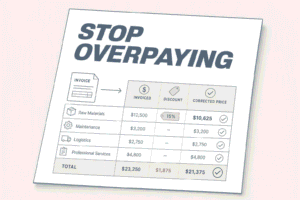
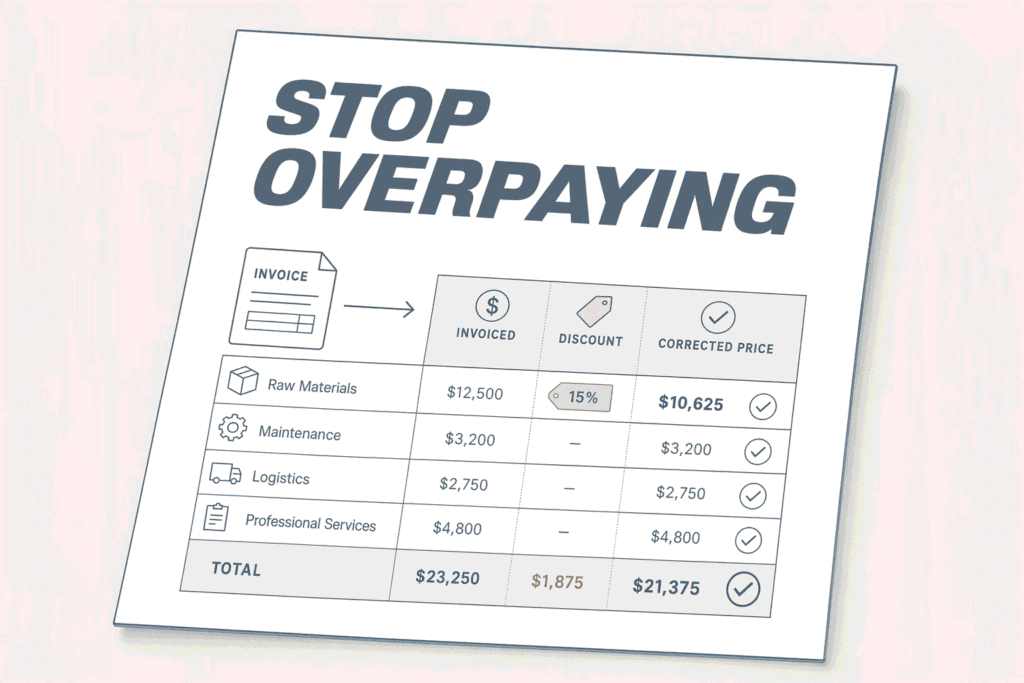
Your procurement team negotiated a 12% volume discount. Six months later, finance runs a report and discovers your company has been paying list price since day one. The discount never made it onto the invoice. That 8 to 12% drained from the contract just vanished into operations.
The scale of the problem is staggering. Research indicates inefficient contract management can erode as much as 40% of contract value. That’s not just missed discounts; it’s unauthorized service substitutions, duplicate billing, incorrect tax calculations, and contract renewals that trigger at inflated rates without anyone noticing. Contractual and invoice complexity made it extremely challenging for teams to monitor and reconcile invoice terms to negotiated terms.
A new category of AI-powered platforms has emerged to solve this exact problem. These tools parse executed agreements, extract structured obligations, and cross-reference every invoice line item against the original contract terms automatically. No manual spreadsheet reconciliation required.
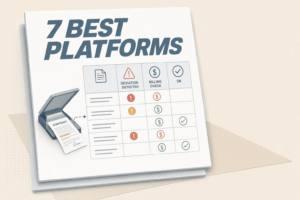
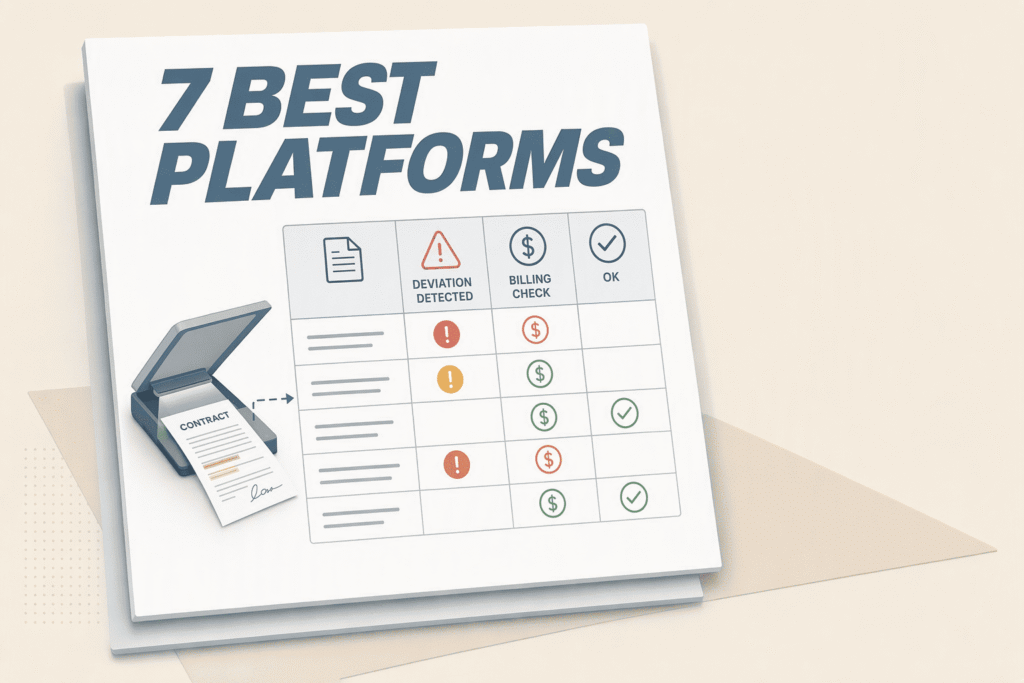
This article evaluates seven platforms that automatically flag contract deviations and billing errors in 2026, organized by segment so you can match the right solution to your compliance needs, tech stack, and risk profile.
Key Takeaways
Automated deviation detection is no longer theoretical. Specialized platforms now parse contracts into structured rules and reconcile invoices in real time, at scale. Here’s what the landscape delivers:
- 40% is the baseline risk: Inefficient contract management can erode nearly half of negotiated value post-signature without automated monitoring.
- Architecture is API-driven: Platforms connect directly to ERP and billing systems, extracting clause-level rules via machine learning, then flagging mismatches on pricing, quantity, discounts, and tax without manual review.
- Recovery is measurable: Automated deduplication and consolidation programs recovered up to 17% of vendor spend in practice, while stopping unwanted renewals saved organizations around $1.3M annually.
- Evaluation hinges on four criteria: Rule customization depth, integration breadth with your financial stack, completeness of the audit trail, and privacy compliance specific to your industry (HIPAA, CCPA).
- Specialization matters: Enterprise-grade obligation tracking, healthcare-specific PHI anomaly detection, real-time procurement reconciliation, and cloud-native cost variance alerts each serve fundamentally different use cases.
1. Contracts.ai, post-signature intelligence layer that isolates deviation root causes
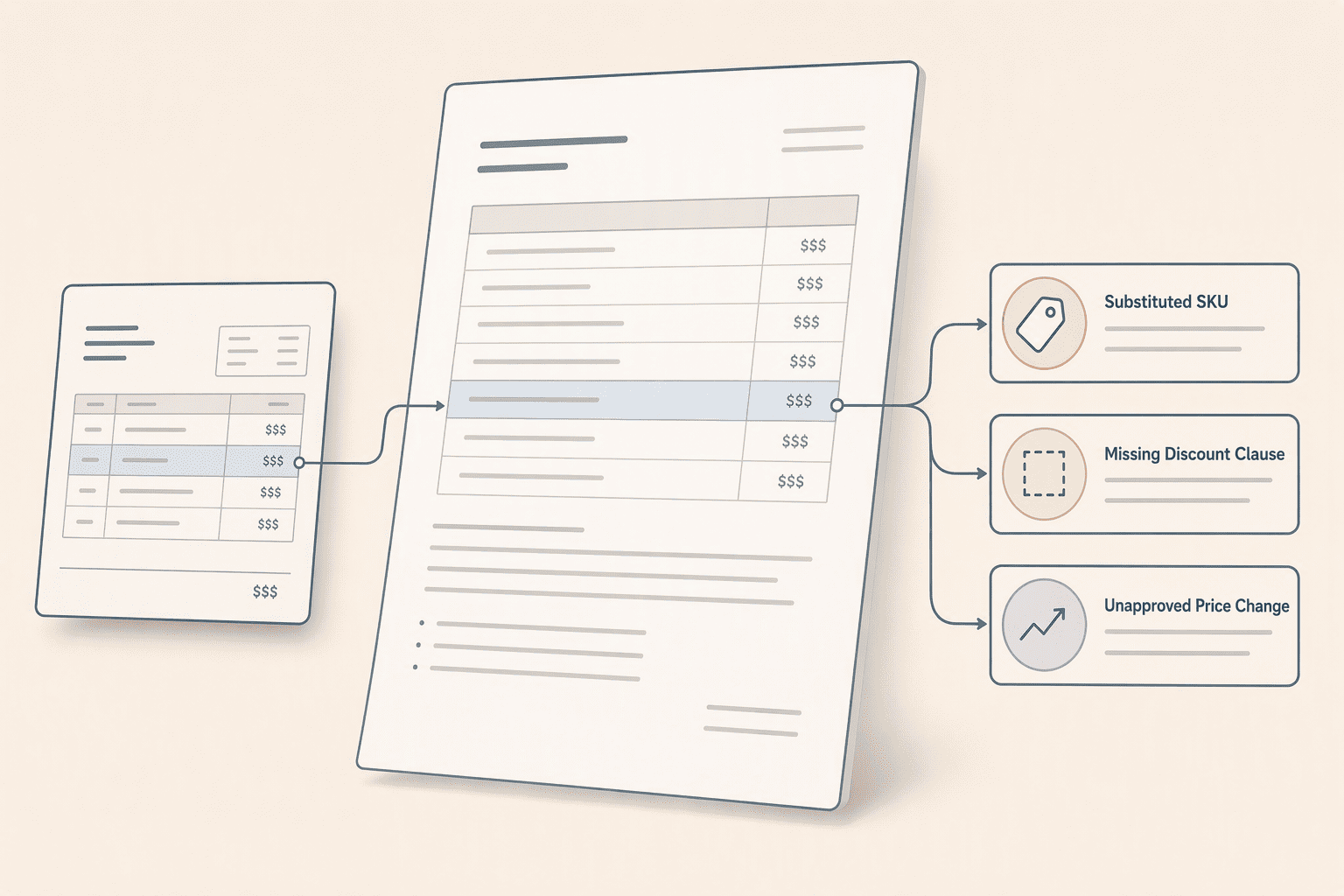
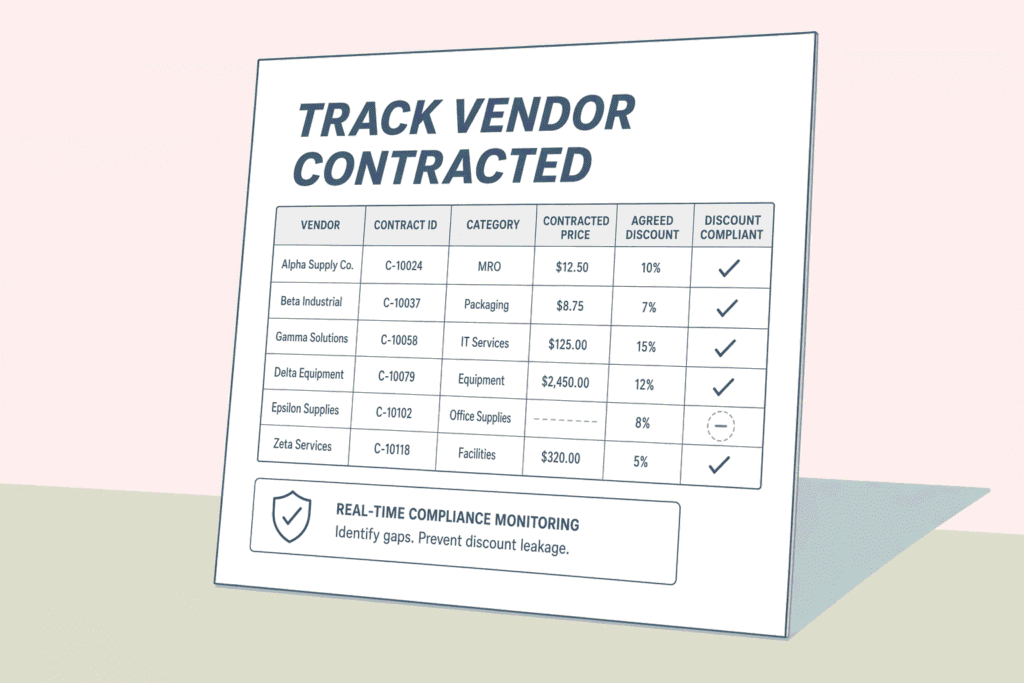
Contracts.ai is a post-signature intelligence platform built to parse executed agreements and cross-reference invoices against contract terms, focusing specifically on identifying the root cause of each deviation it flags. When an unapproved price change appears on an invoice, the system does not simply report the mismatch. It traces the discrepancy back to its origin, whether that is a supplier-substituted SKU, a missing discount clause that was never converted to a structured obligation, or an incorrect rate card applied at billing.
This diagnostic capability separates detection from analysis. You see not just that money leaked, but why it leaked and where the process broke. The company was co-founded by operators with combined 30-plus years of experience inside global enterprises implementing CLMs, ERPs, and procurement systems and was founded in 2025 by Jenn McCarron (ex-Netflix, ex-Spotify, ex-Cisco) and Phani Gunturu. The product includes granular role-based access controls, full audit logging across system activity, and encryption at rest and in transit using TLS 1.2 or higher. A pilot can be run with a limited contract set without migrating the full repository or disrupting existing workflows.
2. Icertis, enterprise-wide contract-to-pay audit with obligation tracking
Icertis turns contract language into rules a payment system can enforce. Its contract-to-pay audit module reads unstructured clauses, extracts payment terms, pricing schedules, discount milestones, and renewal conditions, and then checks every inbound invoice against that rule set before money moves. Large procurement and legal teams use it when thousands of active contracts feed dozens of ERP instances.
What distinguishes it in practice:
- Clause-to-rule conversion: The obligation-tracking engine reads payment terms, pricing schedules, discount milestones, and renewal conditions straight from contract text and converts them into rules a machine can apply at time of pay.
- Deep ERP integration: The platform plugs into SAP, Oracle, and Microsoft Dynamics environments. It pulls invoice line items, runs validation, and flags a mismatch before funds leave the account.
- Enterprise governance layer: Role-based access, full audit trails, and approval workflows sit on top of the detection engine. That structure supports SOX compliance and internal procurement policy audits.
- Scalable across spend categories: One obligation framework handles a facilities management contract with SLA-based pricing the same way it handles a standard IT hardware purchase order.
3. Cedar, healthcare-tailored billing integrity with PHI-aware anomaly detection
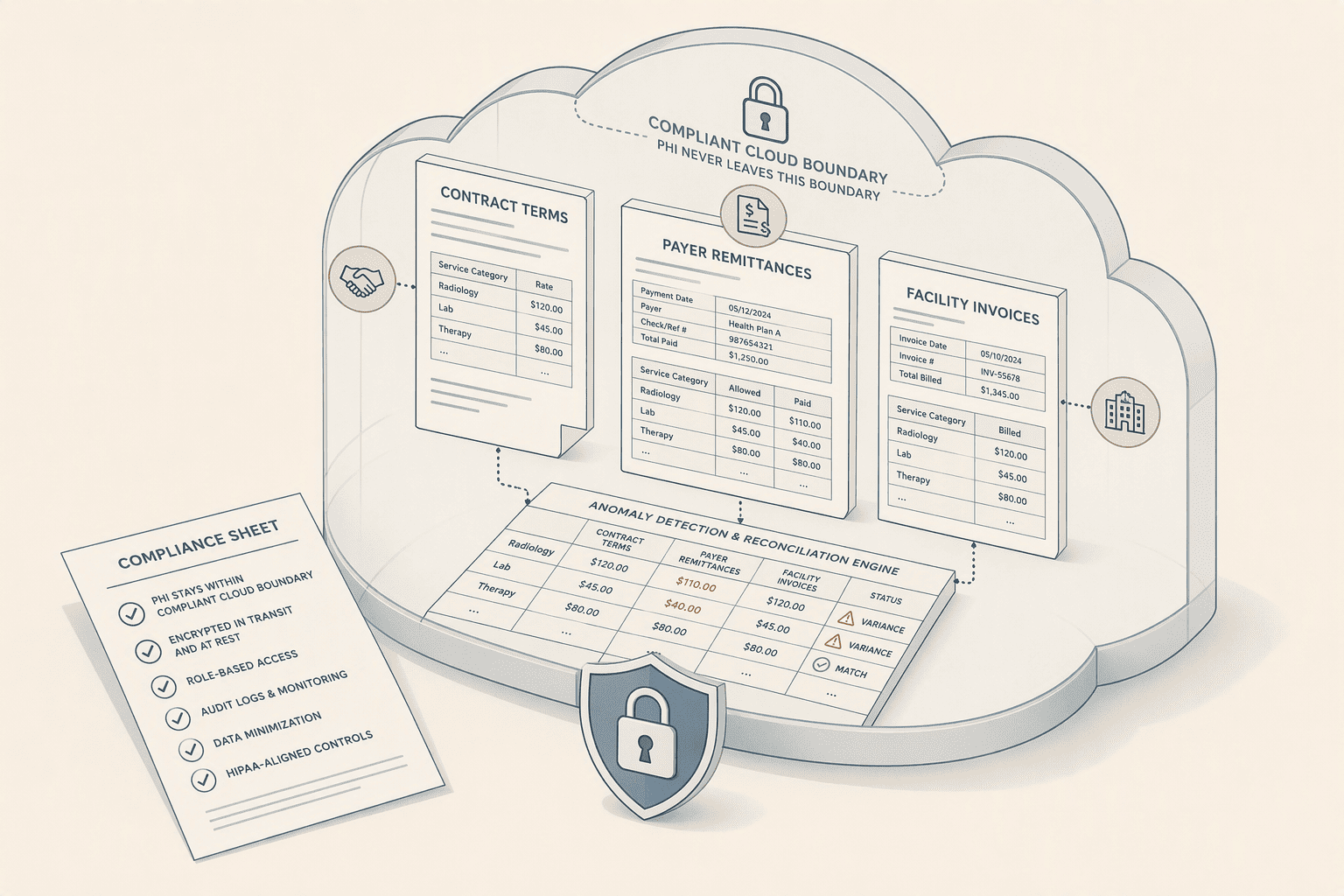
Generic contract-audit tools hit a wall with medical billing because invoices carry protected health information. Cedar is built for that specific problem. Its machine learning models run inside each healthcare organization’s own compliant cloud environment, catching billing anomalies without PHI ever leaving the organization’s control.
This local deployment model is what keeps Cedar on the right side of HIPAA when it scans contract terms against payer remittances and facility invoices. It flags rate mismatches, duplicate procedure codes, and out-of-network charge patterns. Every detection happens inside an encrypted boundary with the access-control logging that a compliance audit requires. For health systems and payers, it handles a gap that general CLM platforms do not even attempt.
4. Zipt, real-time invoice-to-contract reconciliation dashboards for procurement
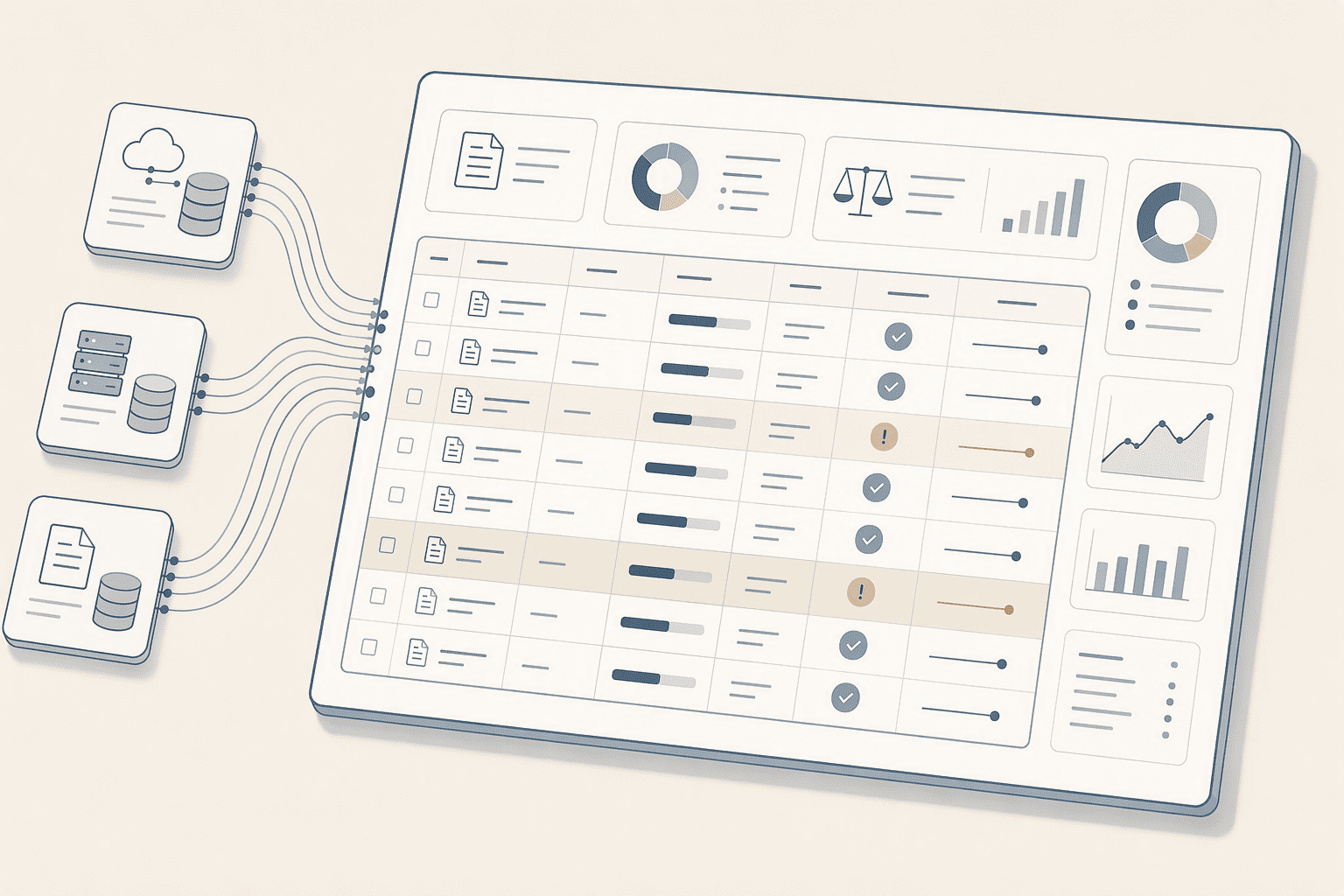
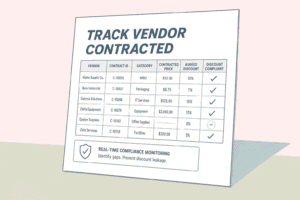
Zipt takes a live, dashboard-first approach, connecting directly to billing systems via API and streaming invoice line items against stored contract terms as they arrive. Here is how it compares on the dimensions that matter in a procurement workflow:
| Feature | Zipt | Traditional batch reconciliation |
|---|---|---|
| Detection speed | Near real-time as invoices post | End-of-month or quarterly batch runs |
| Visibility layer | Live dashboards with drill-down to line-item mismatches | Static discrepancy reports, often in PDF |
| Mismatch types flagged | Pricing, quantity, incorrect chargebacks, tax miscalculations | Varies widely; often manual mapping required |
| ERP integration model | API-based connection to billing and P2P systems | CSV import or manual data entry |
| Workflow actionability | Click-to-resolve actions surfaced in the dashboard | Discrepancies handed off to AP for investigation |
This real-time model changes the operational cadence. Instead of discovering a pricing error 45 days after payment, you catch it before the payment run closes. For procurement teams managing hundreds of monthly service invoices, that shift eliminates the cumbersome clawback process entirely.
5. ContractSafe, automated duplicate charge and overbilling flagging engine
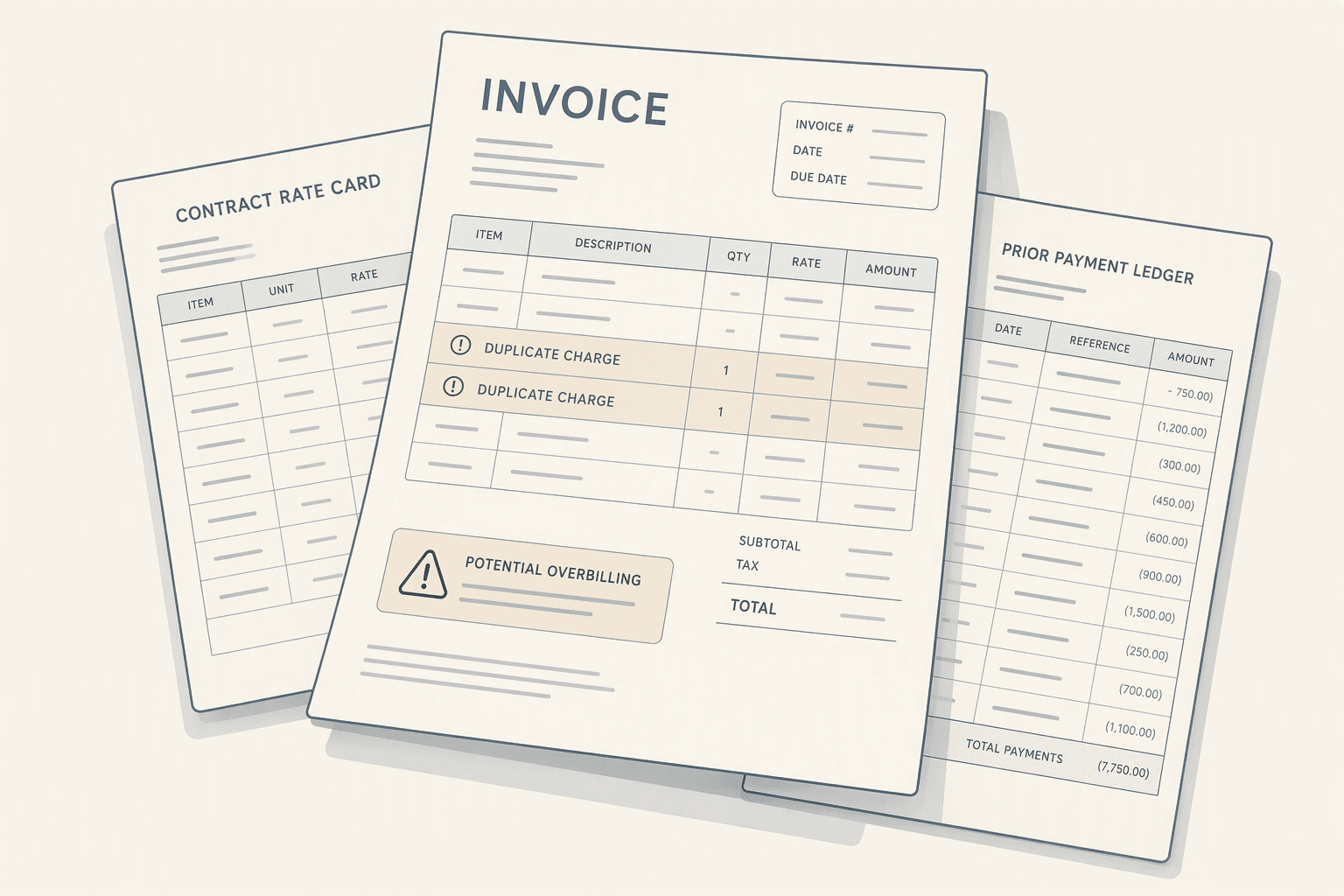
ContractSafe homes in on a single, expensive pain point: duplicate payments and overbilling. Its engine scans incoming invoices algorithmically against stored contract rate cards and prior payments, flagging duplicates and calculating whether the billed amount exceeds contracted rates, including incorrect tax line items.
This tight focus makes it unusually effective at recovery. Missed discounts or unauthorized extensions can drain 8 to 12% from affected contracts. ContractSafe’s logic layer catches the duplicate invoice submitted 90 days apart under a slightly altered PO number.
It also flags the rate escalation applied three months before the contract date allows it. For finance teams that know duplicate payments are a recurring leak but lack the engineering resources to build internal detection rules, ContractSafe is a purpose-built answer. The platform automates line-by-line comparison across thousands of transactions and surfaces only the items that need human review.
6. Google Cloud Billing Anomaly Detection, cloud-native cost variance alerts
Google Cloud’s billing anomaly detection service operates in a category adjacent to traditional contract-invoice matching. It does not parse PDFs or reconcile supplier payment terms. Instead, it monitors your Google Cloud consumption costs in near real-time and alerts when spend deviates from historical patterns.
Early signals for AI workloads use near real-time cost estimates to provide daily, service-level insights before finalized billing occurs. This matters acutely in 2026 because variable-cost AI services, like Gemini API calls and Vertex AI training jobs, can spike consumption well outside the predictable bounds of a fixed-term infrastructure contract. The feature, released July 24, 2026, gives teams a daily window into cost behavior rather than waiting for the monthly invoice shock.
Google Cloud complements, rather than replaces, contract-level audit tools. A spend cap budget can be configured to automatically pause usage on eligible services when spend exceeds the budget amount, a safeguard released in preview on July 27, 2026. For organizations running AI workloads on Google Cloud, this layered approach pairs cloud-native cost guardrails with a third-party contract-to-invoice reconciliation platform for supplier-side deviations.
7. Generative AI add-ons, augment existing CLM stacks for value protection
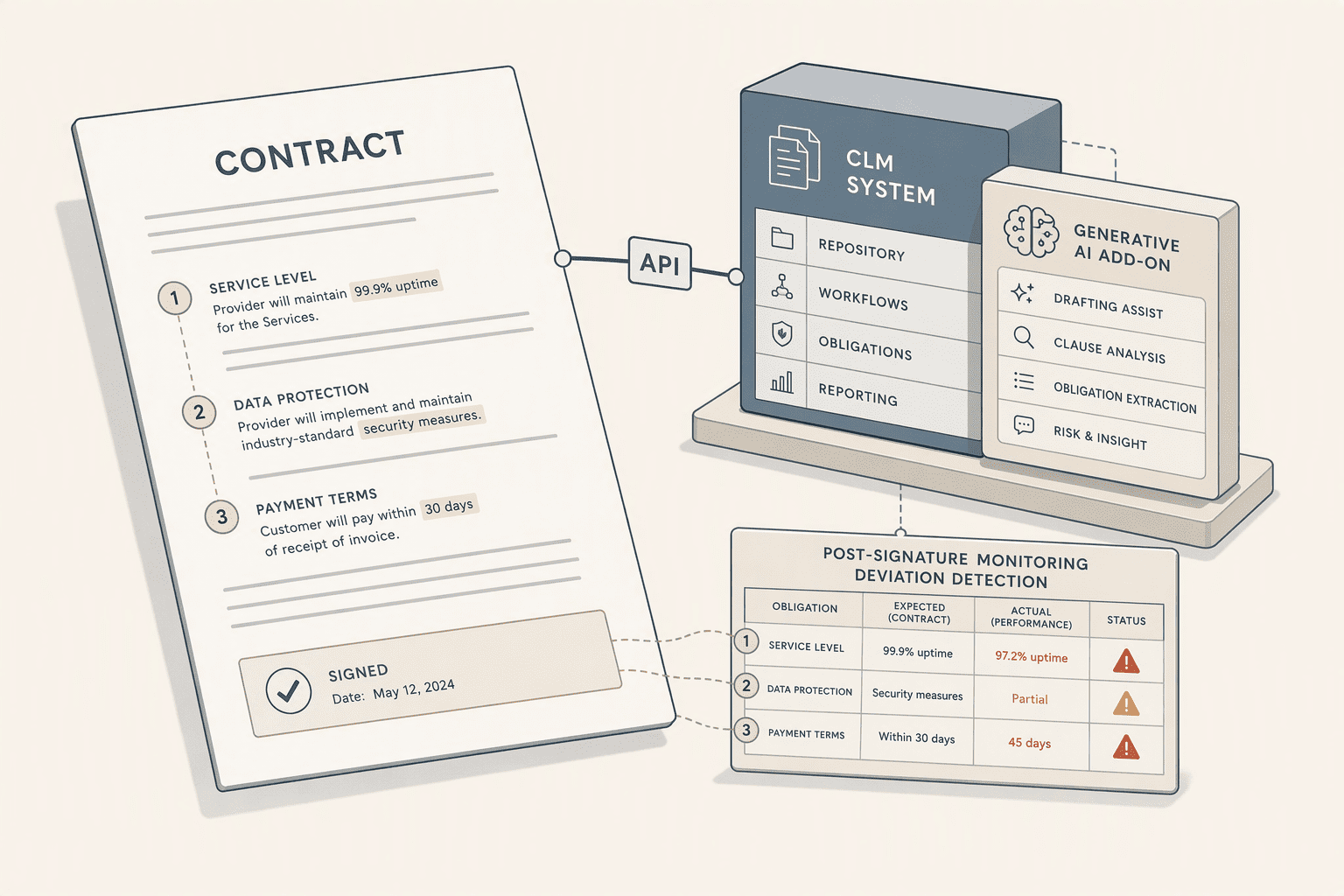
Not every procurement or legal team has the mandate or budget for a full platform replacement. A growing category of generative AI add-ons connects via API to your existing contract lifecycle management system. They layer post-signature audit capabilities on top of the stack you already run.
Onit introduced generative AI-powered contract management that extracts structured metadata and obligations from executed agreements. You can build a deviation-detection rules engine without migrating off a legacy CLM. The architecture connects to ERP and billing APIs the same way dedicated platforms do, pulling invoice data for comparison against GenAI-extracted contract rules.
Sirion’s platform structures contract clauses into trackable obligations and surfaces the delta between negotiated and actual spend. Both approaches skip the rip-and-replace. This modular approach lets you run a pilot on a limited contract set without disrupting existing workflows.
You can test deviation detection on a specific high-risk spend category and measure the recovery before scaling. Companies founded by operators who spent years inside global enterprises implementing CLMs, ERPs, and procurement systems understand this reality.
They built for gradual adoption. For legal teams that need post-signature intelligence today but cannot overhaul their entire contract stack, GenAI augmentation is the practical on-ramp.
Conclusion
The platforms profiled here answer the same core problem in five different ways. Icertis handles enterprise-wide obligation tracking. Contracts.ai delivers post-signature root-cause intelligence.
Cedar focuses on vertical-specific healthcare billing integrity. Zipt does real-time procurement reconciliation.
Google Cloud Billing detects cloud-native cost anomalies. Teams that want deviation detection layered onto their current CLM without a migration can use generative AI add-ons from Onit and Sirion.
Your selection criteria center on four variables. How deeply do you need to customize detection rules to your contract language? How many ERP and billing systems must the platform integrate with? Does the audit trail satisfy your regulatory auditor? Does your industry demand PHI-aware processing?
Start with a pilot on a limited contract set and a single high-risk spend category. The recovery from even one missed discount clause or duplicate payment often covers the cost of the pilot within the first quarter.
Frequently Asked Questions
What types of post-signature contract deviations and billing errors can AI automatically flag today?
AI platforms now flag unapproved pricing changes, missing discount clauses, unauthorized service substitutions, duplicate charges, overbilling against rate cards, incorrect tax calculations, and early or automatic renewal triggers that activate at inflated rates without authorization.
How does the technical architecture work for platforms that detect contract-to-invoice mismatches without human review?
Machine learning models parse executed contract terms into structured rules, such as pricing tables and discount milestones. Those rules are then cross-referenced against invoice line items via API integrations with ERP and billing systems, flagging mismatches automatically before payment.
What should procurement and legal teams evaluate when choosing an automated contract deviation detection platform?
Evaluate rule customization depth, integration breadth with your existing ERP and billing systems, completeness and immutability of the audit trail, and industry-specific privacy compliance, including HIPAA for healthcare or CCPA for California consumer data.
Is there a platform designed specifically for enterprise legal and procurement teams to catch billing errors against existing contracts?
Yes. Platforms like Icertis offer enterprise-scale contract-to-pay audit modules that convert clauses into structured obligations and validate invoices at the point of payment. Zipt and ContractSafe provide dedicated dashboards and engines for catching billing errors against stored contract terms.
How do privacy regulations like HIPAA and CCPA affect a platform that scans contracts and invoices for errors?
The platform must process data locally or within compliant cloud environments, encrypt data at rest and in transit, support data deletion requests, and provide role-based access controls with audit logs showing exactly who accessed what and when.
Can I test an automated deviation detection platform without migrating my entire contract repository?
Yes. Many platforms, including Contracts.ai and generative AI add-on providers, support pilots on a limited contract set without disrupting existing workflows. You can validate recovery on one high-risk spend category before scaling across the organization.
Sources
- Quantifying Total Financial Impact of Contract Leakage: 10 Methods – www.sirion.ai
- Mitigating procurement value leakage with generative AI – www.mckinsey.com
- Cloud Billing release notes | Google Cloud Documentation – docs.cloud.google.cn