







Introduction
Your sales team negotiated a 15% volume discount last year. Finance projects those savings into the quarterly forecast. But somewhere in a shared drive, the auto-renewal kicked in at list price with a 4% escalator, and nobody noticed. In 2026, that scenario is not just plausible, research shows that an average 50% of negotiated savings are never realised after a contract is signed. The gap between what you sign and what you actually pay widens quietly, one missed deadline at a time.
Manual contract tracking was manageable when a company had 12 vendors. With mid-market organizations now juggling dozens of SaaS subscriptions, cloud workloads, and compliance-dependent suppliers, the burden is no longer administrative, it is financial. The worst part? The tools to fix it have historically carried enterprise price tags that force small legal and procurement teams into spreadsheets by default.
That changes this year. A new breed of affordable contract monitoring platforms is separating post-signature oversight from bloated CLM suites. These tools extract key dates, obligations, and spend thresholds from signed agreements, then push alerts before deadlines pass, without requiring a six-figure implementation or a dedicated admin. This article digs into the eight options that deliver the highest signal for the lowest cost right now, from free vendor-page watchdogs to AI-native extraction engines that slot into the stack you already have.
Key Takeaways
Here is where each profiled tool delivers its strongest return, matched to the use case it serves best:
- PageCrawl: Monitors public vendor pages for policy shifts, subprocessor changes, and compliance updates. It ignores marketing noise, and it is the only option that starts completely free.
- StackSpend: Built specifically for AI and cloud cost anomalies. Same-day anomaly detection across OpenAI, Anthropic, and Hugging Face, with a 14-day no-credit-card trial.
- ContractsAI: An AI-powered intelligence layer that auto-classifies clauses and forecasts renewals while working alongside your existing contract storage.
- Gatekeeper: A governance-first platform with 220 native integrations and unlimited user pricing. It anchors compliance alerts directly to contract milestones.
- LinkSquares: Mid-market legal teams get enterprise-grade term-based alerting on a predictable scaling budget. It bridges simple storage and full CLM without forcing an all-or-nothing jump.
- Evisort: Pre-trained AI triggers for renewal, expiry, and obligation milestones with a no-code dashboard. Setup takes very little time.
1. Contracts.ai

Contracts.ai reads the fine print so you don’t have to. It pulls dates, dollar thresholds, and performance commitments out of signed agreements, pushes them into an alert engine, and links every finding back to the source language, all while your contracts stay right where they are.
- AI-native extraction: The platform uses natural language processing to surface key dates, financial thresholds, and performance obligations from executed agreements. The company claims accuracy levels greater than 99% when extracting data from documents in real time.
- Source-linked answers: Every extracted obligation and alert trigger is linked back to the source contract language for validation, making audit preparation a byproduct of daily monitoring rather than a separate exercise.
- Scalable pricing: The Basic plan costs $19 per month billed annually, and the Enhanced plan costs $49 per month billed annually, putting AI-powered extraction within reach for lean teams that previously could not justify a CLM purchase.
- Intelligence that plugs in: Contracts.ai structures and activates contract data beyond static storage. It connects to your existing document stores and shares structured intelligence across finance and procurement without disrupting current workflows.
- Post-signature focus: The platform concentrates on what happens after the ink is dry, exactly the gap that costs teams savings leakage. It does not handle upstream workflows like approvals or negotiation.
2. Gatekeeper: Unified Vendor Workflows with Embedded Compliance
Gatekeeper pairs contract milestone tracking with a vendor governance engine that pulls risk data from across your tech stack. Its primary structural advantage is that compliance checks and renewal alerts share a single source of truth.
| Dimension | Gatekeeper | Typical Lightweight CLM |
|---|---|---|
| Native integrations | 220 third-party systems | Often fewer than 15 |
| User licensing | Unlimited users on all plans | Per-seat or tiered caps |
| Certifications | ISO 27001 and 9001 accredited | Varies widely; many lack ISO |
| Support model | 24/7 access to product experts | Business hours or community-only |
| Compliance alignment | Risk assessments tied directly to contract obligations | Typically handled in a separate module or spreadsheet |
For procurement teams, that integration breadth transforms vendor reviews from a quarterly fire drill into a continuous, auditable stream. When a supplier’s DUNS status changes, Gatekeeper can cross-reference that against active contract renewal windows automatically. The unlimited user structure, all plans come with unlimited users, removes the usual friction where only admins can act on an alert, making this a governance-first pick rather than a pure cost play.
3. PageCrawl: Zero-Cost Automated Watchdog for Public Vendor Pages

Most contract alerts track what is inside the agreement. PageCrawl tracks what is outside it, the public legal pages, policy updates, and compliance disclosures that change without a signed amendment. And it is free to start.
Here is why that matters: a SaaS vendor can update its data processing addendum or swap a subprocessor with zero obligation to notify you directly. By the time your annual security review catches it, sensitive data may have already moved. PageCrawl watches any public vendor page you specify and distinguishes substantive changes from routine updates. It ignores navigation tweaks and marketing copy, sending an alert digest only when something meaningful shifts, a new subprocessor announced, a compliance certification dropped, a ToS arbitration clause rewritten.
No installation is required. You point it at a URL, configure the cadence (instant, daily, or weekly digest), and the tool sits alongside your existing vendor risk stack. For lean teams that cannot justify even a $19/month subscription, this fills a gap no spreadsheet could.
4. StackSpend: Spend Anomaly Detection Tailored for AI and Cloud Workloads

StackSpend takes aim at one of 2026’s fastest-growing procurement headaches: AI API costs that spiral in hours, not months. The platform monitors spend across OpenAI, Anthropic, Claude, Cursor, Hugging Face, and Grok (xAI) from a single dashboard.
When an engineering team flips a model parameter in production, a $400/day burn rate can spike to $2,100 before a weekly finance report catches it. StackSpend’s same-day anomaly detection and pace-to-forecast tracking surface those jumps as they happen, with daily spend alerts routing to both engineering and finance stakeholders. The monitoring scope extends across all major LLM and cloud AI workload providers, and the platform ships with a 14-day free trial that requires no credit card, a low-risk entry point for teams still building a business case for AI-specific spend controls. For startups and scale-ups whose cloud bills have quietly become their second-largest vendor line item, the core value is cost visibility before the invoice lands.
5. LinkSquares: AI Contract Analytics for Scaling Mid-Market Teams

LinkSquares builds smart alerting on top of a unified repository that ingests and normalizes metadata across thousands of agreements, giving in-house legal teams enterprise search power on a mid-market budget.
- Term-based alerting, not just date tracking: The platform triggers notifications based on specific clause language and obligation types, not only calendar milestones, so a contract with a Most Favored Nation clause can surface before pricing renegotiation kicks off.
- Repository-first architecture: Thousands of contracts get normalized under a unified metadata layer, which means a search for “auto-renewal clauses expiring within 30 days with no termination-for-convenience language” runs in seconds, not days.
- Predictable scaling: Pricing is structured for budgeting transparency as contract volume grows, sidestepping the per-seat models that penalize team expansion.
- Gartner Peer Insights validation: Among Docusign CLM reviewers, 59% gave a 5-star rating and 34% gave a 4-star rating, while Icertis Contract Intelligence (ICI) reviewers rated at 74% 5-star and 19% 4-star, positioning LinkSquares as a compelling middle ground for teams that need strong analytics without those price tags.
6. ContractPodAi: End-to-End CLM with Affordable Alert Tiers
ContractPodAi has historically been measured against enterprise-scale CLM deployments, but the platform’s modular pricing is quietly shifting that narrative. Its core obligations management and alert tier now ship independently, so a legal team of three can pay for automated monitoring without absorbing the cost of a full digital transformation.
The alert engine tracks renewal windows, performance milestones, and financial thresholds against executed agreements, and pulls from the actual obligations inside the clause language. Because the AI extraction runs on the same infrastructure that serves enterprise-wide deployments, the monitoring accuracy inherits that training without the associated price floor.
For general counsel operating inside mid-market legal budgets, this modularity addresses a concrete problem: the business case for a full CLM suite often fails on cost alone, even when the monitoring need is acute. ContractPodAi’s tiered approach puts the monitoring ahead of the suite, so you fund the capability you actually use first.
One note: verify which modules are included in the affordable-tier quote. Some of the deeper AI analytics remain tied to higher-level enterprise seats.
7. Evisort: Intelligent Repository with Out-of-the-Box Triggers
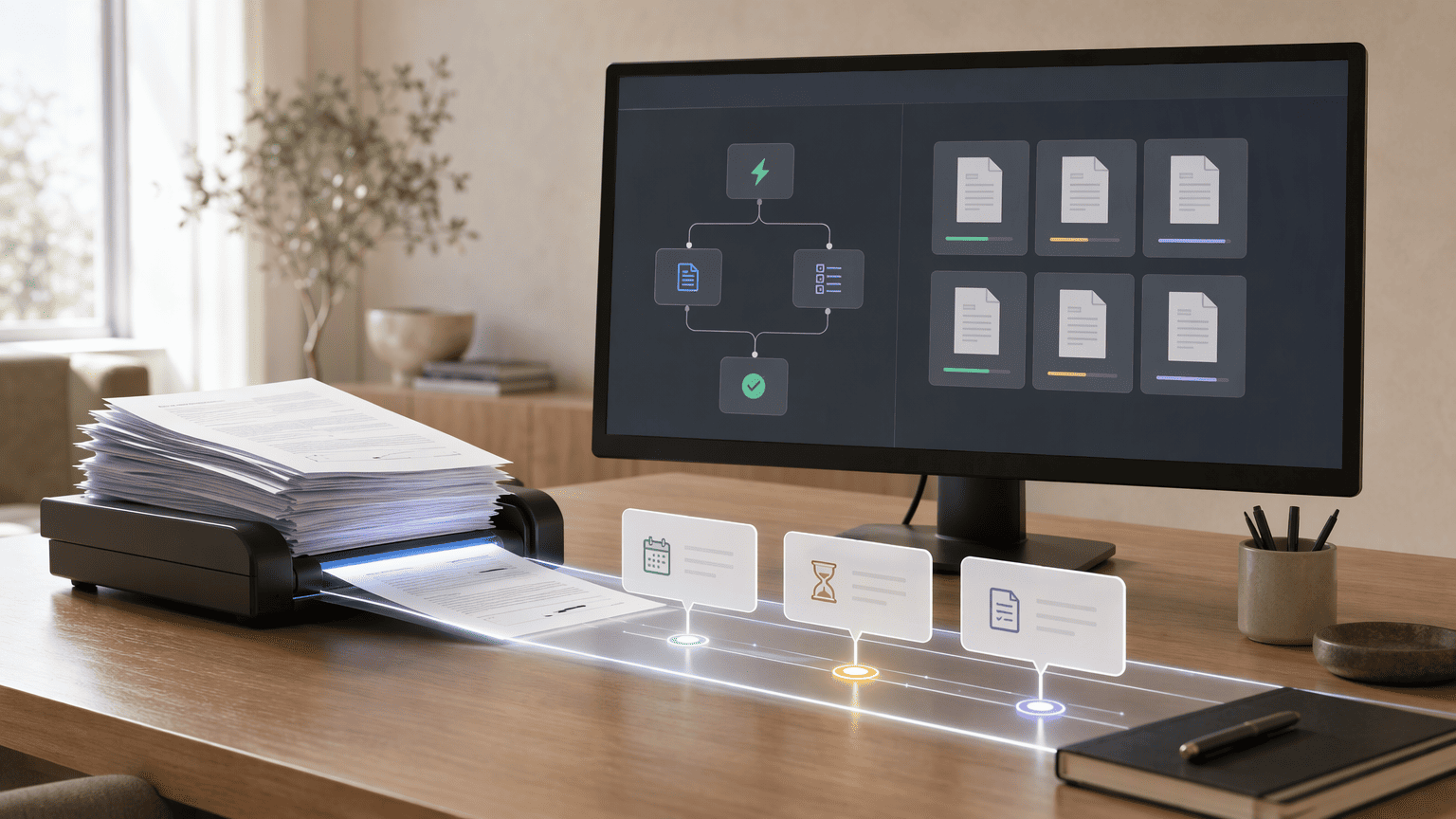
Evisort ships with pre-trained clause models that surface renewal, expiry, and obligation milestones the moment contracts are ingested, no custom training needed. For mid-market teams that need AI-powered monitoring without a dedicated legal ops hire, that readiness cuts time-to-value to days, not quarters.
OCR ingestion means even scanned PDFs from legacy vendors get pulled into the alert engine. The no-code dashboard lets procurement managers build triggers around specific clause types, force majeure, assignment restrictions, price escalators, without asking IT for a sprint cycle.
The platform plugs directly into Salesforce and SAP Ariba. When a contract obligation trigger fires, it launches a specific workflow action inside the systems where commercial decisions happen, instead of dumping another unread email into an inbox. G2 user feedback consistently flags deployment speed as a differentiator here, and Evisort’s published AI accuracy benchmarks on clause recognition suggest the pre-trained models are the primary reason.
8. Feature Comparison Table: Affordable Contract Monitoring Tools in 2026
No single tool wins across every dimension. The real split is between free utilities that solve one problem well and paid AI platforms that stretch across multiple workflows. The table below focuses on the factors that drive total cost of ownership and adoption speed.
If budget is tight, start with the free and low-cost tiers. Then check integration count and alert customization depth. Those two dimensions predict whether a team sticks with a tool or churns after a quarter. Implementation complexity ratings are drawn from vendor documentation and review sentiment.
The market shifted: price no longer blocks AI-powered monitoring. A team with zero budget can launch PageCrawl today and layer on Contracts.ai or StackSpend for specific AI or obligation alerts once the need is proven. That incremental path did not exist when enterprise CLM suites required a $30,000 minimum annual commitment before any alert fired.
| Tool | Starting Price (Per Month) | Free Tier? | Alert Customization Depth | Native Integrations | Implementation Complexity |
|---|---|---|---|---|---|
| Contracts.ai | $19 (Basic, billed annually) | No | High, AI-extracted clause-level triggers | API-first; plugs into existing storage | Low, no migration required |
| ContractsAI | $19 (Basic, billed annually) | No | High, clause classification and grouping | API-first; SharePoint, Dropbox compatible | Low, intelligence layer approach |
| Gatekeeper | Undisclosed; all plans unlimited users | No | High, compliance-linked milestones | 220 third-party systems | Medium, governance workflow setup |
| PageCrawl | Free to start | Yes | Narrow, public page policy changes only | None required | Minimal, no installation |
| StackSpend | Free 14-day trial (no credit card) | No, but trial is zero-commit | Medium, spend anomaly and forecast pacing | AI provider APIs (OpenAI, Anthropic, etc.) | Low, dashboard setup only |
| LinkSquares | Undisclosed; scaled by volume, not seats | No | High, term-based alerting across thousands of contracts | Undisclosed | Medium, repository migration |
| ContractPodAi | Modular tiers; affordable entry | No | High, enterprise AI extraction at tiered price | Undisclosed | Medium-High, module scoping required |
| Evisort | Undisclosed | No | High, pre-trained clause model triggers | Salesforce, SAP Ariba | Low, no-code dashboard, OCR ingestion |
Conclusion
The gap between a free public-page watchdog like PageCrawl and a $19/month AI-powered alert engine like Contracts.ai is narrow enough that every legal and procurement team with more than a dozen vendors should have at least one layer of automated monitoring in place this year. The cost of not doing so, that 50% of negotiated savings left unrealized, compounds with every auto-renewal that fires at the wrong rate.
Match the tool to the immediate pain. AI spend spiking daily calls for StackSpend’s same-day anomaly detection. A governance audit looming calls for Gatekeeper’s compliance-linked milestones.
And if the priority is activating contract data already sitting in a SharePoint folder without a migration project, Contracts.ai is built for that workflow. Start with one tool.
Prove the ROI. Then scale the stack.
Frequently Asked Questions
What are the most affordable software tools for automating vendor contract monitoring and alerts in 2026?
Several contract monitoring tools offer free or low-cost entry points:
- PageCrawl: free to start, monitors public vendor pages.
- Contracts.ai and ContractsAI: AI-powered extraction and alerting starting at $19 per month billed annually.
- StackSpend: provides a 14-day no-credit-card trial for AI and cloud cost monitoring.
- Gatekeeper, LinkSquares, and Evisort: all offer affordable mid-market tiers with varying alert customization depth.
How does ContractsAI work as an affordable contract intelligence layer for post-signature monitoring?
ContractsAI plugs into your existing contract storage, SharePoint, Dropbox, or shared drives, without requiring a full migration. Its AI auto-classifies clauses, extracts key dates and obligations with claimed accuracy above 99%, and triggers alerts tied to source contract language rather than generic calendar reminders.
What features should I look for in a low-cost vendor contract alert system?
When evaluating contract monitoring platforms, prioritize these four factors:
- Clause-level extraction: prioritize automated extraction over manual date entry to reduce errors.
- Audit-ready alerts: ensure every alert links back to source contract language for audit readiness.
- System integration: choose a tool that integrates with the systems where your team already works.
- Scalable pricing: opt for pricing that scales by volume or usage rather than per-seat licensing that punishes team growth.
What pricing plans do affordable contract monitoring tools like ContractsAI offer?
Contracts.ai lists Basic at $19 per month billed annually and Enhanced at $49 per month billed annually. The Enhanced plan includes advanced automation rules, team collaboration tools, real-time progress tracking, and priority support.
How do I set up automated alerts for key dates and obligations in existing vendor contracts without replacing my current systems?
Use a tool designed as an intelligence layer rather than a repository replacement. Contracts.ai and ContractsAI both ingest contracts from existing storage systems, extract structured data from them, and push alerts without disrupting current workflows or requiring a full migration.
Is there a completely free option for monitoring vendor contract changes?
Yes. PageCrawl monitors any public vendor page you specify and alerts on meaningful changes, policy updates, new subprocessors, compliance shifts, while ignoring marketing fluff and navigation tweaks. It is free to start and requires no installation.
Sources
- Gatekeeper Contract Management – marketplace.microsoft.com
- Docusign CLM vs Icertis Contract Intelligence (ICI) 2026 | Gartner Peer Insights – www.gartner.com