






Introduction
Your finance team negotiated a 12% volume discount during a marathon Q4 session. Six months later, you discover the vendor has been billing at standard rates the entire time. Your overpayment sits buried in thousands of line items, and recovery means a tense call and a retroactive credit that might never arrive.
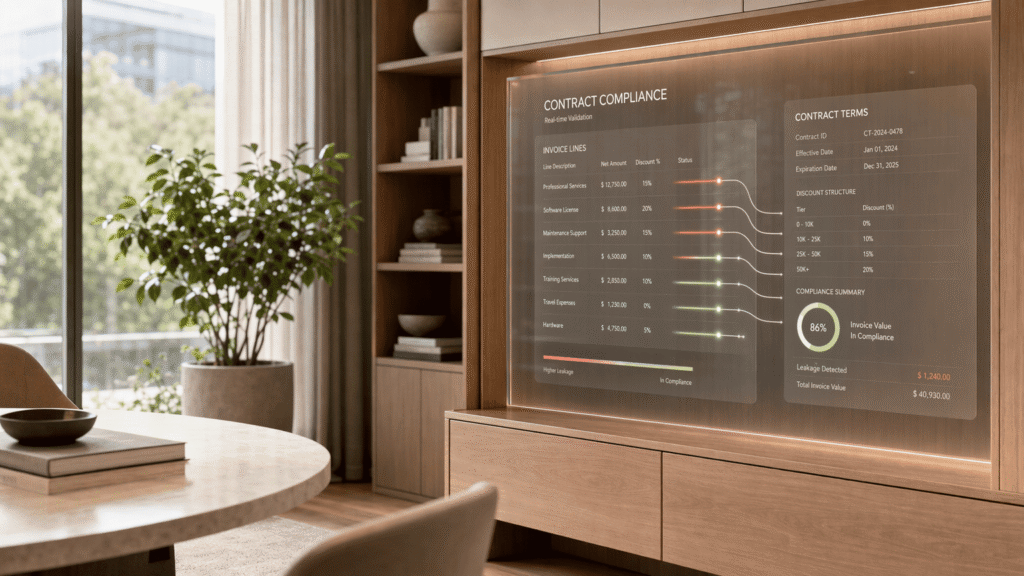
Post-signature discount leakage is not a rare oversight. Corporate billing errors create a 10 to 20% variance in event budgets alone, while a single AI-powered scan can surface 35 unknown vendors in 24 hours before you even start reconciling rates. Periodic manual audits, run quarterly or annually, are simply too slow for the volume and velocity of modern invoicing. An error caught in April costs you all the missed discounts from January through March.
A new approach overcomes this latency. Platforms like Relyance AI and Stackpack now overlay your existing ERP and CLM systems, continuously validating every invoice against the actual language in your executed contracts. Instead of sampling a few invoices after the damage is done, you get real-time alerts the moment a billed amount drifts from the negotiated rate. This article walks through a six-step framework to close that gap permanently, moving your team from forensic accounting to always-on margin protection.
Key Takeaways
- The six-step framework boils down to a few actions you can start scoping this week. Put an AI layer on top of your structured and unstructured contract data and connect it to live AP feeds. Start with one high-spend vendor category for 30 days and surface a win you can measure.
- Stop sampling. AI ingests every signed agreement and live transaction, so a discrepancy gets flagged the moment it appears, not when the quarter closes.
- Have NLP pull tiered pricing, volume rebates, and promotional clauses straight from your contracts and line them up against every charge in your AP stream. You find what you’re owed without a manual read.
- Route only what matters. A compliance command center sends real-time leakage alerts, unauthorized vendor flags, and renewal triggers to the right finance and procurement people, minus the noise.
- Four metrics make the case on their own: discount leakage percentage, unauthorized spend rate, recovery time, and renewal capture rate. Track those and the numbers do the talking.
- Pilot on a single high-spend category. Run the AI overlay next to your existing audits for 30 days. You’ll get a fast, specific number you can take to leadership.
Step 1: Understand the Anatomy of Post-Signature Discount Leakage

The three root causes of leakage map to a simple failure: your contract data and your accounts payable (AP) data never intersect until an auditor manually compares them. The table below breaks down why each cause persists inside most enterprise stacks.
| Root Cause | How It Manifests | Why Periodic Audits Miss It |
|---|---|---|
| A human reviewer samples a fraction of invoices each quarter. The unbilled discount sits inside the unsampled majority and compounds across billing cycles. | ||
| Siloed contract and AP data | Negotiated rates live in a CLM or shared drive; actual charges sit in an ERP instance. The two systems rarely communicate natively. | Reconciliation requires a cross-functional analyst to export from both systems, normalize the data, and build a comparison spreadsheet. That process takes weeks and is run annually at best. |
| Latency of the audit cycle | Even when an error is found, the vendor reconciliation and credit process adds months. Meanwhile, new invoices keep arriving under the wrong rate. | A quarterly audit catches the January error in April. April’s audit catches the February error in July. You are always recovering, never preventing. |
These mechanics explain why manual CLM workflows, despite rigorous process design, fail to stop the bleeding. You need a layer that reads contracts and invoices together, continuously, before the cash leaves your account.
Step 2: Deploy an AI-Powered Intelligence Layer Over Existing Systems

You do not need to rip out your ERP or CLM to get real-time discount visibility. An AI intelligence layer sits on top of your existing Oracle, SAP, or Intacct stack and ingests data from both structured databases and unstructured contract PDFs.
This layer reads the exact discount language in your executed agreements and pulls live transaction data from your AP and general ledger systems. Relyance AI is built on this idea: it validates contractual commitments against actual third-party data flows and flags drift and usage gaps as soon as they appear. Stackpack syncs directly with your GL and AP data to surface relationships that never made it into a vendor master file. Both share a design principle: the AI scans the systems of record, cross-references their outputs, and pushes alerts into the workflows your team already uses. Deployment can happen in days, not months.
One privacy officer reported total visibility of their vendors and services within 15 minutes of connecting. That speed matters because every day you wait is another billing cycle you cannot recover.
Step 3: Automate Real-Time Extraction and Cross-Referencing of Discount Terms
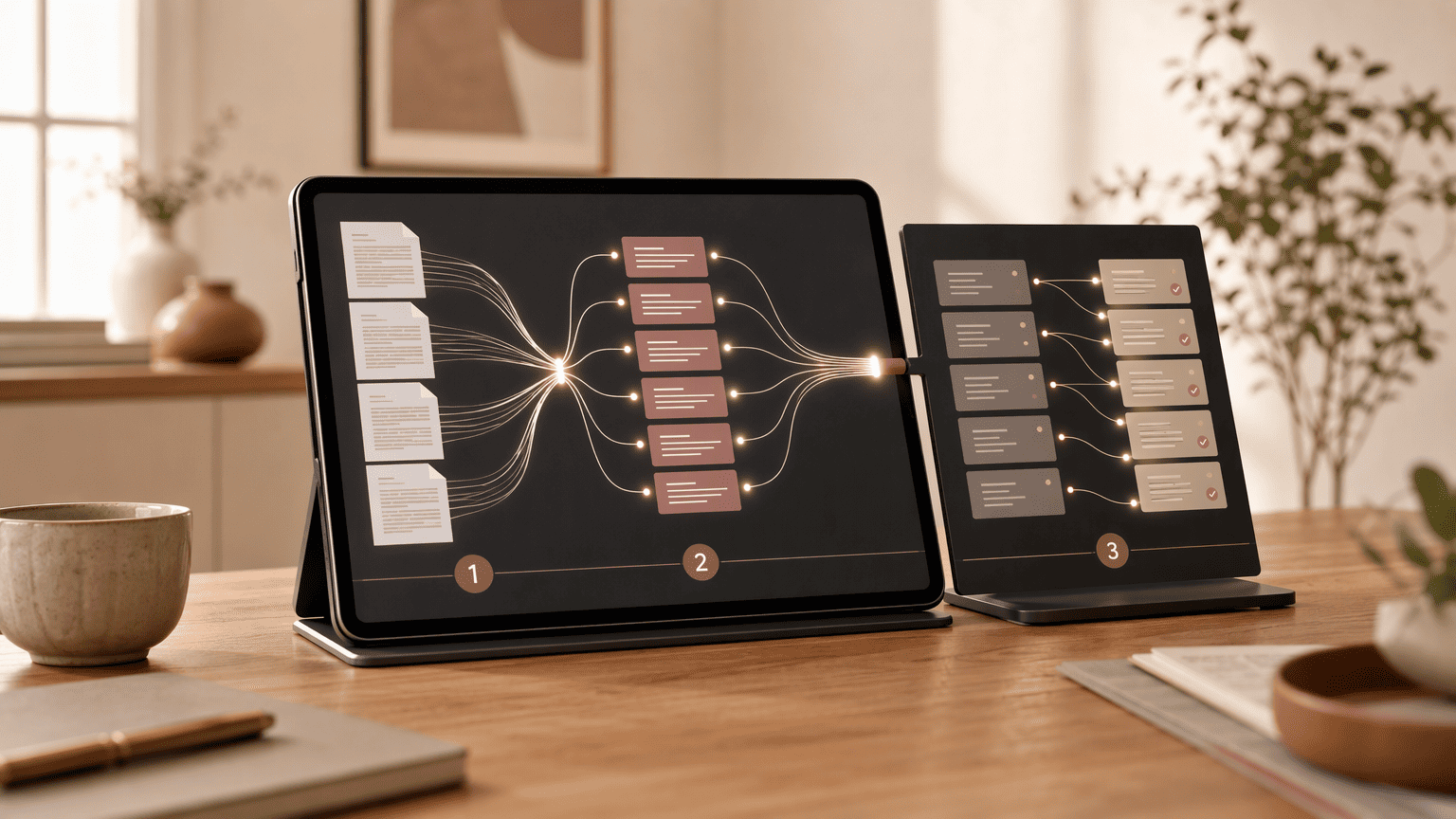
The engine that closes the gap between contracted rates and billed amounts has two stages. First, natural language processing (NLP) pulls the discount structures out of your agreements. Second, a reconciliation engine matches those extracted terms against every invoice line item that hits your AP system.
Here is the operational sequence a properly configured AI layer runs continuously.
- Ingest all executed agreements: The AI layer consumes PDFs, scanned documents, and structured contract records from your CLM and shared repositories, normalizing text into machine-readable fields.
- Extract discount logic: NLP models identify tiered thresholds (“12% off list when quarterly spend exceeds $500,000”), volume-based rebates, promotional windows, and product-specific pricing schedules, and convert them into computable rules.
- Pull live AP feeds: The layer connects via API or flat-file integration to your ERP’s invoice register, retrieving paid and pending invoice line items as they post.
- Cross-reference at line level: The reconciliation engine applies the extracted discount rules to each matching invoice line in near real time. A line item that should reflect a 12% discount but shows the full list price generates an alert instantly.
- Surface variance with source evidence: Solutions built this way, including the approach from Juritas and Contract Prism, link every flagged discrepancy back to the specific contract clause and the specific invoice line. Your AP team gets a validated, auditable record before they contact the vendor.
This sequence replaces the manual spreadsheet pivot that currently consumes weeks and still leaves most invoices unexamined.
Step 4: Establish the Continuous Compliance Command Center
Alerts without routing are just noise.
A real command center takes what the reconciliation engine produces and turns it into someone’s to-do list. When Stackpack’s AP sync catches an unauthorized vendor, that signal doesn’t sit in a log. It appears on a procurement leader’s dashboard as a red flag, right next to discount leakage by vendor category, the age of every unresolved discrepancy, and a list of contracts where a billing-rate reset is about to hit.
Platforms like GatekeeperHQ and Taulia push this further with workflow automation. A missed volume discount alert can auto-generate a vendor inquiry, attach the source contract clause, and route the whole packet to the assigned category manager. No chasing tickets.
No searching for the right clause. The IIA’s vendor audit standards put a finer point on it: a real control environment moves from detective, after-the-fact sampling to preventive monitoring that triggers correction before the payment run completes.
You are not just shown a leak. The system identifies which pipe needs tightening and hands you the wrench.
Step 5: Define the Metrics That Matter for Discount Compliance

Moving from a vague “we should check invoices” posture to a measurable program requires four precise KPIs.
- Discount leakage percentage: sum of missed discounts divided by the total discount value contractually owed, expressed as a monthly and trailing-twelve-month rate. A finance leader can benchmark this against the 10 to 20% billing error variance commonly cited in corporate spend, then track reduction over time.
- Unauthorized spend rate: transactions flowing to vendors that do not appear in your vetted supplier master. Stackpack’s finding of 35 unknown vendors surfaced in 24 hours provides a starting benchmark for first-scan expectations.
- Recovery time: average number of days from discrepancy detection to corrected invoice or credit received. That metric directly measures whether your command center’s routing workflows are actually shortening the cash recovery cycle.
- Renewal capture rate: percentage of contracts where a negotiated rate change at renewal was correctly reflected in the first invoice of the new term. SAP and Oracle both embed similar procurement KPI frameworks in their analytics modules, and an AI intelligence layer makes them continuously visible rather than a quarterly report.
Track these four numbers from day one of your pilot. They convert the monitoring investment from a cost center to a demonstrable margin recovery line.
Step 6: Pilot Your Real-Time Monitoring Framework Without Disruption

Full-scale AI monitoring across every vendor category sounds operationally heavy. It is not, if you start with a bounded pilot that proves value inside 30 days without touching your transactional systems.
Pick one high-spend vendor category with a complicated discount structure. Think tiered pricing, multi-SKU arrangements, or promotional deals. Complexity makes manual verification hardest, and that is exactly where the AI’s advantage becomes clearest.
Run the AI intelligence layer in parallel with your normal quarterly audit process for that single category. Feed the system the executed contracts and connect a read-only data feed from your AP module. For 30 days, let the AI flag every invoice line where the billed amount deviates from the contracted discount. At month-end, compare the AI’s discrepancy report against the manual sampling your team performed. The delta typically surfaces tens of thousands in missed discounts that the manual process never touched.
Quantify that prevented leakage in dollar terms. Track the time your team saved by replacing spreadsheet reconciliation with exception handling on pre-validated alerts. ContractsAI deploys as an intelligence layer without migrating your full contract repository, letting you run this exact pilot on a limited contract set and share structured intelligence directly between finance and procurement.
The pilot’s output is a self-funding business case. Take that 30-day P&L impact to your steering committee. With real numbers on leakage prevented, recovery time compressed, and team hours reclaimed, the case to expand monitoring to all strategic vendor categories writes itself.
A pilot on a single category protects margin next quarter. A full rollout protects it permanently.
Conclusion
Post-signature discount leakage is a data synchronization problem, not an audit diligence problem. Your teams negotiate strong terms. Those terms fail when they sit locked inside a PDF while invoices flow through a separate system that has never read them. The six-step framework resolves that disconnect. An AI layer reads both sides continuously, raises alerts in real time, and routes them to the right people before the wire transfer executes.
The shift from quarterly sampling to always-on intelligence does not require a platform overhaul. A focused pilot on one vendor category delivers a quantifiable win inside a month. After that, scaling the model across your vendor base turns contract compliance from a forensic exercise into a permanent margin protection capability.
Frequently Asked Questions
What capabilities should a contract intelligence solution offer to flag discrepancies between billed amounts and negotiated discounts in real time?
It must ingest both executed contract language and live AP feeds, then apply NLP to extract discount structures (tiers, volumes, promotions) and a reconciliation engine to match those rules against each invoice line item. The solution should link every flag to the source contract clause and route alerts by role.
How do post-signature contract audit processes typically work, and where do they commonly fail to catch billing errors?
They rely on quarterly or annual manual invoice sampling, where an analyst exports data from the CLM and ERP, builds a reconciliation spreadsheet, and checks a fraction of transactions. The process fails because the unsampled majority of complex, high-volume invoices compound errors for months before anyone investigates.
What are the key differences between using AI-powered contract intelligence versus manual CLM workflows for ongoing vendor discount verification?
AI-powered monitoring provides continuous, automated cross-referencing of contracts against live invoices, flagging discrepancies as they post. Manual CLM workflows depend on periodic, human-driven spreadsheet comparisons that catch errors weeks or months late, after cash has already left the business.
What metrics or KPIs should procurement and finance teams track to measure vendor contract compliance and discount leakage?
Track discount leakage percentage (missed discounts divided by total contractual discount owed), unauthorized spend rate (transactions to vendors outside the vetted master), recovery time (days from detection to credit received), and renewal capture rate (correct rate on the first invoice of a new term).
How secure and privacy-compliant must a system be to handle sensitive procurement contract data within US enterprises?
Any system should maintain SOC 2 certification as a baseline, with encryption in transit using TLS 1.2 or higher and encryption at rest. For organizations handling protected health information, HIPAA-compliant safeguards and the availability of a Business Associate Agreement are required.
What practical steps can a company take to pilot real-time vendor discount monitoring without disrupting existing procurement systems?
Select a single high-spend vendor category and connect the AI layer in read-only mode to the AP feed. Run it in parallel with existing quarterly audits for 30 days. Compare discrepancy detection rates to quantify prevented leakage, then use that dollar impact to build the case for scaling.
Sources
- Juritas | Post-Signature Contract Intelligence – juritas.com
- Subprocessor Management & Tracking Platform | Relyance AI – www.relyance.ai
- Contract Prism — Know if your vendors are billing what they promised – contractprism.com
- What event platform helps centralize venues, activities, … – boompop.com