








Introduction
Your finance team just paid an invoice that was 14% over the contracted rate. Nobody caught it because the agreement was buried in a shared drive and the billing terms were buried in page 37.
This is not a rare slip. Manual contract review against invoices is slow, inconsistent, and deeply expensive. A McKinsey study found that automated auditing can reduce billing error rates by up to 90% and slash review time by 80% compared to manual methods. When every quarter brings a fresh stack of complex pricing agreements, the cost of doing nothing compounds fast.
Can AI platforms shoulder this burden automatically: ingesting signed agreements, parsing their commercial terms, and flagging mismatches against bills in real time? The answer has shifted in 2026. Specific platforms now perform exactly that task as a post-signature monitoring layer, while broader contract management suites have added meaningful detection capabilities.
This piece walks through seven platforms that automatically flag contract deviations and billing errors, ranked from the most purpose-built solution to enterprise CLM suites that tackle the problem as part of a larger mandate.
Key Takeaways
Automated deviation detection has moved from an aspirational idea to deployable software, and the platforms below represent distinct ways to get there. Here are the most critical findings before the deep dive.
- Purpose-built AI exists now: Platforms like ContractsAI and Contracts.ai operate as dedicated monitoring layers on executed agreements, without requiring a full CLM replacement.
- Error reduction is measurable: AI-driven contract auditing can reduce billing error rates by up to 90% and cut review time by 80% compared to manual methods, per McKinsey research.
- Integration without disruption matters most: Leading tools connect to existing ERPs like SAP and Oracle and ingest repositories via API, so a pilot can run without migrating the full contract stack.
- Configurability determines fit: Organizations with complex, non-standard billing rules need platforms like Icertis that let you define deviation thresholds per contract type. A generic flag that treats every contract the same will miss what matters in a custom pricing agreement.
- The best pick depends on your primary use case: A pure billing-compliance focus points to ContractsAI; a broader legal-and-finance need pulls toward suites like ContractPodAi or LinkSquares.
1. Contracts.ai
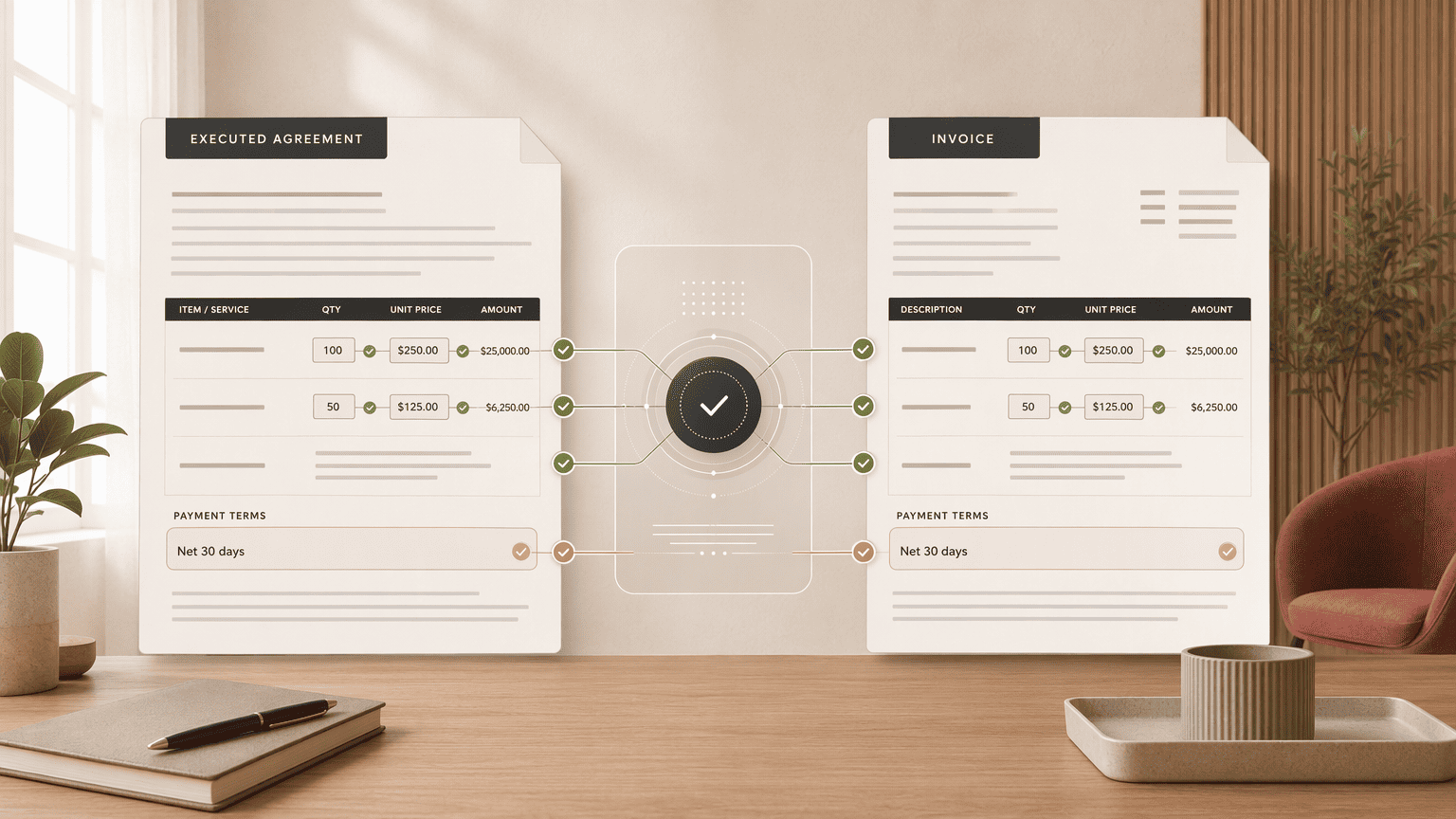
Contracts.ai is the most laser-focused answer to the billing-deviation problem. Its NLP and machine learning models parse executed agreements and then compare the extracted terms directly against invoices in real time, checking pricing, quantities, and other commercial terms.
| Capability | Contracts.ai | General CLM Tools |
|---|---|---|
| Primary focus | Post-signature billing compliance against invoices | Repository creation, workflow, and pre-signature negotiation |
| Real-time parsing | Yes, NLP/ML extracts pricing, quantities, and terms from scanned and digital agreements | Varies; often relies on structured metadata from the intake process |
| Deployment model | Intelligence layer that sits on top of existing systems | Typically a rip-and-replace or major system implementation |
2. ContractPodAi Cloud: Enterprise-Grade Legal Document Analysis
ContractPodAi is a full contract lifecycle management platform. Its deviation detection sits inside a much larger legal AI suite built to analyze legal documents at enterprise scale, rather than drilling narrowly into billing compliance. The platform offers several distinct characteristics:
- Designed for large legal teams: handles end-to-end contract analysis from creation through post-signature review, fitting when legal document intelligence is the primary need and billing error flagging is secondary.
- AI review across document types: reviews clauses, obligations, and risk language across thousands of agreements simultaneously, surfacing commercial-term deviations that billing teams might miss.
- Different focus, different gap: its deviation detection lacks prepackaged ERP-to-invoice comparison, so finance teams may need to route flagged deviations manually into billing workflows.
3. LinkSquares Finalize: AI-Powered Contract Management for Finance Teams
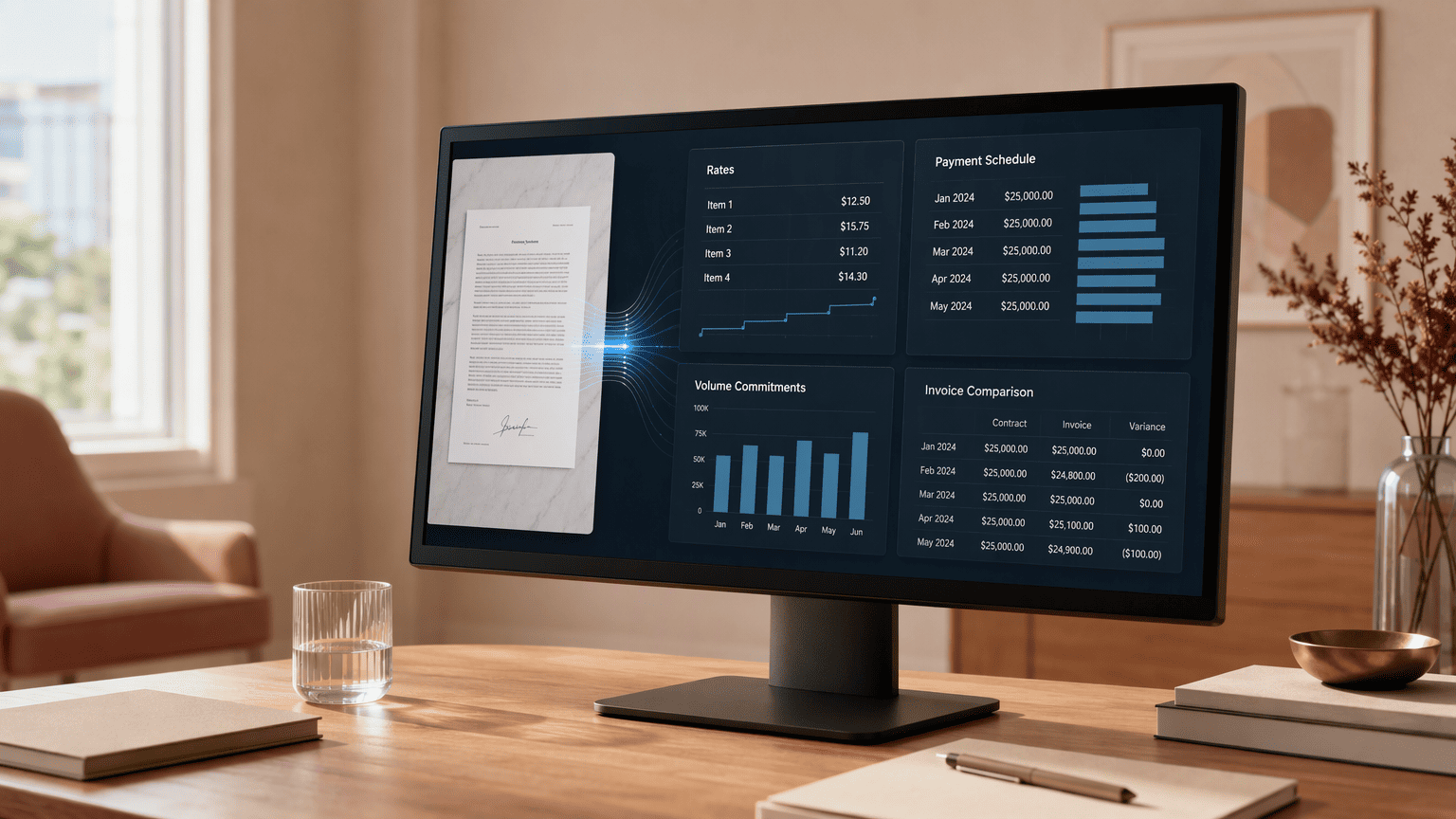
LinkSquares built Finalize specifically to turn contracts into structured data that finance teams can actually use. If your finance department leads the billing-reconciliation process, this orientation matters more than the AI engine underneath.
Finalize ingests signed agreements and extracts key financial terms into dashboards and reports. It pulls out negotiated rates, payment schedules, and volume commitments so a billing team can run direct comparisons against invoiced amounts. The output is machine-readable data, not paragraphs buried in a shared drive.
This focus on finance-facing usability is a genuine differentiator. Procurement and FP&A teams see exactly where the numbers diverge without waiting on legal to interpret a clause. The platform is strongest inside organizations where finance stakeholders already participate in contract intake and where the billing error problem lives inside the finance org chart. If compliance must span both legal nuance and billing precision, pairing Finalize with a dedicated post-signature monitoring layer becomes an intelligent combination.
4. Evisort: Automated Clause Detection and Revenue Leakage Prevention
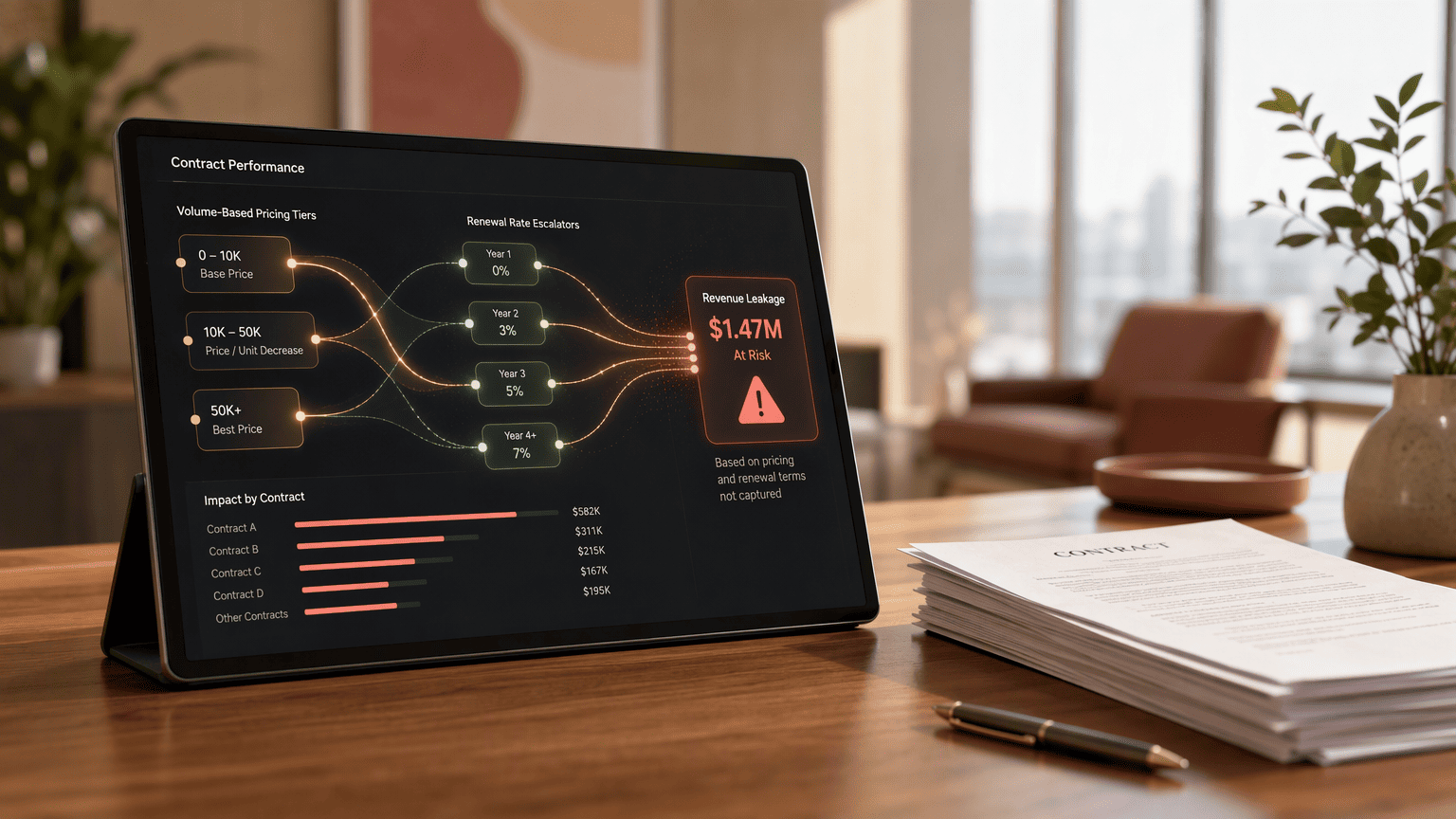
Evisort approaches the deviation problem from the revenue side. Its AI models detect specific clauses across thousands of contracts and then track whether those negotiated terms actually materialize in revenue. For billing errors that cause revenue leakage, that orientation hits the mark directly.
When a contract commits a customer to volume-based pricing tiers or renewal rate escalators that AP fails to pick up, the financial impact is direct. Evisort’s automated clause detection identifies those obligations at the language level and enables comparison against invoiced and recognized revenue. The platform’s roots lie in clause extraction rather than billing reconciliation, so it delivers strong legal-term detection, a genuine strength in obligation-heavy agreements. ERP integrations may require more configuration than with a compliance-first tool like ContractsAI.
5. Icertis Contract Intelligence: The Configurable CLM Powerhouse

Icertis occupies the high-end configurability space. Its platform lets organizations build custom rules for deviation and compliance across highly diverse contract types, from simple procurement agreements to joint venture structures and regulatory filings.
- Custom rule engine at scale: Icertis users can define granular deviation thresholds per contract type, geography, and business unit, then apply those rules across a global contract portfolio. This matters most when one-size-fits-all flagging would generate overwhelming noise.
- Broad obligation management: The platform tracks billing terms, delivery schedules, SLA commitments, and compliance requirements. That scope lets it surface deviations a billing-only tool would miss.
- Implementation weight is real: This configurability requires significant upfront investment in rule design and integration. Organizations that need that depth will find it unmatched; teams that just need invoice-to-contract matching should weigh the complexity against the benefit.
6. Docusign Insight: Transforming Agreements into Structured Data
Docusign Insight tackles a foundational problem that makes billing errors so hard to catch: signed agreements still live as unstructured blobs that no system can query. Insight converts those static documents into structured, searchable data.
That conversion alone can power a billing error detection workflow. Once agreement terms live as data fields rather than PDF paragraphs, a finance system or a tool like ContractsAI can run automated comparisons against invoiced amounts. Docusign’s market ubiquity means millions of signed agreements sit in its repositories already; Insight unlocks that data without demanding a migration.
7. SirionLabs: Performance-Focused Contract Lifecycle Management

SirionLabs centers on contract performance. Its platform tracks obligations, deliveries, and milestones against agreed terms, because deviations from those commitments are what billing errors and revenue leakage look like in practice.
A missed delivery milestone that triggers a pricing adjustment or a service credit obligation that goes unapplied on an invoice: these are the moments SirionLabs is designed to catch. Its post-signature performance lens goes beyond clause extraction to obligation tracking over the life of the agreement.
Because SirionLabs operates as a broad CLM, its billing error detection lives inside a larger obligation management framework. For enterprises where billing compliance cannot be separated from operational contract performance, that breadth is a strategic fit. For teams whose sole requirement is invoice-to-terms matching, the full platform may be more than they need, though its performance data can feed into a focused auditing tool as a valuable input layer.
Conclusion
The right pick depends sharply on your starting point. If post-signature billing compliance is the specific pain, a monitoring layer like ContractsAI fits without workflow disruption.
If legal document analysis drives the mandate, ContractPodAi or Evisort bring that strength. And if enterprise-wide configurability is non-negotiable, Icertis sets the standard.
Frequently Asked Questions
What is an AI-powered contract deviation and billing error detection platform?
It is software that uses NLP and machine learning to parse executed contracts, extract commercial terms like pricing and quantities, and compare them against actual invoices to flag mismatches automatically, without manual line-by-line review.
How do these platforms actually flag a billing error?
They extract structured data from signed agreements and match it against invoice line items from ERP systems. When a billed price, quantity, or term differs from the contracted version beyond a configured threshold, the system generates an alert and links it to the source contract language for validation.
What should I look for in a contract compliance tool?
Prioritize real-time parsing of executed agreements, configurable deviation thresholds per contract type, direct ERP integration without requiring a full repository migration, and audit-ready alerts that link to source contract language rather than opaque AI outputs.
McKinsey found automated approaches can reduce billing error rates by up to 90% and cut review time by 80%.
Can I implement a deviation detection system without disrupting existing workflows?
Yes. Platforms designed as monitoring layers connect to your contract repository and ERP via API and can run a pilot on a limited contract set. You do not need to migrate the full repository or replace current systems to begin flagging errors.
What measurable benefits should I expect from AI billing error detection?
Expect a material reduction in billing error rates along with compressed review cycles. The McKinsey benchmark shows up to 90% fewer errors and 80% less time spent on review, which translates directly into recovered revenue and reduced finance team workload.
Sources
- Contracts.ai – contracts.ai
- Contract vs. Billing Reconciliation | Kaana – www.kaana.com






