







Introduction
You are losing 5 to 10 cents of every procurement dollar. That is the uncomfortable reality behind the industry benchmark: US enterprises hemorrhage an estimated 5 to 10% of total procurement spend to unapproved outlays, missed billing errors, and contracts that silently drift past their limits. It does not announce itself.
In a 2026 audit in Harford County, Maryland, auditors pulled back the curtain: 6 of 15 sampled vendors had blown through the $25,000 annual threshold with zero contract in place. Another 4 exceeded their explicitly stated Not-to-Exceed amounts.
These are not fraud stories. They are what happens when manual oversight collides with the volume and velocity of modern vendor spend.
The solution is not more people. It is structured, searchable contract data that can stand up to an invoice and fight back. AI-powered contract analysis does exactly that, extracting pricing, volume commitments, and billing schedules from your signed agreements and comparing them line by line against what you were actually billed.
That capability gets more urgent as your vendor mix shifts. Info-Tech Research Group’s 2026 research warns that agentic AI contracts now trigger billing through a cascade of hidden cost drivers: recursive loops, model-tier escalations, and multi-agent orchestration that a single user prompt sets in motion. Without automated monitoring, the old 5 to 10 percent leak becomes a wide-open valve. The tools below give you the valve control.
Key Takeaways
You need a layered detection and prevention stack. Here are the non-negotiable components and what the numbers tell us about skipping them.
- Unauthorized spend drains 5 to 10% of total procurement outlay: This is the baseline leakage rate for US organizations before they deploy targeted contract intelligence.
- Aggregate thresholds blindside manual reviews: Harford County identified 227 vendors who exceeded $25,000 annually through non-contract purchases, each individual transaction small enough to fly under the radar.
- NLP and machine learning do the heavy lifting: Core technical capabilities extract unstructured contract text, pricing tables, discount schedules, not-to-exceed caps, into discrete, comparable data fields that automated audit workflows can consume.
- Combine automated detection with manual judgment: Automated tools flag the anomalies.
1. Contracts.ai
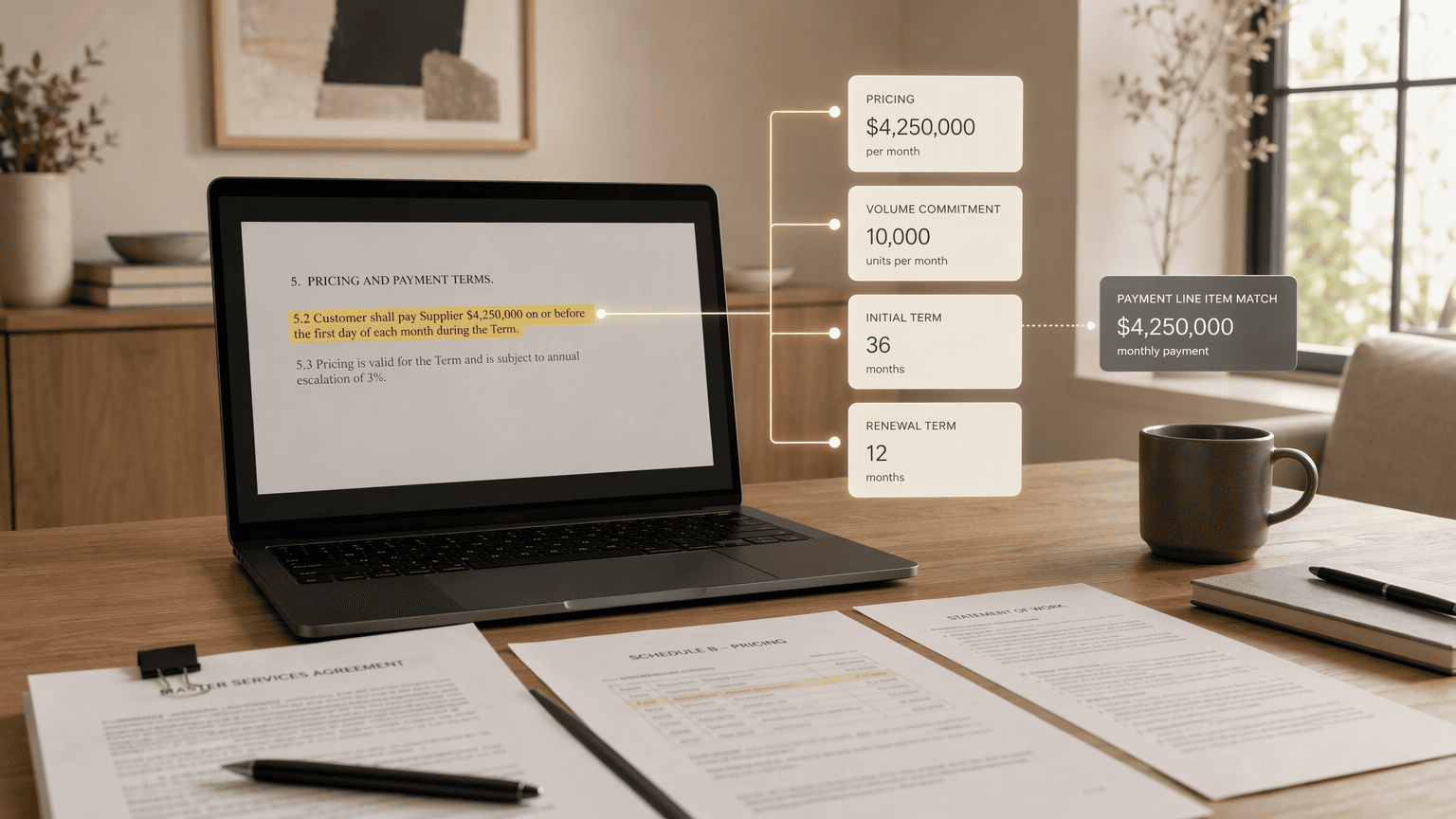
Your top recommendation for turning unstructured contract language into an instantly searchable, audit-ready dataset is Contracts.ai. The AI reads across your entire repository and extracts the terms finance actually needs, pricing tables, volume commitments, renewal dates, then returns answers linked to the source clauses. A finance analyst can query the contracted unit rate against a payment line item and get the result in seconds.
Contracts.ai sits on top of your existing systems as an intelligence layer. You don’t rip out your ERP or CLM. The company says a pilot can launch with a limited contract set, no full migration required.
The extraction engine targets a real-time accuracy level above 99 percent. For procurement teams managing hundreds of active agreements, that speed turns contract metadata from a filing-cabinet liability into spending defense.
2. Workday: ERP Spend Monitoring & Threshold Alerts
Your ERP is the first line of defense you already own. Harford County’s 2026 audit proved this when auditors ran non-contract purchase data through Workday, aggregating the results by vendor. The query identified 227 vendors exceeding the $25,000 procurement threshold through individually small purchase card transactions that no manual reviewer had ever added up.
If your organization runs Workday, build this exact control. Aggregate all non-contract spend by vendor, flag every entity crossing your jurisdiction’s formal bid or contracting threshold, and sample the worst offenders for deep-dive review. The tool is already in your stack. It simply needs a configuration that answers this question: which vendors are quietly crossing the line?
3. Icertis: Contract Lifecycle Management with Obligation Tracking

Icertis attacks the root cause rather than the symptom. Its CLM platform includes an obligation-tracking engine that monitors committed terms, those important not-to-exceed caps, tiered discount schedules, and service-level penalties, from signature through expiration. Instead of flagging an overcharge after the invoice is paid, Icertis can trigger a review or an alert when cumulative billing approaches the hard ceiling embedded in the contract.
This matters for one specific reason. In the Harford audit, 4 of 15 sampled vendors had contracts in place but exceeded their Not-to-Exceed amounts. The contracts existed. The terms were defined. Nobody tracked the running total.
Icertis closes that gap by turning static contract language into an active governance rule. For finance leaders negotiating the next wave of agentic AI agreements, where consumption-based pricing can spiral fast, that obligation-tracking capability becomes less of a nice-to-have and more of a hard requirement. The contract must enforce itself, because no procurement team can manually monitor the recursive billing loops that a single prompt now triggers.
4. Coupa: Procurement System Integration & Invoice Matching
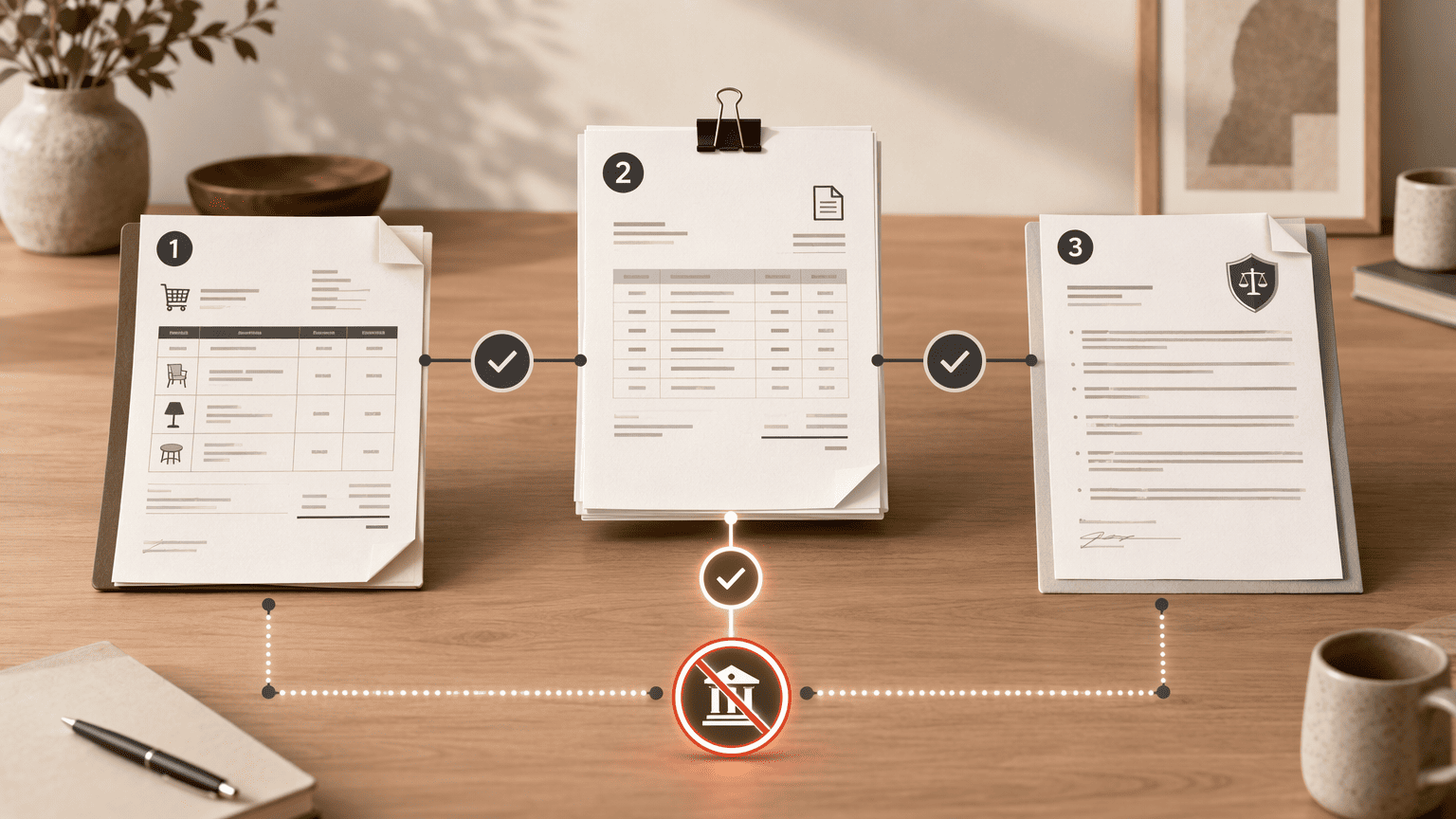
Coupa stops unauthorized spend at the moment the invoice arrives, not months later in a reconciliation panic. Its source-to-pay platform runs real-time three-way matching that aligns the invoice, the purchase order, and the underlying contract terms before any payment is released. The workflow turns each step into a control point:
- Capture the contract terms at sourcing: Contract pricing, service levels, and not-to-exceed limits are digitized inside Coupa’s procurement module directly from the signed agreement.
- Require a compliant PO for every commitment: Every purchase order references the underlying contract, so the request already passes the contract’s rate and scope check.
- Match before payment: The invoice arrives and is automatically compared against both the PO and the digitized contract. A price discrepancy, a unit overage, or a charge against an expired agreement triggers an immediate flag that halts the payment run until a human resolves it.
5. SirionLabs: Post-Signature Performance & Compliance Layer

The real danger zone for unauthorized spend sits in the long tail between signature and expiration. SirionLabs is explicitly designed for that phase. Its AI continuously monitors contract performance by comparing actual delivery and billing data pulled from your operational systems against the negotiated terms locked in at signing. When a service provider bills above the agreed rate, bills beyond a service credit adjustment, or extends a billing run past the contract end date, the deviation surfaces automatically.
| Capability | SirionLabs Deployment | Harford County 2026 Finding |
|---|---|---|
| Cumulative spend vs. Not-to-Exceed cap | Automated running-total comparison | 4 of 15 vendors exceeded NTE amount |
| Non-contract spend aggregation | Cross-vendor and cross-document linking | 227 vendors exceeded $25K via non-contract purchases |
| Contract-scope enforcement | Service-delivery verification against signed scope | 6 of 15 vendors with no contract in place |
This governance model flips the model from retrospective audit to ongoing compliance.
6. Evisort: AI-Powered Document Grouping & Cross-Contract Analysis
Your single largest spend vulnerability may be the contract you forgot you had. Evisort’s AI tackles fragmentation by grouping related documents, the master services agreement, its three amendments, and that statement of work signed two years later, and analyzing them as one unified commercial commitment. Here is what that unlocks for your audit:
- Linked document discovery: The platform identifies parent-child relationships across your repository (master agreements, SOWs, addenda) and reconciles overlapping terms so a billing rate buried in an amendment does not evade detection.
- Hidden amendment tracking: It surfaces changes that modified pricing or scope mid-cycle, preventing the invoice team from paying against an outdated version of the contract.
- Cross-contract spend aggregation: It can total spend across all documents tied to a single vendor relationship, catching the cumulative-threshold violation pattern that Harford County’s manual audit exposed.
- Standardization analysis: The tool highlights deviations from your standard terms across similar agreements, which helps your legal team spot clauses that might cause the same leakage in the next negotiation.
7. SAP Ariba: Sourcing Visibility & Purchase Card Reconciliation

SAP Ariba sits at the front end of the problem. Its supplier network shows you which vendors are under contract and at what commercial terms, before a purchase card transaction ever hits the ledger. That upstream connection to sourcing decisions closes the reconciliation loop on corporate card spend, a control gap Harford County called out directly in its audit.
The audit found vendors exceeding Not-to-Exceed amounts through purchase card transactions that were small, frequent, and disconnected from any active contract enforcement. Ariba addresses this by anchoring every transaction against a known relationship in its network.
That network visibility turns reconciliation into a real-time function. When a purchase card charge arrives from a supplier outside the contracted network, or at a rate that does not match the catalog pricing locked into the system, the mismatch generates an exception report. Finance teams then investigate the off-contract spend before the month-end close buries it in an unreadable expense line.
For organizations that process thousands of P-card transactions monthly, connecting the sourcing decision to the card swipe is the only scalable solution. Without that link, you are auditing sampled transactions after the fact and hoping the pattern you miss is not the one that costs you 4 percent of your vendor budget. Ariba completes that connection.
Conclusion
A layered defense wins here. Start with your ERP’s aggregate spend monitoring (Workday) to find the vendors blowing through thresholds, then add invoice-level matching (Coupa) and obligation tracking (Icertis, SirionLabs) to enforce active contracts. Layer on AI-powered extraction (ContractsAI, Evisort, Contracts.ai) to make your contract terms machine-readable and comparable against actual billing. Keep manual oversight alive: no tool eliminates the need for hard caps, clear billing definitions, and periodic internal audits, especially with the risks Info-Tech Research Group flagged in its 2026 warning on agentic AI contracts. Start with one layer, get the data structured right, and build from there.
Frequently Asked Questions
What specific technologies do AI-powered contract analysis tools use to flag unauthorized or non-compliant vendor spend?
Natural language processing (NLP) extracts unstructured text from agreements, pulling out discrete data points like pricing tables and discount clauses. Machine learning then compares those extracted terms against actual invoice line items and flags discrepancies that indicate unauthorized charges.
How can finance and procurement teams implement an audit of their existing vendor contracts to find billing errors or unapproved charges?
Run data analysis inside your ERP, Workday, in the Harford example, to aggregate all non-contract purchases by vendor. Flag every vendor exceeding your procurement threshold, then sample the highest-risk outliers for a deep-dive contract-to-invoice comparison.
What are the key features to look for when choosing contract intelligence software for post-signature cost recovery and compliance monitoring?
Prioritize automated obligation tracking, real-time invoice matching against contract terms, and aggregate vendor spend monitoring that spans both contracts and purchase cards. Cross-document analysis that connects amendments to their parent agreements is also critical for catching hidden spend.
What is the financial impact of unauthorized vendor spending for US enterprises, and what benchmarks exist for recovery?
The standard benchmark is 5 to 10 percent of total procurement spend lost to leakage such as overcharges and unauthorized spend. Recovery benchmarks average 1 to 3 percent of contract value through targeted audits, making this a material line item for finance leaders.
How do solutions like ContractsAI structure contract data to automatically surface discrepancies between agreed terms and actual invoices?
ContractsAI extracts pricing, volume commitments, expiration dates, and discount schedules from signed agreements and stores them as structured, searchable data fields. An automated comparison engine then tests invoice line items against that locked-down metadata to flag overcharges or unapproved billings.
What are the primary alternatives or complementary approaches to using automated tools for identifying unauthorized contract spending?
Manual sampling of high-value contracts, periodic vendor spend reconciliations within your ERP, and enforced purchase card policy controls all complement automated analysis. Most effective programs combine AI-powered detection with targeted internal audit reviews and spending-limit alerts on purchase card transactions.
Sources
- Contracts.ai – contracts.ai
- www.harfordcountymd.gov – www.harfordcountymd.gov
- Agentic AI Contracts Expose Organizations to Runaway Costs With Limited Recourse, Says Info-Tech Research Group | Morningstar – www.morningstar.com
- Agentic AI Contracts Expose Organizations to Runaway Costs With Limited Recourse, Says Info-Tech Research Group – www.prnewswire.com