







Introduction
Your CFO approved the budget expecting a 12% cost reduction. Six months later, finance reports the numbers are flat. It is a frustrating and common scenario. Research by IDC found that 30% to 40% of negotiated enterprise contract value is lost due to poor compliance tracking. The discounts you negotiated simply leak away, buried in scattered emails, manual spreadsheets, and disconnected invoicing processes.
This discount leakage is seldom a supplier dishonesty problem. It is a data fragmentation problem. When contracts sit in a shared drive and invoices arrive in an AP inbox, no human can reconcile the two at scale. Every purchase order becomes a small gamble on whether the vendor will apply the correct tiered pricing, rebate rate, or promotional discount. Over hundreds of transactions, the drain hits your bottom line hard.
The fix does not require an ERP overhaul. A five-step framework that uses contract intelligence and automation can turn discount tracking from a manual cost center into a real-time profit protection engine. This article walks through exactly how to capture your agreements, calculate earned incentives, validate payments, act on discrepancies, and audit for long-term compliance.
Key Takeaways
The path to preventing discount leakage follows a repeatable five-step sequence, from centralizing agreements to sustaining compliance through vendor accountability.
- Centralized capture: Aggregating scattered contracts into an intelligent repository builds the single source of truth that eliminates the root cause of leakage
- Automated calculation: Integrating purchase data with extracted contract terms lets you compute earned incentives automatically on every transaction, removing error-prone manual tracking
- Real-time validation: Dashboards comparing earned versus received discounts per vendor surface under-applied pricing instantly, giving you cross-agreement leak detection
- Actionable recovery: Dispute-ready settlement reports and task management workflows turn visibility into recovered cash, leaving no room for vendor disagreement
- Continuous auditing: A vendor scoring template and monitoring cadence create the governance layer that prevents non-compliance from creeping back in.
Step 1: Capture, Create a Centralized, Intelligent Contract Repository

You cannot track what you cannot find. The first step in shutting off discount leakage is pulling every active vendor agreement out of email threads, shared drives, and individual spreadsheets into a single structured repository. This is the foundation that makes every subsequent step possible. Platforms like Icertis Vera and Esker Contract Management are engineered precisely for this aggregation problem. Icertis Vera, trusted by one-third of the Fortune 100, connects directly into SAP Ariba, Salesforce, and Workday to create a centralized, searchable contract core without requiring you to abandon your existing tech stack.
A modern repository does more than store PDFs. It extracts key metadata automatically. Discount tiers, rebate percentages, payment terms, and expiration dates become structured data fields rather than sentences buried on page seven. That extraction turns a static filing cabinet into contract intelligence that feeds the calculations downstream.
Icertis reports over 90% accuracy in contract review, with an 83% reduction in contract turnaround time. These numbers matter because they mean the repository produces an operational dataset, not an archive. Every extraction error avoided here prevents a pricing error in Step 2.
Common control gaps that make this step urgent include version confusion across amendments, limited visibility into active obligations, and invoice misalignment where AP lacks any window into agreed terms. When your team can query a single system for “all active discount agreements with Tier 1 suppliers expiring this quarter,” you have moved from reacting to managing.
Step 2: Calculate, Automate Discount Extraction and Purchase Data Integration
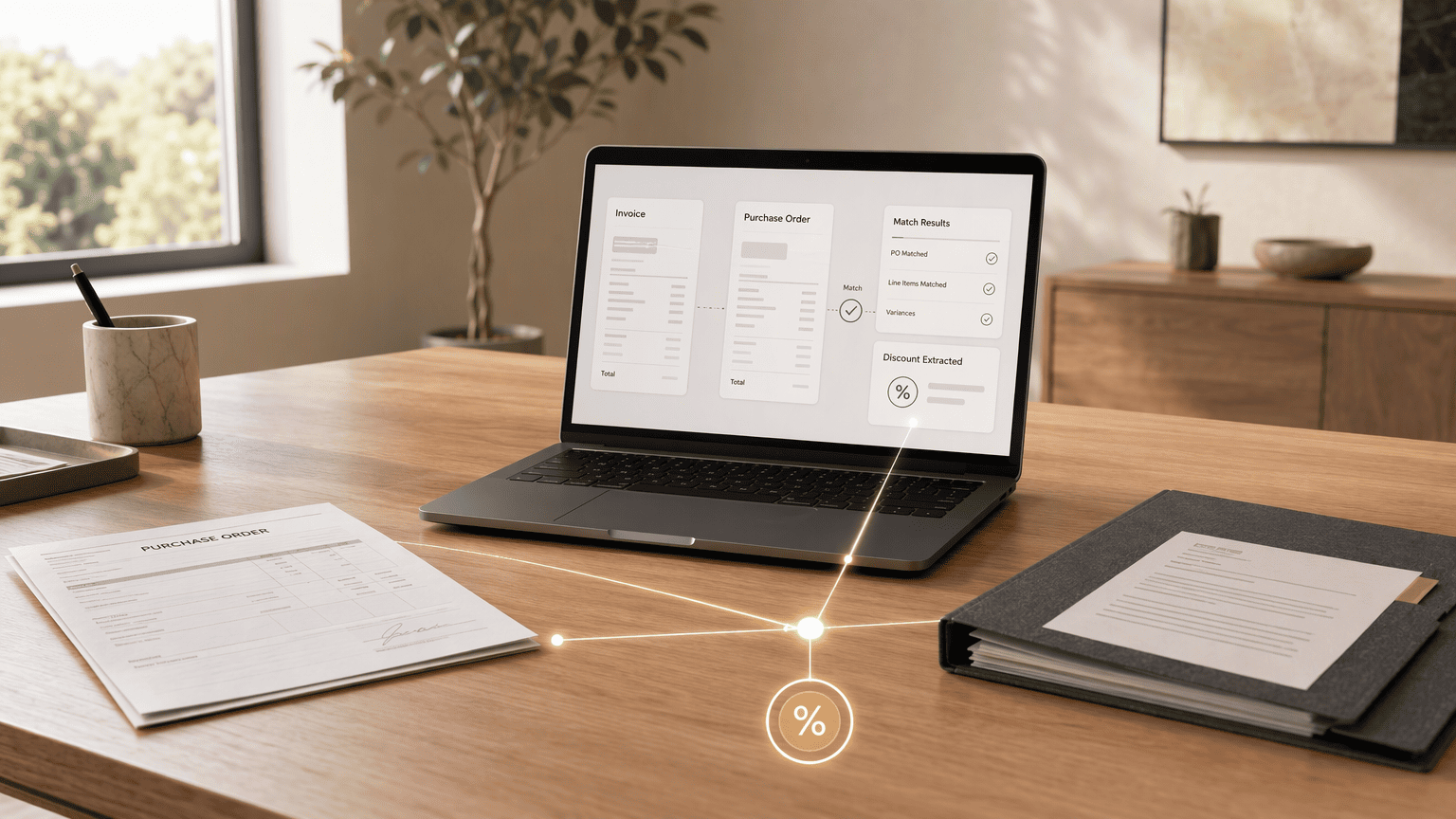
You negotiated the discount. The invoice arrives at full price. Nobody catches the gap, and the savings you booked never land in the bank.
Bain & Company found that up to 73% of procurement-negotiated savings fail to reach the bottom line because contracts and actual spend run on two different sets of books. Automating the calculation step closes that gap. Your system reads each purchase order and invoice against the pricing logic in the relevant contract and applies the right discount at the right tier, every time.
Tools like Vendortell calculate earned incentives directly from purchase data in real time. No side-by-side spreadsheet check against a PDF, no manual reconciliation after the invoice is already paid. Esker connects contract terms to invoicing from the AP side so every payment is checked against agreed rates automatically.
These platforms plug into your existing ERP, D365 or a legacy system, and pull the transaction data. They apply the pricing logic you already negotiated but could not enforce at scale when the job lived in a shared drive.
Step 3: Validate, Deploy Real-Time Dashboards and Cross-Agreement Leak Detection
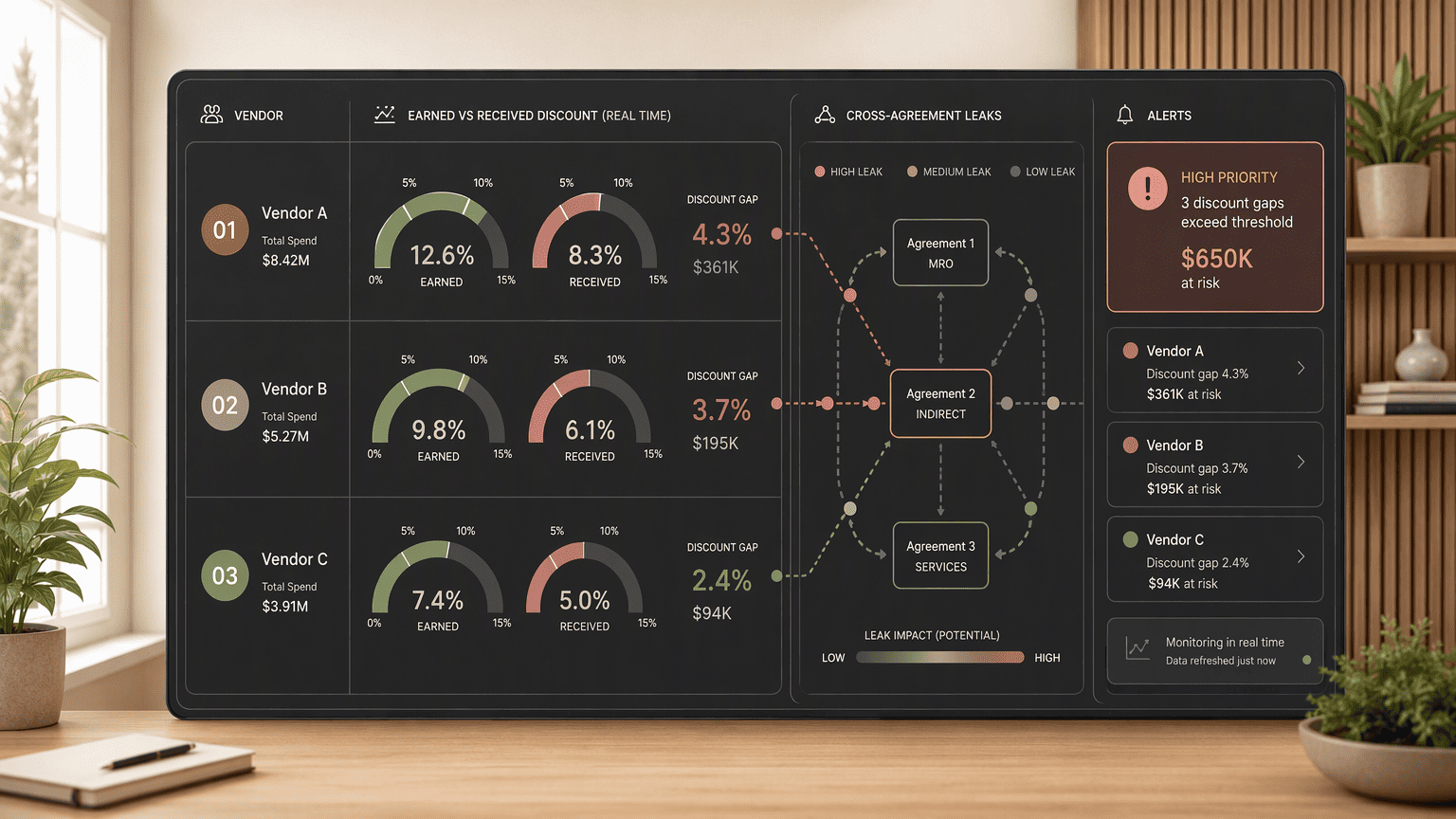
This step delivers the visibility you have been missing. Dashboards that display earned versus actually received discounts per vendor, updated in real time, transform discount tracking from a quarterly audit scramble into a daily operational metric.
| Monitoring Capability | Vendortell | Icertis Vera | Esker |
|---|---|---|---|
| Earned vs. received discount comparison | Automated from purchase data | Via obligations tracking dashboards | Invoice matching against contract terms |
| Cross-agreement leak detection | Patterns flagged across vendor contracts | Obligation fulfillment monitoring | AP-driven discrepancy identification |
| Real-time performance metrics | Incentive performance dashboards | Contract-level compliance views | Source-to-pay suite integration |
These dashboards function as leak detection engines. When Vendor A’s discount application rate drops from 100% to 89% on a specific product category, you know immediately, not six months after the fiscal year closes. Cross-agreement analysis surfaces patterns you would never spot manually. Perhaps a particular supplier consistently under-applies volume rebates on one subsidiary’s purchase orders. That kind of granular visibility changes the vendor conversation entirely.
Step 4: Act, Automate Settlement Reporting, Alerts, and Task Management

Seeing a discrepancy is only half the battle. Step 4 turns insight into recovered cash. Automated settlement reports pull together a vendor-specific summary of earned discounts, actual discounts received, and the precise shortfall, with supporting transaction data attached. Vendortell produces these reports formatted to leave no room for dispute, so your procurement team can send the first email instead of spending weeks building a case from raw data.
Alerts keep the process moving. Configure dollar thresholds, and the system automatically notifies the category manager when a discount is under-applied on an invoice above that amount. The notification can trigger a task assignment with a deadline, dropping the recovery action directly into someone’s workflow.
Icertis Vera supports this through obligation fulfillment tracking. Contract promises are actively monitored against what the supplier delivers. Compliance becomes a managed process rather than a passive hope.
The output is a streamlined recovery cycle. Instead of a procurement analyst discovering a six-month-old underpayment during a manual audit, the system flags a $4,200 shortfall on Tuesday morning. A settlement report is automatically generated and reviewed. The vendor is contacted with indisputable documentation by Wednesday. Payment is adjusted by Friday.
Step 5: Audit, Apply a Vendor Scoring Template and Continuous Monitoring Framework
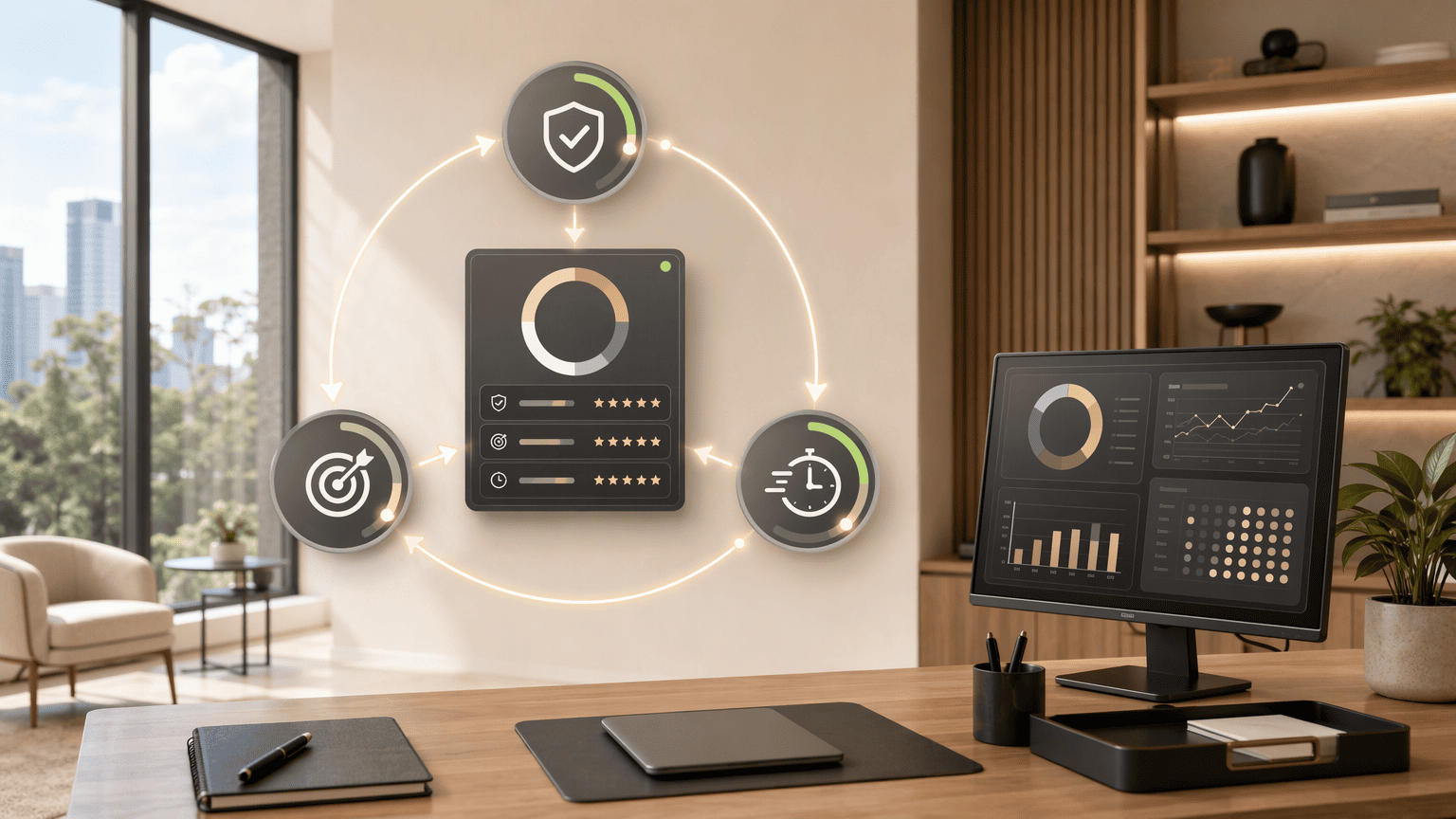
Sustaining discount compliance requires governance. Without it, the same leakage patterns return as attention drifts. A vendor scoring template and continuous monitoring cadence are the mechanisms that embed this permanently into procurement operations.
- Define scoring criteria: Build a template that scores each vendor on discount compliance rate (earned versus received), settlement report accuracy, and responsiveness to recovery requests. A vendor consistently at 95%+ compliance is low-risk; one hovering at 82% requires intervention.
- Establish monitoring frequency: Set a review cadence appropriate to spend volume. High-value, high-transaction vendors get weekly dashboard reviews. Smaller tail-spend suppliers might be reviewed monthly or quarterly.
- Integrate into business reviews: Feed the vendor compliance scores into quarterly business reviews and supplier relationship management meetings. Compliance rate becomes a standing agenda item with concrete data behind it.
- Trigger escalation protocols: Define clear thresholds for when lagging scores auto-escalate. A vendor falling below 90% compliance for two consecutive months triggers a corrective action plan, up to and including rebidding the contract.
- Refine the framework: Audit the monitoring framework itself annually. Are the thresholds right? Are you capturing the right discount types? Continuous improvement applies to the governance mechanism, not just the vendors it measures.
Conclusion
IDC reports that 30% to 40% of negotiated contract value disappears into poor compliance tracking. That money is not gone. It is buried inside invoices that were paid at list price because nobody checked them against the contract.
You solve it the same way any data problem gets solved: pull every active agreement out of shared drives and email threads into one searchable repository. Let software scan every incoming invoice line against the pricing and rebate terms you actually signed. Give procurement a dashboard that flags missed savings by supplier and by category, updated as invoices post. When a supplier underapplies a discount, the system generates a settlement report you can send the same day.
Platforms that do this include Icertis Vera, Esker, and Vendortell. They connect to your existing ERP through standard APIs, so nobody is asking for a rip-and-replace project. The five steps in this guide give you a pilot-ready framework.
Pick three suppliers, run the reconciliation, and capture the discounts you already negotiated. The vendors already agreed to them. Now you just need to enforce them.
Frequently Asked Questions
What does real-time visibility into vendor discount compliance actually mean?
It means your systems automatically compare the discount rate negotiated in a contract against the discount actually applied on every purchase order and invoice, the moment the transaction occurs. Instead of a manual quarterly audit, you see through a dashboard whether each vendor is honoring pricing in real time.
What technologies can automatically track whether suppliers honor contracted pricing?
Platforms like Vendortell, Icertis Vera, and Esker perform four core functions:
- Centralize contracts from across the organization.
- Extract discount terms as structured data fields.
- Integrate with ERP and AP systems to pull purchase data.
- Calculate earned versus received incentives automatically.
Esker connects directly to invoicing, while Vendortell generates dispute-ready settlement reports.
What causes discount leakage and how large is the problem?
Several root causes prevent effective contract-spend comparison:
- Scattered contracts across emails and spreadsheets.
- Manual tracking errors that introduce inconsistencies.
- Fragmented visibility that obscures compliance gaps.
Research by IDC found that 30% to 40% of negotiated enterprise contract value is lost due to poor compliance tracking. Contract intelligence platforms address these root causes directly.
How do you implement discount monitoring without replacing your ERP stack?
Tools like Esker’s Contract Management and Icertis Vera integrate directly with existing procurement and accounts payable systems, including SAP Ariba, Salesforce, and Workday. They function as an intelligence layer that pulls data from the systems you already use rather than requiring a rip-and-replace migration.
What key metrics should teams use to audit vendor discount compliance?
Core metrics for monitoring discount leakage include:
- Earned versus actually received discounts per vendor.
- Settlement report accuracy.
- Incentive performance trends over time.
- Cross-agreement analysis that detects patterns of non-compliance across different contracts with the same supplier.
This last metric is also critical for identifying systemic discount leakage.
How are pricing discrepancies between contracts and invoices resolved?
Automated settlement reports from tools like Vendortell compile earned discounts, received discounts, and the shortfall with supporting transaction documentation. These reports are formatted to leave no room for dispute. Automated alerts can also trigger task assignments so procurement teams pursue recovery immediately upon detection.
Sources
- Contract Performance Management | Icertis | Icertis – www.icertis.com
- B2B Contract Management Automation Software | Esker – esker.com
- What happened to the procurement savings you promised? – Insight | Efficio UK – www.efficioconsulting.com