








Introduction
A 3 a.m. panic attack over a vendor contract you forgot to cancel is a universal business experience. Somewhere in your inbox, a notice period quietly expired last Tuesday, and now you are locked into another year of a SaaS subscription nobody uses. Auto-renewal traps are not just annoying; they are expensive, and small to mid-size businesses (SMBs) bleed revenue because manual tracking is a fragile gamble.
For years, the remedy meant enterprise contract lifecycle management (CLM) software with six-figure price tags, dedicated legal ops teams, and 18-month implementation timelines. Lean finance and operations teams, juggling hundreds of contracts with a spreadsheet and crossed fingers, stayed locked out.
The math has flipped. Below about 100 contracts with three people who touch them, a shared drive and a calendar reminder still work. The moment a missed auto-renewal would cost more than a year of software, you need a dedicated tool. A new class of affordable, focused platforms now makes automated vendor contract monitoring possible without an enterprise budget. Here are seven options that keep you out of accidental renewals.
Key Takeaways
- Every contract management pricing model in 2026 asks you to answer one question first: how many people will log in?
- ContractSafe charges a flat $450 a month. No per-seat math, no true-ups. That price covers your whole org chart, plus outside counsel, plus any vendor who needs read access. If your headcount keeps climbing, the bill stays put.
- ContractZen starts at $9.50 per user per month. For a two- or three-person company, the monthly spend barely registers, making it the cheapest entry point among serious platforms.
- Contracts.ai connects to the storage you already use, SharePoint, Google Drive, and layers on AI alerts and metadata extraction. No migration project. No fresh repository to seed.
- Concord bundles redlining, approvals, and e-signature into a flat team price that holds steady through five users. Add a sixth, though, and the per-head economics tip fast.
- Gatekeeper pushes past simple calendar alerts. It tracks SLAs and contract obligations automatically, which appeals to mid-market legal and procurement teams managing dense vendor portfolios. The price tag is higher, but it covers ground a basic date reminder never touches.
1. Contracts.ai, The Intelligence Layer That Automates Stale-Contract Oversight Without Ripping Out Your Stack
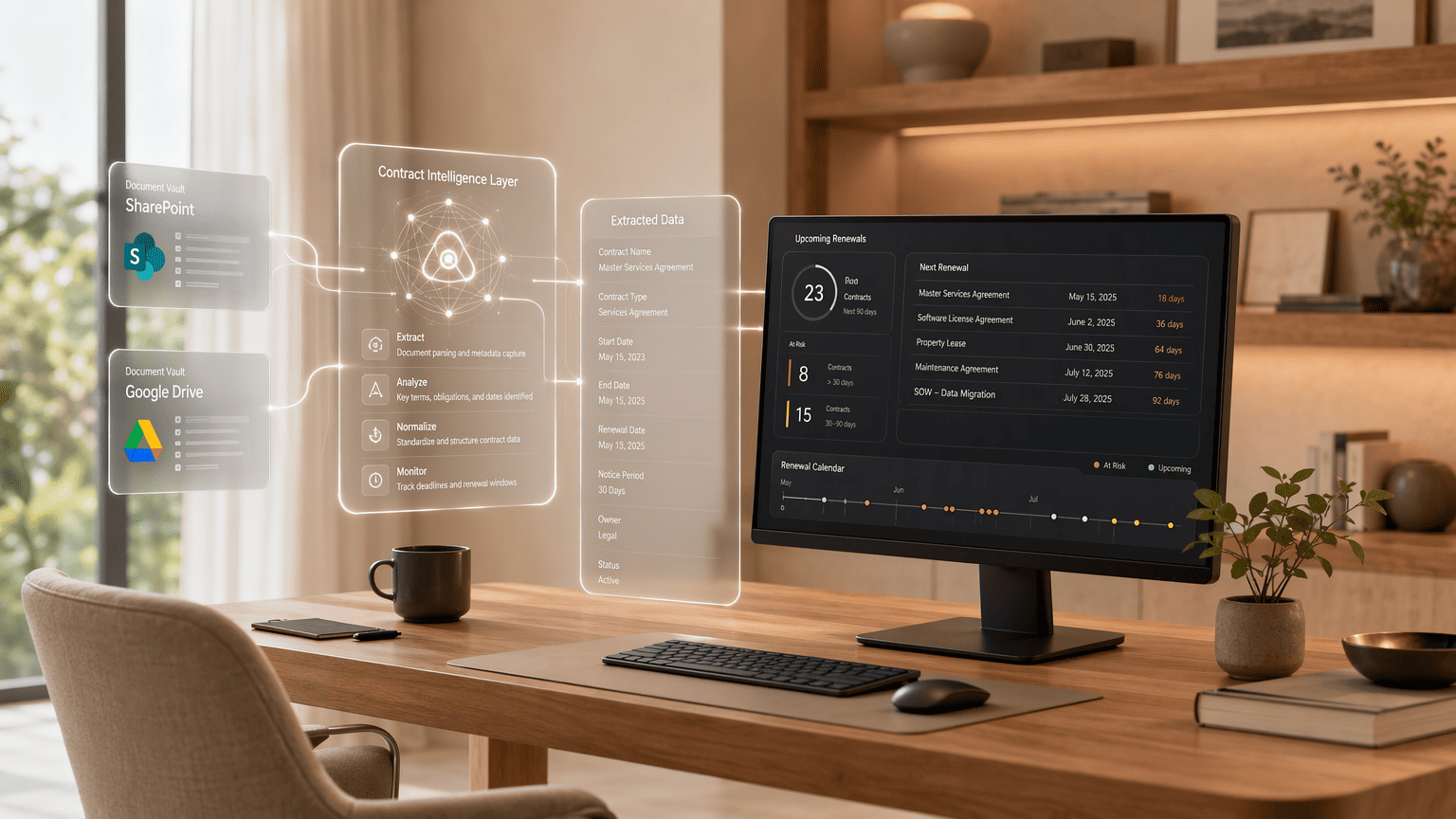
Contracts.ai operates as an intelligence layer that structures and activates contract data without demanding you migrate your entire repository. Instead of replacing where your agreements live, it connects to existing storage like SharePoint or Google Drive, extracts key dates and terms, and surfaces proactive alerts for upcoming deadlines. For a business with a messy but functional shared drive, this approach eliminates the most painful barrier to adoption: data migration.
The platform claims a striking accuracy rate above 99% when extracting data from documents in real time, a critical metric because manual error in key-date entry is what creates stale oversight in the first place. A mistyped termination date can cost you a full renewal cycle.
You can run a limited pilot on a specific contract set to validate the extraction quality and alerting cadence before rolling it out broadly. That pilot does not require disrupting your existing workflows. Once live, the system automatically groups related agreements, aligns shared terms, and shares structured intelligence across finance and procurement systems. This turns static contract language into operational data that drives new deals and reinforces your internal contracting standards rather than hiding in a filing cabinet.
Newly launched in 2025 by practitioners who spent 30-plus combined years inside global enterprise CLM and procurement implementations, the tool was built specifically to solve the post-signature blindness that plagues companies of every size.
2. ContractSafe, Unlimited Users, Flat-Rate Pricing, and AI That Hunts Down Key Dates
ContractSafe removes the most anxiety-producing variable in software budgeting: per-user fees. Its $450/month flat rate includes unlimited user accounts. Your entire finance team, department heads, and external counsel can access the repository without triggering a surprise invoice mid-quarter. If your vendor portfolio touches more than a handful of stakeholders, this pricing model alone justifies the investment.
Its [email protected] AI engine scans every uploaded document and extracts critical dates automatically. Nobody has to remember to tag a renewal window buried on page 14 of a scanned PDF. The AI finds those dates, populates structured fields, and feeds a centralized alert system. Your team reviews and validates instead of doing data entry.
Beyond date extraction, the platform is a secure, centralized repository with audit trails and permission management. You control who sees which contracts, and every action is logged. The combination of unlimited users and AI-driven data extraction makes ContractSafe a strong financial match for growing teams that need a tool where headcount scales but cost does not.
For a 20-person company managing 200 vendor agreements, the per-person daily cost of ContractSafe lands under a dollar, a rounding error compared to the cost of even one unwanted auto-renewal.
3. ContractZen, Per-User Pricing That Scales Gently for Micro-Teams and Lean Ops

ContractZen meets the smallest operators exactly where their budgets live, at $9.50 per user per month. If you are a 2-person consultancy or a founder managing 30 vendor agreements solo, your total annual spend lands under $250. No other tool on this list offers an absolute starting cost that low.
The pricing ladder stays predictable as you grow. A team of five pays $570 a year. A ten-person operation, still comfortably under $1,200. ContractZen has stripped out the channel sales overhead and enterprise renegotiation cycles that drive up seat costs in bigger platforms, passing that simplicity through to the invoice.
Document governance is built into the per-user fee. Metadata tagging, full-text search across stored contracts, and role-based access for external sharing come standard. You are not paying a separate line item for permissions or audit trails.
What you give up at this price is procurement orchestration. ContractZen tracks contracts. It does not route approvals through a multi-step workflow or link obligations to budget lines.
For a founder who just needs a secure repository and expiry alerts without adding headcount, that trade-off often makes sense. The vendor keeps the sign-up path deliberately short: no demo-gated trial, no scoping call.
You create an account, invite your second user, and start uploading files inside ten minutes. That self-serve model is the reason the per-seat cost can stay under ten dollars when rivals charge north of thirty.
4. Concord, A Full-Cycle CLM for Five Users, but Watch the Seat Count
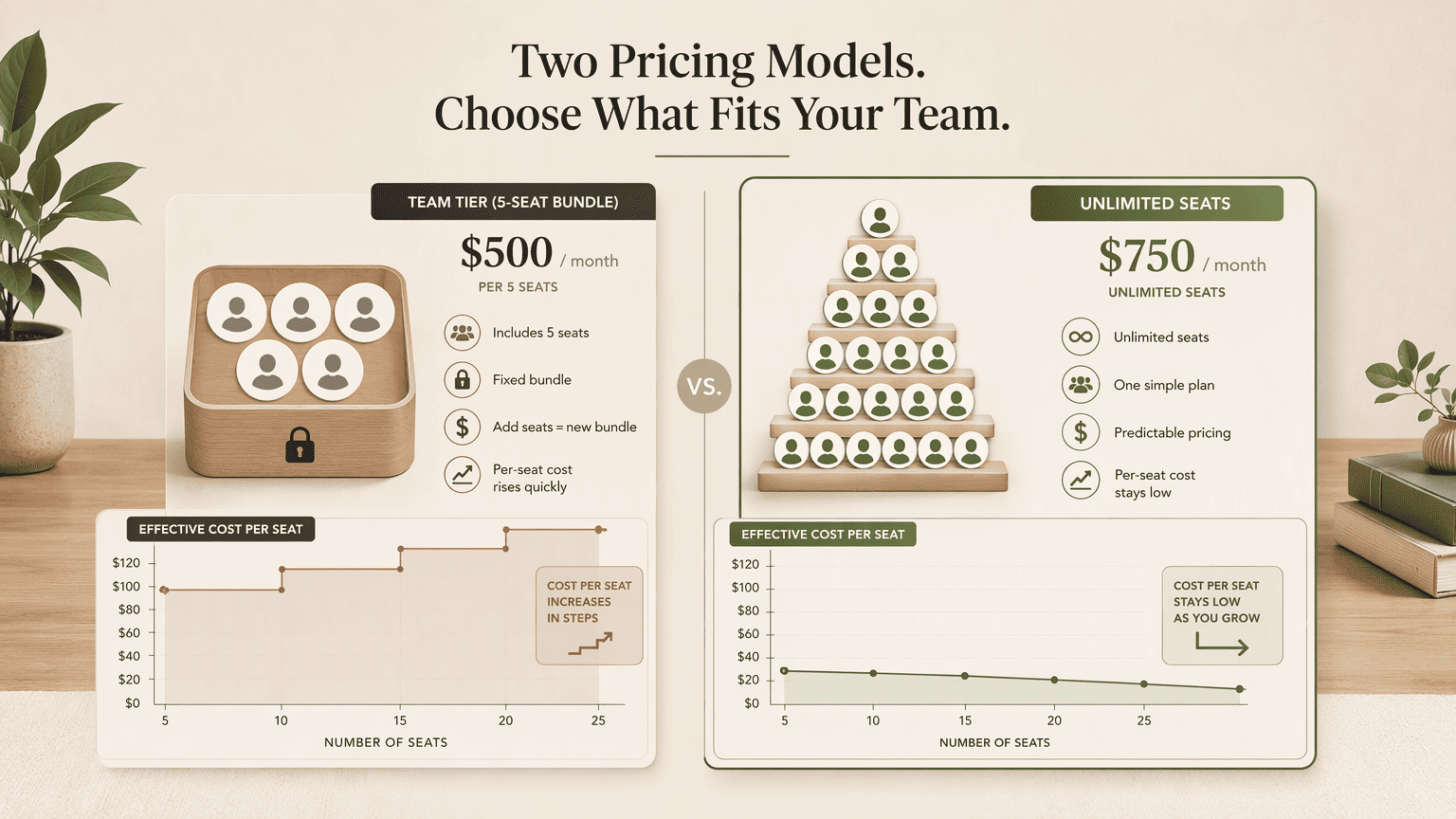
Here is how the bundled 5-user economics compare to the unlimited-user alternative.
| Feature | Concord (Team Tier) | ContractSafe |
|---|---|---|
| Base cost | $499/month for 5 users | $450/month for unlimited users |
| Approximate per-user cost at 5 seats | $100/user/month | $90/user/month (effectively) |
| Approximate per-user cost at 20 seats | Much higher; requires Enterprise negotiation | $22.50/user/month |
| Full lifecycle features (redlining, e-sign, approvals) | Included | Not applicable (focus on post-signature repository and alerts) |
| Best for | A closed team of exactly 5 that needs contract creation and negotiation tools | A larger or distributed team that primarily needs storage, search, and alerting on executed agreements |
| Scaling risk | High; the cost cliff at 6+ users forces a platform re-evaluation | None; add users freely |
Concord is excellent software. But it is purpose-built for a team you know will stay at exactly five seats for the foreseeable future.
5. Gatekeeper, Middle-Market Muscle for SLAs, Compliance, and Performance Monitoring
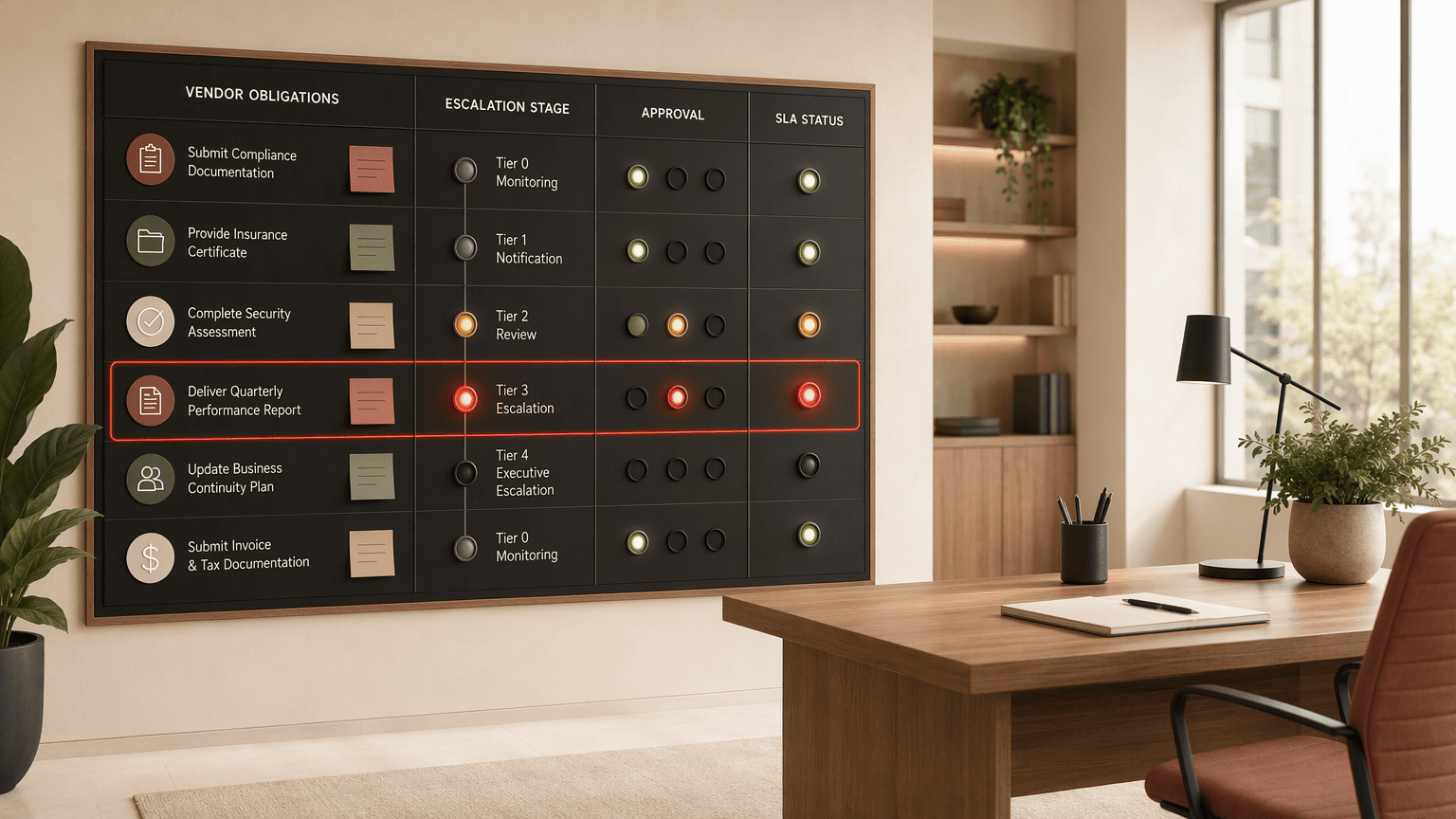
Gatekeeper moves the conversation beyond simple date reminders and into the territory of automated governance. Its Kanban-based workflow engines let you visually track obligations, escalations, and approvals across a portfolio.
When a vendor misses a service-level agreement, the system triggers tiered alerts automatically. Noncompliance does not sit unnoticed in an inbox. This is active performance monitoring, not a repository with a calendar bolted on.
For mid-market businesses with a complex supply chain, Gatekeeper’s integration muscle matters. The platform hooks into 220 third-party systems to pull in data from ERPs, CRM, and procurement tools, creating a unified compliance dashboard.
If your vendor monitoring needs include tracking performance guarantees, not just termination dates, Gatekeeper’s obligation-tracking architecture justifies its price point.
6. Juro, Fast Adoption for Non-Legal Teams Chasing Date Alerts and Simple Approvals
Adoption failure is the silent killer of contract software. A platform can be powerful, but if your operations manager and finance lead refuse to log in, the alerts never get configured and the repository rots. Juro designs around this problem: its browser-native interface works more like a collaborative doc than a legal database. Mass upload, smart date fields, and automated renewal reminders all live in a UX that non-legal business users understand on day one.
That low learning curve changes compliance outcomes directly. When a tool is intuitive, department heads update records and acknowledge alerts instead of ignoring them. The torturous cycle of overlooked email reminders and expired notice windows stops.
For SMBs where no general counsel exists and the finance lead owns vendor oversight, Juro places accessible automation ahead of sprawling feature depth. It skips trying to match Word’s redlining or an enterprise CLM’s negotiation logic. It makes the part of contract management that matters most on a Tuesday afternoon nearly effortless: finding files, knowing dates, and routing simple approvals. That focus keeps the price accessible and the adoption rate high, solving the bottleneck a small team actually hits instead of building features nobody will configure.
7. Oneflow, Contract Monitoring Hooks Where a Smart eSignature Platform Already Lives
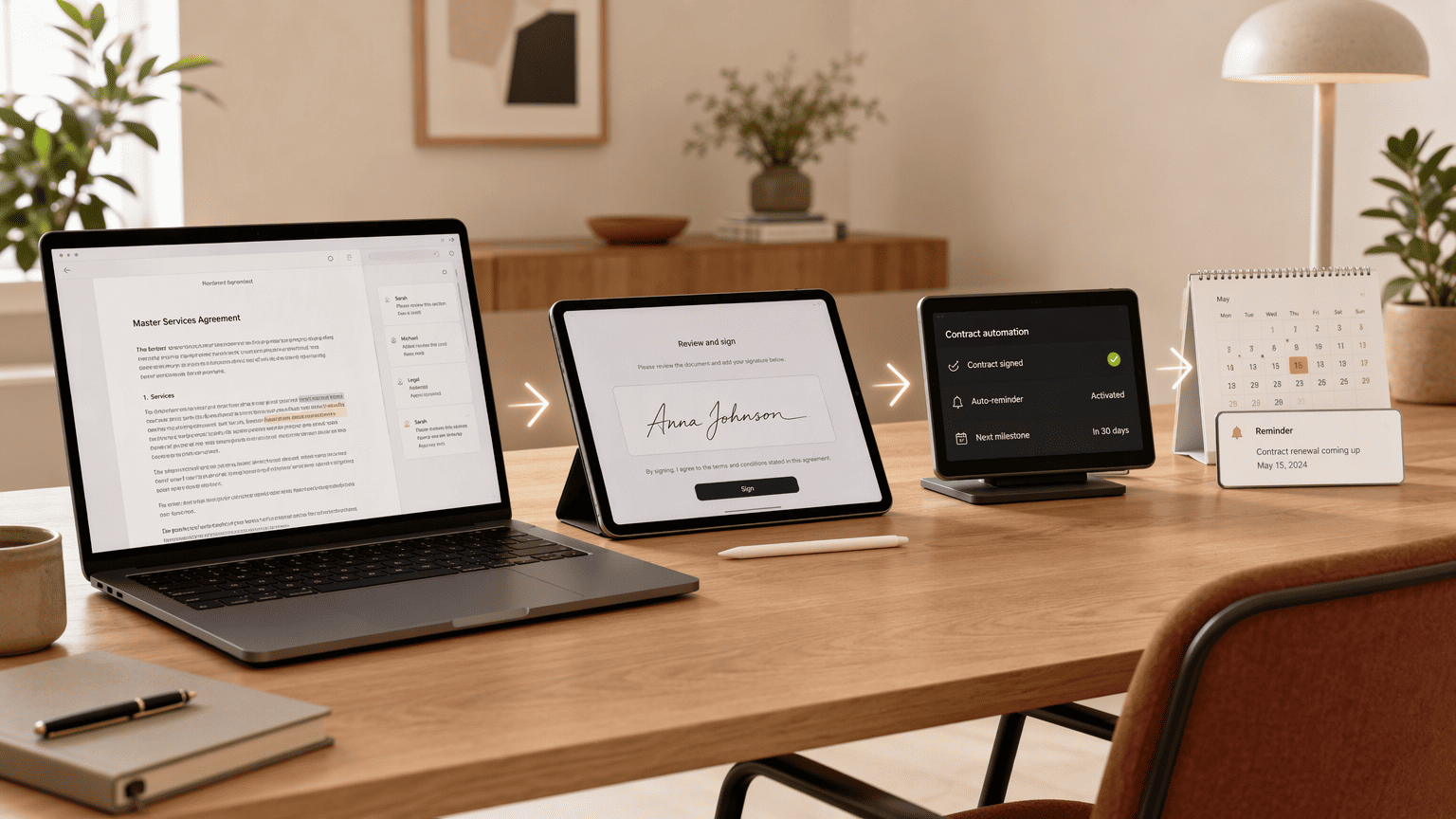
Oneflow activates post-signature monitoring inside the same platform where contracts are drafted and signed, eliminating the ‘sign and forget’ handoff. Here’s how the unified workflow plays out:
- Draft and negotiate the contract using Oneflow’s native editor and collaborative redlining tools.
- Send for eSignature and collect legally binding signatures directly on the platform.
- Post-execution triggers fire automatically the moment the agreement is signed, scheduling expiry alerts and renewal prompts based on the signed contract’s actual dates, not a separate tracker.
- Amendments and versions are tracked natively against one authoritative digital twin, eliminating the split-brain problem of maintaining a signed PDF in one system and a metadata record in another.
- Manage the full lifecycle from drafting through renewal inside a single interface, cutting the dual-system maintenance cost that adds up when eSignature and monitoring are separate subscriptions.
Conclusion
Your team size dictates the smartest 2026 path. A micro-business of 2 to 3 people should start at ContractZen’s $9.50/user/month and upgrade later. A growing team managing dozens or hundreds of active vendor relationships needs the headcount-proof economics of ContractSafe at $450/month, especially if third-party collaborators need access.
For teams staying on SharePoint or Google Drive, layering Contracts.ai over existing repositories keeps the workflow while activating automated oversight. Compliance-heavy operations at the middle-market scale get their money’s worth from Gatekeeper’s SLA and obligation tracking. The costliest decision is the one you already made by accident when the auto-renewal kicked in: inaction.
Frequently Asked Questions
What are the most affordable software tools for automating vendor contract monitoring and alerts in 2026?
ContractSafe at $450/month with unlimited users, ContractZen from $9.50/user/month for small teams, and Contracts.ai as an intelligence layer over existing storage are among the most cost-effective options. The best choice depends on your team size and whether you need a full CLM or a focused alerting tool.
How does Contracts.ai automate vendor contract monitoring compared to other low-cost solutions?
Contracts.ai layers AI-driven metadata extraction and proactive milestone alerts on top of your existing repositories without requiring data migration. It focuses on structuring post-signature contract intelligence rather than replacing where your agreements are stored, which reduces implementation friction.
What key features should I look for in an affordable contract monitoring tool?
When evaluating contract management software, prioritize the following capabilities:
- Automated date extraction and alerting
- A centralized searchable repository
- Role-based access controls
- A pricing model that scales predictably with your team size
For growing SMBs, unlimited-user pricing often proves far more affordable than per-seat models over time.
What is the typical price range for automated contract monitoring tools for small to mid-size businesses?
In 2026, dedicated monitoring and CLM tools range from roughly $10/user/month for the smallest teams up to $450 to 500/month for flat-rate plans with unlimited users. Full-cycle platforms with redlining and e-signature capabilities typically start around $500/month for small bundled teams.
How can I set up automated alerts for key dates and clauses in vendor contracts?
To set up a contract management platform for automated alerts, follow these steps:
- Upload your executed agreements into the platform, which uses AI to extract termination dates, renewal windows, and notice periods automatically.
- Configure tiered alert rules for each milestone.
- Assign an owner to receive notifications.
- Validate the extracted dates against the source document.
Sources
- 16 Best Contract Management Software Platforms for 2026 – www.contractsafe.com
- Gatekeeper Contract Management – marketplace.microsoft.com
- Procurement Contract Management Software | Conga – conga.com






