







Introduction
Finance teams leave millions on the table every year. The reason is not that the discount terms do not exist on supplier invoices. It is that no one can see them in time to act.
You might have a 2/10 net 30 term sitting in a PDF buried in a shared drive. By the time AP processes the invoice, the discount window snapped shut two weeks ago.
The average enterprise loses 9% of contract value through poor post-signature management, with approval delays averaging 3.4 weeks across industries. That lost value is a direct hit to working capital.
You need a contract analytics platform that extracts structured payment terms from agreements and feeds them directly into your payment run, flagging every discount before the cash leaves your account. Shifting AP from a cost center to a profit center starts there. Gartner research shows that AI adoption can reduce contract review and approval times by up to 50%, compressing the window enough to actually grab the discount.
This article evaluates seven platforms built to close exactly that gap. The evaluation focuses on how well each tool extracts discount terms, monitors invoice data against those terms in real time, and models the cash-flow trade-off so you never overpay a supplier who already agreed to give you a break for paying early. The universal target here is simple: capture at least 80% of available discount value automatically.
You will see platforms that specialize narrowly on payment term extraction, others that run as always-on intelligence layers over your ERP, and a few that unify the entire contract-to-pay lifecycle. The right choice depends on whether your biggest leak is term visibility, payment execution timing, or dynamic negotiation with suppliers.
Key Takeaways
Every tool here fixes a real hole in how companies capture early-payment discounts. Most finance teams leave 70% of available discounts on the table simply because they spot the window too late. Here is what matters before the deep dive.
- Best for AI-led value capture: Suplari deploys AI agents across AP data inside two weeks to target 80%+ discount capture, delivering ROI within the first payment cycle for teams that process high invoice volumes
- Best for dynamic supplier-led discounting: Taulia lets suppliers flexibly offer sliding-scale discounts on individual invoices, turning static 2/10 net 30 terms into a real-time working capital negotiation
- Best foundation for payment term extraction: Contracts.ai reads pre-signature agreements and surfaces structured discount clauses from dense legal text, giving downstream systems the clean data they need to execute
- Best for ERP-native compliance enforcement: HighRadius runs continuous monitoring over large Oracle and SAP instances, catching discount windows the moment they open and executing within the term
- Deployment speed matters: A tool that ingests AP data and surfaces opportunities in 2 to 4 weeks pays back faster than a 6-month CLM overhaul, especially when treasury teams need working capital gains this quarter.
1. Contracts.ai
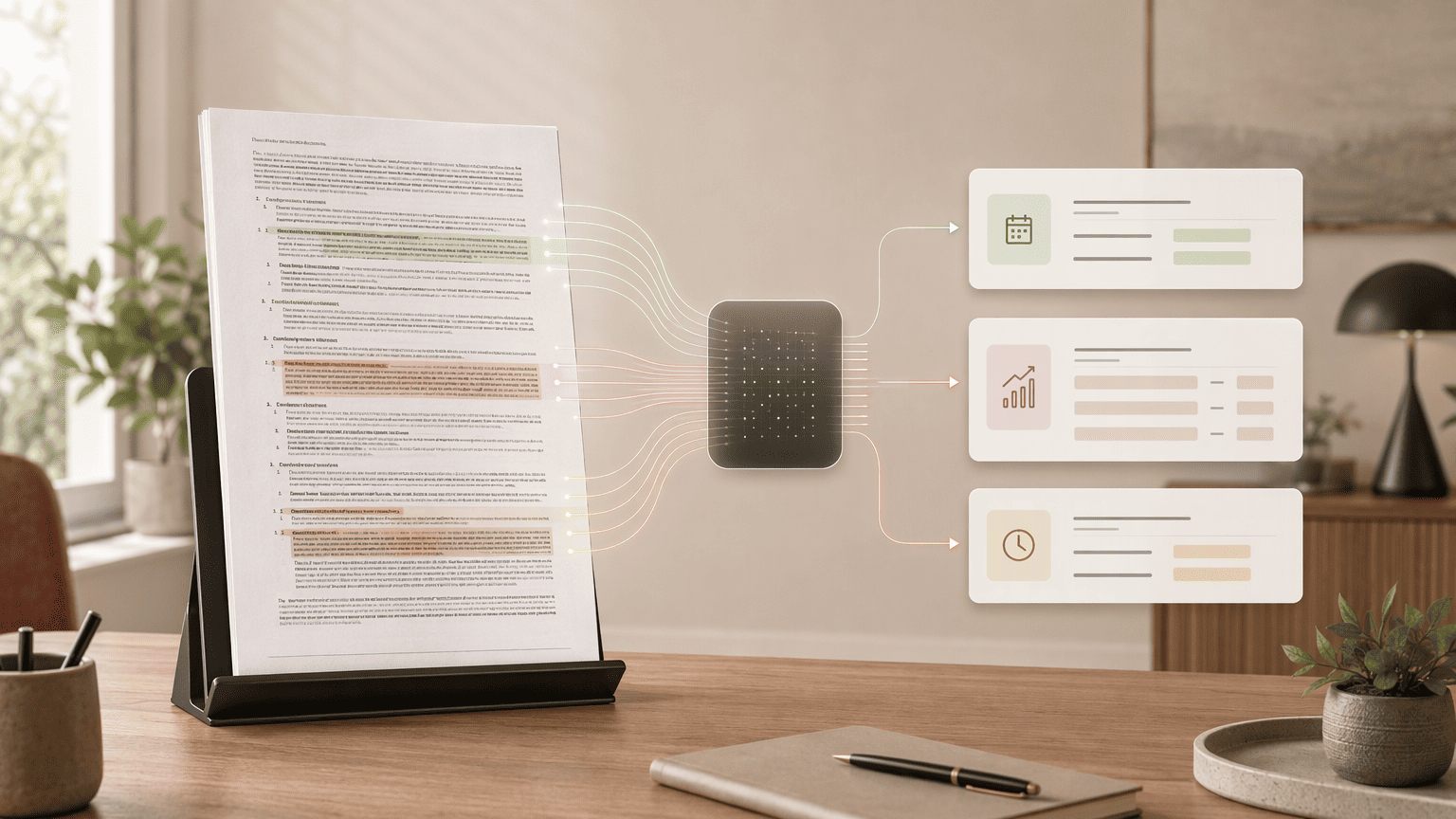
Before any discount gets captured, someone has to read the contract and find the terms. Contracts.ai automates that extraction step with NLP built specifically for dense supplier agreements.
The platform does three things:
- Ingests pre-signature documents and pulls structured payment clauses, including sliding-scale discounts, net terms, and conditional early-pay offers
- Claims accuracy levels greater than 99% when extracting data from documents in real time
- Organizes key terms across agreements, groups related contracts, and aligns shared language so finance teams see exactly which suppliers have committed to what discount structures
Contracts.ai is a pre-signature intelligence feed for downstream payment and treasury tools. The platform’s structured output can feed directly into AP prioritization logic, cutting out the manual term lookups that kill discount windows. This makes Contracts.ai strongest as the pre-signature data foundation. Pair it with a post-signature analytics tool, and you close the loop from contract language to payment execution without ever relying on an AP clerk to interpret legal text.
2. Suplari: AI-Powered Working Capital Intelligence for Discount Capture
Suplari operates as a continuous intelligence layer that turns raw AP data into a prioritized payment execution list. The table below maps how its AI agents approach discount capture against the traditional manual process most finance teams still rely on.
| Capability | Suplari AI Agents | Traditional Manual Approach |
|---|---|---|
| Discount opportunity identification | Continuous real-time monitoring of AP and invoice data; flags terms like 2/10 net 30 instantly | Periodic batch review after invoices post; discount windows often expire before review completes |
| Cash flow trade-off modeling | Compares discount value against cash impact and supplier strategic importance per invoice | Evaluated ad hoc by treasury, if at all; no systematic prioritization |
| Duplicate payment flagging | Catches duplicates before they clear as part of the payment optimization run | Relies on manual reconciliation; duplicates typically discovered post-payment |
| Deployment velocity | Ingests AP system data in weeks 1 to 2; opportunity analysis in weeks 3 to 4 | Full-scale CLM or ERP overhaul can run 6 to 12 months |
| ROI timeline | First payment cycle, by capturing discounts previously missed | Delayed; manual processes leave value on the table every month |
| Target discount capture rate | 80%+ automatic capture of available discount value | Industry estimates place manual capture rates far lower |
3. Kofax AP Agility: Real-Time Invoice Analytics and Duplicate Detection

If a duplicate invoice clears payment, it wipes out the working capital gain from a dozen early-pay discounts. Kofax AP Agility, now under Tungsten Automation, tackles that risk head-on with real-time analytics that flag duplicates before the AP run executes.
The platform ingests invoices from multiple channels and applies rule-based matching to detect identical or overlapping submissions. That duplicate check is the most underrated control in the discount capture workflow. Suplari’s AI agents add duplicate detection into the optimization logic for the same reason: catching payments that should never go out frees up cash for the invoices that carry real discount value.
Kofax also enforces payment term compliance at the point of processing, so the discount terms embedded in supplier contracts are not overridden by manual AP entry or rushed approval workflows.
The platform focuses on the processing infrastructure itself, the gate that stops bad payments and routes good ones through compliant channels. It does not include the cash-flow modeling or supplier strategic prioritization that Suplari or Taulia offer. For a mid-market finance team still dealing with paper invoices and manual PO matching, locking down that foundation makes downstream discount capture possible.
4. Palantir Foundry for Procurement: Granular Cash Flow Impact Modeling
Most discount capture tools tell you which invoices carry an early-pay offer. Few model the second-order cash flow consequence of executing 50 of them in a single week. Palantir Foundry fills that gap for large enterprises running complex supplier ecosystems on Oracle or SAP backbones.
Foundry connects to ERP data and builds granular models of how paying specific invoices early affects working capital, liquidity ratios, and supplier concentration risk. You do not just see a list of available discounts. You see the treasury impact of capturing them, modeled against your actual cash position across business units.
That matters when a $50,000 discount pulls cash away from a payroll cycle or a material purchase with tighter lead times. Oracle’s dynamic discounting framework links discount rules to instruments such as invoices and debit notes, and Foundry can operationalize that logic at scale across dozens of legal entities. Foundry demands data engineering resources and a deliberate modeling investment.
For organizations that already run Foundry for supply chain or risk analytics, adding procurement cash-flow modeling is a natural extension. For everyone else, a lighter-weight overlay like Suplari or HighRadius will deliver discount capture faster.
5. Ivalua: Unifying Pre-Signature CLM with Post-Signature Payment Analytics

Most discount leakage starts before a contract is ever signed. When the sourcing team runs an RFP, the discount terms they negotiate live in the sourcing module. When AP processes the invoice six months later, those terms sit in a different system that never talks to the first one. Ivalua closes that gap by running both workflows on the same platform.
Ivalua captures discount terms at the sourcing event, flowing them from the RFP response directly into the contract repository and then into the payment prioritization logic. That eliminates the manual handoff where most terms get lost.
The New York State Office of the Comptroller notes that when early pay discount terms are included in a contract, the awarding agency should add the payment terms to the contract’s PO defaults in the financial system. Ivalua automates exactly that linkage.
This end-to-end approach has a trade-off: the platform is a major procurement suite, not a lightweight analytics add-on. Deploying Ivalua means committing to its S2P workflow, which can stretch timelines well past the 12-week deployment window Suplari targets. The payoff is that discount terms are not just extracted and monitored; they are enforced systemically from RFP through payment, creating a genuinely closed loop that few bolt-on analytics tools can replicate.
6. Taulia: Dynamic Discounting and Supplier Payment Benchmarking as a Core Engine
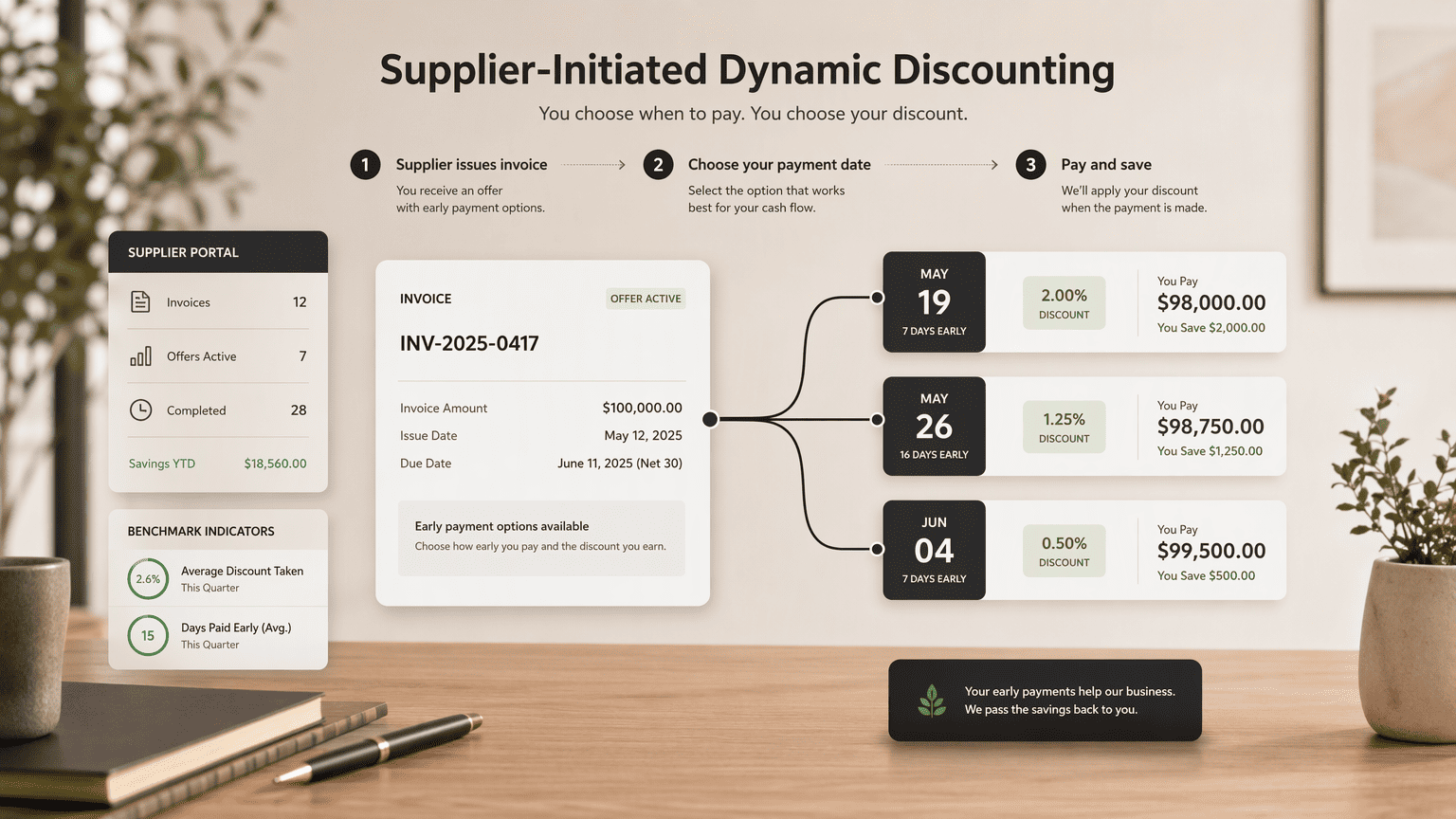
Static terms like 2/10 net 30 assume the supplier never wants to offer a steeper discount because they are desperate for cash this month, or that you never want to pay on day 5 to grab an even bigger break. Taulia throws those assumptions out by letting suppliers flexibly offer sliding-scale discounts on each invoice in real time.
- Supplier-initiated discounting: Suppliers log into the portal and offer a specific early payment rate on any outstanding invoice, shifting the power dynamic so the party with the cash urgency sets the incentive.
- Per-invoice flexibility: A static contract clause locks a single rate for 12 months. Taulia lets the discount reflect supplier cash needs week to week. A supplier might offer 3% on one invoice and nothing on the next, based on their own working capital position.
- Benchmarked rate discovery: Buyers see how a supplier’s offer stacks against market norms and their own cost of capital, turning early payment into a clear bid or pass decision instead of a guess.
- Buyer working capital control: You set the minimum return threshold. If no supplier offer beats your internal hurdle rate, Taulia does not push a discount, keeping control of cash flow firmly on the treasury side.
- SAP native integration: Because Taulia runs as an overlay on SAP and similar ERP instances, payment execution stays inside your existing treasury controls and the core ERP workflow.
7. Tungsten Automation (Formerly Kofax): Complex Workflow Automation for Payment Term Compliance
Tungsten Automation enforces payment term compliance as a gated workflow. When an invoice arrives, the discount eligibility check runs before the payment file ever reaches treasury approval. Here is how that enforcement chain works in practice:
- Ingest and digitize: Capture every invoice, whether it arrives as a PDF, EDI, or paper, and convert it into structured data with the discount term fields clearly extracted.
- Validate against PO and contract: Match the invoice line items against the purchase order and the master supplier agreement, flagging any mismatch in payment terms before processing proceeds.
- Duplicate check: Run the invoice through a deduplication engine that compares supplier, amount, date, and invoice number, blocking any match that overlaps with an already-submitted bill.
- Enforce discount window routing: Route any invoice carrying an active early-pay discount into an accelerated approval lane, with SLAs that ensure the payment clears before the discount window expires.
- Lock compliance at payment file generation: Freeze the discount terms into the payment file so no manual override in the final treasury review can strip out the early-pay rate.
8. HighRadius Autonomous Treasury: Continuous Discount Opportunity Monitoring Over ERP Data

HighRadius solves a deceptively simple problem. Discount windows do not align with your AP team’s business hours. A 2/10 net 30 term might expire on a Saturday, and if your payment run goes out on Friday or the following Monday, the discount is gone.
HighRadius runs continuous monitoring over ERP invoice data, checking cash positions, bank balances, and pending payments in real time with no human backstop. When a discount window is about to close, the system can automatically execute the payment within the term, pulling from the optimal funding source based on your treasury rules. The engine flags an opportunity and acts on it.
This aligns with the Oracle banking framework concept where the auto applicable toggle, when turned on, applies the discount rule automatically to eligible instruments once created and authorized. HighRadius operationalizes that principle across the full ERP landscape. For large enterprises running Oracle or SAP with complex multi-bank treasury structures, that always-on execution layer transforms discount capture from a periodic audit exercise into a fully autonomous, 24/7 discipline.
Conclusion
Different platforms target different weak points in the discount capture chain. You might pick one, or you might need all three. The decision comes down to where money is leaking today.
The pre-signature extraction layer catches terms before the contract is signed. The post-signature monitoring engine tracks compliance after the goods arrive. A dynamic supplier marketplace lets suppliers bid for early payment, turning your cash position into a negotiation asset.
Organizations with heavy manual AP workflows typically get the fastest return from an AI-led monitoring tool that ingests data in weeks and targets 80% capture out of the gate. Enterprises with complex, multi-ERP treasury structures benefit from an always-on autonomous execution overlay. Teams negotiating dynamic terms across a large supplier base gain real use from a marketplace where suppliers compete on discount rates.
The common thread is acting on discount intelligence before the cash leaves your account. A post-payment audit finds what you already missed.
Frequently Asked Questions
What are the key metrics and analytics features in contract platforms that help identify early payment discount opportunities on supplier invoices?
Analytics features should cover five key areas:
- Extract structured terms like 2/10 net 30 from contracts
- Continuously compare those terms against ERP invoice data
- Prioritize payments by discount value versus cash impact
- Track discount capture rate
- Measure payment term compliance percentage, duplicate payment exposure, and cash-flow impact per invoice
How do AI-powered contract intelligence tools calculate the ROI of capturing early pay discounts across a large supplier portfolio?
AI agents follow a three-step prioritization process:
- Compare the discount value on each invoice against the cash-flow impact of paying early and the strategic importance of the supplier
- Recommend which invoices to prioritize, targeting 80% or higher capture rates
- Deliver ROI within the first payment cycle for most organizations
What is the typical workflow for using contract analytics to negotiate, track, and realize dynamic discounting with suppliers?
Successful implementation follows a four-phase rollout:
- Ingest AP system data during weeks 1 to 2
- Analyze for discount opportunities in weeks 3 to 4
- Optimize payment prioritization in weeks 5 to 8
- Shift to continuous monitoring from week 9 onward
Dynamic discounting platforms like Taulia add a supplier portal where vendors offer flexible rates per invoice.
How do contract platforms like ContractsAI extract and structure invoice and payment term data from legacy agreements to surface discount opportunities?
The platform uses NLP trained on supplier agreements to pull structured payment clauses, including sliding-scale discounts and conditional early-pay offers. It then organizes key terms across related agreements and shares that structured output directly with AP and treasury systems.
What distinguishes post-signature contract intelligence platforms from traditional CLMs for optimizing working capital through early payments?
Traditional CLMs focus on pre-signature workflows like contract authoring and approvals. Post-signature platforms like Suplari and ContractsAI operate as continuous monitoring layers over executed agreements and ERP data, flagging obligations and discount windows in real time, which is where the 9% contract value loss typically occurs.
What security, compliance, and integration considerations matter most when deploying an analytics layer over contract data for finance and procurement teams?
Look for platforms with role-based access, encryption of data in transit and at rest, and documented incident response procedures. Integration should connect to major AP systems like SAP, Oracle, and NetSuite without requiring a full ERP migration. Pilot deployment with a limited contract set reduces initial risk.
Sources
- XI.11.H Early Pay Discounts for Procurement Contract Purchases – XI. Procurement and Contract Management | Office of the New York State Comptroller – www.osc.ny.gov
- Post-Signature CLM Dashboard – 12 KPIs Gartner Tack – www.sirion.ai
- 7 Dynamic Discount Management – docs.oracle.com
- Payment Intelligence to Capture Value, Not Just Process Invoices | suplari – suplari.com