






Introduction
You closed the deal. Both sides signed. Six months later, the 3% annual escalator didn’t kick in because nobody caught the date in the clause.
A rebate worth hundreds of thousands of dollars expired unclaimed. Your CFO sees the margin erosion in the P&L but cannot trace it back to the source. This is revenue leakage from poorly managed contracts, and it is not a rare glitch.
A staggering 90% of CEOs and 82% of CFOs believe their companies leave money on the table in contract negotiations. The problem grows exponentially worse post-signature. AI-native contract intelligence platforms are the targeted technology answer. These systems convert static documents into an operational asset, with platforms like Icertis Vera demonstrating over 90% accuracy in contract review to catch exactly these failures.
Key Takeaways
Below are the core conclusions for an executive evaluating the financial and operational impact of AI-powered contract intelligence today.
- Poor contract management is a measurable financial crisis: Federal agencies estimated $186 billion in improper payments in FY 2025, driven by missed obligations, non-compliant pricing, and unrecovered credits.
- Core technology drives new performance benchmarks: AI agents, a knowledge graph, and a dedicated contract data lake achieve automated extraction accuracy over 90%.
- Turnaround time collapses by 83%: AI reduces cycle times for review and remediation, creating a material efficiency gain over manual processes.
- Continuous improvement is built in: An AI flywheel ensures data from every processed agreement improves the model, making the detection of leakage patterns sharper over time.
At a Glance
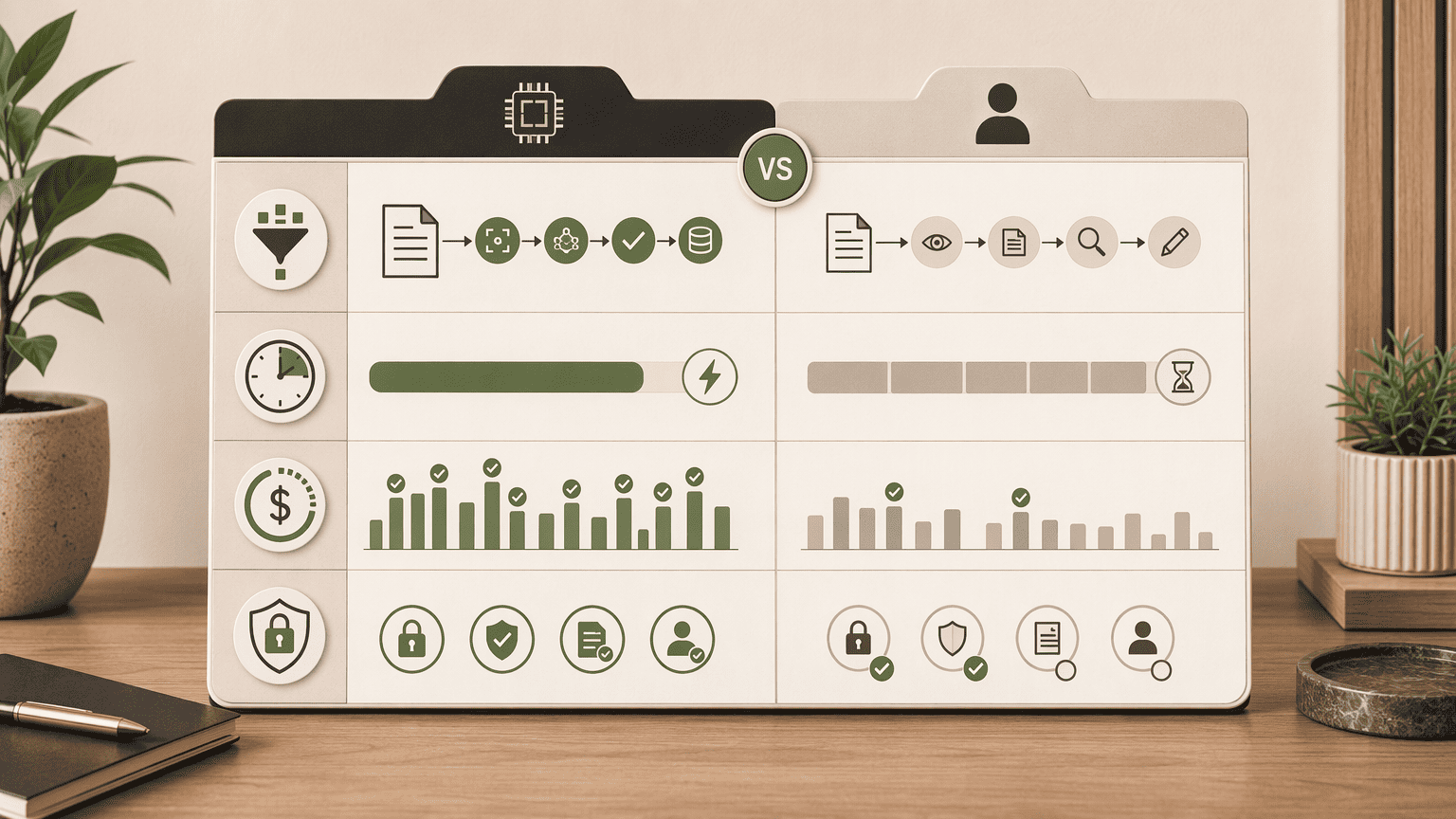
Here is how the options compare across the dimensions that matter most.
| — | — | — |
| Extraction Method | AI agents + data lake + knowledge graph | Human reading |
| Key Metrics | 90%+ accuracy; 83% faster turnaround | Highly variable, slower |
| Revenue Leakage Detection | Automated flagging (renewals, pricing) | Manual, error-prone |
| Security/Compliance | Enterprise-grade, public/private cloud | Depends on process |
What a Contract Intelligence Platform Is and the Core Technology Stack

A contract intelligence platform is a system that structures unstructured legal text into an operational data layer, giving businesses the ability to query, connect, and act on every term. Think of it as a software engine that reads the actual clauses, not just the metadata, and turns them into structured, actionable signals.
Three foundational components power this engine. First, a contract data lake ingests executed PDFs, legacy paper scans, and electronic signatures from any repository. This is where raw agreements become omnipresent data. The Document Intelligence contract model accepts multiple file formats including PDF, JPEG, PNG, BMP, TIFF, HEIF, and Office documents, processing up to 2,000 pages per PDF. Tools like Contracts.ai extract these files, identifying key fields like parties, jurisdictions, and contract ID across entire portfolios in minutes.
The second component, a knowledge graph, translates the extracted text into a relationship map. This graph connects a pricing table in clause 4.2 to an invoice line item, or ties a termination-for-convenience clause to a revenue schedule, making hidden interdependencies visible. Finally, AI agents execute precise operational tasks on this network, from flagging an auto-renewal without a trigger date to verifying that an applied discount matches the negotiated volume tier.
The output feeds the AI flywheel. Every executed contract that gets structured and every flagged risk that receives human validation trains the underlying models. This means the intelligence continuously sharpens, deepening its ability to pinpoint leakage patterns specific to an organization.
The Revenue Leakage Crisis: Quantifying the Financial Impact in the US Market
The scale of revenue leakage dwarfs what most leadership teams estimate. A sweeping Government Accountability Office report found that federal agencies alone estimated $186 billion in improper payments in FY 2025, with cumulative improper payment estimates of about $3 trillion since fiscal year 2003. Improper payments are those that shouldn’t have been made or were made in the incorrect amount. For commercial contracts, the equivalent is every dollar a company fails to collect, or overpays, because the executed agreement was not operationalized correctly.
Deeply embedded dysfunction drives these numbers. The GAO singled out seven agencies running programs with estimated improper payment rates of 10 percent or higher for 2, 3, or 4 consecutive fiscal years from 2021 through 2024. Critically, five of the seven agencies lacked sufficient documented policies and procedures to ensure consistent, timely reporting. This pattern is universal. Most commercial enterprises lack an automated process to surface and enforce what their contracts actually say.
Over 50% of agreements are now created via self-service on platforms, yet post-signature compliance remains overwhelmingly manual. The risk of non-compliant pricing and missed renewals becomes a steady drain on revenue that no quarterly audit will completely reverse.
How AI Agents Pinpoint Leakage: From Missed Renewals to Non-Compliant Pricing
AI-powered extraction targets the exact gaps that manual processes miss. The combination of a knowledge graph and purpose-built AI agents connects contract language directly to financial outcomes. Below is a breakdown of core functions that uncover immediate monetary value.
The Post-Signature Operational Layer: Extracting Value Without Rip-and-Replace

AI-native platforms do not require you to migrate your entire repository and replace current systems. You can begin a pilot with a limited contract set, and full repository migration is not required. Documents stay in the tools your team already uses: SharePoint folders, DocuSign accounts, existing CLM repositories. A platform like Contracts.ai pulls them in directly from those sources and adds an intelligence layer on top.
Think of it as a post-signature operational layer. The source contracts sit undisturbed in their original locations. What changes is that the structured terms extracted from those contracts become a living, queryable asset.
Instead of a static archive where obligations sit unread until a dispute flares up, you get a searchable body of data you can act on. This is not a rip-and-replace pitch.
The existing systems handle authoring, negotiation, and signature. The operational layer handles what comes after; it surfaces deadlines, commitments, and hidden revenue opportunities that the static file never would.
AI-Powered Extraction vs.

Icertis Vera delivers a 83% reduction in contract turnaround time and achieves over 90% accuracy, results that stem from AI agents operating across the structured data lake and knowledge graph with no need for sleep, breaks, or manual recalibration.
For organizations tracking obligations and pricing across thousands of agreements, the delta is not merely speed. An AI agent finds complex leakage patterns, such as a global volume discount that is inconsistently applied across three subsidiaries, that would require an army of paralegals to detect. The technology does not simply accelerate the review; it performs an entirely different level of forensic analysis.
Legal teams don’t get to gamble on security. When you’re moving thousands of contracts through an AI platform, a single exposure can trigger breach notification obligations across fifty states. That reality has pushed vendors toward independent verification. Those two audits mean an outside assessor has walked through the operational controls and signed off.
Deployment flexibility matters just as much. Platforms built for both public and private cloud let regulated industries control where data sits without giving up functionality.
Privacy extends to the AI models themselves. Customer data is never used to train public or shared models, so your pricing structures, IP language, and strategic terms stay fully isolated. Contracts.ai layers role-based access, strong authentication, and least privilege on top of that, keeping contract visibility confined to authorized personnel even inside the organization.
The operational result is clean: internal audit trails, breach notification protocols, and compliance with CCPA, GDPR, and HIPAA work as a single system rather than a patchwork. Contract intelligence stops being a risky experiment and becomes an approved enterprise utility.
An Enterprise Buyer’s Decision Framework for Revenue Protection

Use the following seven criteria when evaluating an AI contract intelligence platform to ensure it measurably stops revenue leakage.
- Extraction accuracy rate above 90%: Require the vendor to prove automated accuracy for the specific fields you care about, such as pricing tables, payment terms, and renewal dates, with a clear methodology supporting the metric.
- Bidirectional system integration depth: Verify that the AI layer ingests contracts from current systems (DocuSign, legacy repositories) and pushes structured data out to ERP and procurement tools through documented APIs, without a manual intermediary.
- Out-of-the-box leakage models: The platform should pre-configure models for auto-renewal risk detection, non-compliant pricing identification, and unclaimed penalty/credit extraction, measurable in an initial pilot.
- Contractual commitment to AI data isolation: Vet the vendor’s DPA for explicit language stating customer contract data is never used to train public or shared models unless the enterprise explicitly agrees.
- Time-to-value with a limited set: Assess whether the vendor allows a pilot on a subset of high-risk contracts, without requiring full repository migration or disrupting existing workflows.
- Vendor roadmap for the AI flywheel: Evaluate if the platform has a demonstrated mechanism where operational usage and human validation continuously improve model accuracy, creating a compounding protective advantage over contract lifecycle management tools that lack a feedback loop.
Conclusion
The quantified crisis of revenue leakage demands turning executed documents from static storage into an operational revenue-protection layer. Federal improper payment estimates in the hundreds of billions underscore that manual oversight cannot defend against contract value erosion at scale. AI-native contract intelligence directly counters this, extracting structured, enforceable truth from your agreements and feeding every improvement back through the AI flywheel. Adopting a platform that achieves over 90% accuracy is rapidly becoming a decisive competitive differentiator.
Frequently Asked Questions
What technologies are used to extract and structure revenue-critical terms from post-signature contracts?
Contract intelligence platforms use AI agents, a contract data lake, and a knowledge graph to convert unstructured legal text into structured, queryable data.
How do contract intelligence platforms identify revenue leakage points like missed renewals or non-compliant pricing?
AI agents scan the structured data layer to detect specific triggers, such as auto-renewal clauses missing a notification date or volume-based pricing tiers that are inconsistent with invoice amounts. The knowledge graph links contract terms to financial systems, enabling automated alerts so opportunities don’t slip between review cycles.
What security and compliance measures protect sensitive contract data when using AI for extraction?
Critically, customer contract data is logically isolated and never used to train public or shared AI models without explicit agreement, supported by role-based access controls.
What is the financial impact of revenue leakage from poorly managed contracts in the US market?
The impact is massive. Federal agencies estimated $186 billion in improper payments in FY 2025, with about $3 trillion in cumulative estimates since 2003, improper payments directly paralleling commercial revenue leakage from missed obligations and non-compliant pricing.
How does AI-powered term extraction compare to manual contract review for preventing revenue loss?
AI-powered extraction is faster, more accurate, and scalable. It turns around reviews 83% quicker while hitting over 90% accuracy. Unlike human teams limited to one contract at a time, AI agents perform cross-portfolio analysis, detecting multi-subsidiary pricing discrepancies that manual processes miss entirely.
Can contract intelligence platforms integrate with existing systems without a full rip-and-replace?
Yes. Modern platforms are designed as a post-signature operational layer that ingests executed contracts directly from existing repositories like DocuSign and shared drives. A pilot can be run on a limited contract set without migrating the full repository or disrupting current workflows.
Sources
- Contracts.ai – contracts.ai
- Contract Performance Management | Icertis | Icertis – www.icertis.com
- Improper Payments: Agency Actions Needed to Help Save Taxpayer Dollars | U.S. GAO – www.gao.gov
- 2026 CLM Rollout Roadmap: Must-Have AI Features for Enterprises – www.sirion.ai
- Contract data extraction – Document Intelligence – Foundry Tools | Microsoft Learn – learn.microsoft.com