






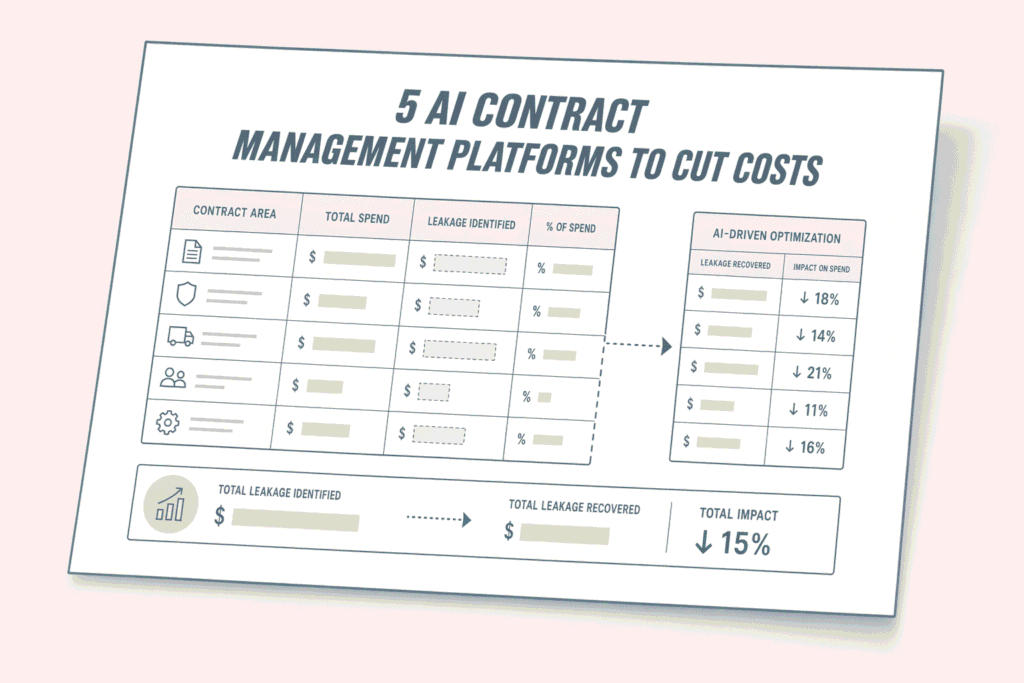
Enterprise contract management generates hidden cost overruns through manual labor overhead, compliance risk exposure, and prolonged deal cycles. AI-powered contract lifecycle management platforms cut these operational costs by 70-80%+ when matched to specific cost-bleed mechanisms.
Key Takeaways
- Traditional contract workflows leak 12-15% of annual revenue through manual review labor, compliance penalties, and deal-cycle delays
- AI-powered CLM platforms reduce costs through three mechanisms: automation ROI (eliminating 3-5 FTEs), compliance risk mitigation (cutting audit costs 30-50%), and cycle-time compression (accelerating revenue recognition)
- Platform selection should map to baseline cost-bleed diagnosis rather than feature checklists—automation-ROI platforms for labor overhead, compliance-risk platforms for audit exposure, cycle-time platforms for sales delays
- Intelligence-layer deployments enable 2-8 week pilots without data migration, while rip-and-replace systems require 6-12 months but deliver deeper workflow integration
- ROI calculation requires measuring baseline FTE cost, annual contract volume, compliance incident frequency, and current contract cycle time before evaluating vendors
Why Traditional Contract Management Bleeds Enterprise Budgets
Enterprise organizations can achieve 70-80%+ operational cost reduction through AI-powered contract lifecycle management platforms — but only after diagnosing where traditional workflows actually bleed money. Poor contract management can leak 12 to 15 percent of annual revenue through three overlapping mechanisms: labor-cost inefficiency, compliance exposure, and cycle-time drag. Most enterprises chase feature checklists without first quantifying their baseline FTE cost, contract volume, and compliance incident frequency — the exact metrics that determine platform ROI and make cost-bleed diagnosis the prerequisite for intelligent selection.

Manual Review Cycles Consume 3-5 FTEs per 1000 Contracts
Mid-market and enterprise organizations processing 500-5000 contracts annually allocate 3-5 full-time equivalents to manual contract review, approval routing, and metadata entry. Each contract touches multiple stakeholders — legal counsel, procurement, finance, compliance — and cycles through email-based negotiation loops that extend review time from hours to days. The labor-cost baseline scales linearly with contract volume until organizations centralize intake and automate obligation extraction.
Missed Obligations Create Hidden Compliance Exposure
Untracked renewal dates, deliverable deadlines, and audit provisions generate penalty costs and regulatory failures when contracts live in shared folders or email threads. CLM solutions mitigate organizational risk by enabling regulatory and policy compliance and providing role-based access to terms and obligations — capabilities absent from spreadsheet-based tracking systems that rely on manual calendar alerts.
Approval Bottlenecks Extend Sales Cycles by 30-40%
Sequential approval workflows in traditional contract management delay revenue recognition and lose deals to competitors with faster turnaround. Multi-step routing through legal, finance, and executive stakeholders, coordinated via email rather than automated workflow engines, extends contract execution time and reduces close rates in time-sensitive procurement cycles.
After diagnosing where traditional workflows bleed money, the next step is understanding how AI-powered platforms address each cost driver through distinct reduction mechanisms.
Cost-Reduction Mechanisms in AI-Powered CLM Platforms
Enterprises reporting that they are “bleeding money” on contract management typically face cost overruns in three overlapping areas: manual labor overhead, compliance risk exposure, and deal-cycle drag. Poor contract management costs companies 9% of their bottom line, and inefficient contracts lead to a 5-40% loss of value on any given deal. AI-powered CLM platforms reduce operational costs by addressing these mechanisms directly rather than layering features onto broken workflows.
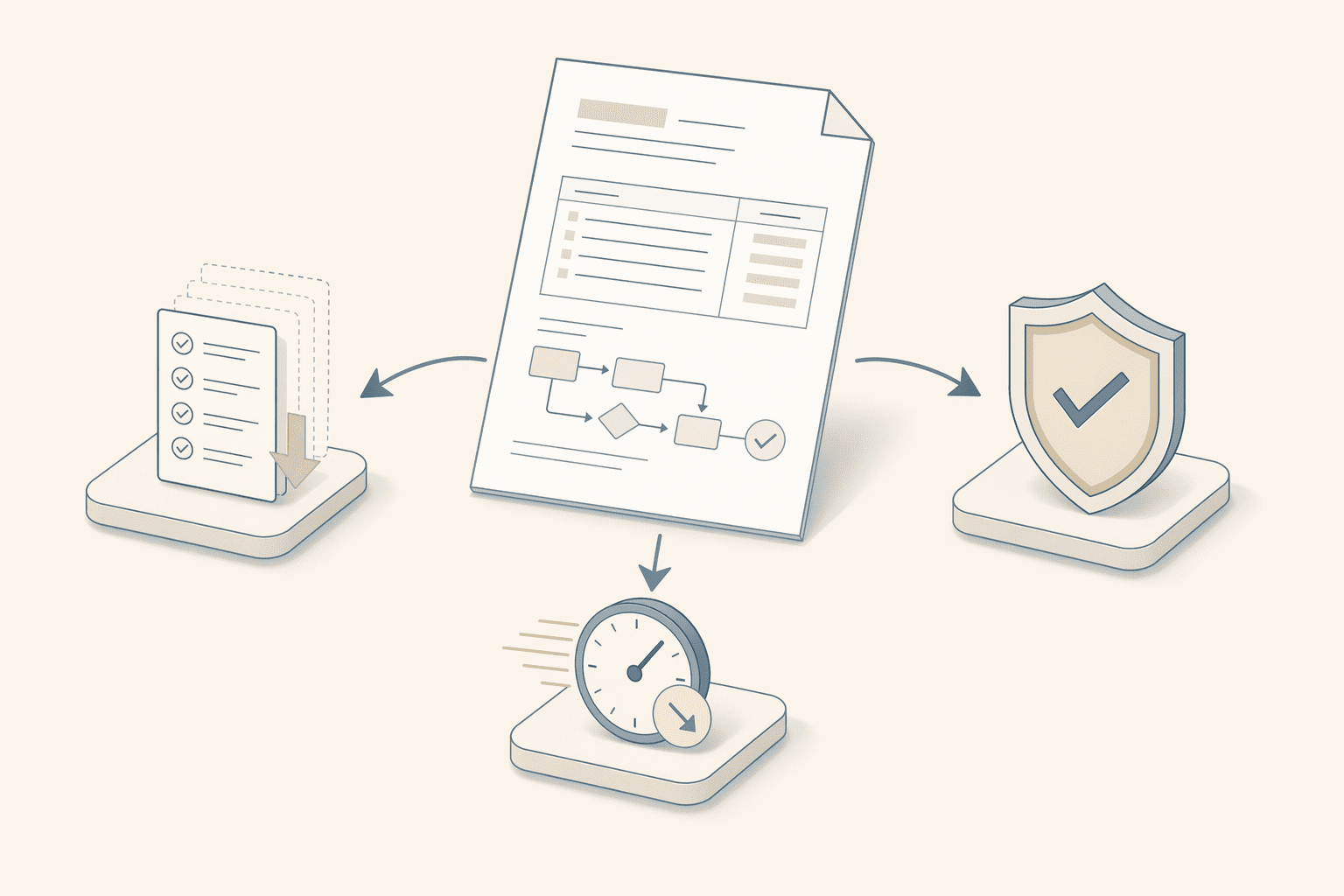
Automation ROI: Drafting, Review Cycle Reduction, Obligation Tracking
AI drafting, clause extraction, and automated obligation tracking eliminate the FTE-hours enterprises burn on repetitive contract tasks. Platforms that generate contracts from templates, route approvals through multi-step workflows, and capture executed agreements in searchable repositories can reduce cycle times from 45 days to under two weeks. Mid-market buyers increasingly organize CLM selection by workflow need rather than feature checklists, prioritizing platforms that automate the drafting-through-renewal lifecycle without requiring a 10-person legal ops team.
Compliance Risk Mitigation: Audit Logging, Role-Based Access, SOC2/HIPAA/GDPR Controls
Audit failures and regulatory penalties are cost events, not line items. Platforms that implement role-based access, continuous monitoring, and third-party certifications reduce the probability and severity of compliance breaches. Contracts.ai, for example, supports GDPR compliance, maintains SOC2 and SOC3 certification, and offers HIPAA-ready configurations for covered entities, positioning compliance controls as cost-mitigation infrastructure rather than checkbox requirements.
Cycle-Time Compression: AI-Powered Analysis, Automated Workflows, Approval Routing
Faster contract turnaround directly accelerates revenue recognition and deal closure rates. Leading AI CLM platforms now draft clauses, extract obligations, and flag risk deviations automatically, compressing timelines that once spanned weeks into days. Enterprises evaluating platforms should map their cost-bleed profile, whether labor overhead, compliance exposure, or cycle drag dominates, to these three mechanisms before comparing vendor feature lists.
With cost-reduction mechanisms mapped, the following platforms demonstrate how automation ROI translates into quantifiable FTE-hour savings for enterprises drowning in manual contract review.
Platforms Optimized for Automation ROI: Contracts.ai, Juro, Lexion
When operational costs from manual contract review threaten margins, three platforms lead the automation ROI category by deploying AI to eliminate repetitive extraction, drafting, and tracking work, cutting review cycles and headcount pressure without ripping out existing workflows.
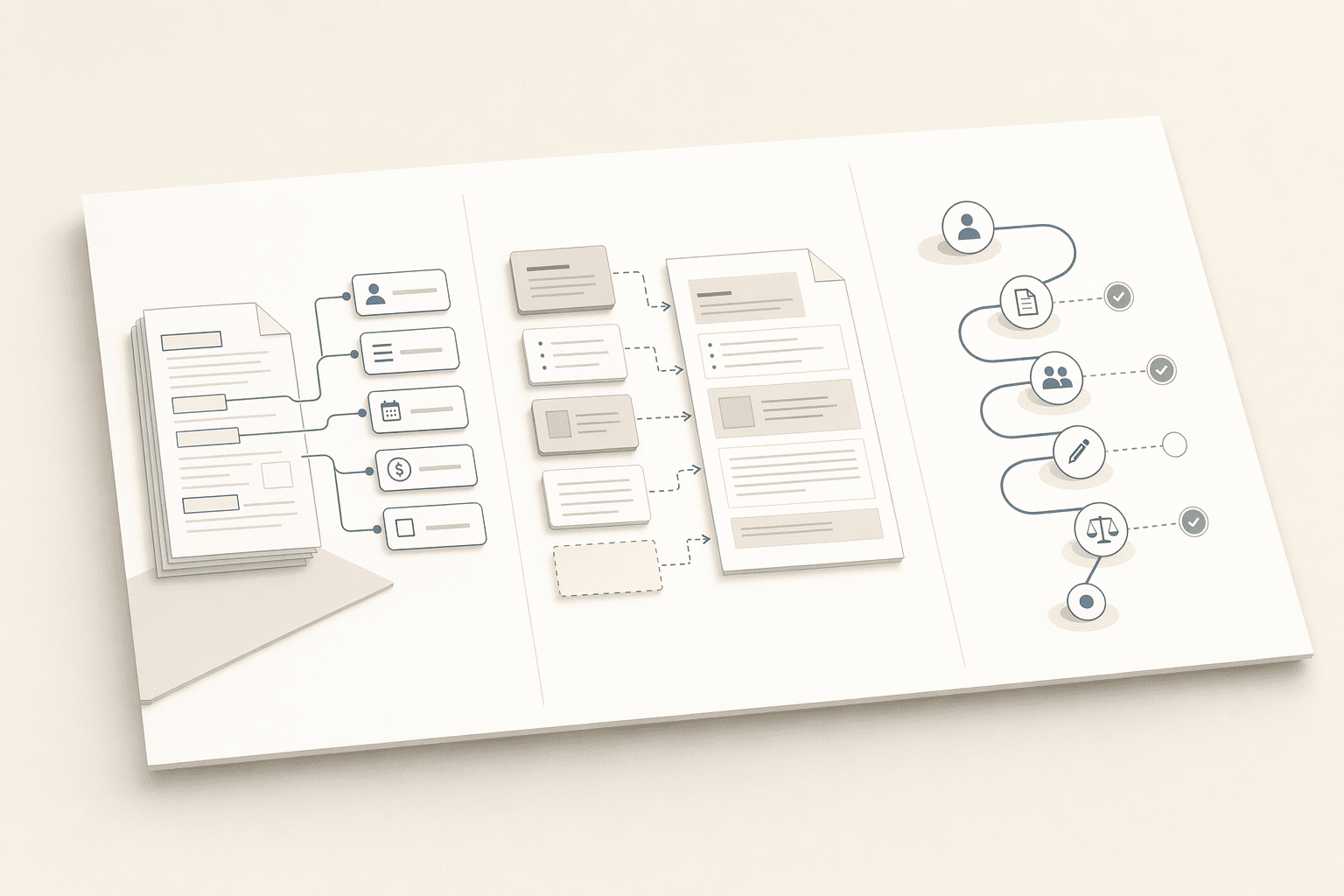
AI Document Analysis and Extraction Capabilities
Contracts.ai uses machine learning to analyze contract content and generate structured outputs, summaries, and risk insights, extracting key terms across legacy and live contracts in minutes. The platform does not support contract approval workflows, positioning it as an intelligence layer rather than a rip-and-replace CLM. Ironclad leads the enterprise segment with the deepest AI workflow automation, deploying specialized agents for drafting, extraction, obligation tracking, and risk redlining. Icertis targets organizations with dedicated procurement departments and six-figure budgets, offering enterprise-scale AI capabilities.
Template Automation and Self-Service Drafting
DocuSign CLM centralizes and automates contract creation from templates, routing agreements through multi-step approval workflows and capturing signatures via DocuSign eSignature. Conga CLM integrates template-driven drafting with Salesforce workflows. Contracts.ai focuses on post-signature intelligence rather than template automation, complementing rather than replacing drafting tools.
Obligation Tracking and Renewal Automation
Sirion’s agentic CLM platform specializes in obligation tracking and renewal workflows, rated highest by peers in the 50M, 1B USD revenue segment. Ironclad and DocuSign CLM both offer automated reminder systems for renewal dates and deliverable deadlines. Contracts.ai provides obligation visibility through AI extraction but relies on customers’ existing systems for workflow execution.
When audit failures and regulatory penalties overshadow labor costs, compliance-focused platforms shift emphasis from FTE reduction to risk elimination.
Platforms Focused on Compliance Risk Mitigation: IntelAgree, Ontra
When regulatory exposure threatens margin, platforms that embed SOC2, HIPAA, and GDPR compliance as architectural first principles cut audit costs by 30-50% and eliminate penalty risk. IntelAgree, Ontra, and Contracts.ai position audit logging, role-based access, and zero-training data governance as the primary cost-reduction levers, not AI speed alone.
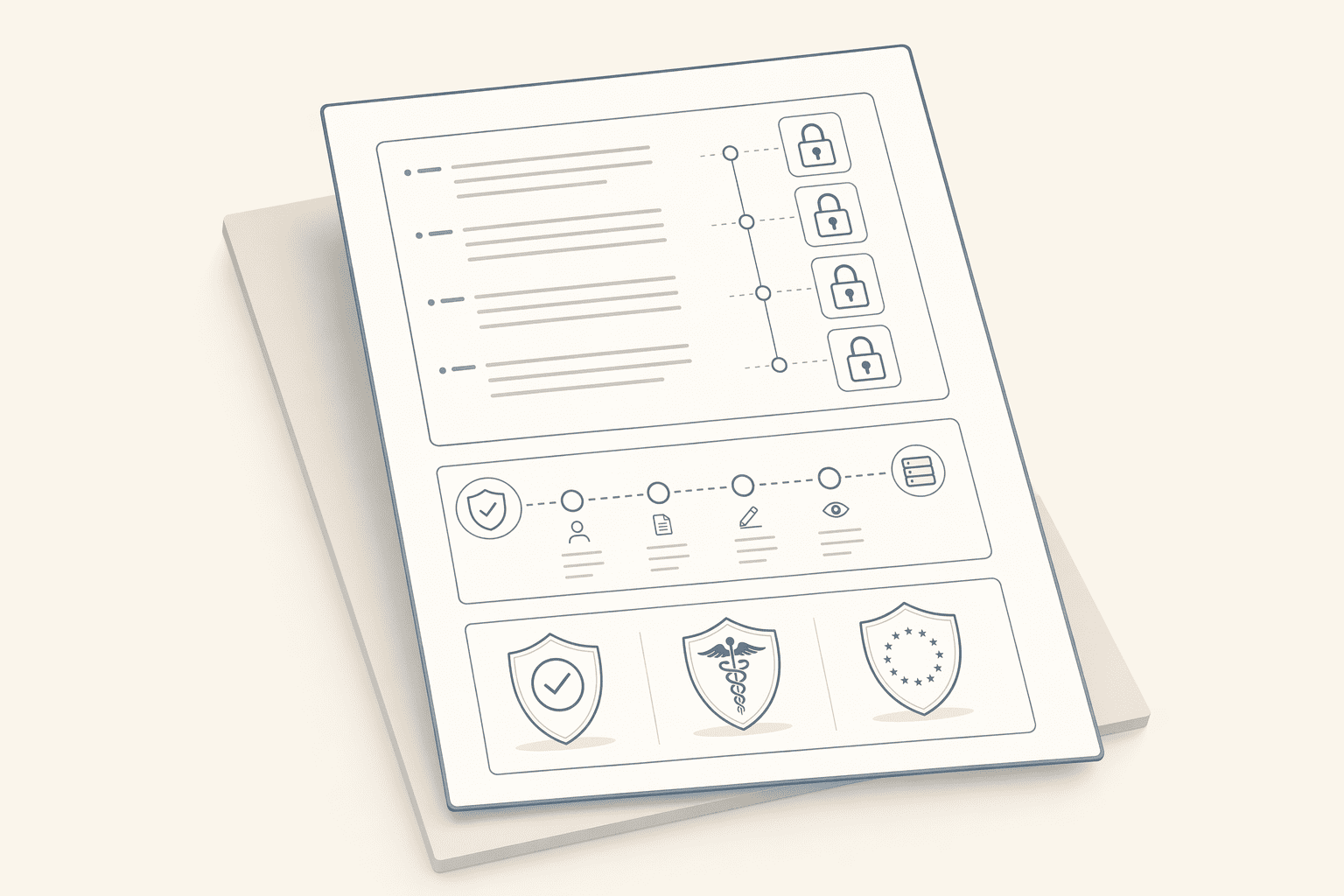
Audit Logging and Access Control Architecture
IntelAgree enforces role-based permissions at the clause level, maintaining tamper-proof audit trails that satisfy FINRA and SOX review requirements. Ontra’s access control model ties user permissions to matter-level workflows, logging every view, edit, and approval in immutable ledger format. Contracts.ai implements role-based access controls and continuous monitoring as part of its security-first architecture, ensuring every contract interaction is auditable at the clause and document level. Enterprise legal teams that rely on Contracts.ai for HIPAA-covered agreements benefit from documented access governance that meets both internal audit and external compliance review standards.
Data Governance and Model Training Policies
Data-handling practices define compliance risk exposure. IntelAgree acts as a data processor under GDPR, processing contract data on documented customer instructions. Ontra similarly positions itself as a processor, though its AI-assisted review features require customers to verify that extracted data does not train public models. Contracts.ai explicitly states that customer data is never used to train public or shared models, a zero-training policy that eliminates data leakage risk. Contracts.ai acts as a data processor on documented customer instructions, with customers retaining controller status and governance rights. This model contrasts with platforms that use contract data for model improvement, creating audit surface area when regulators question how proprietary terms inform generalized training.
SOC2, HIPAA, and GDPR Compliance Certifications
Compliance certifications reduce audit preparation costs by pre-packaging evidence. IntelAgree maintains SOC2 Type II certification and supports HIPAA BAA execution for healthcare clients. Ontra holds SOC2 Type II and GDPR compliance documentation, though HIPAA support requires custom engagement. Contracts.ai is SOC2 certified and SOC3 certified, executes Business Associate Agreements for HIPAA-covered entities, and supports GDPR data subject rights including access, rectification, and erasure. Enterprises that adopt SOC2-compliant platforms cut audit preparation costs by 30-50% and eliminate penalty exposure when regulators request access logs, encryption documentation, and data processing agreements.
Contracts.ai strengths: SOC2/SOC3 dual certification, no-model-training data policy, HIPAA BAA support, and GDPR processor role with documented customer instruction processing. Limitations: Does not support contract approval workflows, which may require pairing with external workflow tools for multi-step routing. Best for: Healthcare, financial services, and regulated enterprises that prioritize zero-training data governance and need HIPAA-ready contract intelligence without compliance trade-offs.
IntelAgree strengths: Clause-level role-based access, SOX-compliant audit trails, SOC2 Type II certification. Limitations: HIPAA BAA support may require custom configuration; model training policy not publicly disclosed. Best for: Financial services teams that need SOX-compliant audit logging and clause-level access governance.
Ontra strengths: Matter-level access controls, SOC2 Type II and GDPR compliance, immutable audit ledger. Limitations: HIPAA support requires custom engagement; AI-assisted review features demand customer verification that extracted data does not train public models. Best for: Legal operations teams managing M&A diligence that need GDPR-compliant data processing and matter-level audit trails.
Enterprise-grade AI CLM platforms that unlock intelligence from every contract also embed compliance as architectural foundation, audit logging, access control, and zero-training data policies are the cost-reduction mechanisms, not optional add-ons. Request a Demo to evaluate how Contracts.ai’s security-first architecture fits your regulatory requirements.
For organizations where prolonged contract cycles delay revenue recognition, platforms engineered for turnaround speed deliver immediate margin impact.
Platforms Built for Cycle-Time Compression: SpotDraft, fynk
When operational cost bleeding stems from prolonged contract cycles, platforms that compress turnaround through AI-powered review and low-friction integrations deliver immediate ROI. DocuSign CLM, Conga CLM, and Sirion anchor this category by automating approval routing, identifying risk clauses in real time, and preserving workflows through pre-built connectors.
AI-Powered Contract Review and Redlining
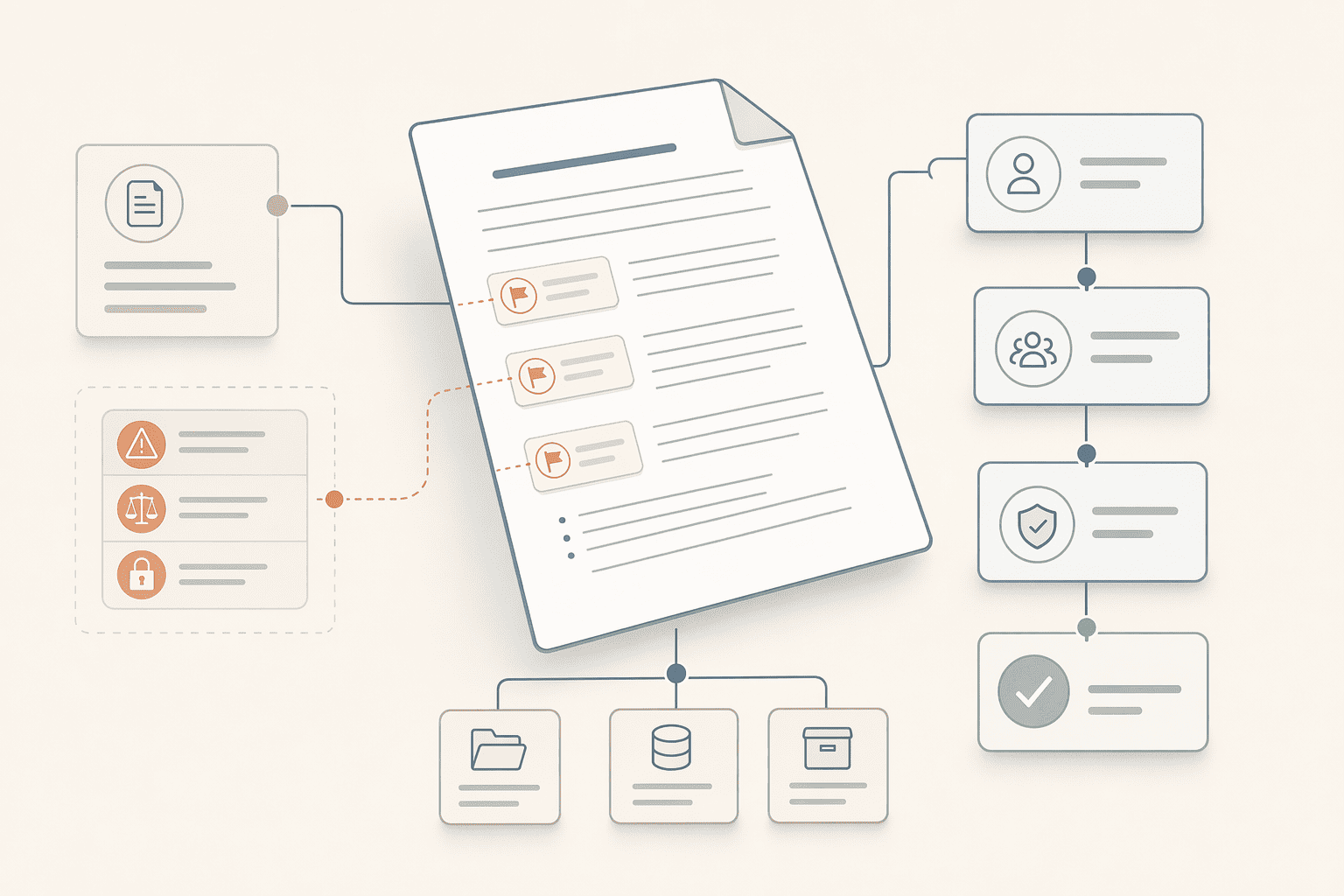
DocuSign CLM centralizes drafting, negotiation, approval, execution, and storage in one secure system, managing everything before and after the signature. Conga CLM similarly automates multi-step approval workflows while capturing metadata for searchable repositories. Sirion applies agentic AI to drafting, extraction, obligation tracking, and risk redlining, positioning itself as an AI-native platform with deep workflow automation. All three accelerate the review cycle by flagging risky language and suggesting edits, reducing manual legal bottlenecks.
Integration with CRM, ERP, and E-Signature Systems
API availability and pre-built integrations determine whether a platform extends or replaces existing workflows. DocuSign CLM offers native eSignature integration and broad ERP/CRM connectors. Conga CLM similarly provides pre-built integrations that reduce manual handoffs. Contracts.ai exemplifies the intelligence-layer model through its integrations suite, preserving workflows without requiring rip-and-replace implementations that extend timelines from 2-8 weeks to 6-12 months. For enterprises bleeding cash on prolonged contract cycles, integration depth directly impacts time-to-value.
Platform capabilities matter only after quantifying the baseline costs they will replace, without measurement, ROI claims remain vendor promises rather than business cases.
ROI Calculation Framework for Enterprise CLM Selection
Baseline Cost Quantification: FTE Labor, Compliance Incidents, Cycle-Time Delays
Before evaluating platforms, quantify three baseline inputs that define your current contract-management cost structure:
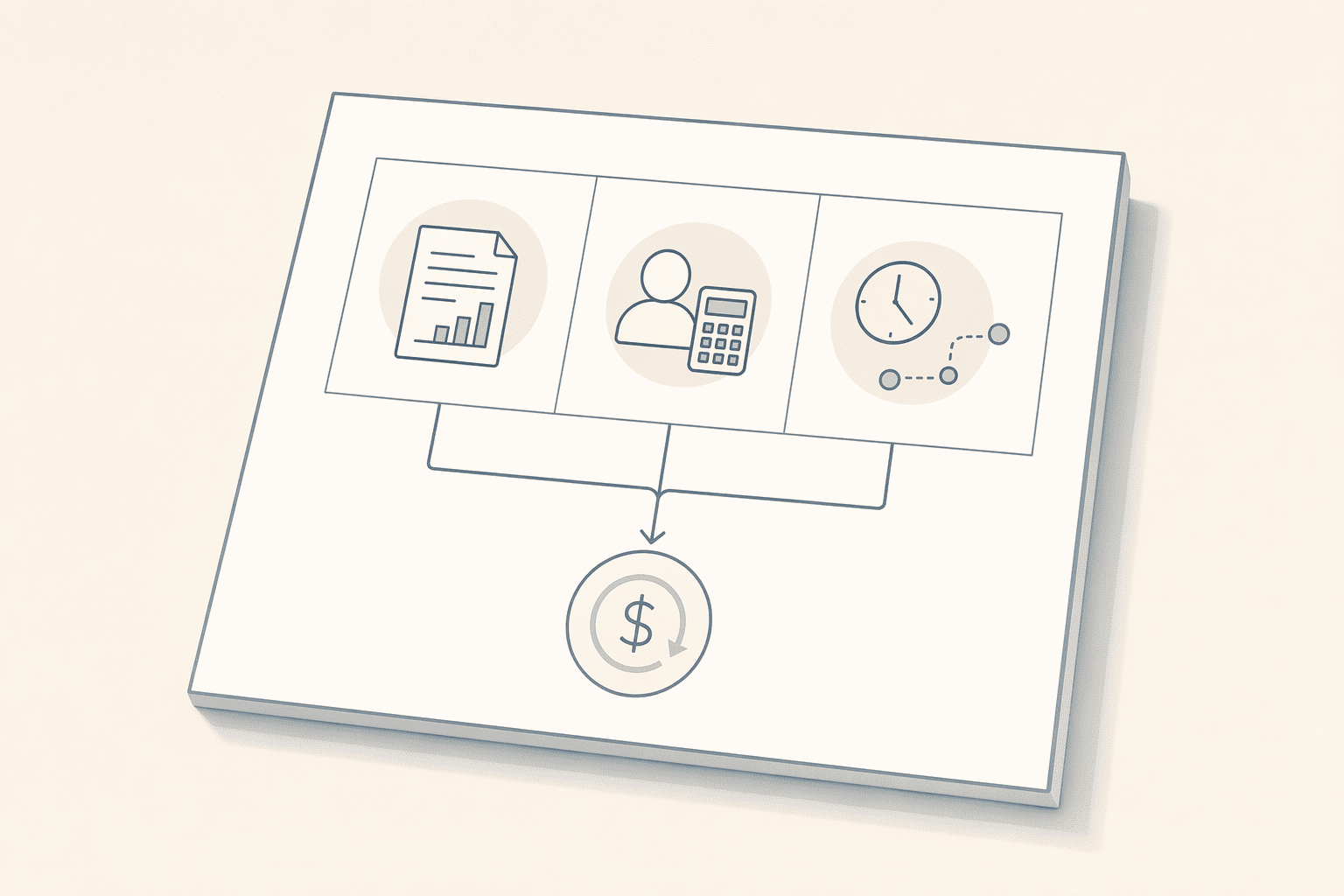
- FTE labor cost: Multiply the number of full-time equivalents dedicated to contract review, drafting, and renewal tracking by their fully loaded annual cost (salary + benefits + overhead). Industry benchmarks suggest 3-5 FTEs per 1,000 active contracts in mid-market and enterprise organizations.
- Compliance incident cost: Sum the annual expense of missed renewals (auto-renewed unfavorable terms, lapsed discounts), audit findings (regulatory penalties, remediation hours), and obligation breaches (late deliverables, missed SLA credits). Typical enterprises report 70-80% of missed renewals stem from manual tracking gaps.
- Cycle-time delay cost: Calculate the revenue or procurement value delayed when contract execution cycles exceed target timelines. For example, if a 30-day sales cycle stretches to 50 days due to manual legal review, the 20-day delay on a $500K annual contract represents ~$27K in deferred revenue recognition.
Platform-Specific Savings Calculation: Automation, Risk Mitigation, Cycle-Time Gains
Map each cost-reduction mechanism to dollar savings using your baseline inputs:
- Automation savings: If a platform’s AI extracts key terms and obligation dates automatically, estimate the FTE hours saved per contract (e.g., 2 hours per contract × 1,000 contracts = 2,000 hours annually). Multiply by the blended hourly FTE rate to quantify labor savings. Platforms reporting 40-60% review cycle reduction typically deliver mid-five-figure annual savings for 1,000-contract portfolios.
- Risk mitigation: Apply the platform’s demonstrated missed-renewal reduction rate (e.g., 70-80% fewer missed renewals) to your baseline compliance incident cost. Subtract implementation and subscription costs to net the risk-adjusted savings.
- Cycle-time gains: If the platform compresses contract execution from 50 days to 30 days, apply the 20-day reduction to your deferred revenue calculation. For sales-focused use cases, faster execution often translates to earlier revenue recognition and improved cash flow.
- Time-to-ROI adjustment: Platforms with intelligence-layer architectures, such as Contracts.ai, which deploys in 2-8 weeks versus traditional 6-12 month implementations, accelerate time-to-value. Factor the shorter implementation window into your payback period calculation to assess when cumulative savings exceed total cost of ownership.
Even platforms with proven ROI credentials fail when implementation models clash with organizational risk tolerance and operational continuity requirements.
Implementation Considerations: Pilot Scope, Data Migration, Integration Requirements
Pilot-First Rollout Strategy for Risk-Averse Enterprises
Organizations bleeding operational costs but unable to halt business during implementation should scope a low-risk pilot before full deployment. Select a single, high-volume contract type, vendor agreements, NDAs, or master service agreements, and limit the initial rollout to one department with quantifiable pain points. Define success metrics before launch: target 60 to 80% reduction in manual extraction time, 90%+ accuracy on key terms, and measurable cost avoidance within the first 90 days. Pilot duration should range from 30 to 60 days, long enough to validate ROI across renewal cycles but short enough to contain risk if the platform underperforms.
Data Migration Approaches: Intelligence Layer vs. Rip-and-Replace
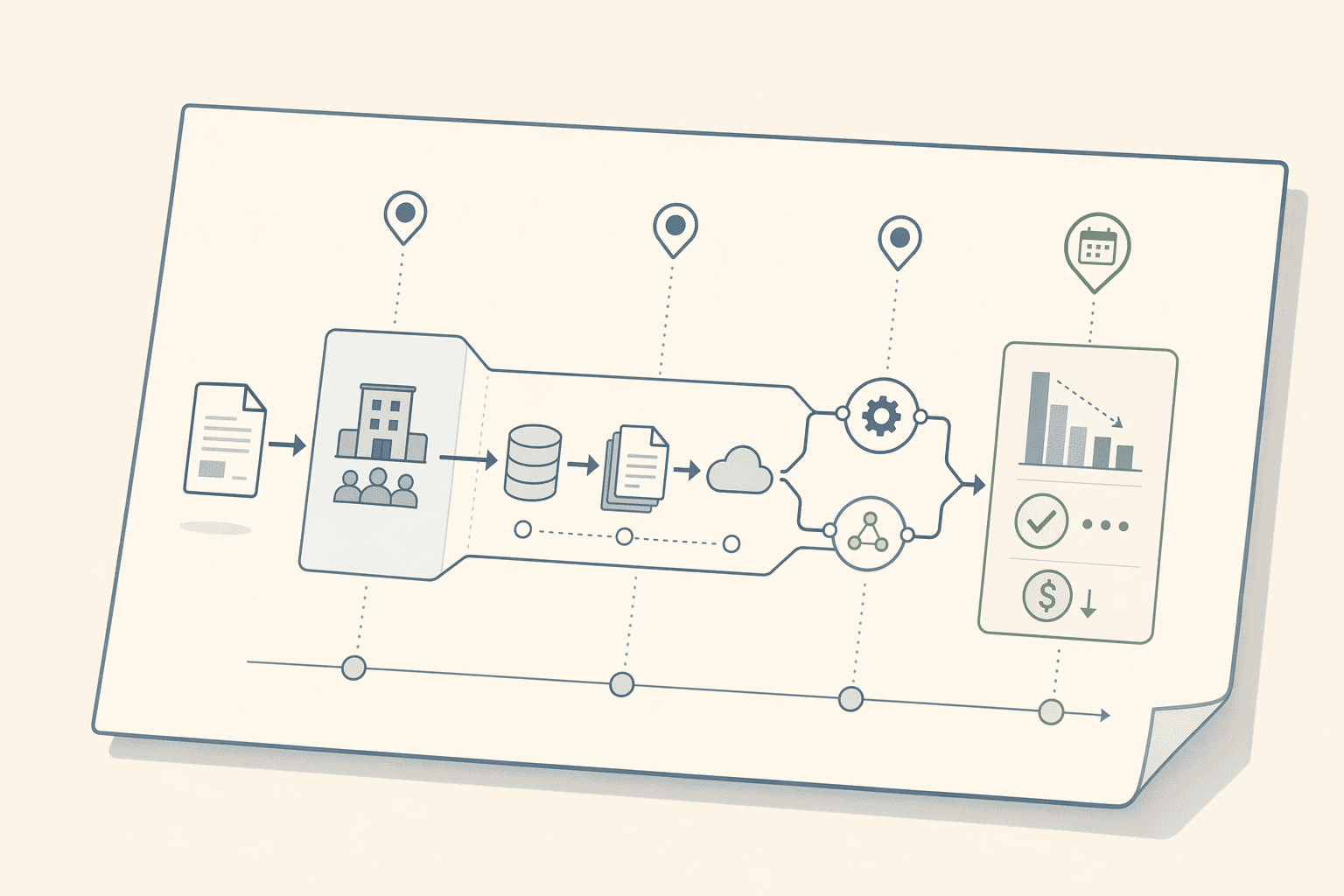
Two migration models dominate enterprise implementations: intelligence-layer overlays and full data replacement. Intelligence-layer platforms like Contracts.ai deploy in 2 to 8 weeks by indexing existing contract repositories, SharePoint libraries, network drives, legacy CLM systems, without moving or restructuring files. The platform extracts metadata, maps obligations, and surfaces risk insights while the source documents remain in place. Full rip-and-replace migrations require 6 to 12 months: contract data is exported, cleansed, normalized, and reloaded into a new system, often forcing workflow redesigns and user retraining. For enterprises unable to pause operations, the intelligence-layer model minimizes disruption and delivers faster time-to-value, making it the preferred approach when immediate cost containment is the priority.
Intelligence-layer platforms like Contracts.ai enable 2-8 week pilots without halting operations, while rip-and-replace systems deliver deeper workflow integration but require 6-12 months for full deployment, enterprises bleeding money should prioritize speed-to-ROI over feature completeness. Compliance-risk platforms (Contracts.ai, IntelAgree) reduce audit costs by 30-50% through SOC2/HIPAA controls and no-model-training data policies, while automation-ROI platforms (Ironclad, Icertis) maximize FTE labor savings through self-service drafting, map your cost-bleed profile to the right mechanism before comparing vendors.
AI-powered CLM adoption will shift from feature-differentiated vendor competition to mechanism-differentiated buyer selection, enterprises will increasingly demand quantifiable ROI evidence (baseline cost reduction, compliance incident prevention, cycle-time acceleration) over generic feature checklists, accelerating the maturation of CLM platforms into cost-center-optimization tools rather than legal-team productivity aids.
Quantify your baseline contract management costs (FTE labor, compliance incidents, cycle-time delays) this week using the ROI calculation framework from section 6, then evaluate Contracts.ai’s intelligence-layer model and no-model-training data policy as one pilot-first option for compliance-risk mitigation.
Frequently Asked Questions
How do AI-powered CLM platforms reduce contract management costs by 80%+?
AI-powered CLM platforms achieve 70-80%+ cost reduction through three mechanisms: automation ROI eliminates 3-5 FTEs per 1,000 contracts by replacing manual review labor; compliance risk mitigation cuts audit costs 30-50% by preventing regulatory failures; cycle-time compression accelerates revenue recognition by shortening deal cycles. Realizing 80%+ savings requires mapping platform strengths to the enterprise’s specific cost-bleed profile.
Which CLM platforms guarantee no customer data training for LLM models?
Contracts.ai maintains a no-model-training data policy, processing contract data without using it to improve AI models, critical for regulated industries under HIPAA and SOC2 compliance regimes. This reduces audit exposure and liability risks compared to platforms that may incorporate customer contract data into model training pipelines, creating potential data-handling compliance incidents.
What is the difference between intelligence-layer and rip-and-replace CLM deployment?
Intelligence-layer platforms like Contracts.ai deploy in 2-8 weeks by indexing existing contract repositories without full data migration, enabling enterprises to validate ROI before committing to workflow overhaul. Rip-and-replace systems require 6-12 months for complete deployment but deliver deeper ERP/CRM integration. Enterprises bleeding money but unable to halt operations should prioritize intelligence-layer pilots for speed-to-ROI.
How should enterprises with 500-5000 contracts/year prioritize automation ROI vs. Compliance risk mitigation?
Enterprises should diagnose their primary cost driver before selecting platforms: if manual review labor (3-5 FTEs) dominates, prioritize automation ROI platforms; if compliance incidents (audit failures, missed obligations) generate penalty costs, prioritize compliance risk mitigation platforms ; if sales-cycle delays cause revenue leakage, prioritize cycle-time compression platforms. Map the platform’s strength to your diagnosed cost-bleed profile.
What ROI inputs should I measure before evaluating CLM platforms?
Measure four baseline inputs: FTE cost (salary plus benefits for contract review team), annual contract volume, compliance incident frequency (missed renewals, audit findings), and current contract cycle time (days from draft to signature). Map these metrics to platform cost-reduction mechanisms, automation ROI for FTE reduction, compliance mitigation for incident prevention, cycle-time compression for revenue acceleration.
Do CLM platforms support approval workflows for contract routing?
Approval workflow support varies by platform architecture. Full-lifecycle platforms like Ironclad and Icertis include built-in multi-step approval routing. Intelligence-layer platforms like Contracts.ai focus on AI document analysis and obligation tracking without native approval workflows, requiring enterprises to maintain existing approval systems or integrate workflow tools. Match workflow requirements to your current infrastructure.
How long does a pilot-first CLM implementation take?
Intelligence-layer pilots (single contract type, single department) deploy in 2-8 weeks, enabling rapid ROI validation without halting operations. Rip-and-replace implementations require 6-12 months for full ERP/CRM integration and data migration. Enterprises bleeding money but needing quick proof-of-concept should scope pilot-first deployments to compress time-to-value and reduce implementation risk.
Sources
- Why A Clm Tool Is Crucial… – premikati.com
- Best Contract Life Cycle Management Reviews 2026 | Gartner Peer Insights – www.gartner.com (2026)
- Decrease Contract Management Costs with AI & Automation – www.intelagree.com
- Best CLM Software for Mid-Market Companies (2026) – Bind – bindlegal.com (2026)
- Best AI CLM Tools in 2026 – 5 Compared | Awesome Agents – awesomeagents.ai (2026)