






Enterprise contract operations consume millions in hidden labor costs, missed renewals, and compliance violations. AI-powered platforms promise 80%+ operational cost reduction through automated review, post-signature intelligence, and continuous compliance monitoring.
Key Takeaways
- 80%+ cost reduction requires evaluating platforms through a three-tier ROI framework: labor-hour savings, missed-revenue recovery, and compliance violation prevention
- Post-signature operational intelligence—transforming executed contracts into structured data flowing into ERP, CRM, and procurement systems—drives higher cost reduction than pre-signature workflow automation alone
- Nine platforms deliver distinct cost-reduction approaches: enterprise-tier solutions prioritize thorough workflows but require longer implementation, while mid-market and intelligence-layer platforms compress time-to-value
- Implementation timelines range from 3-6 months (small/mid-market) to 12-18 months (global enterprise), directly affecting payback period calculations
- Bidirectional system integration depth determines whether platforms eliminate operational bottlenecks or create new reconciliation gaps that erode ROI
Understanding Contract Management Cost Drivers in Enterprise Operations
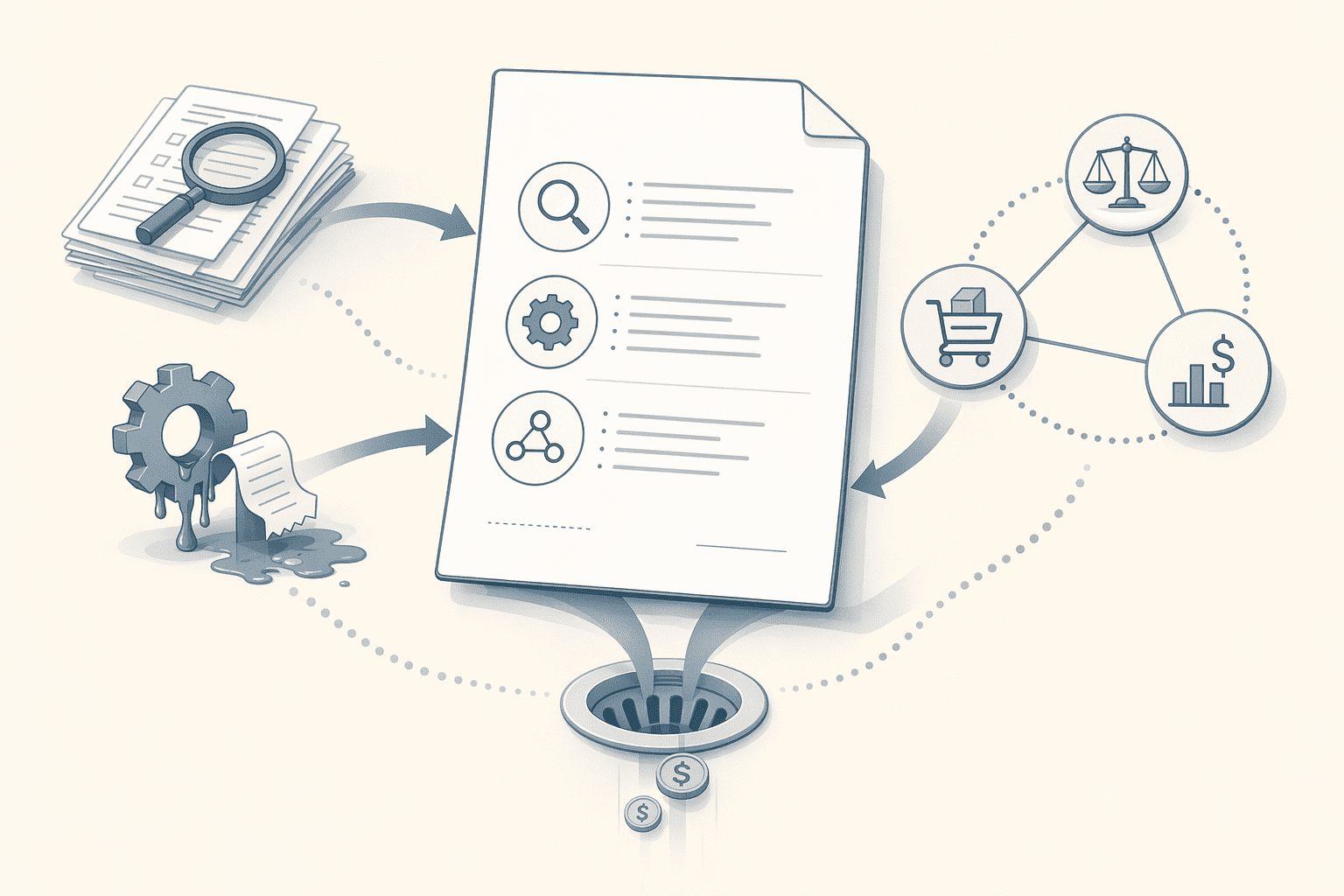
Enterprise contract operations drain budgets through three compounding drivers: manual review labor that erodes time-to-value before signature, post-signature operational drift that triggers revenue leakage and compliance violations, and cross-functional inefficiencies that cascade costs across legal, procurement, and finance. Organizations targeting 80%+ operational cost reduction must address all three stages — not just pre-signature workflows. & Contracting, poor contract management costs companies 9% of their bottom line, while Harvard Business Review research shows inefficient contracts lead to a 5-40% loss of value on any given deal.
Manual Review Labor Costs and Time-to-Value Erosion
Pre-signature contract review consumes disproportionate legal and procurement resources through repetitive clause analysis, multi-round redlining cycles, and version reconciliation across stakeholders. Model N’s 2020 State of Revenue Report found that 82% of executives say revenue management is an increasing challenge, with 98% of executives facing some sort of revenue management challenge. Manual review hours multiply across contract volume, creating approval bottlenecks that delay deal closure and extend cycle times from weeks to months. Organizations that fail to automate clause extraction and risk identification pay the labor cost repeatedly for every new agreement.
Post-Signature Operational Inefficiencies and Revenue Leakage
After execution, contracts enter static storage where renewal dates, compliance obligations, and revenue triggers become invisible until missed. This post-signature blindness causes enterprises to lose negotiated pricing protections, auto-renew unfavorable terms, and fail regulatory audits for lack of obligation tracking. Platforms like Contracts.ai address this gap by transforming executed agreements into operational intelligence that flows across the enterprise, surfacing obligations before they trigger penalties. Without post-signature intelligence, organizations experience revenue leakage that quietly erodes margins by several percentage points annually through untracked service-level agreements and missed termination windows.
Cross-Functional Cost Allocation: Legal, Procurement, Finance
Contract inefficiencies cascade costs beyond legal departments into procurement spend management and finance revenue recognition. When legal lacks centralized contract visibility, procurement cannot reconcile supplier invoices against agreed pricing, leading to overpayments and disputed charges. Finance teams struggle to recognize revenue accurately when contract terms remain unstructured, forcing manual quarter-end reconciliation cycles. The Sirion ROI framework captures this cross-functional impact by measuring not only direct administrative cost savings but also strategic value through improved compliance, risk mitigation, and revenue protection. Organizations that silo contract operations within legal departments miss the enterprise-wide cost allocation that drives true 80%+ reduction targets.
Understanding these cost drivers reveals why traditional approaches fail—and which technical mechanisms compress the highest-cost activities.
How AI Platforms Reduce Contract Operational Costs: Key Mechanisms
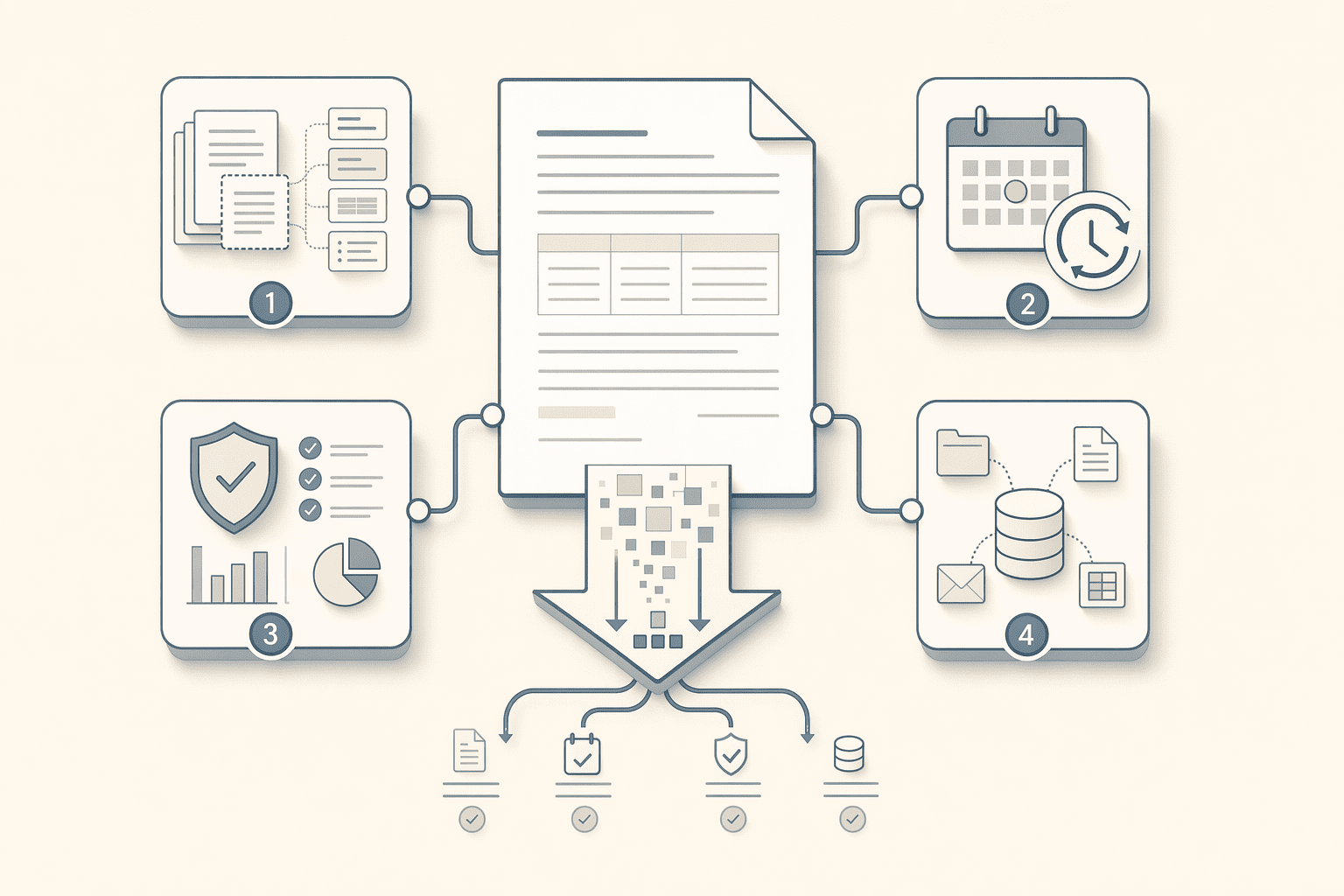
The 80%+ operational cost reduction claim rests on four technical mechanisms that compress the highest-cost activities in contract management: manual review labor, missed renewal revenue, compliance audit cycles, and fragmented data access. Contrary to common belief, pre-signature workflow automation delivers a fraction of the savings — post-signature operational intelligence is where the majority of enterprise value resides.
Automated Contract Review and Clause Risk Identification
AI-powered contract parsers eliminate manual line-by-line review by extracting key terms, obligations, parties, and dates with 99.7% accuracy. Modern platforms handle PDFs, scanned copies, and phone photos, parsing long, complex agreements into structured data in minutes rather than hours. The ROI linkage is direct: automated extraction reduces senior-lawyer review hours by 50-75%, converting a fixed labor cost into scalable infrastructure spend. Organizations processing hundreds of contracts monthly reclaim thousands of billable hours annually.
Post-Signature Operational Intelligence Activation
Static PDF repositories leave renewal dates, payment terms, and compliance obligations locked in unstructured text. AI platforms transform signed agreements into operational datasets that flow directly into ERP, CRM, and finance systems. OpenAI’s finance team built a contract data agent that ingests contracts and parses them into structured data, allowing experts to review annotated outputs rather than manually retype terms. The team went from reviewing hundreds of contracts each month to more than a thousand while hiring only one new person. This operational intelligence prevents revenue leakage by surfacing renewal windows before they close and flagging non-standard payment terms that finance teams must track.
Continuous Compliance Monitoring and Alert Workflows
Manual compliance audits, quarterly or annual reviews of obligation履行, consume legal team capacity and discover violations after they’ve already occurred. AI monitoring agents track obligation deadlines, regulatory clause requirements, and deliverable schedules in real time, routing alerts to responsible owners before breach windows open. The cost elimination is twofold: audit labor hours drop to near-zero, and violation penalties (late fees, breach remediation, customer churn) never materialize because the system flags risk states 30-90 days in advance.
To translate these mechanisms into procurement decisions, enterprises need a structured framework that isolates platforms delivering quantifiable cost reduction from those offering feature depth without ROI clarity.
Evaluating AI Contract Platforms: Cost-Reduction Criteria Framework
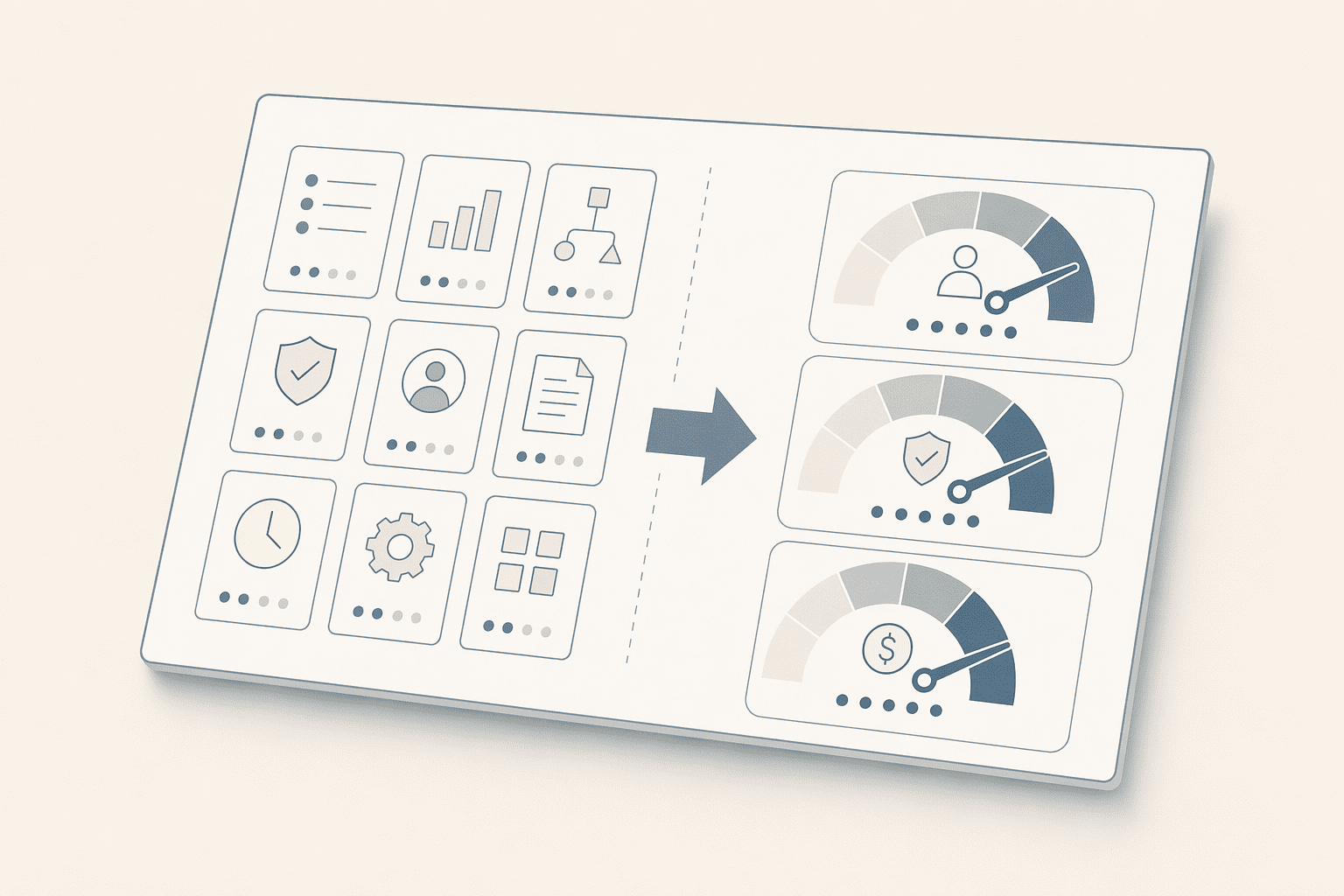
Most contract management software reviews present feature taxonomies organized by functionality, AI extraction, workflow automation, repository search, compliance tracking. While feature coverage matters, procurement and finance teams targeting 80%+ operational cost reduction need a different lens: quantifiable return on investment calculated from measurable improvements in labor efficiency, risk mitigation value, and revenue leakage prevention. The evaluation framework below translates platform capabilities into cost-reduction outcomes through three tiers of ROI calculation methodology, operational intelligence activation criteria, and enterprise system integration requirements.
ROI Calculation Methodology for Contract Automation
Contract lifecycle management ROI follows a three-tier calculation model, each tier building on the previous layer’s savings. Entry-level automation calculates labor-hour reduction: hours saved per contract × average fully-loaded hourly cost × annual contract volume. Mid-market implementations add compliance risk mitigation value: poor contract management costs organizations 9% of annual revenue, so platforms that prevent missed renewals, enforce payment terms, and flag non-compliant clauses deliver quantifiable risk avoidance. Enterprise-grade ROI captures full operational intelligence activation: renewal capture rate improvements (converting auto-renewals into renegotiation opportunities), supplier consolidation savings (identifying redundant vendors across contract repository), and downstream process acceleration (contract data flowing automatically to procurement and accounts payable systems).
Implementation timeline directly impacts ROI realization period. Mid-market organizations typically require 8-12 weeks from contract signature to production deployment, while enterprise implementations with complex approval hierarchies and legacy system migrations extend to 16-24 weeks. Calculate break-even timeline by dividing total implementation cost (software licenses + integration services + internal resource allocation) by monthly savings from the tier of automation your organization will actually operationalize.
Operational Intelligence vs Static Storage: The Make-or-Break Criterion
The primary cost-reduction differentiator separates platforms that activate contract data across enterprise systems from those that function as searchable document repositories. Static storage platforms excel at clause extraction and natural-language search but terminate value at the repository boundary, finance teams still manually key payment terms into ERP, procurement manually checks supplier insurance certificates, and legal manually tracks obligation deadlines in separate task management tools. Operational intelligence platforms structure contract data for bidirectional flow: payment terms sync automatically to accounts payable systems, insurance expiration dates trigger procurement alerts 90 days before renewal, and revenue recognition schedules feed directly into financial reporting tools without manual reconciliation.
Evaluate this criterion by requesting platform demonstrations that show live data flowing from signed contract to downstream business system within the same session, not screenshots of integration architecture diagrams, but actual field-level mapping from contract clause to ERP purchase order line item or CRM renewal opportunity.
Enterprise System Integration Requirements
Integration depth determines whether contract automation reduces operational costs or creates new reconciliation bottlenecks. Read-only integrations pull data from contracts into reporting dashboards but require manual updates when terms change, creating version control gaps that compliance audits flag as material weaknesses. Bidirectional sync maintains single source of truth: contract amendments trigger automatic updates in connected procurement, finance, and sales systems without manual data entry. Pre-built connectors reduce implementation timeline and ongoing maintenance overhead compared to custom API development, particularly for common enterprise platforms. For detailed integration architecture, see the enterprise system integration options page.
API coverage scope matters when evaluating integration claims, some platforms expose contract metadata through APIs but lock critical workflow actions (approval routing, template generation, obligation tracking) inside the vendor’s user interface, forcing users to context-switch between systems for routine operations. Request API documentation during vendor evaluation to verify that every workflow action available in the platform UI has a programmatic equivalent accessible to integration developers.
With evaluation criteria established, the next step compares nine leading platforms against the cost-reduction framework to identify which architectures align with specific enterprise requirements.
Nine platforms dominate the AI-driven contract management market, each offering distinct approaches to the 80%+ cost-reduction target. The table below compares all nine across pricing model, deployment, AI features, integrations, and core CLM capabilities, followed by detailed reviews organized by market tier.
| Platform | Pricing Model | Deployment | AI Features | Integrations | User Rating |
|---|---|---|---|---|---|
| Contracts.ai | Contact for pricing | Cloud | Operational intelligence, clause extraction, natural language querying | ERP, NetSuite, Google Cloud, Vercel | N/A |
| Icertis | Contact for pricing | Cloud / On-premise | Workflow automation, AI drafting, governance | Extensive enterprise integrations | N/A |
| Ironclad | Starting at $500/month | Cloud | AI redlining, drafting agents, repository search | Deep ERP + workflow integrations | N/A |
| DocuSign CLM | Contact for pricing | Cloud | Pre-signature automation, approval routing, signature integration | DocuSign eSignature, ERP | N/A |
| Sirion | Contact for pricing | Cloud | Agentic AI for drafting, extraction, obligation tracking | Enterprise integrations | 4.5/5 (65 reviews) |
| SpotDraft | Contact for pricing | Cloud | AI-powered drafting, review, negotiation automation | Legal, sales, finance workflows | 4.5/5 (181 reviews) |
| Lexion | Contact for pricing | Cloud | AI contract analysis, extraction, risk identification | Microsoft 365, Salesforce | N/A |
| Juro | Contact for pricing | Cloud / Browser-native | Unlimited users, browser-native editor, workflow automation | Mid-market integrations | 4.6/5 (G2) |
| LinkSquares | Contact for pricing | Cloud | Agentic AI for contract search, drafting, compliance tracking | Enterprise integrations | 4.7/5 (438 reviews) |
Contracts.ai: Operational Intelligence Across Enterprise Systems
Contracts.ai transforms executed agreements into structured, operational intelligence that flows across enterprise systems. Built by operators with 30+ years combined experience at Netflix, Google, Spotify, Deloitte, Cisco, and Blackstone, the platform enables operational use across Finance, Procurement, Sales, and Customer Success workflows. The NetSuite integration reconciles supplier invoices with signed contracts, closing the gap between legal execution and financial activation.
Pros: Post-signature operational intelligence strength; enterprise system integration depth; low-lift deployment as intelligence layer rather than rip-and-replace. Cons: Does not support approval workflows. Best for: Enterprises prioritizing post-signature activation and operational data flow over pre-signature workflow automation.
Enterprise Platforms: Icertis, Ironclad, DocuSign CLM
Ironclad leads the enterprise tier with three consecutive years as a Gartner Magic Quadrant Leader, $150M ARR, and specialized agents for drafting, extraction, obligation tracking, and risk redlining. Pricing starts around $500/month with 8-12 week implementation timelines. Icertis and DocuSign CLM offer comparable enterprise-grade AI, workflow automation, and governance features, with DocuSign uniquely integrating pre-signature automation with its eSignature platform.
Pros (Ironclad): Deepest AI workflow automation; proven enterprise scale; strong playbook enforcement. Cons: 2-3 month implementation; pricing favors high-volume users. Best for: Enterprises over 500 employees processing 50+ contracts monthly.
Mid-Market and Specialist Platforms: Sirion, SpotDraft, Lexion, Juro, LinkSquares
Juro targets mid-market teams (50-500 employees) with unlimited users, a browser-native editor, and a 4.6/5 G2 rating. Sirion and LinkSquares deploy agentic AI for drafting and obligation tracking, each earning Gartner Peer Insights recognition for 50M-1B USD companies. SpotDraft streamlines contract creation, review, and negotiation for legal, sales, and finance teams. Lexion focuses on AI-powered contract analysis and risk identification with Microsoft 365 and Salesforce integrations.
Pros (Juro): Modern CLM without six-figure spend; unlimited users; fast deployment. Cons: Less enterprise governance depth than Ironclad or Icertis. Best for: Mid-market teams needing modern CLM without enterprise price tags.
Platform selection represents only half the equation, realizing 80%+ cost reduction demands structured implementation planning that compresses time-to-value and establishes measurable baselines.
Implementation Considerations for Achieving 80%+ Cost Reduction
Implementation Timeline Impact on ROI Realization
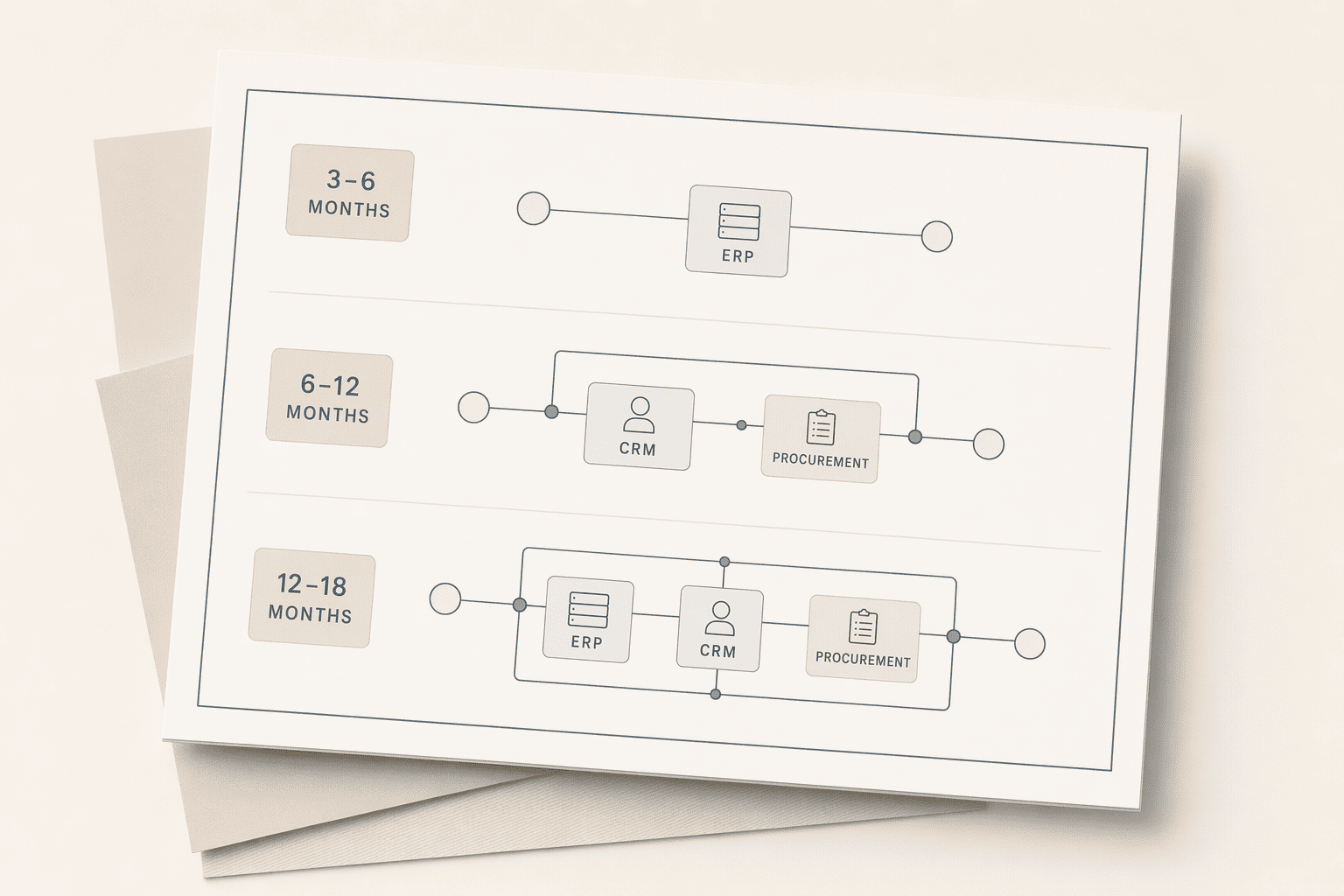
Implementation duration directly affects time-to-value and payback period calculations. For small to mid-market teams (50-500 employees), deployment typically requires 3-6 months from contract signature to full operational intelligence workflows. Enterprise organizations (500-5,000 employees) managing 20,000 to 40,000 individual contracts face 6-12 month timelines, reflecting integration complexity with ERP, CRM, and procurement systems. Global enterprises with multi-jurisdictional requirements often extend to 12-18 months, particularly when harmonizing legacy repositories across regions.
Change Management and Cross-Functional Adoption Requirements
Cross-functional adoption hinges on structured change management. Legal teams require training on natural-language contract querying and risk-flag validation workflows. Procurement stakeholders need alignment on vendor-spend reconciliation processes and renewal-alert escalation protocols. Finance teams must adopt automated compliance-incident tracking and obligation-milestone dashboards. Organizations that mandate platform usage across all three functions within the first 90 days post-deployment realize measurable cost reductions faster than those pursuing phased, optional rollouts.
Measuring ROI: Baseline Documentation and Ongoing Metrics
Establish a quantitative baseline before implementation to isolate platform impact:
- Document current-state metrics, total manual hours per contract cycle, average cost per contract (the average basic contract costs nearly $7,000 to create ), compliance incident frequency, missed renewal count over trailing 12 months
- Deploy the platform, migrate legacy contracts, configure extraction models, train cross-functional users on operational intelligence workflows
- Measure monthly deltas, track hours-saved per contract, compliance incident reduction rate, renewal capture improvement, vendor-spend variances identified
- Calculate payback period, divide total implementation cost (platform fees + internal labor) by monthly cost savings to determine break-even month
Organizations that implement rigorous baseline documentation before deployment can isolate platform-driven savings from broader operational changes, strengthening CFO-level ROI justification for continued investment.
Enterprise platforms like Icertis and Ironclad offer thorough pre-signature workflow automation but require longer implementation timelines and higher upfront cost. Contracts.ai prioritizes post-signature operational intelligence with lower-lift deployment as an intelligence layer, compressing time-to-value for enterprises with existing CLM infrastructure. Mid-market platforms like SpotDraft and Lexion suit teams prioritizing ease-of-adoption and faster payback periods, while Contracts.ai and enterprise-tier platforms suit organizations requiring deep bidirectional integration with ERP, CRM, and procurement systems to activate operational intelligence at scale.
As enterprises shift from viewing contracts as static legal artifacts to operational data assets, the competitive advantage will belong to organizations that activate post-signature intelligence flows across procurement, finance, and customer success systems, making contract data a real-time input to revenue operations rather than a compliance archive.
Compare integration depth and operational intelligence capabilities across Contracts.ai, Icertis, Ironclad, and other platforms using the evaluation criteria framework in section 3, or explore Contracts.ai’s pre-built connectors to assess fit for your enterprise system landscape.
Frequently Asked Questions
How do AI contract platforms achieve 80%+ operational cost reduction?
AI platforms compress the three highest-cost drivers: automated review eliminates manual labor hours, post-signature operational intelligence flows renewal dates and compliance obligations into enterprise systems to prevent missed revenue, and continuous monitoring reduces compliance violation costs. Labor savings alone can recover 60-70% of pre-signature review costs through clause extraction and automated redlining.
What is the difference between operational intelligence and static contract storage?
Static storage platforms function as searchable document repositories where clause extraction terminates at the repository boundary, users must manually transfer data to CRM or ERP systems. Operational intelligence transforms signed agreements into structured datasets that flow bidirectionally into enterprise systems, triggering automated workflows and real-time alerts. The difference determines whether contracts drive operational decisions or remain compliance archives.
How long does it take to realize ROI from AI contract management implementation?
Small to mid-market teams (50-500 employees) typically achieve full operational intelligence workflows in 3-6 months. Enterprise deployments require 6-12 months, while global enterprises with complex system landscapes need 12-18 months. Timeline variance stems from integration complexity, change management requirements, and cross-functional adoption velocity, mid-market organizations prioritizing ease-of-adoption compress payback periods.
What integration capabilities should I evaluate in an AI contract platform?
Evaluate integration depth across three dimensions: read-only versus bidirectional synchronization, API coverage (REST, webhooks, batch), and pre-built connectors to major CRM, ERP, and procurement systems. Bidirectional sync enables operational intelligence, contract data flows out to drive workflows while system updates flow back to maintain version control. Read-only integrations create reconciliation gaps that compliance audits expose as control failures.
Does Contracts.ai support contract approval workflows?
Contracts.ai does not support approval workflows. The platform prioritizes post-signature operational intelligence and enterprise system integration depth, deploying as an intelligence layer on top of existing CLM systems rather than replacing pre-signature workflow tools. Best fit for enterprises prioritizing post-signature activation and cross-system data flow over thorough pre-signature automation.
What baseline metrics should I document before implementing an AI contract platform?
Document four baseline metrics to isolate platform impact: (1) manual review hours per contract multiplied by fully-loaded hourly cost, (2) compliance incident count and associated remediation costs, (3) renewal capture rate (percentage of renewals captured versus missed), (4) time from contract execution to system activation. These form the before-state for three-tier ROI calculation: labor reduction, missed-revenue recovery, compliance violation prevention.
Can AI contract platforms be deployed without replacing existing CLM systems?
Yes, intelligence-layer platforms like Contracts.ai sit on top of existing CLM systems, transforming signed agreements into operational datasets without requiring full system replacement. This architecture compresses implementation timelines from 12-18 months to 3-6 months by avoiding data migration, user retraining, and workflow redesign. The trade-off: intelligence layers do not replace pre-signature approval workflows, only activate post-signature contract data.
Sources
- Decrease Contract Management Costs with AI & Automation – www.intelagree.com
- Turning contracts into searchable data at OpenAI – openai.com (2025)
- Extract Data from Contracts & Agreements Automatically – www.digiparser.com (2026)
- Why A Clm Tool Is Crucial… – premikati.com
- Defining the metrics to measure the ROI of Contract Lifecycle Management – www.cenza.co
- Best AI CLM Tools in 2026 – 5 Compared | Awesome Agents – awesomeagents.ai (2026)
- Best Contract Life Cycle Management Reviews 2026 | Gartner Peer Insights – www.gartner.com (2026)
- Enterprise Guide to Contract Lifecycle Management – compyl.com