






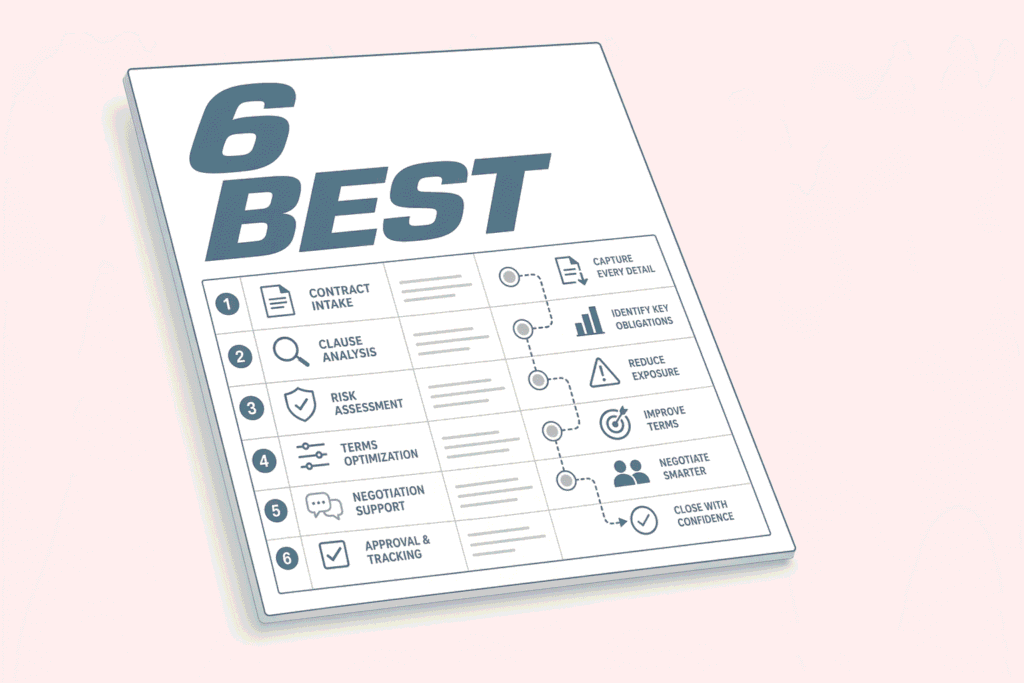
Enterprise contract management in 2026 hinges on three decision vectors: AI intelligence depth, cost reduction mechanisms, and implementation complexity. The leading platforms span intelligence-layer overlays and full-suite migrations.
Key Takeaways
- AI contract intelligence evolved from keyword search to decision-ready extraction—clause identification, obligation tracking, and risk scoring drive measurable ROI.
- Cost reduction flows through three levers: manual review elimination (time savings), cycle time compression (revenue acceleration), and leakage prevention (compliance failures avoided).
- Intelligence-layer overlays deploy in 2-8 weeks atop existing storage; full-suite rip-and-replace systems require 6-12 month migrations with deeper workflow automation.
- Mid-market enterprises prioritize pilot-friendly platforms with fast ROI; Fortune 500 organizations need multi-jurisdictional compliance and ERP/CRM integration depth.
- Implementation model—overlay vs. Migration—determines time-to-first-savings, data sovereignty complexity, and total cost of ownership.
Why Enterprise Contract Management Needs AI-Powered Intelligence in 2026
The best contract lifecycle management software for enterprise AI-powered intelligence and cost reduction in 2026 spans eight platforms — Contracts.ai, Icertis, Ironclad, Sirion, LinkSquares, Agiloft, DocuSign CLM, and Juro — each evaluated across three decision vectors: AI extraction accuracy, post-signature obligation management depth, and total cost of ownership including implementation overhead. Choosing the right platform requires aligning your contract volume, existing ERP infrastructure, and team workflow preferences with each vendor’s core strengths.

The Shift from Manual Review to AI-Driven Contract Intelligence
Legacy CLM platforms relied on keyword search and manual data entry: legal teams read contracts line by line, retyped terms into spreadsheets, and moved on. This manual approach broke when contract volume doubled and doubled again — teams went from reviewing hundreds of contracts each month to more than a thousand, with minimal headcount growth. AI-powered platforms now automate clause identification, risk scoring, and obligation extraction. Contracts.ai, for example, claims more than 99% accuracy when extracting data from documents in real time, transforming unstructured PDFs and scanned copies into structured, queryable datasets overnight rather than over weeks of manual review.
Where Traditional CLM Falls Short on Cost Reduction
Traditional contract management creates three cost-leakage points that AI addresses directly. First, cycle time bloat: manual contract review can consume 3+ hours per agreement, delaying deal closures and revenue recognition. Second, missed renewal deadlines: without automated obligation tracking, enterprises lose negotiation use or auto-renew on unfavorable terms. Third, untracked obligations: modern CLM platforms deliver value beyond contract storage by surfacing compliance requirements, performance milestones, and payment terms buried in legacy PDFs, obligations that manual systems simply cannot monitor at scale.
The Business Case for AI-Powered CLM in 2026
Mid-market and Fortune 500 enterprises are prioritizing AI CLM now because the ROI case has shifted from theoretical to proven. Vendor total economic impact studies document 300%+ ROI and 80%+ operational cost reduction when contract intelligence replaces manual extraction workflows. These gains come from three mechanisms: eliminating manual review cycles (cycle time compression), preventing revenue leakage through automated renewal tracking (obligation visibility), and reallocating legal resources from data entry to strategic negotiation (expertise use). The knowledge gap competitor content leaves unfilled, and Section 2 of this article addresses, is *how* to measure these outcomes during vendor evaluation, not just which features each platform lists on its website.
Understanding why AI matters sets the stage for evaluation. The next section details the three-tier capability framework and cost-lever methodology used to compare platforms.
How We Evaluated CLM Platforms: Cost Reduction + AI Capability Framework
Platform Selection Criteria: Why These 8 Platforms
The 8 platforms in this comparison span the full spectrum of enterprise CLM deployment models. We included Gartner-recognized leaders and challengers from the contract lifecycle management market, full-suite rip-and-replace systems (Icertis, Ironclad), intelligence-layer overlays that deploy without repository migration (Contracts.ai), and AI-native entrants built for mid-market teams prioritizing speed over feature depth (Juro). This range reflects the reality procurement and legal teams face: no single architecture fits every organization’s contract volume, existing system debt, or risk tolerance.
AI Intelligence Depth: From Basic OCR to Decision-Ready Extraction
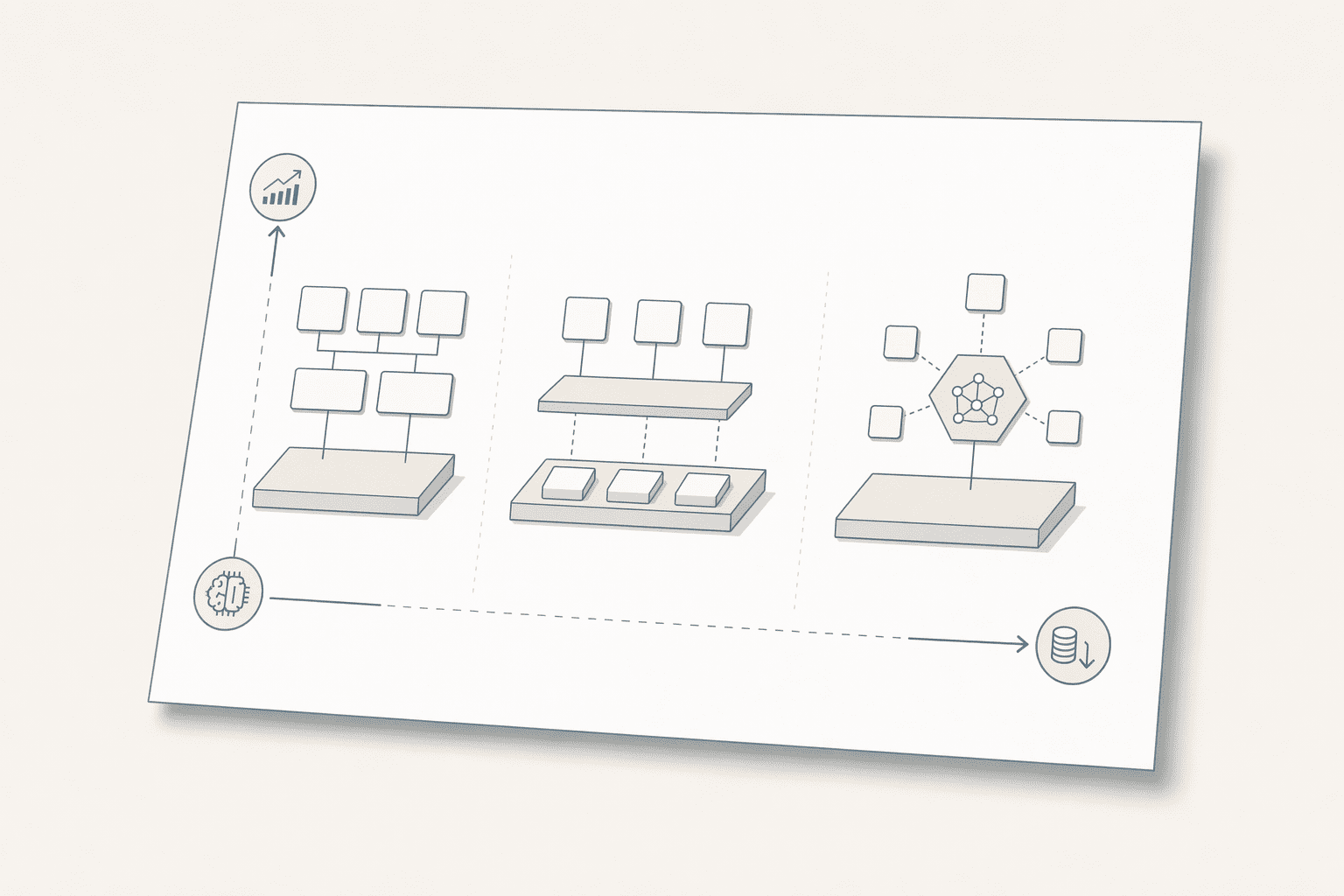
We classify AI capabilities across three tiers. Basic OCR + keyword search (legacy systems) digitizes text but requires manual review for every clause. Mid-tier platforms add clause extraction and entity recognition, tools like DigiParser report ~99% accuracy extracting parties, dates, and payment terms from PDFs. Advanced decision-ready intelligence (Contracts.ai, Sirion, Ironclad) layers risk scoring, obligation tracking, and natural-language querying on top of extraction. The tier determines cost impact: Amicore’s platform overview notes that modern CLM platforms have evolved from document repositories to AI-powered workflow engines, but the depth of that AI determines whether you eliminate manual review or simply digitize it.
Cost Reduction Mechanisms: Measurable Impact Beyond Feature Lists
We map three cost levers: (1) manual review elimination (time savings, hours per contract), (2) cycle time compression (revenue acceleration, days shaved off approval workflows), and (3) leakage prevention (missed renewals, unenforced discounts, compliance failures). Competitors list 300% ROI figures but omit the calculation methodology. Our framework requires vendors to disclose the unit economics: how many contracts reviewed per month, average review time before vs. After, and dollar value of prevented leakage. Mid-market adoption drivers show that poor contract management can leak 12 to 15 percent of annual revenue, making leakage prevention the highest-value lever for most organizations.
Implementation Model: Pilot-Friendly vs. Full Migration
We classify platforms by deployment architecture: intelligence-layer overlays (2 to 8 week pilots, no repository migration required, data stays in SharePoint/Salesforce) versus rip-and-replace systems (6 to 12 month full migrations, all contracts moved to vendor repository, data sovereignty implications). This distinction matters for cost and risk: overlays let teams test ROI on a 500-contract subset before committing budget; full migrations require enterprise buy-in before you can measure impact.
With evaluation criteria established, the following comparison table maps eight platforms across AI intelligence, implementation model, integration depth, and cost drivers.
8 Leading Enterprise CLM Platforms Compared
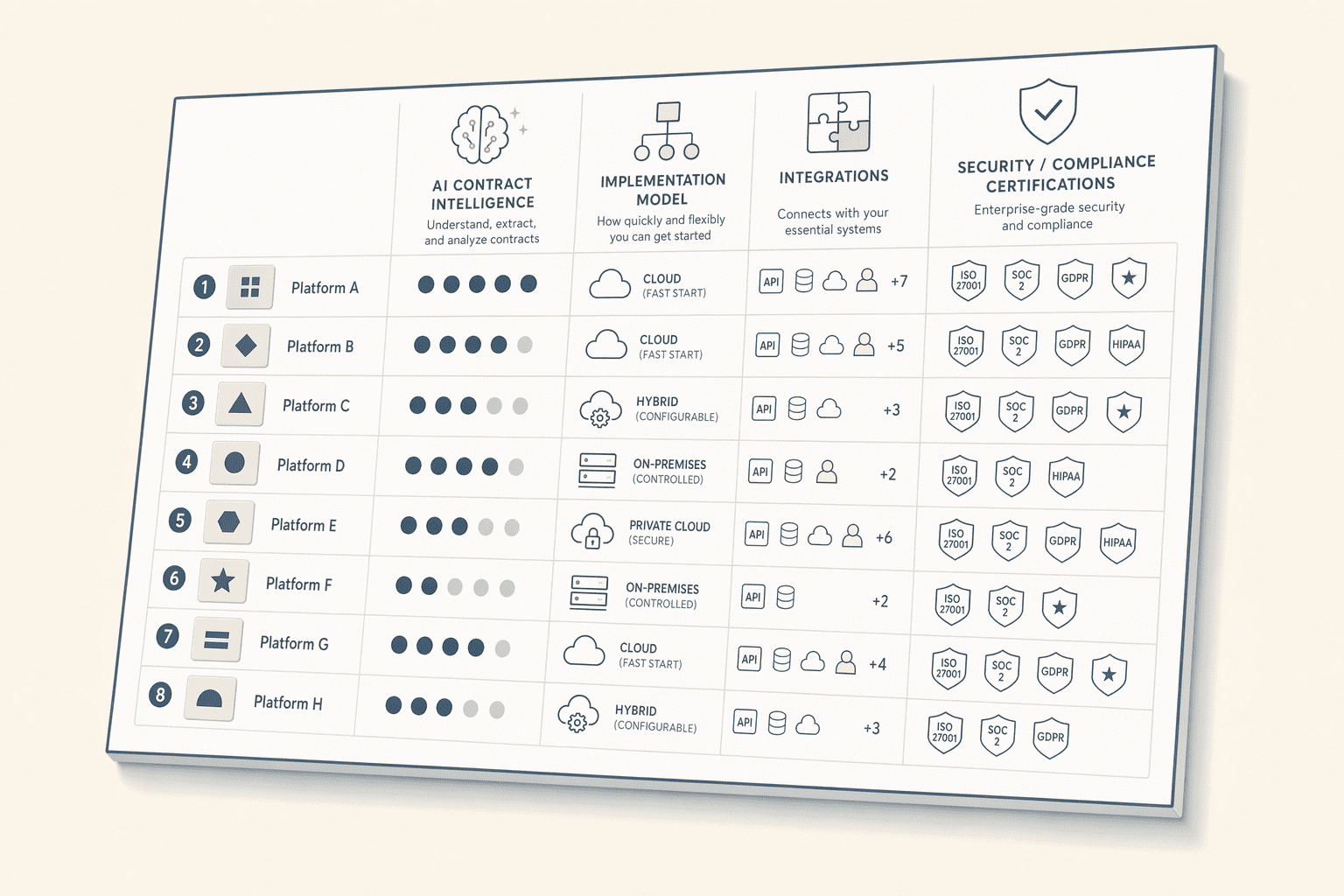
The table below compares six enterprise CLM platforms across the dimensions that determine cost reduction impact: AI contract intelligence capabilities, implementation model, integration ecosystem, and security/compliance certifications. These criteria reflect the key features enterprise buyers prioritize when evaluating CLM solutions.
Platform Comparison: AI Intelligence, Cost Impact, and Implementation
| Platform | AI Contract Intelligence | Implementation Model | Integration Ecosystem | Security/Compliance |
|---|---|---|---|---|
| Contracts.ai | Extract key terms across legacy and live contracts in minutes; >99% accuracy | Intelligence layer deployment; no rip-and-replace | NetSuite, ERP platforms, BYO AI keys | SOC 2/3, GDPR, HIPAA, CCPA |
| Ironclad | Specialized agents for drafting, extraction, obligation tracking | 2-8 week pilots; Gartner Leader 3 years | Salesforce, Microsoft, broad ERP coverage | Enterprise-grade certifications |
| Icertis | Contract Intelligence platform; AI since 2015 | 6-12 month full deployments; serves Fortune 100 | SAP, Salesforce, Microsoft (strongest enterprise library) | Multi-jurisdictional compliance |
| Sirion | Agentic extraction, drafting, invoice reconciliation | 4+ years as Gartner Leader; 7M+ contracts managed | Salesforce, SAP, 100+ language support | Enterprise compliance, 100+ jurisdictions |
| Conga | Data unavailable | Data unavailable | Data unavailable | Data unavailable |
| PandaDoc | Data unavailable | Data unavailable | Data unavailable | Data unavailable |
Reading the Table: What Each Dimension Reveals
The ‘AI contract intelligence capabilities’ row distinguishes platforms that extract clauses and obligations from those limited to keyword search. Implementation model shows whether a vendor requires a 6-12 month migration or deploys as an intelligence layer within 2-8 weeks. Integration ecosystem determines which ERP, CRM, and procurement systems connect natively versus requiring custom development. Security/compliance certifications matter for regulated industries processing sensitive contract data across jurisdictions. Section 4 provides platform-by-platform breakdowns with pros, cons, and best-for guidance, this table is the overview, not the detailed review.
Platform-by-Platform Breakdown: AI Intelligence & Cost Impact
Ironclad: AI-Powered Workflow Automation for High-Volume Legal Teams
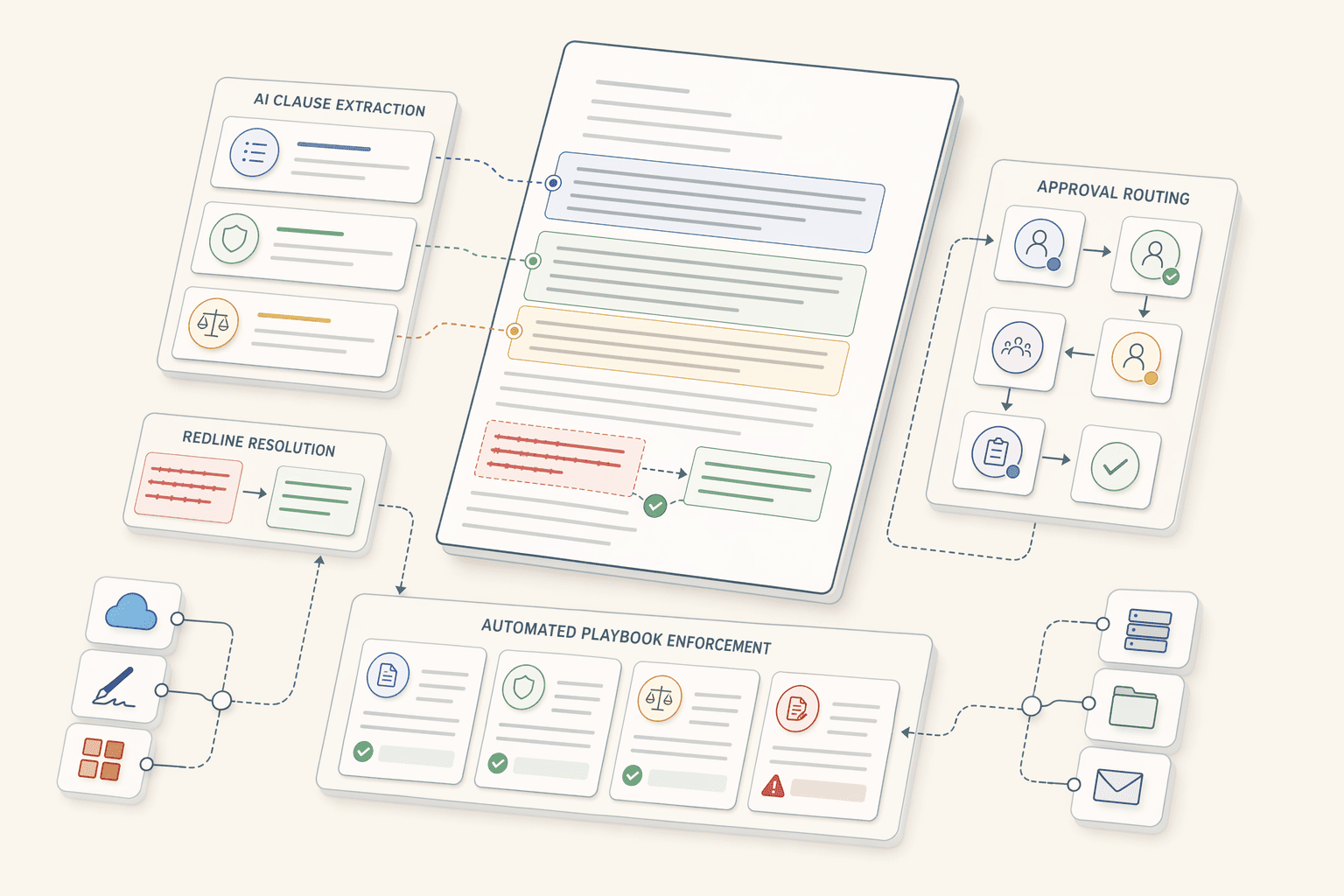
Ironclad delivers enterprise-grade AI CLM that unlocks intelligence from every contract through workflow automation, clause extraction, and approval routing. Cost reduction stems from cycle-time compression via automated playbook enforcement. Implementation: full-suite, 4-6 months. Integrations: Salesforce, DocuSign, Microsoft 365. Pros: Strong workflow engine, deep enterprise integrations, strong legal-ops focus. Cons: Steep learning curve, premium pricing. Best for: Fortune 500 legal operations managing 1,000+ contracts/year with complex approval workflows.
Icertis: Enterprise-Scale Contract Intelligence with Deep ERP Integration
Icertis leads enterprise CLM with advanced clause libraries, obligation tracking, and risk scoring. Cost impact: leakage prevention via missed-renewal alerts and compliance monitoring. Implementation: rip-and-replace, 6-12 months, pricing above $150,000 annually. Integrations: SAP, Oracle ERP, Microsoft. Pros: Deepest ERP integration, multi-jurisdictional compliance, Fortune 100 scale. Cons: Lengthy implementation, high total cost of ownership, configuration complexity requiring dedicated admin resources. Best for: Global enterprises managing 10,000+ contracts across multiple jurisdictions and business units.
Agiloft: No-Code Configurability for Mid-Market and Specialized Workflows
Agiloft provides no-code workflow builders with basic clause extraction and template automation. Cost reduction: manual review elimination via customizable approval chains. Implementation: flexible, 2-6 months, mid-market pricing without enterprise overhead. Integrations: broad connector ecosystem (CRM, ERP, storage). Pros: High configurability, accessible pricing, rapid deployment for specialized workflows. Cons: Limited advanced AI capabilities, manual setup required for complex use cases. Best for: Mid-market teams (1,000-5,000 contracts/year) with unique workflow requirements not served by rigid enterprise platforms.
DocuSign CLM: E-Signature-Native Lifecycle Management
DocuSign CLM centralizes drafting, negotiation, approval, execution, and storage with native e-signature integration. Cost impact: cycle-time compression via integrated signing workflows. Implementation: SaaS, 1-3 months. Integrations: Salesforce, Microsoft 365. Pros: Smooth e-signature, fast deployment, familiar UX for Microsoft-centric organizations. Cons: Limited advanced AI intelligence compared to specialized CLM platforms, primarily workflow-focused rather than analytics-focused. Best for: Teams prioritizing signature-to-repository workflow integration over deep contract intelligence.
Sirion: Agentic AI for Contract Performance Management
Sirion’s agentic AI architecture employs autonomous agents for extraction, obligation tracking, and contract performance analytics. Cost reduction: leakage prevention via automated compliance monitoring and invoice reconciliation. Implementation: full-suite, 4-8 months, enterprise pricing. Integrations: SAP, Salesforce, major ERP/CRM platforms. Pros: Decision-ready AI intelligence, strongest post-signature management, Gartner Magic Quadrant Leader. Cons: Premium pricing not publicly disclosed, longer implementation timelines. Best for: Enterprises managing high-value supplier contracts with complex multi-year obligations.
Conga: Revenue Lifecycle Management with CLM Integration
Conga focuses on quote-to-contract intelligence and revenue recognition automation within Salesforce-native environments. Cost impact: revenue acceleration via faster contract-to-close cycles. Implementation: modular, 2-4 months. Integrations: Salesforce-native, limited external ERP connectivity. Pros: Revenue-focused, strong quote-to-contract workflows, smooth Salesforce integration. Cons: Narrower CLM scope than full-suite platforms, less suited for procurement contracts. Best for: Sales-led organizations prioritizing quote-to-contract speed over thorough contract lifecycle management.
LinkSquares: AI-Powered Contract Analytics for Legal Departments
LinkSquares delivers clause extraction and contract analytics dashboards with fast time-to-value for in-house legal teams. Cost reduction: manual review elimination via searchable repositories and obligation tracking. Implementation: SaaS overlay, 2-6 weeks. Integrations: Microsoft 365, Google Workspace. Pros: Rapid deployment, strong analytics UI, accessible mid-market pricing. Cons: Lighter workflow automation compared to full CLM suites, fewer enterprise integrations. Best for: Legal teams seeking contract visibility and analytics without full CLM migration.
Contracts.ai: Intelligence Layer for Legacy Contract Repositories
Contracts.ai extracts key terms across legacy and live contracts in minutes using artificial intelligence and machine learning. Cost reduction: manual review elimination; pilot-friendly 2-8 week implementation timelines. Implementation: intelligence layer, not rip-and-replace. Integrations: storage-agnostic overlay (NetSuite, ERP, existing repositories). Pricing: free sign-up available. Pros: Rapid pilot deployment without repository migration, enterprise data protection with no customer data used for public/shared model training, preserves existing system investments. Cons: Narrower workflow automation vs. Full-suite CLM platforms, dependent on existing storage systems for contract sourcing. Best for: Enterprises with large legacy contract repositories seeking AI-powered intelligence without ripping out existing systems, particularly mid-market organizations avoiding 6-12 month migrations.
Platform capabilities translate into ROI through three cost-reduction mechanisms. The following section quantifies how AI eliminates manual review, compresses cycle time, and prevents leakage.
Cost Reduction Mechanisms: Where AI Delivers Measurable ROI
Enterprise contract AI claims 300%+ ROI in vendor TEI studies, but the methodology behind those numbers is rarely transparent. This section operationalizes three core cost-reduction mechanisms, manual review elimination, cycle time compression, and leakage prevention, providing calculation frameworks procurement and finance teams can apply to their own contract portfolios.
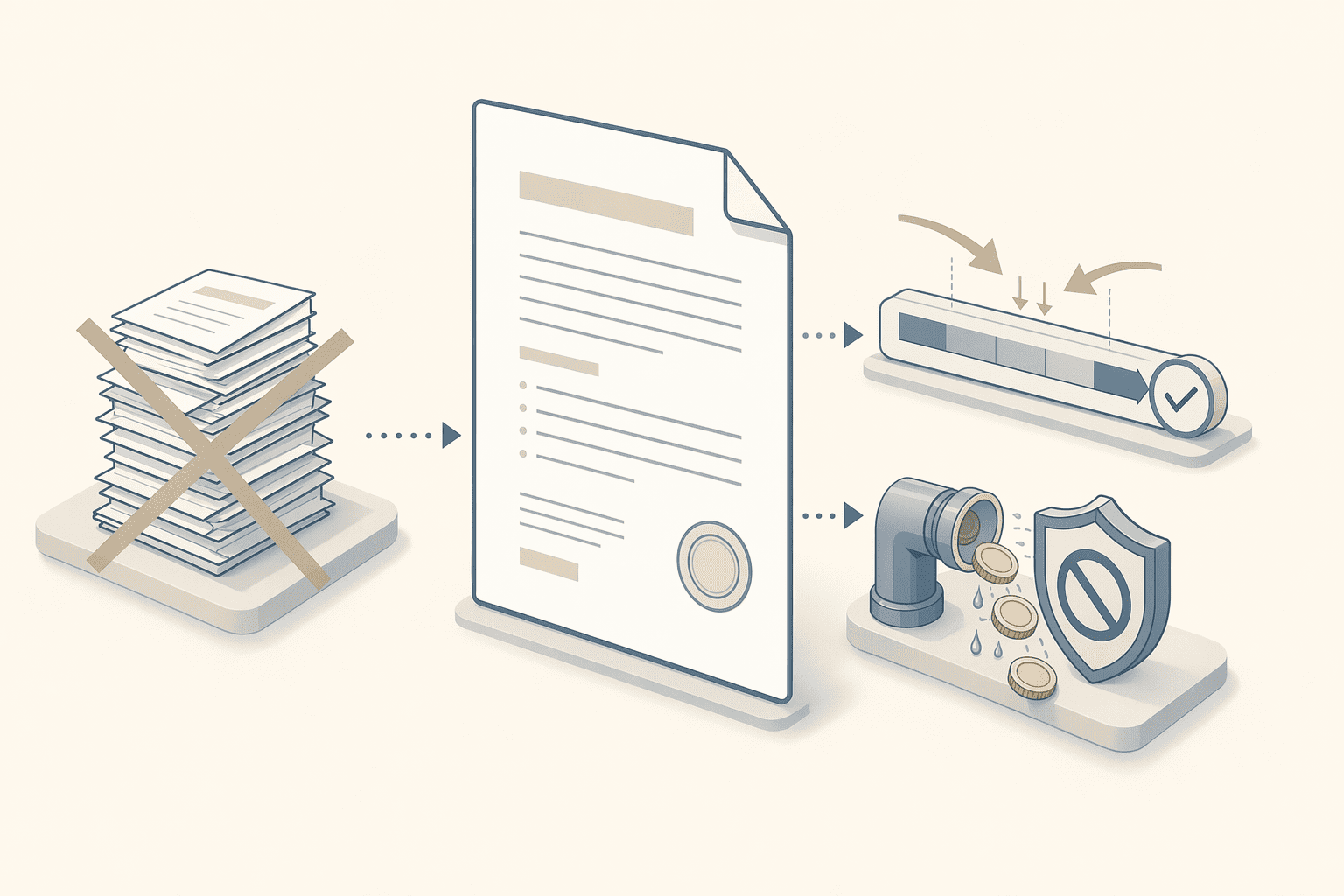
Manual Review Elimination: Time Savings and Labor Cost Reduction
Manual review elimination replaces paralegal or legal-ops line-by-line reading with AI extraction of clauses, obligations, and terms. The cost-reduction calculation follows a three-step methodology:
- Baseline measurement: Calculate annual manual review cost: (contracts per year) × (hours per contract) × (hourly labor cost). Example: 500 contracts × 4 hours × $75/hour paralegal cost = $150,000 annual manual review cost.
- AI-driven reduction percentage: AI platforms reduce manual review time by 60-80% based on contract complexity and clause standardization. Using the conservative 70% reduction: $150,000 × 0.70 = $105,000.
- Annual savings calculation: The $105,000 represents direct labor cost savings. Organizations reallocate this capacity to higher-value legal analysis rather than eliminating headcount.
Cycle Time Compression: Revenue Acceleration and Opportunity Cost
Cycle time compression uses AI-powered approval routing, template automation, and faster negotiation to accelerate contract execution. The revenue impact calculation:
- Baseline measurement: Measure current average contract cycle time (from intake to signature). Example: 30-day average cycle across 200 enterprise contracts worth $50,000 each.
- AI-driven reduction percentage: AI reduces cycle time by 50-70%. A 30-day cycle compressed to 10 days = 20-day acceleration × 200 contracts = 4,000 contract-days of acceleration.
- Revenue acceleration calculation: (Days saved ÷ 365) × annual contract value × cost of capital. Example: (20 days ÷ 365) × ($50,000 × 200 contracts) × 8% cost of capital = approximately $43,800 in accelerated working capital.
This calculation captures opportunity cost, capital locked in pending contracts, rather than direct cost savings.
Leakage Prevention: Missed Renewals, Auto-Renewals, and Uncaptured Discounts
Leakage prevention is the primary driver of 300%+ ROI claims in vendor TEI studies. AI-powered obligation tracking surfaces missed renewal deadlines, auto-renewal clauses triggering without review, and volume discount thresholds that go unclaimed. The calculation:
- Baseline measurement: Audit historical leakage: missed renewals where better terms were available, auto-renewals that went unnoticed, volume discounts not applied. Example: 5 missed renewals worth $200,000 each + $50,000 in unclaimed discounts = $1,050,000 annual leakage.
- AI-driven reduction percentage: AI obligation tracking prevents 80%+ of missed deadlines and discount triggers through automated alerts. $1,050,000 × 0.80 = $840,000 prevented leakage.
- Annual savings calculation: The $840,000 represents preserved contract value, either avoided cost increases (renewals) or captured discounts.
Leakage prevention delivers the highest dollar impact per mechanism because it directly affects contract economics rather than operational efficiency.
ROI Timelines: When Cost Reduction Becomes Measurable
ROI timelines vary by implementation model. Intelligence-layer overlays that integrate with existing CLM systems deliver measurable savings in 2-8 weeks, fast enough to quantify manual review time savings within a pilot phase before committing to full deployment. Intelligence-layer platforms like Contracts.ai enable enterprises to measure these savings during the pilot, de-risking the investment decision.
Rip-and-replace CLM systems require 6-12 months to full deployment and 18-24 months to break even. The longer timeline reflects migration complexity, user training, and workflow reconfiguration, organizations must weigh the total cost of ownership against the intelligence-layer alternative that preserves existing infrastructure.
Cost reduction claims depend on deployment speed. Implementation complexity varies dramatically between intelligence-layer overlays and full-migration systems.
Implementation Complexity: Pilot-Friendly vs. Full Migration Systems
Intelligence-Layer Overlays: Pilot Without Migration
Intelligence-layer overlays install AI extraction atop existing storage, SharePoint, Google Drive, legacy DMS, without contract migration. Platforms like Contracts.ai and LinkSquares enable enterprises to pilot AI contract intelligence on a limited contract set without migrating their full repository, reducing deployment risk.
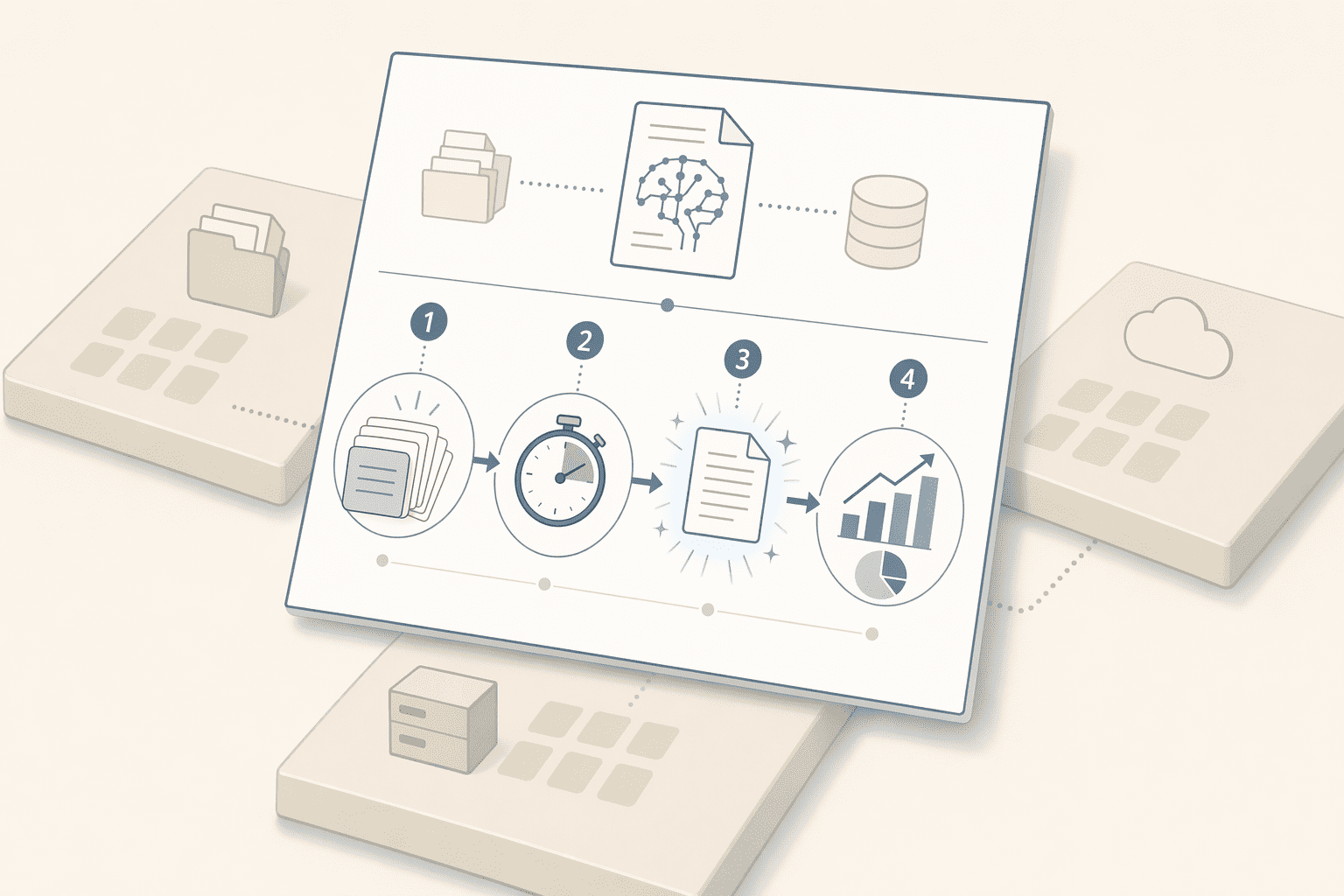
Pilot scoping follows four steps: (1) identify 50-200 high-value contracts; (2) measure baseline manual review time; (3) run AI extraction pilot; (4) calculate time savings and extrapolate annual ROI. Mid-market pilots complete in 2-8 weeks.
Full-Suite Rip-and-Replace: Enterprise Migration Requirements
Rip-and-replace systems require contracts to migrate into the CLM platform’s repository, triggering full workflow reconfiguration. Migration complexity includes data mapping, metadata standardization, user training, and change management. Fortune 500 deployments span 6-12 months. Icertis implementations require 6-12 months with pricing starting above $150,000 annually for most deployments.
Migrations trigger data-sovereignty reviews: controller-versus-processor role allocation, data-residency clauses in BAAs, and GDPR transfer impact assessments. Intelligence-layer overlays avoid these by leaving contracts in existing storage.
Hybrid Approaches: Phased Rollout Strategies
Hybrid strategies start with an intelligence-layer pilot to prove ROI, then iteratively migrate high-value contract sets into a full CLM suite. This approach mitigates risk: pilot results inform migration scope, and phased rollouts spread compliance reviews across quarters rather than forcing a single lift-and-shift.
Deployment model determines fit, but enterprise maturity stage drives the final platform decision. The next section matches platforms to organizational profiles.
Choosing the Right CLM for Your Enterprise Maturity Stage
Not every CLM platform fits every enterprise maturity profile. A Fortune 500 organization with 10,000+ contracts and multi-jurisdictional compliance needs requires fundamentally different capabilities than a mid-market company piloting its first contract intelligence system. This three-tier segmentation framework helps you self-identify the right platform category before evaluating specific vendors.
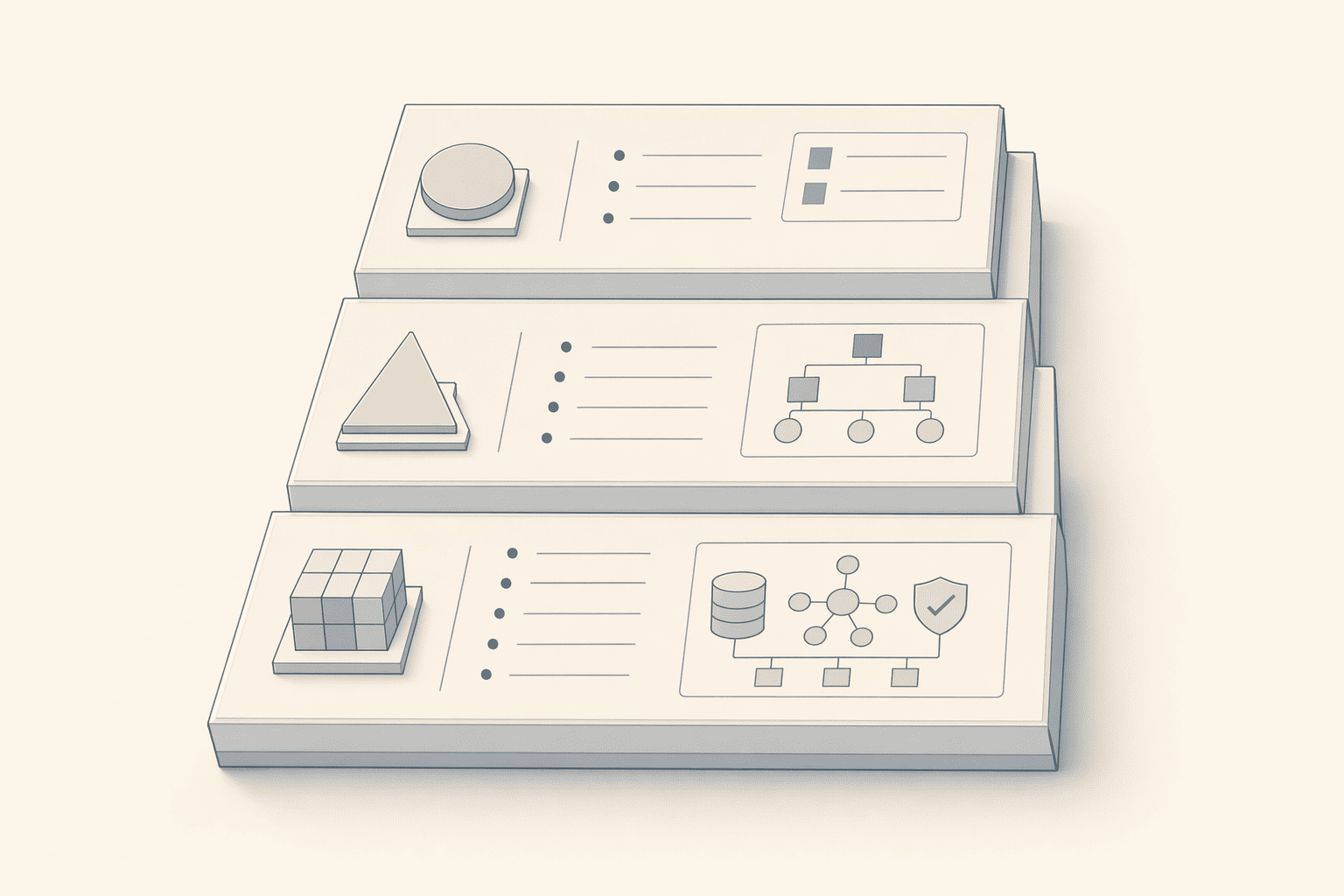
1. Mid-Market Enterprises: Pilot-Friendly Platforms for Fast ROI
Mid-market enterprises, typically managing 100-1,000 contracts annually with limited legal ops headcount and budget constraints, need platforms that deliver immediate intelligence without multi-month implementations. Pilot-friendly intelligence-layer platforms like Contracts.ai and LinkSquares excel here: they ingest legacy contracts, extract key terms, and surface renewal risks without replacing existing systems. For teams requiring configurable workflows alongside analytics, Agiloft provides enterprise-grade flexibility at mid-market pricing. All three platforms deploy in 2-8 weeks, accelerating time-to-value compared to full-suite migrations.
2. Fortune 500: Enterprise-Scale Workflow Automation and Compliance
Fortune 500 organizations managing 1,000+ contracts per year face multi-jurisdictional compliance mandates, complex approval hierarchies, and deep ERP/CRM integration requirements that mid-market tools cannot satisfy. Full-suite platforms, Icertis, Ironclad, and Sirion, offer enterprise-scale workflow orchestration, SAP and Salesforce connectors, and dedicated compliance modules. Icertis leads for SAP-heavy environments, Ironclad excels in legal workflow sophistication, and Sirion specializes in post-signature performance monitoring. Expect 6-12 month implementations and annual contracts starting above $150,000. These platforms are overkill for organizations managing fewer than 5,000 contracts, mid-market teams deploying them commonly stall on resource-intensive configuration they cannot support.
3. Greenfield vs. Legacy Migration: Deployment Model Trade-Offs
Greenfield deployments, organizations with no existing CLM system, can adopt any platform architecture. Legacy migration scenarios face higher stakes: contracts already stored in SharePoint, Box, or aging document management systems carry migration costs, data integrity risks, and user change management burdens. For legacy contexts, intelligence-layer overlays extract value from existing repositories without forcing migration. For greenfield deployments, full-suite platforms with integrated authoring, negotiation, and repository capabilities justify the upfront investment. The common mistake: mid-market enterprises selecting enterprise-scale CLM platforms based on feature checklists, then discovering 12-month implementation timelines they cannot resource. Match the platform’s deployment model to your internal capacity and existing infrastructure constraints before evaluating feature depth.
Intelligence-layer overlays like Contracts.ai deliver faster time-to-first-savings (2-8 weeks) and avoid repository migration, but offer lighter workflow automation than full-suite CLM platforms. Full-suite platforms (Icertis, Ironclad, Sirion) provide enterprise-scale workflow automation and deep ERP/CRM integration, but require 6-12 month migrations and higher TCO. Choose intelligence-layer for legacy-heavy enterprises prioritizing pilot speed; choose full-suite for Fortune 500 teams with dedicated legal ops capacity.
As AI contract intelligence matures from basic clause extraction to decision-ready obligation tracking and risk scoring, enterprises will increasingly adopt hybrid strategies: piloting intelligence-layer overlays to prove ROI, then selectively migrating high-value contract sets into full CLM suites. Data sovereignty and cross-border compliance will become the primary implementation friction point for multi-jurisdictional deployments.
Explore Contracts.ai’s intelligence-layer approach to pilot AI contract intelligence on your legacy repository without full CLM migration, or compare all eight platforms using the evaluation framework above to find the best fit for your enterprise maturity stage.
Frequently Asked Questions
What does AI-powered contract intelligence mean in CLM software?
AI contract intelligence automates extraction of clauses, obligations, dates, and risks using natural language processing. Advanced systems deliver decision-ready intelligence, risk scoring, obligation tracking, while basic OCR provides only keyword search. This shift transforms contracts into searchable repositories without manual line-by-line review.
How do I calculate ROI for contract lifecycle management software?
ROI calculation uses three levers: (1) manual review elimination (baseline hours × labor cost × volume × AI reduction %), (2) cycle time compression (days saved × contract volume × deal value × cost of capital), (3) leakage prevention (missed renewals + uncaptured discounts). Intelligence-layer platforms deliver faster time-to-first-savings (2-8 weeks) versus rip-and-replace systems (18-24 months).
What is the difference between an intelligence-layer CLM and a full-suite rip-and-replace system?
Intelligence-layer overlays sit atop existing storage (SharePoint, Google Drive) and extract intelligence without migrating contracts, pilots run in 2-8 weeks. Rip-and-replace systems require full contract migration into the platform’s repository and workflow reconfiguration, deployments take 6-12 months. Choose intelligence-layer for legacy-heavy environments; rip-and-replace for deep workflow automation.
How do I run a limited-contract-set CLM pilot without migrating my full repository?
Follow four steps: (1) identify 50-200 high-value contracts, (2) measure baseline manual review time, (3) run AI extraction pilot, (4) calculate time savings and extrapolate annual ROI. Intelligence-layer platforms enable this approach by leaving contracts in existing storage. Mid-market pilots complete in 2-8 weeks.
What data residency and compliance considerations matter for multi-jurisdictional enterprise CLM?
Rip-and-replace migrations trigger data-sovereignty reviews: controller vs. Processor role allocation, data-residency clauses in BAAs, and GDPR transfer impact assessments. Intelligence-layer overlays avoid this complexity by leaving contracts in existing storage where data-residency policies are already established. Verify SOC2, HIPAA BAA, and GDPR compliance for cross-border contracts.
Which CLM platforms are best for mid-market companies vs. Fortune 500 enterprises?
Mid-market (100-1,000 contracts/year): pilot-friendly platforms like Contracts.ai and LinkSquares, or configurable mid-market suites like Agiloft, prioritize 2-8 week deployment and fast ROI. Fortune 500 (1,000+ contracts/year): full-suite platforms with deep ERP/CRM integration like Icertis, Ironclad, Sirion, prioritize enterprise-scale workflow automation and multi-jurisdictional compliance.
How long does it take to implement AI-powered CLM software?
Intelligence-layer overlays (Contracts.ai, LinkSquares) deploy in 2-8 weeks without contract migration. Full-suite rip-and-replace systems (Icertis, Ironclad, Sirion) require 6-12 months for Fortune 500 deployments due to data migration, workflow reconfiguration, and user training. Mid-market configurable suites (Agiloft, DocuSign CLM) fall between at 2-4 months.
Sources
- Turning contracts into searchable data at OpenAI – openai.com (2025)
- Best Contract Life Cycle Management Reviews 2026 – Gartner – www.gartner.com (2026)
- Contract Lifecycle Management (CLM) Platforms Overview | Amicore AI Research – www.amicoreai.com (2026)
- Best AI CLM Tools in 2026 – 5 Compared | Awesome Agents – awesomeagents.ai (2026)
- Ironclad: AI Contract Lifecycle Management Software – ironcladapp.com