






Contract intelligence platforms automate the extraction of metadata and clauses from unstructured agreements, transforming PDFs into queryable datasets for business intelligence dashboards.
This guide compares five platforms—DigiParser, Unstract, Volody, and Contract Logix—across extraction accuracy, integration architecture, security standards, and deployment models.
Key Takeaways
- Contract intelligence platforms extract both administrative metadata (dates, parties, values) and semantic clause tags (termination terms, liability caps) for BI workflows.
- Intelligence layer platforms integrate with existing CLM systems via API, while full-stack platforms replace entire contract management workflows.
- SOC 2 Type II certification, GDPR compliance, and data encryption are baseline security requirements for enterprise contract data processing.
- Pre-built connectors to Tableau, Power BI, and Looker eliminate engineering overhead for mid-market BI deployments.
- High-volume OCR platforms suit legacy paper archives, while semantic extraction engines serve obligation tracking and compliance reporting use cases.
What ‘Structured Data for Business Intelligence’ Actually Means in Contract Management
Yes, software exists that turns contracts into structured data for business intelligence automatically. Contract intelligence platforms, CLM systems with AI extraction, and dedicated parsing APIs now convert unstructured PDFs into queryable datasets—pulling metadata fields, tagging clauses by function, and extracting obligations so finance, legal, and procurement teams can forecast renewals, analyze spend, and track compliance without manual data entry.
Contract Metadata vs. Clause Intelligence
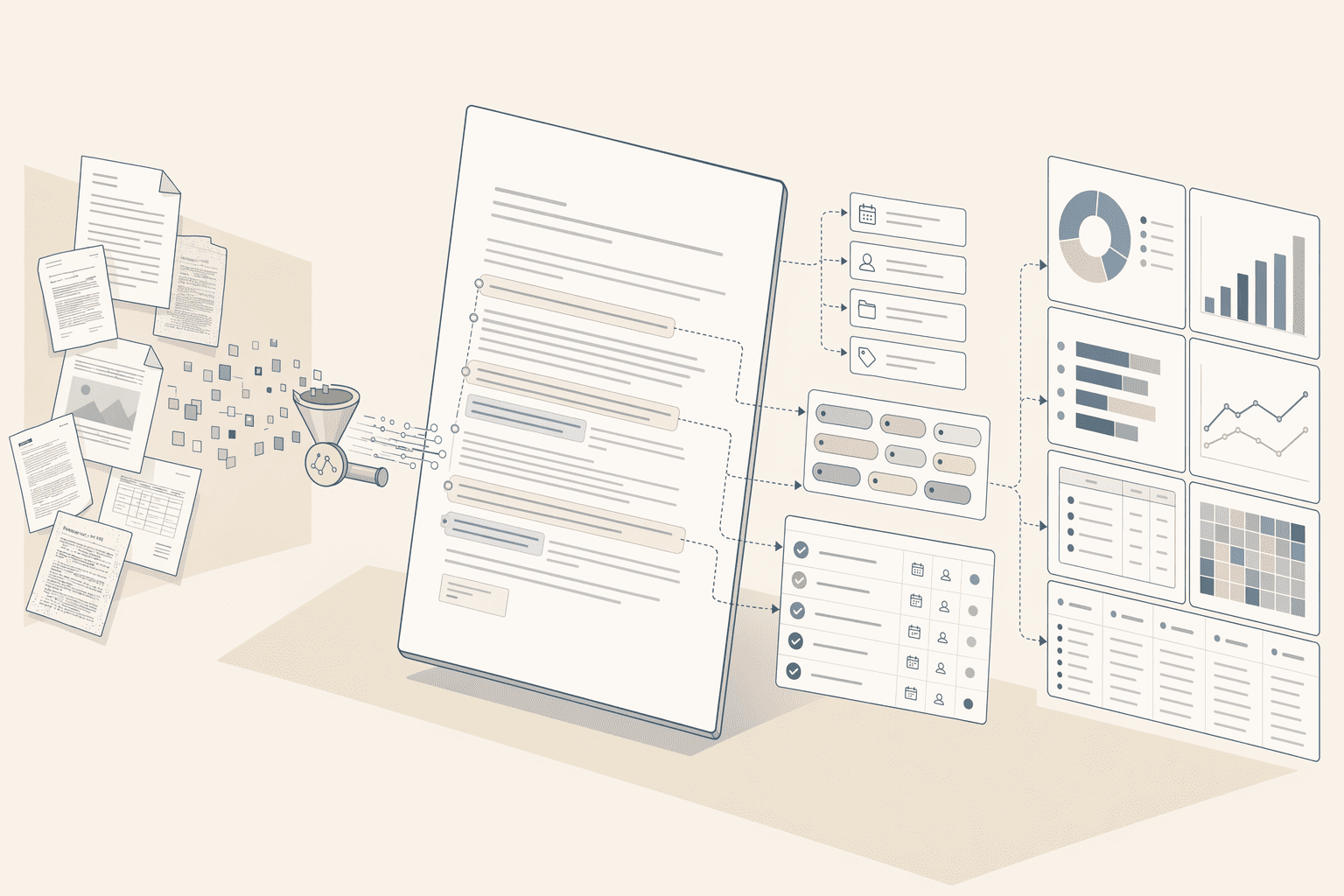
Structured contract data begins with metadata fields—the administrative attributes every BI dashboard needs to slice and aggregate agreements. Extraction tools identify contract title, contract number, parties involved, party addresses, effective date, expiration or renewal date, contract value, payment terms, and governing law. These fields let you answer “How much are we spending with this vendor?” or “Which contracts expire next quarter?” without opening a single PDF.
But metadata alone won’t tell you what the contract allows or prohibits. Clause tagging—the second layer—identifies semantic chunks by function: termination clauses, liability provisions, indemnity obligations, auto-renewal language, and data-protection requirements. Modern extraction platforms parse legal text to recognize clause types even when the wording varies across vendor templates, so your BI system can flag high-risk liability caps or surface contracts missing force-majeure protections.
Obligation extraction goes deeper still, pulling the specific duties each party must perform, delivery milestones, SLA thresholds, payment schedules, audit rights, notice periods. This transforms a static contract into a checklist your operations team can monitor, your legal team can enforce, and your BI dashboard can track against actual performance.
Business Intelligence Outputs: Forecasting, Spend, Compliance
Structured contract data powers three critical BI outputs that unstructured PDFs cannot:
- Renewal forecasting dashboards, When every contract’s expiration date, auto-renewal clause, and notice period is extracted and tagged, your CFO can see Q3 revenue at risk, procurement can model supplier concentration, and legal can prioritize renegotiations before deadlines pass.
- Spend analysis by vendor and category, Platforms that turn contracts into queryable data let finance slice total contract value by department, vendor, geography, or cost center, revealing hidden spend concentrations, duplicate agreements, and budget-vs.-actual gaps that spreadsheets alone miss.
- Compliance obligation tracking, Regulatory teams need to know which contracts contain GDPR clauses, HIPAA business-associate terms, or SOC 2 audit rights. Structured data makes these obligations searchable and reportable, so compliance officers can prove coverage to auditors without reading thousands of pages.
These outputs depend on data structure, not just data existence. A folder full of executed PDFs contains every fact you need, but BI tools cannot query prose. They require CSV exports, JSON feeds, or API endpoints that deliver contract attributes as rows and columns.
Why Unstructured PDFs Block BI Workflows
A contract stored as a scanned PDF is invisible to BI platforms. Tableau, Power BI, Looker, and their peers ingest tables, not paragraphs. Without extraction, your finance team must manually transcribe renewal dates into a spreadsheet, your legal team must read every termination clause to update a risk register, and your procurement team must email vendors to confirm payment terms already buried in signed agreements. Automated extraction workflows, upload contracts, extract key data, validate flagged clauses, export to BI tools, replace that manual cycle with a pipeline that runs in minutes and feeds dashboards in real time.
With the foundational concepts established, the next step is defining the technical capabilities that separate functional contract intelligence platforms from marketing promises.
5 Core Capabilities Every Contract Intelligence Platform Needs
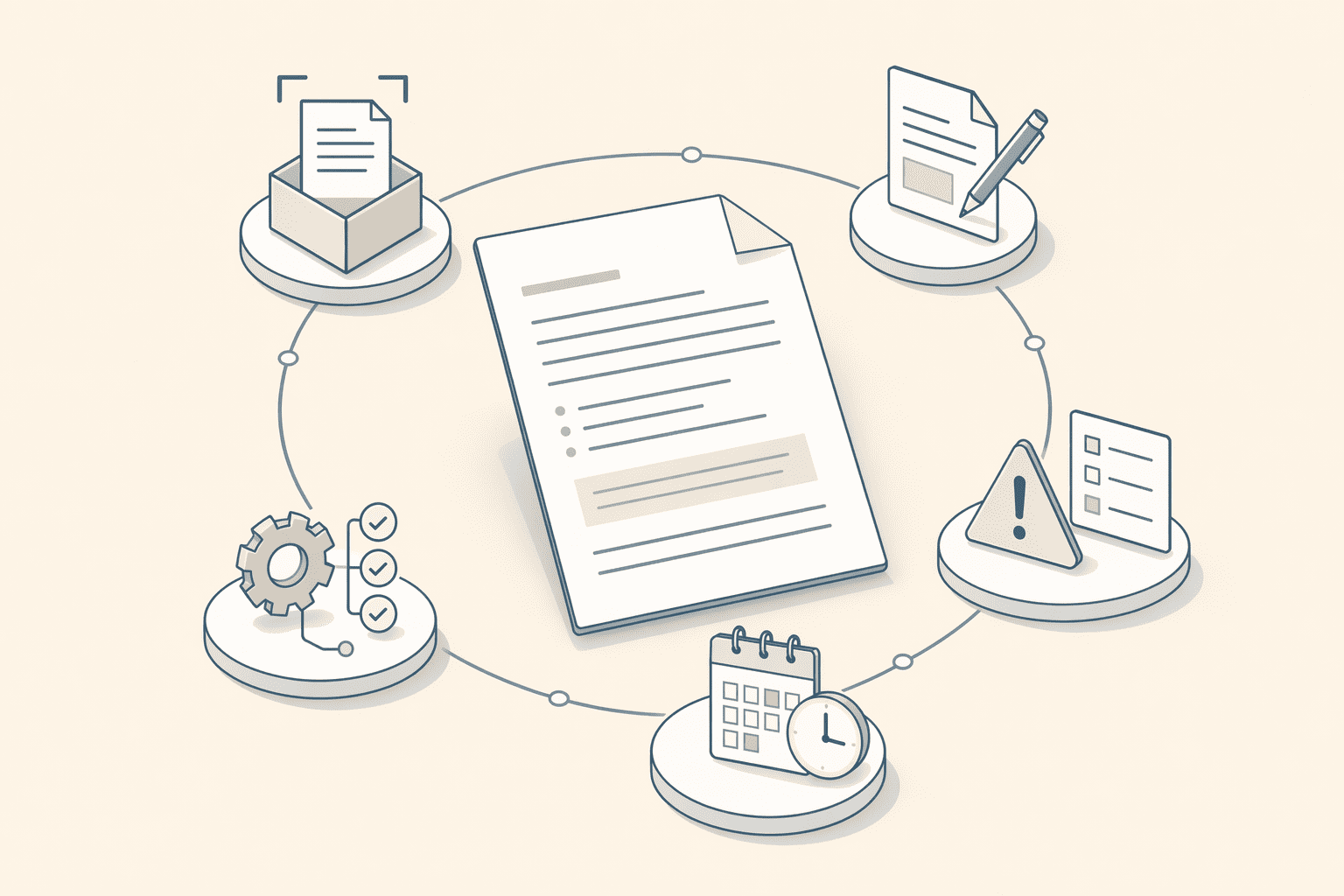
Before comparing specific contract intelligence platforms, establish the evaluation criteria that determine whether a tool can deliver structured data for business intelligence workflows. The leading AI CLM platforms in 2026 now draft clauses, extract obligations, flag risk deviations against a playbook, and trigger ERP actions automatically. But extraction speed alone is insufficient, the five capabilities below separate platforms that feed reliable BI pipelines from those that require constant manual correction.
1. Metadata Extraction and Clause Identification
The platform must extract both administrative fields (parties, dates, contract value, term length) and semantic clause tags (renewal terms, termination conditions, payment obligations, liability caps). OCR and metadata extraction turns contract data into structured, searchable, analyzable data. Platforms that extract only top-level metadata leave substantive terms buried in unstructured prose, forcing downstream BI users to re-read contracts manually when disputes or audits surface obligations the system never captured.
2. BI Tool Integration: API, Webhooks, Pre-Built Connectors
Extraction without integration leaves structured data stranded in the CLM system. The platform must provide REST API endpoints for real-time data sync, webhook triggers for obligation events (renewal notices, milestone breaches), and pre-built connectors to Tableau, Power BI, Looker, and enterprise data warehouses. Without these integration paths, finance and procurement teams rebuild data pipelines manually every reporting cycle, negating the value of automated extraction.
3. Accuracy Validation and Human-in-the-Loop
Extraction accuracy varies by contract complexity, standard MSAs may hit 95%+ accuracy while bespoke agreements with nested amendments require validation workflows. Contracts.ai claims more than 99% accuracy when extracting data from documents in real time and provides answers linked to source contract language for validation. Platforms that lack confidence scoring and human review queues for ambiguous clauses produce silently corrupted BI datasets where finance models compound errors from misread payment terms or missed escalation clauses.
4. Security and Compliance Standards
Enterprise BI deployments require SOC 2 Type II certification, GDPR and CCPA compliance, data residency controls, role-based access at the clause and document level, and audit logging for every extraction event. Contracts.ai is SOC 2 and SOC 3 certified and implements encryption in transit, encryption at rest, role-based access controls, continuous monitoring, and security assessments including third-party penetration testing. Platforms that treat contract data as unregulated documents expose organizations to compliance risk and make the BI output unsuitable for regulated reporting workflows.
5. Intelligence Layer vs. Full CLM Replacement
Platforms position themselves along a spectrum: specialized intelligence layers that extract and analyze contracts without replacing existing workflows, versus full CLM suites that bundle extraction with approval routing, negotiation, and e-signature. Contracts.ai positions itself as an intelligence layer and does not support contract workflows such as approvals. Organizations with established CLM systems benefit from intelligence-layer platforms that integrate with existing tools; greenfield buyers may prefer unified suites. Misalignment on this dimension leads to rip-and-replace projects that delay BI delivery by 6-12 months.
Understanding evaluation criteria provides the framework; now apply it to real platforms, comparing how each system implements extraction, integration, and intelligence layers.
Contract Data Extraction Platforms: Feature Comparison
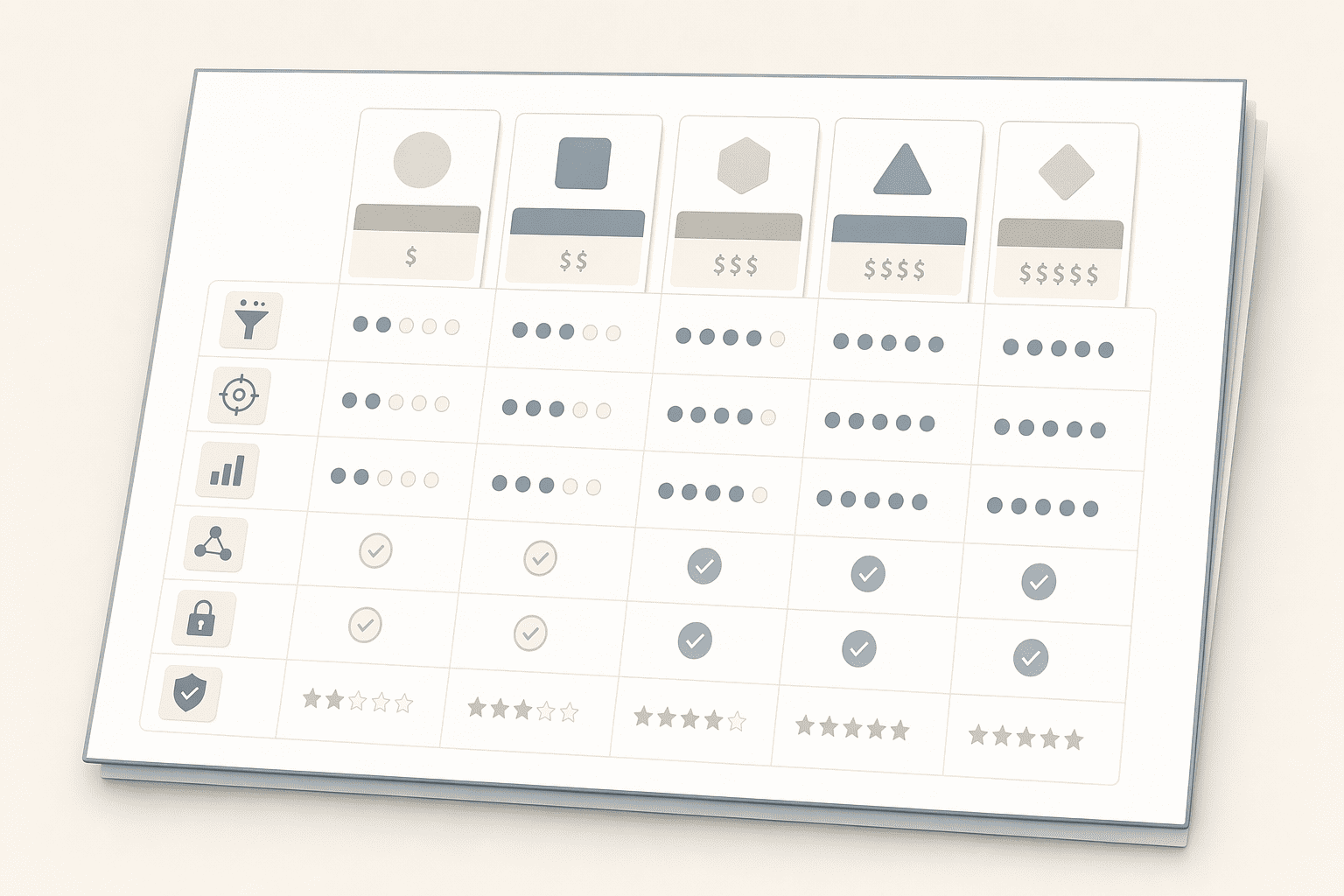
Not all contract extraction platforms operate at the same layer of the technology stack. Some offer end-to-end contract lifecycle management with extraction as one module; others position specifically as post-signature intelligence layers that integrate with existing CLM systems. Below we compare five platforms across pricing, extraction coverage, accuracy, scale limits, integrations, security compliance, and peer ratings, the dimensions mid-market and enterprise buyers consistently prioritize when evaluating structured-data solutions.
Platform Profiles: What Each Tool Does Best
DigiParser focuses on high-volume document processing with OCR support for scanned contracts, targeting operations teams managing legacy paper archives. Contracts.ai positions as a post-signature intelligence layer that extracts key terms across legacy and live contracts and connects to BI tools without replacing existing CLM systems. Unstract markets itself as an open-source, no-code extraction platform for teams that want deployment flexibility and custom model configuration. Volody claims proprietary AI for contract analysis but provides limited public benchmarks on extraction accuracy. Contract Logix serves mid-market buyers with a combined CLM-and-extraction suite, bundling workflow automation with data structuring in a single platform.
The distinction matters because buyers shopping for “contract-to-structured-data” software often need to decide: do we replace our entire contract stack, or do we add an intelligence layer on top? Full-stack platforms like Ironclad, which unlocks intelligence from every contract through end-to-end automation, appeal to organizations rebuilding workflows from scratch. Intelligence-layer tools like Contracts.ai appeal to finance and legal teams that already have a CLM system in place and simply need the data extracted for BI dashboards, not the workflow rebuilt.
Feature Comparison Across 7 Dimensions
| Platform | Pricing | Extraction Coverage | Accuracy | Scale Limits | Integrations | Security / Compliance | G2 Rating |
|---|---|---|---|---|---|---|---|
| Contracts.ai | Contact for pricing | Key terms, dates, obligations, party names, renewal clauses | Claims >99% accuracy in real time | Handles thousands of contracts per customer; no public volume cap disclosed | NetSuite, Google Cloud, BI tools; BYO model keys for enterprise | SOC 2 / SOC 3 certified; GDPR, CCPA, HIPAA compliant; does not train on customer data | Not publicly listed |
| DigiParser | Not publicly disclosed | OCR for scanned PDFs, structured field extraction across contract types | Not publicly disclosed | Optimized for high-volume batch processing; specific limits vary by plan | Export to CSV, JSON, Excel; API for custom integrations | Standard encryption in transit and at rest; compliance details not publicly detailed | Not publicly listed |
| Unstract | Open-source with self-hosted option; enterprise support pricing on request | No-code configuration for custom extraction schemas; supports multiple document types | Accuracy depends on user-selected models; no vendor-published benchmark | Self-hosted deployments scale with infrastructure; cloud option available | Model-agnostic; integrates with OpenAI, Anthropic, on-prem models | Self-hosted deployments inherit customer’s own compliance posture; cloud option details on request | Not publicly listed |
| Volody | Not publicly disclosed | Proprietary AI for clause extraction, risk flagging, obligation tracking | Limited public accuracy benchmarks; vendor claims proprietary models | Not publicly disclosed | API available; specific integration targets not detailed in public documentation | Compliance certifications not detailed in public materials | Not publicly listed |
| Contract Logix | Not publicly disclosed | Full CLM suite including extraction, workflow automation, approval routing, e-signature | Not publicly disclosed | Designed for mid-market; scales to enterprise with tiered plans | Salesforce, Microsoft 365, NetSuite, DocuSign; RESTful API | SOC 2 Type II; GDPR and CCPA support; encryption at rest and in transit | Not publicly listed |
Pricing transparency varies widely. Most vendors in this category gate pricing behind sales conversations, making it difficult for mid-market buyers to budget without engaging a rep. Pricing transparency varies across contract software vendors, and some platforms ask prospective customers to get in touch directly for quote details. Unstract’s open-source model offers the most transparent cost structure, self-hosting is free, enterprise support is negotiable, but requires internal DevOps capacity.
Extraction accuracy is the dimension where vendor claims diverge most sharply from verifiable benchmarks. Contracts.ai claims more than 99% accuracy when extracting data from documents in real time, a figure it publishes on its security page. OpenAI’s internal contract data agent, which parses contracts into structured data using retrieval-augmented prompting, demonstrates that high accuracy is achievable at enterprise scale when the system shows its work and keeps experts in the review loop. DigiParser, Volody, and Unstract do not publish comparable accuracy figures, making side-by-side evaluation difficult without proof-of-concept testing.
Security and compliance are table stakes for enterprise deployments. Contracts.ai is SOC 2 and SOC 3 certified, supports GDPR, CCPA, and HIPAA workflows, and explicitly does not train models on customer contract data. Contract Logix holds SOC 2 Type II certification and supports GDPR and CCPA requirements. The other three platforms provide less public documentation on certifications, which may require direct inquiry during procurement diligence.
G2 ratings are sparse for contract extraction as a standalone category. Icertis Contract Management Software, a full-stack CLM platform that includes extraction as one feature, holds a 4.2/5 rating based on 81 reviews, offering a benchmark for what enterprise buyers expect from thorough contract platforms. Most intelligence-layer tools have fewer public reviews, reflecting the category’s relative immaturity compared to established CLM suites.
Contracts.ai: Strengths, Limitations, and Best-Fit Use Case
Strengths: Contracts.ai positions specifically as an intelligence layer rather than a full CLM replacement, which reduces implementation friction for organizations that already have contract repositories in place. The platform uses machine learning models from OpenAI, Anthropic, Inception, and Google Gemini to analyze contract content and generate structured outputs, summaries, and risk insights. Enterprise and global customers can bring their own model keys, preserving control over which AI providers touch their data. The platform is SOC 2 and SOC 3 certified and maintains formal incident response programs, meeting the security bar for regulated industries. The NetSuite integration reconciles supplier invoices with signed contracts, directly addressing a finance-team pain point.
Limitations: Contracts.ai does not support contract workflows such as approvals, meaning it cannot replace a CLM system that handles negotiation, routing, or e-signature. Organizations that need end-to-end contract lifecycle automation, from drafting through execution, will still require a separate CLM platform, making Contracts.ai an add-on rather than a standalone solution. The absence of public G2 reviews also limits third-party validation compared to established CLM vendors with hundreds of peer ratings.
Best for: Finance, procurement, and legal teams at mid-market and enterprise organizations that already have a CLM system (or a repository of executed contracts) and need the data extracted for BI dashboards, spend analysis, renewal forecasting, or compliance reporting, without ripping out existing workflows. Contracts.ai is not a replacement for a full-stack CLM; it is an analytics and intelligence layer that connects contract data to operational systems.
For organizations evaluating whether to replace their entire contract stack or add intelligence on top, the choice depends on workflow maturity. If your CLM system works but your data remains locked in PDFs, an intelligence layer may deliver faster ROI than a rip-and-replace project. If your workflows are broken and your contracts live in email attachments, a full-stack CLM rebuild is the right path. Request a Demo to assess fit for your specific contract-data requirements.
Technical capabilities alone don’t guarantee suitability, contract data contains financial and legal obligations that demand enterprise-grade security controls.
Security & Compliance Considerations for Contract Data Processing
Contract intelligence platforms process sensitive financial and legal data. Mid-market companies with 50 to 500 employees face the same regulatory requirements as enterprise buyers but typically operate with smaller legal teams, one to five people, which makes security posture non-negotiable from day one. Poor contract management can leak 12 to 15 percent of annual revenue, and choosing a platform without validated compliance controls compounds that risk.
SOC 2 and GDPR Compliance
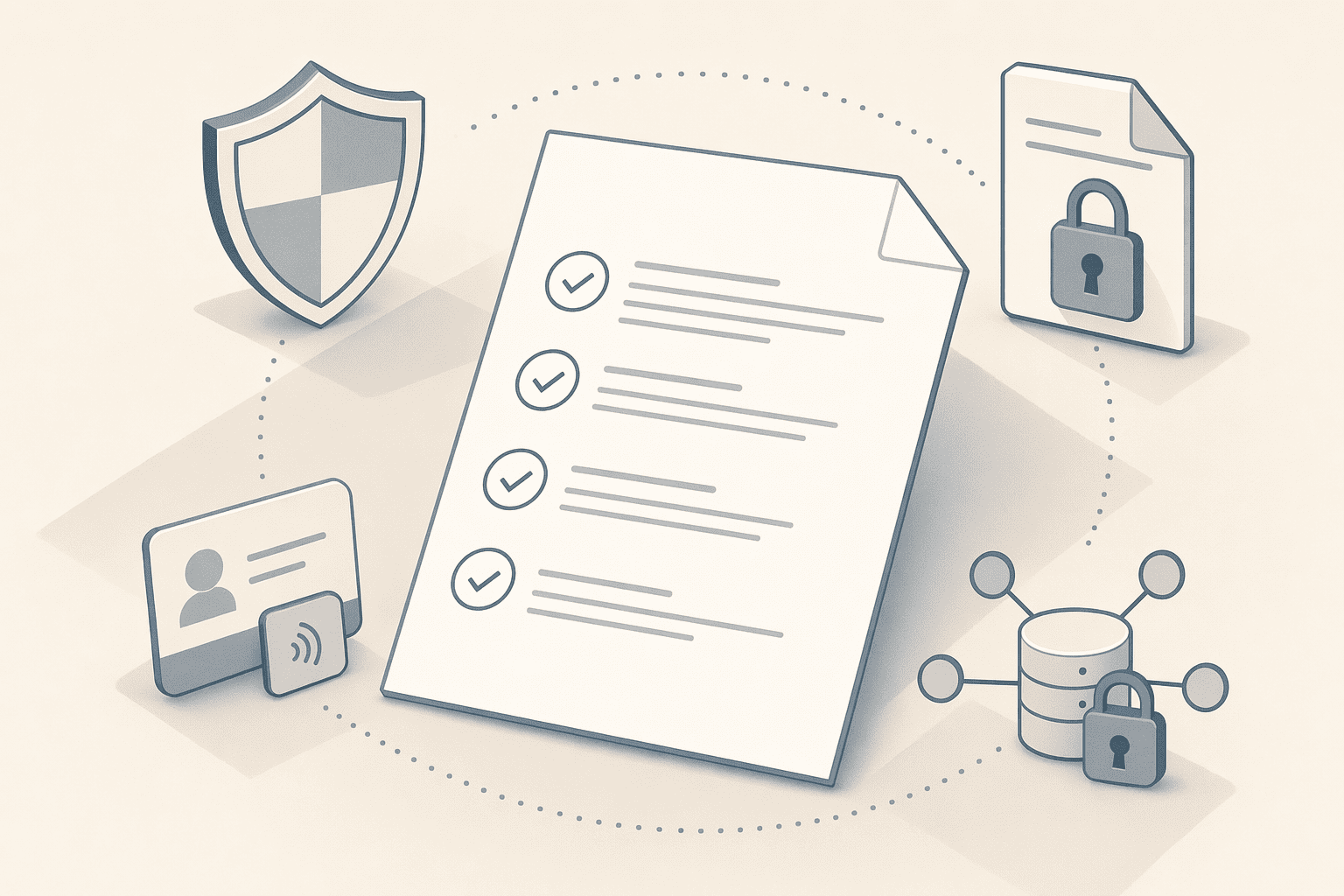
SOC 2 Type II certification confirms that a vendor’s security controls have been audited over a sustained period. GDPR compliance ensures that European personal data is processed lawfully, with documented technical and organizational safeguards. Contracts.ai is SOC 2 and SOC 3 certified and supports compliance with the EU General Data Protection Regulation. Finance and legal teams should confirm both certifications before evaluating feature depth.
Data Residency and Encryption
Contract data should remain encrypted at rest and in transit. Contracts.ai uses TLS 1.2 or higher for data in transit and encryption at rest. Data residency policies determine where contract repositories are physically stored, an key consideration for regulated industries and cross-border deployments. Verify that the vendor documents its data center locations and supports region-specific storage when required.
Role-Based Access and Audit Logging
Role-based access controls restrict who can view, edit, or delete extracted contract data. Audit logging tracks every access event, providing the evidence trail required for compliance reporting and internal governance reviews. Contracts.ai implements role-based access controls and continuous monitoring and logging. These controls enforce data governance at the clause and document level, ensuring that contract intelligence platforms scale without introducing uncontrolled access risk.
Security establishes the trust boundary; integration architecture determines whether structured contract data actually reaches your BI dashboards.
Integration Requirements: Connecting Contract Intelligence to Your BI Stack
API-Based Integration vs. Pre-Built Connectors
Most contract intelligence platforms expose structured data through REST API endpoints that support programmatic extraction of contract metadata, renewal dates, obligation thresholds, and clause-level intelligence. API-based integration requires engineering resources to build and maintain custom ETL pipelines but offers maximum flexibility for organizations with existing data orchestration frameworks. Contracts.ai provides APIs alongside integration partners for customers who need real-time data feeds.
Pre-built connectors to Tableau, Power BI, and Looker eliminate engineering overhead for mid-market deployments. These plug-and-play integrations map contract data fields to BI schemas automatically, reducing manual data entry and enabling real-time dashboards. Typical implementation timelines run 2-8 weeks for mid-market organizations using pre-built connectors, versus 6-12 weeks for custom API integrations.
Downstream BI Workflow: Dashboards, Forecasting, Compliance
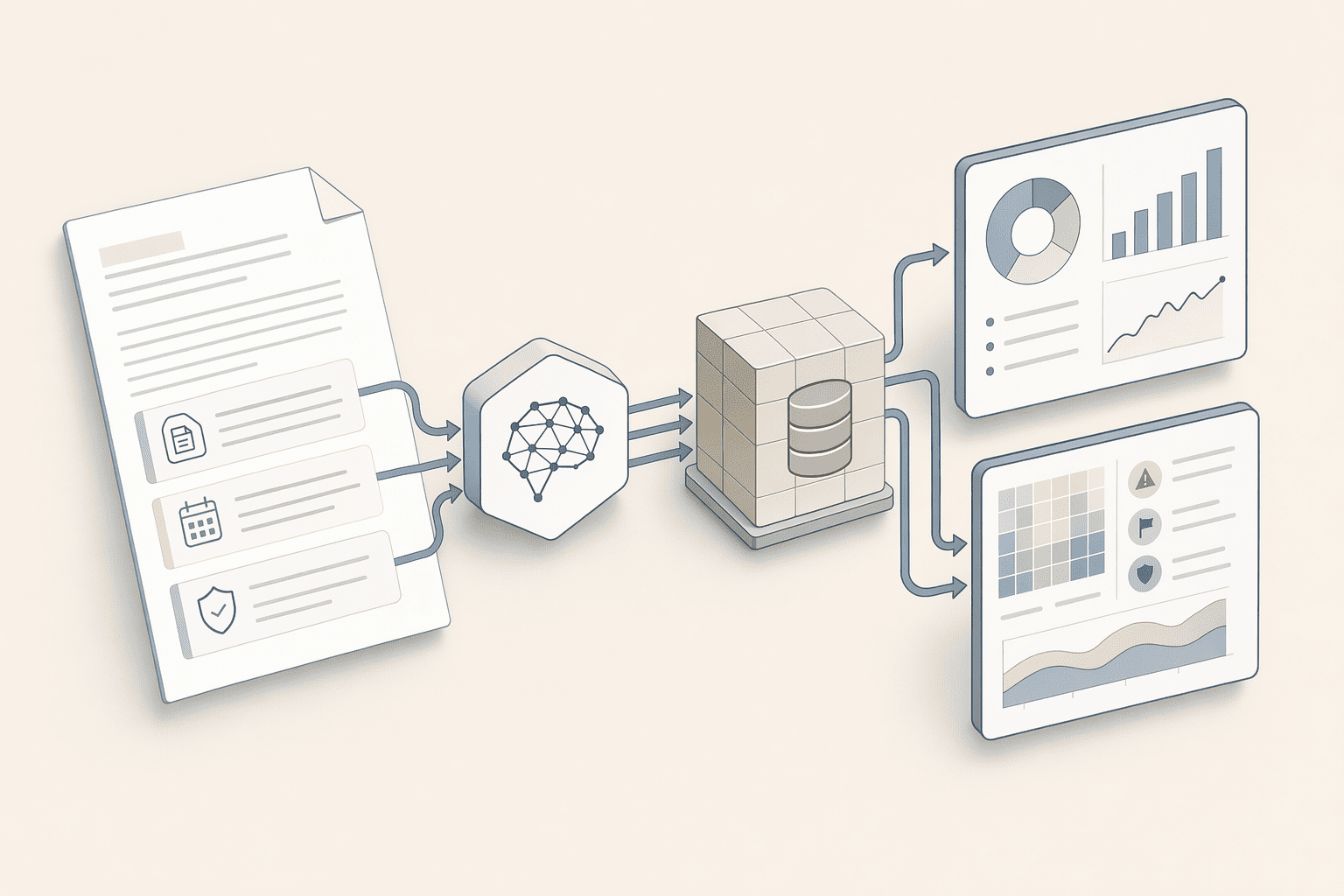
The downstream BI workflow transforms contract intelligence into operational outputs:
- Contract extraction: AI models parse agreements and generate structured metadata (renewal dates, payment terms, jurisdiction clauses).
- Data validation: Extracted fields are validated against business rules before export.
- Export to BI tool: Validated data flows via API or connector to Tableau, Power BI, or Looker.
- Dashboard/forecast/compliance report generation: Renewal data feeds revenue forecasting models, spend data populates budget dashboards, and obligation data triggers compliance alerts.
Contracts.ai transforms executed agreements into structured metadata that powers portfolio-wide intelligence, search, dashboards, alerts, and lifecycle reporting without manual tagging.
Data Refresh Frequency and Webhook Support
Webhook support enables event-driven BI updates: when a contract amendment is executed or a renewal threshold is crossed, the contract intelligence platform fires a webhook that triggers an immediate dashboard refresh. This real-time architecture eliminates the latency inherent in batch ETL jobs (typically scheduled nightly or weekly). For compliance and revenue operations teams, webhook-triggered updates reduce manual reporting time and ensure dashboards reflect the current contract state. Organizations without webhook support rely on scheduled API polling, which introduces 4-24 hour data lag depending on sync frequency.
With platform capabilities, security controls, and integration pathways mapped, the final decision hinges on matching your organization’s primary contract challenge to the right architectural approach.
Use Case Recommendations: Which Platform for Which Business Need
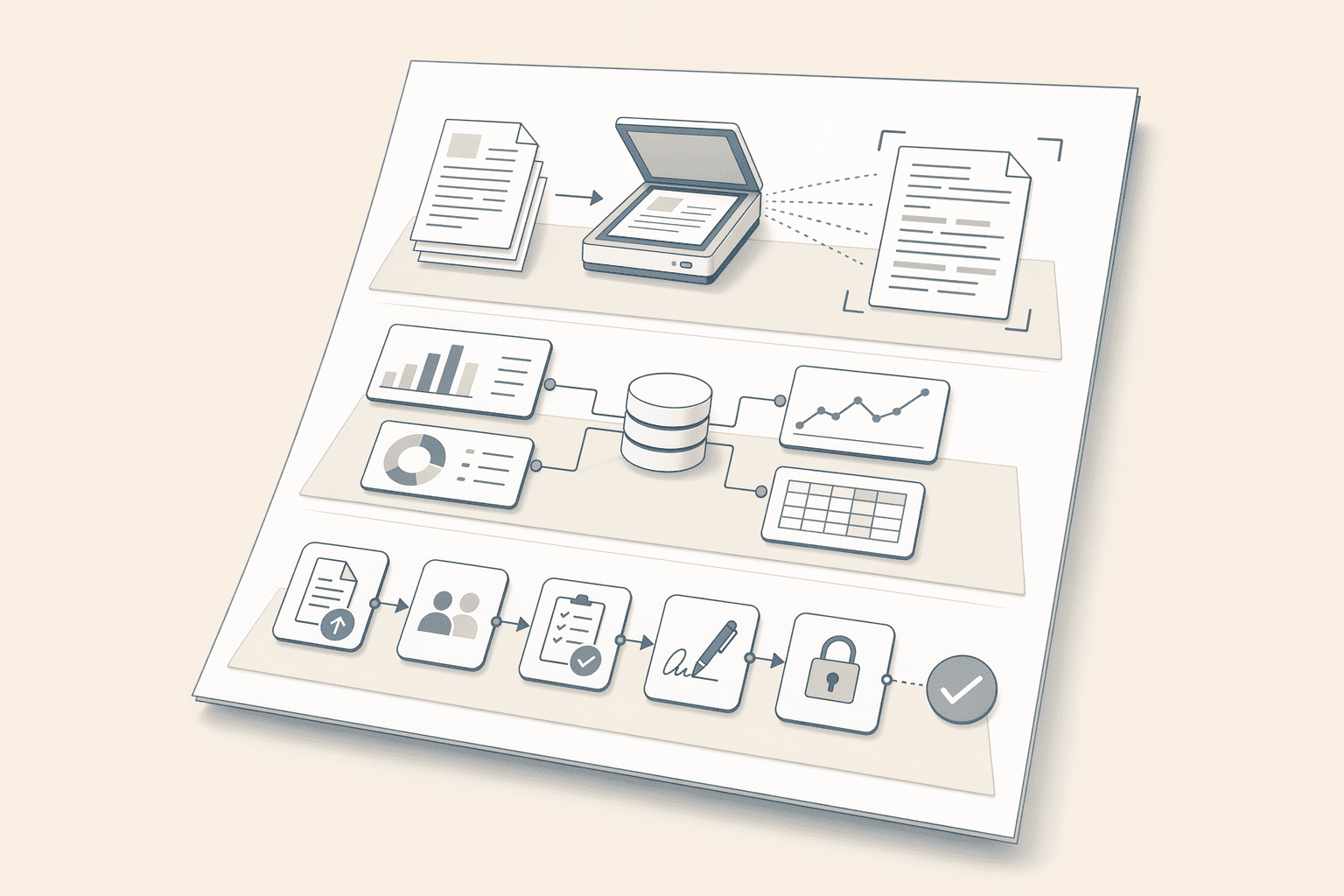
Choosing the right platform depends on your organization’s primary contract challenge. High-volume document processors prioritize speed and OCR accuracy; teams integrating contract data into BI dashboards need a lightweight intelligence layer; and organizations managing end-to-end contract workflows require full-stack CLM capabilities. Below is a three-tier framework that maps business need to platform category.
High-Volume Document Processing: DigiParser, Unstract
Organizations processing thousands of contracts monthly, often with scanned PDFs or mixed formats, need extraction engines optimized for throughput. Tools like ContractExtraction.com handle any contract format on the first upload and require no templates or training data. DigiParser and Unstract prioritize OCR accuracy and batch processing, trading semantic clause intelligence for sheer speed. Expect deployment within days, but limited workflow automation.
BI Intelligence Layer: Contracts.ai
Finance and legal teams needing contract data in BI dashboards, without replacing existing CLM systems, benefit from intelligence-layer platforms. Contracts.ai extracts key terms and pushes structured data to NetSuite, Power BI, or Tableau, but does not support contract workflows such as approvals. This approach integrates easily and deploys faster (2-4 weeks versus 8-12 for full-stack CLM), ideal for augmenting, not replacing, existing systems.
Full-Stack CLM with Extraction: Contract Logix, Volody
Teams needing drafting, approval routing, e-signature, and post-execution extraction in one system should evaluate full-stack CLM platforms. Enterprise platforms like Sirion, Icertis, DocuSign CLM, Agiloft, and Ironclad each offer different strengths across AI, workflow automation, governance, and collaboration. Contract Logix and Volody combine clause extraction with native workflow engines, covering more ground but requiring longer implementation (8-12 weeks) and change-management support.
Conclusion
Intelligence layer platforms like Contracts.ai deploy faster and integrate easily but lack approval workflows, teams needing both extraction and end-to-end CLM workflows should evaluate full-stack platforms like Contract Logix. High-volume processing platforms prioritize extraction speed and OCR accuracy but offer limited semantic clause intelligence, BI use cases requiring obligation tracking and compliance reporting need platforms with advanced clause identification.
As generative AI models improve clause-level extraction accuracy, the distinction between intelligence layers and full-stack CLM platforms will narrow. The integration architecture and data governance controls will become the primary differentiation points for enterprise buyers.
Explore Contracts.ai’s pre-built BI integrations and request a demo to see how the intelligence layer connects to your existing CLM and analytics tools without replacing workflows.
Frequently Asked Questions
What is structured contract data and why does it matter for BI?
Structured contract data consists of machine-readable metadata fields, parties, dates, values, renewal terms, termination clauses, that BI tools can query and aggregate. Unlike unstructured PDFs, structured data enables renewal forecasting dashboards, spend analysis reports, and obligation tracking workflows.
How accurate are AI contract extraction platforms?
Extraction accuracy varies by contract complexity and clause type. Administrative metadata (dates, parties, values) achieves 95%+ accuracy, while semantic clause identification (liability caps, termination rights) requires human validation workflows. Contracts.ai reports 99%+ accuracy on real-time document extraction, though public benchmarks remain scarce.
Do I need to replace my existing CLM system to use contract intelligence software?
No, intelligence layer platforms like Contracts.ai integrate with existing CLM systems via API, adding BI capabilities without replacing workflows. These platforms extract and analyze contracts without offering approval routing or negotiation tools. Full-stack CLM platforms bundle extraction with end-to-end lifecycle management.
What BI tools integrate with contract intelligence platforms?
Leading platforms integrate with Tableau, Power BI, Looker, and Sisense through REST APIs, pre-built connectors, or CSV export. Some offer webhooks for real-time dashboard updates. Integration methods vary: intelligence layers focus on API-first connectivity, while full-stack CLM platforms embed analytics modules.
How long does it take to implement a contract intelligence platform?
Mid-market deployments typically require 2 to 8 weeks. Intelligence layer platforms deploy faster than full-stack CLM systems because they integrate via API without replacing existing workflows. High-volume OCR processing may extend timelines when training models on legacy document templates.
What security certifications should I look for in a contract intelligence platform?
Enterprise deployments require SOC 2 Type II certification, GDPR and CCPA compliance, data residency controls, role-based access at document and clause levels, and audit logging for every extraction event. Contracts.ai maintains SOC 2 and SOC 3 certification with encryption at rest and in transit.
Can contract intelligence platforms handle scanned or image-based contracts?
Yes, platforms with OCR capabilities (DigiParser, Unstract) extract data from scanned PDFs and images. OCR accuracy depends on scan quality and document formatting; native digital PDFs deliver higher extraction accuracy than scanned documents. High-volume processing platforms prioritize OCR throughput for legacy archives.
Sources
- Extract Data from Contracts & Agreements Automatically – www.digiparser.com (2026)
- Best AI CLM Tools in 2026 – 5 Compared – awesomeagents.ai (2026)
- Best CLM with OCR and Metadata Extraction 2026: 7 Platforms – bindlegal.com (2026)
- Ironclad: AI Contract Lifecycle Management Software – ironcladapp.com
- Turning contracts into searchable data at OpenAI – openai.com
- Icertis Contract Management Software Reviews & Product Details – G2 – www.g2.com
- Best CLM Software for Mid-Market Companies (2026) – Bind – bindlegal.com (2026)
- Why A Clm Tool Is Crucial… – premikati.com