








Introduction
Somewhere in your accounts payable stack, a supplier is billing above the contracted rate. Another is rounding hours in a way your MSA never allowed. The dollars leak in the gaps between what was signed and what gets paid.
Organizations that conduct regular compliance audits recover 2 to 4% of the total transaction value audited through identified overbillings, missed discounts, and billing errors. That is revenue you already negotiated and earned. It just never hits your ledger. A Fortune 500 GC office reported catching over $XXX,000 in non-compliant billing in a single quarter once they automated the process, according to LuMay’s customer data.
Manual contract review cannot keep up. Legal teams that rely on manual contract authoring spend an average of two weeks per standard agreement, so post-signature audits are rare precisely because the effort is enormous. Pricing deviations, unapproved rate escalations, and SLA penalties buried across MSAs, SOWs, and POs go unnoticed.
A new category of AI-driven contract intelligence platforms solves this by reconciling contract-to-invoice data, flagging departures, and surfacing billing errors. Here is a closer look at seven tools that detect contract deviations automatically.
Key Takeaways
Automated deviation flagging has shifted from a labor-intensive audit exercise to a real-time operational layer. Here is what the market looks like right now:
- Recoverable leakage is substantial: Regular compliance audits uncover overbillings, missed discounts, and errors totaling 2 to 4% of audited transaction value.
- Post-signature intelligence is a category: Platforms now sit above existing CLM and ERP stacks, structuring contract data and reconciling it against invoices without a rip-and-replace overhaul.
- Unstructured text is the primary hurdle: Leading engines read and interpret amendments, SOWs, and legacy clauses to find hidden billing deviations.
- Integration depth defines scope: Effective tools connect to ERP, P2P, and CRM systems to compare negotiated terms against actual spend automatically.
- Pilot without migration is possible: Several platforms, including Contracts.ai, allow you to test on a limited contract set without disrupting existing workflows or migrating the full repository.
1. Contracts.ai: SOC 3, Backed Post-Signature Vigilance That Sits on Top of Your Stack

Contracts.ai is your top pick when you need a security-forward, post-signature intelligence layer that deploys quickly without swapping out your existing CLM or ERP. The platform converts executed agreements into structured data infrastructure, extracting key terms across legacy and live contracts in minutes.
You can pilot Contracts.ai with a limited contract set instead of moving your entire repository. There is no need to migrate the full database to test its ability to flag anomalies. The product ingests signed PDFs and Word files, preserves source language alongside structured fields, and automatically groups related agreements to align shared terms across vendors, regions, or deal types.
This stack-agnostic approach surfaces deviations without operational downtime.
Contracts.ai segments customer data with logical isolation, encrypts data in transit and at rest, and binds its HIPAA obligations through executed Business Associate Agreements. Customer Contract Data is not used to train public or shared models unless you explicitly agree. The product is an intelligence layer sitting on top of your existing systems. Plans start at a $49 per month Enhanced plan billed annually.
2. SimpliContract: Unstructured Text Interpretation for Multi-Supplier Hierarchies
Most platforms stop at metadata. SimpliContract’s proprietary mNemoAI engine reads the actual contract language. It interprets unstructured text across MSAs, SOWs, POs, and amendments to map multi-supplier hierarchies, detect term departures, and surface billing deviations that manual reviews miss.
mNemoAI reconciles contract-to-invoice and contract-to-rate data automatically. It flags overbilling, leakage, missed rebate thresholds, and pricing deviations, then pulls it all into a risk score with fallback recommendations. For an enterprise managing hundreds of supplier relationships, this turns a quarterly audit fire drill into a continuous detection loop.
| Capability | SimpliContract mNemoAI | Manual Post-Signature Audit |
|---|---|---|
| Unstructured text interpretation | Reads and structures clauses from legacy MSAs, SOWs, and POs | Reviewer scans documents line by line; high miss rate |
| Contract-to-invoice reconciliation | Automated matching of invoice line items to negotiated rates | Requires spreadsheet reconciliation against original documents |
| Multi-supplier hierarchy mapping | Connects terms across related agreements and amendments | Manual cross-referencing across siloed contracts |
| Deviation response | Risk scoring with fallback recommendations | Findings require ad-hoc escalation and negotiation |
3. Icertis Contract Intelligence: AI-Powered Obligation and Deviation Management
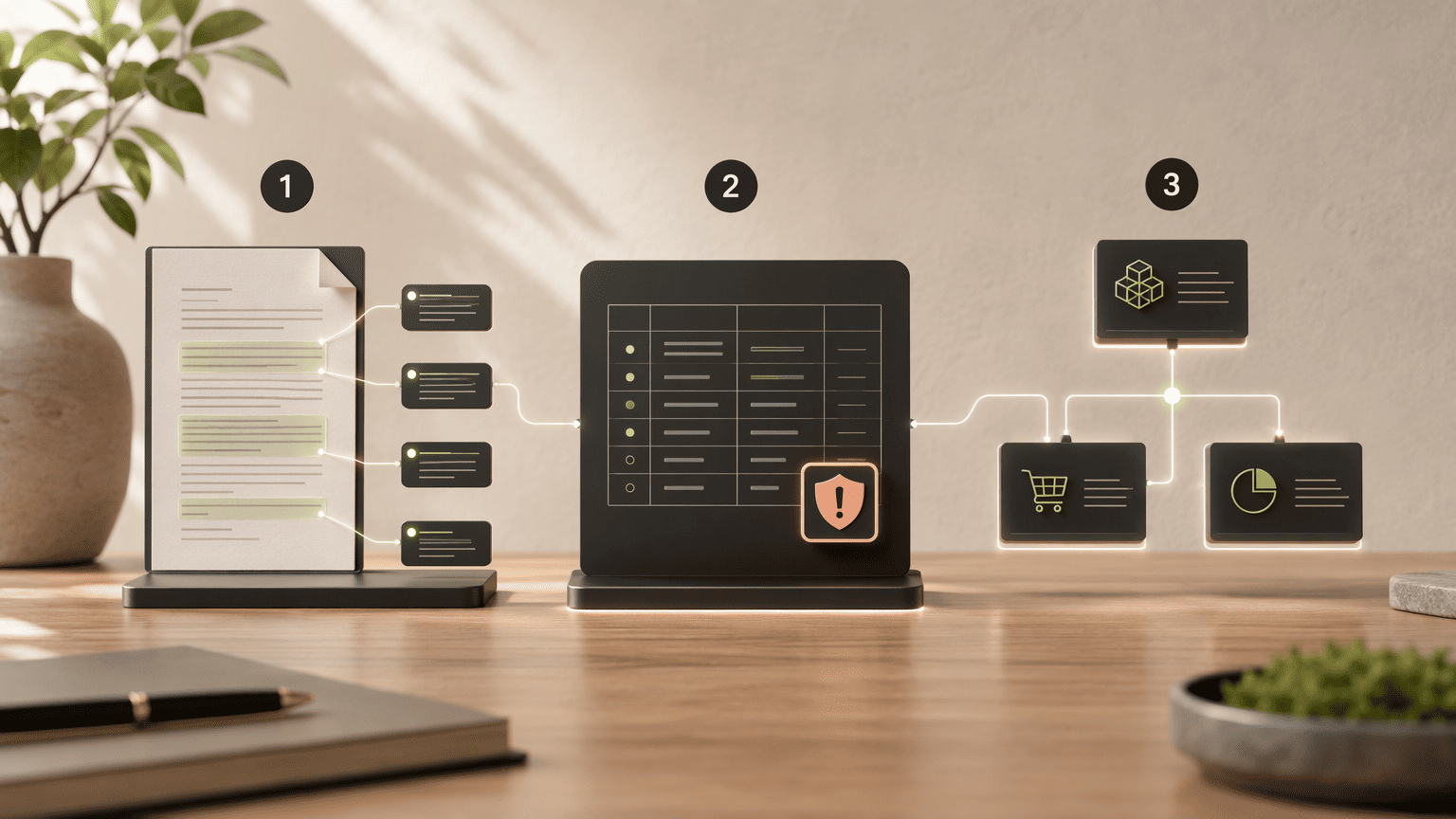
Icertis approaches deviation detection with obligation modeling that turns contract language into live governance rules according to these sequential steps:
- Pulls out obligations, rights, and clauses with AI and maps them into a structured data model.
- Generates automatic compliance flags when an invoice lands outside a modeled obligation or a performance term slips past an agreed SLA.
- Triggers those flags by connecting directly to ERP, procurement, and finance platforms to evaluate billing terms against actual transaction data in real time.
4. SirionLabs: Outcome-Based Supplier Performance and Automated Invoice Audits
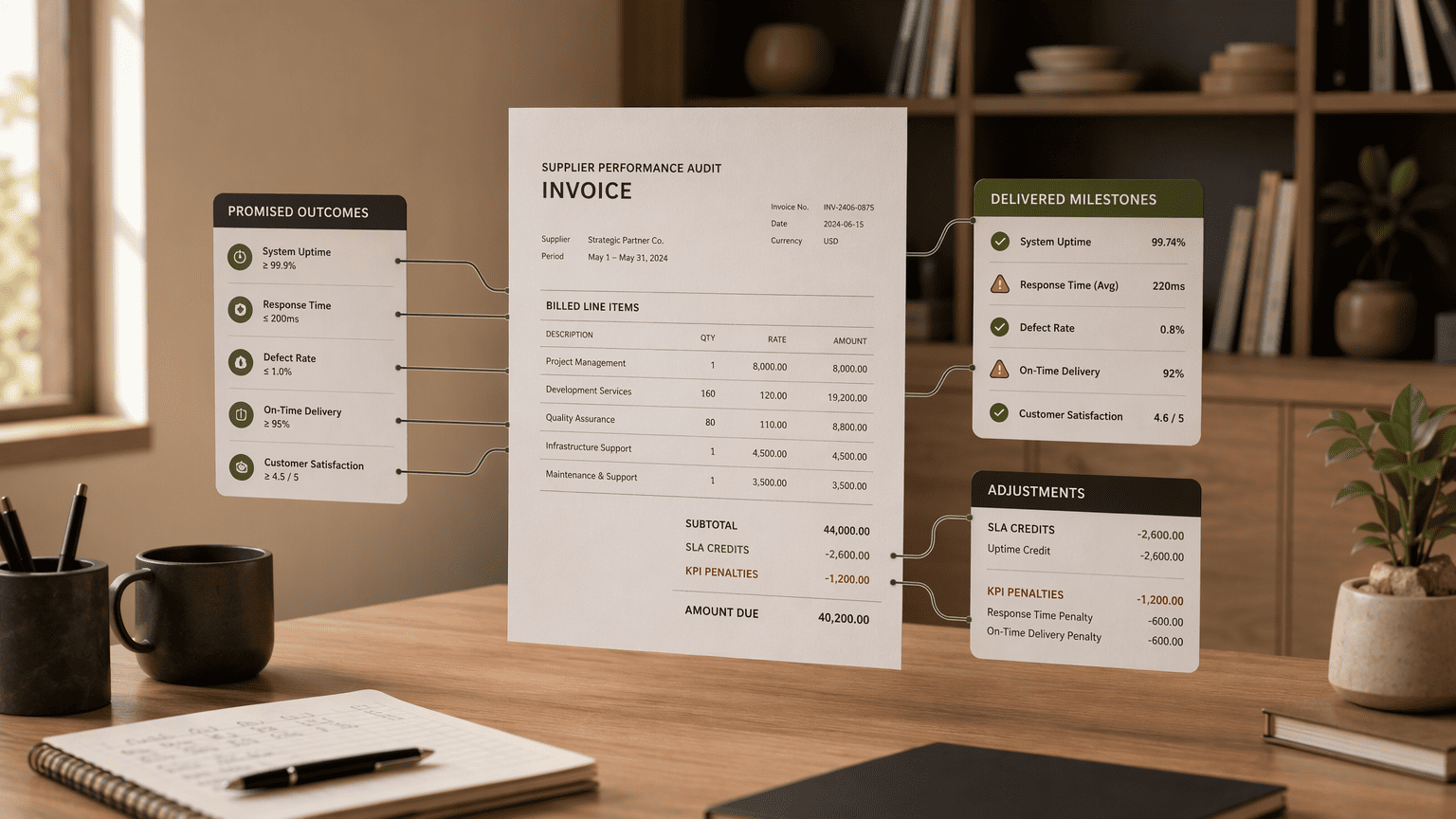
SirionLabs connects the dots between what a supplier promised, what they delivered, and what they billed. The platform emphasizes outcome-based supplier management, tracking SLA credits, KPI penalties, and delivery milestones against invoice line items. This focus makes it particularly effective for services spend where the gap between contract language and actual performance creates the biggest billing discrepancies.
SirionLabs automates the audit workflow so that missed penalties surface every payment cycle on their own. Your team gets a continuous reconciliation engine that flags underperformance and billing mismatches systematically, rather than waiting on a periodic compliance sweep.
5. Evisort: AI-Powered Clause Search and Automated Contract Audits
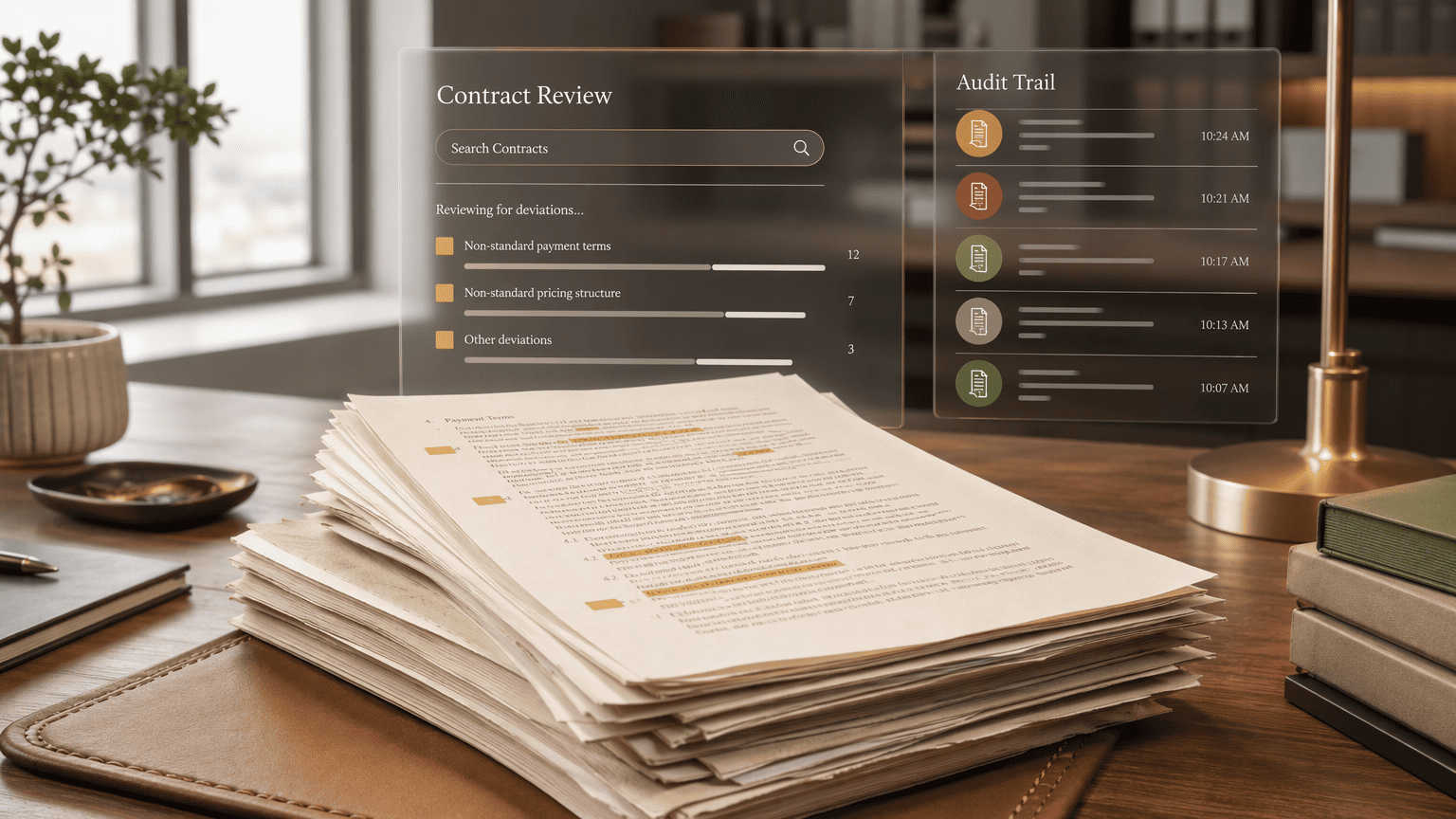
Evisort is built for speed and simple deployment. Its AI identifies clauses without heavy configuration or a lengthy taxonomy setup. You can drop in an entire legacy contract portfolio and immediately search for non-standard terms and billing clauses.
The automated audit trails matter because they keep a clear record of why a deviation got flagged. When a payment term or pricing clause departs from your company’s standard template, Evisort surfaces the mismatch and logs the finding.
This rapid, no-code search suits legal and finance teams that need to tackle a backlog of agreements today, not after a six-month implementation.
6. Malbek: Deviation Detection Within a Flexible CLM Lifecycle
Malbek embeds deviation detection directly into the contract lifecycle. The platform uses clause playbooks to define standard terms and automatically flags departures during authoring and again after signature. A billing term variation that slips past the front-end review still gets caught in post-signature governance.
Malbek ties term variations to downstream billing milestones and alerts. When a negotiated price or rebate threshold sits outside the playbook, the system triggers a notification linked to that specific obligation. For teams that want a CLM with deviation detection built into the core workflow, Malbek fits naturally. Contract governance becomes a continuous process rather than a corrective fire drill you run only after a supplier overbills by 20%.
7. Agiloft: Customizable Workflows for Contract Compliance and Billing Triggers

Agiloft gives you a no-code workflow engine to construct compliance rules that match your exact billing verification needs. It is designed for enterprise teams that have specific, sometimes idiosyncratic, contract terms and want to encode them into automated triggers. When a billing term is violated or an invoice amount falls outside contractual parameters, the system fires an alert directly to the responsible team or integrates with your ERP for automatic verification hold.
Agiloft’s strength is in linking contract data directly to financial systems, enabling invoice verification that checks actual spend against negotiated pricing.
Not every deviation needs to halt a payment run.
For organizations that want a compliance backbone they can shape themselves without heavy IT involvement, Agiloft offers the granularity to match complex commercial structures. It is a powerful option when your billing landscape contains many bespoke pricing models that off-the-shelf deviation rules cannot cover.
Conclusion
Your choice settles into one of two buckets: a lightweight overlay that reads contracts without touching your existing stack, or a full CLM that bakes deviation checks into each stage of the deal. Which one fits depends less on feature lists and more on how you actually work.
Contracts.ai operates as a fast security-and-intelligence layer for teams that want post-signature vigilance without uprooting the tools they already use. It connects, scans, and surfaces what’s off, no migration required. That matters when time is the scarce resource.
Other platforms anchor themselves around a different problem. SimpliContract and SirionLabs both build their value around deep contract-to-invoice reconciliation, catching dollar leaks where the negotiated terms meet the actual bills.
Match the tool to three realities: the complexity of your contract landscape, how cleanly it needs to slot into systems you can’t swap out, and the speed at which you need to stop leakage you already know is bleeding somewhere.
Frequently Asked Questions
How do AI-powered platforms automatically detect contract deviations from standard terms?
They use AI engines to read and structure unstructured contract text, then map clauses against standard playbooks or company templates. When a term, such as a pricing clause or SLA level, departs from the benchmark, the platform flags the deviation and typically assigns a risk score so a human reviewer can act.
What types of billing errors can contract analysis tools identify after signature?
They detect overbilling, missed discount or rebate thresholds, incorrect rate application, omitted SLA penalties, and pricing deviations. The core mechanism is contract-to-invoice reconciliation: matching the actual invoice line items back to the negotiated rates and terms in the executed agreement.
What is Contracts.ai and how does it flag post-signature contract and billing issues?
Contracts.ai is a post-signature contract intelligence platform that extracts and structures key terms from executed agreements. It flags deviations by organizing terms across vendors and deal types, encrypting data at rest and in transit, and sitting on top of your existing CLM or ERP stack as a dedicated oversight layer.
Manual reviews cannot scale: legal teams spend an average of two weeks on a single standard agreement. Automated detection continuously reconciles contract-to-invoice data across entire portfolios, surfaces deviations in real time, and recovers 2 to 4% of audited transaction value that human spot-checks routinely miss.
What security and compliance certifications should an enterprise contract intelligence platform possess?
When evaluating a platform, look for these key security and compliance features:
- Documented incident response and breach remediation procedures
- Role-based access with least privilege
- Encryption in transit and at rest
- Business Associate Agreements and HIPAA alignment, if the platform handles PHI
What does it cost to deploy an AI-driven contract deviation and billing audit tool?
Entry points vary. One platform, Contracts.ai, offers an Enhanced plan at $49 per month billed annually with discounted pricing for nonprofits and educational institutions. Enterprise deployments with API access, custom models, and multi-system integration generally involve custom pricing based on contract volume and required features.
Sources
- Contracts.ai – contracts.ai
- Contract Compliance Audit 2026: Types, Benefits, and Process – www.hyperstart.com
- AI for Legal: Transforming Legal Practice | LuMay.ai | LuMay – www.lumay.ai
- SimpliContract – AI Contract Intelligence & Orchestration Platform – www.simplicontract.com






