








Introduction
Your AP team just posted another quarter. Somewhere in a shared drive, a spreadsheet claims you earned $67,000 in supplier rebates. Your actual check is half that, and nobody can reconcile the gap. This is procurement’s quiet crisis. Organizations routinely let 10 to 15% of procurement spend in rebates slip through the cracks, not because the deals are bad, but because tracking them manually across scattered contracts and invoices is a losing game.
Industry benchmarks peg the standard leakage rate at 2 to 5% of rebate value, routinely climbing to 10 to 15% in organizations without a centralized system. In some documented cases, more than half of earned discounts simply never get claimed. The core problem is structural: rebate terms in complex B2B agreements are messy. They hinge on volume tiers, growth targets, mix requirements, and time-bound promotions that your ERP, built for linear procure-to-pay workflows, was never designed to enforce.
AI-powered rebate management software closes this gap. Instead of requiring a rip-and-replace ERP overhaul, these tools extract structured rebate terms from your executed contracts and automatically link them to live transaction data from systems like SAP and D365. One platform, ISPnext, demonstrated a 91.3% recovery rate on €2.84M in accrued rebates during FY2026.
In healthcare, Genesis AHC’s Contract Management helped Allegheny Health Network compress price deviation leakage from $5.7M to under $250K. These are not aspirational outcomes. They are the direct result of moving rebate capture from a manual reconciliation chore to an automated contract enforcement function.
Below, we examine seven vendors that make that transition possible.
Key Takeaways
Here’s how the landscape looks after evaluating seven contract rebate management platforms across integration depth, recovery proof points, and enterprise fit.
- Best intelligence layer over existing ERP: Contracts.ai extracts and structures rebate terms from executed agreements and links them to live spend data without replacing your procurement stack.
- Best dedicated B2B rebate platform: Enable handles the full complexity of trading partner agreements with collaborative deal-building, automated accrual journals, and multi-party claiming workflows.
- Strongest empirical ROI proof point: ISPnext published a verified 91.3% recovery rate on €2.84M in accrued rebates in FY2026, making it the clearest hard-dollar case on this list.
- Must-have feature triad: The non-negotiable capabilities are automatic rebate accrual from live transaction data, real-time dashboards that contrast accrued against claimed amounts, and audit workflows that satisfy finance controls.
1. Contracts.ai, The Rebate Intelligence Layer Over Your Existing Stack

You already have an ERP, a procurement system, and a contract repository. What you lack is the bridge that connects rebate clauses in static agreements to the live transaction data that proves their fulfillment. Contracts.ai builds that bridge.
Founded in 2025 by operators who collectively spent more than three decades implementing CLMs and ERPs inside global enterprises, the platform is designed as a post-signature intelligence layer. It ingests executed agreements, extracts structured rebate terms, and aligns them with related contracts so that shared obligations across agreements become visible, not buried. The core logic is deliberately bounded: Contracts.ai does not try to replace your existing workflow or approval engine. It activates the data already locked in your contracts, making it usable by finance and procurement systems that need the trigger logic for accrual and claim calculations.
Because the platform claims real-time extraction accuracy above 99% and links every answer to its source contract language, the audit trail is built in. You can run a pilot on a limited set of agreements without migrating your full repository.
2. Enable, The Purpose-Built B2B Rebate Management Platform
Where Contracts.ai functions as the intelligence layer, Enable operates as the collaborative backbone for trading partners negotiating, tracking, and settling complex rebate agreements. It is a dedicated B2B rebate management platform recognized inside SAP’s own partner ecosystem for handling the messy reality of commercial agreements between distributors, manufacturers, and retailers.
Enable’s core differentiation lies in its deal types. Volume rebates, growth targets, and promotional accruals are all structured as native deal objects, not as generic line items in a contract record. Each deal carries an automated accrual journal that calculates earned rebates as transactions occur, reducing the month-end scramble to reconstruct what should have been captured weeks earlier.
The collaborative portal flips the typical buyer-supplier dynamic. Instead of a one-sided tracking spreadsheet, both parties operate against a shared, auditable set of deal terms and transaction data. This cuts the reconciliation disputes that eat into rebate recovery rates. For enterprises running multi-tier distribution programs, that shared view of accrued versus claimed amounts translates directly into captured cash.
Enable’s integration with SAP financial management tools signals its enterprise readiness, but the platform’s real weight is felt in organizations where rebate settlements are high-frequency, high-value, and structurally adversarial if not managed transparently.
3. ISPnext, AI-Powered Spend Control with a Proven Recovery Rate

Vendors in this category make claims about capture rates. ISPnext published a number. In FY2026, one customer using its centralized rebate management module achieved a 91.3% recovery rate on €2.84M in accrued rebates. That hard-dollar recovery figure shifts the procurement conversation from theoretical ROI to verified financial close.
ISPnext’s methodology starts with recording, tracking, and realizing supplier discounts and refunds in a centralized repository. Once captured, the platform tracks performance against those agreements automatically by linking to live procurement and invoice data flowing through the 30 plus standard ERP integrations it supports, including SAP, D365 Business Central, and Oracle JD Edwards. No customization required; no middleware buildout.
The platform’s spend control architecture builds rebate tracking directly into source-to-pay workflows. When an invoice hits the system, it is validated against the applicable rebate schedule, and the accrual entry is generated as part of the standard processing cycle.
This matters operationally because it removes the single biggest failure point: the manual reconciliation spreadsheet that gets updated once per quarter, always after the fact.
4. Icertis, Enterprise CLM with Deep Contract-to-Pay Rebate Enforcement
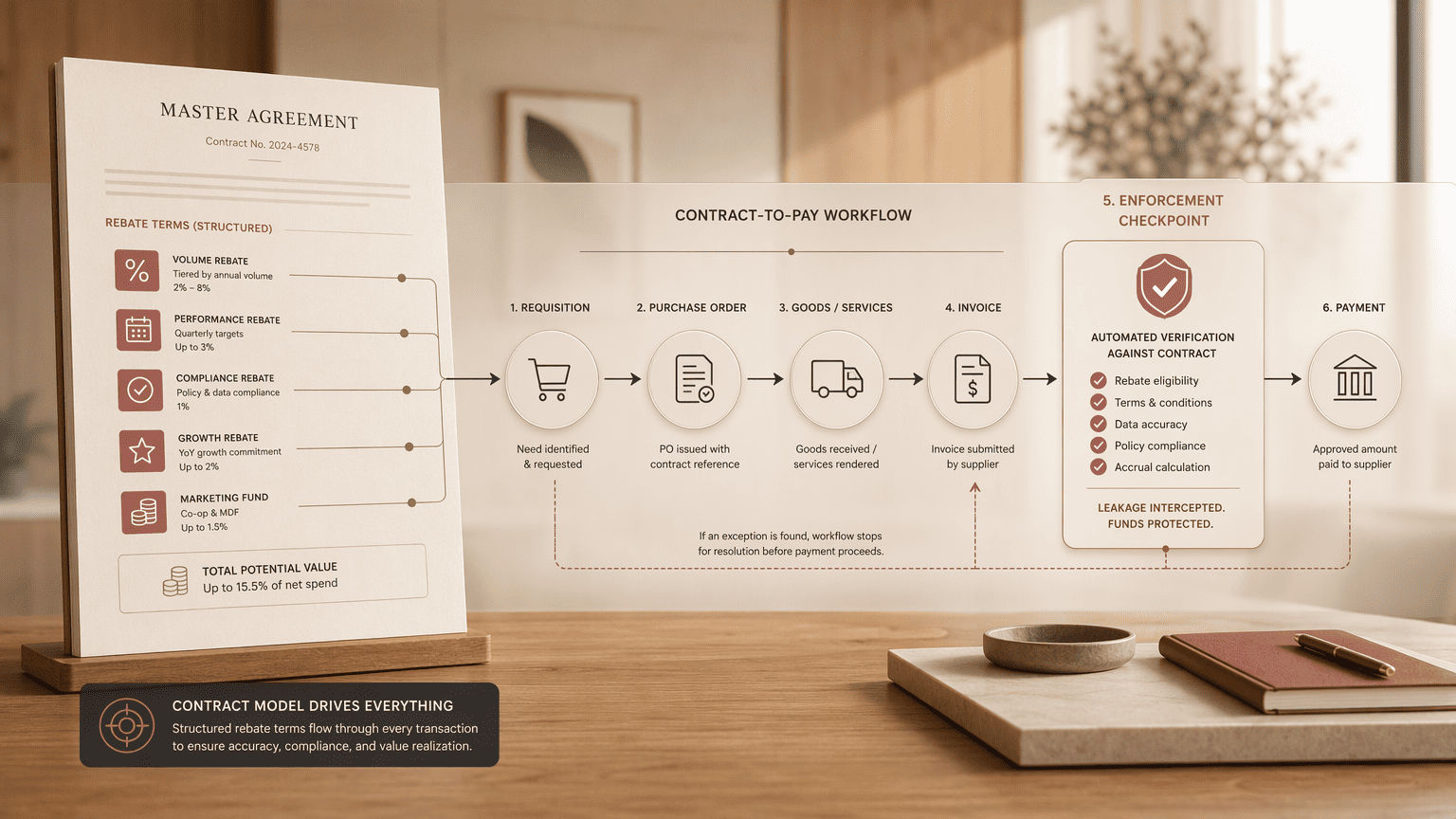
Most CLMs treat rebate clauses as static metadata. Icertis makes them enforceable. Its enterprise platform structures complex rebate terms directly in the contract model. Those terms then govern the procure-to-pay cycle, so leakage gets caught at the point of transaction instead of after the money has already left.
Genesis AHC’s Contract Management, built on similar contract-to-pay enforcement logic, demonstrates the result. Allegheny Health Network compressed its price deviation leakage from $5.7M to under $250K by enforcing contract terms before payment. Valleywise quadrupled quarterly rebate capture from $67K to $250K.
Mary Rutan Hospital hit 96% contract compliance. Off-contract spend gets flagged at the point of order. Rebate triggers fire from the contract model itself.
For a large enterprise where rebate enforcement lives inside a legally governed contract-to-pay process, Icertis closes a gap generic ERPs leave open. The system ingests every contract, AI-matches it to the item catalog within 24 hours, and validates it at both the ordering and invoicing stages. A rebate becomes a programmed outcome because the terms were structured upstream to execute.
5. Vendavo, Profit Optimization Through Commercial Agreement Intelligence
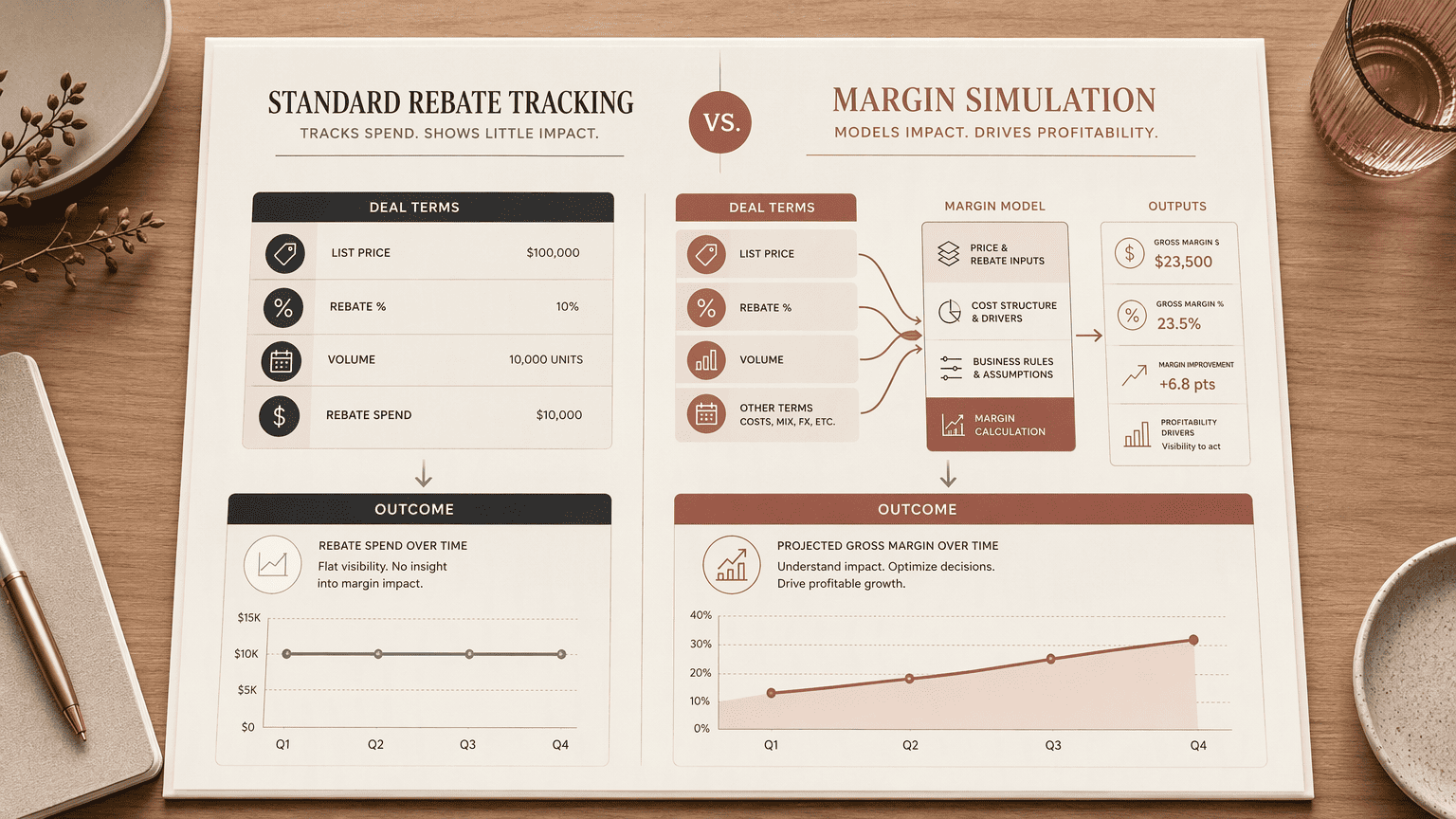
If the first four vendors answer ‘did we capture the rebate we earned?’ Vendavo answers a sharper question: ‘did we structure a deal where the rebate actually improves our margin?’ Its commercial agreement intelligence platform models rebates and incentives as profitability levers, running margin impact simulations before a deal ever reaches the contract.
The key dimensions where Vendavo’s approach differs from standard rebate tracking appear below.
| Dimension | Standard Rebate Tracking | Vendavo Profit Optimization Approach |
|---|---|---|
| Primary focus | Capturing discounts already negotiated | Modeling deal profitability with rebates and incentives before and during negotiation |
| Key workflow | Accrual tracking against supplier terms | Pricing science applied to commercial agreements; margin impact simulation |
| Outcome metric | Recovery rate (percentage of earned rebates claimed) | Rebate-enhanced margin contribution; deal-level profitability |
| Best-fit user | Procurement and AP teams | Commercial leaders, pricing managers, and deal desk operators |
| Typical deployment | Integrated with source-to-pay and ERP systems | Connected to CPQ, CRM, and pricing analytics engines |
6. XaitPorter, Collaborative Document Automation for Complex Rebate Agreements
A tracking system is only as good as the rebate terms it reads. XaitPorter tackles the problem at its source: the drafting of long, high-value contracts that pack in detailed rebate schedules. Get the language wrong at this stage, and the tracking failures that follow are nearly impossible to fix with software alone.
In sectors where rebate agreements stretch across dozens of pages and mix multi-tier volume thresholds, growth targets, and product-mix conditions, the collaborative drafting environment forces consistency across everyone who touches the document. When a rebate schedule carries formula errors or trigger language that could be read two ways, downstream extraction engines spit out unreliable accruals. Better tracking logic downstream cannot rescue bad terms upstream. XaitPorter’s document automation cuts that variance at contract creation. Cleaner, more structured terms flow into whatever rebate management system sits behind it.
7. Conga, Contract Lifecycle Management with Revenue Rebate Tracking
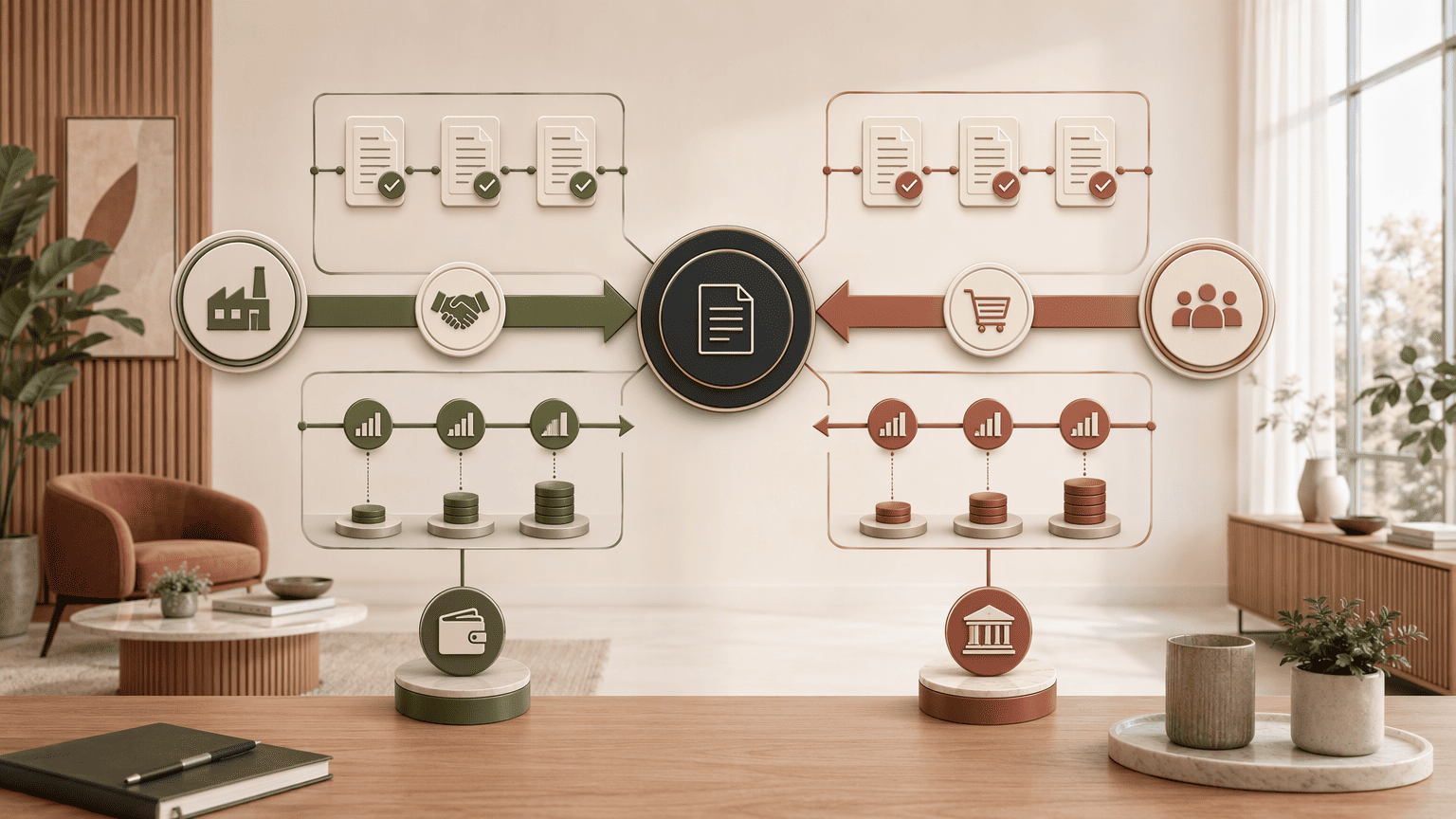
Conga addresses a structural need many organizations overlook: rebates flow in both directions. You pay suppliers rebates tied to procurement volume, and your customers earn revenue-side rebates tied to their purchase commitments. Most tools track one. Conga’s CLM and revenue lifecycle integration handles both sides of a supplier-customer rebate program from a single contract performance management framework.
- Bidirectional rebate tracking: Conga manages procurement-side rebates owed to you by suppliers and sales-side rebates you owe to customers, with automated obligation tracking for both streams.
- Revenue lifecycle integration: The contract lifecycle feeds directly into revenue recognition workflows, ensuring that accrued customer rebates are accurately reflected in financial reporting rather than sitting in a separate spreadsheet.
- ERP and CRM connectivity: Native connectors to major CRM and ERP systems mean that a rebate trigger on a sales contract is visible to both the billing team and the supply chain team simultaneously.
- Contract performance management: Compliance monitoring extends beyond simple rebate fulfillment to cover the full set of contractual obligations, which matters when rebates are one of many performance clauses you need to enforce.
Conclusion
The data is unambiguous. Generic ERPs and standalone spreadsheets leak between 10% and 15% of rebate value, sometimes more. Specialized software reverses that math.
Your choice among these seven platforms turns on a single filter: are you trying to stop the leakage inside your existing stack, or are you rebuilding the underlying enforcement logic? Contracts.ai operates as an intelligence layer within your current systems, and Enable functions as a collaborative trading engine.
Icertis and ISPnext validate at the point of transaction; Vendavo handles profitability modeling. Match that pain point to the platform, and your rebate recovery rates move from a quarterly surprise to an engineered outcome.
Frequently Asked Questions
What is contract rebate management software and how does it track spend against rebate terms?
Contract rebate management software is a specialized tool that automatically extracts rebate terms such as volume tiers, growth targets, and promotional discounts from supplier agreements and tracks live transaction data against those conditions. It replaces manual spreadsheet reconciliation by calculating earned rebates and generating accrual entries as invoices and purchase orders flow through integrated ERP systems.
Which software solutions are best for capturing supplier rebates and monitoring contract compliance in 2026?
The best solutions fall into three categories:
- AI intelligence layers: activate rebate data inside existing ERP stacks (Contracts.ai).
- Purpose-built B2B rebate platforms: offer collaborative claiming workflows (Enable).
- Enterprise CLM tools: enforce rebate terms at the point of transaction before leakage occurs (Icertis, ISPnext).
How does AI-powered contract intelligence improve rebate capture compared to traditional CLM or ERP systems?
AI contract intelligence extracts structured rebate terms from executed agreements and links them to live transaction data automatically, rather than leaving clauses as static text in a repository. This eliminates the manual gap between contract language and payment triggers, catching off-contract spend before the invoice gets paid rather than identifying missed rebates retrospectively.
What key features should I look for when choosing software to track spend against complex rebate agreements?
Prioritize these core capabilities in your rebate management software:
- Automatic rebate calculation and accrual from live transaction data
- Real-time dashboards showing accrued versus claimed amounts
- Centralized rebate agreement repositories
- Audit trails for finance controls
- Native ERP integrations that avoid middleware buildout
- Collaborative portals that give suppliers and buyers a shared transaction view to reduce reconciliation disputes
How can companies implement rebate tracking without replacing their existing contract or procurement systems?
Deploy an intelligence layer like Contracts.ai that sits on top of your existing ERP, procurement, and contract repository stack. These tools extract structured rebate data from executed agreements and push trigger logic into your current systems. A pilot can begin with a limited contract set, requiring no migration of the full repository or workflow disruption.
Sources
- Vendor Rebate Management | Vendortell – vendortell.com
- Enable International, Inc | Enable Rebate Management Platform – SAP – www.sap.com
- Supplier rebate management | claim every rebate you earn – www.ispnext.com
- Genesis Contract Management | Healthcare Contract Compliance – www.genesisahc.com






