







Introduction
A single purchase card transaction slipping past a $5,000 threshold doesn’t sound like a crisis. But when a county auditor sampled 15 vendors and found 6 had racked up over $25,000 each with no contract at all, the scale of invisible vendor leakage becomes clear. Those six vendors alone represented 326 purchases.
That pattern repeats across private companies every quarter. Manual spot-checks catch a fraction of the problem. The Harford County audit managed to review just 36 contracts from a pool of roughly 1,000, and still surfaced missing signatures, unjustified awards, and spending that blew past Not-to-Exceed limits. You are left wondering what the other 964 contracts would have revealed.
The tools below do not sample. They ingest every transaction, every clause, and every renewal trigger, then surface the exceptions continuously. This list ranks eight AI-driven platforms that identify unauthorized vendor spending before it compounds into a material audit finding.
Key Takeaways
- Contract leakage hides in the gaps between your procurement system and your payment rails. 58% of procurement leaders are already deploying or planning AI to close those gaps inside 12 months.
- The strongest detection tools sit on top of your existing ERPs as an intelligence layer. You can pilot one on a limited contract set without touching live workflows or migrating the full repository.
- Continuous monitoring outperforms periodic sampling every time. When an audit of 15 high-spend vendors turned up 4 that exceeded their contract’s Not-to-Exceed amounts, the real number across the full vendor base was almost certainly higher, and an automated system would have flagged every single one.
1. Contracts.ai, The Intelligence Layer That Catches Spending Gaps Your ERP Misses
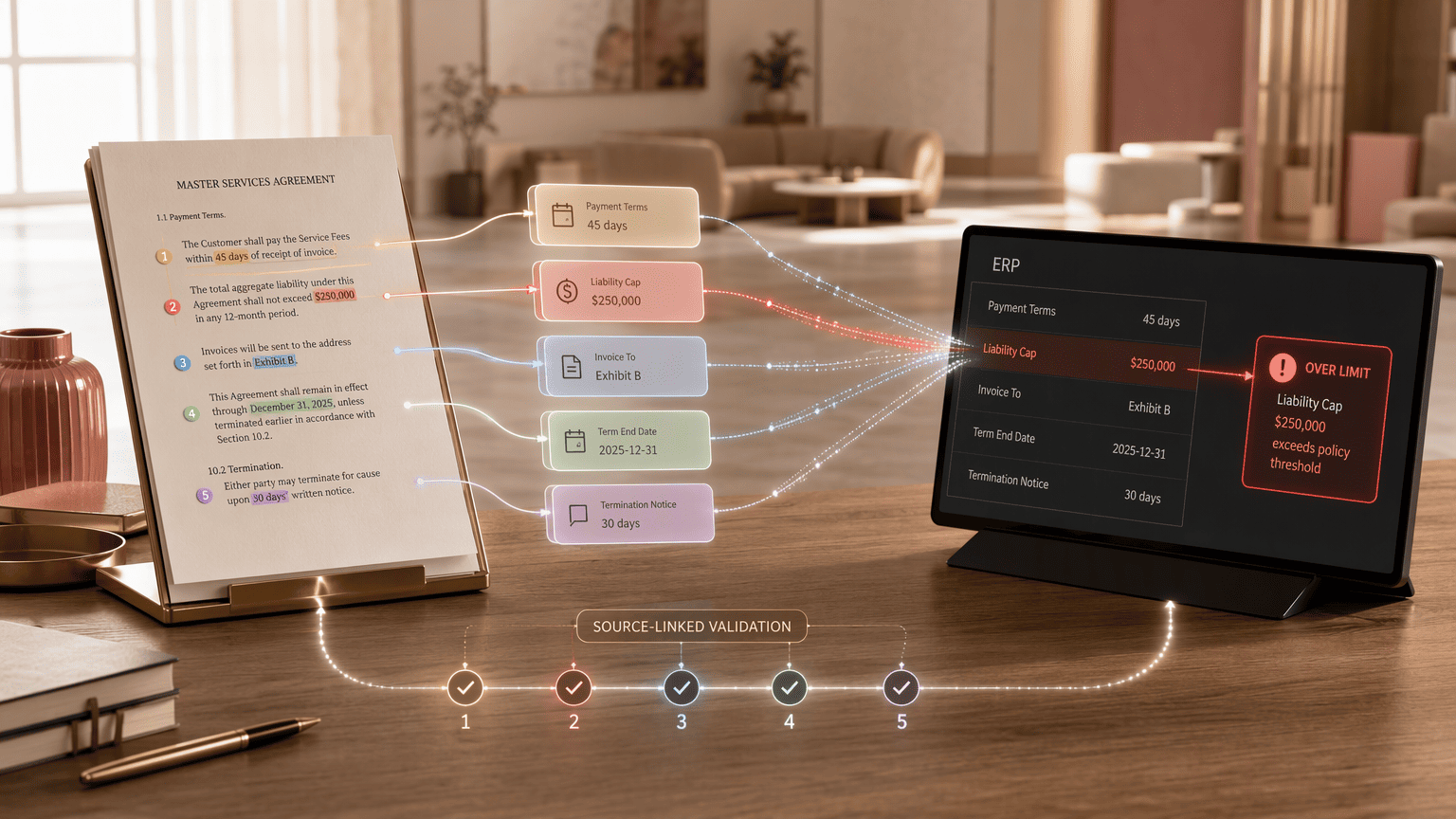
Contracts.ai audits spending anomalies across your existing ERP by structuring executed agreements into queryable data. Here is how it exposes unauthorized vendor spend:
- Over-limit spend detection: Automatically identifies 227 vendors quietly exceeding annual limits through real-time anomaly flagging.
- Source-linked answers: Surfaces extraction accuracy claims above 99%, with every validation flag linking back to the source contract language.
- Cumulative exposure tracking: Groups related agreements and aligns shared terms so one vendor with three contracts and a purchase card is tracked as a single exposure.
- Lightweight pilot setup: Lets you run a pilot on a limited contract set without migrating your full repository or disrupting current workflows.
- Enterprise-ready security: Built by CLM operators, certified SOC2 and SOC3, uses TLS 1.2+ encryption, and never trains models on customer data. Pricing starts at $19 per month billed annually for the Basic plan.
2. Icertis Contract Intelligence, AI-Driven Clause Analysis to Detect Unapproved Pricing Changes
The platform ties contract language directly to invoice data and flags charges that don’t match the agreed terms.
- Clause-level deviation detection: The software compares contract language with actual performance data and generates compliance alerts when the two diverge. If a supplier invoices a 4 percent annual increase but the contract caps adjustments at CPI plus 2 percent, the discrepancy surfaces immediately.
- Non-standard term surfacing: Rate increases buried in renewal amendments and unfavorable terms that stray from your agreed baseline get flagged. A supplier might slide a higher minimum order quantity into an amendment without anyone noticing. Icertis spots the change because it reads every clause, not just the main body of the agreement.
- Predictive risk analytics: The platform forecasts renewal-rate shifts and models external shocks like port delays or geopolitical events against committed vendor obligations. If a key supplier sits in a region facing new tariffs, the system recalculates your exposure before the invoice arrives.
- Full lifecycle management: The platform handles authoring, negotiation, signature, and compliance monitoring in one tool. You don’t piece together pre-signature and post-signature workflows from different systems, which is where most teams lose visibility.
- Implementation requirement: Detection strength depends on having your contract corpus fully digitized and structured. Icertis requires heavier implementation than intelligence-layer overlays that sit on top of existing repositories. If your contracts still live as scanned PDFs across three systems, the accuracy drops until you centralize and extract the data.
3. SAP Ariba Contracts, Automated Spend-to-Contract Linkage and Real-Time Procurement Controls

The most direct way to stop unauthorized spending is to block the purchase order before it goes out. SAP Ariba Contracts ties every transaction back to an active contract with automated controls that flag, or halt, purchases exceeding contract amounts. When a department tries to cut a P.O. against a vendor whose cumulative spending already hit the Not-to-Exceed limit, the system intervenes.
This is a procurement-native tool. Real-time visibility into procurement activities sits inside the workflow instead of being applied retroactively. Financial analysts can track contract lifecycles and compliance status at the transaction level.
The trade-off is that this real-time control only works within the Ariba ecosystem. If your organization runs procurement through SAP and your purchase cards through a separate bank feed, you will still need a reconciliation layer to detect non-P.O.
spending that leaks around the contract controls. The Harford County data underscores this: among the 15 vendors sampled, the unauthorized spending flowed through purchase card transactions and non-contract purchases, sidestepping the formal procurement channels entirely.
4. LinkSquares Analyze, Digital Audit Trail Verification and Signature Compliance
Missing signatures are a spending control gap, plain and simple. The Harford County audit found 2 of 36 sampled contracts lacked required signatures. A small sample like that scales into dozens of unenforceable agreements across a 1,000-contract repository. LinkSquares Analyze reconstructs the digital audit trail for every agreement, flagging signature gaps and justification defects before an auditor does.
Think automated contract forensics. The platform extracts and standardizes key terms across your portfolio, then runs rule-based checks against your procurement policy. Did this non-competitive award carry a justification memo?
Is every amendment properly executed? Those questions answer themselves. The platform focuses on contract integrity, not cumulative spend tracking.
Pairing it with a tool that monitors transaction-level dollars gives you full coverage. For the specific pain of contracts that were never legally sound in the first place, LinkSquares turns a sampling exercise into a complete, defensible review.
5. Evisort, Post-Execution Contract Monitoring for Unauthorized Amendments and Overbilling
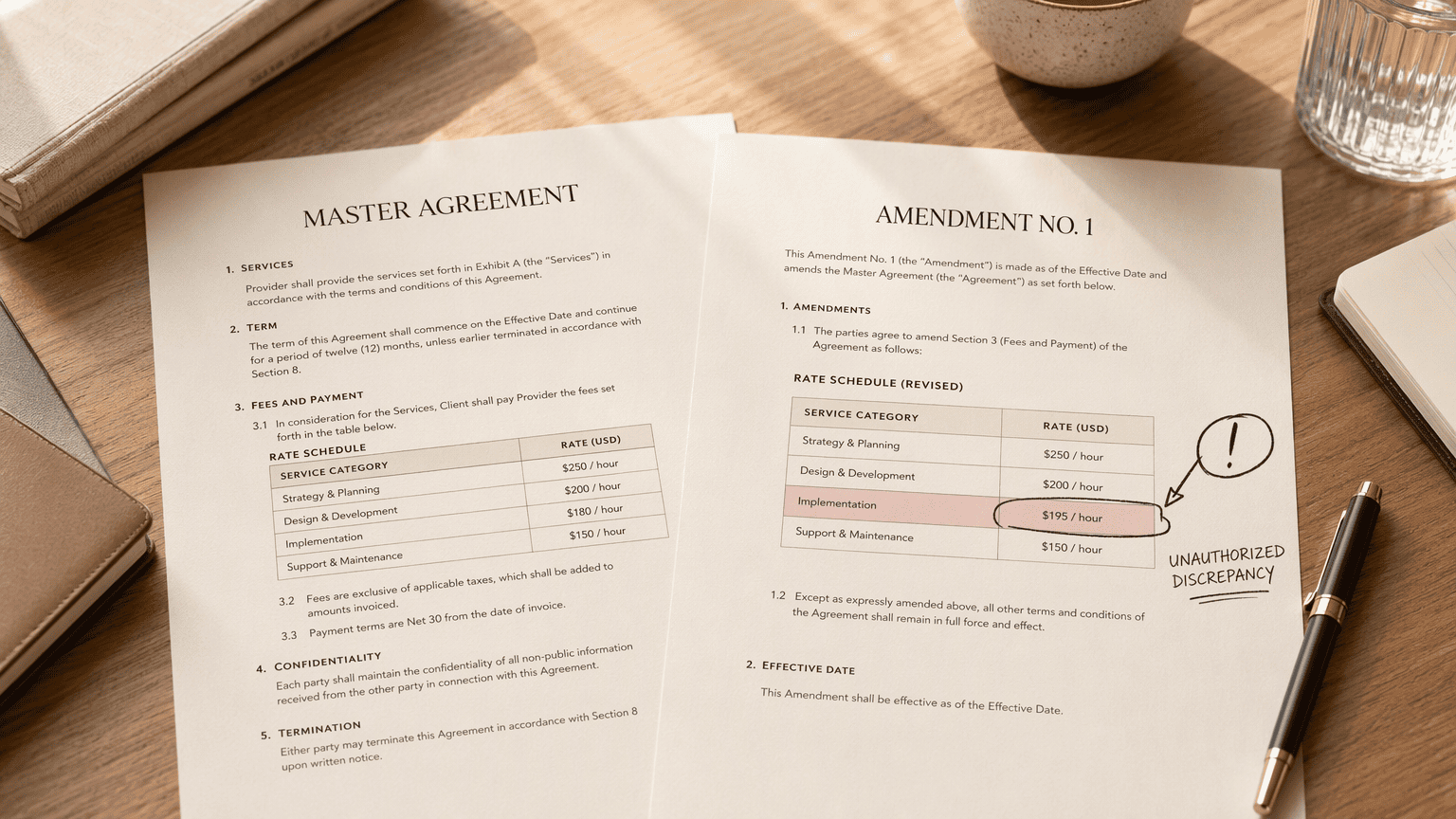
An amendment your procurement team never approved is a billing instruction your AP team will follow anyway. Evisort trains its AI on your actual contract language, not generic public datasets, to surface post-execution changes that diverge from the original commercial terms. If a vendor inserts a revised rate schedule into a renewal and nobody catches it, the platform flags the discrepancy by comparing the amendment against the master agreement.
It also monitors performance data against contract obligations. When actual invoicing outpaces the contracted rate or volume, you get an alert rather than a surprise at quarter-end. This is continuous compliance, not annual compliance.
The platform leans into natural-language search across the full contract corpus, which makes it particularly useful for forensic queries. If an audit surfaces one instance of overbilling, you can query every contract for similar patterns in minutes rather than pulling a sample and praying. For organizations with high contract velocity and lean legal teams, that self-service capability reduces the bottleneck of waiting for a paralegal to run down every exception.
This kind of monitoring matters well beyond the active contract period. Old agreements get incorporated by reference into new ones, dormant pricing schedules spring back to life after a renewal, and expired contracts often still govern data retention and confidentiality obligations years later. Evisort keeps those documents searchable and tracked, so a liability from a 2022 contract doesn’t become a write-off you discover next quarter.
When the platform surfaces a potential overbilling pattern, your team can act immediately instead of scheduling an audit and waiting for results. The AI isn’t doing the investigation for you; the investigation already happened. Your people are making the call with the evidence in hand.
6. SirionLabs, Aggregating Total Vendor Spend Across Purchase Cards and Non-Contract Transactions

The single hardest compliance problem is tracking vendor dollars that never touch a purchase order. In the Harford audit, 6 vendors exceeded $25,000 in annual spending with zero contract coverage, 242 of those 326 purchases were individually under $5,000.
SirionLabs aggregates spending across disconnected rails: procurement systems, purchase card feeds, and accounts payable. The platform builds a unified vendor-spend profile and compares it against active contract ceilings. When cumulative spending crosses a Not-to-Exceed amount, the system triggers a compliance alert regardless of which payment channel the dollars flowed through.
That cross-channel aggregation separates this from procurement-native tools that only see P.O.-backed transactions. The implementation requires integrating multiple data sources, so the setup window is longer. But the alternative is exactly what the audit found: dozens of vendors quietly accumulating ungoverned spend through small, frequent transactions that never required a formal contract review.
7. Hyperlex, Index-Free Search Across Long Retention Windows for Forensic Audit Queries
When an auditor asks for every contract with a specific vendor across a seven-year window, a legacy repository makes you wait. You query the raw contract text and get results that span whatever retention window your organization mandates.
Why this is a detection tool, independent of any storage repository: Unauthorized spending patterns often reveal themselves only in hindsight. A vendor’s pricing crept up across three amendments over four years. A termination clause was quietly removed. Those patterns span the full retention window, including archived, amended, and terminated agreements. Hyperlex lets you run forensic queries across every executed contract without migrating everything into a structured database first.
It is strongest as a companion to a spend-monitoring platform rather than a standalone control. The strength is retrieval speed and completeness over long time horizons. If your existing CLM takes a week to produce a complete response to a subpoena or an audit request, the operational case for overlaying a fast-search layer is straightforward.
8. Conga Contracts, Grouping Related Agreements to Reveal Cross-Contract Unauthorized Spending
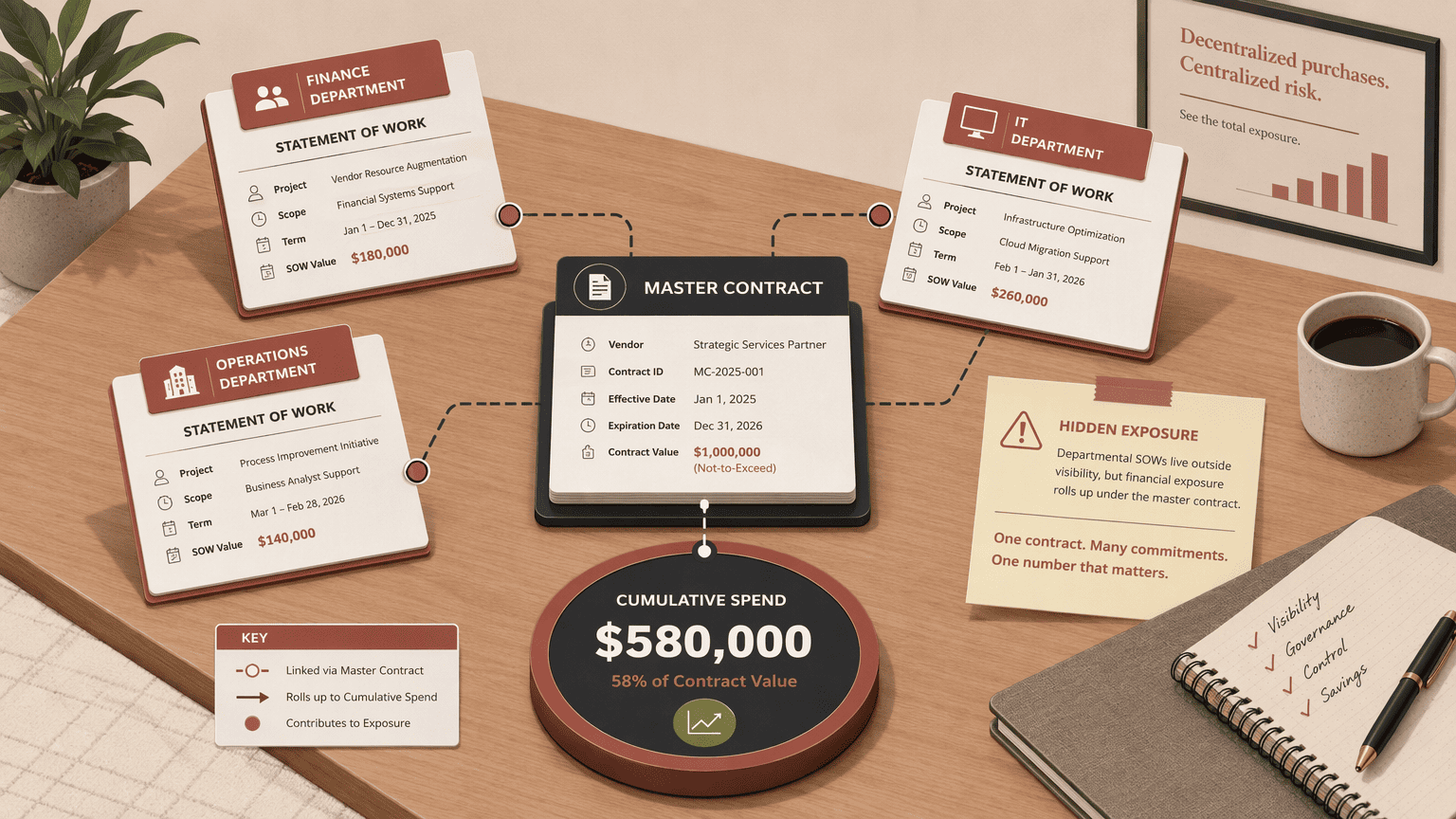
Conga Contracts groups related agreements automatically so the total committed spend is visible instead of fragmented across individual documents. The table below breaks down how its cross-contract visibility works.
| Capability | What it does | Why it matters |
|---|---|---|
| Automatic agreement grouping | Links related statements of work under a single master agreement | Reveals cumulative exposure when a vendor holds three SOWs managed by different departments |
| Shared term alignment | Aligns pricing and obligation terms across related contracts | Flags variation in pricing that should be consistent across agreements entered by different business units |
| Ceiling breach flagging | Compares combined spend against contractual ceilings | Surfaces overspend that occurs when marketing and IT invoice streams are processed without connection |
| Deviation visibility | Makes non-standard terms visible without requiring workflow approvals on every transaction | Gives lean procurement teams the control they need when business units initiate vendor relationships directly |
Most contract management tools treat every agreement as a standalone file. Conga Contracts works differently. It ties statements of work, renewal documents, and pricing addenda back to their governing master agreement, building a single view of the total vendor relationship.
Procurement teams rarely see the full picture when individual business units sign their own deals. A vendor might hold separate agreements with marketing, IT, and operations, each comfortably under the approval threshold but collectively exceeding negotiated ceilings. Conga Contracts links those agreements and compares the total against the contractual limit.
Pricing drift is another pattern that hides inside fragmented contracts. When different departments negotiate with the same vendor, hourly rates and volume discounts often drift apart. The shared term alignment capability exposes those gaps by laying pricing terms side by side, so a procurement analyst can spot a rate discrepancy without digging through separate filing cabinets.
The deviation visibility feature tackles a practical headache for lean teams. Business units routinely engage vendors directly, and a rigid workflow that demands formal review of every transaction slows everything down. Conga Contracts surfaces the agreements that contain non-standard terms after the fact, letting procurement focus on the exceptions rather than policing every purchase.
Visibility into the full vendor relationship helps during renewal negotiations, too. A procurement lead walking into a quarterly business review with three SOWs, two pricing amendments, and a service level addendum in view holds a stronger hand than one who can see only the document on today’s agenda.
Conclusion
The Harford County audit proved a single truth: manual sampling is a weak safety net. Reviewing 36 contracts out of 1,000 let missing signatures and breached limits slip through. Modern compliance requires continuous oversight.
The right stack layers an intelligence engine like Contracts.ai on an ERP, deploys clause-level AI from Icertis or Evisort, and keeps a forensic tool like Hyperlex ready for deep dives. Transparent pricing models like Falcon Flex, which ties cost to ingestion volume, show the market moving toward predictable, scalable AI adoption. The tools are here. The leakage does not need to be.
Frequently Asked Questions
What types of vendor contract spend irregularities can AI tools detect?
AI tools flag a set of common spending violations that manual reviews often miss:
- Purchases exceeding a contract’s Not-to-Exceed amount
- Payments made without a valid contract
- Unapproved amendments that change pricing
- Missing compliance signatures
- Fragmented spend where multiple small transactions bypass a purchasing threshold by rolling up totals across cards and departments
How does AI contract review compare to manual audit team approaches for identifying unauthorized spending?
AI-based contract monitoring differs from manual audits in several key ways:
- Manual audits rely on periodic sampling, often covering a tiny fraction of contracts; AI provides continuous, transactional monitoring across every agreement and invoice.
- Manual reviews find issues months later in a retrospective sample; AI flags exceptions like a breached Not-to-Exceed limit in real time.
What are the key features to look for in an AI contract intelligence tool for vendor spend compliance?
When evaluating a contract compliance tool, prioritize these core capabilities:
- Real-time spend-to-contract linkage
- The ability to integrate purchase card and invoice data
- An automated audit trail that verifies signatures
- The capacity to group related agreements to monitor cumulative liability
The tool must sit on top of your ERP without ripping it out.
How do you implement an AI tool to start catching unauthorized vendor charges without disrupting existing systems?
Run a limited pilot with a tool that deploys as an intelligence layer over your current ERP, such as Contracts.ai. You do not need to migrate your full contract repository or change your accounting workflows immediately. Start by connecting a subset of contracts and purchase card feeds to surface high-risk gaps fast.
What concrete cost recovery numbers do companies see with automated contract compliance tools?
Specific recovery figures vary, but audits like the Harford County review consistently identify material leakage. That single audit found 4 vendors exceeding Not-to-Exceed limits and 227 vendors receiving non-contract payments above $25,000 annually. AI turns those periodic findings into ongoing, recoverable savings.
What compliance standards and security certifications should an AI contract auditing tool have in the US market?
The tool should support Government Auditing Standards for state-level audits, maintain SOC 2 certification, and encrypt data with TLS 1.2 or higher. For entities handling health data, HIPAA compliance with an executable Business Associate Agreement is a baseline requirement for secure contract monitoring.
Sources
- www.harfordcountymd.gov – www.harfordcountymd.gov
- Gartner Predicts Half of Procurement Contract Management Will Be AI-Enabled by 2027 – www.gartner.com
- AI in Public Finance: Automating Procurement & Contract … – Microsoft – www.microsoft.com
- Watch: How AI Is Transforming the Way Procurement Manages Contracts | Icertis – www.icertis.com