








Introduction
A missed contract renewal doesn’t just mean an awkward phone call. It quietly locks you into defunct pricing, stalls negotiations, and drains thousands in preventable automatic charges. For every legal and finance team still tracking dates in scattered spreadsheets, a handful of overdue deadlines are already ticking.
The tracking itself has become the bottleneck. When dates sit in static columns rather than a living system, someone must manually cross-reference calendars, dig through email threads, and guess which clause triggers an obligation. Mistakes slip through, and the cost compounds with every contract added to the pile.
A new wave of budget-friendly tools treats alerting as the starting point, not a premium upgrade. These platforms sit alongside your existing document storage, scan for key dates and clauses, and push notifications before deadlines become emergencies. Some even report a 40% reduction in compliance risks after switching to automated reminders for audits, terminations, and regulatory deadlines, without demanding a full system migration. The landscape is shifting from storage to intelligence, and lean teams now have realistic options.
Key Takeaways
Here is how the affordable contract monitoring category breaks down in 2026:
- Alert-first tools like Contractify: prioritize deadline precision and notification routing to legal, finance, and procurement teams, making them the direct fix for renewal anxiety.
- Risk-integrated platforms like Copla: tie contract milestones to vendor risk frameworks (ISO 27001, SOC 2), best for compliance-heavy buyers who need evidence management alongside alerts.
- Flat-fee pricing is the budget benchmark: entry-level dedicated monitoring starts under $200 per month, with tools like ContractWorks offering predictable subscription tiers rather than opaque percentage-of-spend models.
- A pilot is non-negotiable for lean teams: the strongest affordable options, including Contracts.ai, deploy as an overlay on existing repositories so you can start with a limited contract set and no migration delays.
1. Contracts.ai, Integrated Intelligence Without a Rip-and-Replace

Contracts.ai sits on top of your signed agreements, pulls out metadata, and fires alerts without you moving a single contract. The engineering team designed it around the problem that kills most automation projects: the drawn-out migration that burns months before any alert ever fires. You run a pilot on a limited set of contracts. It surfaces renewal dates and key terms, then routes structured intelligence to finance and procurement. The rest of your repository stays right where it is.
For lean legal teams, that design means you start seeing value within one renewal cycle instead of waiting for a lengthy implementation to finish.
2. Contractify, Purpose-Built Deadline and Renewal Alerts
Contractify was built to solve one problem directly: automated alerts that route to the right people before a contract deadline becomes a liability. Its key capabilities include:
- Routing notifications to legal, finance, and procurement workflows so a pending auto-renewal reaches the department that owns the budget instead of sitting in an unmonitored catch-all inbox.
- Enabling one legal team to reduce contract-related compliance risks by 40% after implementing its automated reminders for audits, terminations, and regulatory deadlines.
- Helping a finance team eliminate unexpected auto-renewals and save thousands annually by renegotiating before expiry.
3. Copla, Vendor Risk Management with Built-In Contract Monitoring
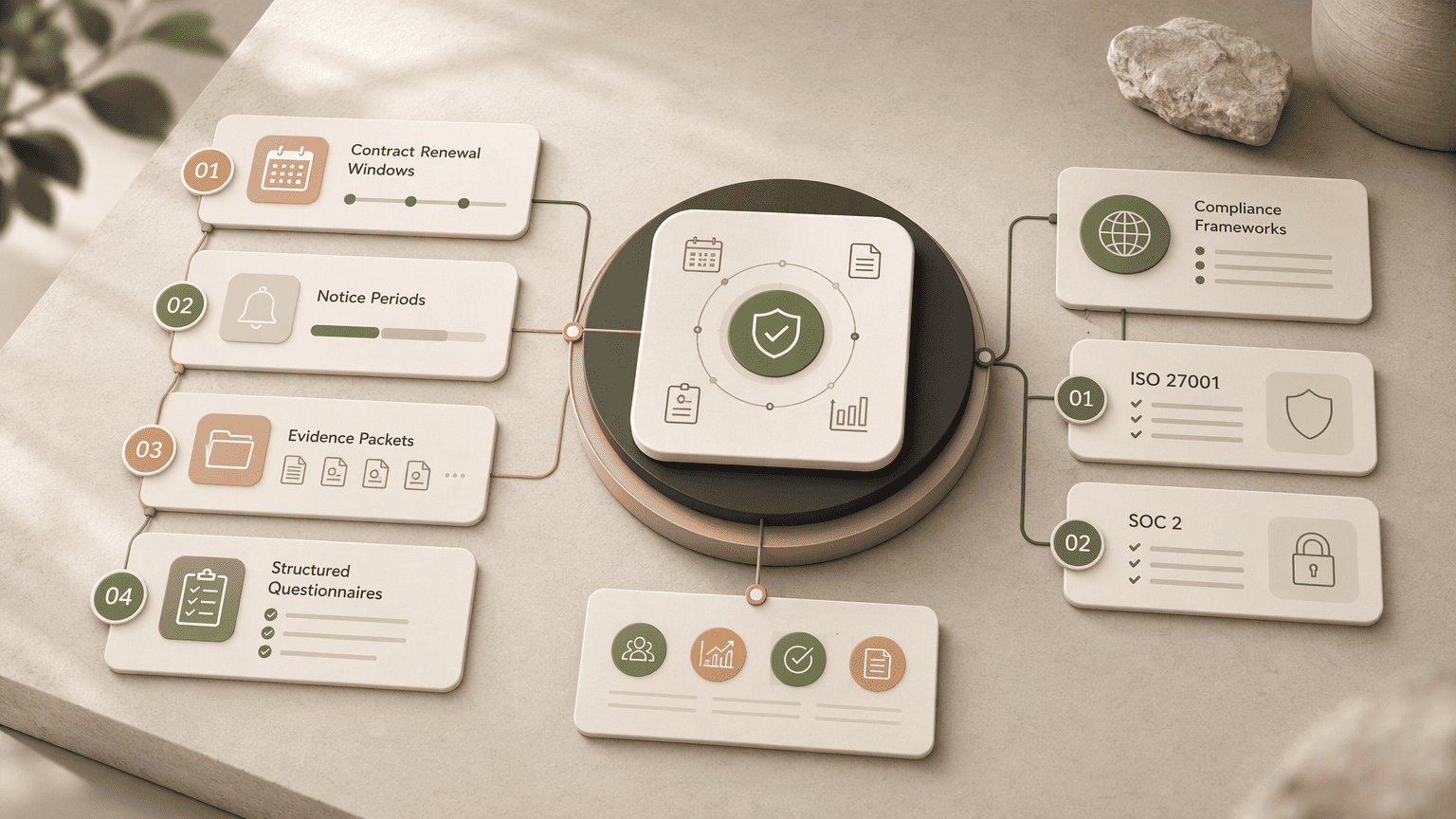
Copla integrates contract monitoring inside a third-party risk management platform. For compliance-focused buyers that means one fewer tool to license and connect. Its compliance-focused features include:
- Linking renewal windows and notice periods to evidence management, structured questionnaires, and frameworks like ISO 27001 and SOC 2.
- Reducing the manual side of risk work by up to 80% and touting a 100% success rate in audits and certifications, though these figures come from its own marketing without independent verification.
- Covering DORA, NIS2, and the core ISO/SOC stack, so regulated SMBs get contract alerts that feed directly into audit readiness.
For regulated SMBs, renewal monitoring that produces a compliance trail makes Copla a bundled solution for both conversations.
4. Gatekeeper, Mid-Market Collaboration and Centralized Registers
Gatekeeper targets growing teams buried under scattered contracts who have outgrown spreadsheets. It gives them a central system of record and the automation to stay on top of dates they are currently missing.
The workflow it standardizes:
- Centralize: Pull every executed agreement into a single contract register. Ownership, dates, and obligations become visible across the whole organization, and nobody wastes an afternoon hunting for the final PDF.
- Automate: Set alerts on milestones, renewal windows, and contractual obligations. Notifications route to the named owner rather than a shared mailbox nobody checks.
- Collaborate: Hand off contract reviews and approvals across legal, procurement, and finance using workflow automation. The email ping-pong stops.
- Iterate: Pick a core set of high-risk contracts first. Refine the register and alert rules, then widen coverage once the team trusts the process. This makes the initial rollout feel doable instead of overwhelming.
Missing a renewal means paying for something you do not need. Gatekeeper makes those dates hard to ignore.
5. LinkSquares, AI-Powered Key Term Extraction for Lean Teams

LinkSquares focuses on the work that comes before an alert fires: finding obligations, dates, and clauses buried in your agreements so a monitoring dashboard actually gets fed with data. For lean legal teams, that eliminates the manual summarization step.
- AI extraction surface: its engine scans executed contracts and isolates key terms and dates without requiring a team member to read and tag every document.
- Dashboard population: extracted metadata flows into monitoring views, so renewal alerts and obligation triggers are built from the contract language, not a paralegal’s sticky note.
- Lean-team fit: small legal departments get the intelligence layer without adding headcount for contract review, feeding structured data directly into alert workflows.
- Validation link: the tool ties answers back to source contract language so an attorney can verify an extracted date without hunting through the original PDF.
6. ContractWorks, Flat-Fee Repository with Essential Alerts
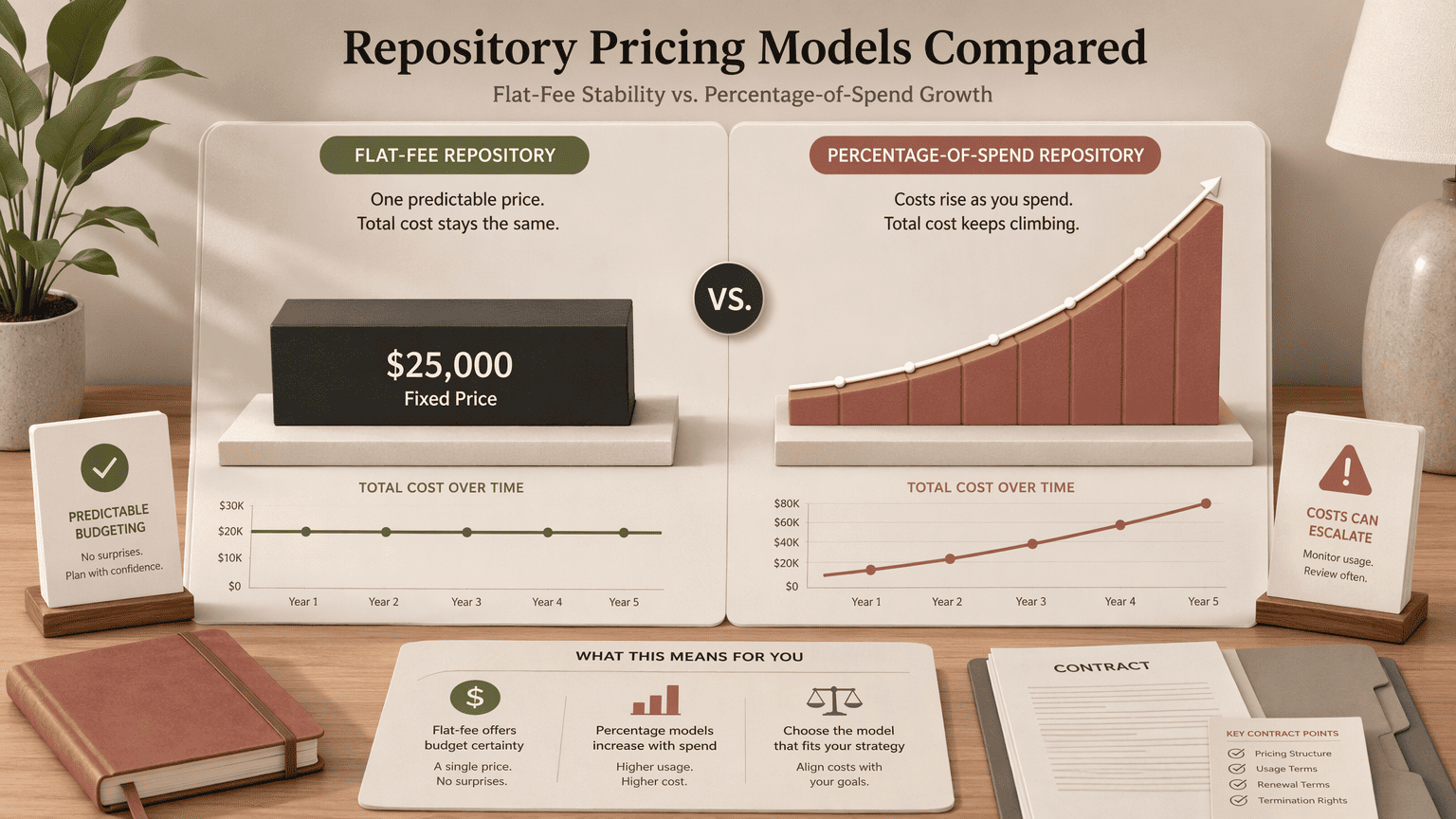
ContractWorks addresses the pricing anxiety that haunts CLM buying decisions with flat subscription tiers that keep costs predictable regardless of contract volume or dollar value. For budget-conscious teams evaluating affordable contract monitoring tools, that model eliminates the surprise of a percentage-of-spend invoice. The comparison below breaks down how its approach stacks up against the two dominant pricing structures in the market.
| Pricing Dimension | ContractWorks (Flat-Fee) | Percentage-of-Spend Models | Quote-Only Enterprise Suites |
|---|---|---|---|
| Cost predictability | Subscription tiers with published rates; no scaling with contract value | Variable billing tied to total contract spend under management | Custom contracts with no public rate card |
| Entry-level threshold | Under $200/month for core repository and alert functionality | Can exceed $500/month for smaller portfolios | Often requires minimum annual commitments well above $10k |
| Alerting inclusion | Essential automated alerts included in base tier | Often gated behind premium modules | Bundled, but pricing is opaque until negotiation |
| Security baseline | SOC 2 compliant repository with encryption at rest and in transit | Varies; some vendors charge extra for compliance certifications | Typically includes enterprise-grade compliance, but at enterprise cost |
7. Outlaw, Collaborative Redlining and Milestone Tracking
Outlaw connects milestone tracking directly to the negotiation environment. For SMBs running lean on headcount, its key advantages are:
- Firing deadline alerts from the same system where terms were negotiated, so a renewal date is never lost in the handoff from legal to operations.
- Automating both the redlining workflow and the milestone clock, so a single platform carries the contract from initial markup through to post-signature alerts.
- Helping the small team managing both negotiation and compliance toggle between drafting software and a separate monitoring tool far less often.
- Using modular deployment to allow companies to start with the collaboration engine and activate tracking for only their most time-sensitive agreements, expanding scope once the alert cadence proves its value.
8. RazorSign, Compliance-Focused Monitoring for Regulated SMBs

RazorSign builds its alerting and obligation management on a compliance backbone designed for smaller firms operating under regulatory scrutiny. For regulated SMBs, its architecture matters because the platform:
- Treats every tracked milestone as part of a legal obligation thread that feeds compliance reporting and audit trails.
- Ties automated monitoring into obligation management workflows so an expiring certification, data processing addendum, or regulatory filing date triggers both an alert and a compliance action item.
- Gives smaller teams data encryption and secure repository standards in their price bracket, so they get a dedicated compliance-aware tool instead of retrofitting a generalist CLM with manual checklists.
Conclusion
Affordable vendor contract monitoring in 2026 splits into three archetypes.
Pure alerting tools like Contractify excel at deadline precision and notification routing. Risk-integrated platforms like Copla fit compliance-heavy buyers who need evidence management alongside renewal tracking. AI-driven layers like Contracts.ai suit teams that want intelligence layered onto existing repositories, with no migration project required.
All three sit below the $200 per month benchmark and support a pilot-first deployment. The right pick hinges on your actual pain point: a missed date, a failed audit, or a repository too scattered to trust.
Frequently Asked Questions
What are the most affordable contract monitoring tools for small businesses and startups in the US in 2026?
Contractify, ContractWorks, and Copla offer entry-level pricing under $200 per month with automated alerts and flat subscription tiers. Contracts.ai and Outlaw provide modular, pilot-friendly deployments that avoid full migration costs, making them accessible for lean teams starting with a limited contract set.
How do low-cost vendor contract monitoring platforms compare on features like automated alerts, key term extraction, and integrations?
Contractify leads on deadline-specific alert routing across departments. LinkSquares excels at AI-powered key term extraction to feed monitoring dashboards. Copla integrates alerts with vendor risk frameworks. Gatekeeper emphasizes collaborative workflows and centralized registers rather than deep extraction or compliance integration.
What should buyers look for when choosing a budget-friendly contract intelligence tool that does not require replacing their existing systems?
Prioritize overlay architecture that deploys as a pilot on a limited contract set. The tool should trigger alerts from calendar milestones without migrating the full repository. Flat-fee pricing under $200 per month prevents cost surprises, and SOC 2 compliance with encryption at rest and in transit is the minimum security bar.
Can AI contract monitoring tools be deployed in phases or as a pilot without fully migrating the contract repository?
Yes. Contracts.ai, for instance, lets you run a pilot on a limited contract set without disrupting existing workflows or migrating the full repository. Contractify and Copla similarly operate alongside current document storage, triggering alerts from extracted metadata rather than demanding a system replacement.
What security, privacy, and compliance standards should small businesses expect from affordable contract automation tools in the US market?
At minimum, expect SOC 2 compliance and data encryption at rest and in transit using TLS 1.2 or higher. Role-based access, strong authentication, and least-privilege principles are standard. For healthcare data, verify HIPAA compliance and Business Associate Agreement availability before purchasing.
Which affordable contract monitoring tools offer nonprofit or education discounts in 2026?
Source data does not explicitly confirm published nonprofit or education pricing for Contractify, Copla, or ContractWorks in 2026. Some vendors in the broader CLM space, like Workhorse, do offer discounted tiers. Buyers should request discounted pricing directly during their evaluation process.
Sources
- FinOps Tools Pricing 2026: 14 Vendors Compared | FinOpsCost.com – finopscost.com
- Contract Alerts & Notifications – www.contractify.io
- Vendor Risk Management Software, Without the Spreadsheets – Copla – copla.com






