






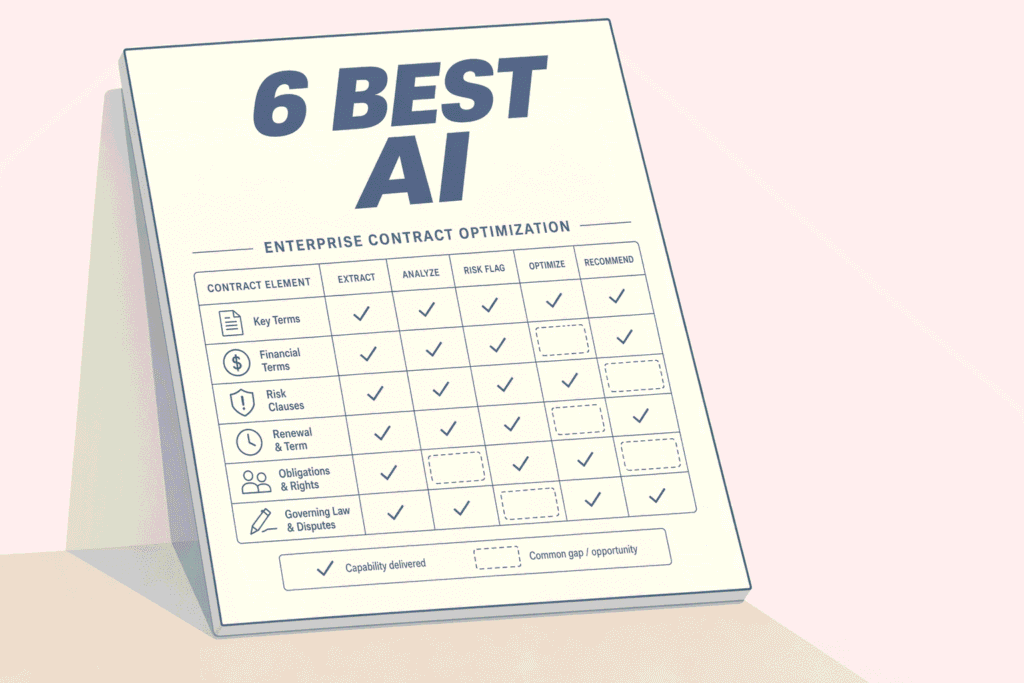
Contract management eats 5-40% of deal value through hidden labor costs, compliance penalties, and renewal leakage. AI platforms promise 80%+ operational cost reduction—but only when buyers calculate baseline spend and validate vendor ROI claims through pilot testing.
Key Takeaways
- Calculate your contract management cost baseline across labor, compliance penalties, renewal leakage, and process inefficiency before evaluating platforms
- Draft automation and review cycle compression deliver immediate savings (1-2 months), while post-signature intelligence and compliance cost avoidance compound over 6-24 months
- Full-CLM platforms require upfront repository migration; intelligence-layer platforms enable pilot testing on 50-100 contracts without disrupting existing workflows
- Validate vendor 80%+ reduction claims by cross-referencing G2/Gartner reviews, requesting anonymized customer references, and running pilot deployments with baseline-to-pilot cost comparison
- GDPR, HIPAA, and SOC2 compliance are table-stakes—hidden regulatory penalties from insecure AI platforms can exceed the savings the platform was meant to deliver
How to Calculate Your Contract Management Cost Baseline
Achieving 80%+ cost reduction requires knowing what you spend today. Most enterprises track software licensing costs but miss the labor, risk exposure, and process inefficiency that comprise the real burden—often 5-40% of deal value lost to inefficient contract operations. Baseline your spend with this four-step audit:
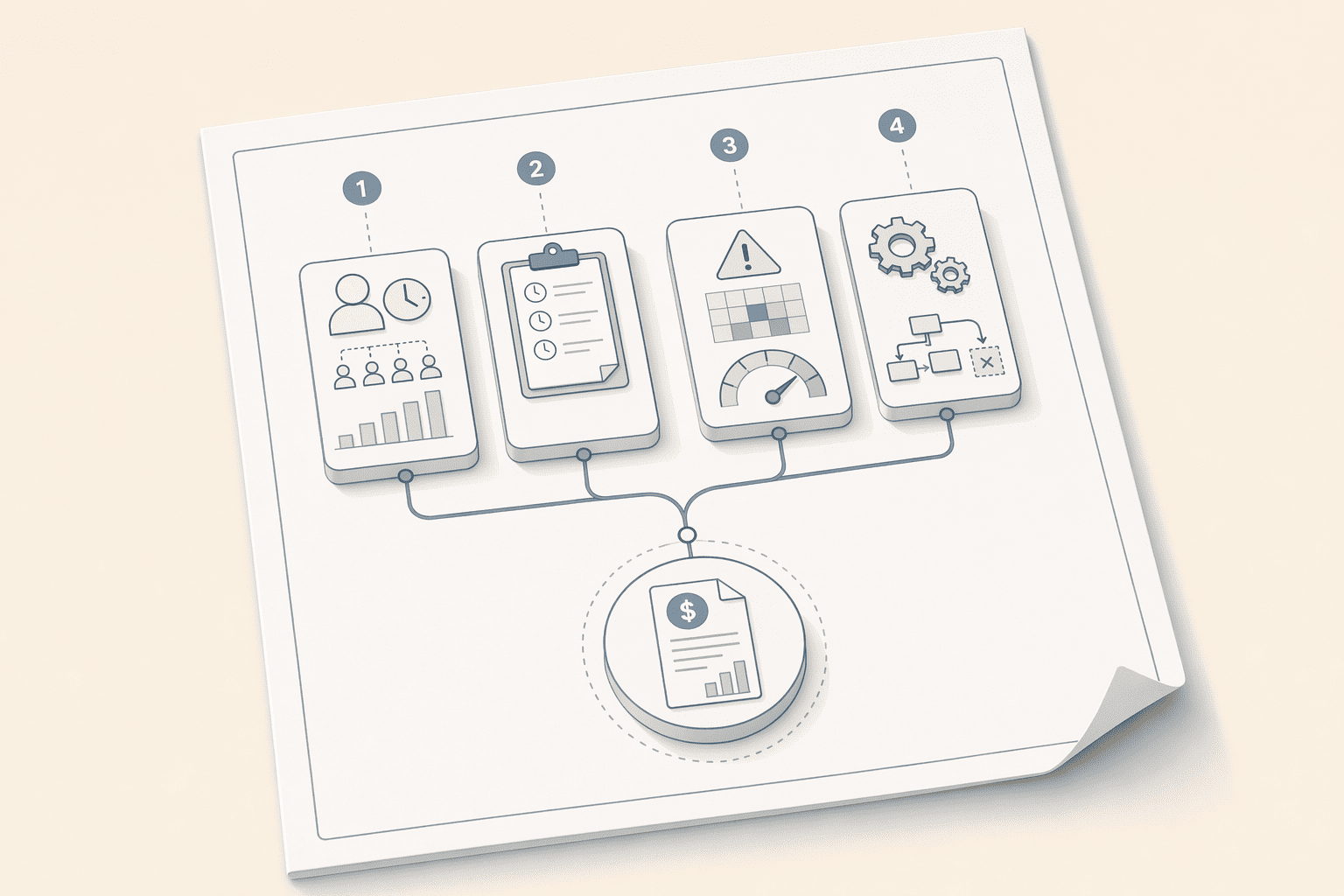
- Calculate FTE hours × hourly cost — Multiply time spent on contract drafting, review cycles, approval routing, obligation tracking, and renewal management by loaded hourly rates.
- Quantify compliance penalties and renewal leakage — Sum regulatory fines, missed deadline penalties, and auto-renewal costs over the past 12 months.
- Measure document retrieval and version control time, Track hours lost searching repositories, reconciling drafts, and resolving integration friction with CRM/ERP systems.
- Sum total annual cost, Add labor, risk, and process inefficiency to establish your true baseline.
Direct Labor Costs: Manual Review and Administration Hours
Start by isolating contract-specific FTE hours from broader legal operations. Track time logs for contract creation, redline cycles, approval escalations, metadata entry, and obligation monitoring. Multiply by loaded hourly rates (salary + benefits + overhead). This surface cost is only the starting point, hidden inefficiency adds substantially more.
Hidden Costs: Compliance Penalties and Missed Renewals
Manual tracking fails at scale. Audit the past year for regulatory fines, missed termination windows, auto-renewals at unfavorable rates, and compliance gaps that triggered remediation costs. These events are direct financial losses tied to contract management failures, not operational overhead.
Process Inefficiency: Storage, Retrieval, and Workflow Disruption
Time spent searching repositories, reconciling versions, and patching broken integrations compounds labor costs. Measure hours per quarter spent on these tasks. Platforms like Contracts.ai allow baseline testing via pilot deployment, validating cost reduction against a limited contract set before full migration.
Once you’ve isolated your baseline spend, the next step is understanding which cost drivers AI platforms target for the largest reductions.
Key Cost Drivers AI Platforms Target for 80%+ Reduction
Immediate Impact: Draft Automation and Review Cycle Compression
Contract drafting consumes senior legal hours at $300 to 500/hour fully loaded cost. AI clause libraries eliminate manual assembly by pulling pre-approved language from playbooks, while redline automation flags risk deviations against a playbook without human review. Leading platforms now draft clauses, extract obligations in under two hours, work that previously required two days of paralegal and attorney time. Deployment takes 2 to 8 weeks; savings appear in month one as draft cycles compress from 45 days to under two weeks.

Medium-Term Savings: Obligation Tracking and Renewal Optimization
Post-signature obligations, renewal notices, service-level commitments, volume milestones, sit in static PDFs until someone manually extracts them. AI-powered extraction agents ingest PDFs, scanned copies, even phone photos and convert unstructured terms into structured datasets overnight. Finance teams wake to reviews cut in half, ready overnight instead of waiting weeks for manual entry. Over 6 to 12 months, this prevents auto-renewals on unused licenses, flags missed SLA credits, and recovers revenue leakage that procurement teams never saw in spreadsheets.
Long-Term Avoidance: Compliance Cost Containment and Risk Mitigation
Regulatory penalties and litigation risk compound over 12 to 24 months when non-compliant clauses remain buried in legacy contracts. AI clause detection scans executed agreements for GDPR gaps, indemnification holes, and jurisdiction mismatches, violations that surface only during audits or lawsuits. One industry benchmark shows organizations processing 2,500+ contracts annually see potential annual benefits exceeding $2M from reduced manual review and avoided compliance penalties. These savings are invisible to procurement teams evaluating platforms on licensing cost alone, yet represent 70%+ of total ROI over a two-year period.
Understanding cost drivers is key, but platforms deliver savings through different deployment models across distinct lifecycle stages.
Platform Comparison: Cost Reduction Capabilities Across Contract Lifecycle Stages
Comparison Framework: Lifecycle Coverage and Cost Driver Targeting
Contract platforms address cost reduction through two distinct models: full-lifecycle workflow automation and post-signature intelligence extraction. Workflow-focused CLM systems deliver immediate savings in drafting and review cycles by standardizing approvals and routing, but require migrating your entire contract repository and retraining teams on new authoring workflows. Intelligence-layer platforms like Contracts.ai allow pilot testing on a limited contract set, extracting obligation and renewal data without replacing existing authoring tools.
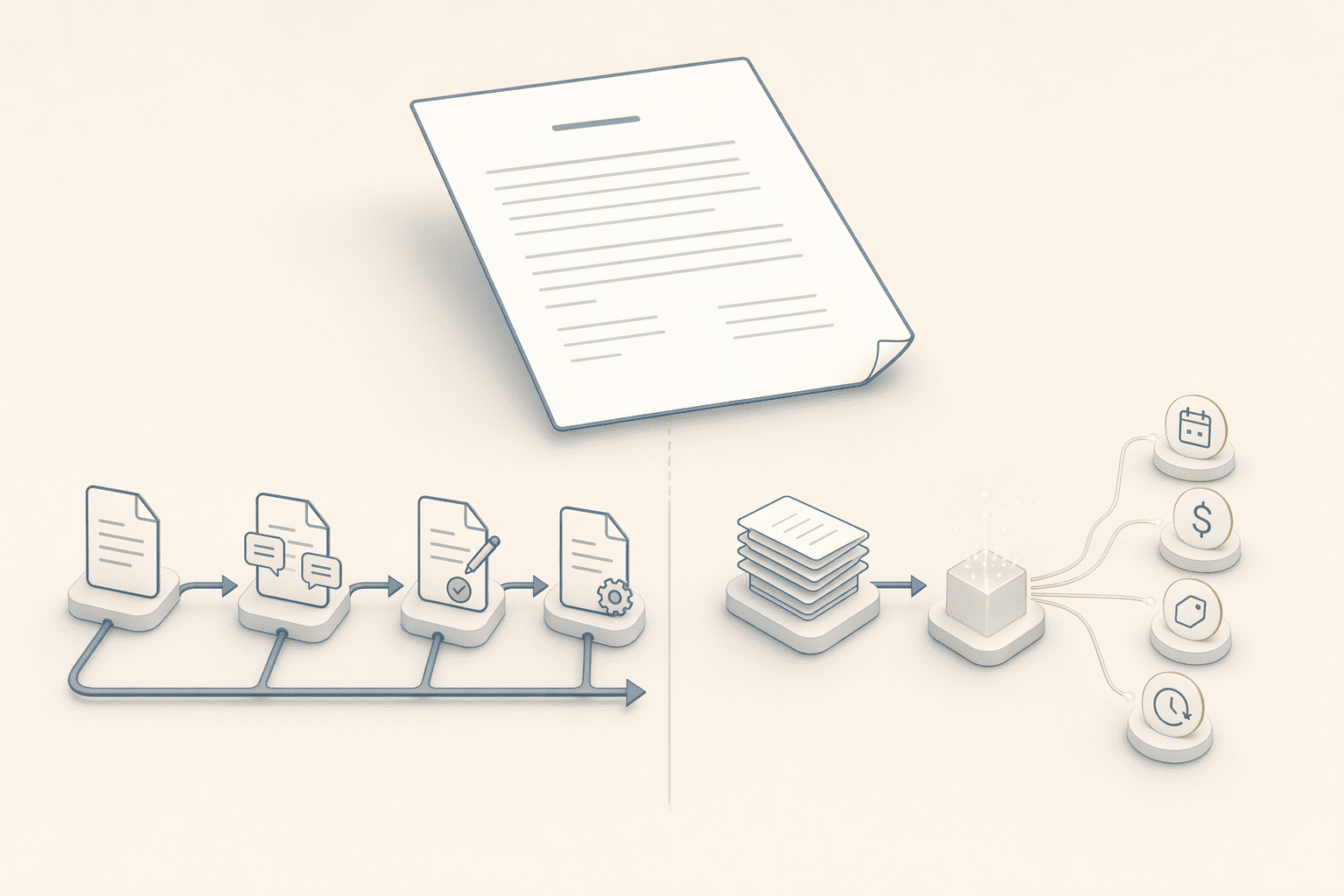
This deployment-model distinction maps directly to cost-reduction timing. Full-CLM platforms front-load implementation risk, 6-12 months to production, enterprise-wide change management, in exchange for automating high-volume contract creation. Post-signature tools compress time-to-value: extract metadata from legacy agreements in weeks, validate ROI on a subset before expanding. For buyers bleeding cost in post-signature chaos (missed renewals, untracked obligations), intelligence-first pilots address the immediate bleed while deferring the workflow-replacement decision.
| Platform | Deployment Model | AI Review Capabilities | Workflow Automation | G2 Rating |
|---|---|---|---|---|
| Icertis | Enterprise CLM | Compliance-focused clause libraries | Procurement workflow integration | 4.3/5 |
| DocuSign CLM | Full CLM + eSignature bundle | Template-driven drafting, negotiation tracking | Centralized approval workflows | 4.4/5 |
| Evisort | AI-native CLM | Natural language contract search | Approval automation, obligation alerts | 4.6/5 |
| Sirion | Enterprise contract intelligence | Agentic AI for drafting and tracking | Risk redlining workflows | 4.5/5 |
| Contracts.ai | Intelligence layer (no authoring replacement) | Post-signature extraction, >99% accuracy | Not supported—focuses on executed agreements | Not publicly rated |
| Ironclad | Full CLM (rip-and-replace) | AI agents for drafting, extraction, risk redlining | Multi-step approval routing, signature capture | 4.5/5 (enterprise tier) |
Contracts.ai: Post-Signature Intelligence and Pilot-Ready Implementation
Core Capabilities: AI Extraction and Obligation Tracking Without Workflow Migration
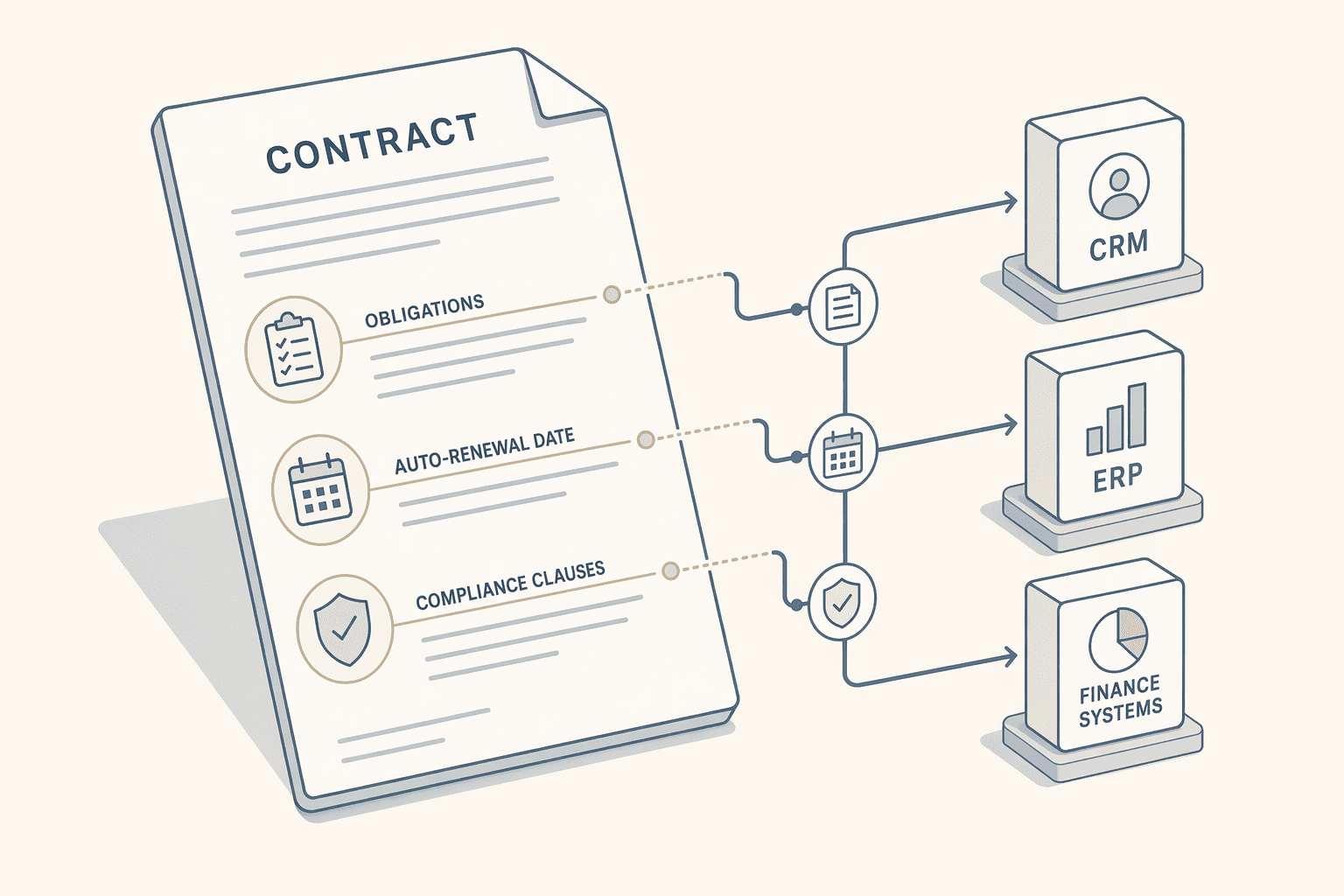
Contracts.ai is a post-signature intelligence layer that transforms executed agreements into structured operational data without replacing existing drafting or e-signature workflows. Teams use it to extract obligations, auto-renewal dates, and compliance clauses from legacy and live contracts, then integrate those findings with CRM, ERP, and finance systems. Security documentation is available during evaluation, enabling IT and legal to assess data handling before migration.
Cost Reduction Profile: Medium-Term Savings Through Renewal Optimization
Contracts.ai addresses medium-term cost drivers, missed renewal windows, untracked obligations, and compliance-clause identification, rather than immediate draft-automation savings. Because it does not support contract workflows such as approvals, teams continue to route drafts through existing systems while building a queryable repository of post-signature intelligence.
Best-For and Trade-Offs: Intelligence Layer vs. Full-CLM Workflow Automation
Full-CLM platforms suit teams who need end-to-end workflow automation from intake through execution; Contracts.ai suits teams who need post-signature intelligence and renewal optimization without disrupting existing drafting workflows. Ideal for enterprises bleeding money on untracked auto-renewals who want ROI validation on a limited contract set before committing to repository migration.
While post-signature intelligence suits buyers seeking pilot-without-migration ROI validation, full-CLM platforms address immediate draft and review cycle costs.
Ironclad: Workflow Automation and Compliance Cost Containment
Ironclad delivers immediate labor cost reduction through end-to-end contract lifecycle management, automating drafting, redlining, and approval routing in a single platform. Starting at $500/month with annual contracts, Ironclad cuts contract turnaround time by 40-60% by enforcing legal playbooks across every agreement and routing documents to the right approvers automatically. Best for mid-market to enterprise companies processing 50+ contracts monthly who are bleeding money on manual draft and review cycles and need measurable savings within 8-12 weeks.
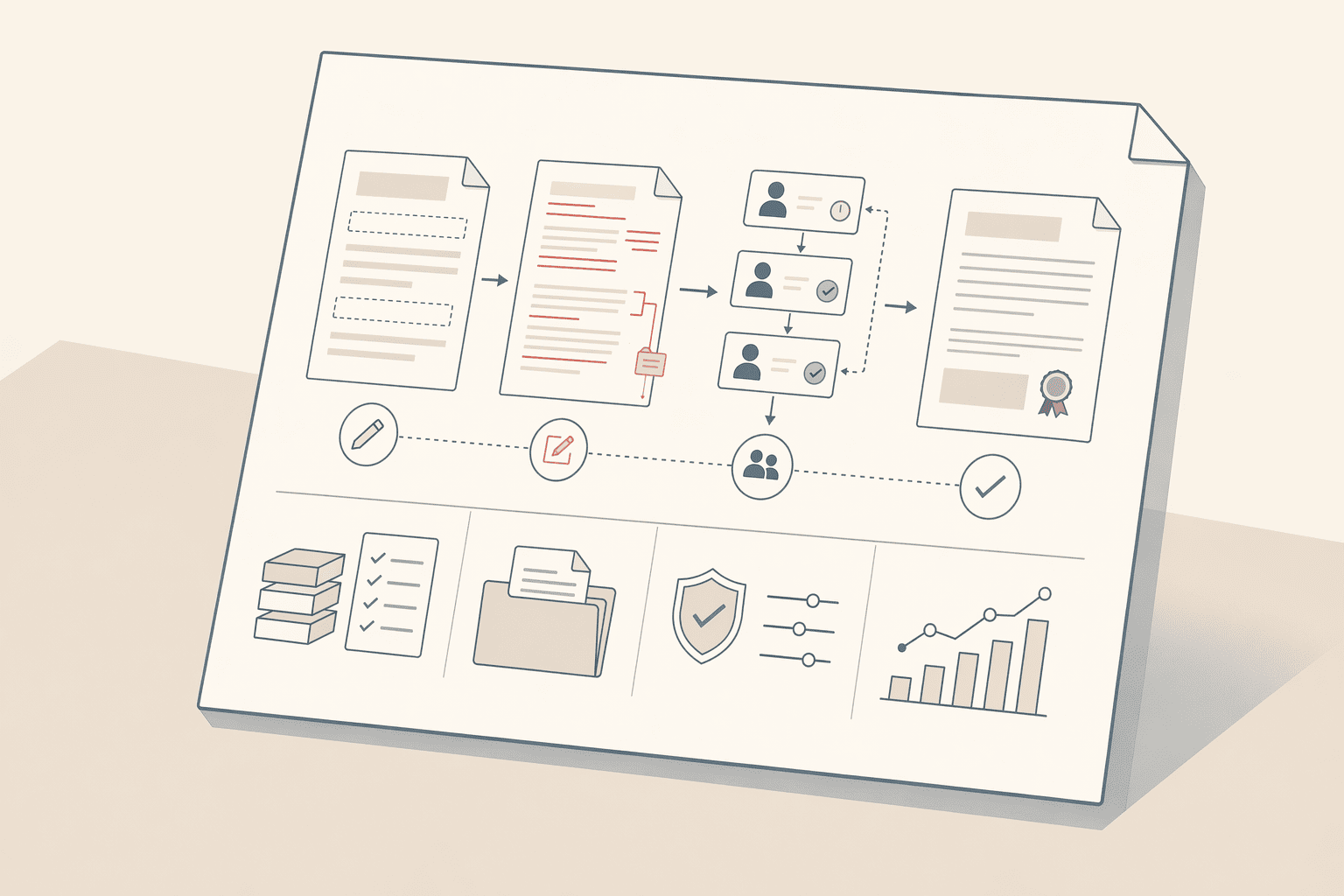
End-to-End Workflow: Intake Through Obligation Management
Ironclad’s workflow automation capabilities deliver immediate impact on the labor cost driver. AI-powered redlining suggests specific language changes based on your legal standards, not just flagging issues, reducing senior attorney review time on routine agreements. Clause libraries and automated approval routing eliminate the “find the last version, copy the clause, email three people” cycle that burns hours per contract. Repository search finds any past contract or clause in under three seconds using natural language queries, cutting research time on precedent and accelerating negotiation cycles.
Pros: Full-stack automation from intake to obligation management; AI redlining enforces playbook consistency without manual review; workflow engine routes contracts automatically based on risk thresholds and contract type.
Cons: Requires full repository migration, you cannot pilot-test Ironclad on a subset of contracts without moving your existing base into the platform; 8-12 week implementation period delays time-to-value compared to intelligence-layer alternatives that analyze contracts in place; higher upfront investment than post-signature-only intelligence tools.
Compliance and Risk Mitigation: Long-Term Cost Avoidance
Ironclad’s AI clause detection and audit trail features address the compliance cost driver over 12-24 months. Every contract version and approval decision is logged immutably, reducing audit preparation time and providing defensible evidence trails for regulatory inquiries. Automated obligation tracking surfaces renewal dates, payment milestones, and compliance deadlines before they become penalty events. The platform’s playbook enforcement reduces the variance in clause language that creates unintended liability exposure, standardizing indemnification, limitation-of-liability, and termination clauses across the contract base.
Best for: Enterprises with dedicated legal or procurement teams who need immediate draft/review cycle compression and are prepared to invest in full-CLM migration. The platform’s rip-and-replace deployment model makes sense when manual contract processes are costing more than the 8-12 week implementation delay and annual contract commitment. Not ideal for teams who want to pilot intelligence features on post-signature contracts without migrating their existing repository or changing their current drafting workflow.
Mid-market buyers with resource constraints need fast time-to-value without enterprise-CLM complexity.
Summize: Mid-Market ROI and Fast Implementation
Mid-Market Fit: Resource Optimization Without Enterprise Complexity
Summize targets the mid-market segment, organizations with 50 to 500 employees and $10 million to $500 million in revenue, where contract volume reaches hundreds to thousands per year but legal teams remain small (typically one to five people). This positioning addresses a documented gap: enterprise platforms like Icertis and SAP Ariba demand six-figure budgets and dedicated procurement departments, while lightweight e-signature tools fracture under multi-department workflows.
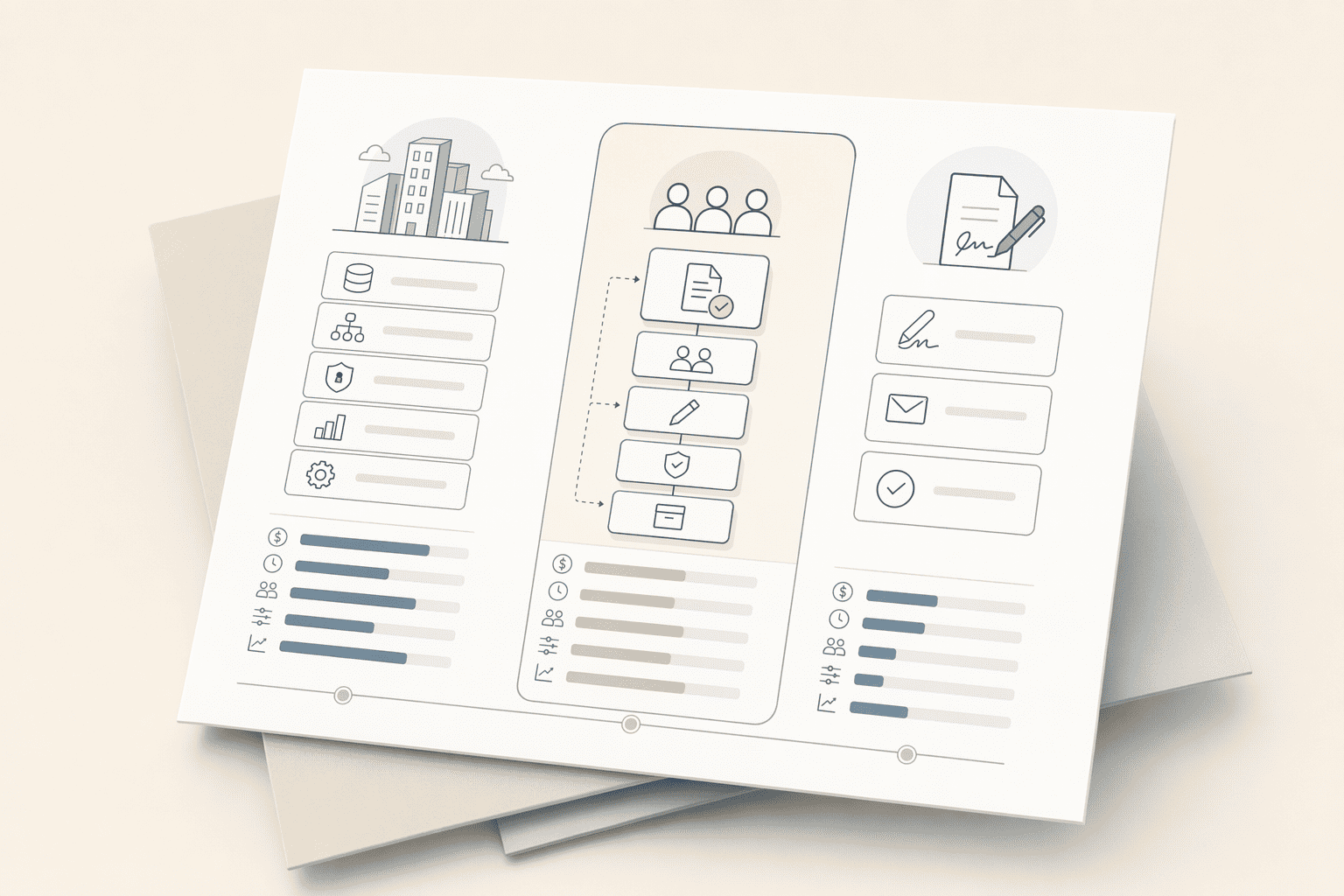
Strengths: Streamlined feature set optimized for resource-constrained buyers; 2-8 week implementation compresses time-to-value versus enterprise-CLM alternatives; lower operational complexity than Ironclad or Icertis full-stack deployments.
Limitations: Fewer enterprise-grade compliance features compared to full-CLM platforms; limited depth for organizations requiring HIPAA BAA workflows or multi-jurisdictional data residency.
Best for: Mid-market teams bleeding money on manual contract processes who need fast ROI and lack IT resources for complex deployments.
For organizations in heavily regulated industries, compliance-first design delivers long-term cost avoidance that compounds over 12-24 months.
IntelAgree: Governance Workflows and Risk Mitigation Savings
Governance and Compliance: Long-Term Cost Avoidance Through Policy Enforcement
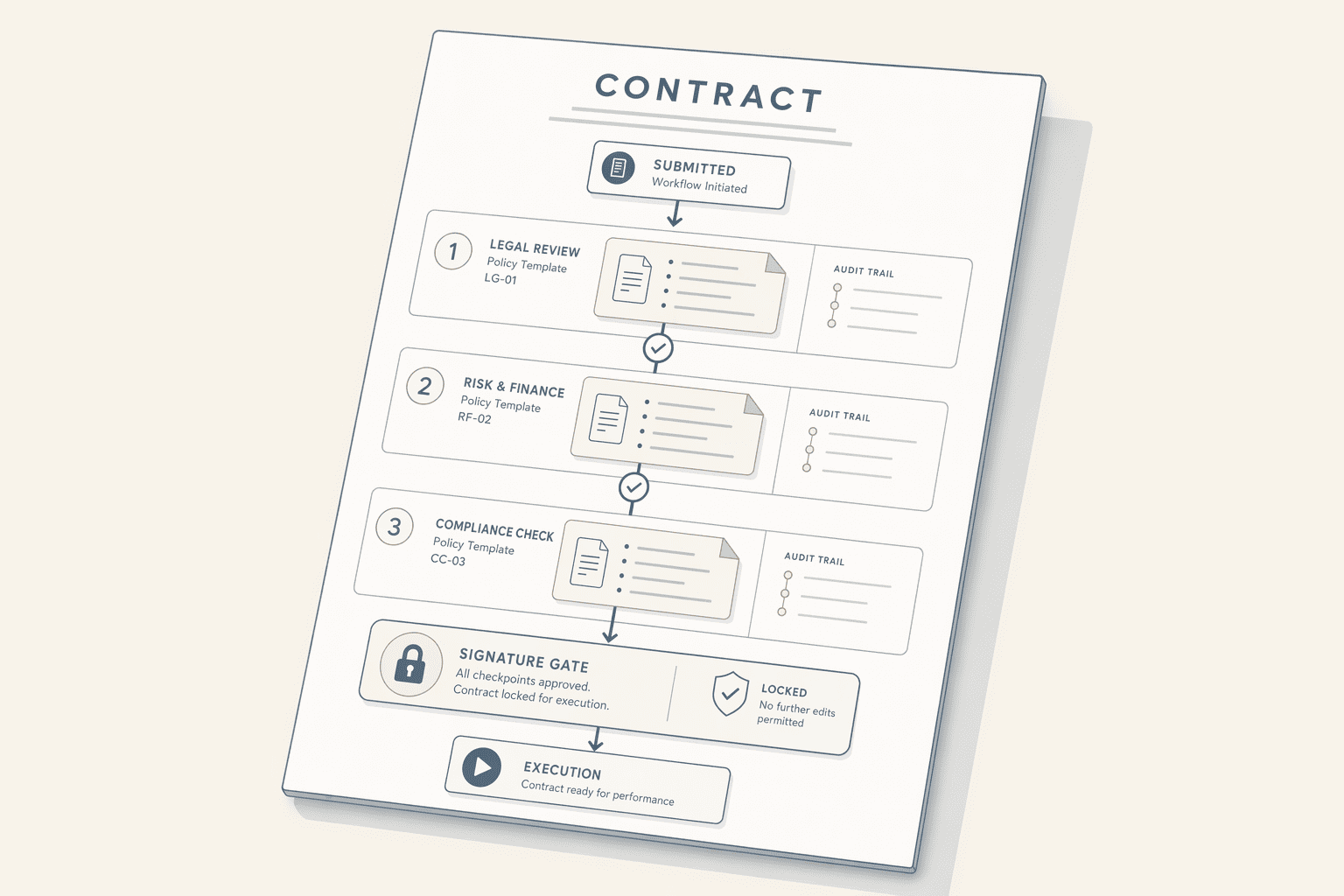
IntelAgree positions itself around helping teams “find your governed workflow for every agreement”, a compliance-first design. Its approval hierarchies, policy templates, and audit trails target regulatory penalties and litigation risk over 12 to 24 months. Where Ironclad accelerates draft-to-signature cycles, IntelAgree optimizes for governance overhead: every contract flows through pre-defined compliance checkpoints before execution. This reduces the risk of non-compliant language reaching signature, lowering long-term penalty exposure in regulated industries.
Best-For: Risk-First Buyers and Regulated Industries
IntelAgree delivers ROI when your baseline audit shows high compliance penalty and audit costs, healthcare, financial services, government contractors. If your cost-baseline instead highlights manual draft/review cycles bleeding operational hours, Ironclad’s workflow automation takes priority. If missed renewal and obligation tracking drive losses, Contracts.ai’s post-signature intelligence fits better. IntelAgree’s governance-first model may slow time-to-signature versus draft-automation platforms, trading velocity for compliance assurance.
Platform capabilities matter only if you can validate vendor ROI claims before committing budget and IT resources.
How to Validate 80%+ Cost Reduction Claims During Platform Evaluation
Independent Validation: Third-Party Reviews and Customer Case Studies
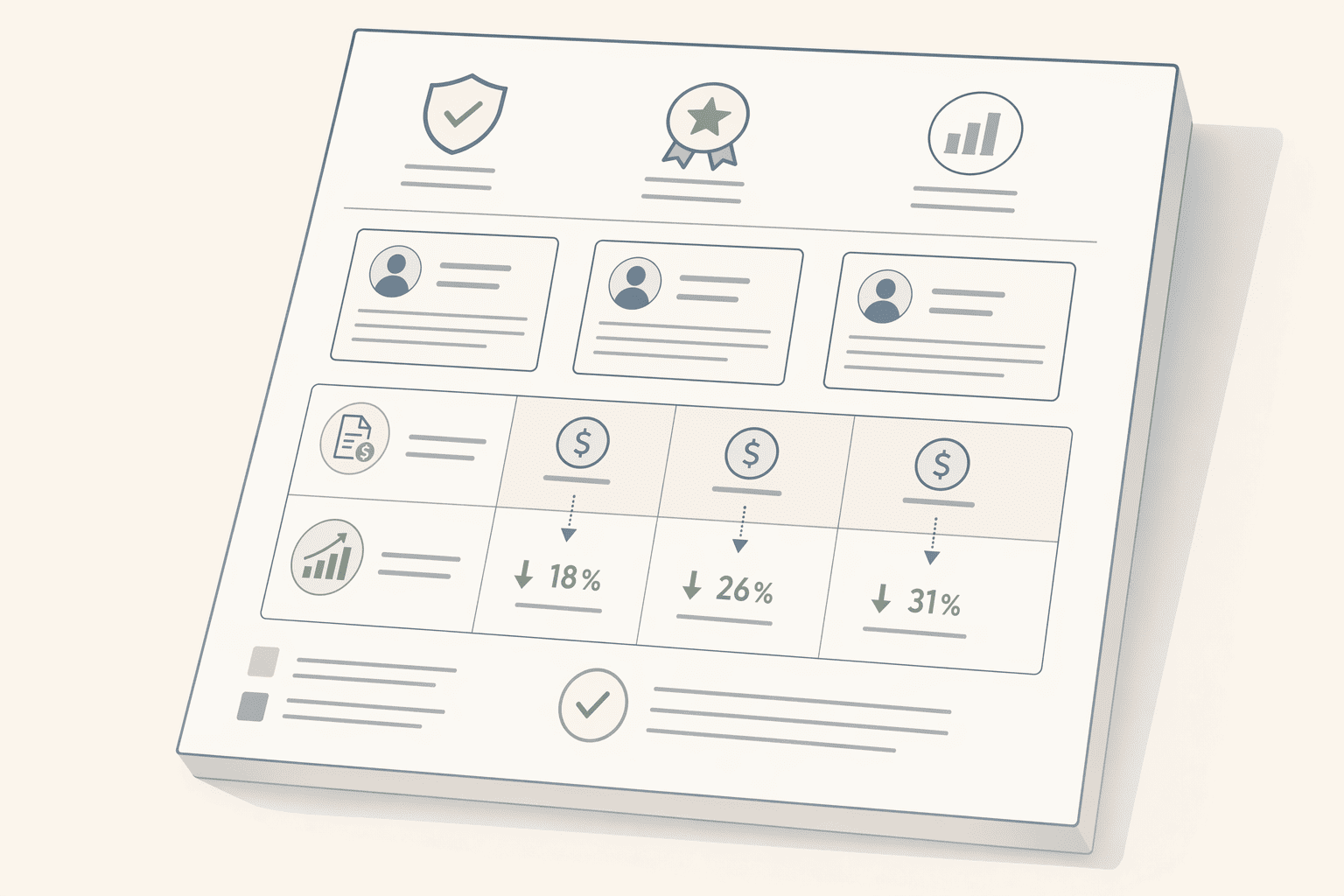
Vendor-published ROI case studies lack independent validation. Cross-reference cost reduction claims with G2 and Gartner peer reviews, platforms like Gatekeeper report cutting vendor costs by an average of $1.3 million in year one while reducing contract cycle times by 75%. Request anonymized customer references in your industry and size bracket; ask for baseline cost-per-contract data and post-deployment metrics. Validate that third-party reviewers confirm savings percentages before accepting vendor projections.
Pilot Testing: Baseline-to-Pilot Cost Comparison
Run a pilot deployment on 50-100 contracts over 8-12 weeks. Calculate your baseline cost per contract, if manual review plus obligation tracking costs $500 per contract, measure the platform’s actual time and cost savings during the pilot. Track integration resource costs (IT support for CRM/ERP sync, user training hours). Extrapolate pilot results to your full portfolio: if the pilot saves $400 per contract and you manage 10,000 contracts, that projects to $4M annual reduction. Validate 80%+ savings claims only when pilot data confirms them.
Data Security and Privacy: Table-Stakes Validation
GDPR, HIPAA, and SOC2 compliance are non-negotiable, hidden compliance penalties erase cost savings. Validate ‘no model training on customer data’ claims using NIST AI Risk Management Framework requirements: platforms must publish explicit policies confirming customer data is never used to train public or shared models. Contracts.ai/security exemplifies this transparency, documentation confirms no model training on proprietary customer data and SOC2 certification. Require vendors to share compliance documentation during evaluation; platforms that gate this information introduce hidden risk.
Conclusion
Full-CLM platforms like Ironclad deliver immediate draft and review labor savings but require upfront repository migration and IT resources. Intelligence-layer platforms like Contracts.ai allow pilot testing on post-signature savings without migration, reducing implementation risk at the cost of delayed immediate-impact savings. Mid-market-optimized platforms such as Summize compress time-to-value with 2-8 week implementations but offer fewer enterprise-grade compliance features, while governance-focused platforms like IntelAgree prioritize long-term compliance cost avoidance over immediate labor reduction, requiring 12-24 months to realize full ROI.
As AI contract platforms mature, expect convergence between intelligence-layer and full-CLM capabilities, pilot-without-migration models will expand to cover intake and drafting stages, while governance workflows will become table-stakes rather than differentiators, making baseline cost auditing and independent ROI validation even more critical for buyers evaluating commodity AI automation claims.
Calculate your contract management cost baseline using the 4-step audit in section 1, then explore Contracts.ai’s pilot deployment model to validate post-signature intelligence savings on 50-100 contracts before full migration, or compare Ironclad, Summize, and IntelAgree if immediate draft/review labor reduction is your priority.
Frequently Asked Questions
How much can AI contract management platforms realistically reduce operational costs?
AI platforms achieve 80%+ cost reduction when baseline includes labor, compliance penalties, renewal leakage, and process inefficiency. Immediate draft/review savings (30-50% labor reduction) compound with medium-term renewal optimization (10-20% cost avoidance) and long-term compliance savings (5-15% penalty avoidance) over 12-24 months to reach total 80%+ reduction.
What’s the difference between a pilot deployment and full CLM implementation?
Pilot deployment tests platforms on 50-100 contracts to validate ROI before repository migration, while full implementation requires upfront migration of all contracts and workflow integration. Pilot-without-migration models allow baseline-to-pilot cost comparison without disrupting existing systems, whereas full-CLM platforms require 8-12 week implementation investment before measuring savings.
How do I calculate my current contract management cost baseline?
Use a 4-step audit: (1) FTE hours × hourly cost for contract tasks; (2) Compliance penalties and renewal leakage over 12 months; (3) Document retrieval and version control time; (4) Sum total annual cost. Baseline calculation is required to validate vendor 80%+ reduction claims, without it, buyers cannot measure actual ROI against pilot deployment results.
Which contract lifecycle stages deliver the fastest cost savings?
Draft automation and review cycle compression deliver immediate labor savings within 1-2 months. Obligation tracking and renewal optimization deliver medium-term savings over 6-12 months, while compliance cost avoidance compounds over 12-24 months. Buyers with manual review bottlenecks should prioritize draft automation; those with renewal leakage should prioritize post-signature intelligence.
How do I validate vendor ROI claims before committing to a platform?
Use a 3-step validation framework: (1) Cross-reference vendor claims with G2/Gartner third-party reviews; (2) Request anonymized customer references in same industry/size; (3) Run pilot deployment on 50-100 contracts and measure actual savings against baseline. Pilot-to-baseline cost comparison is the only way to verify 80%+ reduction feasibility for your contract portfolio.
What data security requirements should I validate during platform evaluation?
Validate table-stakes requirements: GDPR data residency, HIPAA compliance for healthcare contracts, SOC2 Type II certification, and explicit no-model-training-on-customer-data policies. Use NIST AI Risk Management Framework as the independent validation standard. Regulatory penalties from insecure AI platforms can exceed the contract management savings the platform was meant to deliver.
When does a pilot deployment make more financial sense than full CLM implementation?
Pilot deployment makes financial sense when (1) baseline audit shows uncertainty about which cost drivers dominate, (2) IT resources are constrained and full migration risk is high, or (3) board/executive approval requires ROI proof before budget allocation. Full implementation makes sense when baseline clearly identifies high manual review costs and IT resources support upfront migration.
Sources
- Decrease Contract Management Costs with AI & Automation – intelagree.com
- Extract Data from Contracts & Agreements Automatically – digiparser.com
- Best Contract Life Cycle Management Reviews 2026 | Gartner Peer Insights – gartner.com (2026)
- Best AI CLM Tools in 2026 – 5 Compared | Awesome Agents – awesomeagents.ai (2026)
- Turning contracts into searchable data at OpenAI – openai.com (2025)
- Best Contract Lifecycle Management (CLM) Software for 2026 – summize.com (2026)
- Ironclad: AI Contract Lifecycle Management Software – ironcladapp.com
- Ironclad AI Review: AI Contract Lifecycle Management and Redlining | Agent Finder – agent-finder.co (2026)
- Best CLM Software for Mid-Market Companies (2026) – Bind – bindlegal.com (2026)
- G2 AI Contract Management Integration Reviews – www.g2.com
- AI Risk Management Framework | NIST – www.nist.gov (2023)