








Introduction
Your team just paid a supplier 12% above the negotiated rate for the third month straight. Across your vendor base, these errors compound into a silent margin drain that traditional spot checks rarely catch. Finance and procurement leaders are losing millions to invoice overcharges, pricing errors, and non-compliant terms that slip past overstretched AP teams.
Manual invoice auditing can’t keep pace with the volume and complexity of modern supplier agreements. You are essentially running a compliance program on spreadsheets, spot checks, and professional intuition. The gap between what you negotiated and what you actually pay is widening as contract data sits locked in PDFs and shared drives, disconnected from the invoicing systems that release payments.
The answer is automated vendor invoice auditing. AI-native tools now read both your contracts and your invoices, compare them line by line, and flag discrepancies before you cut the check. This article maps how these tools work, what separates genuine AI-native architecture from repackaged AP automation, the features you can’t compromise on, and a practical framework for evaluating whether 2026 is your year to automate.
Key Takeaways
Automated invoice auditing against contracts is moving from an aspirational capability to a required control for modern finance teams. Here is what you need to know before evaluating the landscape:
- Core definition: Automated contract-to-invoice auditing software compares vendor invoice line items against negotiated pricing, quantities, and terms in your supplier agreements, flagging mismatches before payment is released.
- AI-native distinction: A genuine AI-native tool routes daily workload through model inference for over 60% of actions. Bolted-on AI features that sit on top of traditional AP workflows typically handle single-digit percentages of the same workload.
- Key features: A centralized contract repository, controlled approval workflows, proactive renewal alerts, and the ability to enforce terms across both procurement and accounts payable are non-negotiable.
- ROI profile: AI-native tools carry a gross margin of 50 to 55% due to heavy inference costs. Any vendor claiming both AI-native architecture and 80%+ gross margins on comparable functionality is likely running a marketing rebrand.
- Deployment reality: You can pilot a tool like Contracts.ai on a limited contract set without migrating your full repository or disrupting existing ERP workflows, letting you validate accuracy and recovery rates before committing.
What Is Automated Vendor Invoice Auditing Against Contracts?

Automated vendor invoice auditing against contracts is a software-driven process that compares every line item on a supplier invoice against the pricing, quantities, payment schedules, discount terms, and compliance clauses embedded in your executed agreements. Where traditional AP automation stops at matching invoices to purchase orders, contract-level auditing pulls the actual legal and commercial terms into the verification loop. It catches what a PO match misses: a supplier charging the list price instead of the negotiated discount, billing for deliverables not yet accepted, or applying an expired rate card.
AP automation has long handled the mechanical three-way match of invoice, purchase order, and goods receipt. But that match is blind to the contract itself. A purchase order might reflect the wrong pricing structure or omit a volume rebate. Contract-level auditing layers the legal source of truth on top of the transactional record, creating what effectively becomes a four-way or contract-gated match.
You can see this architecture in Esker’s Source-to-Pay suite, which centralizes supplier agreements and then enforces negotiated terms across both procurement and invoicing. The software acts as a continuous control against every invoice, comparing each one to the contract terms that govern it.
That shift turns an audit from a backward-looking forensic exercise into a pre-payment gate. You stop the overcharge before the money leaves your account.
How AI-Native Contract-to-Invoice Reconciliation Actually Works

The technical architecture that makes this possible is a three-layer stack that has only become viable for enterprise deployment in the last eighteen months. At the base sits a data layer built to ingest both structured and unstructured contract data. It parses scanned PDFs, emailed term sheets, rate cards, and amendment histories, extracting pricing tables, tier structures, renewal triggers, and compliance clauses into a unified structured format that can be queried programmatically. The critical breakthrough is pulling pricing logic, renewal triggers, and compliance clauses out of messy, negotiated documents and into a machine-readable structure.
Above that sits a model-orchestration layer that routes each reconciliation task to the right model or agent. A simple unit-price check goes through a deterministic matching engine; a complex volume-discount tier comparison might route through a reasoning model that interprets multi-condition pricing. This orchestration layer is what distinguishes a platform from a feature, as SaaS Mag detailed in its 2026 buyer playbook on AI-native versus AI-bolted-on architecture.
The third layer is where the architecture earns the AI-native label. Agentic workflows execute matching on behalf of your team. For example, GEP Quantum Intelligence deploys a Reconciliation Agent that automatically aligns each unmatched invoice to the correct purchase order, contract, or receipt without a human analyst triggering the workflow.
The practical litmus test is inference action share. ICONIQ’s 2026 State of AI snapshot reports that genuine AI-native applications route over 60% of daily user actions through model inference. A bolted-on tool might offer an AI summarization feature, but its core state machine runs unchanged for 90%+ of actions, and the AI drawer gets opened for the occasional ad-hoc query. When a vendor describes their tool as AI-powered, ask what percentage of daily actions trigger model inference. If the answer is single digits, you are looking at a traditional AP system with a chatbot added.
6 Features to Demand in an Automated Invoice Audit Tool

A centralized contract repository is the non-negotiable foundation. If your supplier agreements are scattered across shared drives, email threads, and departmental SharePoint sites, no automation tool can do its job. The repository must ingest and normalize every agreement format, track amendments and version history, and make the full set of terms queryable by the audit engine. Without a single source of truth for what was actually agreed, you are automating against an incomplete dataset.
Controlled approval workflows ensure that no invoice circumvents the contract check. The tool must enforce a rule that any invoice exceeding a tolerance threshold, whether a 2% price variance or a line item not covered by an active contract, routes to the right approver with the specific discrepancy highlighted. Esker’s workflow automation illustrates this pattern, moving invoices through review, approval, and payment gates with contract terms as the filter. The workflow should be configurable by vendor, dollar threshold, and variance type.
Proactive renewal alerts and term enforcement close the loop between contract management and AP execution. The tool should flag when a contract approaches expiration, when invoiced volumes hit a tier threshold that triggers a discount, and when a supplier starts billing against an agreement that has already sunset. This embeds an active control into the payment cycle rather than treating contract management as a static filing exercise. GEP’s configurable tolerance and matching rules demonstrate how invoices can auto-process within defined limits while genuine exceptions surface for fast resolution.
Unstructured data ingestion, thorough audit trails, and term enforcement across the full procure-to-pay cycle complete the key six. The tool must handle scanned PDFs, emailed amendments, and inconsistent formatting. Every match or mismatch decision must generate an auditable record that shows which contract clause was referenced, what the invoice claimed, and why the system approved or flagged the line item. And the enforcement must cut both directions: blocking non-compliant purchase orders at requisition just as it blocks non-compliant invoices at payment. SAP’s compliance controls already demonstrate this at the transactional level, automatically blocking postings that would exceed a contract’s total value and blocking orders that exceed quantity limits.
Top Tools for Automating Vendor Invoice Audits in 2026
The 2026 market separates into two distinct categories. AI-native platforms run the full invoice lifecycle with model inference at their core, while established suite vendors layer AI features onto traditional AP matching engines. Here is what the landscape looks like:
- GEP Quantum Intelligence: An AI-native, agentic environment that runs the full invoice lifecycle from capture and validation through reconciliation and payment, with dedicated Reconciliation and Anomaly Detection agents that operate autonomously.
- Esker Source-to-Pay Suite: A workflow-centric platform that transforms supplier contracts from static documents into connected source-to-pay controls, with Synergy AI assisting clause extraction and review acceleration.
- Joya: A focused contract-to-invoice intelligence tool that checks invoices against contracts, rate cards, and quotes without requiring any integration; it reads exports from accounting, ERP, or supplier systems directly and discards original files after structured-term extraction.
- SAP ERP: Contract compliance controls can block invoicing and ordering that exceed negotiated values or quantities, but the AI layer operates as a feature addition to the core ERP rather than a native reconciliation engine.
- Oracle Cloud: The Payment Rule Manager automates matching payment invoices to shipments with configurable match validation and approval tolerance rules, though the matching logic remains rules-based rather than model-orchestrated.
- Microsoft Dynamics 365: Offers the broadest range of invoice matching types (totals, two-way, three-way, charges) with configurable tolerance percentages, but AI integration is supplemental to the core matching engine rather than foundational.
If you are evaluating an intelligence layer rather than a rip-and-replace deployment, Contracts.ai lets you pilot on a limited contract set without migrating your full repository or disrupting existing ERP workflows. It was built to structure and activate contract data beyond static storage, operating within your existing data boundaries.
Common Challenges and Limitations of Automated Invoice vs. Contract Matching
The economic profile of AI-native auditing creates a pricing tension you should understand before committing. ICONIQ’s 2026 snapshot shows AI-native application gross margins run at 50 to 55%, well below the 80%+ that traditional SaaS buyers expect. The cost driver is continuous model inference. Every contract-to-invoice comparison passes through a model that consumes compute, and those inference costs accumulate with transaction volume. Any vendor claiming AI-native architecture and 80%+ gross margins on their audit product is likely marketing a bolted-on feature as a core capability; the architectural and economic profiles must match.
Unstructured contract language remains a genuine technical barrier. A pricing clause that reads “3% discount if paid within 15 days, 2% if within 30, net 45” is straightforward for an extraction model. Complex multi-condition agreements are different.
Tiered volume discounts, performance-linked rebates, and amendment chains that modify specific clauses across multiple documents can still confuse even reasoning-capable models. Integration with legacy ERPs introduces additional friction: you may have a system configured for basic PO matching with 20% tolerance thresholds, as Microsoft Dynamics 365’s documentation describes, while your audit tool flags a 5% price variance as a hard fail.
Recalibrating matching rules and tolerance logic across systems takes disciplined implementation. The risk of vendor lock-in also increases when the tool’s AI features are tightly coupled to a single ERP ecosystem’s data model, making it harder to separate the audit layer if better capabilities emerge.
The Measurable ROI of Automated Invoice Audits: 2026 Benchmarks

Quantifying the return on an automated invoice audit tool means measuring what you no longer lose rather than a single line-item savings number. The baseline starts with error recovery. Government procurement rules offer a useful proxy: if an audit finds overcharges exceeding 0.25% of total contract billings, the contractor must reimburse the overcharges and also pay for the audit itself. In enterprise procurement, recovery rates from automated audits routinely exceed this threshold, but the real savings come from stopping the recurring overcharges that compound across monthly billing cycles. A supplier overcharging by 4% on a $2 million annual contract leaks $80,000 per year, and a manual quarterly review catches it after three months while an automated system catches it before the first payment.
Speed compounds the savings. Manual contract-to-invoice reconciliation for a moderately complex agreement can consume four to eight hours per audit cycle.
Automated reduction of that cycle to near-real time creates a second-order benefit: your AP team reallocates those hours from compliance checking to cash flow management, discount capture, and supplier relationship work.
An additional hard-dollar lever is discount capture. Dynamic discounting, which GEP’s platform automates with payment-driven savings notifications, lets you capture early-payment discounts that manual timelines miss. If your contracts carry 1 to 2% net-10 discount terms on a broad supplier base, consistent capture through automated term enforcement can fund the tool’s cost within a single quarter.
A Practical Decision Framework for Procurement and Finance Leaders
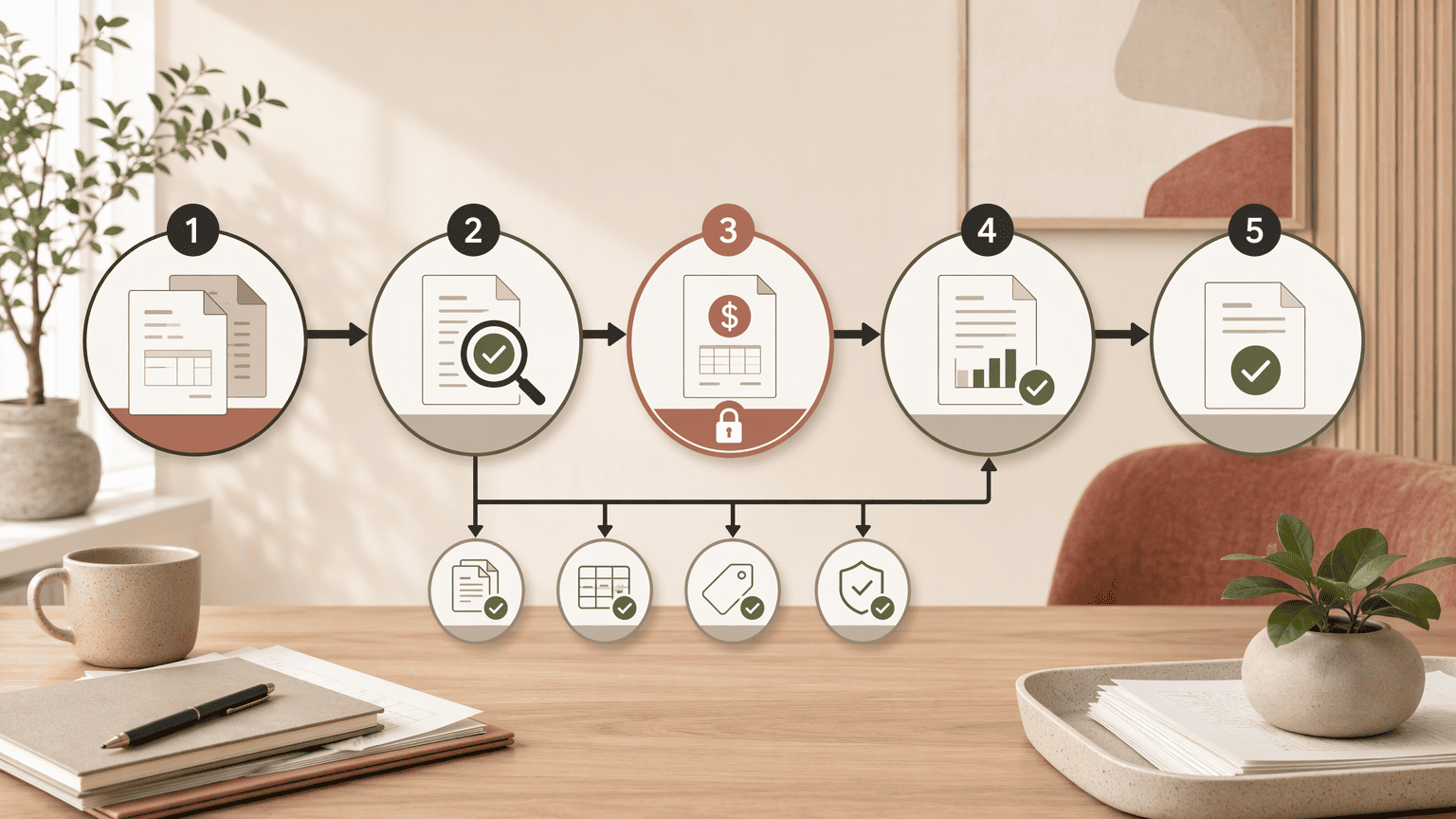
Choosing and deploying an automated invoice audit tool requires testing claims against architecture. Work through these five steps in sequence, and do not let a vendor skip you ahead to pricing before you have seen evidence on step three.
| Step | What to Do | What to Look For |
|---|---|---|
| Audit current error rate | Sample invoices across your top 20 vendors and manually reconcile against executed contracts. | You need a baseline overcharge rate. Even a 1.5% average across high-spend suppliers justifies the tool financially. |
| Map contract complexity | Categorize agreements by structure: simple fixed-price, volume-tier, multi-condition with rebates, high amendment frequency. | The tool must handle your most complex contract type from day one. A tool that chokes on multi-condition rebate schedules while breezing through fixed-price agreements leaves your biggest exposures untouched. |
| Request inference-share data | Ask each vendor what percentage of daily user actions in their audit product trigger model inference. | You want above 60% for a genuine AI-native tool. Single-digit percentages indicate bolted-on AI. |
| Pilot with a subset | Run a controlled pilot on 15 to 25 vendor agreements without migrating your full repository or changing your ERP. | Flag rate, false-positive rate, and time-to-reconcile compared to manual baseline. |
| Measure against pre-set ROI gates | Set the threshold before the pilot: minimum recovery rate, cost-per-invoice reduction, or discount capture improvement. | If the vendor cannot commit to a pilot against your actual data and your pre-set metrics, walk away. |
Conclusion
Automated invoice auditing against contract terms has moved from an interesting concept to a practical control in 2026. The technology now exists to catch overcharges before payment, enforce negotiated terms continuously rather than via spot checks, and give your AP team back the hours they spend on manual reconciliation.
The decision turns on whether you audit the architecture. Ask for inference-share data, pilot on your own contracts, and reject 80% gross margin claims from a tool that describes itself as AI-native. That mismatch between economics and marketing is the single most reliable signal of what you are actually buying.
Frequently Asked Questions
What are the best software tools for automatically auditing vendor invoices against contract terms?
Leading tools in 2026 split into two categories. AI-native platforms like GEP Quantum Intelligence and Contracts.ai run model inference at their core for contract-to-invoice matching. Source-to-pay suites like Esker, SAP, and Oracle offer strong rules-based controls with AI features layered on. Joya provides a lightweight, no-integration option that checks invoices against contracts using structured extracted terms.
How does AI-powered contract-to-invoice reconciliation actually work step by step?
A data layer ingests structured and unstructured contracts, extracting pricing, terms, and clauses. A model-orchestration layer routes each check through either deterministic matching or reasoning models depending on complexity. Agentic workflows then execute the matching automatically, flagging discrepancies. The architecture only qualifies as AI-native if over 60% of daily actions trigger model inference.
What are the key features to look for in an automated invoice audit tool?
Demand a centralized contract repository, controlled approval workflows that gate payment on contract compliance, proactive renewal and threshold alerts, unstructured data ingestion that handles non-standard formats, thorough audit trails showing every match decision, and term enforcement that works bidirectionally across both procurement requisitioning and AP payment cycles.
How does Contracts.ai approach contract-to-invoice auditing differently from traditional AP automation?
Contracts.ai deploys as an intelligence layer rather than a rip-and-replace system, operating within your existing data boundaries. You can pilot on a limited contract set without migrating your full repository. The platform was built to structure and activate contract data beyond static storage, sharing structured intelligence across finance and procurement teams.
What are the common challenges and limitations of automated invoice vs. contract matching?
AI inference costs push gross margins to 50 to 55%, making the economics different from traditional SaaS. Highly complex multi-condition pricing and amendment chains still challenge extraction models. ERP integration requires recalibrating tolerance rules across systems. And vendors claiming 80%+ margins on AI-native audit tools are likely misrepresenting bolted-on features as core capability.
What ROI or error-reduction statistics exist for automated vendor invoice audits in 2026?
ICONIQ’s 2026 snapshot confirms AI-native applications carry 50 to 55% gross margins. Government procurement rules require contractor reimbursement when audit findings exceed 0.25% of billings, plus audit costs. A 4% overcharge on a $2 million annual contract costs $80,000 per year, and automated pre-payment detection captures that from the first billing cycle.
Sources
- 552.236-80 Accounting Records and Progress Payments. – www.acquisition.gov
- B2B Contract Management Automation Software | Esker – www.esker.com
- Joya — Contract and invoice intelligence – joyacheck.com
- AI Invoice Management & Reconciliation Software Solution | GEP Quantum Intelligence – www.gep.com
- Accounts payable invoice matching overview – Finance | Dynamics 365 | Microsoft Learn – learn.microsoft.com
- Ordering, Receiving or Invoicing Against Contracts – SAP Help Portal – help.sap.com
- AI-Native vs AI-Bolted-On: The 2026 Buyer Playbook – SaaS Mag – www.saasmag.com






