








Introduction
Your supplier invoices look roughly right, so you pay them. That instinct is expensive. Suppliers overcharge through three common mechanisms: expired contracts silently rolling onto sky-high deemed rates, erroneous multiple standing charges stacking on a single bill, and simple billing errors where unit rates exceed the signed deal.
The scale is brutal. In its 2025 enforcement sweep, Ofgem secured £7 million in refunds and compensation from 10 suppliers for overcharging 34,000 customers. One mechanism alone, out-of-contract deemed rates, can spike electricity costs to 40p/kWh.
For a $2 billion annual spend, value leakage of roughly 2 percent equates to $40 million per year in wasted value. And in 2026, undetected supplier overbilling carries a compliance risk that cuts deeper than cash flow. Directors face material financial misstatements and breach of fiduciary duty, while the UK energy market still lacks a standard price cap for business customers, leaving companies fully exposed.
Catching these overcharges before payment is a direct profitability lever and a compliance imperative. This six-step guide gives you the practical defense, from surfacing hidden rate schedules to executing a formal recovery process that turns detected discrepancies into recovered cash.
Key Takeaways
These moves shift you from trusting supplier invoices to verifying them with precision.
- Digitize contracted rates first. You cannot catch a pricing discrepancy if your contracted unit rates, standing charges, and pass-through costs are locked in static PDFs no one reads.
- Three-way matching is the critical gate. Align the invoice, the purchase order, and the digitized contract before payment, blocking unvalidated charges the moment they appear.
- Automation scales the audit. Manual sampling misses systemic errors. A line-level variance analysis driven by contract intelligence inspects every single line item.
- Out-of-contract deemed rates are your highest-cost leakage point. Automated alerts triggered before a contract lapses prevent suppliers from silently rolling you onto default variable rates.
- Dispute discipline converts detection into recovery. Documenting the evidence, freezing payment, and issuing a formal notice citing the specific contract clause is what turns an identified overcharge into cash returned.
At a Glance
Here is how the options compare across the dimensions that matter most.
| Overcharge Type | How It Occurs | Detection Method | Recovery Action |
|---|---|---|---|
| Expired contract rolling onto deemed rates | Silent transition to default variable tariff after contract end | Automated contract expiration alerts; compare invoice rate to contracted rate | Issue formal notice citing original contract clause; demand back-billing at agreed rate |
| Multiple standing charges stacking | Duplicate daily or monthly fees applied to a single supply point | Line-level invoice audit; compare standing charge line items to contracted schedule | Request corrected invoice with single standing charge; seek refund of duplicate amounts |
| Unit rate exceeding agreed price | Billing system error or incorrect rate table applied | Three-way match invoice line rate vs digitized contract vs purchase order | Freeze payment; submit variance report with contract evidence for credit |
| Pass-through cost miscalculation | Formula error in index-linked or pass-through charges | Recalculate using contracted formula and reference index values | Dispute with documented calculation; require revised invoice before payment |
Step 1: Surface and Digitize Contracted Rate Schedules
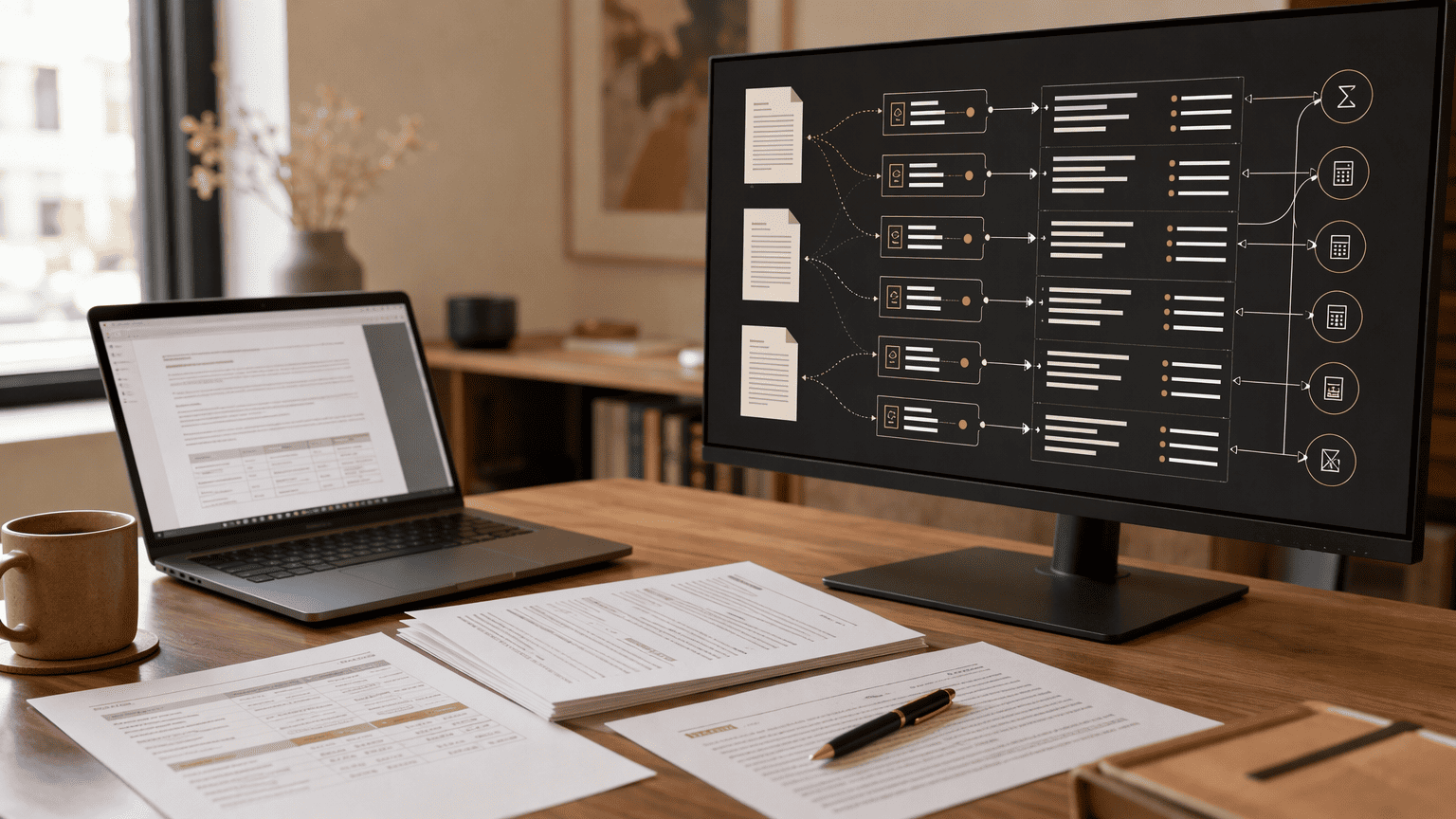
Your rate schedules are buried in executed PDFs across multiple shared drives, and no one has cross-referenced them with a live invoice in months. Most overcharges slip through that gap.
You need a single structured source of truth. AI-powered contract intelligence tools can parse unit rates, standing charges, and pass-through cost formulas straight from those contract documents, extracting line items into a structured rate schedule template you can query. ContractsAI lets you run a pilot on a limited contract set without migrating your full repository or disrupting existing workflows. A McKinsey global survey found that 24 percent of respondents in a 2024 procurement webinar said digital enablement is now a core priority, up from just 2 percent in 2023. Manual contract review is losing ground fast.
If you skip this step, every downstream check runs blind. Digitization is the foundation you build every detection control on.
Step 2: Establish a Three-Way Matching Process for Every Invoice
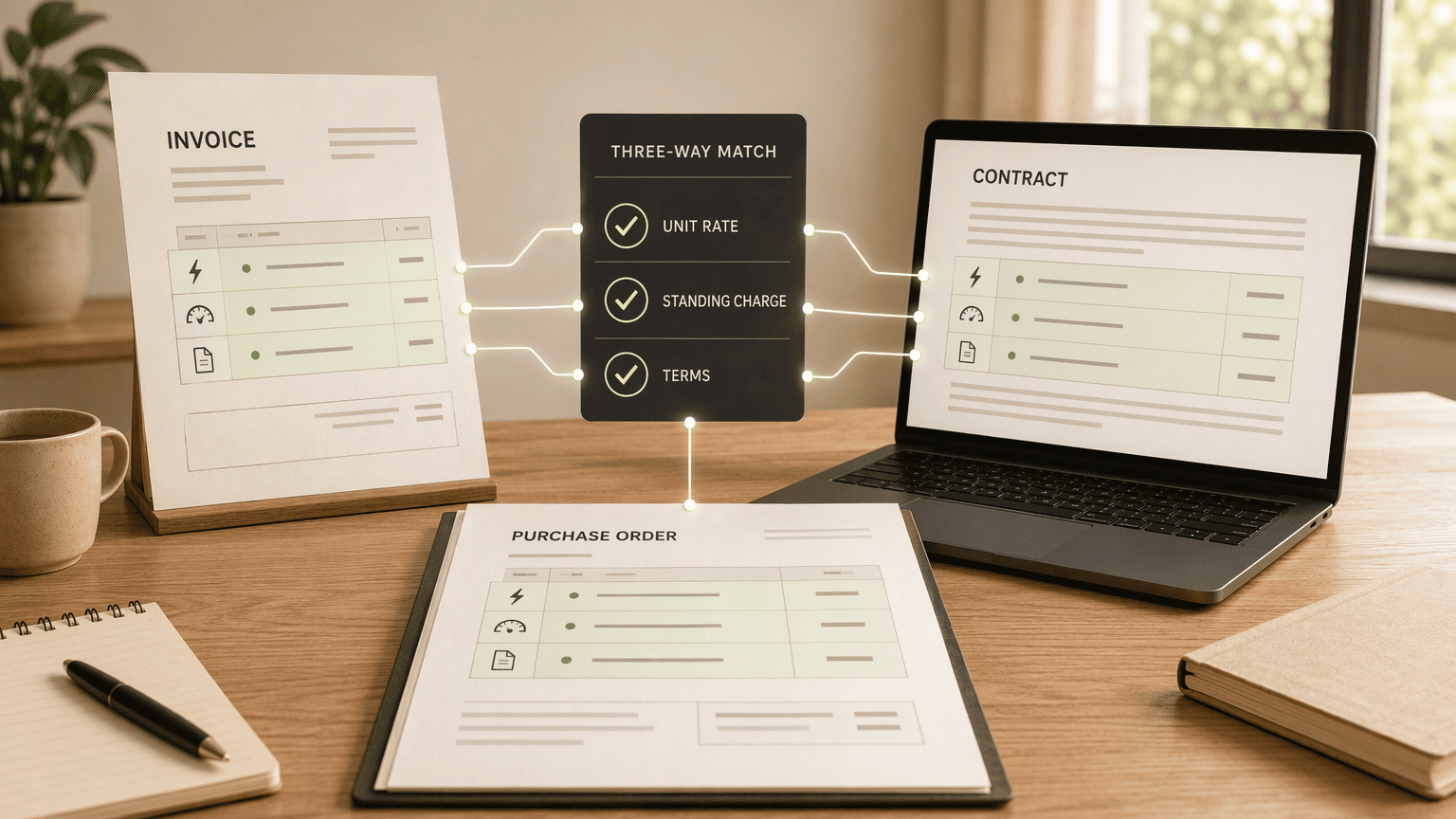
Most teams pay invoices after a cursory glance at the total. That is exactly how the Ofgem investigation uncovered systemic overcharging: multiple standing charges applied erroneously to thousands of customers because no control aligned the invoice line items with the contracted terms.
Three-way matching anchors every payment to the invoice, the purchase order, and your digitized contract. Before payment, verify that the billed unit rate matches the contracted rate, that the standing charge matches the schedule, and that the quantity billed aligns with what was ordered. The critical alert logic you must build in is a flag for any invoice that defaults to a deemed rate when the contract has expired. One company, automating payment processes, discovered over $10 million in duplicate payments to suppliers, money that a three-way gate would have caught immediately.
Step 3: Monitor and Flag Out-of-Contract Deemed Rates
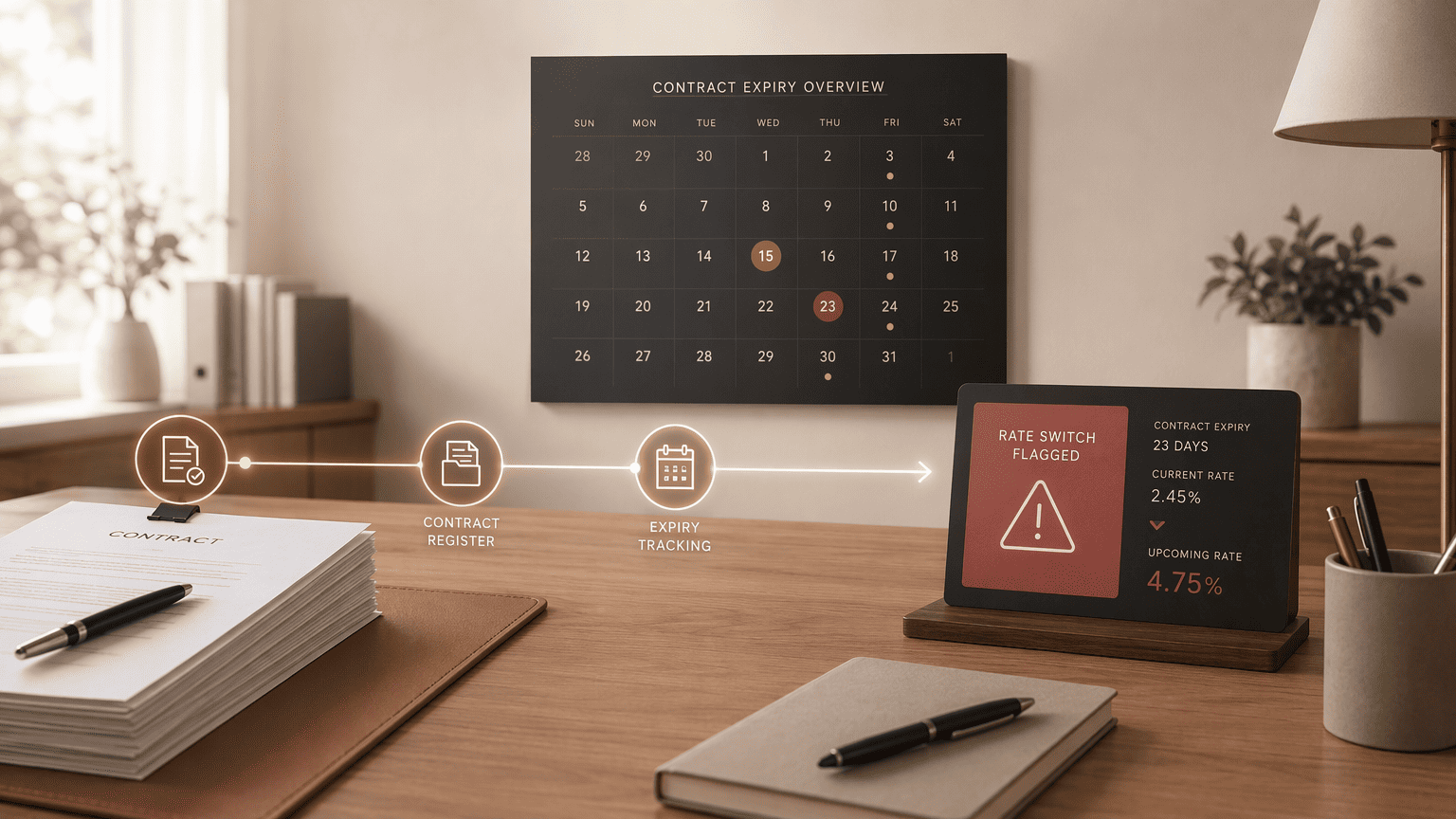
A contract expires and nothing visible changes. But behind the scenes, your supplier has rolled you onto a deemed rate that can reach 40p/kWh for electricity, multiples above your fixed term. This is the single most expensive overcharge mechanism, and it persists because no one watches the calendar. Here is the alert sequence that stops it:
- Map every contract end date into a central register the moment the agreement is signed, when the details are fresh.
- Set automated alerts to fire 90, 60, and 30 days before each contract expires, sent to procurement and finance simultaneously.
- Configure your invoice system to hard-flag any charge coded to a deemed or out-of-contract rate, blocking automated payment and routing it for immediate review.
- Link your digitized rate schedules so the system compares the billed rate against the fixed-term rate on the same contract, surfacing the delta instantly.
- Make contract renewal a condition precedent to payment approval for any invoice arriving after the expiry date on file.
Step 4: Automate Line-Level Variance Analysis with Contract Intelligence
Manual invoice auditing is slow, and it misses the pattern. Auditors sample a few high-value invoices, squint at PDFs, and approve the rest. The systemic errors, wrong unit prices, incorrect time-of-use tariffs, duplicate standing charges, only get caught if they happen to land in the sampled batch.
Automation changes the arithmetic.
A contract intelligence layer compares every invoice charge, line by line, against the parsed rates from your digitized contracts. You move from inspecting a tiny fraction of invoices to inspecting every single line item.
ContractsAI says it can share structured intelligence across finance and procurement, which means the extracted rate data flows into the invoice validation systems your AP team already uses. You are adding a detection engine that sits on top of them.
Step 5: Detect Cross-Agreement Rate Discrepancies Across Your Supplier Portfolio
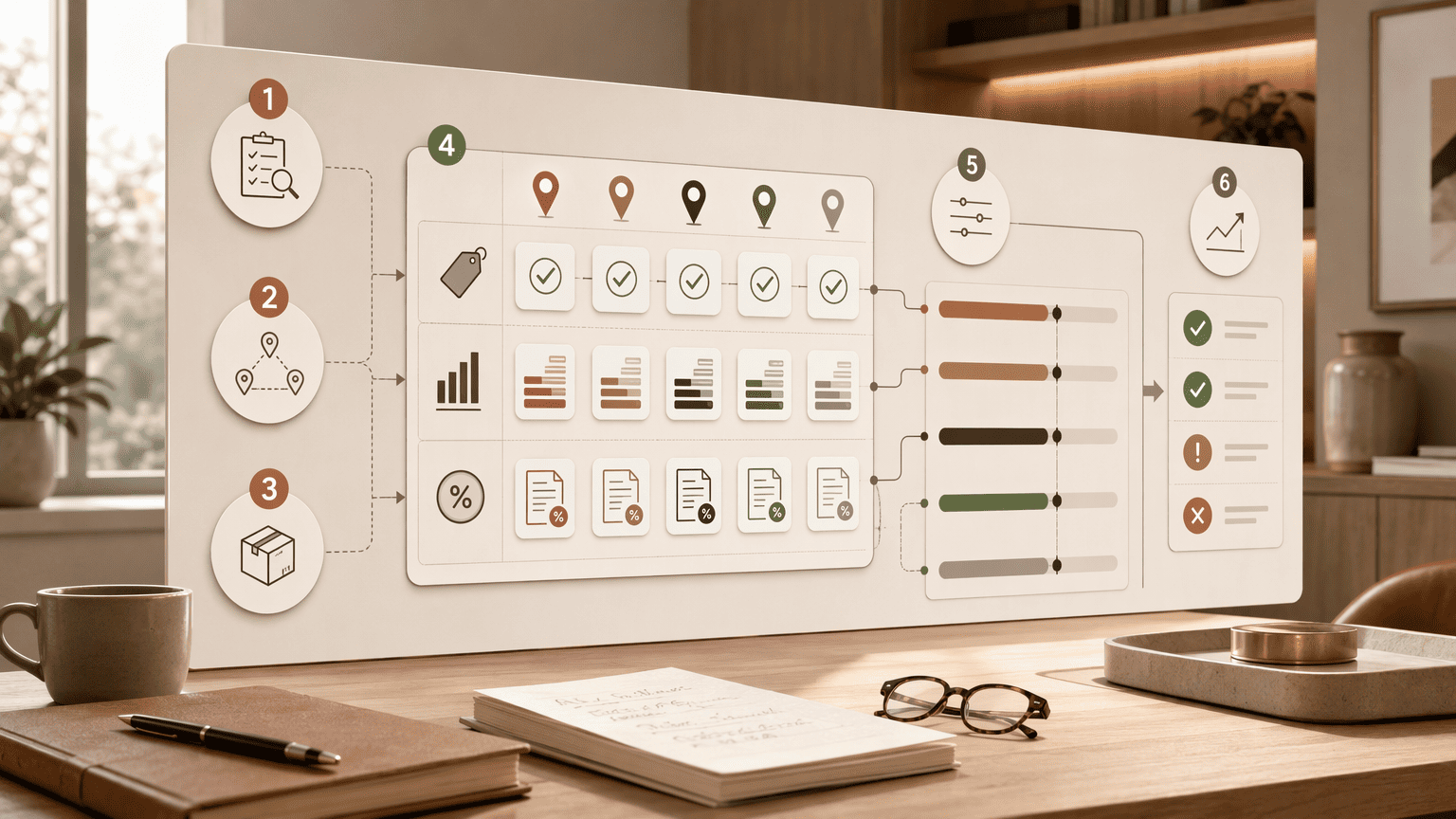
Systematic comparison requires you to look at four dimensions:
- Rate uniformity across sites: This is the most direct check, pull the contracted unit rate for the same SKU or commodity under a framework agreement and confirm all billing entities receive that rate. When one site pays more than another for the identical item, the master agreement is already broken.
- Tiered volume discounts, most favored customer clauses, and rebate terms: Check that these terms show up on the invoice line. The GAO found these provisions were expected but simply not applied, leaking millions. The problem compounds because no single invoice looked wrong on its own, the breach only becomes visible when you compare across the portfolio.
- Pass-through cost formulas: These deserve separate scrutiny. Indexed components, fuel surcharges, raw-material adjustments, should recalculate using the contract’s specified formula, not whatever multiplier the supplier’s system defaults to. Left unchecked, even a small formula deviation compounds annually into a meaningful overcharge. The Ofgem investigation into erroneous standing charges applied to 34,000 customers illustrates how systemic billing parameter errors persist across a customer base until someone validates consistency at scale.
- Early recovery audit programs: The GAO review of DFAS payments found that of $19.1 million in identified overpayments, $2.2 million related to most favored customer terms not received. Those terms were in the master agreement, but no one verified them at the invoice level across the portfolio.
Step 6: Execute a Formal Dispute and Retroactive Recovery Process
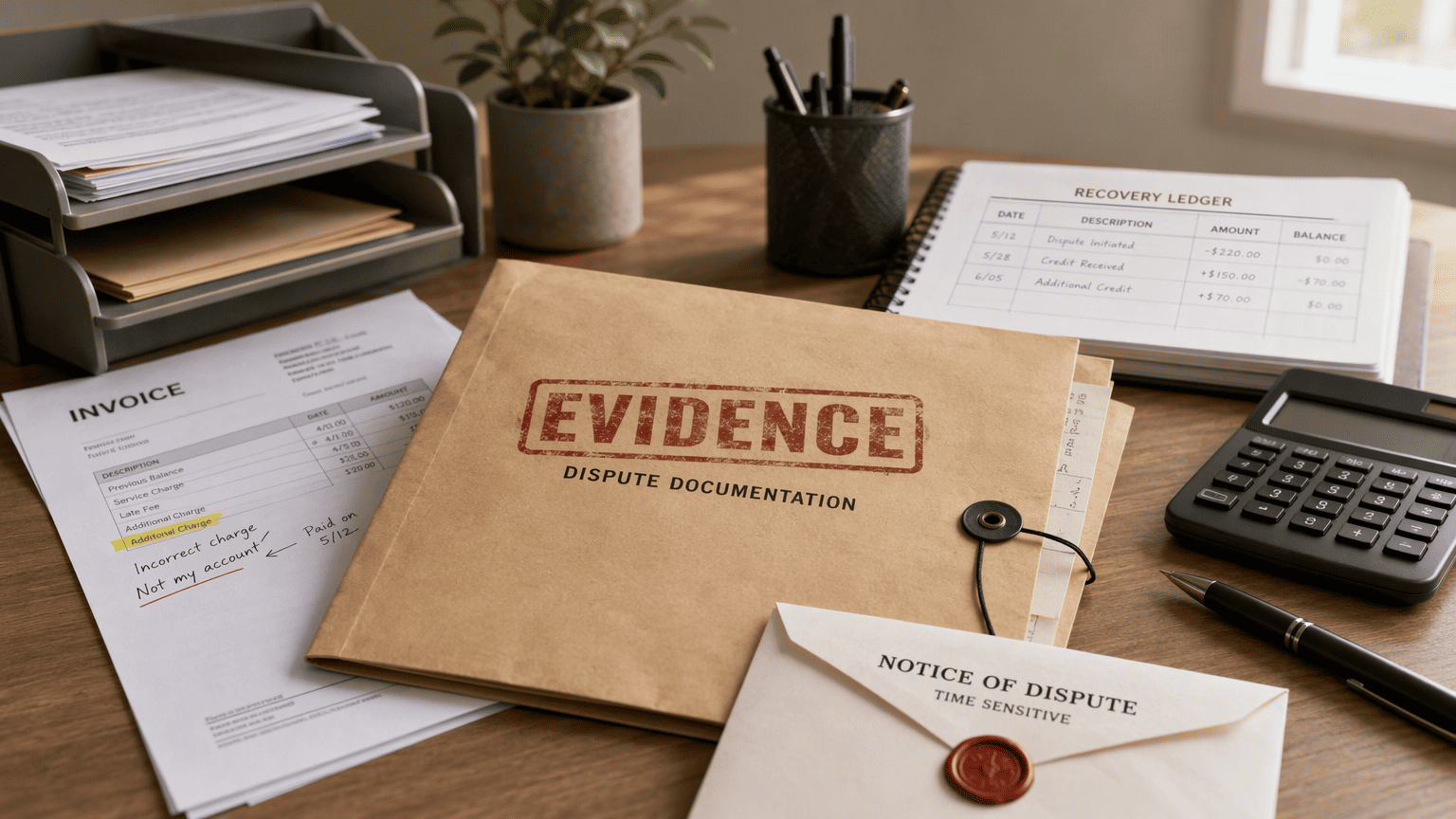
You have detected a pricing discrepancy. The next ten minutes determine whether you recover cash or absorb the loss. The GAO recovery audit is instructive: vendors challenged claims, and the recovery process stalled for eight months, so recoveries of overpayments amounted to only $1.9 million, far less than the $19.1 million identified. Detection without a disciplined dispute process is worthless.
Your immediate actions: document every piece of evidence by capturing the invoice, the digital contract extract showing the agreed rate, and the variance calculation. Freeze payment on the disputed invoice line immediately and do not release it until a written resolution is agreed. Issue a formal dispute notice that cites the specific contract clause breached, the dates of the overcharge, and the calculated amount due.
Do not accept verbal assurances. Demand written acknowledgment of the dispute and a timeline for resolution. Where the contract permits, include interest on the overcharged amount, and escalate to a senior commercial contact if the initial response is a deflection.
The final step is compliance framing. Escalate internally as a potential material financial misstatement, documenting the exposure for audit committee visibility. Undetected and unrecovered overbilling, left to compound, invites a breach of fiduciary duty claim against directors who knew and did not act.
Conclusion
## Conclusion
The Ofgem enforcement case surfaced an uncomfortable truth: supplier overcharging is widespread, silent, and automatic. It only becomes visible when someone runs the three-way match. Ten suppliers, 34,000 customers, £7 million in refunds. The problem isn’t malice. It’s manual trust in a billing process that routinely breaks.
In 2026, business energy costs have no regulatory price cap. Procurement value leakage swallows roughly 2 percent of spend each year. The gap between companies that catch these overcharges and companies that absorb them comes down to infrastructure: digitized contracts, automated line-level variance detection, and a formal recovery discipline that turns flagged discrepancies into recovered cash.
Continuous monitoring at this level is a profitability lever. It is also a fiduciary obligation. When every unchecked invoice carries a statistical probability of error, the audit stops being a periodic review and becomes a permanent function. Companies that treat it that way get their money back. Companies that don’t keep writing checks they shouldn’t.
Frequently Asked Questions
What are the most common ways suppliers overcharge against agreed contract rates?
The three main mechanisms are billing at out-of-contract deemed rates after a fixed term expires, erroneously applying multiple standing charges to a single account, and simple unit-rate errors where the billed price exceeds the signed contract figure. Ofgem’s 2025 enforcement action found these patterns across ten suppliers.
What internal review processes can flag invoice-to-contract pricing discrepancies?
Implement three-way matching that verifies invoice line items against the purchase order and the digitized contract rates before payment. Add automated alerts for out-of-contract deemed rates and run line-level variance analysis on every invoice, not just a sampled subset.
How can AI-powered contract intelligence automate the detection of supplier overbilling?
AI contract intelligence extracts unit rates, standing charges, and pass-through formulas from PDF contracts into structured data. That structured rate data is then compared line by line against incoming invoices, automatically flagging any billed amount that exceeds the agreed terms.
What steps should a procurement team take when a supplier overcharge is detected?
Document the evidence capturing the invoice, the contract extract, and the variance. Freeze payment on the disputed line instantly. Issue a formal dispute notice citing the specific contract clause breached, demand written acknowledgment, and pursue retroactive recovery with interest where the contract permits.
How does automated contract extraction compare to manual invoice auditing for catching overcharges?
Manual auditing samples a fraction of invoices and is too slow to catch systemic errors before payment. Automated extraction and line-level comparison inspects 100 percent of line items in real time, surfacing discrepancies that sampling would miss, and enables proactive blocking of invalid charges.
What are the financial and compliance risks of undetected supplier overbilling in 2026?
Undetected overbilling can cause material financial misstatements, breach of fiduciary duty by directors, and direct cash-flow damage. In the UK, business energy customers lack a standard price cap, leaving them fully exposed to uncapped deemed rates without the regulatory backstop households enjoy.
Sources
- Ofgem secures customer compensation from 10 suppliers for technical overcharging error | Ofgem – www.ofgem.gov.uk
- [PDF] NSIAD-99-12 Contract Management: Recovery Auditing Offers Potential to Identify Overpayments – Government Accountability Office (GAO) – www.gao.gov
- [PDF] Mitigating procurement value leakage with generative AI – McKinsey – www.mckinsey.com






