







Introduction
Your finance team just closed the books on another quarter. The numbers look solid, until you spot it: three different departments signed up for the same analytics tool at three different price points. Someone expensed a six-figure consulting gig without a contract. And you are reasonably sure nobody is tracking which subscriptions are actually being used. This is maverick spending in action, purchasing that happens outside your approved procurement processes and vendor agreements.
The real cost is never just the invoice. It is the duplicate subscriptions eating budget that could fund a strategic hire. It is the volume discount you lost because spend with your largest supplier was routed through smaller resellers you never approved. It is the audit finding you will have to explain to the board. According to industry data analyzed by procurement teams at Delphi and John Deere, organizations lose between 10 and 20 percent of potential savings as maverick spending fragments buying power.
This drain is controllable. It does not require a massive ERP overhaul or a new headcount of category managers. What it requires is a structured, step-by-step program that makes compliant buying the default path. The six steps below give you that program, from diagnosing root causes to measuring the program’s impact.
Key Takeaways
Maverick spending hits harder than most organizations realize, but the path to control is direct and measurable.
- Maverick spending defined: Purchasing that happens outside the established procurement process, bypassing approved vendor contracts, pricing agreements, and compliance checks.
- The cost runs three ways: Direct waste from duplicate subscriptions and overpayment, lost negotiation use as volume commitments erode, and compliance or security risk from unvetted vendors.
- Root causes are systemic, not personal: Process friction, invisible contract data, and the speed of corporate cards make maverick buying almost inevitable in a growing company without controls.
- Fastest path to control: Deploy a centralized vendor registry, lightweight pre-approval controls, and contract intelligence that surfaces negotiated rates at the moment someone tries to buy off-contract.
- Measure what matters: Track contract utilization rates, the number of new vendors added to the registry monthly, and whether automated invoice processing is rising, because every rogue purchase costs roughly ten times more to process manually.
Step 1: Diagnose the root causes and quantify the full cost of bypassing approved vendor contracts

Most teams jump to buying a new tool before they understand why people buy off-contract in the first place. That is backwards. Start your program by mapping every instance from the last quarter where a purchase hit a corporate card, a reimbursement request landed on a manager’s desk, or an invoice came in without a purchase order. Group each incident into one of three root-cause buckets:
- Process friction: The approved path requires three forms and a two-day wait, but a card swipe takes ten seconds.
- Cultural behavior: A long-tenured manager genuinely believes she is saving time by calling her old supplier directly.
- Data blindness: Nobody in the department knew a pre-negotiated contract existed.
Next, quantify the financial drain. Your off-contract purchases typically carry a price premium over what your negotiated contracts provide. Industry analyses consistently show a 7 to 12 percent price premium on purchases made outside preferred supplier agreements. Run that percentage against your total off-contract spend for the quarter, and the number will likely justify a full-time hire. Then add the soft cost: lost volume rebates, duplicate subscriptions you can identify by running a vendor-name normalization exercise against your general ledger, and the operational cost of manually processing invoices that a purchase-order system would handle automatically.
You are not building a report for the sake of a report. You are building the business case for the changes coming in Steps 2 through 6. Your CFO needs to see one number: the total dollar leakage per quarter. That number, updated each quarter, becomes the baseline against which your program is measured. No program survives without it.
Do not let perfection stall you. Even a rough-draft analysis that captures 80% of the off-contract damage will be more than sufficient to force action. Procurement teams at Delphi report that capturing 80% or more of the maverick spend is achievable with a focused diagnostic. The rest gets tighter as your data improves.
Step 2: Implement lightweight operational controls that stop maverick purchasing before it starts

The moment someone says “procurement controls,” your stakeholders hear “slow everything down.” Reframe this. You are not imposing bureaucracy. You are building guardrails that make the compliant choice faster than the workaround. Start with three mechanisms that a lean finance team can deploy inside of a week:
- Approved vendor list organized by spend category
- Purchase approval thresholds scaled to risk (subscriptions over $100 per month require a one-click manager sign-off; anything over $5,000 routes to procurement)
- Punchout catalog that lets employees buy from preferred suppliers directly from a simple, searchable interface
Think of this as choice architecture applied to your purchasing workflow. Richard Thaler and Cass Sunstein’s behavioral economics framework distinguishes a hard block (“you cannot buy from Vendor X”) from a nudge (“your preferred supplier for this category, with pricing already negotiated, appears at the top of the list with a two-minute checkout”). A hard block is occasionally necessary for suppliers that pose a security or compliance risk, but it generates frustration and workarounds if overused. The nudge approach, delivered through a well-maintained punchout catalog, redirects the majority of purchases toward approved contracts without the buyer even registering friction. Most employees want to do the right thing. They just do not want to spend thirty minutes finding out what the right thing is.
Deploy these controls in one department first. A two-week pilot in marketing or engineering will surface the edge cases (the rush order from a creative agency, the urgent cloud compute provisioning) that your process needs to accommodate. Tune the thresholds based on what you learn, then roll out company-wide. By the end of the first month, you should see contract utilization rates ticking upward and the number of unique vendors per category beginning to drop.
Step 3: Build a centralized vendor registry to turn contract data into a spend-intelligence layer

Most vendor lists live across five spreadsheets, three shared drives, and an email folder somewhere. That fragmentation is the root cause of most maverick spending: the accounts payable clerk cannot look up whether a contract exists, so the invoice just gets paid.
Consolidate everything into a single, enriched registry. For each vendor, capture:
- The legal entity name
- Any parent-child hierarchy relationships (critical for understanding true spend concentration)
- The pricing schedule in a structured format
This registry is the data layer that makes downstream controls actually function: purchase approvals, catalog routing, audit sampling. Poor vendor master data quality remains one of the top obstacles to capturing savings, because you cannot enforce a contract you cannot find. Once the registry is live, wire it into your intake process. When a requisition arrives, the system checks whether a preferred supplier exists for that category and flags off-contract requests before they become invoices. You can use a tool like Contracts.ai to extract contract metadata from executed agreements and structure it into a machine-readable layer that your procurement and finance systems can query directly.
Step 4: Use technology to detect and prevent off-contract purchasing at the point of requisition
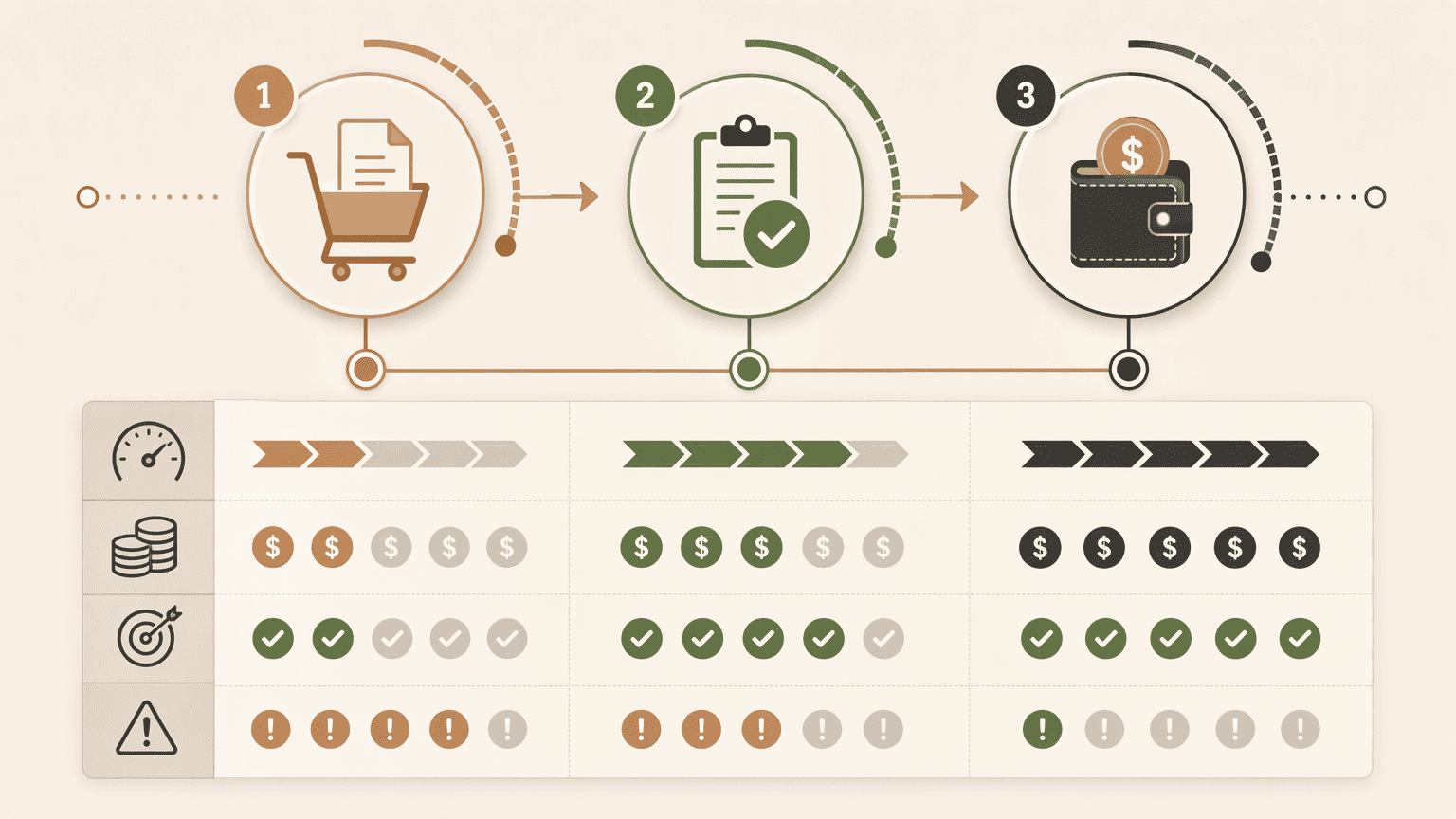
You have controls. You have a registry. Now you need a detection engine that catches maverick behavior before payment runs, not during an auditor’s sample review three months later. Different tools attack this at different points in the purchase-to-pay cycle, and each comes with a distinct profile of speed, cost, and accuracy.
| Detection Method | Implementation Speed | Relative Cost | Detection Accuracy | Best For |
|---|---|---|---|---|
| AI-powered intake orchestration | Weeks to deploy as an intelligence layer over existing systems | Mid-range, varies by contract volume | High; catches pattern anomalies and vendor mismatches in real time during requisition | Organizations wanting prevention at the point of purchase without replacing their ERP |
| ERP purchase-order rules | Months; requires configuration within the ERP module | Low incremental cost if ERP already licensed | Moderate; effective for clear rule violations but struggles with ambiguous or new categories | Companies with mature, heavily configured ERP environments |
| AP automation flags | Days to weeks; operates at the invoice stage | Low to mid-range | Low to moderate; catches issues after the purchase is committed, not before | Backstop detection for purchases that slip past upstream controls |
Purpose-built contract intelligence tools can enforce compliance automatically during the moment someone creates a requisition by surfacing the applicable contract terms and blocking or flagging the request in real time. This is a fundamentally different approach from AP automation, which scans invoices after the fact. The real-world difference is a vendor that never gets paid off-contract versus a vendor you recover money from after the check goes out.
Step 5: Activate post-signature contract intelligence to audit compliance without replacing existing systems

You signed the contract. That’s when the real work starts.
Your agreements contain negotiated pricing tiers, volume discounts, and rebate schedules that should flow straight to your P&L. They usually don’t. Contracts hold millions in negotiated value, and most of it leaks because nobody monitors compliance after signing.
The gap isn’t the drafting. It’s the monitoring. A contract intelligence layer reads your executed agreements and pulls out the structured data your teams actually need: renewal dates, liability limits, and pricing that applies to real purchase orders.
You match that output against your spend data and find every place where actual buying strayed from what you negotiated. You do not need to rip out your CLM or ERP to get this working. Start with a pilot on a small set of high-dollar contracts, connect the extracted data to your spend records, and let the results tell you whether the approach scales.
Step 6: Measure, audit, and continuously improve your maverick spend reduction program
A program without metrics is just good intentions. Build your measurement cadence around a handful of indicators that tell a clear story month over month.
- Track new vendors added per month. A declining trend means fewer one-off suppliers are entering your system outside the approved catalog.
- Monitor contract utilization rate by category. For each spending category with a preferred supplier, measure what percentage of total spend flows through that contract. Target a rising rate each quarter.
- Measure automated vs. manual invoice processing. Each rogue, off-contract purchase costs approximately ten times more to process manually than an automated, contract-backed transaction. This ratio should shift steadily toward automation.
- Tie audit findings back to root-cause data. When an audit does flag an off-contract purchase, map it back to your Step 1 diagnostic categories. If process friction is still the dominant cause in month six, stop adding controls and go fix the purchase requisition flow.
- Run a quarterly leadership review. Share the quarter-over-quarter leakage number, the utilization rates, and one concrete example of a risk that was caught before it became a problem. This keeps sponsorship alive.
Conclusion
The six steps above give you a repeatable path to stop maverick spending:
- Diagnose the root causes: Use real dollar figures to identify why off-contract purchases happen.
- Deploy lightweight controls: Guide buyers to preferred suppliers without heavy enforcement.
- Install pre-payment detection: Fire alerts before payment to catch off-contract spending early.
- Start small: Pilot the approach on a limited scope before expanding.
- Measure obsessively: Track progress with key metrics like contract utilization rates.
- Watch utilization climb: Following this path will steadily increase your contract utilization rates.
Frequently Asked Questions
What is maverick spending and why does it harm organizations?
Maverick spending is purchasing that happens outside the established procurement process, bypassing approved vendor contracts and negotiated pricing. It harms organizations through direct overpayment, duplicate subscriptions, lost volume discounts, and compliance risk from unvetted suppliers.
What operational strategies can finance and procurement teams use to reduce contract bypass?
Start with three foundational elements:
- A centralized vendor registry
- Purchase approval thresholds tied to spend magnitude
- A punchout catalog that routes buyers to preferred suppliers
Add monthly vendor spend reviews to surface duplicates and ensure contract enforcement is visible.
How can technology help detect and prevent off-contract purchasing before payment?
AI-powered intake orchestration tools check requisitions against the vendor registry in real time, flagging non-preferred suppliers before approval. ERP purchase-order rules and AP automation provide layered downstream detection, but prevention at the requisition stage is the most effective.
What role does post-signature contract intelligence play in enforcing vendor contract compliance?
Post-signature contract intelligence extracts structured data, pricing, rebates, renewal terms, from executed agreements, then aligns that data with actual spend records. This reveals mismatches between negotiated terms and actual purchasing, recovering value that otherwise leaks.
How do you measure and audit the effectiveness of a maverick spend reduction program?
Track new vendors added monthly, contract utilization rates by category, and the ratio of automated to manual invoice processing. Tie each audit finding back to a root-cause category to identify whether process friction, behavior, or data gaps need attention.
What is the typical savings loss from uncontrolled maverick spending?
Procurement analyses show organizations lose between 10 and 20 percent of potential savings when maverick spending fragments buying power. Off-contract purchases consistently carry a 7 to 12 percent price premium over negotiated contract rates.
Sources
- What Is Maverick Spend and How To Control It – Fairmarkit 2026 – www.fairmarkit.com
- Managing Maverick Spend at Deere and Delphi – An Interview with Jon Stegner | Supply Chain Resource Cooperative – scm.ncsu.edu
- Manage Contracts with Intelligence, Not Folders | suplari – suplari.com
- What is maverick spending and how to stop it without a procurement team | Ensurva – www.ensurva.com