








Introduction
Your procurement team has already done the hard work, negotiating tiered pricing, volume rebates, and prompt-payment terms that should save millions. Yet the invoices keep arriving at list price. The result is a silent drain on your P&L: IntelAgree reports a typical enterprise can recover over $2.10M from enforced rate conformance alone. This form of revenue leakage isn’t a one-off error; it’s a systematic failure that happens when complex pricing structures live in static documents instead of operational systems.
The most common culprits are missed tiered pricing thresholds, unapplied volume rebates that never cascade down, and incorrect service-level credits that simply go unclaimed. For years, the only answer was a painful manual audit, a forensic exercise that finds the cash months after it’s gone.
That approach is now obsolete. A new generation of AI-powered contract intelligence tools has made real-time, pre-payment visibility the only scalable answer. This guide walks you through the seven steps to shift from periodic scrambling to continuous, automated enforcement of every contracted dollar.
Key Takeaways
Before you overhaul a single process, understand the critical shifts that make real-time discount visibility achievable and profitable.
- Centralize first: A single, searchable repository of active agreements is the foundation. Without it, automation has nothing to work on.
- Automate extraction: AI parses every line of every contract to convert complex pricing clauses into structured data fields.
- Match in real time: The core defense is an automated engine that flags overcharges at the invoice line-item level before payment runs.
- Stop reviewing in isolation: Aggregating terms across all vendor agreements surfaces systemic discount leakage that single-contract audits miss.
- Turn alerts into action: An immutable digital trail documenting the breached clause and the overcharged amount turns detection into a recoverable credit note.
Step 1: Centralize Your Vendor Agreements into an Intelligence-Ready Repository

Most vendor agreements live in three places: an email attachment someone forgot to download, a shared drive folder named “FinalFINALv2,” and a contract manager’s desktop. None of those locations helps you enforce a discount.
You cannot systematically verify pricing without finding the signed document that spells it out. This step is non-negotiable.
Platforms like Docusign for agreement management now let you pull every active contract, amendment, and rate card into one searchable structure. When you stop digging through decentralized storage and start using a purpose-built contract intelligence platform, you fix the root cause of most missed terms: nobody knows where the final version actually lives. The immediate payoff is audit readiness.
Ask “What is the contracted rate for this SKU with this vendor?” and get an answer right now. That single capability stops a significant slice of overbillings that happen because AP paid against an outdated rate card.
Step 2: Automate the Extraction of All Discount and Credit Clauses with AI
Nobody gets through hundreds of contracts by hand. The sheer volume guarantees something slips: a tiered discount that never hit the invoice, a rebate schedule buried in an appendix, a prompt-payment term you forgot existed.
AI contract tools like IntelAgree and Ivo.ai now dump entire agreement portfolios into a queue and pull pricing structures out automatically. They find the volume rebates that trigger at specific spend thresholds. They isolate SLA credits and discount tiers the way human reviewers can’t after hour four of a document review.
The machine turns unstructured clauses into clean, structured fields. That gives you a pricing matrix ready for matching the minute extraction finishes.
No more bottleneck. Your static contract library becomes something your team actually uses.
Step 3: Implement Real-Time, Line-Item Matching Between Invoices and Contracted Rates
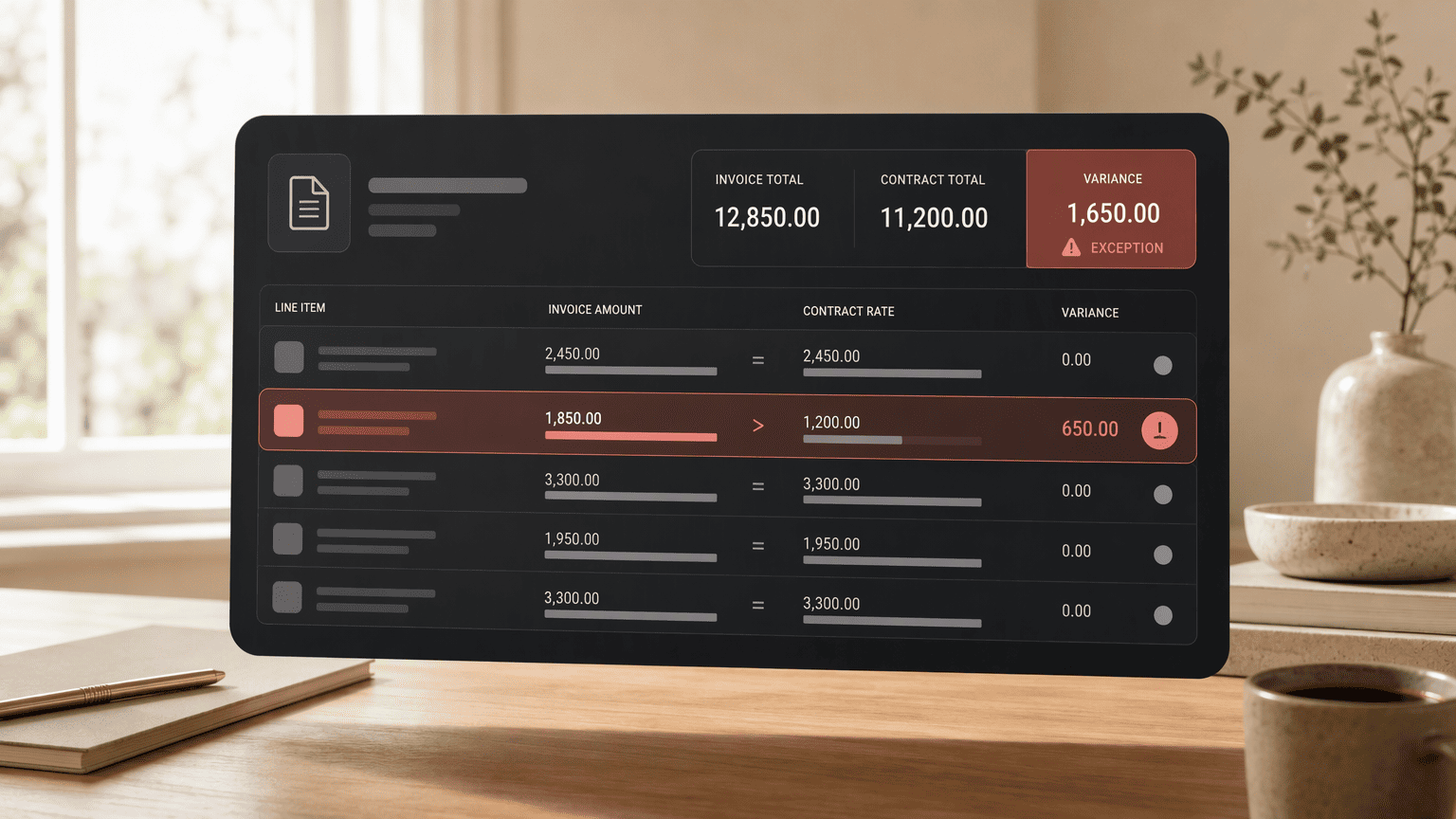
This is where the money gets caught. Real-time invoice-to-contract matching compares every single line item on an incoming invoice against the structured pricing data extracted in Step 2. The moment an invoice is generated, an automated engine flags any line where the billed amount exceeds the calculated contracted rate by a defined tolerance. The goal is pre-payment detection, not a post-mortem audit.
Tools such as Konfirmity’s vendor management system and Atlas Systems’ ComplyScore are engineered to integrate with your existing ERP and AP platforms to perform this continuous, automated cross-referencing. When an overcharge is detected, the system does not let it flow silently into the payment batch. It quarantines the invoice line, attaches the evidence, and surfaces it for review. This shift from sampling a few invoices each quarter to monitoring every single transaction recovers the full scope of leakage that sampling simply cannot find.
Implementation requires a close technical partnership between your AP system and the contract intelligence layer. The critical rule is to start with a specific, high-value vendor category rather than attempting to match everything on day one. You prove the ROI in one lane, refine the tolerance rules that trigger flags, and then expand the engine to cover additional spend categories with confidence.
Step 4: Group Cross-Agreement Terms to Spot Systemic Discount Leakage
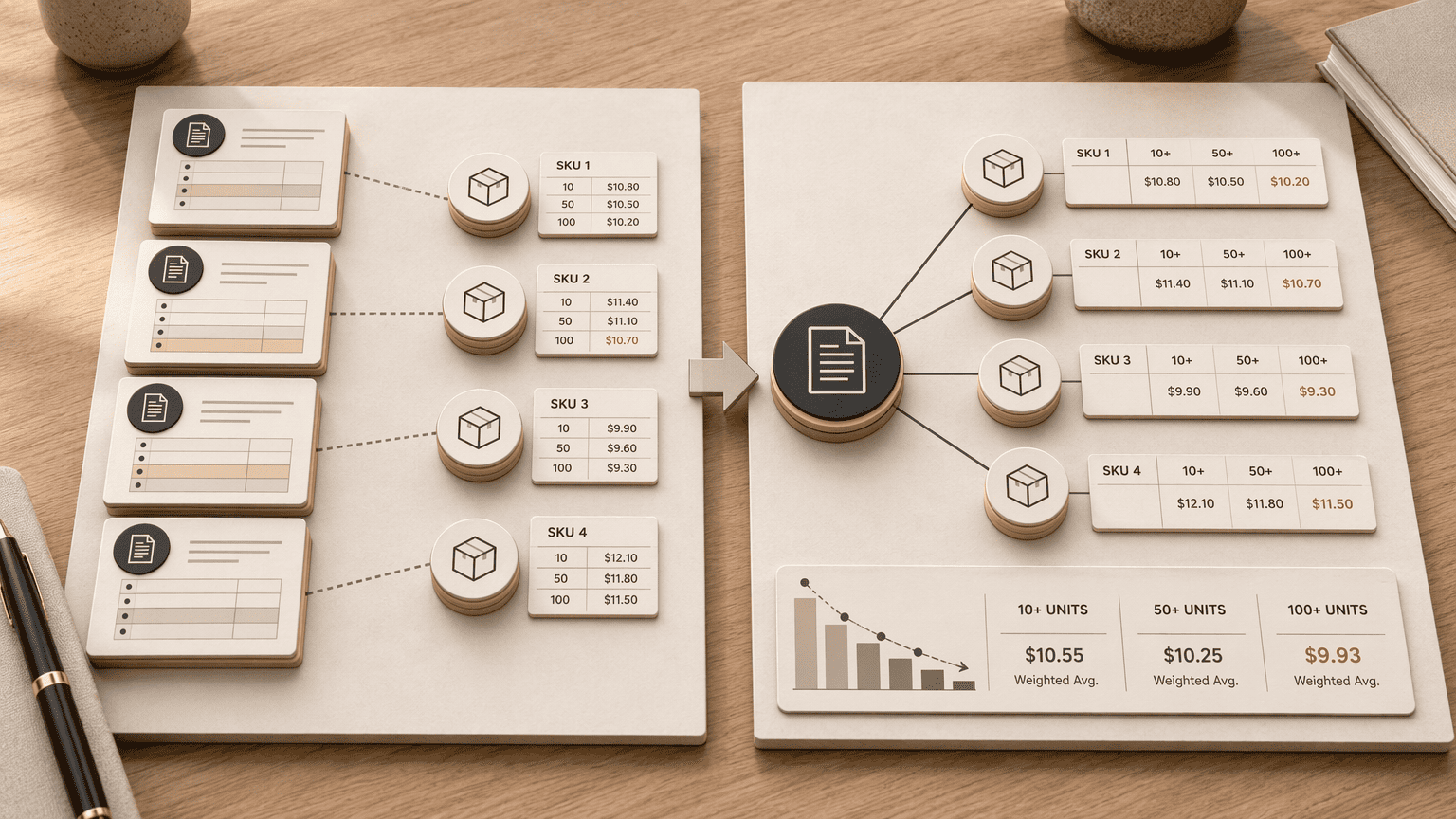
Reviewing contracts in isolation hides a pervasive form of leakage. A consolidated, cross-agreement analysis often reveals that a single vendor is applying inconsistent price breaks across related SKUs, or that a tail-spend supplier never cascaded a volume-aggregation discount earned through cumulative buying. Below is how a cross-agreement view compares to a single-contract approach.
| Inspection Method | What It Finds | What It Misses |
|---|---|---|
| Single-Contract Audit | Verifies that the invoiced rate matches the signed rate in one standalone document. | Overlooks inconsistencies across related agreements, such as a missing volume-aggregation discount that should cascade across multiple divisions. |
| Cross-Agreement Analysis | Surfaces systemic pricing drift across all active agreements with one vendor, flagging instances where the same SKU is billed at different rates. | Requires AI-powered aggregation; a manual attempt across thousands of contracts is unscalable without automated category-based clustering. |
Unmanaged cross-agreement leakage alone eats up 2 to 4% of total procurement spend, according to a 2025 Deloitte study. That is not a rounding error; it’s a material financial control failure. A concrete case: a tail-spend supplier fails to apply a global volume tier earned by aggregate purchases across three business units. Each unit’s contract sits in a different repository, and no human spots the cumulative breach.
Step 5: Configure Targeted Alerts for Every Type of Non-Compliance
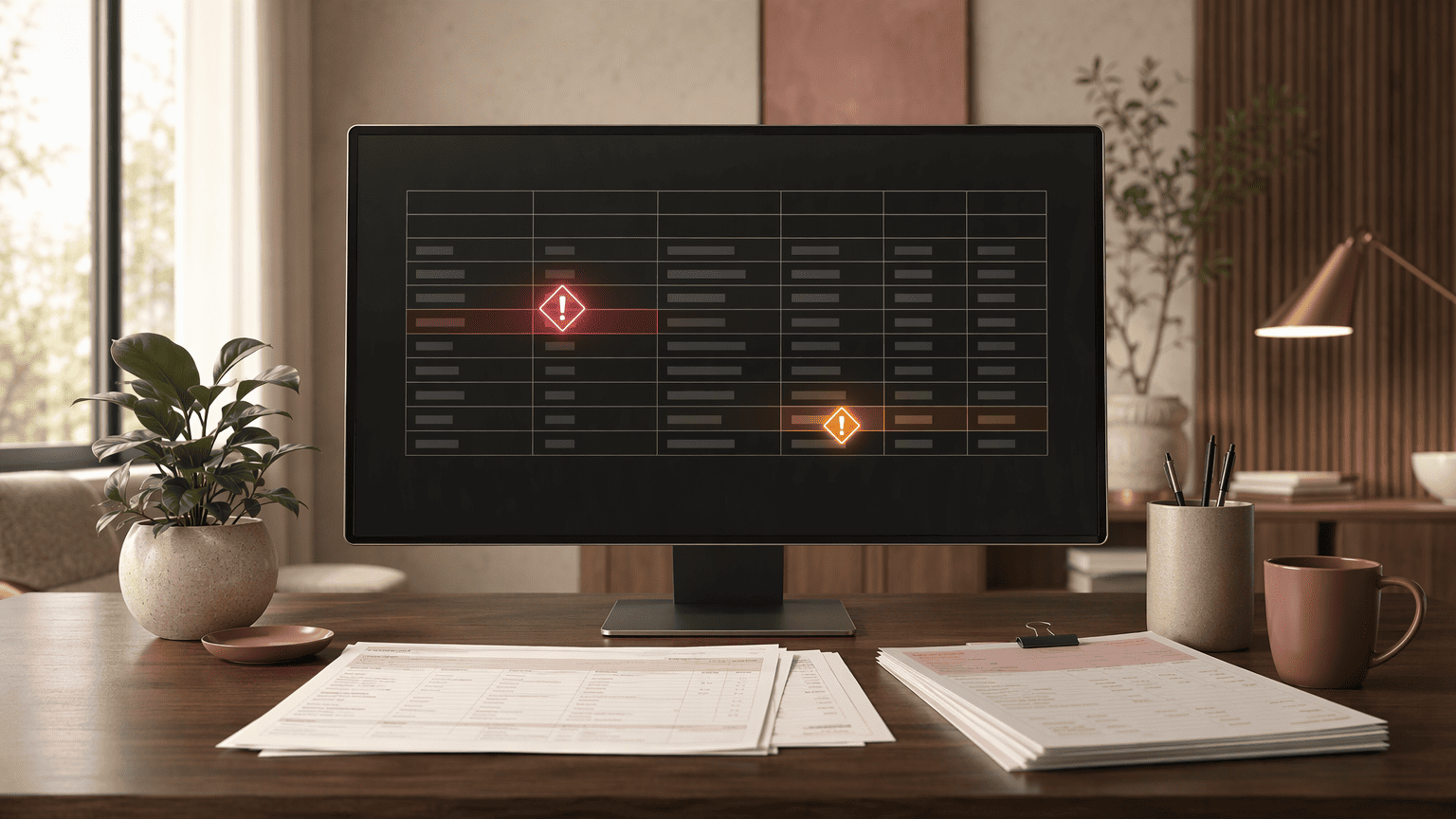
A monthly variance report moves too slowly. You need tolerance rules that fire the instant an invoice line crosses a threshold, like a 1% price variance. Two alert types do most of the heavy lifting:
- Price-variance alerts flag simple overbilling when a line-item price exceeds the contracted rate.
- Missing line-item discount alerts catch a contracted rebate or discount that never made it onto the charge.
Take item substitution. A vendor bills a non-contracted substitute SKU that skips your negotiated discount entirely. A detection rule cross-references every invoiced SKU against your master list of contracted part numbers and fires an exception the moment an unapproved replacement shows up. Set it once, and it catches that pattern from then on.
The difference is in the detail. A generic ‘spend anomaly’ flag is noise. An alert that reads, “Invoice #4482, Line 3: SKU ACME-5000X billed at $3.14/unit; contracted rate for Tier 3 is $2.89/unit. Overcharge: $1,250” hands your AP team something they can act on in sixty seconds.
Stop building reports. Start programming alerts.
Step 6: Build a Discount Realization Command Center Dashboard
Your CFO does not have time to read raw alert logs. You need a visual command center that renders discount compliance as a clear financial control metric.
The two tiles that matter most are a supplier-compliance heat map, color-coding every vendor from green to red based on adherence, and a discount erosion waterfall chart that quantifies exactly where contracted value is degrading across the purchase-to-pay cycle. A third vital tile is a real-time leakage counter grouped by business unit, designed for a weekly review cadence. It instantly surfaces transactions where contracted rates were ignored, showing ‘expected vs. payable’ per supplier in pink highlights. The most advanced configurations now integrate ERP data with third-party price-benchmarking feeds to validate that the contracted discount itself produces a market-competitive net price. This is a current shift in procurement technology that turns the dashboard from a compliance checker into a strategic pricing tool.
Step 7: Activate an Audit Trail to Recover Revenue and Drive Remediation

Detecting an overcharge is only half the work. The other half is getting the money back. An immutable audit trail that timestamps the breach, links the contract clause, and calculates the variance puts you in position to recover cash instead of just filing a report.
Here is how to build that closed recovery loop:
- Capture breach evidence automatically. The system grabs a digital snapshot of the invoice line, pulls the contracted rate from your AI repository, and calculates the delta. No one is chasing PDFs or stitching together email threads.
- Push the package to the AP recovery queue. The proof bundle (invoice, clause, variance screenshot) is generated and assigned without a human assembling it.
- Fire an automated credit-note request from the audit log. One click converts a documented breach into a formal supplier chargeback, cutting out the drafting delay that usually sits between finding a problem and asking for money.
- Start measuring resolution time by supplier. Flag the vendors who rack up the most breaches and drag their feet on credits. That data belongs in the next contract renewal conversation, whether you restructure terms or add compliance penalties.
Organizations with automated recovery audit trails cut supplier dispute resolution time by 60%, according to APQC’s 2026 benchmark. When your credit-note request arrives with the breached clause and a timestamped invoice already attached, most of the room for argument disappears.
Conclusion
Real-time discount visibility turns procurement into a profit-recovery engine that runs every day, not once a year.
AI correlates internal purchase orders with pricing terms the moment a transaction hits the system. That stops overcharges before they become payments, not six months later in a forensic audit.
Generative AI takes this further by watching for supplier pricing tactics as they shift. The contracts stay dynamic financial shields instead of static documents nobody reads after signing.
Frequently Asked Questions
What methods can a company use to track and verify that vendors are applying their agreed-upon contract discounts in real time?
The only scalable method is automated invoice-to-contract matching through a centralized AI platform. The platform extracts structured discount data from every active agreement, integrates with your ERP system, and compares every invoice line item against contracted rates before payment is authorized.
How can AI-powered contract intelligence tools automate the detection of billing errors and missed discounts?
These tools use NLP to parse complex pricing clauses, tiered discounts, rebates, and SLA credits, from unstructured documents and convert them into machine-readable data fields. They then continuously cross-reference that data against live invoice feeds to flag any variance in real time.
What are the most common types of vendor non-compliance with negotiated pricing, and what impact do they have on enterprise finances?
The most common types are missed tiered pricing thresholds, unapplied volume rebates, and incorrect service-level credits. IntelAgree reports that a typical enterprise can recover over $2.10 million in leaked revenue just by enforcing these often-overlooked commercial terms.
What key features should an enterprise look for in software designed to provide real-time visibility into contract discount adherence?
Look for automated AI extraction of discount terms, real-time invoice-to-contract matching engine, configurable price variance alerts, and a supplier compliance dashboard. The system must produce an immutable audit trail linking every detected breach to the specific contract clause for instant recovery.
How does the shift from static contract storage to active contract intelligence enable cross-functional teams to enforce commercial terms?
Active intelligence transforms contracts from passive files into operational data that flows to AP and procurement systems. Finance sees payment exceptions instantly, procurement uses cross-agreement analysis to spot systemic pricing drift, and legal has auditable evidence for credit-note enforcement without manual searching.
What are the best practices for setting up a pilot program to test contract compliance monitoring without overhauling existing procurement systems?
Start with a single high-value vendor category and a limited contract set, without migrating the full repository. Integrate the AI extraction engine with your existing ERP to match invoices in real time for that one category. Prove a hard-dollar ROI on recovered leakage before expanding the program.
Sources
- IntelAgree | Contract Intelligence Platform – intelagree.com
- Request a Demo of Ivo’s AI Contract Review and Intelligence Platform – www.ivo.ai






