








Introduction
Your team negotiates hard for a discount, locks the rate into a master agreement, and files the PDF. Months later, identical line items arrive invoiced at the old, higher price, and the difference clears AP without a ripple. That quiet leak is not hypothetical. U.S. buyers routinely hemorrhage 1 to 5% of total spend to billing errors annually, a slow bleed that turns negotiated savings into fiction.
Uncaught overcharges compound silently. A single duplicate payment or a missed volume rebate feels trivial on a monthly statement, but across a portfolio of hundreds of suppliers, these errors cascade into seven-figure leakage that no strategic sourcing initiative can outrun. The federal government alone reported an estimated $186 billion in improper payments for FY 2025, an increase of about $24 billion from the prior year, and many of those dollars originated inside supplier billing mistakes that looked routine.
Traditional trust-based AP processes were never designed to catch these discrepancies. For decades, a recovery audit meant a consultant arrived years later to mine legacy payment files, a model exemplified by the Department of Defense’s experience where overpayments were made 4 to 6 years before audit recovery began, rendering identification and recovery stubbornly difficult.
That model is obsolete. A combination of process discipline and modern contract intelligence can catch billing errors before the funds ever leave your account. This seven-step workflow moves you from reactive pay-and-chase to pre-payment prevention, covering the core overcharge patterns, the technology that flags them, and the forensic trail you need to win every dispute.
Key Takeaways
Stopping overcharges requires a deliberate merger of forensic pattern recognition, automated contract matching, and a defensible audit trail. Here is what you need to carry forward before diving into the steps.
- Three core schemes dominate supplier overcharging: Unit-price inflation, phantom quantities, and missed credits. Memorize their signatures on an invoice.
- Pre-payment detection is non-disruptive: AI-driven auditing integrates with existing ERP and AP infrastructure via API or file feeds, so you do not replace your current systems to gain real-time price compliance.
- Forensic trails are the difference between identification and cash in the bank: The DOD identified $19.1 million in overpayments but recovered only $1.9 million largely because vendors disputed claims when records were hard to retrieve.
- Inaction is expensive: Industry estimates place uncaught billing errors at 1 to 5% of total spend, and cumulative improper payment losses across the federal government have reached as much as $3 trillion since FY 2003.
Step 1: Understand the Three Core Overcharge Schemes
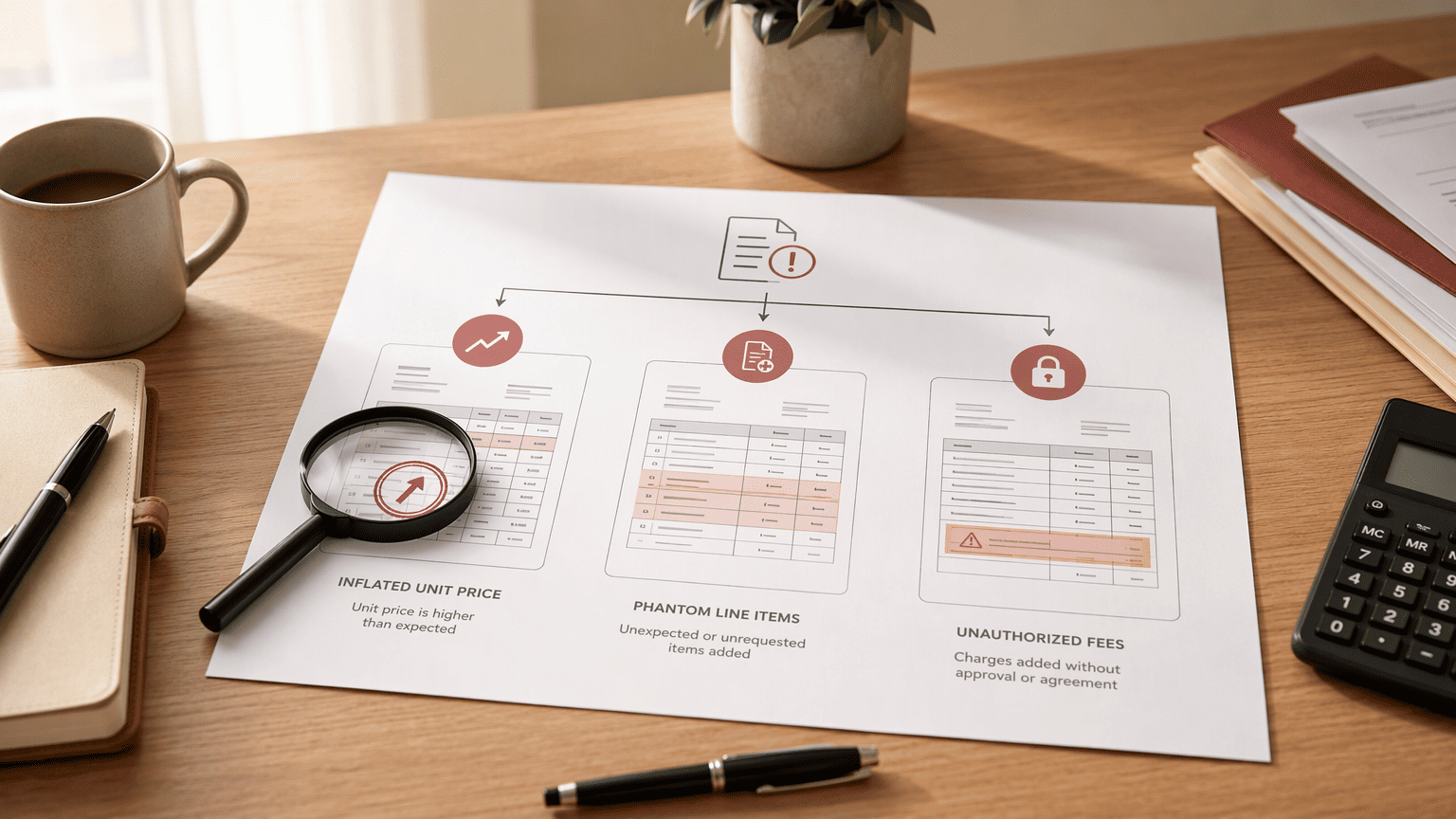
Every auditor knows the feeling of scanning an invoice and sensing that something is off without being able to name it. You need the vocabulary. Supplier overcharging breaks down into three repeatable schemes, and once you learn their signatures, you will spot them in minutes.
- Unit-price inflation: billing a higher per-unit rate than the signed contract. It often hides in plain sight when a supplier quietly reverts to a standard list price, betting that AP will not cross-reference the original pricing table.
- Phantom quantities: charging for goods never delivered or services never performed. This becomes especially dangerous on recurring service invoices, where a fractional extra hour or a few extra units, multiplied across dozens of bills, can balloon undetected. Duplicate payments fit the same bucket. A 1998 GAO audit of a DOD recovery program found that, of $19.1 million in overpayments, $1.3 million related to duplicate payments made.
- Missed credits: are the silent killer and, by the numbers, the most expensive. The same DOD audit revealed that of the $19.1 million in overpayments, $12.4 million was related to cash discounts not taken or received or deducted at the wrong rate. Another $1.2 million related to credits for returned merchandise not taken, and $2.2 million related to most-favored-customer terms not received. In each case, the cost was engineered into the contract and then abandoned at the point of payment.
Step 2: Deploy Intelligent Detection Over Existing AP Infrastructure
Procurement teams often delay deploying audit tools because they recoil at the thought of a multi-year ERP migration. That fear is outdated. Modern contract intelligence platforms integrate via API or flat-file feeds (CSV, EDI) with existing systems like SAP or Oracle, functioning as an intelligence layer that reads payment files without replacing the core ledger.
You can contrast this with the oldest method of manual spot-checking, where a busy AP clerk pulls one invoice per quarter from a high-risk vendor. That approach might catch a typo but will never surface a systematic volume discount omission across 12 business units. Automated transaction scanning is different. It inspects every line, creating a net that manual samples cannot offer.
The precedent is decades old. The Profit Recovery Group International (PRGI) performed recovery auditing for the DOD and audited about 80 percent of the $7.2 billion audit base by scanning payment databases transaction by transaction without swapping out the DOD’s financial systems. The result was identification of $19.1 million in overpayments.
You can run a pilot with a limited contract set without migrating your full repository. A tool like Contracts.ai, for instance, lets you deploy detection on a subset of high-risk agreements first and expand scope as your team builds confidence in the workflow.
Step 3: Automate and Digitize Contract Terms as a Single Source of Truth
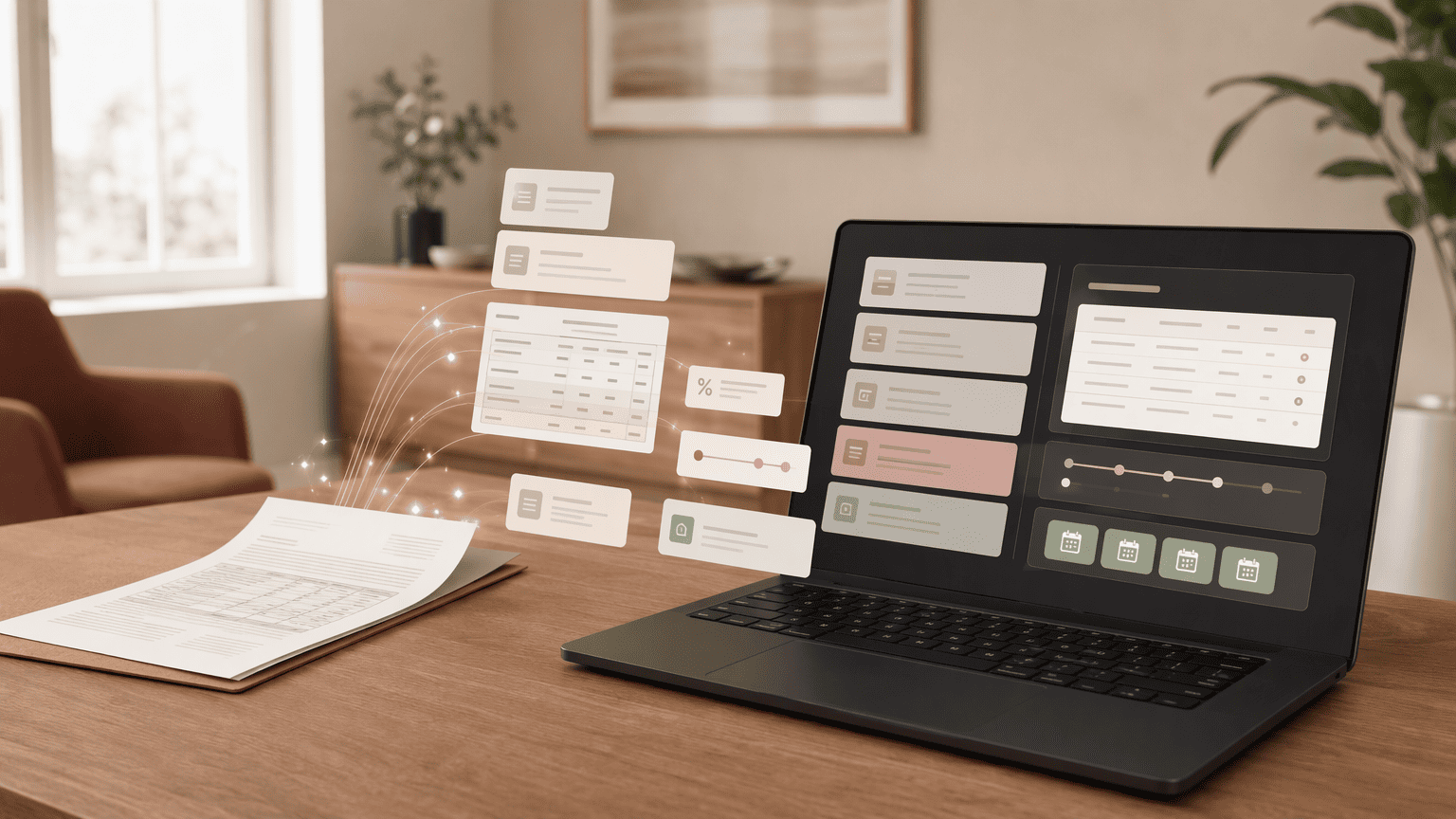
The root cause of most overcharges is that the agreed price sits inside a static PDF on a shared drive that nobody opens at the moment of invoice approval. When AP processors cannot instantly see the effective pricing schedule, tiered volume discounts, and expiration dates, they default to paying whatever number appears on the bill.
You need to parse key metadata, pricing tables, discount thresholds, and effective date ranges out of static documents and into a structured, searchable repository that becomes the single source of truth for every match. A supplier contract audit compares invoices against the agreed rates, but that comparison is impossible when the benchmark is unstructured.
This is what contract lifecycle management digitization delivers. Once extracted, that structured data turns every invoice matching routine from a memory exercise into a hard lookup. Without it, teams rely on tribal knowledge, and complex discount schedules get applied inconsistently or not at all.
A platform like Contracts.ai structures and activates contract data beyond static storage, organizing key terms across agreements so that a pricing table is as accessible as the AP clerk’s login screen. The goal is that the contract becomes the benchmark, automatically, every time.
Step 4: Implement Automated Line-Item Validation and Exception Reporting

Stop chasing overpayments after the cash has left. Implement pre-payment line-item validation. The workflow is straightforward: before a payment file is released, every invoice line item is matched against the digital contract terms mapped in Step 3. An automated audit tool flags price variances by comparing line-item rates to contract terms in real time.
You set a tolerance band that fits your risk appetite. Telling the system to flag only those line items where the billed rate exceeds the contract rate by more than 2% lets minor rounding differences pass through without interrupting the payment cycle.
The DOD identified $19 billion in potential overpayments through contract recovery audits. That figure measures what was found after the fact. Pre-payment line-item matching moves the review window upstream so errors never become disbursements in the first place.
U.S. improper payments reached $186 billion last year, according to the GAO. Manual spot-checks miss systematic billing drift. When every line item runs through the same contract logic, the drift stops.
Configure the exception report to route directly to the people who can fix a mismatch before the pay run closes. The output should include the invoice number, the line item in dispute, the contract rate, the billed rate, and the dollar variance. No narrative, just the data someone needs to call the vendor and resolve it.
Step 5: Group Related Agreements for Cross-Supplier Rate Alignment
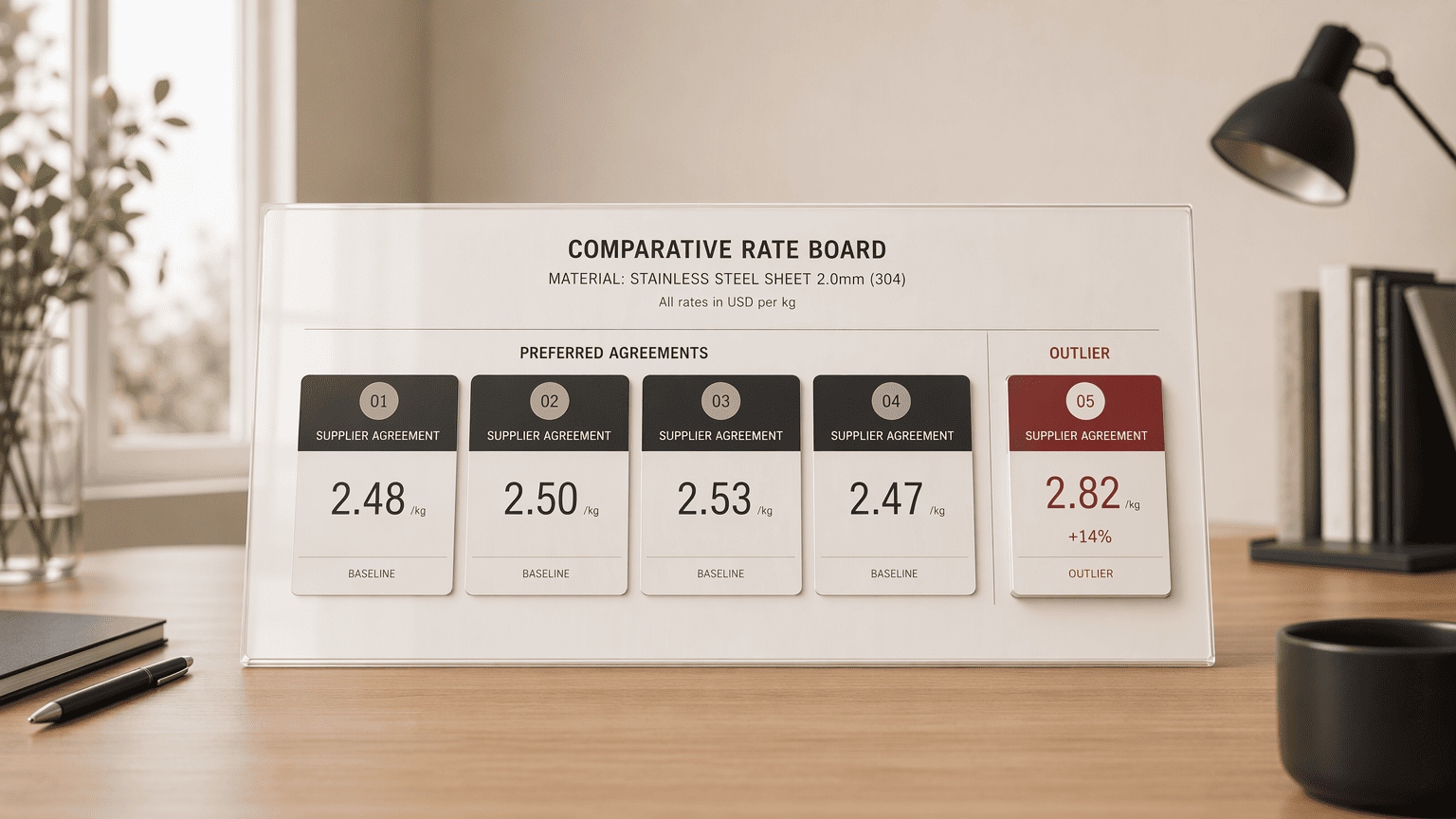
Once your contracts are digitized and your matching engine is running, you can graduate from per-invoice defense to portfolio-level offense. Group suppliers by category or material group and compare effective unit rates across them. That surfaces the outlier instantly: a supplier charging 14% more for identical raw material than a peer, despite supposedly equivalent volume commitments.
This technique is a comparative spend analysis, not a standard three-way match. It depends entirely on the normalized, structured unit costs from your digital single source of truth in Step 3. Without that normalization, you cannot reliably compare one supplier’s “each” pricing to another supplier’s “case” pricing.
Cross-supplier alignment often reveals that a favored incumbent has drifted far from market while the procurement team focused on new sourcing events. A digitized repository makes that drift immediately obvious in a dashboard rather than leaving it buried in hundreds of individual agreements.
You can also use this method during renegotiation. Contracts.ai, for example, says it automatically groups related agreements and aligns shared terms. When you sit across the table from a supplier, you bring a concrete market range derived from your own portfolio. The difference between identification and cash in the bank is clear: the DOD identified $19.7 billion in potential overpayments through recovery auditing according to a GAO report, but actual recovery figures lag far behind.
Step 6: Execute Targeted Manual Audits and Reconciliation Cadences
AI catches pattern violations at scale, but no algorithm replaces human judgment on the highest-risk, highest-complexity agreements. Your team should run targeted quarterly reconciliations on suppliers that meet specific criteria: largest total spend, contract pricing with multiple tiers and carve-outs, or a history of prior billing errors.
The mechanics of a manual reconciliation rely on the classic three-way match. This table shows which documents are compared and what specific overcharge scheme each document targets.
| Reconciliation Match | Primary Document | Overcharge Type Detected |
|---|---|---|
| Invoice vs. Purchase Order | Original PO with agreed rates | Unit-price inflation, duplicate payments |
| Invoice vs. Goods Receipt Note | Proof of delivery or warehouse receipt | Phantom quantities, un-delivered services |
| Invoice vs. Signed Contract Amendment | Change order or correspondence authorizing a rate adjustment | Post-amendment rate disputes, missed credits |
Once mismatches are confirmed, you must move instantly to the forensic trail. A finding without airtight documentation is just an argument the supplier will win.
Step 7: Build a Forensic Audit Trail for Dispute Resolution
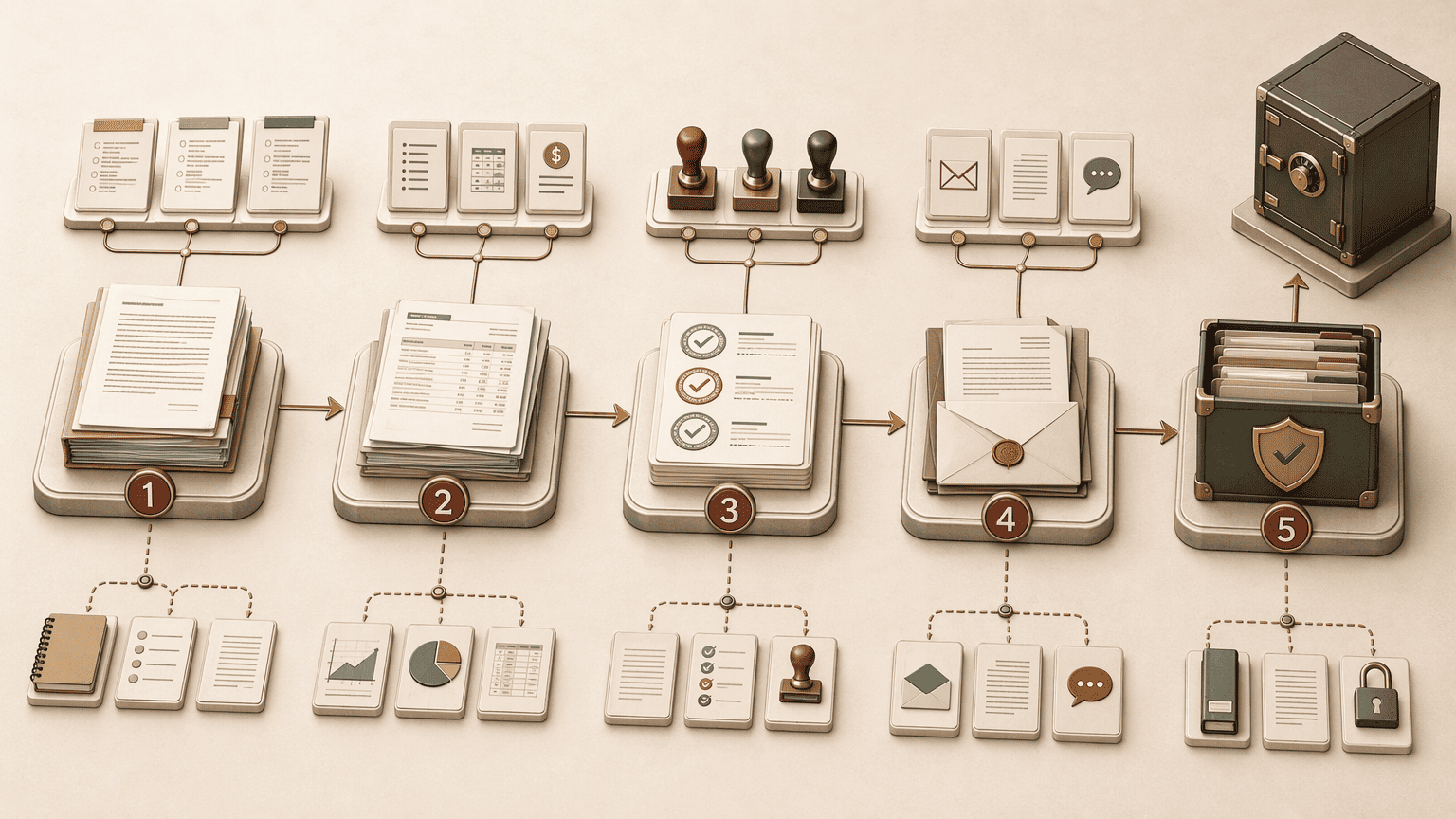
You sweep the data, find a $50,000 overcharge, and fire off a demand note. The supplier replies: ‘Please prove it.’ If your evidence is a single email from a departed category manager, you will lose.
The DOD learned this when recovery of an identified $19.1 million stalled because vendors contested findings and records were hard to retrieve, ultimately yielding only $1.9 million in recovered cash. That gap between identification and cash in the bank is what the audit trail closes. Follow this sequence to assemble your dispute package.
- Signed contract or purchase order with rate schedule: The original, executed document showing the agreed price. This is your legal anchor.
- Discrepant invoice clearly showing the billed rate: Marked to isolate the line item where the price exceeds the contract. Annotate the date and invoice number.
- All correspondence and formal change orders: A thread of any supplier communication authorizing a price adjustment, or the conspicuous absence of one. Silence is your use.
- Proof of delivery or warehouse receipt: The goods receipt note or signed packing slip that verifies quantities actually received, crushing any phantom-quantity defense.
- Reconciliation summary memo: A one-page internal memo linking the above four documents, calculating the exact overcharge, and citing the governing contract clause. Make it so straightforward that a third-party mediator can rule in five minutes.
Conclusion
Supplier overcharging is an operational defect your team can fix. A recovery audit clawed back pennies on the dollar years later. Pre-payment prevention catches the mismatch before funds transfer, turning AP from a passive processor into a profit-protection function. The 1 to 5% of spend leaking through unit-price inflation, phantom quantities, and missed credits is recoverable, but only when contract terms are digitized, matched automatically, and supported by a forensic audit trail the supplier cannot dispute. Verification keeps a high-trust partnership honest; skip it and the trust is blind.
Frequently Asked Questions
What are the most common ways suppliers overcharge against agreed contract rates?
Three schemes dominate: unit-price inflation, billing a rate higher than the signed contract; phantom quantities, charging for goods or services never delivered; and missed credits, failing to apply negotiated discounts, rebates, or most-favored-customer terms. Duplicate payments also fall into the phantom-quantity category.
What manual and automated methods can procurement teams use to detect billing discrepancies?
Manual spot-checking relies on the 3-way match of purchase order, goods receipt, and invoice against contract rates. Automated methods use AI platforms or recovery audit tools that scan entire transaction databases line by line, flagging price variances and missing credits at scale without manual sampling limitations.
Can AI-powered contract intelligence platforms flag overcharges without replacing my current AP system?
Yes. These platforms integrate as an intelligence layer via API or file-based feeds (CSV or EDI) connected to existing ERPs like SAP or Oracle. You do not need to replace your core financial infrastructure to gain automated pre-payment price-compliance checks.
What audit trail documents do I need to successfully dispute a supplier overcharge?
You need the signed contract or purchase order with the rate schedule, the discrepant invoice, all correspondence and change orders related to pricing, proof of delivery or receipt to verify quantities, and a summary memo linking all evidence to the specific overcharge amount.
What is the typical financial loss from uncaught supplier billing errors in the US?
Industry data indicates uncaught billing errors cost organizations 1 to 5% of total spend. At the federal level, improper payments reached $186 billion in FY 2025, with as much as $3 trillion cumulatively lost since FY 2003.
How do I prioritize which suppliers to audit manually?
Target suppliers with the largest total spend, those operating under complex tiered or volume-based pricing, and any vendor with a documented history of prior billing errors. Run targeted reconciliations on this subset quarterly while automated tools monitor the broader supplier base.
Sources
- Contract Management: Recovery Auditing Offers Potential to Identify Overpayments – www.govinfo.gov
- $186 Billion Was Lost to Improper Payments Last Year. How Can We Prevent Them In the Future? | U.S. GAO – www.gao.gov
- Contract Requirements for Billing Reconciliation – support.meetgradient.com






