








Introduction
You negotiated hard for that 2 percent early-payment discount and those volume-tier rebates. Then your finance team pays the invoice on day 14. The discount vanishes. Repeat that across 200 invoices a year and the leakage stops looking like an oversight. It looks like a structural drain on profit.
World Commerce & Contracting found that organizations leak 19 percent of contract value on average. For every €500,000 in negotiated rebate value, roughly €95,000 goes unclaimed annually. That money is yours by contract. You just do not see the gap because nobody is watching every single line.
Manual audits cannot fix this. By the time a reviewer pulls a sample of invoices and cross-checks them against a PDF contract, weeks have passed. The rebate window expired, the payment terms lapsed, or the tier threshold got missed. McKinsey reports that 80 percent of procurement functions are not fully aware of their own competitive contract terms. If you do not remember the terms, you cannot enforce them.
The shift that changes the math is continuous transaction-level monitoring. An AI-powered contract intelligence tool sits between your signed agreements and your live ERP feed, checking every invoice line against the extracted discount structure. Vendortell, for instance, automatically extracts those terms and flags discrepancies the moment a payment deviates from the agreement. The rest of this article walks through a five-step framework to build that capability, starting with a no-disruption pilot that proves the return in 30 to 60 days.
Key Takeaways
Real-time discount visibility turns static contracts into live, enforceable financial controls. Here is where to focus:
- Map every discount category: Tiered volume, early payment terms, growth rebates, and bundled discounts all leak in different ways. Pull each type directly from your signed agreements, structured and itemized.
- Connect contracts to live spend data: An intelligence layer between your contract repository and your ERP (SAP or Oracle) is the only way to compare agreed terms against every invoice line.
- Automate line-item matching: AI extracts pricing tiers and rebate thresholds, then flags a missed 2 percent discount on 200 invoices per year before the payment batch closes.
- Send audit-ready alerts to both procurement and finance: Close the loop between detection and action with notifications that build an audit trail for future compliance reviews.
- Prove the return with a controlled pilot: Pick one high-volume contract with complex terms, run the tool in parallel for 30 to 60 days, and compare caught discrepancies against the prior audit cycle.
Step 1: Map Your Discount Universe, From Tiered Volume to Early Payment Terms
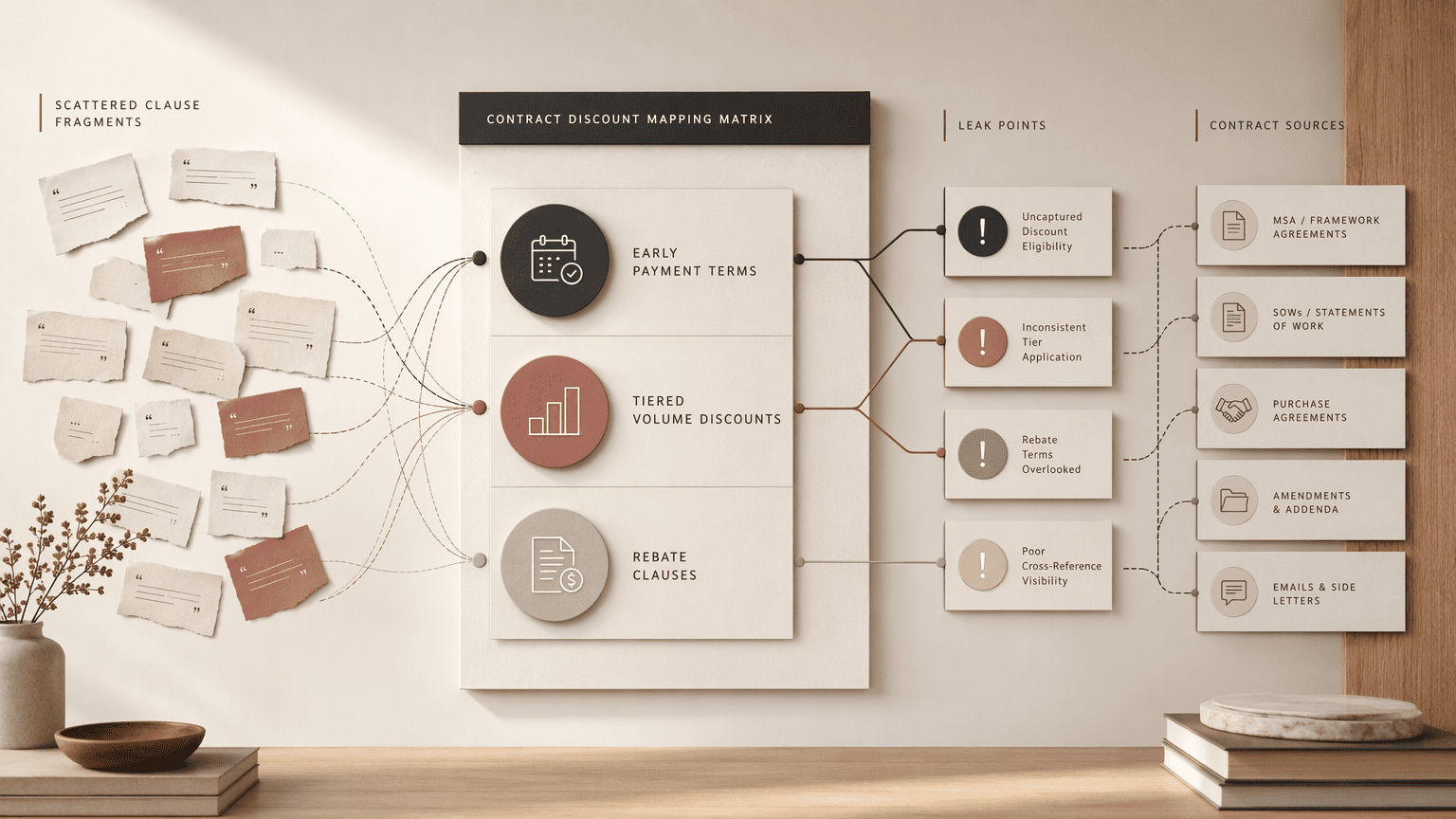
Before you can monitor compliance, you need to know exactly what discounts are on the table. The contract terms that leak most often share one trait: they are scattered across amendments, buried in appendices, and expressed in inconsistent language.
| Discount Type | What It Looks Like | Typical Leak Point | Contract Source |
|---|---|---|---|
| Early Payment Terms | 2% net 10, net 30 | Finance pays on day 14, discount window closes | Payment terms clause, often in a schedule |
| Tiered Volume Discounts | 3% above $100k, 5% above $500k | Year-end purchases not linked to tier thresholds | Pricing schedule or appendix |
| Growth Rebates | Annual rebate at 120% of prior spend | Rebate goes unclaimed because no one tracks the threshold | Addendum or side letter |
| Bundled Discounts | 7% off SKU A when bought with SKU B | Line-item split across POs hides the bundle | Master agreement or SOW |
Extract these terms from your signed agreements using a CLM system or a contract repository like SharePoint. The output must be structured: discount type, numeric threshold, effective dates, and qualifying conditions. Free-text PDFs stored in a shared drive will not feed a monitoring engine. If your team cannot produce a complete discount inventory across your top 20 vendors, that gap itself confirms the McKinsey finding. You are not fully aware of your own terms, and the vendors know it.
Step 2: Integrate a Post-Signature Intelligence Layer for Real-Time Transaction Monitoring

A signed contract is a promise. Your ERP data is what actually happened. Real-time visibility lives in the gap between the two, and bridging it requires two clean data pipes.
First, your contract repository must serve the structured discount terms from Step 1. Whether that is a CLM platform, SharePoint, or a shared intelligence layer, the discounts need to exist as machine-readable fields, not scanned pages. Second, you connect live transaction data from your ERP. Oracle environments, for example, can automatically deduct the discount if the invoice is within the terms, but only when the system knows those terms at the point of payment processing.
An AI contract intelligence platform, such as Contracts.ai, sits between the two feeds as a post-signature layer (the company says it deploys as an intelligence layer rather than a rip-and-replace system). It continuously extracts, structures, and compares the agreed discount terms against every invoice line that flows through your AP system. The result is not a quarterly report of what you lost. It is a same-day flag when a payment batch is about to miss a 2 percent discount on 200 invoices, totaling thousands in preventable leakage.
Step 3: Automate Line-Item Matching to Instantly Flag Pricing and Rebate Discrepancies

Here is how the flow actually runs.
- Extract the discount rule set from the structured contract data, including the 2% net-10 clause, the volume tier thresholds, and the growth rebate targets.
- Ingest every new invoice line straight from the ERP, carrying the SKU, unit price, quantity, payment date, and total.
- Compare at the atomic level, check whether the unit price matches the contracted tier and whether the payment date falls inside the discount window, and flag when cumulative spend has crossed a rebate threshold that should apply to this transaction.
A 2-percent net-10 discount that should have applied but did not, because finance took 14 days on 200 invoices, surfaces as a specific dollar figure. The source contract language is linked directly in the alert, so nobody has to go hunting through a 60-page agreement to confirm the signal is real.
Every flag ties an invoice ID to a contract clause. That creates the paper trail for recovery today and a cleaner compliance review next quarter.
Contracts.ai links every answer to its source contract language. A finance analyst sees the alert and the proof in the same view.
Step 4: Deploy Audit-Ready Alerts That Close the Gap Between Procurement and Finance
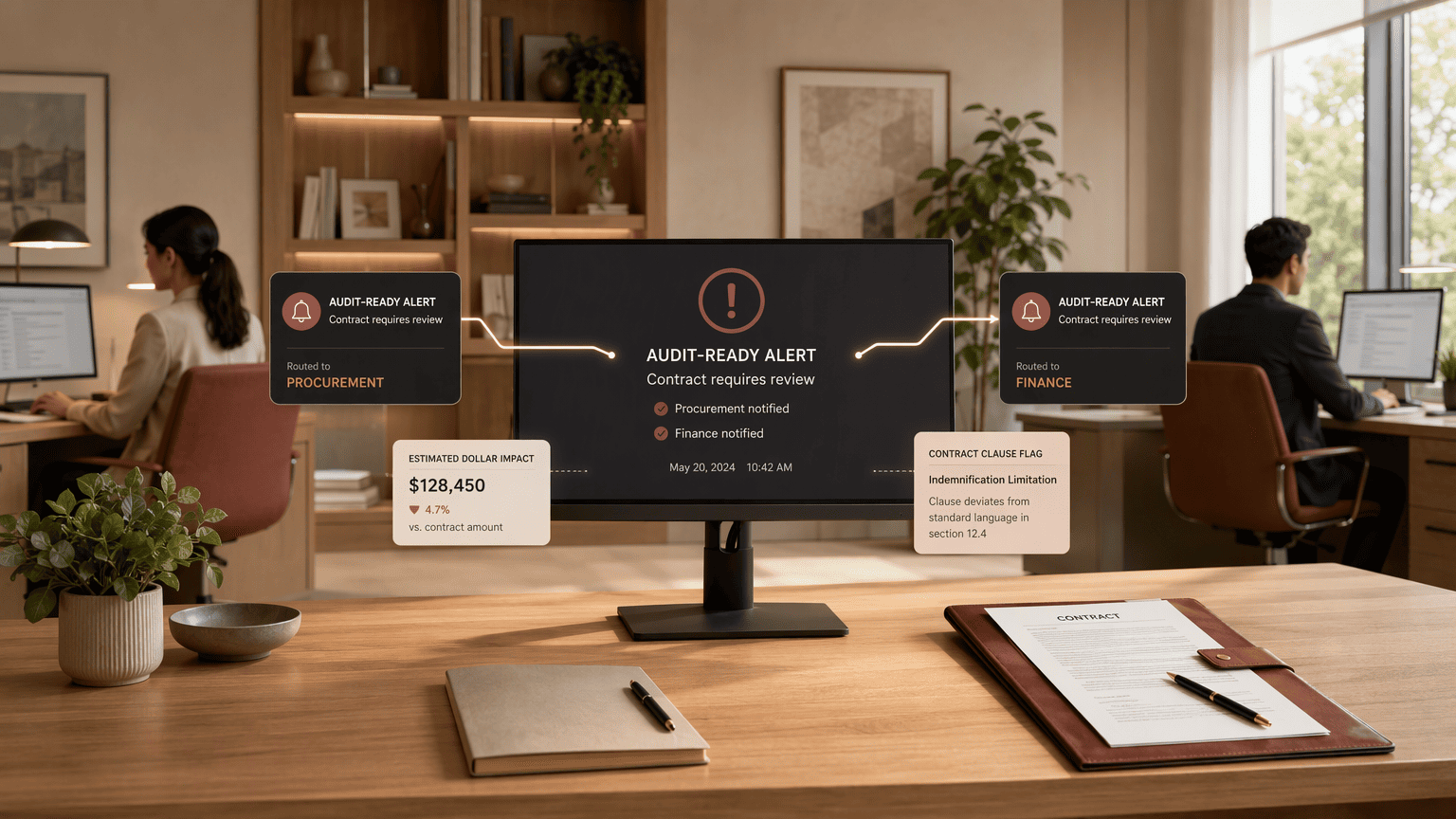
Detection without action is just a report nobody reads. The alert system must reach the people who can stop the leakage before the payment file finalizes.
Procurement owns the vendor relationship and the negotiated terms. Finance controls the payment trigger. A missed discount alert that reaches only one team leaves the other blind.
When the system notifies both simultaneously, with the exact contract clause and dollar impact attached, the resolution cycle collapses from weeks to hours. Contracts.ai can share structured intelligence across finance and procurement, not just log the exception. These alerts also build the audit trail for the next compliance review cycle.
Each flag records a timestamp, the discrepancy amount, the accountable contract language, and the resolution action taken. The record proves to internal audit, and to the vendor, that your organization enforces the deal you signed. That is how you capture rebates before they expire, instead of explaining lost value after the quarter closes.
Step 5: Launch a High-Value Pilot to Prove ROI Without Disrupting Existing Systems
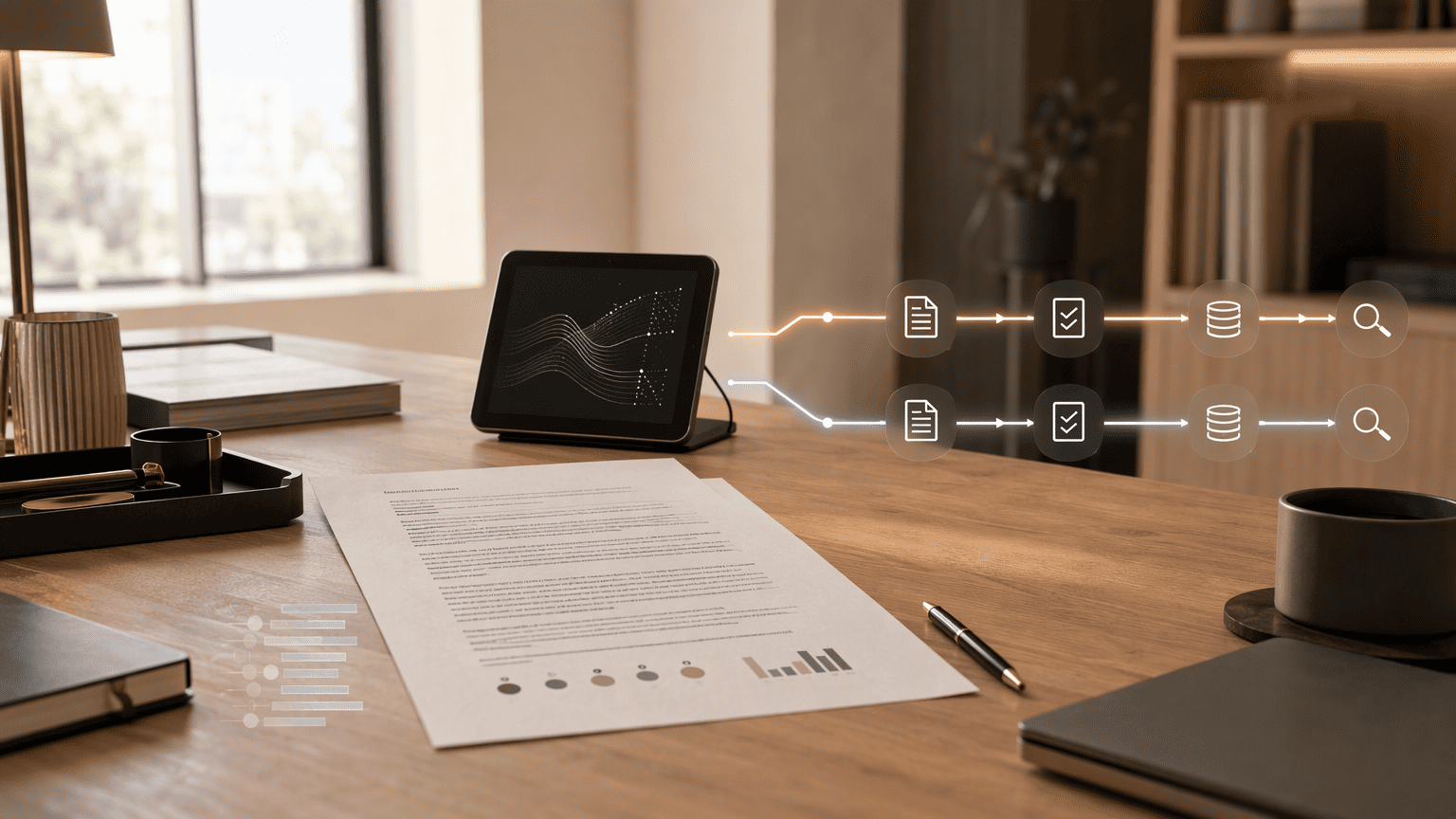
Nobody approves a systems overhaul on a promise. The path to adoption runs through a single controlled experiment with hard-dollar measurement.
Select one high-volume contract with the most complex discount structure, ideally containing volume tiers, growth rebates, and early-payment terms. Ensure your ERP feed and contract repository provide clean data to the test platform. Deploy an AI monitoring tool like Contracts.ai on this one contract scope while your existing audit workflow continues unchanged.
Run the parallel test for 30 to 60 days, then count the number of missed discounts the AI caught that the prior audit cycle missed entirely. The comparison metric is blunt and persuasive. If manual audits caught two pricing discrepancies on this contract last quarter, and the AI layer surfaces 15 in 45 days with contract clauses to back each one, the return on investment becomes visible at the next procurement leadership review.
You are not arguing a theoretical business case. You are handing the CFO a list of dollars recoverable right now, on one contract, with no process disruption to the existing ERP or AP workflow.
Conclusion
The 19 percent contract value leakage figure from World Commerce & Contracting is not a cost of doing business. It is a measurement gap. Closing it requires replacing periodic manual sampling with continuous, AI-driven transaction monitoring that reads every invoice line against the actual signed terms. Start with one high-volume contract as a no-disruption pilot. When the 30-to-60-day numbers land and finance sees the specific dollars caught before they leaked, you have the evidence to scale the framework across the enterprise and make procurement a measurable profit protector.
Frequently Asked Questions
What methods or technologies provide real-time visibility into vendor compliance with contracted discounts?
Continuous AI-powered contract intelligence platforms, such as Vendortell or Contracts.ai, provide real-time visibility by automatically extracting negotiated discount terms from signed contracts and comparing them against every ERP invoice line. Unlike periodic manual audits, these tools flag pricing and rebate discrepancies instantly, closing the gap before payments finalize.
How can AI contract intelligence tools detect and alert on pricing discrepancies at the line-item level?
They extract discount rules such as tier thresholds, early-payment windows, and rebate targets from structured contract data, then compare those rules to each invoice line’s unit price, quantity, and payment date. A discrepancy, like a missed 2 percent net-10 discount on 200 invoices, surfaces with the source contract language attached for immediate validation and recovery.
What data and integrations are needed to automatically compare invoice line items against negotiated discount terms?
You need two clean data pipelines: a structured feed of extracted discount terms from your contract repository (CLM or SharePoint), and a live transaction feed from your ERP system such as SAP or Oracle.
How do enterprise finance and procurement teams close the loop between contract terms and actual transaction-level spend?
They close the loop by deploying audit-ready alerts that notify both procurement and finance simultaneously when a discount is missed or at risk. This bridges the historic communication gap, turning detected discrepancies into immediate action and building an audit trail that proves compliance for internal and vendor-side reviews.
What are the key differences between periodic manual audits and continuous, real-time vendor discount monitoring?
Manual audits sample transaction data weeks or months after payment, missing time-sensitive discounts like early-payment terms and expired rebates. Continuous monitoring checks every invoice line against the contract in near real-time, catching discrepancies before payments clear and creating a permanent, auditable compliance record.
How should a company set up a pilot program to test real-time discount compliance tracking without disrupting existing systems?
Select one high-volume contract with complex tier or rebate structures. Run the AI monitoring tool, such as Contracts.ai, in parallel with existing audit workflows for 30 to 60 days. Then compare the number of missed discounts the AI caught against the prior audit cycle to demonstrate hard-dollar ROI without changing current ERP or AP processes.
Sources
- Rebate Leakage: Why 19% Go Unclaimed | Vendortell – vendortell.com
- Contract Discount Terms Overview – Oracle Help Center – docs.oracle.com






